Long before Oklahoma had a statehood star on the flag, soldiers stood guard behind tall log walls near the Grand River. That frontier post still stands in eastern Oklahoma, and you can walk right through its gate.
Inside, barracks, a brig, and officers’ quarters tell the story of a young nation pushing west and the tribal nations whose lives were changed forever. Up the hill, old stone buildings carry the story forward into the late 1800s.
It is the kind of place where kids ask questions and grown-ups end up asking even more. The grounds stretch across more than 80 acres, so there is plenty to explore in a single day trip from Tulsa or Muskogee.
Keep reading to learn what waits behind those logs, what is up the road, and how to plan a smooth visit.
1. A Frontier Post on Garrison Avenue
Some history hides in dusty books, but this chapter has its own front gate. Fort Gibson Historic Site sits at 803 N Garrison Ave, Fort Gibson, OK 74434, in the eastern part of Oklahoma.
The site is run by the Oklahoma Historical Society. It covers more than 80 acres, so it is far bigger than a single building or a quick roadside sign.
The town of Fort Gibson sits close to Muskogee, which makes it an easy outing for families in that area. Tulsa folks can also make it a reasonable day trip.
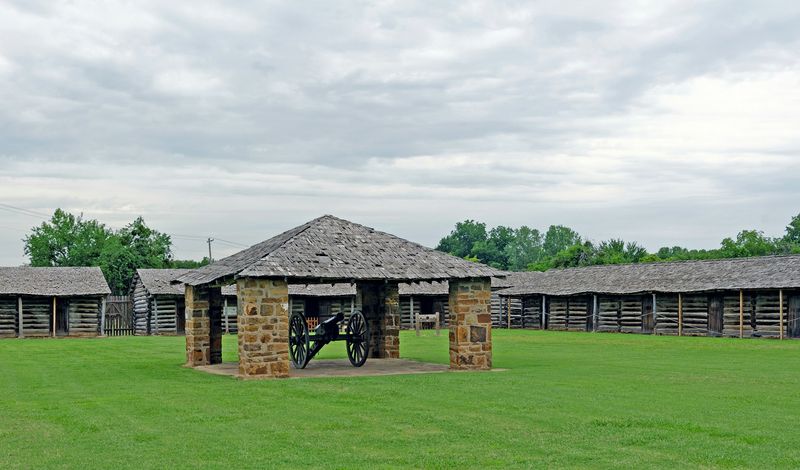
The site is split into two main parts. Down low is the reconstructed log fort, and up the road sits a cluster of stone buildings and the museum area.
Each part covers a different stretch of time. Together, they give a fuller picture of how frontier army life changed over the decades.
Parking is available at the main fort area, which keeps things simple for families with little ones in tow. That first look at the stockade walls is often what hooks people in.
Once the car is parked, the real adventure begins at the gate.
2. The Door to the Frontier
Plenty of places claim to be important, yet few can say they helped shape a whole region. The fort is often called a gateway, or a door, to the frontier.
Its story connects closely to early U.S. policies toward Native nations. That makes it a key stop for anyone wanting to understand both Oklahoma history and Native American history.
The site also ties into the era of the Trail of Tears. It is a heavy chapter, and the fort does not shy away from it.
Many families with Cherokee roots visit and feel strongly about seeing this place. The fort represents a hard time for tribal nations in the area, and that honesty is part of its value.
Learning all sides of the past matters here. The history is not tidy, but it is real, and it explains a lot about how eastern Oklahoma came to be.
Kids who visit often come away with questions about why the army was here at all. Those are exactly the kinds of questions worth asking.
Big history, small town, and a lot to think about on the drive home.
3. Two Forts, Two Eras
Think of the site as a timeline you can walk. The lower fort represents the 1830s through the 1850s.
The upper fort covers the 1860s through the 1890s. That jump in time shows up clearly in the buildings themselves.
Down below, logs rule. Up top, stone takes over, and the change says a lot about how the army settled in for the long haul.
Splitting the history this way helps younger guests keep the eras straight. One part feels like the early frontier, and the other shows a more established post.
The two areas are about a mile apart by road. Some people drive between them, while others enjoy the extra steps.
Plan time for both sections. Skipping one means missing half the story, and that would be like reading a book with the middle chapters torn out.
Both halves together make the trip feel complete.
4. Barracks, Brig and the Commander’s Quarters
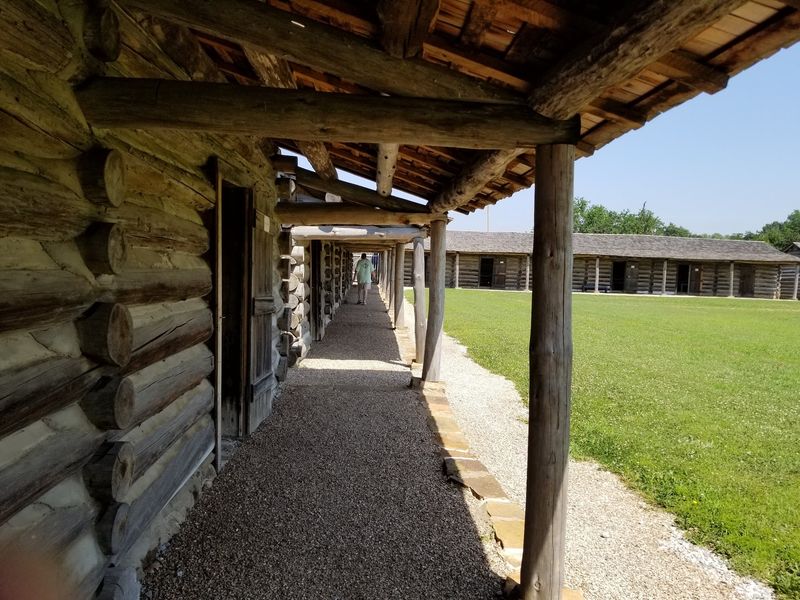
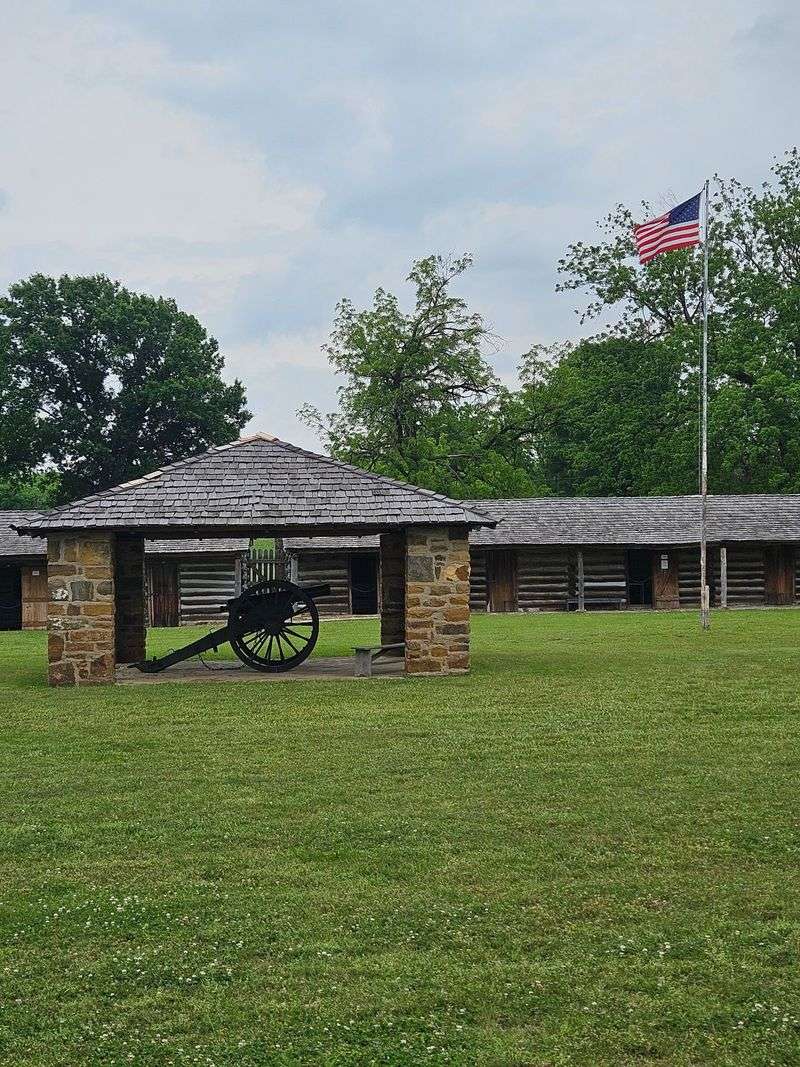
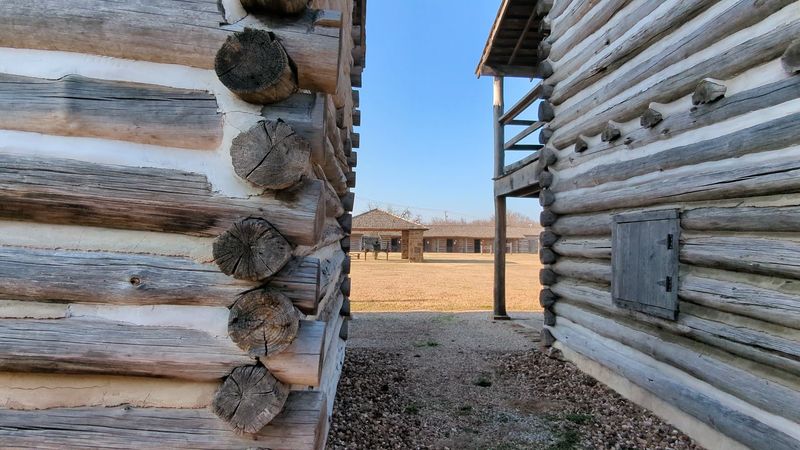
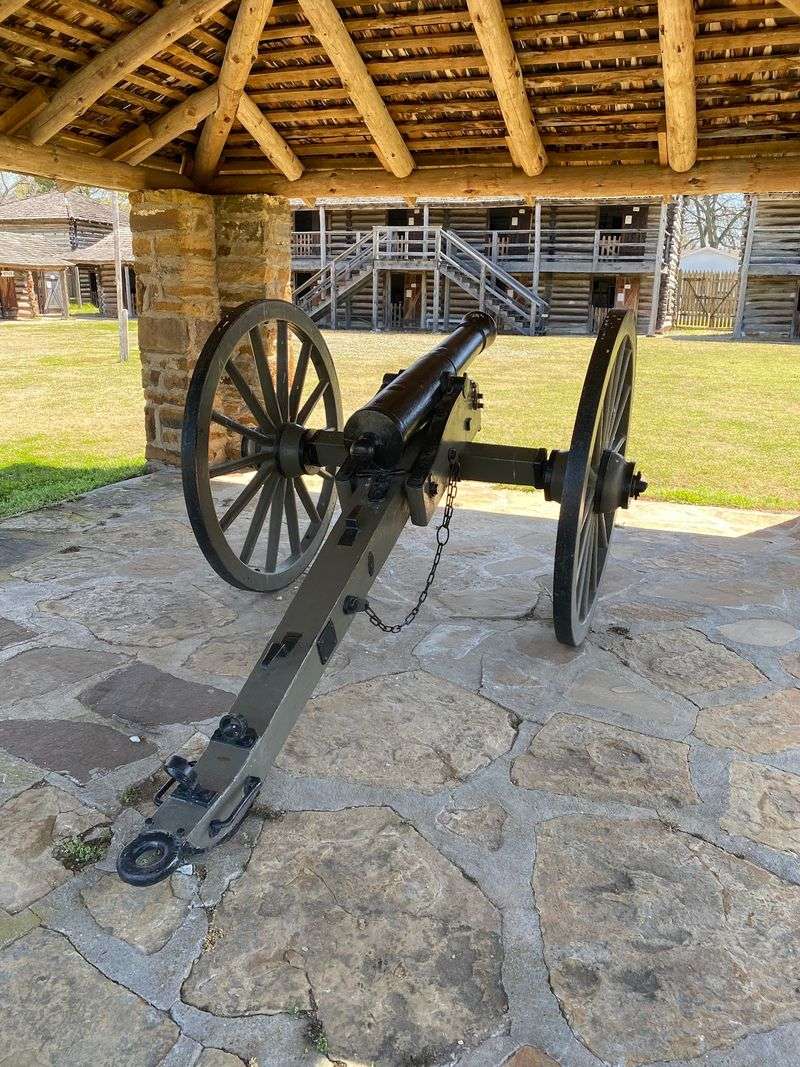
Soldier life was not glamorous, and the lower quadrangle proves it. This is the main post, laid out around an open square inside the stockade.
The barracks show where enlisted men lived. Close by stands the brig, which is the army word for a jail, and kids tend to find that one especially interesting.
The Commander’s quarters offer a look at how rank changed daily life. The contrast with the barracks is worth noticing.
Displays are spread through the buildings. There is enough to keep people engaged without turning it into an overload of signs and cases.
Not every building is always open, so some doors may be closed during a visit. It helps to ask at the visitor center about what is open that day.
The reconstructed fort keeps the feel of life some 150 years ago. Walls, doorways, and layout all help the past make sense.
Fun fact for young explorers: the brig is where rule-breaking soldiers ended up, so behave yourself in there.
5. Stone Buildings on the Hill
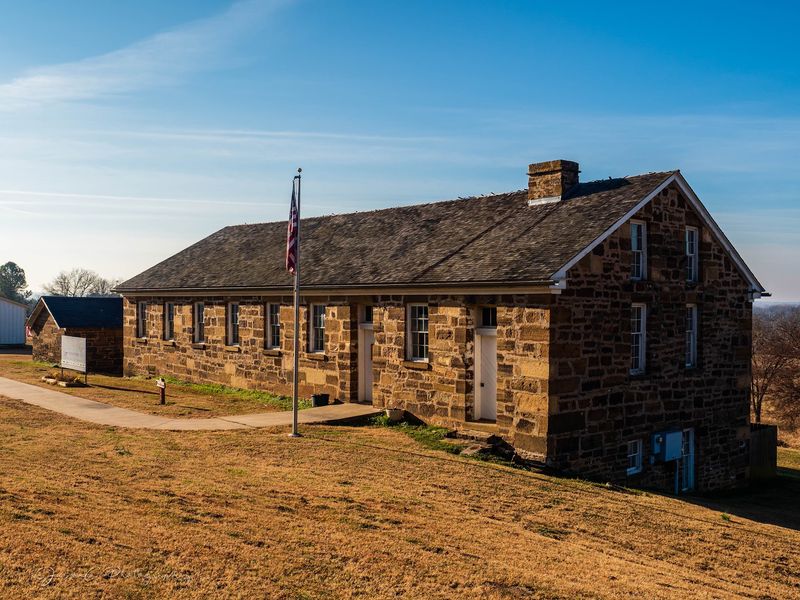
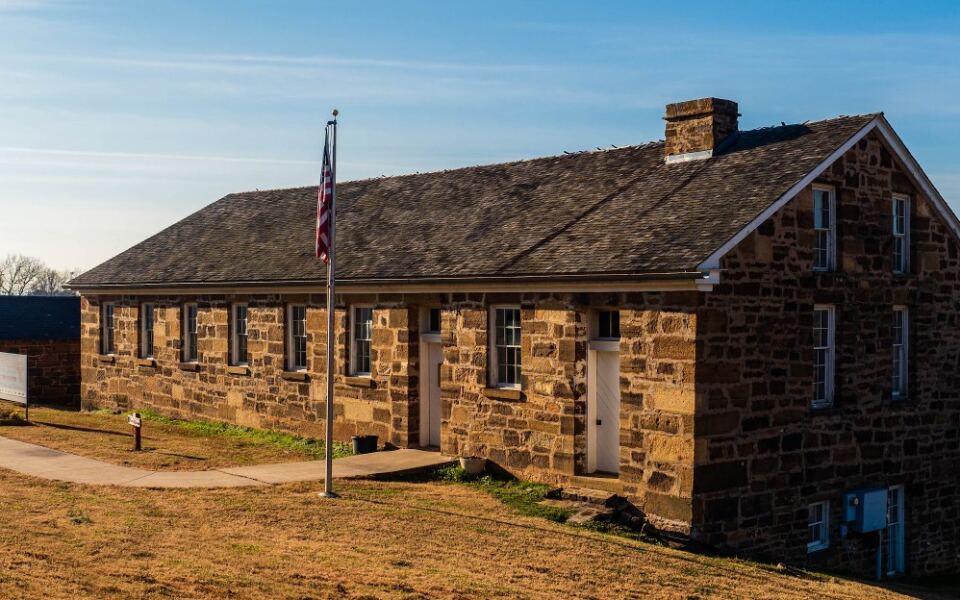
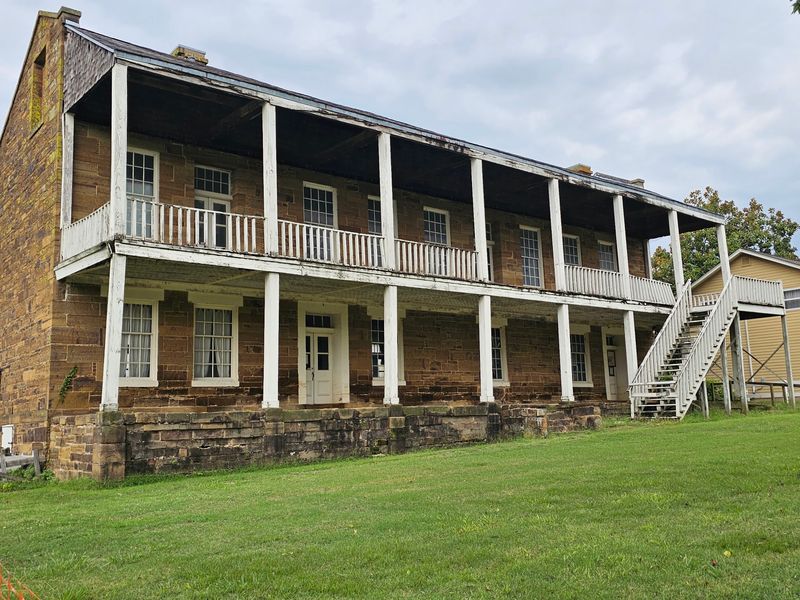
Logs rot, but stone stays put. Up the road, the upper section holds around five original stone buildings from the later years of the post.
These are not reconstructions. They are the real thing, and that detail tends to impress history fans.
A couple of standing chimneys mark spots where other structures once stood. There is also a building in ruins, which adds to the sense of age.
Artifacts are scattered around the grounds as well. Keeping an eye out while walking can turn into a small treasure hunt for kids.
The museum is located up in this area too. It gives helpful background before or after exploring the stone structures.
The newer stone buildings and the older log fort make a striking pair. Seeing both in one trip shows how the post grew over time.
Bring walking shoes, because the hill rewards those willing to roam.
6. Bread, Books and a Surprising Schoolhouse
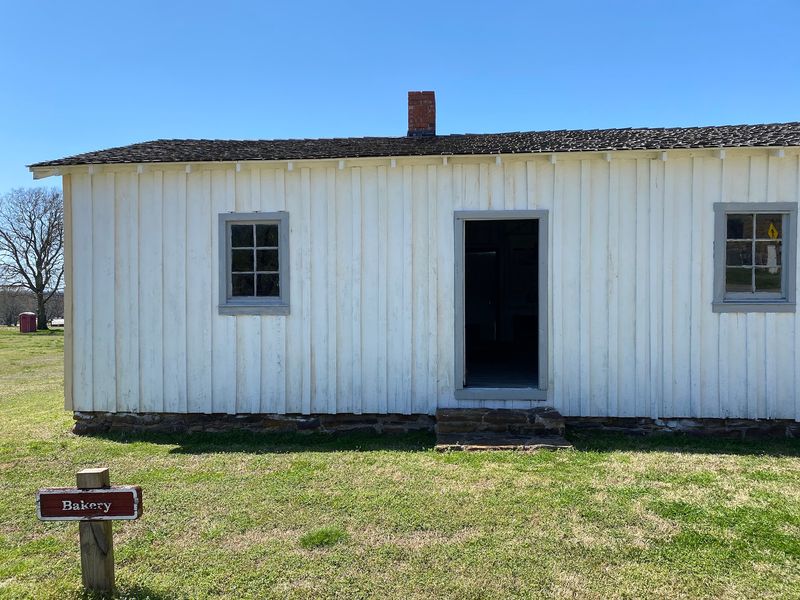
A fort needs more than soldiers. It needs food, and the historic bakery is one of the more unusual stops on the grounds.
Bread is still baked there on certain days. Check ahead if that is something you want to catch.
The upper area also includes a building tied to the first school for the blind in Oklahoma. It is a surprising piece of the story that many people do not expect at an army post.
That detail shows how the site kept serving the community after its military years. History here does not stop when the soldiers leave.
For families, these buildings add variety to the visit. Not everything is about uniforms and drills.
The mix of everyday life and big events makes the past feel more human. It is easier to understand people when you see where they worked and learned.
Sometimes the quietest buildings hold the most unexpected stories.
7. Staff Who Love the Story
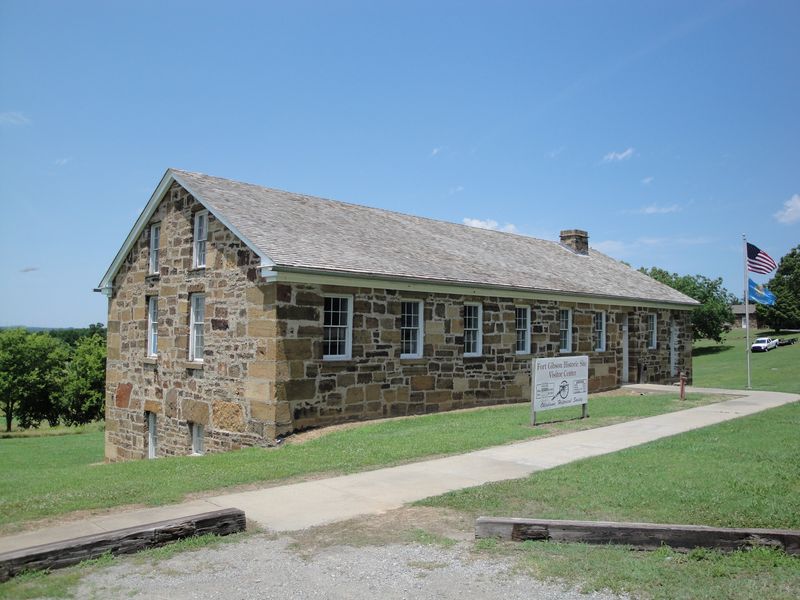
Ask one question here and you may get a whole history lesson, in the best way. The staff are a big reason people leave happy.
Knowledgeable staff is the most common praise tied to this site. The folks in the visitor center clearly enjoy what they do.
They answer questions, share background, and help guests figure out where to go next. Quiet days can mean extra one-on-one attention.
That is especially handy for kids. A curious 11-year-old can get real answers instead of just reading a sign.
Staff are also kind and patient. Even first-timers with zero history background feel welcome.
Tours are self-guided, so people move at their own pace. Still, stopping to chat at the visitor center first can make the whole visit richer.
Good guides turn old buildings into living stories, and this crew does it well.
8. Reenactments and the Candle-Light Tour
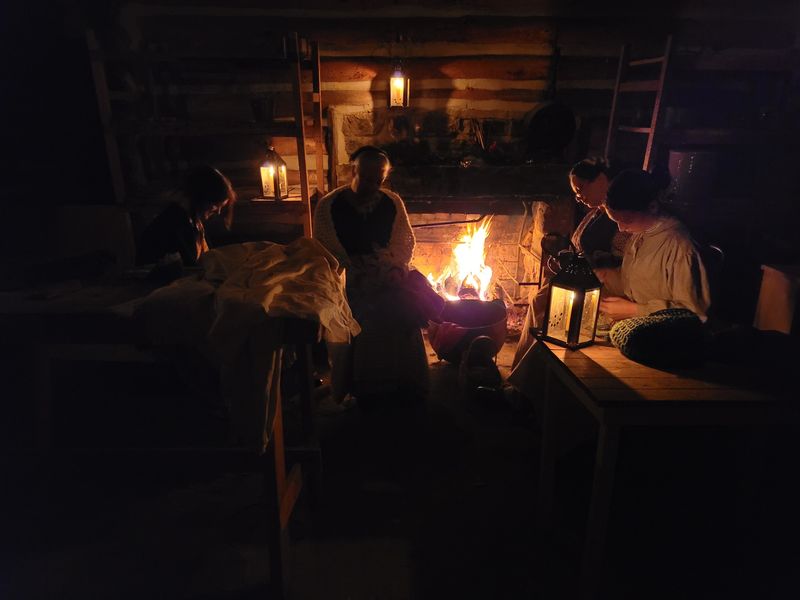
History gets a pulse when people show up in period dress. The fort hosts reenactments and a variety of events through the year.
Timing matters, though. Reenactors take breaks too, and showing up during lunch can mean missing the action.
The Christmas Candle-Light Tour is a highlight for many families. It offers a fun seasonal way to see the fort in a different setting.
Event dates change from year to year. The Oklahoma Historical Society website is the best place to check the current schedule.
Living history works well for kids who struggle with museum cases. Seeing a costumed interpreter makes the era easier to grasp.
Planning a trip around an event can turn a regular visit into a special memory. It is worth a quick look online before choosing a date.
Mark the calendar, and the past might just march right out to meet you.
9. Fresh Work and a Grand Reopening
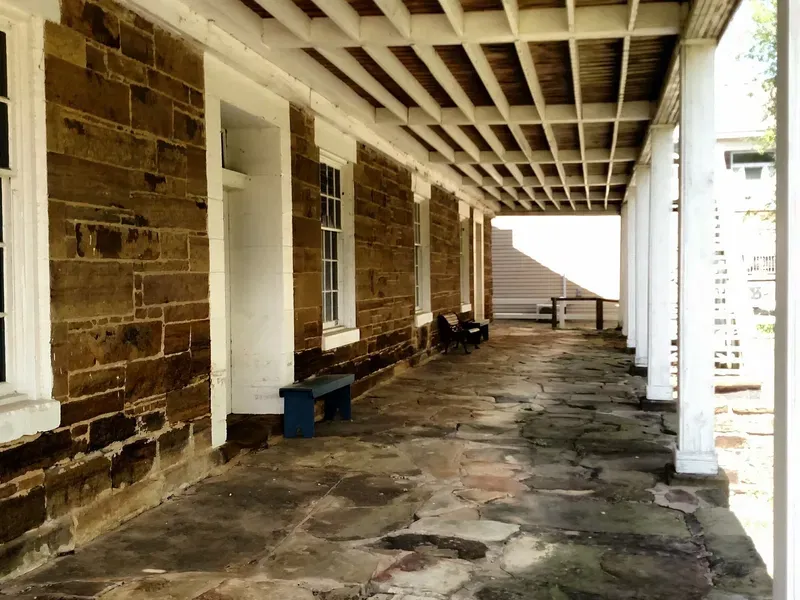
Old forts need care too. Recent work at the site led up to a grand reopening, and the results have drawn strong praise.
The work is described as top notch. That is good news for anyone who visited years ago and wants a reason to return.
The grounds look well maintained, even from outside the walls. Folks who arrive on a closed day can still see how tidy the site is.
Keeping a log fort in good shape takes ongoing effort. The care shows in the buildings and the paths.
Families who grew up visiting often bring the next generation. Fresh updates give longtime fans something new to see.
It is a fine example of how Oklahoma protects its heritage. Pride in the past shows in every repaired wall.
New work, old stories, same welcoming gate.
10. Nearby Honors at the National Cemetery
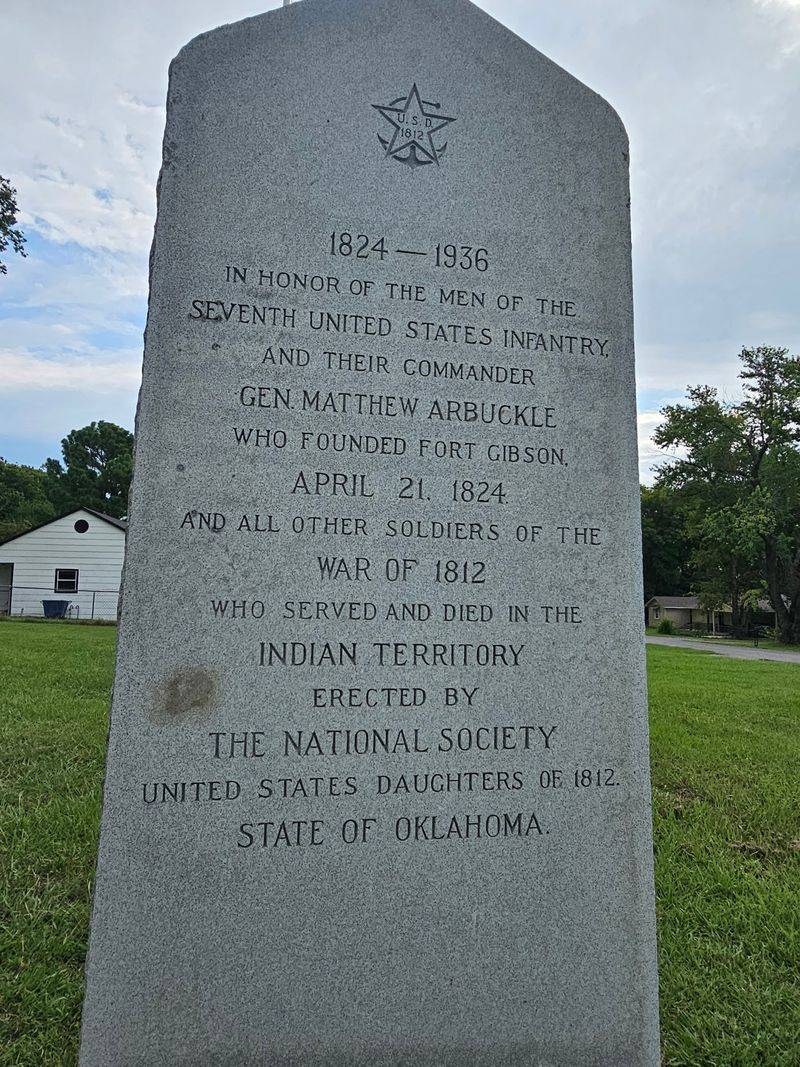
A short drive from the fort leads to a place of quiet respect. Fort Gibson National Cemetery is located near the historic site.
Many people pair the two stops in one trip. The cemetery offers a chance to pay tribute to those who have served the United States.
It can be a moving experience. Families sometimes come for a service and then take time to explore the old fort afterward.
For kids, the cemetery offers a gentle way to talk about service and community. Keep voices low and treat the grounds with care.
The connection between the fort and the cemetery helps show how long the military has been part of this town. The story continues well beyond the frontier years.
Leave a little extra time in the schedule for this stop. It adds meaning to the day.
Some places are for learning, and some are for remembering, and this town offers both.
11. Old Bridge, Old Downtown and a Dam Up the Road
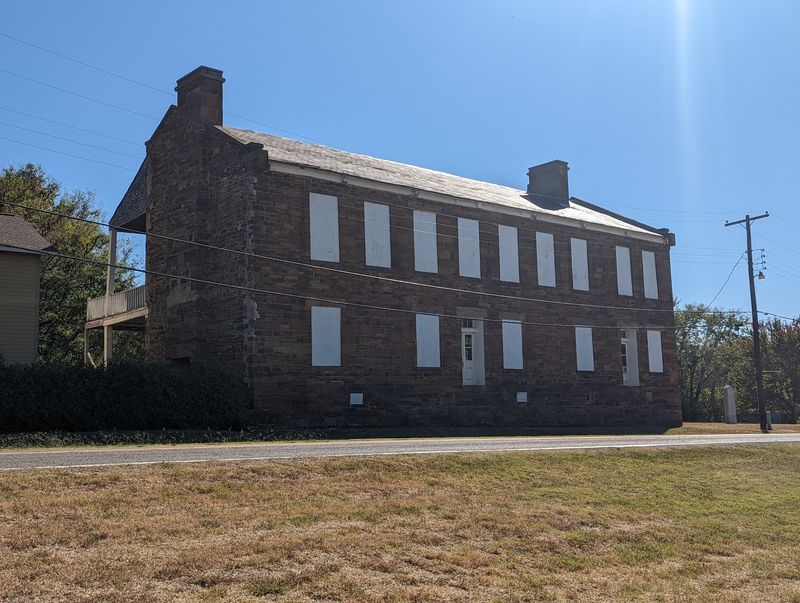
One stop can easily become three or four. The area around the fort has extra spots worth a look.
The former road bridge sits next to a train trestle, close to the wooden fort. It makes a nice photo stop for history buffs and bridge fans alike.
Old downtown Fort Gibson is also nearby. A stroll there adds small-town charm to the outing.
A few miles beyond the museum area, the road leads to the dam. It is an easy add-on for those who like a scenic drive.
Greenleaf State Park is close enough that campers swing by the fort during their stay. That makes it a good fit for a weekend camping trip.
Stacking these stops turns a short visit into a full day. Oklahoma is clearly more than flat prairie around here.
Bring a full tank and a curious spirit, and the side roads will do the rest.
12. Hours, Days and Smart Timing
Nothing spoils a road trip like a locked gate. The site is open Tuesday through Saturday from 10 AM to 4:30 PM.
It is closed on Sundays and Mondays. Online listings have not always matched the official schedule, so trust the Oklahoma Historical Society website.
Hours may change for holidays, events, or work on the grounds. A quick check before driving saves a wasted trip.
Admission prices are best confirmed directly through the website or by calling ahead. That way there are no surprises at the door.
Quiet seasons can be a bonus. A late January visit may mean having the place nearly to yourself, with plenty of staff attention.
Arriving earlier in the day gives time to see both the lower and upper forts. It also helps avoid missing reenactors during their lunch break.
A little planning keeps the frontier fun on schedule.
13. Worth a Spot on the Family Map
Some outings fade fast, but this one tends to stick. The fort earns strong marks for being family friendly and full of Oklahoma history.
Self-guided tours let families set their own pace. Little legs can rest, and curious minds can linger.
The displays are engaging without being overwhelming. That balance works well for both kids and grown-ups.
There is a gift shop on site for a small keepsake. It is a nice way to close out the day.
History fans will want to pin this one on their map. Casual explorers will still find plenty to enjoy just walking around.
The mix of log walls, stone buildings, honest history, and friendly staff makes it a standout in eastern Oklahoma. It shows a side of the state many people never stop to see.
Pass through that stockade gate once, and the frontier may call you back again.
Share this story