The best old-school food stops do not feel staged; they feel like they never forgot what made people pull in. Near Sault Ste.
Marie, Michigan, Clyde’s Drive-In still carries that easy roadside charm with carhop-style service, a loyal local following, and burgers that feel right at home in an Upper Peninsula travel day. It is nostalgic, but not frozen in time.
The place has its own working rhythm, the kind built from repeat customers, hungry road-trippers, and a menu that understands the assignment without overcomplicating it. For anyone passing through the Soo, Clyde’s makes a simple meal feel like a small piece of the trip itself.
The Red, White, and Blue Landmark by the River
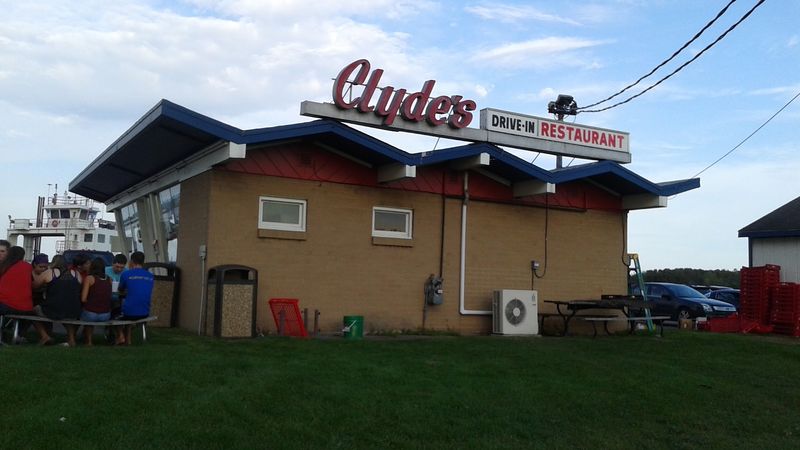
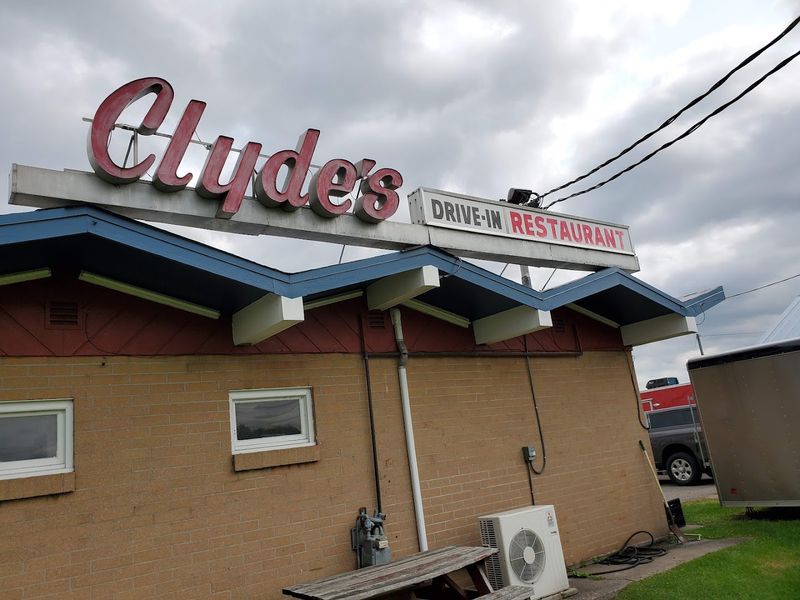
Clyde’s Drive-In announces itself before the menu ever enters the picture. The building has a bright, unmistakable roadside presence, with a bold red, white, and blue sign and a low-slung midcentury shape that looks lifted from a more optimistic era of American car culture.
In a town where movement matters – freighters, bridges, border traffic, road trips – that visual punch gives the place immediate identity.
Its Riverside Drive address helps the effect. Instead of sitting in a generic commercial strip, Clyde’s lands in a part of Sault Ste.
Marie where the water, the road, and the open sky all contribute to the scene. Pulling in has a small theatrical quality, because the lot itself becomes part of the experience, not just a place to leave the car while heading indoors.
The architecture matters here more than it does at many old restaurants, because it has not been polished into something museum-like. There is still a working, everyday energy to it.
Cars roll in, orders are taken, trays and bags move out, and the place reads as a surviving piece of roadside Americana that still earns its keep through constant use.
That first impression sets the tone for everything that follows. Clyde’s does not need to manufacture retro charm with staged props or overexplained history panels.
The look of the building, the positioning near the river, and the active parking lot already do the heavy lifting, telling you this is a real drive-in, still operating on its own terms in Michigan’s Upper Peninsula.
Why the Carhop Format Still Changes the Meal
The most surprising thing about Clyde’s is not that it looks old school. It is that the old-school format still shapes how the meal unfolds.
Pull into a spot, stay in the car, and a carhop comes to take the order, which immediately changes the pace from ordinary fast food to something more deliberate and more place-specific.
That setup creates a different kind of attention. Instead of rushing from parking lot to counter to table, you settle into the surroundings and watch the drive-in operate around you.
A server moving between vehicles, food arriving directly to the car, and the visible choreography of the lot all turn lunch or dinner into a small local ritual rather than a quick anonymous transaction.
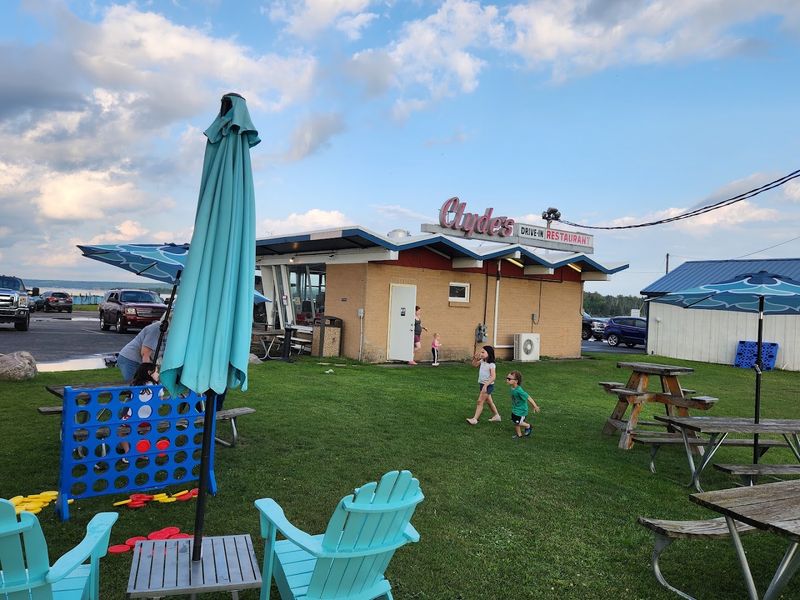
Clyde’s also gives that format options. There are picnic tables outside for anyone who wants open air and a better view, plus a very small interior area for those who prefer to eat inside.
The limited indoor seating is almost part of the point, because it quietly reinforces that this place was built first for the lot, the cars, and the social life that happens between road and restaurant.
Even practical details feed into the distinction. This is not the kind of drive-in where novelty replaces usefulness.
Carhop service is paired with counter service, the flow remains straightforward, and the system still works as an efficient way to feed locals, road trippers, and hungry day visitors. Plenty of restaurants imitate the mood of a drive-in.
Much fewer continue to function like one.
The Burger That Built the Reputation
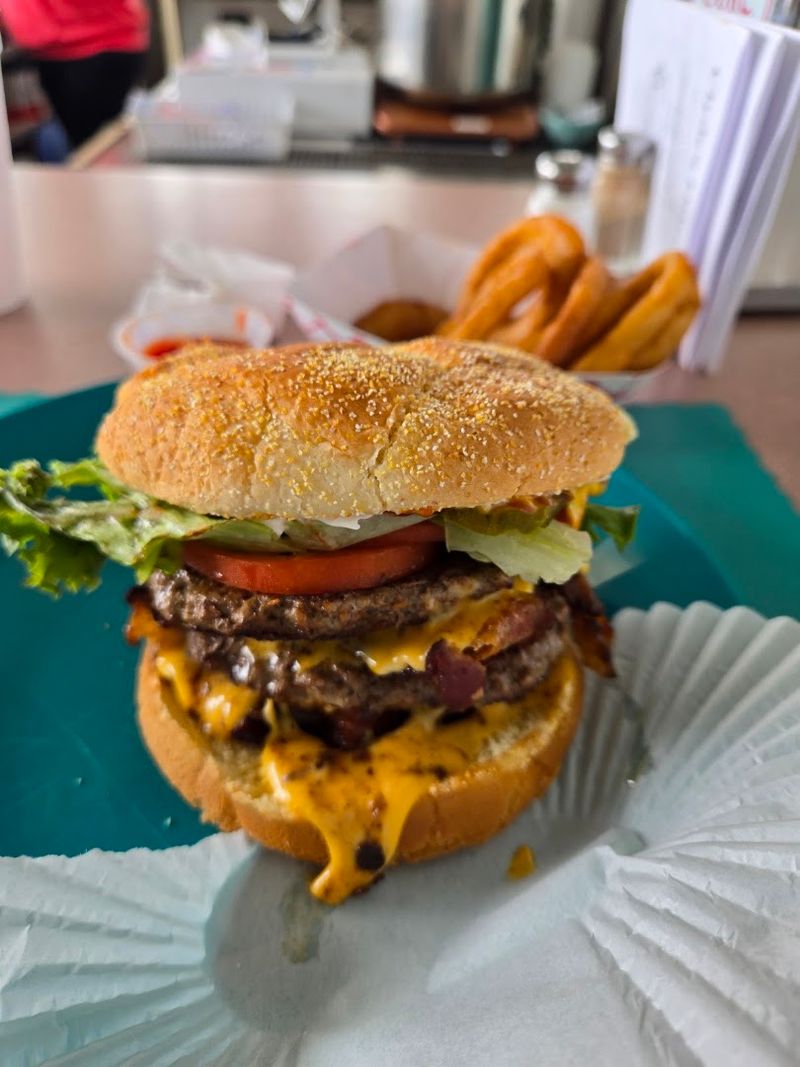
Clyde’s reputation is tied tightly to burgers, and that focus keeps the menu grounded in the kind of food that suits a carhop drive-in best. There are baskets, sandwiches, fish, shakes, and other familiar standards, but the burger remains the centerpiece because it matches both the setting and the expectations built by decades of roadside eating in the Upper Peninsula.
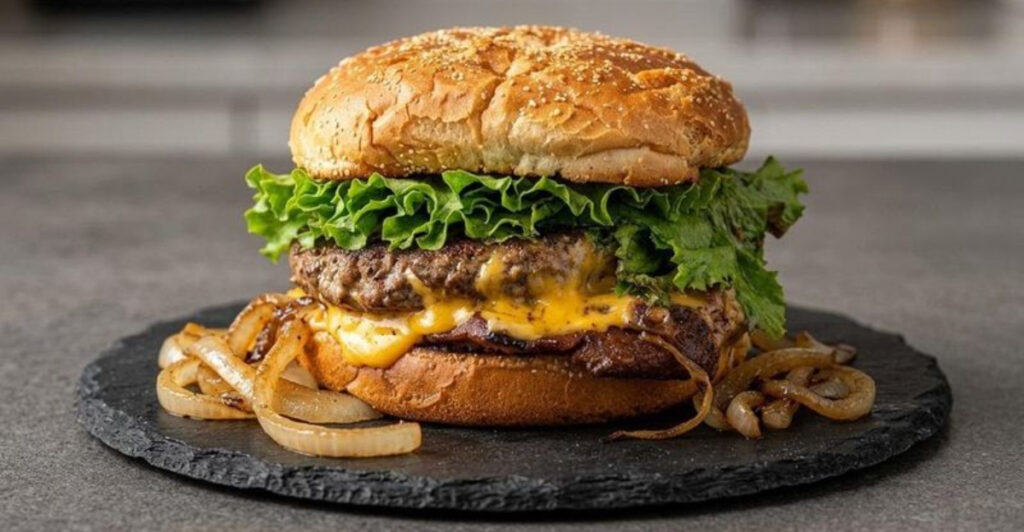
One item towers above the rest in name recognition: the Big C. It is the kind of oversized signature burger that gives a place its own mythology, partly because of scale and partly because of the way it turns an ordinary order into an event.
At Clyde’s, that signature is not isolated from the rest of the menu. It works because the surrounding choices still read as solid, straightforward drive-in food.
The menu’s burger culture also includes an olive burger, a regional favorite that fits Michigan especially well. That matters because Clyde’s is not trying to serve a generic national version of Americana.
It folds local taste into the classic drive-in template, giving the restaurant a stronger geographic identity than places that simply stop at cheeseburgers and fries.
Details from longtime operation reinforce the point. Ownership responses have emphasized hand-pattied beef prepared in-house, and the overall menu structure suggests pride in fundamentals rather than trend chasing.
When a place becomes known for burgers over generations, the appeal usually comes from consistency, portion confidence, and the ability to make something familiar hit exactly as it should. Clyde’s has clearly built its standing on that combination.
Small Details That Make Clyde’s More Than a Burger Stop
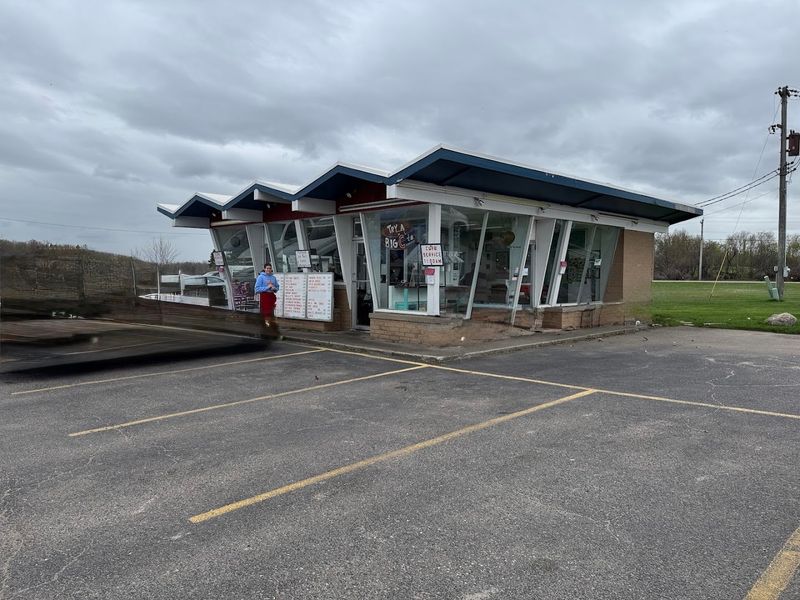
Look past the headline burgers and Clyde’s reveals a fuller roadside personality. Shakes, malts, onion rings, fries, chili, cheese curds, cod, and walleye baskets widen the appeal without diluting the drive-in identity.
That menu breadth matters because it lets the place work equally well as a quick burger mission, a family stop, or a casual dinner when different cravings collide in the same car.
The layout contributes just as much as the menu. Outdoor picnic tables give diners a way to step out and linger, while the compact indoor area keeps the operation from pretending to be something larger or more polished than it is.
Clyde’s remains most convincing when used exactly as intended: pulling in, ordering, waiting with a little anticipation, and eating close to the parking lot rhythm.
Then there is the setting itself. This stretch of Sault Ste.
Marie has enough river presence that a meal can come with moving scenery, including freighters when timing lines up. That is not a decorative extra.
In a place shaped by shipping lanes, cross-border movement, and Great Lakes weather, the view makes Clyde’s feel tied to its location in a practical, unmistakable way.
Even quirks add texture. The restaurant has noted that traditional window trays still exist but are no longer used because aggressive seagulls make them impractical, which says more about the site than a polished marketing line ever could.
It is a funny, specific detail, but also a useful one. Clyde’s is not frozen in the past.
It is an old drive-in constantly negotiating the realities of where it actually stands.
A Family Story Still Running Through the Place
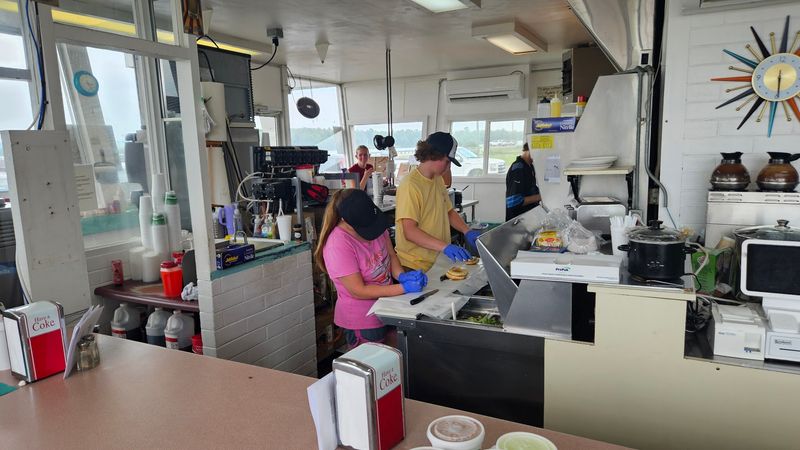
Clyde’s carries the kind of history that matters most when it remains visible in the present tense. The restaurant dates back to 1949, and that longevity would mean much less if the place now operated as a detached brand or a hollow throwback.
Instead, the local story still appears in the way staff interact, how the business speaks about its food, and how the building continues to function as a daily fixture.
That family continuity surfaces in unusually direct ways. Diners have described conversations with relatives connected to the business, including a son-in-law speaking proudly about the restaurant, the products, and the staff.
Those moments suggest a place where ownership identity has not disappeared behind anonymous operations. It does not turn the meal into a history lecture, but it does give the restaurant a stronger sense of stewardship.
The house voice reinforces that impression. Responses from the business mention its 1962 building and even identify the Googie architectural style, which shows attention not just to selling burgers but to preserving the character of the site itself.
Other responses defend details like hand-pattied beef with the calm confidence of people who know exactly how their product is made and why regulars care.
That combination shapes the tone of the whole experience. Clyde’s reads less like a concept revived for nostalgia-minded travelers and more like a working institution that has adapted without scrubbing away its roots.
In practical terms, that means the service remains friendly rather than scripted, the history feels attached to actual people, and the restaurant stands as part of Sault Ste. Marie’s ongoing local life rather than an isolated roadside curiosity.
How to Time a Great Stop in Michigan’s Upper Peninsula
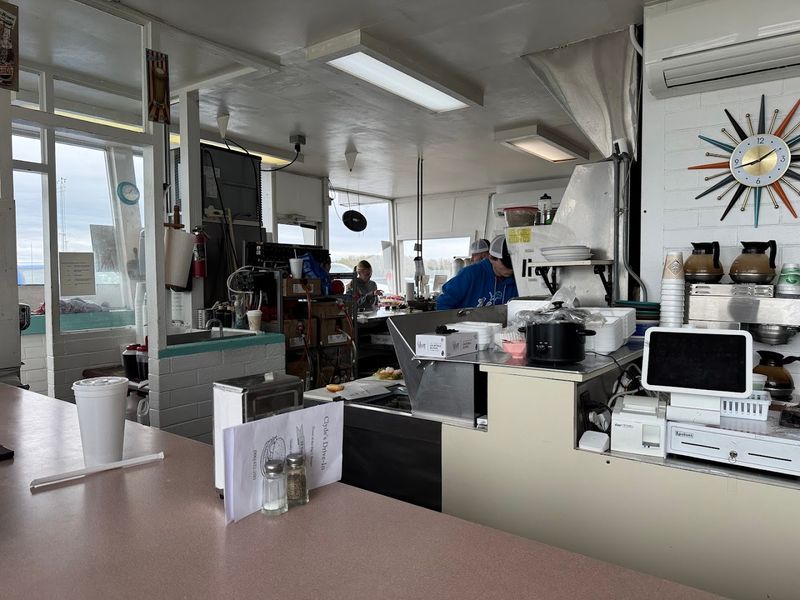
Clyde’s works best when approached as part of a larger Upper Peninsula rhythm rather than as a random meal squeezed between errands. Its 11 AM to 8 PM operating window on most open days makes it especially suited to lunch, early dinner, or that sweet spot in late afternoon when a drive along the river starts turning into hunger.
Tuesday closures are worth noting so the stop does not become an accidental near miss.
Timing also matters because this is an active local favorite, not an empty nostalgia set waiting for tourists to discover it. Busy periods can bring a wait, especially when the lot fills and made-to-order food starts stacking up.
That is not necessarily a drawback if the expectation is set correctly. Clyde’s is the kind of place where a few extra minutes can be part of the pace, particularly when the setting itself gives the stop some visual interest.
For the strongest version of the experience, eating on site beats rushing off with takeout. Staying in the car preserves the classic drive-in structure, while the picnic tables offer a more open view and a little breathing room.
Those choices allow the place to reveal its full personality, including the movement of servers, the sound of nearby traffic, and the occasional bonus of freighter traffic out on the water.
A little practical awareness helps too. Clyde’s has been described as cash only, so planning ahead is smart.
The interior seating is very limited, which makes it unwise to count on grabbing a roomy indoor table at peak times. Go with enough time to settle in, enough appetite for a serious burger, and enough flexibility to enjoy the lot as part of the destination.
Why This Riverside Drive-In Still Matters
Plenty of old restaurants survive because people admire the idea of them. Clyde’s stands out because the idea and the function still line up.
This is not merely a building that looks the part. It continues to operate as a true carhop drive-in, serving a community, handling road-trip traffic, and delivering a type of meal experience that has become surprisingly rare in modern American dining.
The setting on Riverside Drive sharpens that distinction. Sault Ste.
Marie already carries a strong sense of movement, with water, shipping, and border geography shaping daily life. Clyde’s fits that environment perfectly.
A drive-in belongs in a place built around arrivals, departures, waiting, watching, and eating well before getting back on the road.
There is also value in the restaurant’s refusal to overcomplicate itself. The menu stays rooted in recognizable favorites, the service model remains practical, and the building’s odd little charisma is allowed to do its work without polish-heavy reinvention.
Even the imperfections associated with a busy seasonal favorite make sense within the larger picture. Clyde’s reads as a place still being used hard, not one preserved under glass.
That is why it resonates beyond simple nostalgia. In an era when many roadside institutions have been flattened into interchangeable convenience, Clyde’s still offers shape, local character, and a very specific way to eat.
You pull in, the place comes to you, and for a while the car becomes your booth in one of Michigan’s most distinctive surviving drive-in scenes. Few restaurants can deliver that kind of experience without pretending. Clyde’s still does.
Share this story