
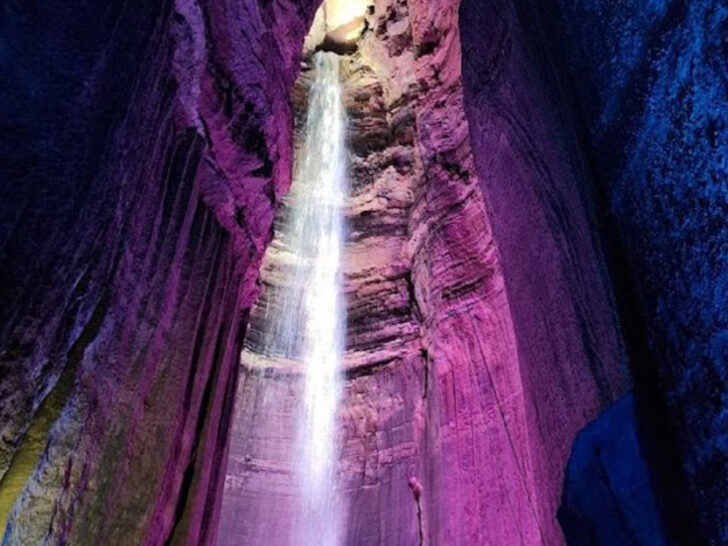
Tennessee has no shortage of pretty places, but Ruby Falls pulls off something most attractions can’t. It hides the main event inside Lookout Mountain.
In Chattanooga, visitors step into a glass-front elevator, drop 260 feet underground, and follow a cave trail to a waterfall thundering inside the mountain itself. That alone would be enough to make it memorable.
But the place has range. There’s the strange, cool air of the cave, the winding stone passages, the wild backstory of its discovery, and the sweeping views waiting above ground once you reemerge.
If you like your Tennessee travel with a little drama, a little history, and a setting that feels almost made up, this one earns the hype.
The Tennessee waterfall hidden deep inside Lookout Mountain
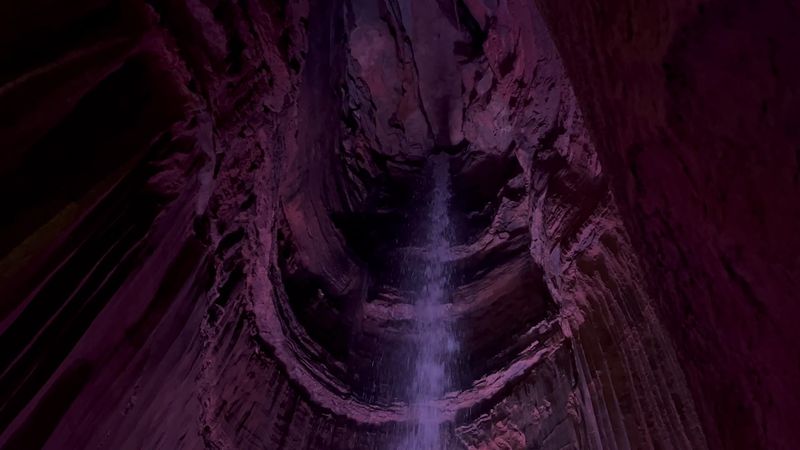
Most waterfalls in Tennessee ask for hiking boots, a trail map, and maybe a bit of patience. Ruby Falls takes a different approach.
You ride into the mountain. The experience starts on Lookout Mountain in Chattanooga, where guests descend by elevator before setting off on a guided cave walk.
The waterfall itself is tucked deep inside the mountain, far from daylight and far from the usual scenic-roadside formula. That underground setting is what makes the place so unforgettable.
You are not just looking at a waterfall. You are standing in a cavern, surrounded by stone, listening to water crash through a space that feels older than memory.
Ruby Falls also has the kind of location that makes Tennessee geography feel extra dramatic. Lookout Mountain already looms large in the Chattanooga area, and this attraction uses that landscape in the best possible way.
Above ground, it is all mountain air and broad views. Below ground, it is cool, dim, echoing, and wonderfully weird.
That contrast is part of the magic. You get the mountain twice, first from the inside and then again from the top.
Why Ruby Falls feels unlike any other scenic stop in the state
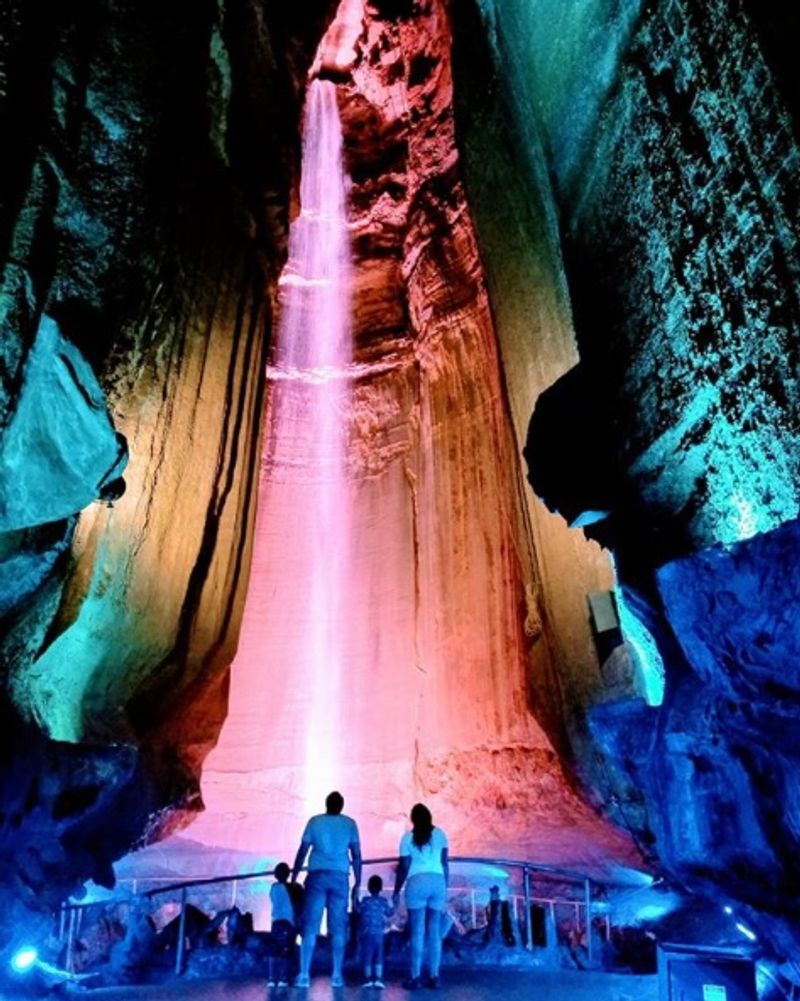
Plenty of scenic spots are beautiful. Very few are this theatrical without feeling gimmicky.
Here, the buildup is half the fun. You leave the daylight behind, glide down through the mountain, and move through narrow passages and towering cave formations before the waterfall finally appears.
That slow reveal matters. It turns the waterfall into an event instead of a quick photo stop.
By the time you hear the rushing water, you are already fully in the mood for something dramatic. The cave itself helps do the heavy lifting.
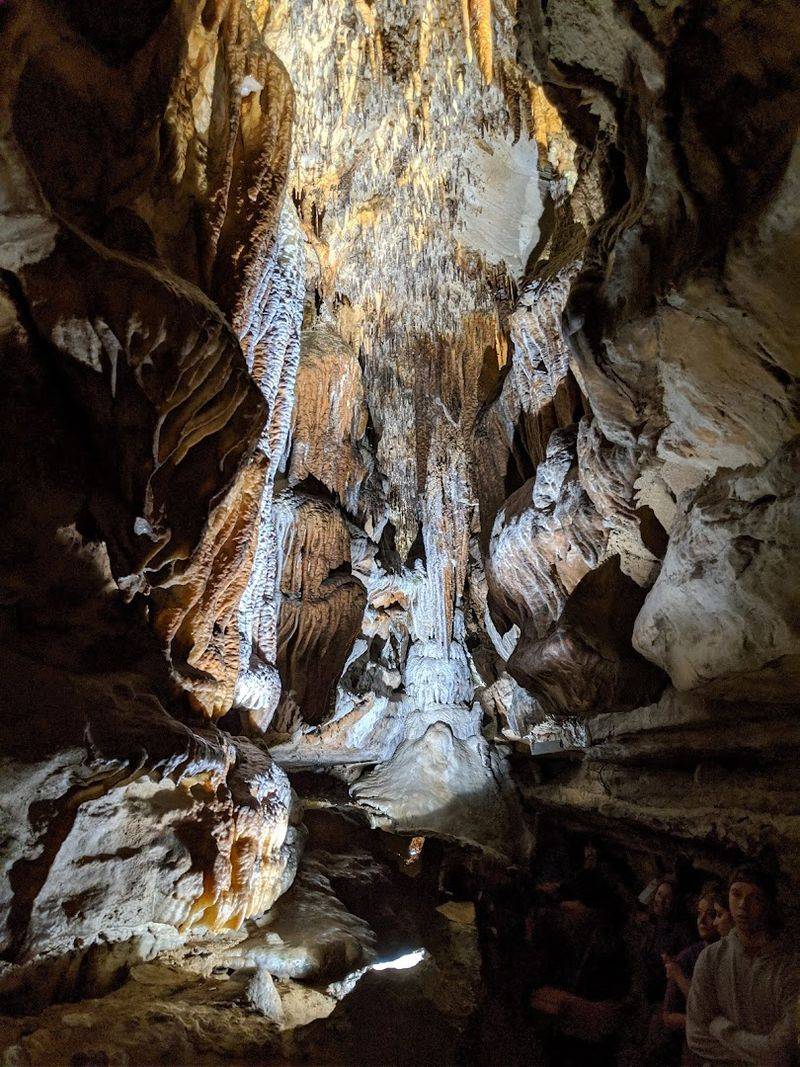
The air feels cool and crisp even when Tennessee is being aggressively Tennessee outside. The trail keeps the momentum going, with underground formations and winding passages that make the place feel active rather than frozen in time.
That combination is hard to beat. You get geology, atmosphere, and a waterfall hidden where no casual passerby would ever expect it.
Tennessee has plenty of beautiful places. This one feels like a secret with lighting.
The surprising story behind this underground Tennessee landmark
The backstory is almost as good as the waterfall itself. Ruby Falls was discovered by Leo Lambert in 1928 during an exploration effort inside Lookout Mountain, and the story has just the right amount of old-school daring.
He squeezed through a narrow opening, pushed deeper into the cave system, and eventually found the waterfall hidden in the dark. Then he named it after his wife, Ruby, which is either incredibly romantic or extremely efficient branding depending on your mood.
The public attraction followed soon after, and that history still gives the place extra personality. This is not some brand-new stop that appeared after a marketing brainstorm.
It has roots, a real discovery story, and nearly a century of Tennessee tourism history behind it. Even the castle above ground adds to the mood, giving the whole place a slightly eccentric charm that suits it perfectly.
So when you visit, you are not just seeing a natural wonder. You are stepping into a place that has been impressing people for generations and still knows how to make an entrance.
What it is like to ride an elevator into the mountain
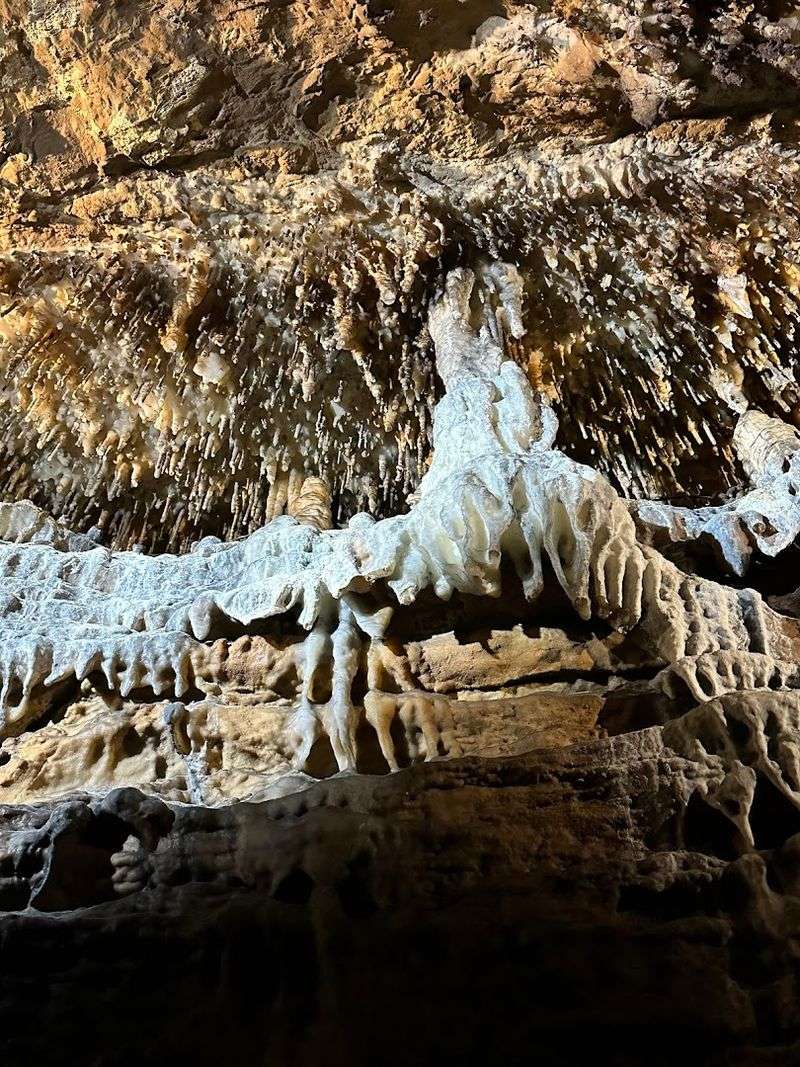
This is the moment when the whole outing starts to feel slightly unreal. You step into the elevator, the doors close, and suddenly you are dropping into solid rock instead of heading up to an office or down to a parking garage.
It is quick, smooth, and just dramatic enough to make everyone pay attention. Even people who walked in acting casual usually get a little wide-eyed here.
It is not every day you take an elevator ride to a waterfall. Once you get out, the tone shifts immediately.
The air cools down. The light changes.
Sound gets softer and stranger. The cave walk begins, and it does not feel anything like a museum queue or a paved overlook path.
The space narrows in places, opens up in others, and keeps reminding you that this is a mountain interior, not a staged set. That matters.
The elevator might be the detail everyone remembers first, but it works because what comes after actually delivers. There is something undeniably fun about descending into a mountain before a sightseeing experience.
It adds suspense, gives the outing real texture, and makes the return to daylight feel like part of the story too.
The cave walk that leads to one unforgettable waterfall
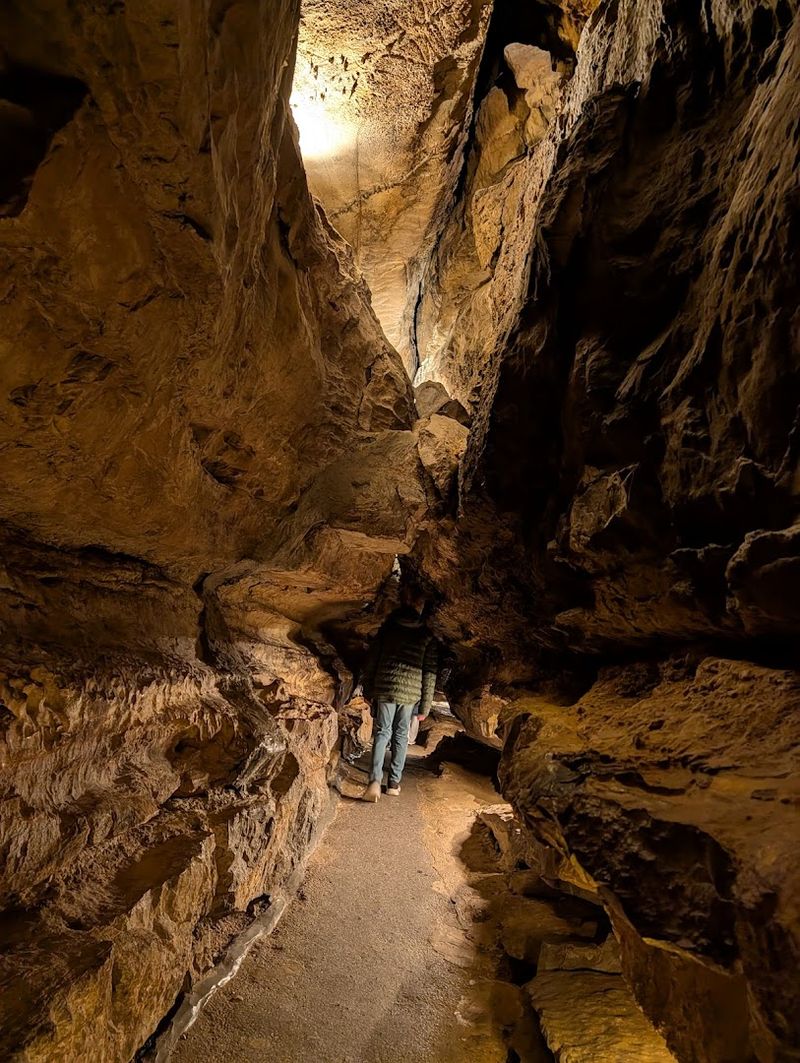
Getting to the waterfall is not an inconvenience. It is the point.
The guided cave walk builds anticipation the smart way, giving you time to settle into the underground world before the main attraction shows up. Along the trail, you pass rock formations, narrow corridors, and larger cavern spaces that keep the route from feeling repetitive.
Some sections feel close and winding. Others open up enough to make you stop and look around for a second.
That changing rhythm is part of what makes the walk work so well. And then, finally, the waterfall.
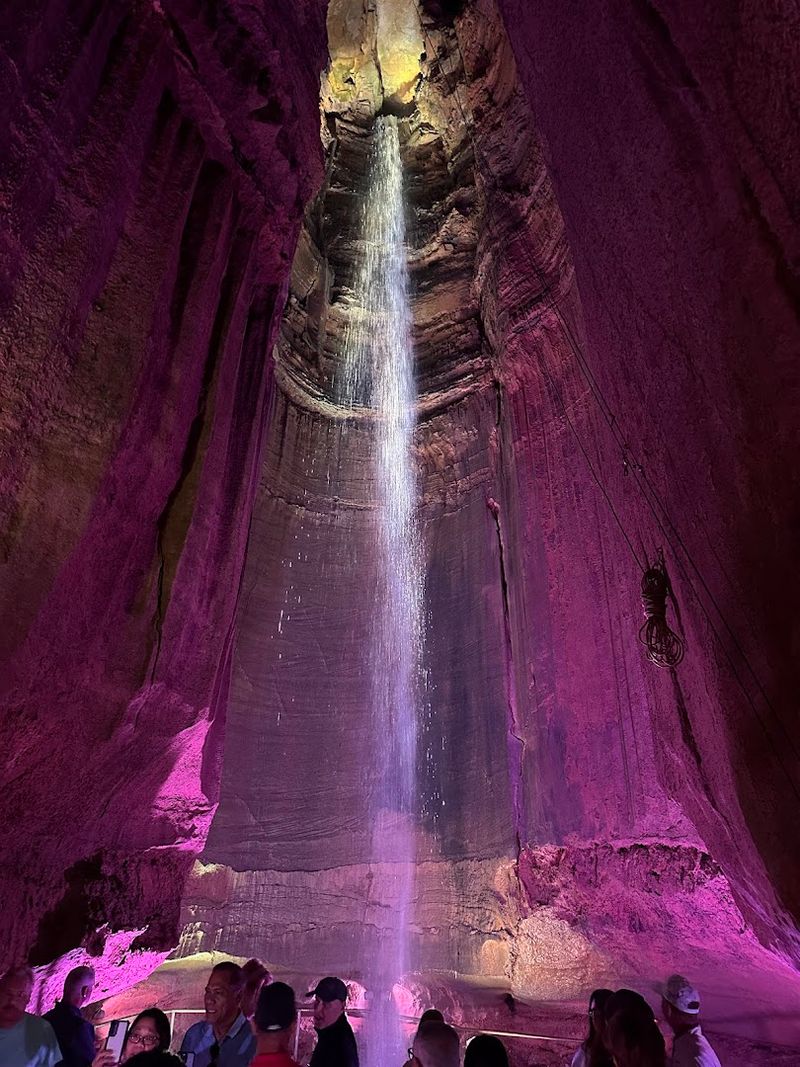
After the dim passageways and steady buildup, the reveal lands exactly the way you want it to. Water pours through the cavern in a setting that feels half natural wonder, half fever dream.
The sound bounces off the walls, the air stays cool, and the whole chamber manages to feel intimate and enormous at the same time. What really seals the deal is the pacing.
Ruby Falls does not hand you the payoff in the first few minutes. It makes you work for it just enough, and that is exactly why the waterfall hits so hard when you finally see it.
Why Ruby Falls belongs on every Chattanooga travel list
Even in a city with strong scenery, this place stands out. Chattanooga already has a lot going for it.
The river, the ridgelines, the historic sites, and the easy access to outdoor spaces give the area a built-in advantage. Lookout Mountain alone pulls plenty of attention thanks to its views, trails, and deep sense of place.
Ruby Falls adds something totally different to that mix. It is not trying to compete with the scenery outside.
It gives you another version of the mountain altogether. That makes it especially useful on a Chattanooga itinerary.
You can pair it with overlooks, historic stops, or a day exploring the mountain and still feel like you did something distinct rather than repetitive. It is also one of those rare attractions that works for a wide range of travelers.
Families, road-trippers, geology nerds, and people who just want to see something genuinely unusual can all walk away impressed. Some places make travel lists because they are convenient.
Ruby Falls earns its spot because there really is nothing ordinary about seeing a waterfall inside a mountain and then heading back out into the Tennessee sunshine.
What to know before planning a visit to Ruby Falls
A little planning goes a long way here. First, this is the kind of place where advance tickets are a very good idea, especially if you are visiting during a busy stretch.
The experience runs on timed entry, so winging it is not the strongest strategy. Second, dress for the cave, not just the parking lot.
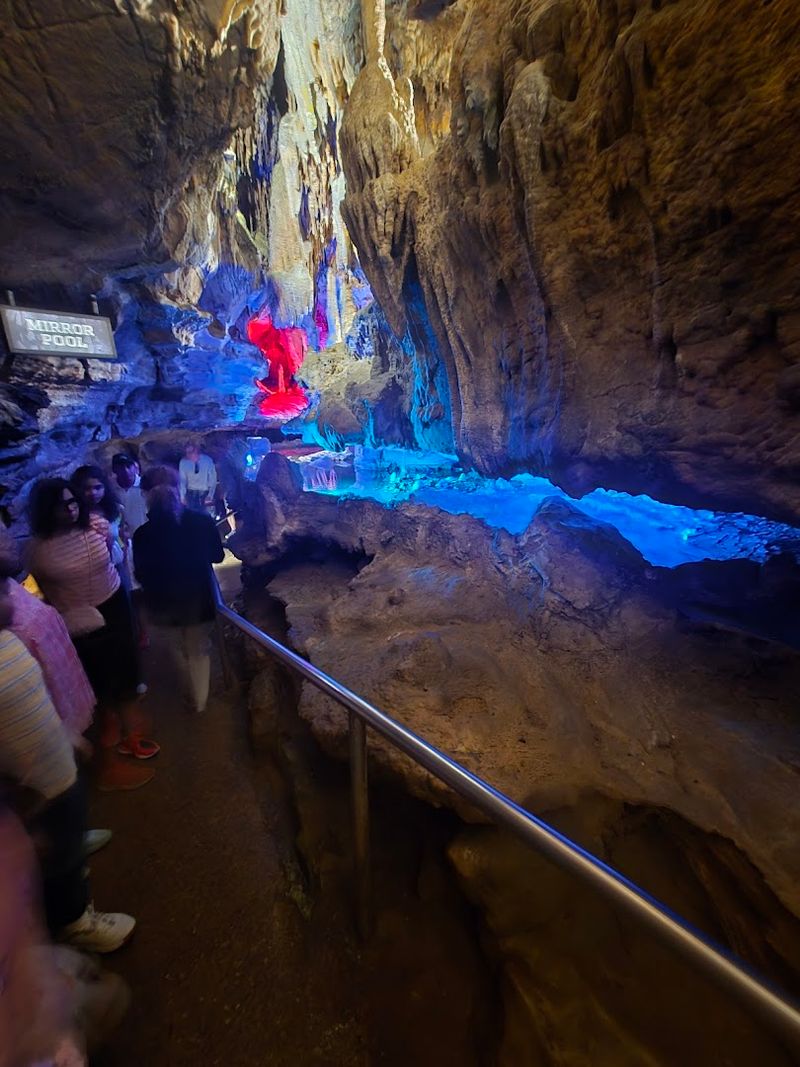
Underground, the temperature stays cool year-round, which feels fantastic in the middle of summer and noticeably brisk if you showed up dressed for a hot Tennessee afternoon. Comfortable shoes are the move too, because the cave walk is not a sit-back-and-coast kind of experience.
The pathways can be uneven, and this is still very much a real cave, not a polished indoor attraction pretending to be rugged. It also helps to think beyond the waterfall itself.
The overlooks and mountain setting above ground deserve some of your time too. That is really the best way to do Ruby Falls.
Do not treat it like a five-minute stop. Give yourself room to enjoy the descent, the cave, the waterfall, and the views afterward so the whole outing feels complete.
The views above ground make the experience even better
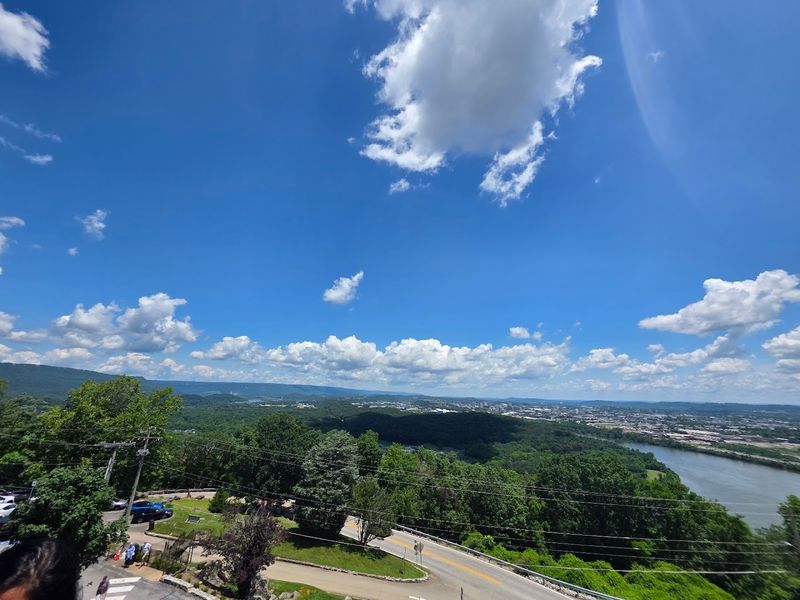
One of the smartest things about Ruby Falls is that it does not end underground. After the cave, the views above ground give you a completely different kind of payoff.
You come back into the daylight, look out across Chattanooga and the surrounding landscape, and suddenly the experience shifts from enclosed and echoing to wide-open and expansive. That change in mood is part of what makes the visit stick with people.
Underground, everything is cool stone, shadows, and rushing water. Up top, it is broad vistas, mountain air, and that familiar Tennessee feeling that makes you want to linger longer than you planned.
The contrast is doing a lot of work here, and it works beautifully. You are not just checking off one unusual attraction.
You are getting two sides of the same mountain in one stop, and they balance each other perfectly. Plenty of places have a strong headline attraction and not much else around it.
Ruby Falls understands the full outing. The waterfall gets your attention, but the mountain views are what make the whole visit feel bigger, richer, and much more memorable.