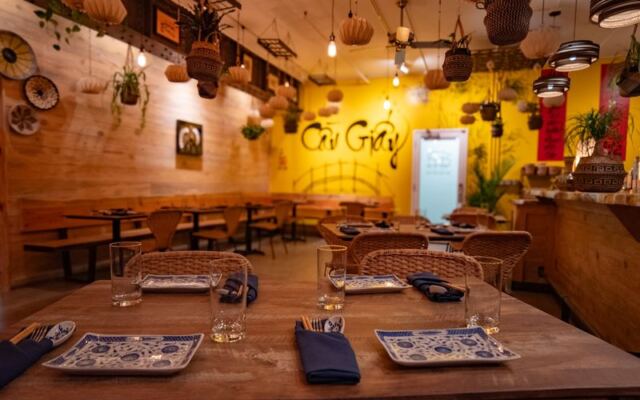
Most noodle soups in America start with a dried brick of rice noodles pulled from a box. One Portland kitchen skips that shortcut and leans into the slower, older way of doing things. The result is a dining room that fills up fast, a line that often reaches the door, and a menu built around the cooking of Northern Vietnam, a style that is surprisingly hard to find in the United States.
Families who left Hanoi decades ago come here to test it against their memories, and curious locals come to learn what bun cha even is. The restaurant sits on a quiet block that barely looks commercial, which makes finding it part of the fun. Keep reading to learn where it is, what makes the noodles special, when to go, and how to avoid the longest wait.
A Hanoi Corner on a Quiet Portland Block
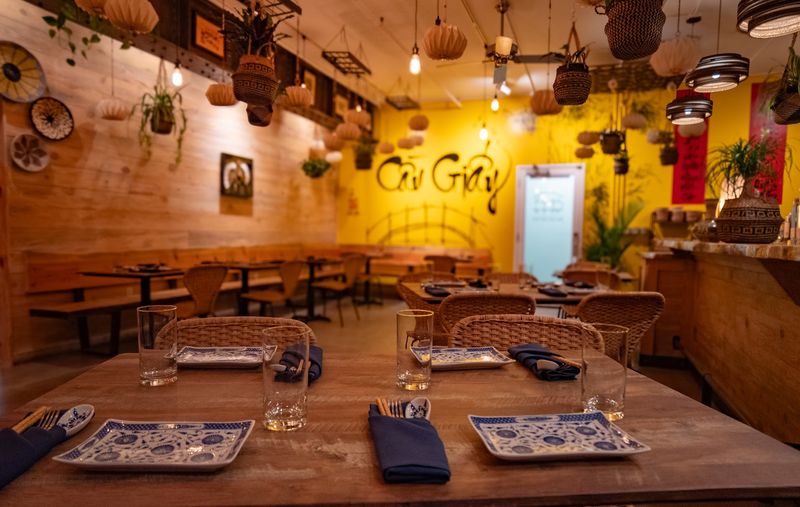
Plenty of people walk right past it the first time. The Paper Bridge, also known as Bún Chả Cầu Giấy, sits at 828 SE Ash St, Portland, OR 97214, in the city’s Southeast side.
The block does not look like a dining destination at all. There is no flashy strip of storefronts, so first-timers sometimes slow down and double-check the address.
That low-key setting is part of its charm. Once inside, the space shifts gears completely and becomes a tribute to the streets of northern Vietnam.
The restaurant specializes in Northern Vietnamese cooking, which is a different branch of the family tree than the Southern-style pho shops many Oregonians grew up with. Dishes from Hanoi, Nam Dinh, Hai Phong, and the mountain town of Sapa all show up on the menu.
For a state where beloved local spots come and go, it is refreshing to see an independent restaurant build something this specific. It is not trying to be everything to everyone.
It is trying to be one thing, done with care. And that one thing starts with the name on the sign.
The Story Behind a Paper Bridge
Names carry homework, and this one is worth looking up. Cầu Giấy translates to paper bridge, and it is the name of a district in Hanoi, the capital of Vietnam.
The Vietnamese half of the sign, Bún Chả Cầu Giấy, points straight at the restaurant’s mission. Bun cha is one of Hanoi’s signature dishes, and pairing it with a Hanoi place name tells diners exactly where the kitchen’s heart lives.
That focus matters because Northern Vietnamese food rarely gets its own spotlight in American cities. Most Vietnamese restaurants in the U.S. lean toward Southern styles, so a dedicated northern menu is a genuine rarity in Portland.
The menu itself leans into history too. Some sections come with background on where dishes originated, which turns ordering into a small geography lesson.
Not everyone loves that much reading before dinner. Some guests find the menu a bit overwhelming at first, so asking staff for guidance is a smart move.
Servers regularly walk tables through popular items and steer newcomers toward good first orders. Consider it a free tour guide with a side of noodles.
Fresh Noodles, the Northern Way
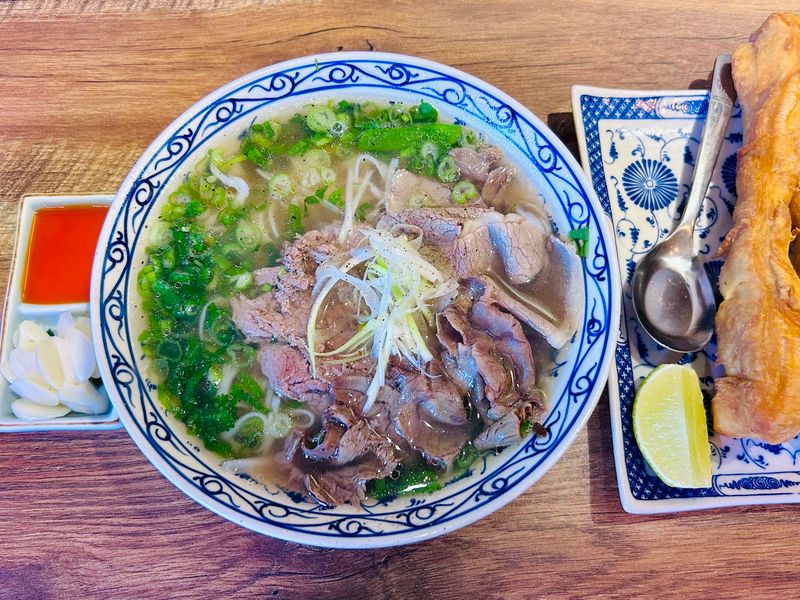
Here is the detail that gets noodle fans talking. The pho Nam Dinh at The Paper Bridge comes with fresh rice noodles instead of the dried kind.
That might sound like a small swap, but people who know Vietnamese food treat it as a big deal. Fresh noodles are the standard in much of northern Vietnam, and they are hard to come by in American restaurants.
Nam Dinh, a province south of Hanoi, is often credited as one of the birthplaces of pho. Serving a Nam Dinh style bowl in Portland is a nod to the dish’s roots.
The bowl arrives with a long fried dough stick called quẩy on the side, meant for dunking into the broth. Many first-timers have never seen pho served this way before.
Opinions on the broth do vary. Some diners call the pho a highlight with noodles that have real personality, while others with Hanoi roots feel it does not quite match what they remember back home.
That split is honest and worth knowing. Order it anyway, and decide for yourself which camp you land in.
Bun Cha, the Dish on the Sign
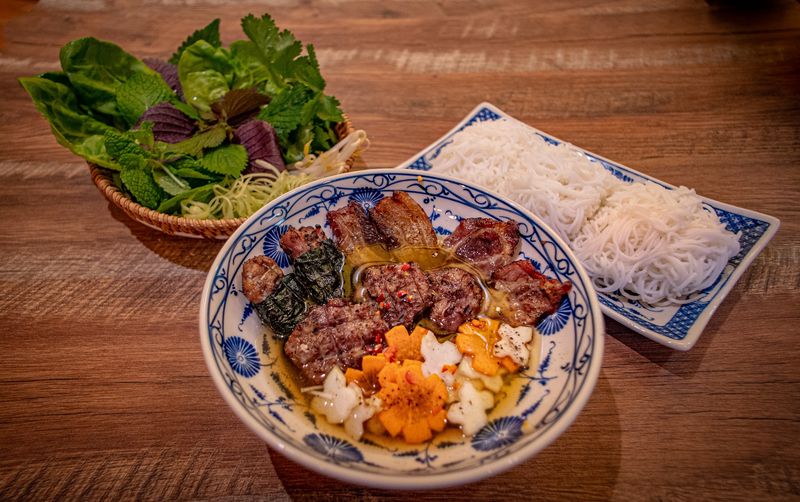
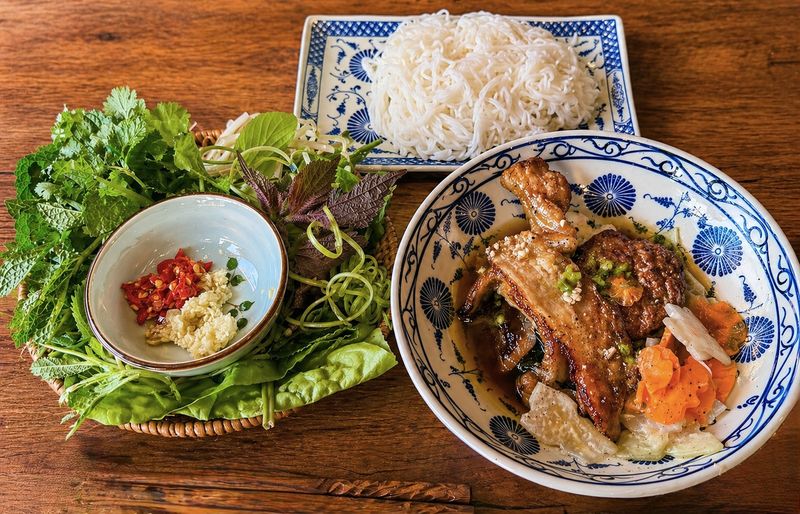
When a restaurant puts a dish in its own name, the pressure is on. Bun cha Ha Noi is the most talked-about item on the menu, and it is the one most people order first.
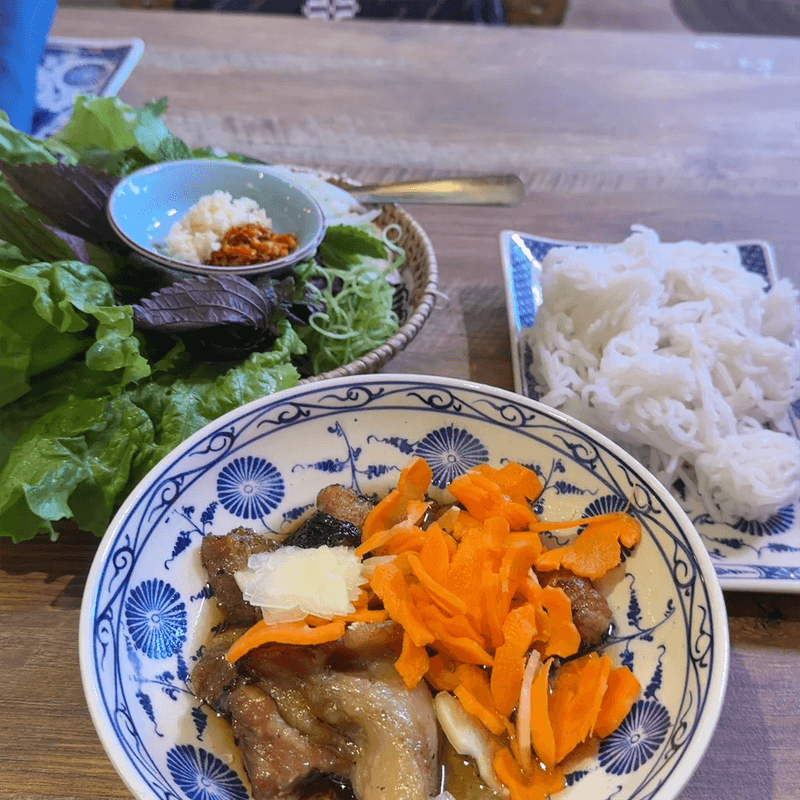
The setup is interactive. Grilled pork and pork patties arrive in a bowl of dipping broth, alongside rice noodles and a tray of herbs and vegetables.
From there, diners build their own bites. Noodles go into the broth, herbs get tucked in, and every forkful can turn out a little different.
Fans of the dish praise the marinated meat, the springy noodles, and a bright, balanced fish sauce. Some call it the star of the whole meal and say it should never be skipped.
A few guests feel the dipping sauce leans heavy on vinegar and fish sauce. Northern Vietnamese diners in particular can be picky about this dish, since the sauce is considered its soul.
There is also a fish version of bun cha for anyone who wants a twist. Either way, this is the bowl that explains the whole restaurant in a single order.
Puffed Pho and Other Noodle Surprises
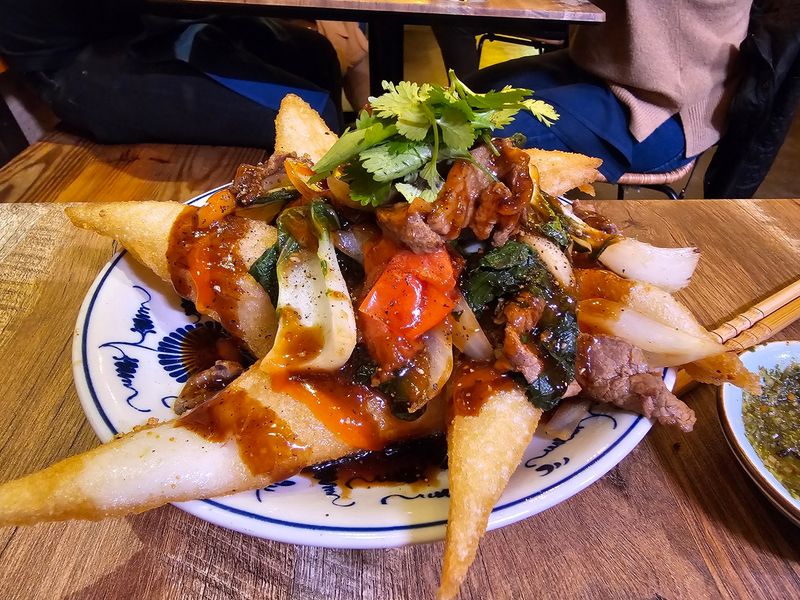
Pho does not always come in a bowl. One of the most memorable plates here is puffed pho, where squares of rice noodle sheets are fried until crisp outside and chewy inside.
The puffed pieces are topped with a stir-fry of beef, bok choy, and tomatoes in a sweet, spicy, and salty sauce. Staff often recommend it to first-timers, and many leave planning their return trip around it.
The noodle lineup keeps going from there. A duck and pork pho combines duck leg with pork belly, which is unusual even for seasoned pho fans.
There is also a deconstructed chicken pho that has been known to sell out early on busy nights. One Saturday evening around 6:30, only a handful of portions remained.
Mai Dich bún cá, a turmeric-tinted fish noodle soup from the outskirts of Hanoi, comes with fresh dill. Diners who have hunted for bún cá outside Vietnam are thrilled to find it here.
Not every bowl lands for every guest, and some find certain broths too mild. Still, the range of rice noodle dishes here is hard to match anywhere else in Oregon.
Skewers From the Mountains of Sapa
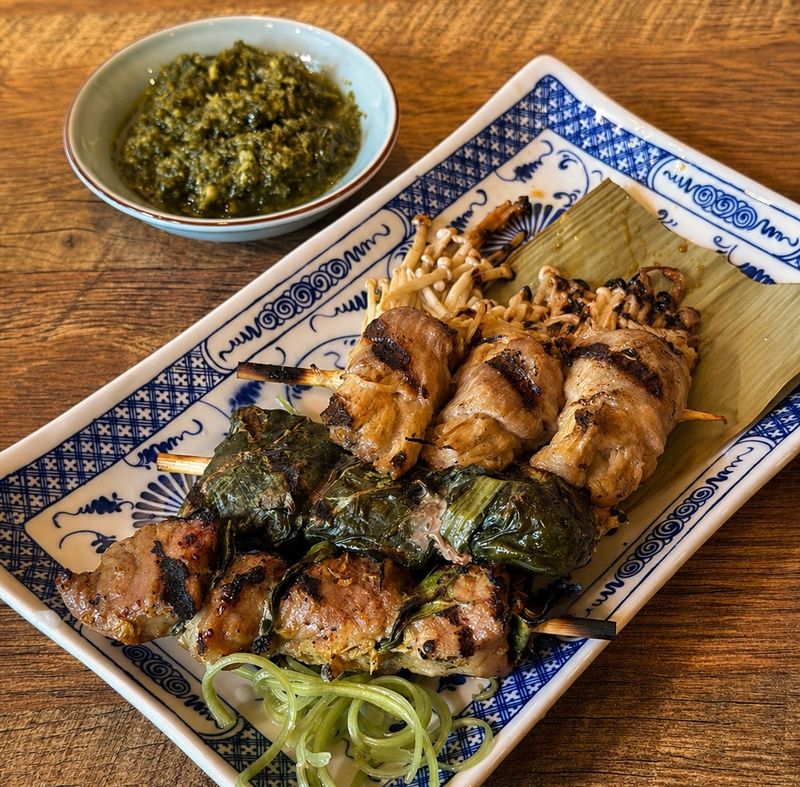
Sapa is a mountain town in far northern Vietnam, and its grilled skewers have made the trip to Southeast Portland. The Sapa-style skewers are among the most popular starters on the menu.
The assortment brings variety to the table. Options include pork with curry leaves, beef wrapped in leaf, and pork belly wrapped around enoki mushrooms.
The dipping sauce gets a lot of credit. Many diners say it ties the whole plate together, though at least one table found it far too salty for their taste.
Skewers work well as a group order. They are easy to share, and they give everyone something to snack on while the noodle dishes are on the way.
That last point is practical, too. Waits for main dishes can stretch on busy nights, so ordering a few small plates early keeps the table happy.
Think of the skewers as the opening act. They set the tone for a meal that tends to unfold slowly and generously.
Small Plates Worth the Detour
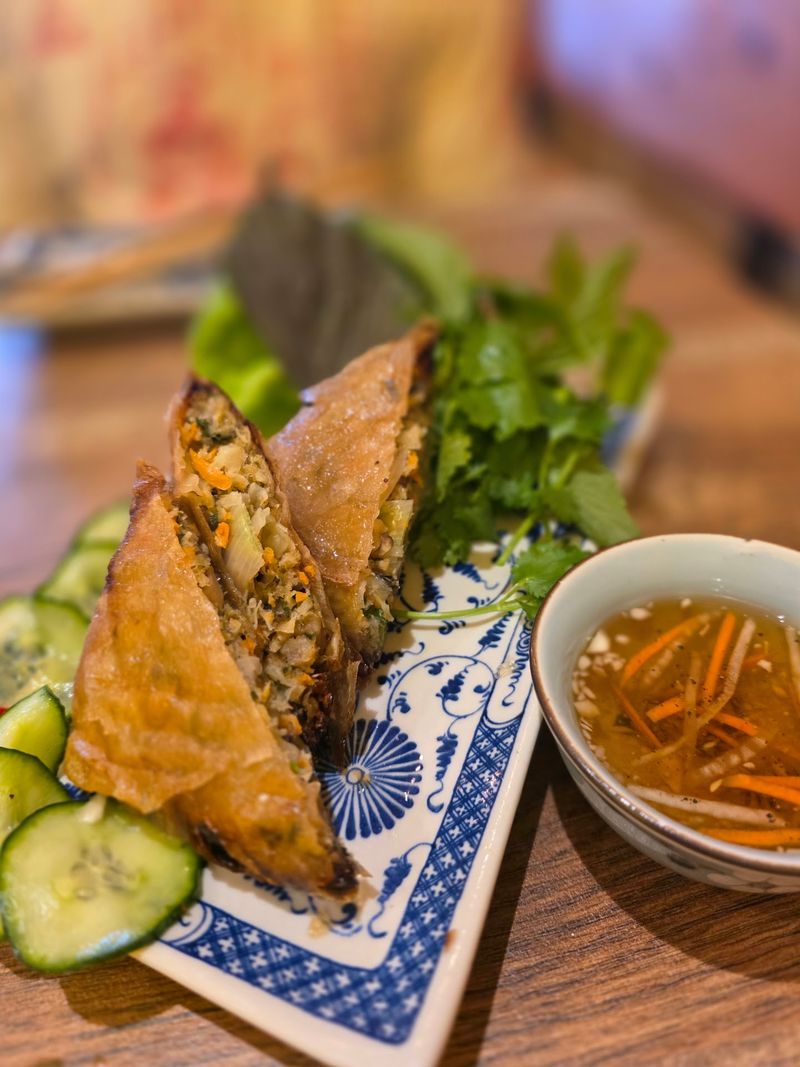
Some of the best moments here happen before the noodles even show up. The small and medium plate section is packed with northern favorites that reward sharing.
Crab spring rolls, known as nem cua be, are one of the most recommended starters. Sautéed morning glory, or rau muong, is a classic green dish that shows up on many tables.
Clams arrive in a peppery broth, often paired with the long fried dough stick for soaking it up. Fried stuffed rice cakes with a pork filling are another crowd favorite.
The stuffed rice balls also earn praise, even from guests who were lukewarm on other dishes. Fried pork cakes, oysters with scallions, and a duck noodle roll round out the options.
Monthly specials add another layer. Past specials have included pig ear salad and pork trotter, which reward diners who like trying something new.
A group of four can easily build a whole meal from this part of the menu. Mix, match, and pass plates around the table.
An Alleyway Built Indoors
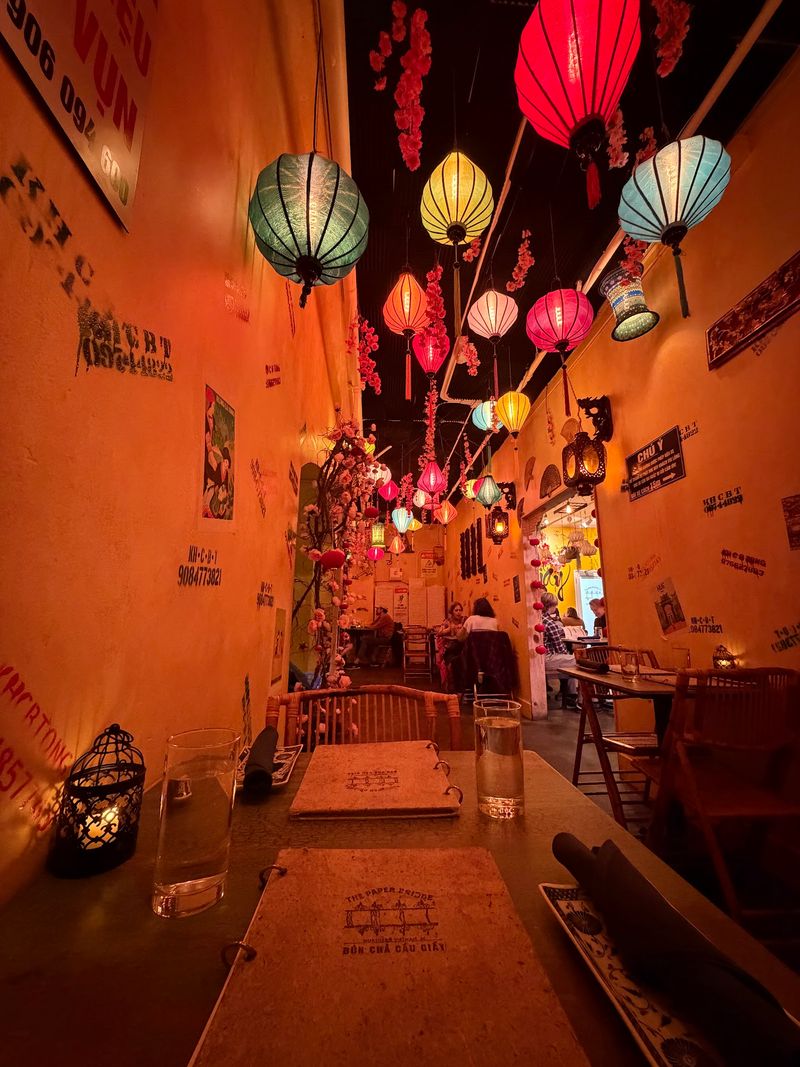
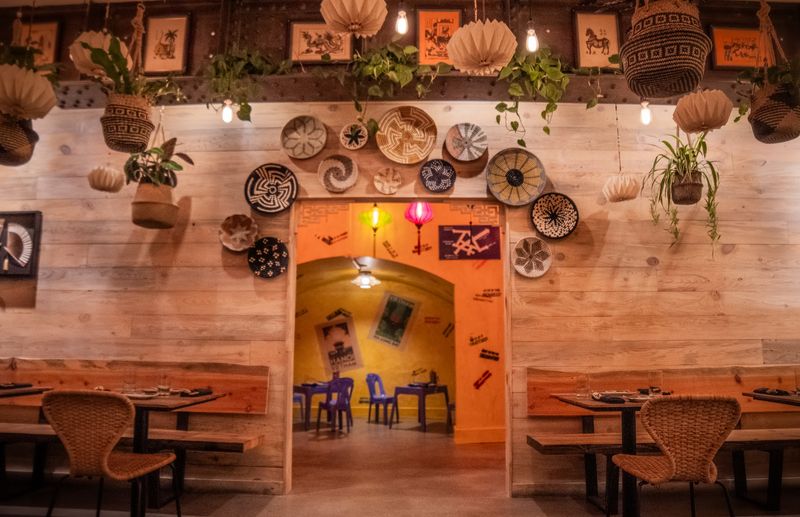
The dining room might be the biggest surprise of all. Inside, the space is built to resemble a Vietnamese alleyway and street corner.
Dozens of paper lanterns hang from the ceiling. Plants, posters, and small decorative details fill nearly every corner.
Guests often say they keep noticing something new each time they look up. It is clear a lot of thought went into the design, and it shows in every nook.
The effect is immersive without feeling like a theme park. It feels personal, as if the owners built a love letter to the streets they remember.
One small heads-up involves the furniture. The wooden chairs are not the sturdiest, and at least one guest spent dinner wondering about a squeaky seat.
That is a minor quibble in a room this detailed. Bring a phone with a charged battery, because the setting is very photo friendly.
Who Fits Best at These Tables
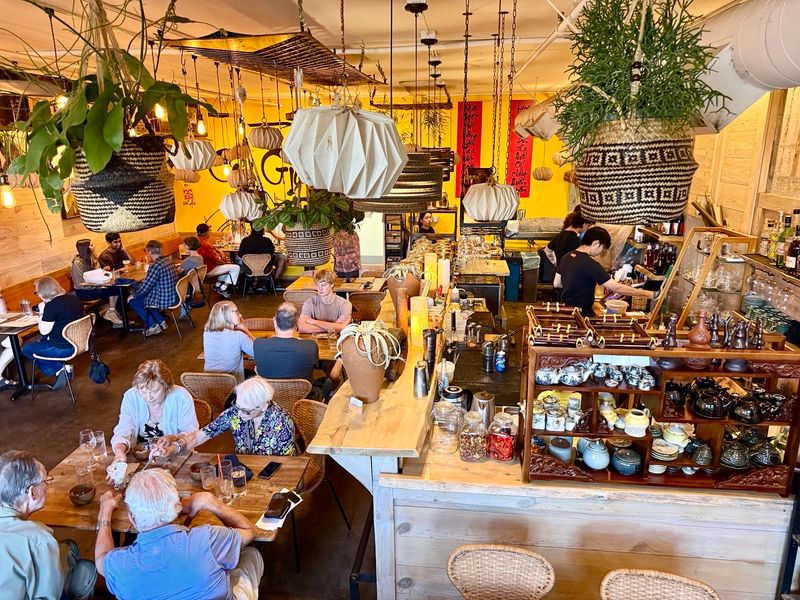
Groups tend to get the most out of a visit. With so many shareable plates, a table of four can sample far more than a solo diner.
Date nights work well here, too. The warm lighting and detailed decor have made it a pick for special occasions like early Valentine’s Day dinners.
Curious eaters who only know pho will find plenty to learn. Staff help explain dishes, and the menu doubles as a crash course in northern Vietnamese regions.
Diners with Vietnamese roots form another big part of the crowd. Southern Vietnamese families come to try northern cooking, and travelers who have been to Hanoi come to compare.
Those comparisons are not always glowing. Some guests with northern backgrounds feel certain flavors fall short of what they ate in Vietnam, while others say it took them right back.
Anyone in a hurry may want to plan differently. This is a sit-and-stay kind of meal, best enjoyed with time to spare.
The Line, the Wait, and the Reservation Trick
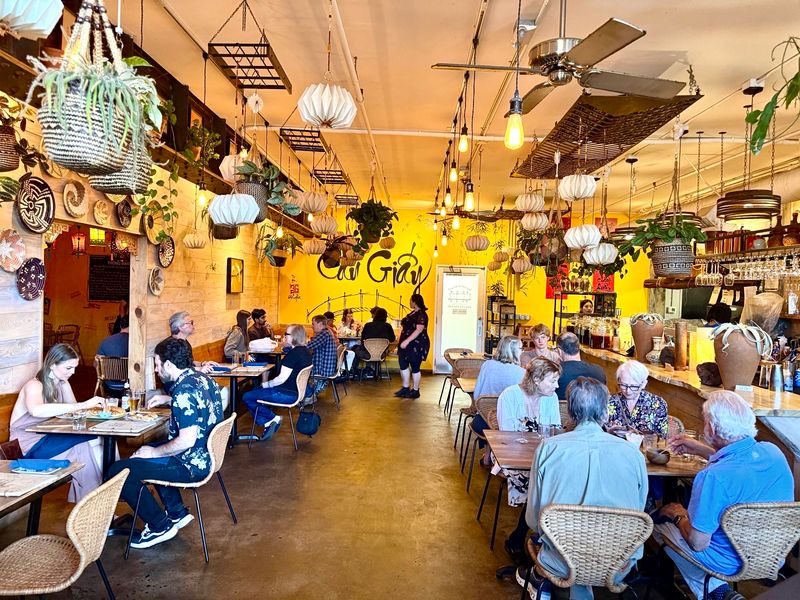
Popularity comes with a price, and here it is paid in minutes. The restaurant stays busy nearly all the time, and a line out the door is common.
Reservations are strongly recommended. Even with one, some guests have waited a while for a table, since reserved diners and walk-ins currently share the same check-in line.
Food can also take time once seated. Waits of 40 to 50 minutes for a main dish have happened on busy nights, especially on weekends.
Arriving right at opening is a smart move. Guests who showed up at 4 PM, when dinner service begins, have been seated even after a reservation mix-up.
Lunch can be packed too. A midday weekday visit still drew a full house, though the wait for a table was short.
The best strategy is simple. Book ahead, order small plates early, and settle in for a relaxed meal instead of a quick bite.
What a Bowl Costs in Southeast Portland
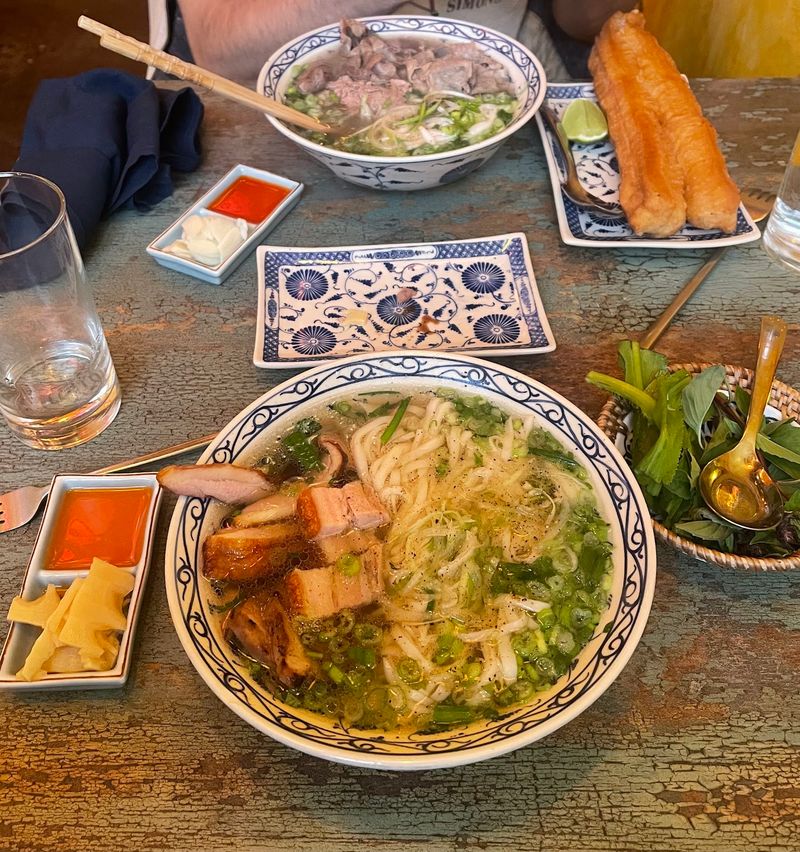
Oregon diners watch their budgets closely these days, so the numbers matter. A bowl of pho here runs about $24, and noodle dishes generally land above $20.
Drinks add up as well. Non-alcoholic options like a jasmine pineapple juice run around $10.
Opinions on value are split. Some guests feel portions, especially noodles, are small for the price, and extra herbs cost more.
Others see the bill as fair for a sit-down meal with this much care in the menu and design. Many leave stuffed after ordering a spread of shared plates.
For budget-minded groups, splitting several small plates with one or two noodle dishes is a sensible approach. It spreads the cost and the variety across the table.
This is not a cheap weeknight pho stop. It is better treated as a planned outing, the kind worth saving for.
Hours, Parking, and Planning Ahead
Timing a visit takes a little attention, because the schedule is split. The restaurant is open Thursday through Monday, with lunch from 10:30 AM to 2 PM and dinner from 4 to 9 PM.
Tuesdays and Wednesdays are closed. Plan around that before driving across town with an empty stomach.
Parking is street only. The surrounding block is quiet and residential in feel, so give yourself a few extra minutes to find a spot.
The gap between lunch and dinner matters too. Arriving at 2:30 PM means waiting outside until the 4 PM opening.
Reservations can be made ahead, and the restaurant’s website at thepaperbridgepdx.com is the best place to check current details. Double-check your reservation date, since mix-ups do happen.
A little planning goes a long way here. The reward is a seat in one of Portland’s most talked-about dining rooms.
A Local Spot Worth Keeping Around
Independent restaurants with a clear point of view are worth holding onto. The Paper Bridge has built something unusual in Oregon, a dining room devoted to Northern Vietnamese cooking with fresh rice noodles at its center.
It holds a 4.5 star standing across more than 500 opinions, and the crowds back that up. Still, it is not perfect, and it does not need to be.
Some bowls win people over completely, while others leave diners wanting more. Service is usually warm and helpful, though busy nights can feel rushed.
What stays consistent is the ambition. Dishes like pho Nam Dinh, bun cha, and bún cá are rarely found together anywhere in the state.
For Portlanders, it is a place to support and explore one plate at a time. For visitors, it is a reason to wander down a quiet Southeast block.
Go hungry, go patient, and go with friends. The noodles will do the rest.
Share this story