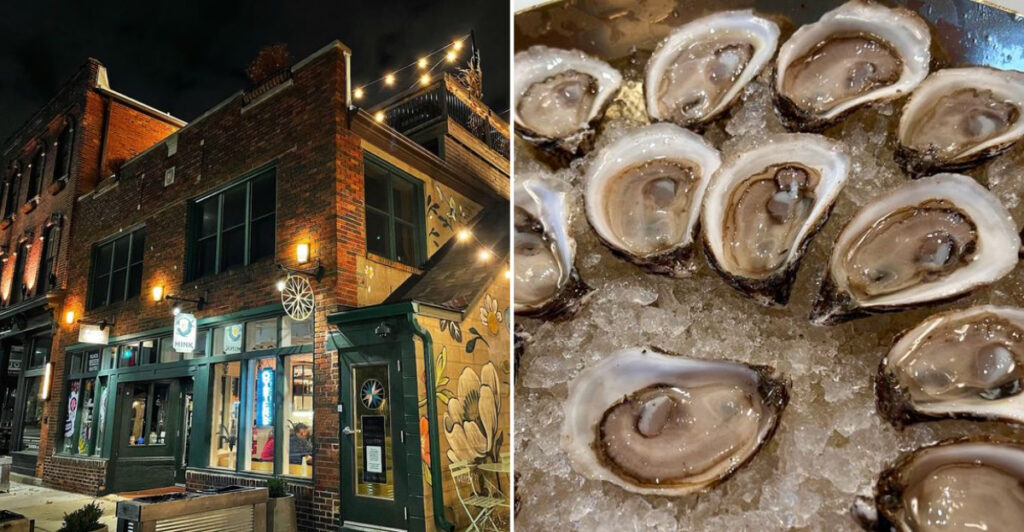
A restaurant does not need a big dining room to make a statewide impression. In a narrow corner of Detroit’s Corktown neighborhood, Mink Detroit has turned about 15 seats, a monthly changing menu, and a serious focus on seafood into one of Michigan’s most talked-about dining experiences.
The place feels intimate by design, with oysters, thoughtful small plates, and a kitchen that keeps giving people new reasons to pay attention. Diners make the trip from Grand Rapids, Ann Arbor, Traverse City, and beyond for a seat at this tiny seafood bar, and once the first plate lands, the drive starts to make perfect sense.
The Oysters That Started the Road Trips
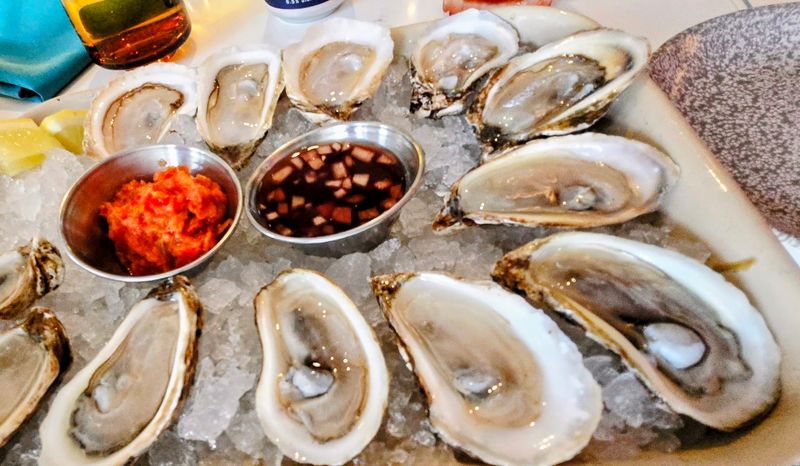
Fresh oysters have a short window of perfection, and Mink Detroit treats that window seriously. The selection rotates based on what is arriving at peak quality, which means the oysters on your plate tonight may be entirely different from what was served last Thursday.
That level of sourcing precision is rare, and it shows in every bite.
The shells arrive clean and cold, balanced on ice, with the liquor still pooled inside. There is no muddiness, no off-putting brine overload.
Each variety has its own distinct flavor profile, and the staff can walk you through exactly where each one was harvested and what sets it apart from the others on the menu.
Oyster selection at Mink spans a range of growing regions, giving the bar an almost educational quality without feeling pretentious. One visit might feature a sweet, buttery East Coast variety; the next could lean toward a bolder, more mineral-forward Pacific option.
Regulars have started planning their visits around what is in season rather than just picking a random date.
Sitting at the bar puts you right in front of the action. Watching the shucking happen a few feet away, ice chips scattering across the prep station while the shucker works quickly and cleanly, adds a layer of theater to the whole experience.
It is not performance for its own sake. The proximity just makes the freshness feel more immediate and real.
For anyone who has only ever eaten oysters at a chain restaurant or a crowded happy hour spot, Mink resets expectations completely. The sourcing, the rotation, and the sheer care involved in presenting each shell make these among the most respected oysters in Michigan.
Fifteen Seats, Zero Wasted Space
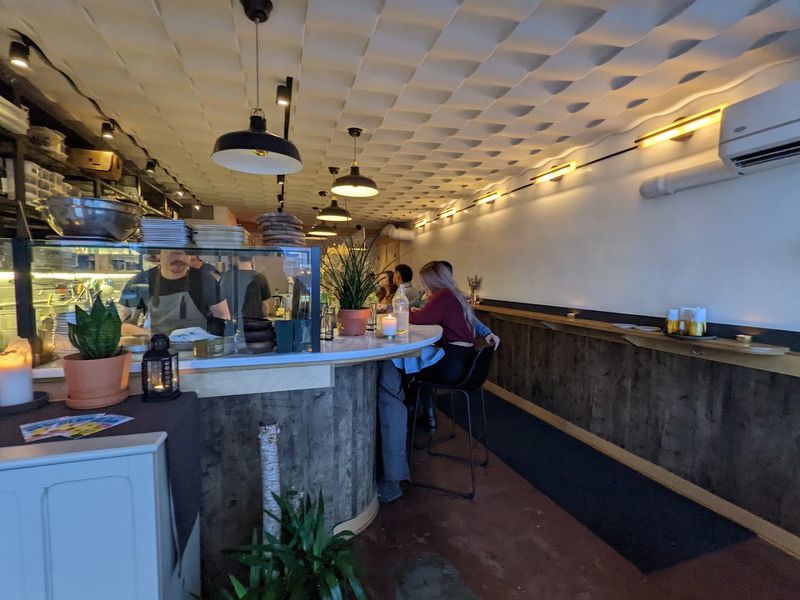
Walking through the door at Mink Detroit for the first time, the size of the space is the first thing that registers. Around 15 seats fill the room, split between the bar and a small number of tables.
There is no waiting lounge, no expansive dining floor, no overflow section. The restaurant is exactly as compact as it sounds, and that constraint shapes everything about how the evening unfolds.
Small spaces force intentionality. Every seat has been positioned so that diners can see the kitchen prep station behind the bar.
That openness is not accidental. It creates a direct connection between the people cooking and the people eating, which is unusual in a city where most kitchens stay hidden behind closed doors and pass-through windows.
The layout also changes how conversations happen. Because the room is so tight, the staff moves through it with practiced efficiency rather than speed.
There is no sense of being rushed or ignored. Servers cover short distances and return quickly, which keeps the pacing of each course feeling natural rather than mechanical.
Reservations fill up fast, and for good reason. With only 15 seats available per service window, availability is genuinely limited.
The restaurant operates Thursday through Sunday, opening at 5 PM, and the seating policy runs roughly 90 minutes per table. Planning ahead is not optional if you want a guaranteed spot inside.
Some guests have shown up right at opening to try their luck without a reservation, and the staff has occasionally found room on the patio for a short visit. That kind of flexibility, even in a packed house, reflects how the team thinks about hospitality.
The small footprint actually makes the experience feel more personal rather than more restricted.
A Tasting Menu Built Around Global Technique
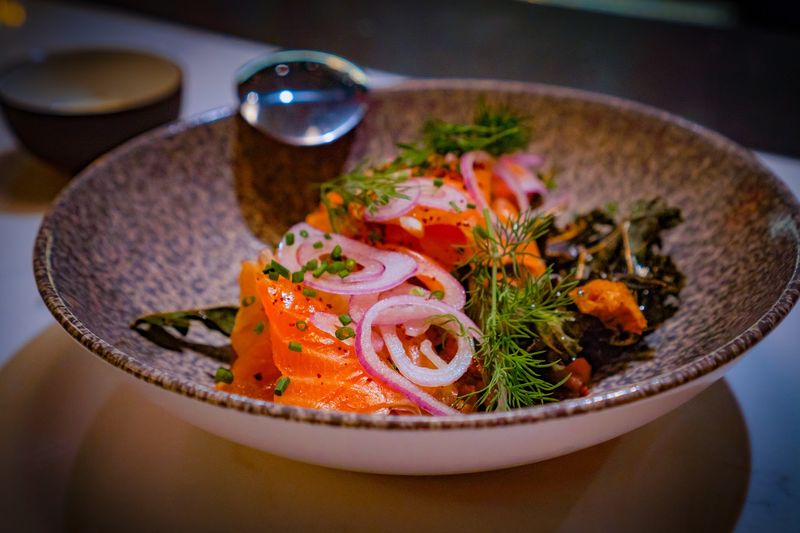
The chef’s tasting menu at Mink Detroit does not follow a predictable template. Dishes rotate monthly, drawing from a wide range of culinary traditions including Middle Eastern, Spanish, and Asian influences.
The result is a seafood-forward progression that feels genuinely exploratory rather than safe or formulaic.
Fish preparation at Mink reflects serious technical range. One course might feature a delicate ceviche-style treatment with citrus and herb, while the next arrives with a deeply savory glaze that reads more like something from a Japanese izakaya than a Midwestern seafood bar.
The transitions between courses are deliberate, and the kitchen clearly thinks about how each dish sets up the one that follows it.
One dish that has drawn particular attention involves a presentation so visually dynamic that it appears to move on the plate. The kitchen uses technique to create an illusion of motion, which sounds gimmicky until you see it in person.
At that point, it reads as confident creativity rather than spectacle for its own sake. The flavor still leads.
Portion sizes on the tasting menu are well-calibrated. By the final course, most guests report feeling comfortably full without being overwhelmed.
That balance is harder to achieve than it sounds, especially when each dish is rich in flavor and the kitchen is clearly not holding back on quality ingredients.
The menu change cycle also means that returning guests never eat the same meal twice. Regulars who visit monthly encounter an entirely new sequence of dishes each time, which keeps the restaurant from ever feeling routine.
For food-curious diners who want to track what a kitchen can do over time, Mink offers a compelling ongoing experiment worth returning to season after season.
Caviar Service Done Right in Michigan
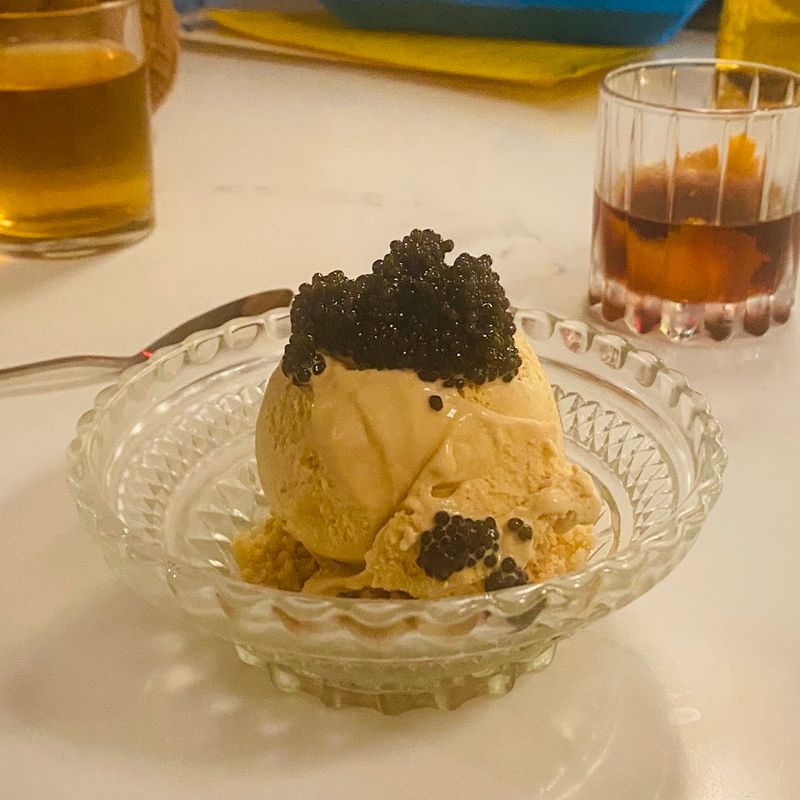
Caviar service at Mink Detroit is not an afterthought tucked onto the menu to add a luxury price point. The selection is curated, the presentation is precise, and the staff knows how to explain each variety without making the experience feel like a lecture.
For first-time caviar eaters, it is one of the most approachable introductions available anywhere in Michigan.
The house-made ice cream paired with caviar has become one of the restaurant’s most talked-about combinations. Brie ice cream served alongside caviar sounds like a pairing that exists purely to be provocative, but the flavor logic holds up.
The fat richness of the brie base softens the salinity of the caviar in a way that makes both elements taste more complete than they would separately.
Presentation matters here. The caviar arrives in a format that feels special without being theatrical to the point of distraction.
Accompaniments are chosen to complement rather than compete, and the portions are generous enough to feel indulgent without tipping into excess. The staff can walk guests through the differences between varieties and help them decide how much to order based on appetite and budget.
For guests who have never tried caviar before, Mink turns out to be an ideal setting for the first experience. The knowledgeable staff removes the intimidation factor that often surrounds this ingredient, presenting it in a context where curiosity is welcomed and questions are answered with genuine enthusiasm rather than impatience.
Detroit is not a city typically associated with caviar culture, which makes the quality and confidence of Mink’s caviar program even more striking. The bar has carved out a specific identity around premium seafood in a market that did not previously have a dedicated space for it at this level.
The Lobster Roll That Keeps Regulars Coming Back
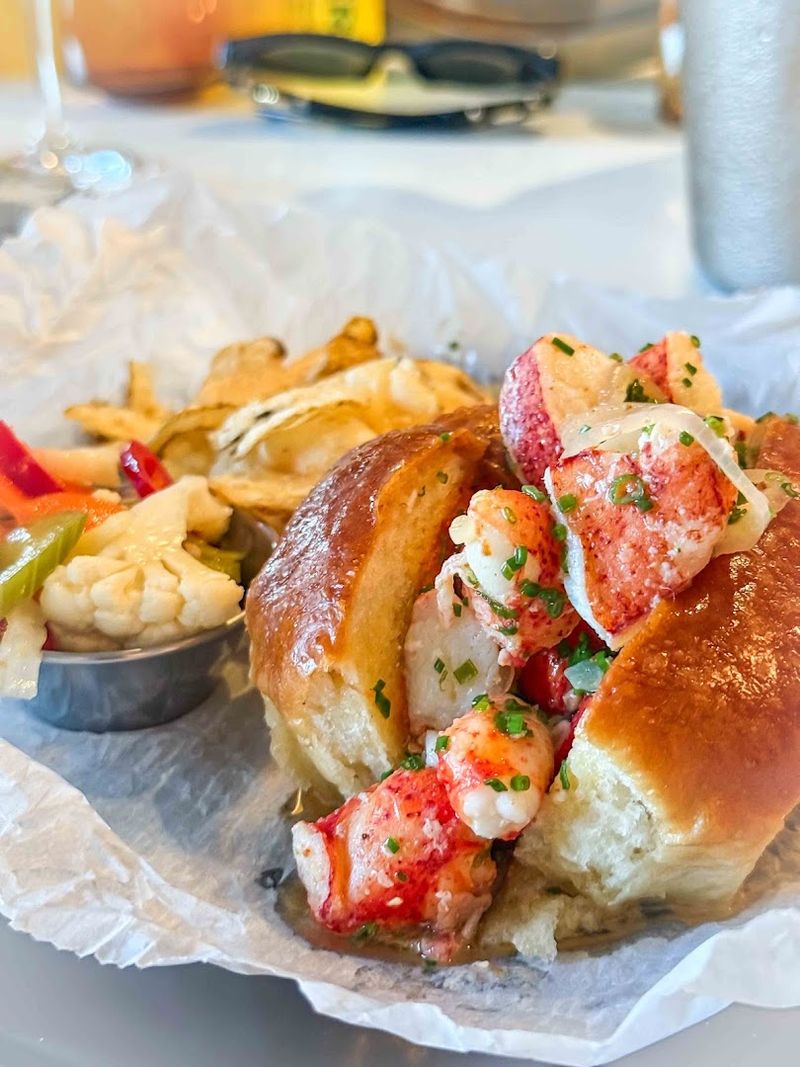
Lobster rolls have a way of exposing the difference between a kitchen that respects its ingredients and one that is just filling a bun. At Mink Detroit, the lobster roll has developed a reputation serious enough that regulars specifically mention it when recommending the restaurant to friends.
It is one of the few non-oyster items that consistently earns its own spotlight in conversations about what to order.
The execution is straightforward in the best possible way. The lobster is cooked to the exact point where the meat stays tender and sweet without any rubberiness, which is easier to describe than to achieve consistently.
The bun provides structure and a slight toasty contrast without overwhelming the filling. The whole thing is calibrated so that lobster flavor leads from the first bite to the last.
Some guests order it as a standalone item during a shorter visit, especially if they come in for oysters and want something more substantial alongside. Others work it into a longer meal that includes the tasting menu, using it as a familiar anchor amid a sequence of more experimental courses.
Either approach works, and the kitchen delivers it at the same standard regardless of how it fits into the rest of the order.
Availability follows the same sourcing philosophy that governs everything else at Mink. When the lobster is not at the quality the kitchen expects, it does not appear on the menu.
That commitment to sourcing integrity means that when the lobster roll is available, it is genuinely worth ordering. Guests who arrive specifically hoping to try it should check current menu availability before making the trip.
Several regulars have admitted to ordering two. That says more about the lobster roll than any description could.
How the Staff Turns a Meal Into an Experience
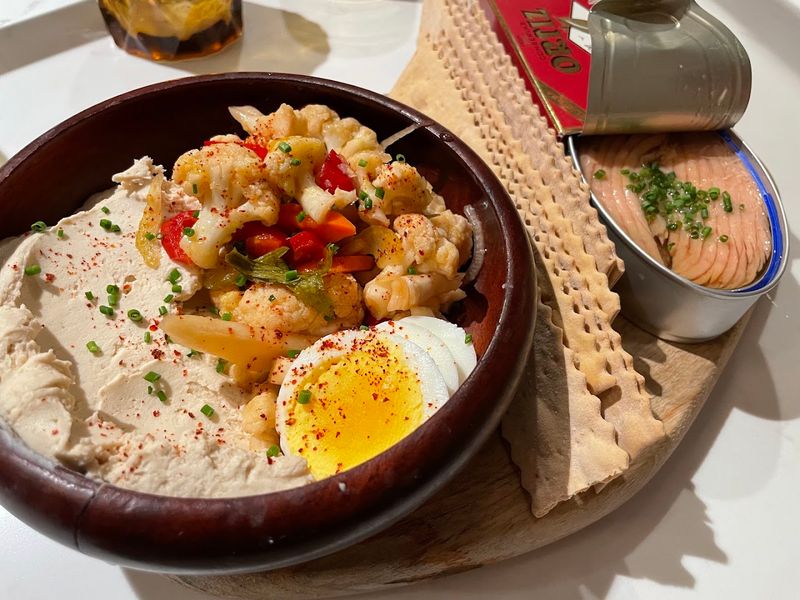
Service at Mink Detroit operates on a different model than most restaurants in the city. With only around 15 seats in the room, the staff-to-guest ratio stays high enough that every table gets real attention throughout the meal.
Nobody is waving down a server or waiting through a long gap between courses. The pace is managed deliberately, and the team seems to understand that timing is part of hospitality.
Staff knowledge goes well beyond memorized descriptions. The team can speak fluently about sourcing regions for the oysters, explain the flavor logic behind wine pairings, and walk guests through the tasting menu with the kind of detail that makes the food more interesting to eat.
That depth of knowledge is not incidental. It reflects how the restaurant has been built from the ground up.
Several servers have become regulars’ favorites by name, which is notable in a restaurant that does not rely on personality-driven marketing. Guests return and specifically hope to be seated with the same person who guided them through a previous visit.
That kind of staff continuity and individual connection is difficult to manufacture and even harder to sustain.
The kitchen team is visible from the bar seats, which creates an unusual dynamic where diners can watch dishes being assembled and occasionally ask questions directly. Chefs at Mink do not disappear behind a closed door.
The openness invites interaction and makes the cooking feel collaborative rather than mysterious.
One practical note: the restaurant maintains a 90-minute seating policy during service. That structure is enforced consistently, so guests should plan their pace accordingly.
Moving through the menu with intention rather than lingering indefinitely allows the kitchen to maintain the quality that makes each visit worth the planning.
Planning Your Visit to Mink on Trumbull in Detroit
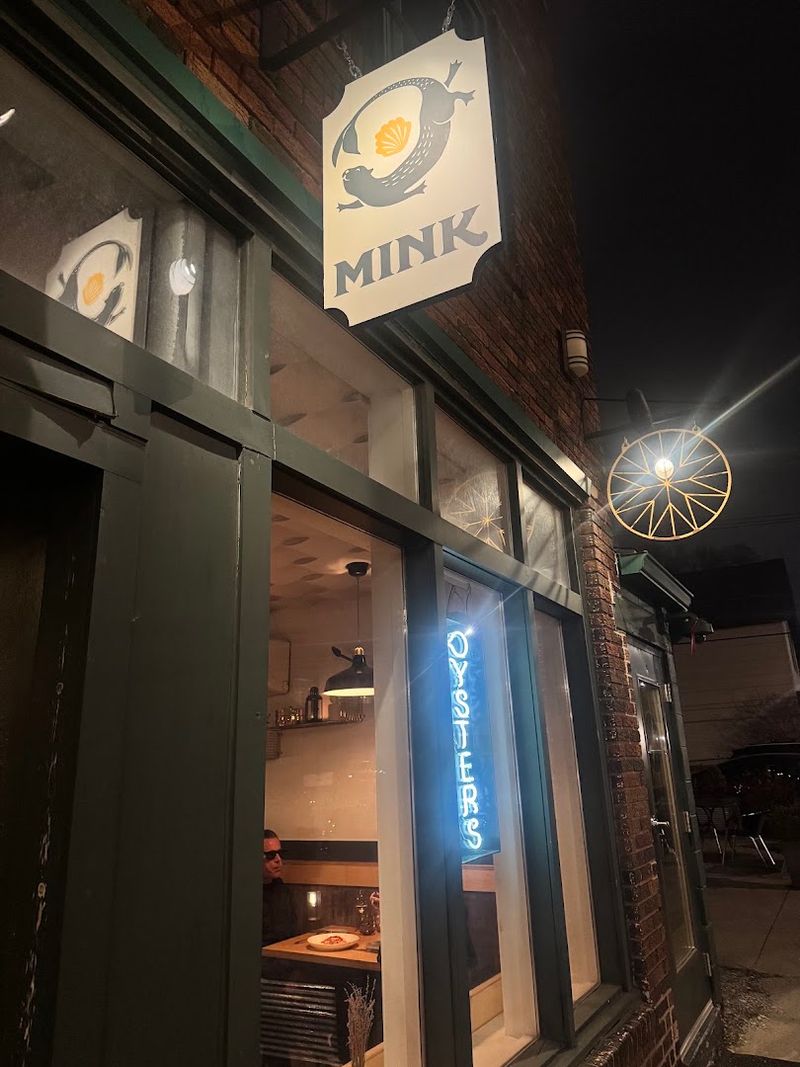
Mink Detroit sits at 1701 Trumbull in the Corktown area, one of the city’s most walkable and historically layered neighborhoods. The surrounding blocks include a mix of bars, coffee shops, and independent restaurants that make the area worth exploring before or after a reservation.
Parking is available nearby, though arriving a few minutes early helps avoid any last-minute stress.
The restaurant operates Thursday through Sunday, opening at 5 PM each evening and closing at 10 PM. Monday, Tuesday, and Wednesday are dark days, so planning around the Thursday-to-Sunday window is essential.
The four-day week is not unusual for restaurants operating at this level of quality, where the kitchen needs time to source, prep, and maintain standards that a seven-day schedule would make difficult to sustain.
Reservations are strongly recommended and fill up quickly. The limited seat count means that even a modest surge in demand can leave a week fully booked.
Checking availability well in advance, especially for weekends, gives the best chance of securing a preferred time slot. Walk-ins have occasionally found space at the patio when conditions allow, but counting on that is risky.
The restaurant has a 4.8-star rating across more than 330 reviews, which is an unusually strong signal for a place this small. High ratings at tiny restaurants are often fragile and inconsistent, but Mink has maintained its score across a sustained period of visits and across a wide range of guest types.
That consistency across time is the most reliable indicator of quality.
First-time visitors should consider sitting at the bar if possible. The sightlines into the prep station, the proximity to the staff, and the energy of watching service unfold from that vantage point all combine to make the bar the best seat in the house.
Share this story