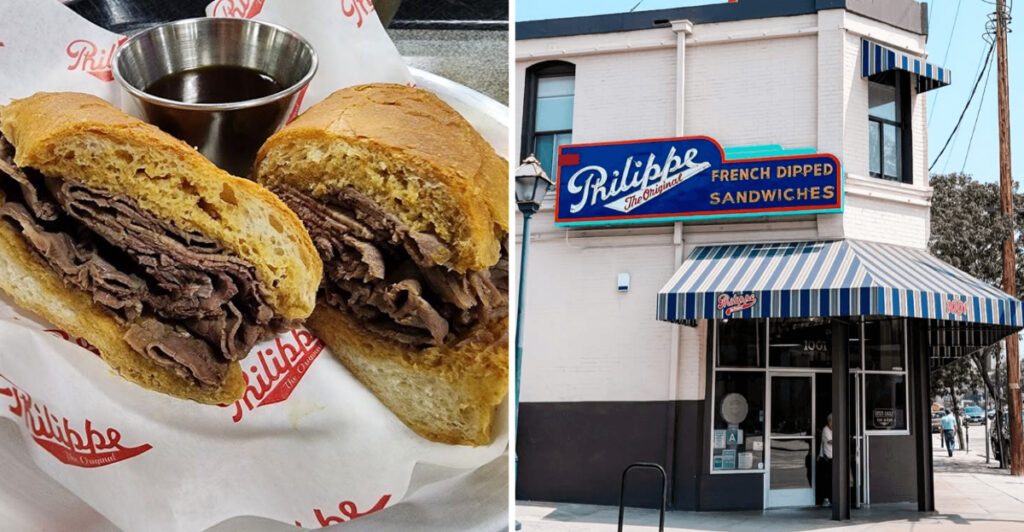
Some Los Angeles food landmarks survive on nostalgia alone. Philippe The Original keeps drawing crowds because the whole experience still works, right down to the quick-moving counter lines, fresh bread, and cafeteria-style dining room that never pretends to be trendier than it is.
Open since 1908, this downtown institution feels connected to an older Los Angeles shaped by railroads, warehouses, and hardworking lunch crowds. The famous French dip may get most of the attention, but the atmosphere does plenty of the heavy lifting. Every tray, ticket, and communal table reinforces the sense that some traditions endure because they remain genuinely satisfying.
A Downtown Arrival With Real Old Los Angeles Energy
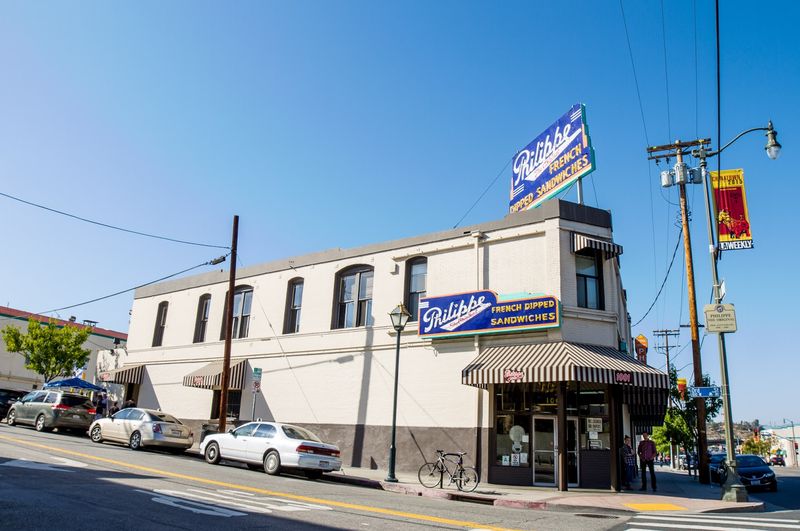
Walk up to Philippe The Original and the setting does a lot of the talking before a sandwich even enters the picture.
The building sits near Union Station, and that location gives the whole stop a transitional energy, like the city is constantly passing by while this place stays firmly planted.
You get traffic, trains, downtown movement, and then suddenly a restaurant that looks committed to its own pace. That contrast is part of the draw.
Philippe does not chase polished minimalism or curated retro styling because it already has the real thing: practical signage, broad windows, and a straightforward exterior that suggests generations of regulars have known exactly where they were going.
In a city that reinvents itself nonstop, there is power in a place that still looks built for eating, not posing. Step inside and the room opens up with a large, busy dining area that reads more like a civic institution than a fragile time capsule.
The noise has a useful rhythm – trays moving, orders called, seats turning over, families finding tables, solo diners locking onto lunch with zero ceremony.
Even when there is a line, the room rarely gives off panic, because the layout seems designed for volume and familiarity.
That first impression matters for anyone driving in from elsewhere in California expecting a famous-name letdown. Instead, the arrival feels grounded, practical, and visibly lived in, which suits a sandwich shop tied so closely to Los Angeles food history.
You are not entering an attraction that happens to serve lunch. You are entering a working institution whose biggest flex may be how normal it still insists on being, even with its reputation already secured.
The French Dip That Still Runs the Show
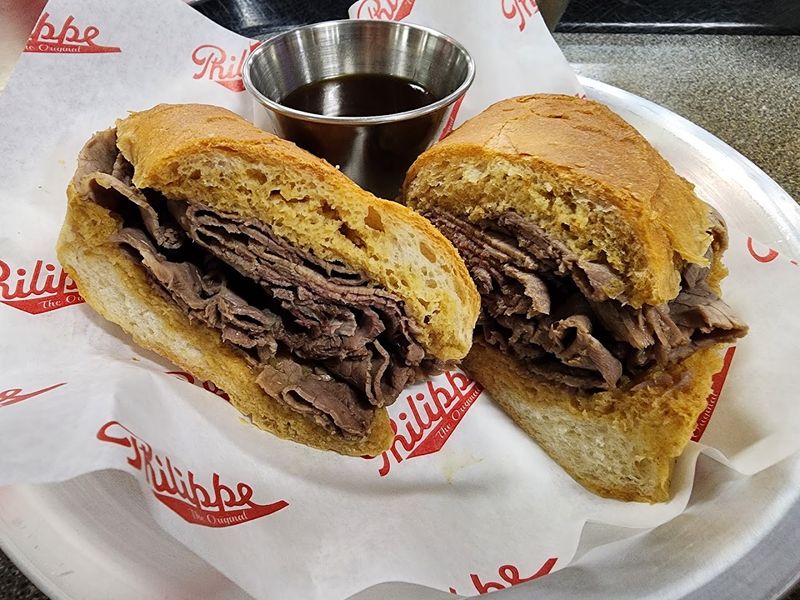
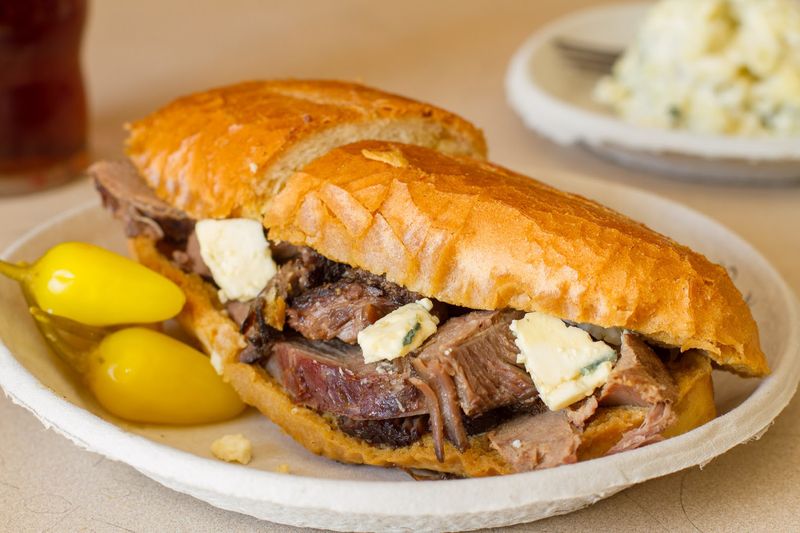
The headline item here is obvious, but the appeal is more specific than simply ordering a famous sandwich. Philippe’s French dip works because the bread, meat, and juices are calibrated for texture as much as flavor.
The roll has enough structure to hold together, enough softness to absorb liquid, and just enough crust to keep each bite from collapsing into mush.
The beef version gets most of the attention, and for good reason, yet the full experience depends on how you order it and how wet you want that sandwich. Single dipped, double dipped, extra jus on the side – these details are not side notes here.
They shape whether your lunch lands as neat and sturdy or gloriously messy in the way a historic sandwich should.
Then there is the mustard, which deserves its own warning label in the best possible sense. It cuts through the richness with a sharp heat that wakes up the bread and meat immediately, and a small amount goes a long way.
Used carefully, it turns a comforting sandwich into something livelier, punchier, and much more distinct than a basic roast beef roll.
What makes this signature item endure is that it still eats like everyday food, not protected museum food. Portions, combinations, and dipping choices let you tailor the experience without losing the core identity of the place.
You can understand the legend while sitting at a simple table with a tray in front of you, napkins nearby, and a sandwich that tastes built for workers, travelers, locals, and anyone smart enough to arrive hungry.
Beyond Beef – The Order That Regulars Build
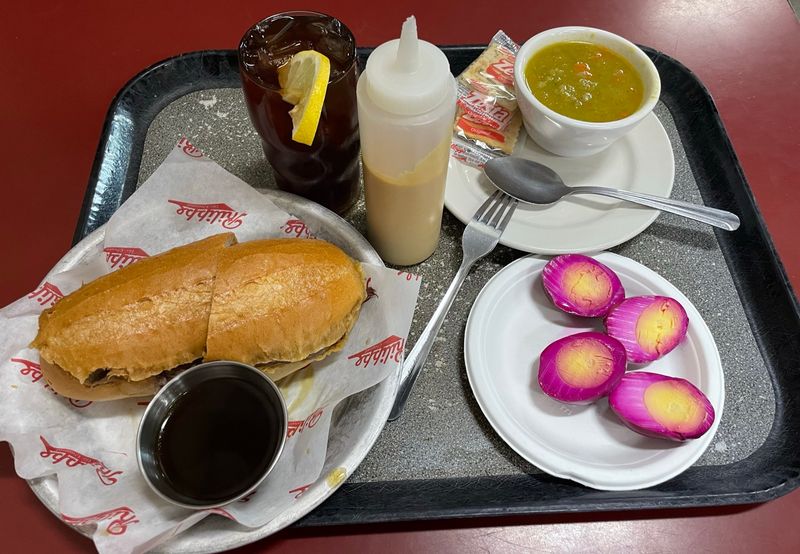
Limiting Philippe to one sandwich would miss half the fun. The menu opens up into a wider comfort-food world where pork, lamb, pastrami, sides, desserts, and breakfast plates all help explain why this place functions as more than a one-item pilgrimage.
Even if the French dip gets top billing, the supporting cast gives regulars reasons to keep changing the script. The pork dip has loyal fans for its savory depth, while pastrami offers a more assertive, seasoned profile that plays beautifully against fresh bread and cool sides.
Lamb adds a richer lane for anyone who wants something less predictable, and cheese options can nudge each order in a different direction without turning the menu gimmicky.
These combinations are simple, but simplicity is the point when the ingredients and assembly are this familiar to the staff.
Sides matter here because they continue the old-school deli logic rather than serving as filler. Potato salad, coleslaw, pickled eggs, pickled beets, and crisp pickles all bring texture and temperature contrast that make a tray feel complete.
Desserts such as custard, pudding, or cheesecake keep the menu rooted in a comfort-food vocabulary that suits the room’s lived-in personality.
Even the drinks contribute to the identity. Coffee has a long-standing reputation for being inexpensive and straightforward, while beer and lemonade can shift the meal depending on the hour.
That range makes Philippe especially appealing for mixed groups, because one person can chase the classic beef dip while another goes for pastrami, chili, or a sweet finish, and nobody looks like they ordered against the grain.
California History Served Across a Long Counter
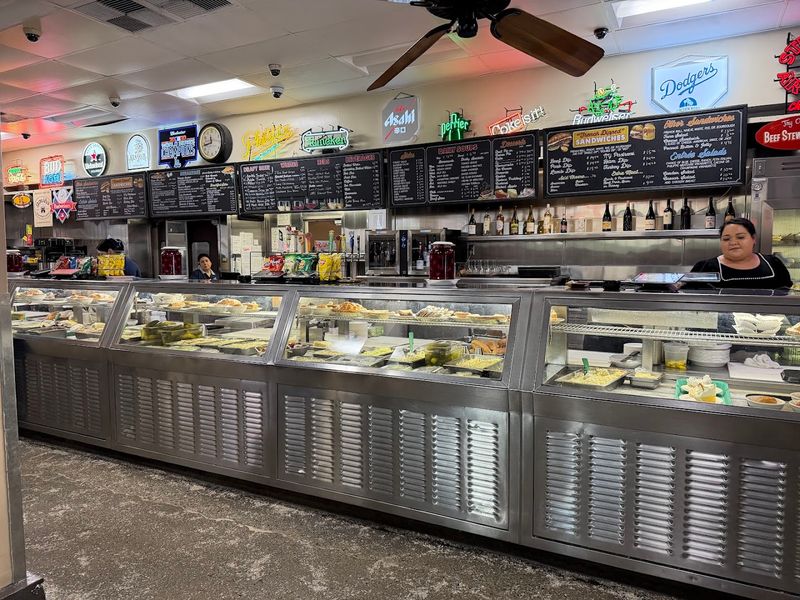
Plenty of famous restaurants lean hard on their backstory. Philippe benefits from history, but the story lands because the mechanics of the place still reflect it.
Long counters, visible food assembly, quick transactions, and a room built for turnover make the restaurant’s age feel functional rather than decorative, which is a big difference in a city full of nostalgia packaging.
The French dip origin story is part of the lore attached to Philippe, and that tale has helped turn an everyday sandwich into a Los Angeles food marker.
Even without trying to verify every retelling detail, the broader truth is easy to grasp once you are there: this is a landmark tied to a specific local food tradition, not a newcomer borrowing somebody else’s mythology. The restaurant has become part of the city’s edible vocabulary.
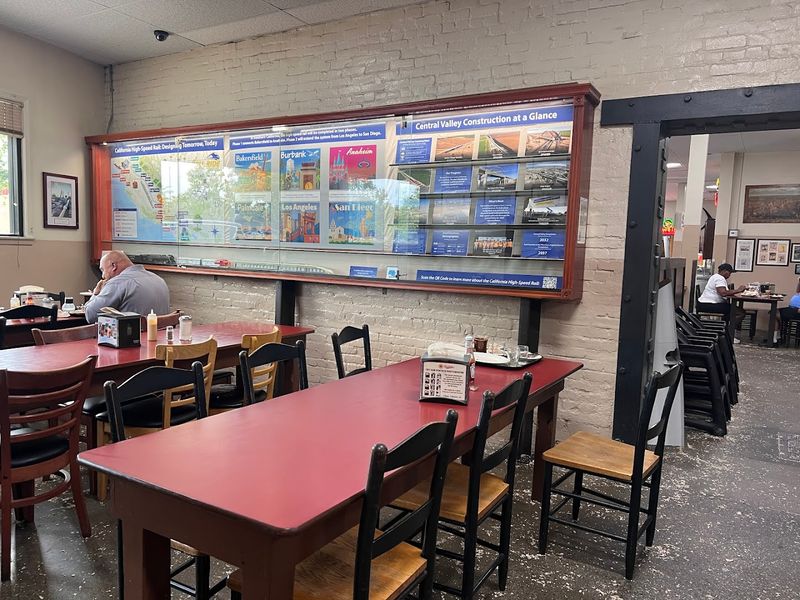
Inside, small visual cues keep reinforcing that connection. The room carries an institutional sturdiness, with communal seating, practical surfaces, and a layout that favors use over display.
Nothing seems designed to slow the line down so diners can admire branding elements for ten minutes. The place was built to feed people efficiently, and that purpose still shapes the experience more than any historical plaque could.
That is why the shop attracts such a mixed crowd. Travelers from Union Station, downtown workers, Dodgers game diners, longtime Angelenos, and curious first-timers can all occupy the same room without the place changing personality for any of them.
In California, where old establishments often get polished into themed experiences, Philippe remains refreshingly direct. Its history is not trapped behind glass. You order it, carry it on a tray, find a table, and join the ongoing scene.
How the Line Moves So Fast and Why That Matters
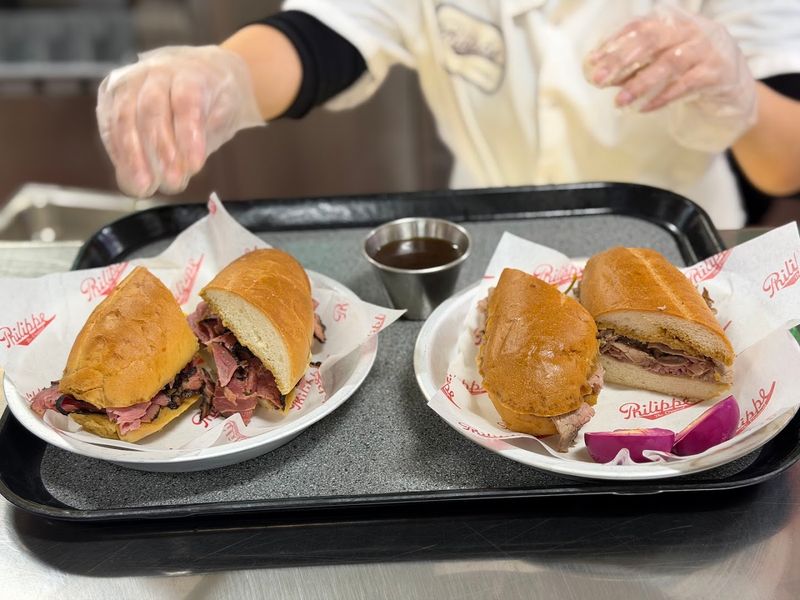
A packed line at Philippe can look intimidating at first glance, especially if you arrived with weekend hunger and limited patience. Then the system starts revealing itself.
Cashiers and carvers work with a practiced rhythm, orders move briskly, trays appear fast, and the whole operation feels less like a bottleneck than a long-running routine refined by repetition.
That efficiency changes the mood of the visit. Instead of treating the wait as a test of devotion, Philippe turns it into part of the tempo, giving you just enough time to scan the menu, decide on your dip level, and spot what other tables are eating.
There is an old-school confidence in a restaurant that knows how to handle heavy volume without turning the process into theater.
Seating helps complete that equation. The large communal dining room means the crowd often disperses more easily than the entrance suggests, and table turnover keeps things moving once orders start landing.
Staff attention to clearing tables and maintaining flow makes a noticeable difference, because famous places can fall apart if the room lags behind the register. Here, front and back of house seem linked by shared muscle memory.
For a destination restaurant, that practical smoothness matters as much as flavor. People driving across Southern California do not want a landmark meal derailed by chaos, confusion, or preciousness.
Philippe succeeds because it remains a working lunchroom first and a celebrated institution second, not the other way around.
You can be in a long line, surrounded by hungry strangers, and still sense that lunch is under control. In a city that often makes simple errands complicated, that kind of operational clarity is its own local pleasure.
A Smart Stop Before Trains, Games, and Long LA Days
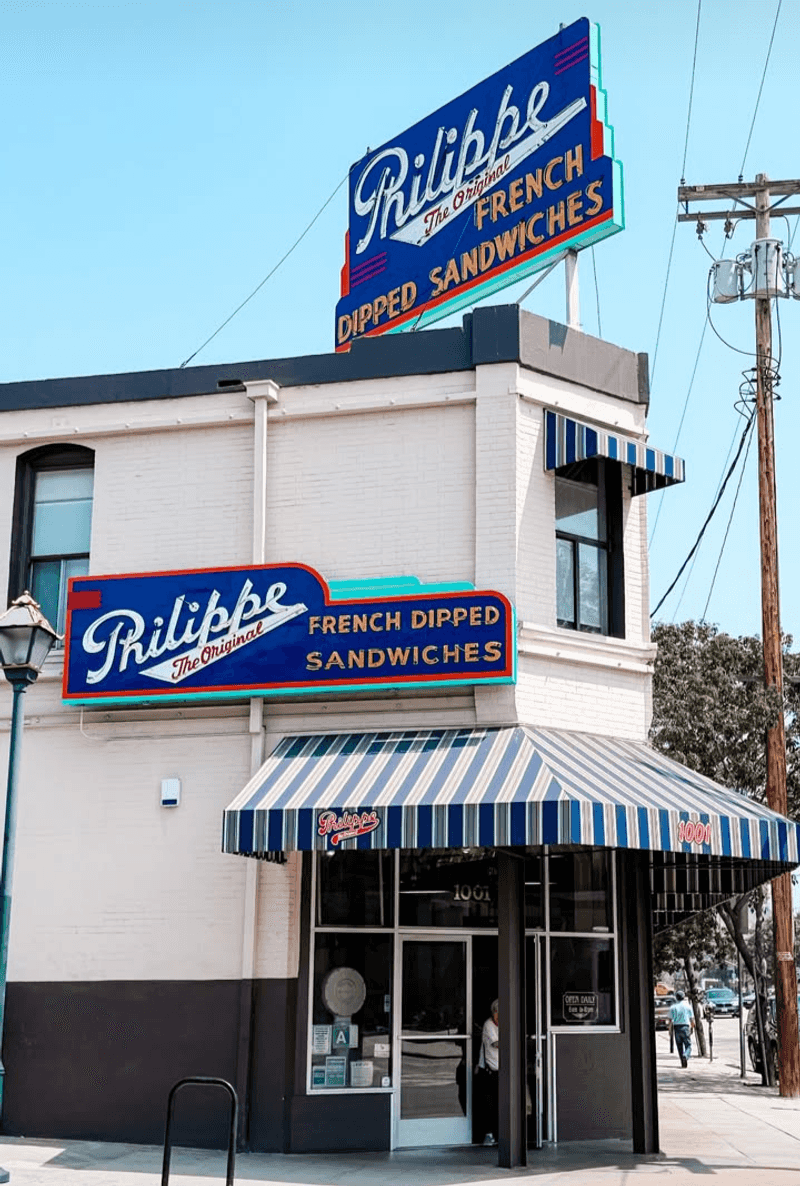
Location is one of Philippe’s quiet superpowers. Being close to Union Station gives it a natural stream of travelers, commuters, and day-trippers, while the short hop from Dodger Stadium makes it an easy pre-game move for anyone who wants substance before the parking-lot snacks and stadium lines begin.
This is the kind of place that fits neatly into a larger Los Angeles plan. That flexibility broadens the crowd in a useful way.
Some diners arrive straight off a train looking for a classic meal with local character, while others build Philippe into a baseball outing, downtown wandering route, or early-start breakfast plan.
Because the restaurant opens in the morning and keeps long daily hours, it can serve as a first stop, a midday anchor, or a late, uncomplicated dinner without straining to be any one thing.
Free parking adds another layer of convenience that matters more than it might elsewhere. In Los Angeles, practical details often decide whether a legendary place becomes a real habit or stays a once-only aspiration.
Philippe clears that hurdle for many drivers, especially those coming from other parts of the city or further across California, by offering a visit that feels manageable rather than logistically punishing.
The surroundings also sharpen its identity. Downtown Los Angeles has no shortage of visual drama, but Philippe offers a different form of reliability: solid food, quick service, and a room where you can reset before diving back into the city. That makes it appealing even beyond the sandwich itself. You are not just chasing a famous bite.
You are plugging into a stop that understands movement, timing, and the practical reality of how people actually spend a day in Los Angeles.
When to Go, What to Order, and How to Play It Right
If you want the cleanest first visit, a little strategy helps. Going earlier in the day can make the experience easier to read, especially if you want time to study the menu and watch the room before ordering.
Busy periods are part of Philippe’s identity, but the shop is efficient enough that even a crowd does not automatically mean a stressful stop.
For a classic order, the beef French dip is the safest starting point, and adding mustard should be done with restraint until you know your tolerance. Asking about dip level is smart, and getting extra jus on the side can give you more control if you like your sandwich wet but not collapsing.
If you are hungrier than usual, double meat is worth considering, especially since the bread and juices can support a more substantial filling.
Sides are not an afterthought here, so build the tray intentionally. Potato salad and pickles are dependable complements, while coleslaw brings a cooler, crisp contrast to the richness of the sandwich.
A dessert or coffee can round out the old-school experience without pushing the meal into excess, particularly if you are making Philippe one stop in a longer day.
The best mindset is simple: do not overcomplicate a place that has already figured itself out. Order confidently, claim a table, use the mustard carefully, and let the room show you how it works.
Philippe rewards people who meet it on its own terms. That means appreciating the speed, the plainspoken service style, the communal seating, and the lack of unnecessary polish.
In a city full of reservation drama and trend cycles, there is real pleasure in a landmark where the smartest move is just to show up hungry and pay attention.
Why This Los Angeles Sandwich Shop Still Pulls Drivers Off the Freeway
Some restaurant reputations grow larger than the actual experience. Philippe avoids that trap because its appeal is concrete.
You get a historic Los Angeles location, a sandwich with a clear point of view, fast-moving service, broad seating, fair everyday energy, and enough menu depth to support repeat visits. Those traits travel well across generations, neighborhoods, and expectations.
That is why people keep driving in from all over California. The shop satisfies more than one kind of outing at once: food pilgrimage, family lunch, pre-game stop, downtown detour, rail-adjacent meal, or comfort-food reset.
It suits visitors who want local history and locals who simply want a dependable tray of food in a room that still knows what it is. Very few famous places remain this adaptable without sanding off their edges.
There is also a broader civic value in Philippe’s survival. Los Angeles can sometimes be caricatured as a city of constant novelty, yet this restaurant proves how much staying power an unfussy institution can have when it continues delivering the basics with discipline.
The building, the counter service, the communal seating, the mustard, the dipped bread, the practical pace – all of it adds up to an experience tied to the city’s daily life, not just its marketing image.
So the real story is not merely that Philippe is old or famous. It is that the place still functions beautifully as a place to eat right now.
That immediacy keeps the legend from hardening into museum material. You can understand why first-timers seek it out, but you can also see why regulars fold it into ordinary routines.
In Los Angeles, that combination is rare. Philippe remains both a destination and a lunch counter, and that double identity is exactly why the drive still makes sense.
Share this story