The whistle cuts across Phillipsburg before the train begins rolling south, its restored passenger coaches rocking gently beside the Delaware River. Soon, downtown buildings give way to wooded banks, old railroad infrastructure, and flashes of water through the trees.
This is not an NJ Transit run or a museum display with velvet ropes. Delaware River Railroad Excursions carries passengers roughly 20 miles round-trip along the historic Belvidere and Delaware line, often behind a working steam locomotive.
The journey links two small Warren County communities, Phillipsburg and Riegelsville, while giving riders a close look at the river that shaped both of them. Depending on the ticket, the day might also involve panning for gemstones, walking through a corn maze, visiting a vineyard, or claiming a pumpkin.
Yet the train remains the main event—a wonderfully old-fashioned way to spend a few hours without traveling far from home.
All Aboard in Historic Phillipsburg
Phillipsburg grew up around transportation. Its location where the Delaware and Lehigh rivers meet made it an important canal and railroad center, especially during the 19th century, when coal, iron, agricultural goods, and passengers moved through town.
The rail excursion begins in that same historic corridor at 38 Market Street, a short distance from the free bridge connecting New Jersey with Easton, Pennsylvania. There is no grand marble terminal or cavernous waiting hall here.
Riders check in near the tracks, hear the usual predeparture instructions, and watch the crew prepare equipment that looks markedly different from the trains passing through Newark or Secaucus. That straightforward setup is part of the fun.
A volunteer might answer a question about the locomotive while families photograph the coaches and experienced railfans position themselves for a clear view of the engine.
The operation is run by the nonprofit New York Susquehanna & Western Technical & Historical Society, an organization formed in 1988 to preserve regional railroad history.
It describes the excursion as a “living museum,” which is accurate in the most literal sense: the machinery is maintained, operated, and used to carry passengers rather than parked behind a barrier.
Once everyone is aboard, the train heads south along a route commonly called the Old Bel-Del, following part of the former Belvidere Delaware Railroad.
The river appears almost immediately, making the transition from downtown outing to scenic ride remarkably quick. Phillipsburg’s industrial past is not hidden or polished away along the route.
Old trackwork, bridges, warehouses, and rail remnants remain part of the view, offering a useful reminder that this pleasant weekend excursion follows a corridor once built for serious commercial work.
Vintage Railcars Bring New Jersey’s Railroad Past to Life
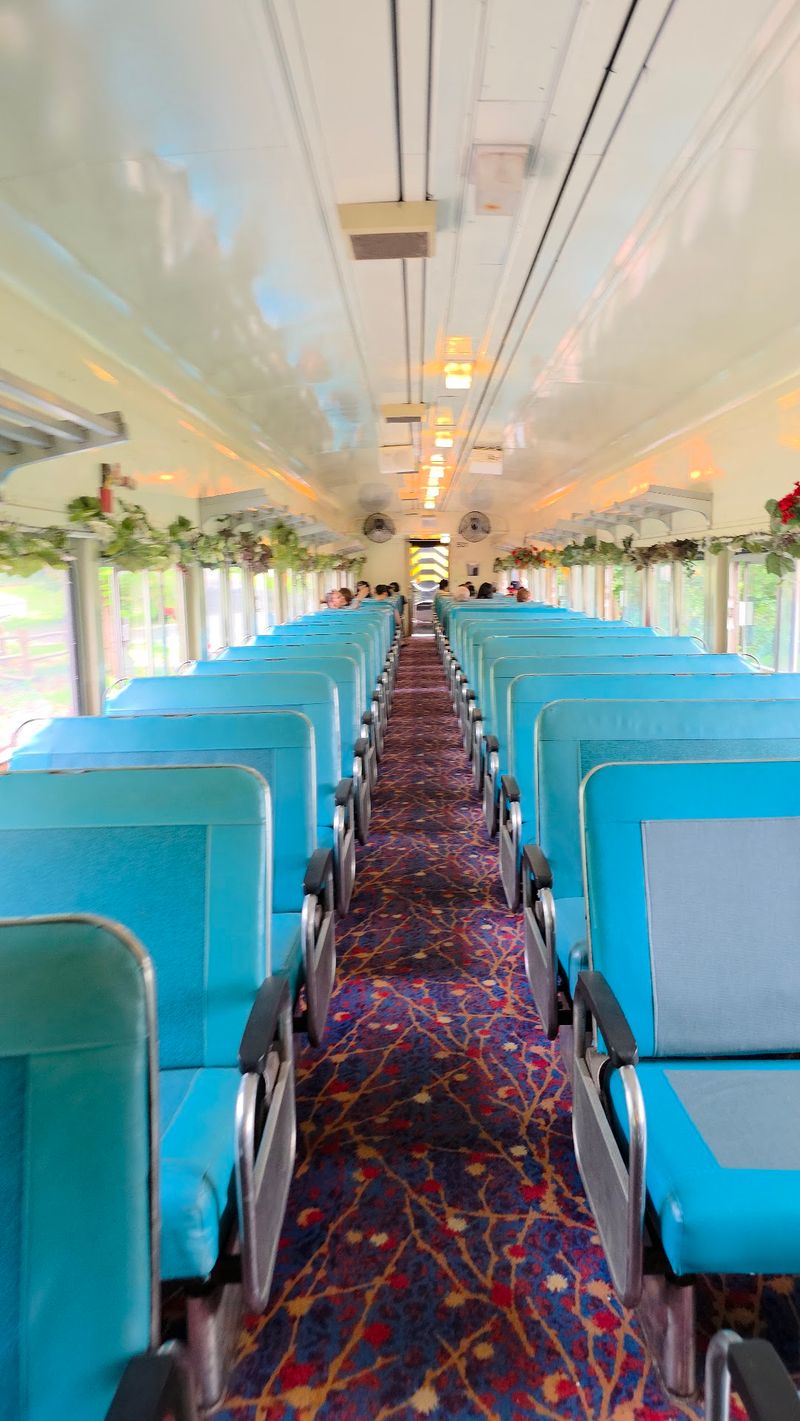
Look closely at the passenger coaches and the little imperfections become part of the experience. Windows slide differently than they do on a modern train, seats have the sturdy proportions of another era, and the cars respond to every joint and curve in the track with a soft sway.
The restored coaches once served Long Island Rail Road commuters and date to the 1950s, meaning they spent their first working lives moving riders around the New York metropolitan area. They were restored during the 1990s and now carry sightseers instead of rush-hour crowds.
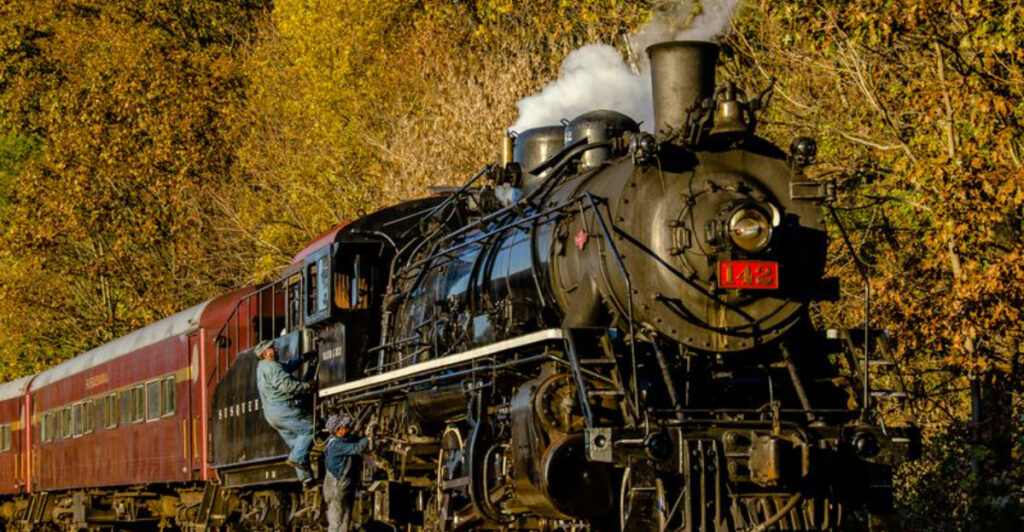
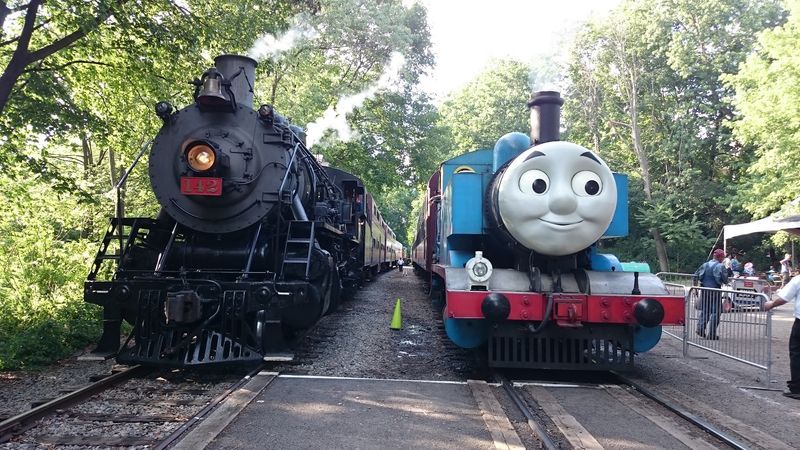
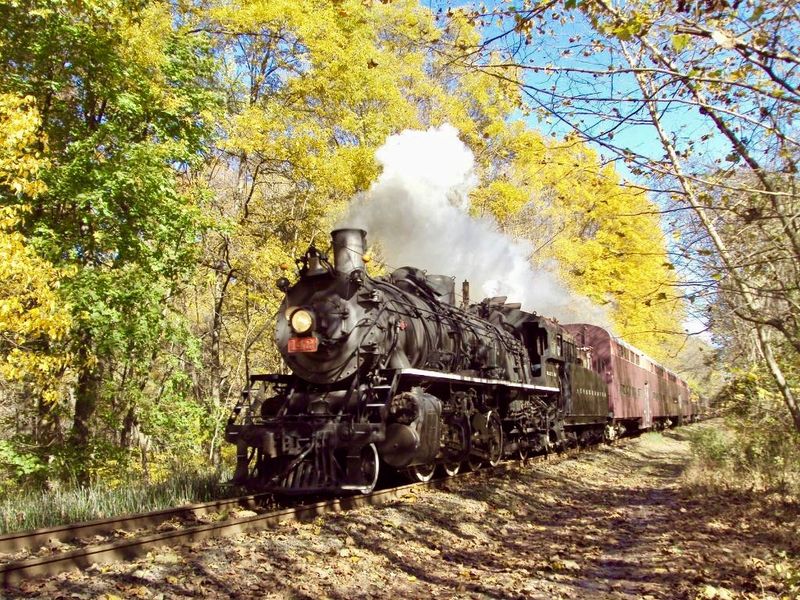
Up front, the most recognizable locomotive is New York, Susquehanna & Western No. 142, a Mikado-type 2-8-2 steam engine. The wheel arrangement refers to two leading wheels, eight driving wheels, and two trailing wheels—a detail rail enthusiasts can identify long before everyone else finishes taking pictures.
No. 142 was built by Tangshan Locomotive Works in China in 1989, making it far younger than its appearance suggests but still among the last steam locomotives produced for commercial use.
When operating, it supplies the full sensory package: drifting steam, rhythmic exhaust, metal in motion, and a whistle that can be heard well beyond the tracks.
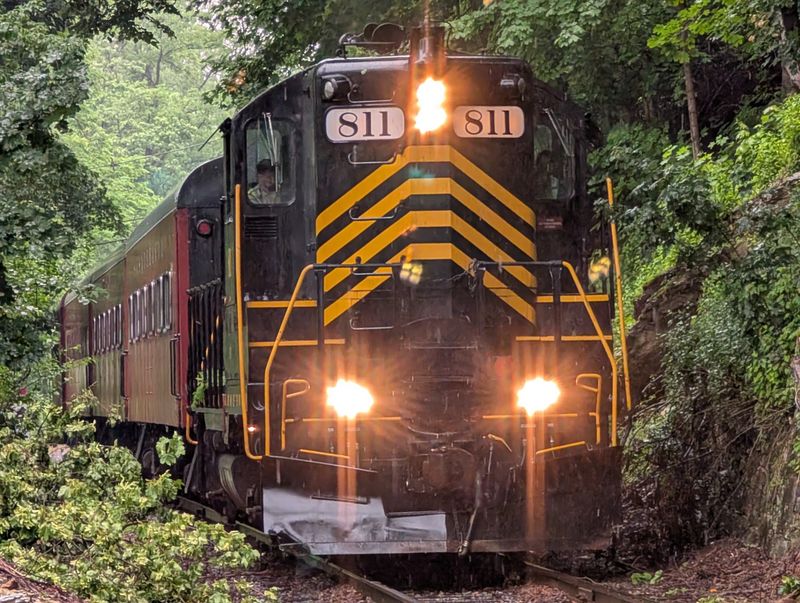
Antique diesel power or a railcar may substitute on some trips, so travelers specifically hoping to ride behind steam should confirm the scheduled equipment before booking. The historical society’s volunteers do much of the work required to keep the railroad running, from rules training to locomotive maintenance.
That effort gives the ride a different character from a themed attraction built to resemble the past. These are genuine railroad cars moving over genuine historic track, maintained by people who know exactly what each lever, fitting, and inspection record means.
Even passengers who arrive without knowing a Mikado from a caboose tend to leave appreciating the mechanics.
Delaware River Views Steal the Show
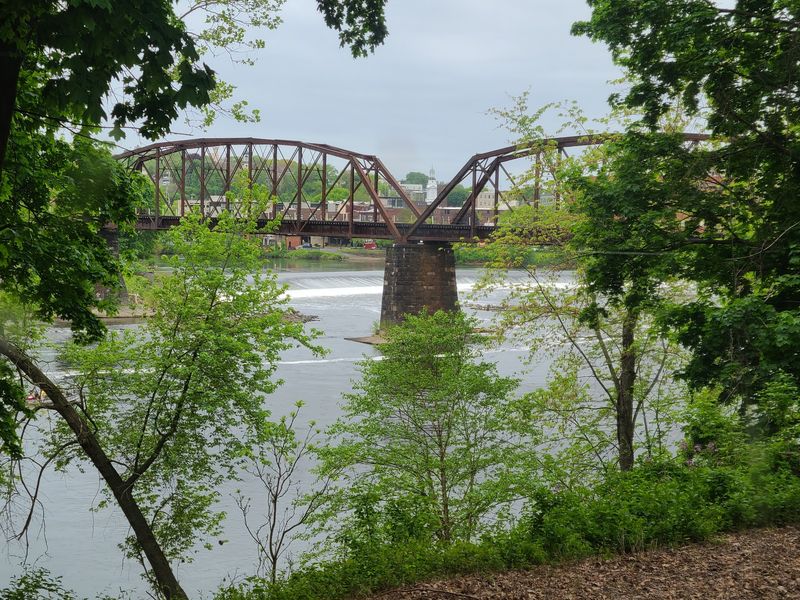
About ten minutes after departure, phones begin migrating toward the windows. The Delaware accompanies much of the southbound journey, sometimes spread broadly beside the tracks and sometimes partially screened by sycamores, maples, and riverside brush.
Pennsylvania occupies the opposite bank, close enough in places to pick out roads, houses, and people enjoying the water. The scenery changes with the calendar.
Spring brings bright foliage and high, fast-moving water after heavy rain. Summer fills the riverbank with dense green growth, creating alternating stretches of shade and open water.
Fall is the visual heavyweight, when the hills on both sides of the Delaware turn red, copper, orange, and yellow. Winter excursions trade leaves for longer sightlines through bare branches.
This is not mountain wilderness, and it does not pretend to be. The route passes backyards, utility lines, road crossings, stonework, and traces of the region’s industrial history.
Those human details make the trip more interesting because they show how closely the river, railroad, and communities have always been connected. The best views can shift with vegetation and direction of travel, although seats on the river-facing side generally provide the longest unobstructed looks at the water.
Since the train makes a round trip, missing a particular view on the way south is hardly a disaster; it may appear from a better angle on the return. The relaxed speed also helps.
Rather than receiving two seconds to spot a bridge or a bend in the river from a highway, passengers have time to notice anglers near the bank, kayaks downstream, old stone retaining walls, and the layered ridges beyond the water. It is a landscape many New Jersey drivers pass regularly without ever seeing from this angle.
The Journey Continues to Riverside Riegelsville
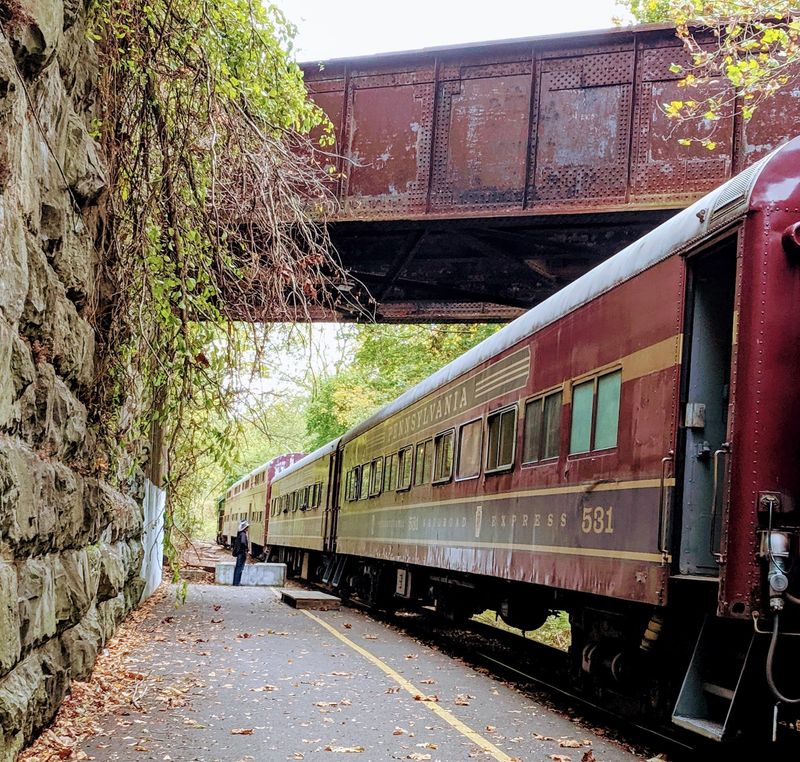
Riegelsville is small enough that the arrival of a train still feels like an event. Located near the southern edge of Warren County, the hamlet sits directly across the Delaware from Riegelsville, Pennsylvania.
The two communities share more than a name: a narrow suspension bridge links them just steps from the New Jersey station. Built in 1904, the bridge is associated with the engineering legacy of John A.
Roebling’s Sons Company, the Trenton firm connected to some of America’s best-known suspension bridges. Its slim profile and tall towers make it easy to recognize from the riverbank.
On regular River Train outings, passengers may remain aboard for the return to Phillipsburg or get off and explore, then catch a later northbound departure when the schedule permits. That flexibility turns a two-hour rail trip into a more leisurely half-day outing.
Hootz Bar and Grille stands beside the station on the New Jersey side, while the historic Riegelsville Inn is across the bridge in Pennsylvania near the Delaware Canal.
Travelers planning a meal should check restaurant hours and keep the final return train firmly in mind; the railroad is wonderfully nostalgic, but it does not wait like a rideshare driver.
The stop also reveals how the line once served communities that now feel tucked away from the busiest roads. Riegelsville is not packed with souvenir shops or manufactured attractions.
Its appeal comes from the river, bridge, old buildings, and the unusual pleasure of arriving by rail. Those who stay aboard still get time to absorb the setting as the crew prepares for the northbound journey.
Then the locomotive pulls the coaches back through the same corridor, presenting familiar scenery in reverse and proving that a return trip does not have to feel repetitive when the river keeps changing with the light.
Themed Excursions Offer Something for Every Traveler
A regular scenic ride is only the starting point here. From May through autumn, the railroad layers a rotating collection of experiences onto the river route, and some of them change the shape of the day considerably.
The Mine Train stops at Snyders Station, home of the playfully named Susquehanna Mining Company. After a short mine presentation, participants receive mining rough and learn to use a sluice to uncover gemstones they can take home.
The site also has a shaded picnic grove beneath tall pine trees, lawn games, a gift shop, and seasonal access to a corn maze. It is hands-on enough for children without leaving accompanying adults standing around with nothing to do.
The Warren County Winery Train takes a more grown-up approach. Passengers ride to Riegelsville and transfer by shuttle to Villa Milagro Vineyards, set on a ridge overlooking the Delaware and Musconetcong river valleys.
The experience includes information about grape growing and winemaking, followed by a tasting. The 2026 winery package is listed at $45 per person, with weekend departures scheduled from May 2 through November 1; availability is limited and popular dates can fill quickly.
Autumn changes the mood again. During Great Pumpkin Train trips, the return journey includes a stop at the pumpkin patch, where each child can choose a pumpkin.
The railroad has also hosted the Corn Maze Train, Dinosaur Days, A Day Out With Thomas, Easter Bunny excursions, and staged train-robbery events. After Thanksgiving, the coaches are redecorated for a 90-minute Polar Express experience with hot chocolate, cookies, a reading of the story, costumed performers, and Santa.
Because each special event includes different activities, durations, and fares, the event name matters just as much as the departure time.
What to Know Before Planning Your Train Ride
The basic River Train covers approximately 20 miles round-trip between Phillipsburg and Riegelsville and typically takes about two hours if passengers return without an extended stop.
For the 2026 season, weekend service is scheduled from May 2 through November 1, with common departure times of 10 a.m., noon, 2 p.m., and 4 p.m.
Some experiences, including the Mine Train, use only the earlier departures, while special-event timetables may be completely different. The railroad recommends advance booking, particularly for fall foliage weekends, the winery excursion, Thomas events, and holiday trains.
Riders should arrive early enough to park, walk to the ticket area, and check in without attempting a last-minute sprint down Market Street.
Parking options include a paid lot near the ticket booth on Market Street, another paid lot off Union Square behind Jimmy’s Hot Dogs, and a free transit lot on South Main Street across from 274 South Main Street.
Metered spaces along South Main Street have also been listed at $1 per hour, though posted signs should always settle the matter. The coaches are historic equipment, so visitors should expect steps, narrower spaces, and fewer modern conveniences than they would find aboard a commuter train.
Accessibility arrangements are possible in a designated car for some riders using light portable wheelchairs, but boarding still involves three steep steps; contacting the railroad in advance is essential. Dress for the actual weather rather than the weather visible through the kitchen window.
Riverfront conditions can feel cooler, and the mine, maze, pumpkin patch, and Riegelsville stop all involve time outdoors. A small bag with water and snacks is sensible, while a packed lunch works especially well for the Snyders picnic grove.
Between the whistle, restored coaches, and changing river views, the experience remains refreshingly uncomplicated: an old railroad line doing what it was built to do, carrying people through the Delaware Valley at a pace slow enough to see it.
Share this story