
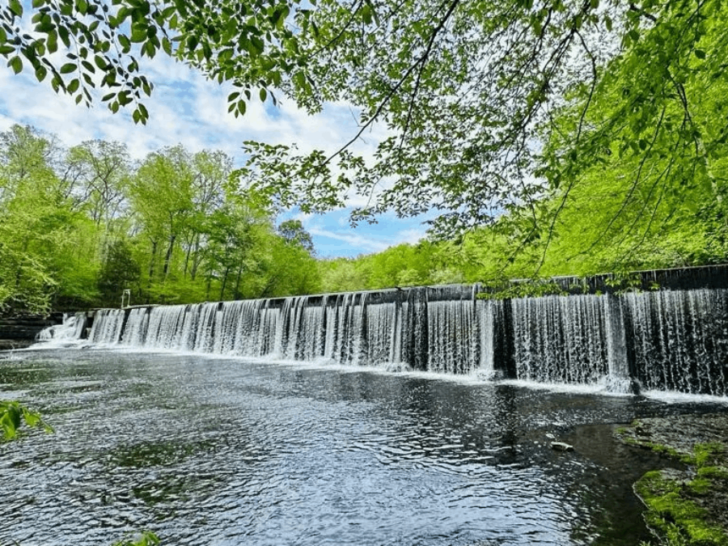
Tucked away in Manchester, Tennessee, Old Stone Fort State Archaeological Park sits at the meeting point of the Duck River and the Little Duck River, creating a landscape that feels both ancient and alive.
This isn’t your typical state park—it blends 2,000-year-old Native American earthworks with cascading waterfalls, riverside trails, and seasonal wildflower displays that transform the forest floor into a natural canvas. Whether you’re drawn to history, hiking, or simply escaping into nature for a few hours, this hidden gem delivers an experience that feels refreshingly different from the usual tourist stops.
At Old Stone Fort, Ancient History And Tennessee Scenery Share The Same Trail
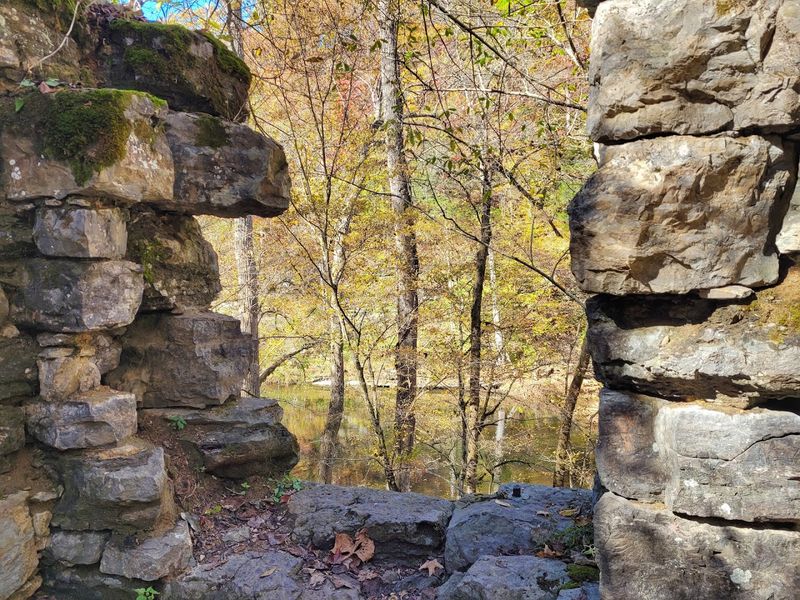
Walking the trails here means stepping into a timeline that stretches back two millennia. The earthworks weren’t built as a military fort—despite the name—but served as a ceremonial gathering place for the Middle Woodland period indigenous people. Walls made of earth and stone still outline the sacred enclosure, running along the bluff edges where the rivers meet below.
You’ll notice interpretive signs placed thoughtfully along the paths, offering context without overwhelming the natural experience. The museum near the entrance dives deeper into the archaeological discoveries, displaying artifacts and explaining the seasonal gatherings that once filled this space. It’s a small building, but it sets the stage for what you’re about to explore.
The trails themselves loop and intersect, letting you choose your own adventure. Some hug the river’s edge, others climb slightly for overlook views, and a few take you right past remnants of the ancient walls. The scenery shifts constantly—one minute you’re under a canopy of hardwoods, the next you’re standing at a waterfall’s edge.
History buffs and nature lovers don’t always find common ground, but this park manages to satisfy both without compromise.
Set Between Two Rivers, This Park Feels Distinct From The Start
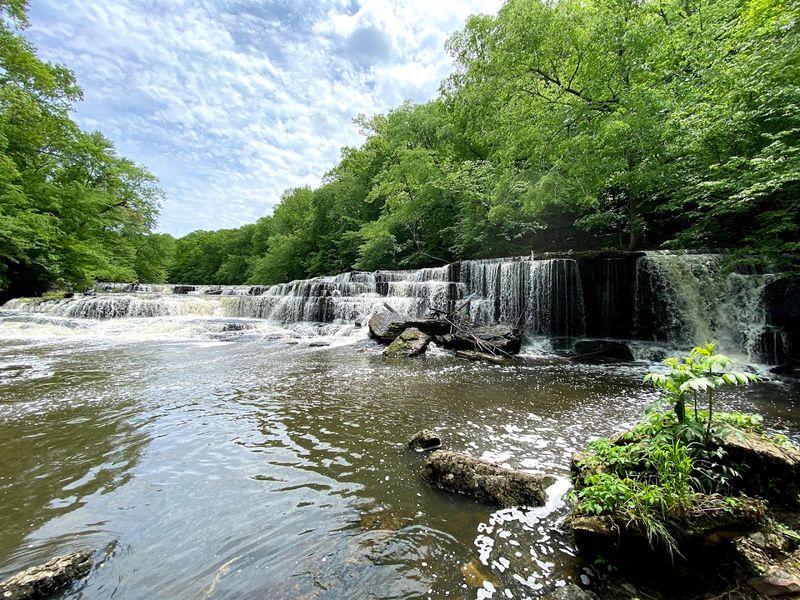
The geography here creates something special. The Duck River and Little Duck River carve around a peninsula of limestone bluffs, forming a natural boundary that ancient peoples recognized and used. Standing at certain viewpoints, you can see both waterways winding through the forest, their currents meeting and merging downstream.
This dual-river setup isn’t just visually striking—it shapes the entire hiking experience. Trails run parallel to each river, offering different perspectives and ecosystems to explore. The Duck River side tends to be wider and calmer, while the Little Duck moves faster through narrower channels, especially after recent rain.
The peninsula’s elevated position means you’re often walking along bluff edges with drop-offs that range from gentle slopes to more dramatic cliffs. Some sections have railings and defined paths, while others feel more rugged and require careful footing. It’s this variety that keeps the hike interesting mile after mile.
Families with younger kids often stick to the easier riverside sections, while more adventurous hikers venture onto the bluff trails for better vantage points. The park accommodates both without feeling overcrowded, even on busy weekends when the parking lot fills up quickly.
The Ancient Earthworks Give Old Stone Fort Its One-Of-A-Kind Sense Of Place
Most state parks offer natural beauty, but few can claim a 2,000-year-old ceremonial complex as their centerpiece. The earthworks form a roughly 50-acre enclosure following the natural bluff lines, with walls that once stood several feet high. Time and erosion have softened them, but you can still trace their path through the forest.
Archaeologists believe this site served as a meeting ground for indigenous groups from across the region, particularly during significant celestial events and seasonal transitions. The alignment of certain wall sections suggests astronomical knowledge and intentional design. Walking these same grounds connects you to something much larger than a casual hike.
The walls themselves are fascinating up close. They’re not uniform stone structures but rather combinations of earth, limestone slabs, and river cobbles. Some sections have been stabilized to prevent further erosion, while others remain as they were discovered.
Informational plaques explain construction techniques and cultural significance without turning the experience into a classroom lecture.
Photography enthusiasts love capturing the interplay between ancient human construction and the forest that’s reclaimed it. Moss covers many of the stones, tree roots wind through gaps, and wildflowers sprout from the earthen mounds each spring.
Waterfalls, River Views, And Wooded Paths Add To The Experience
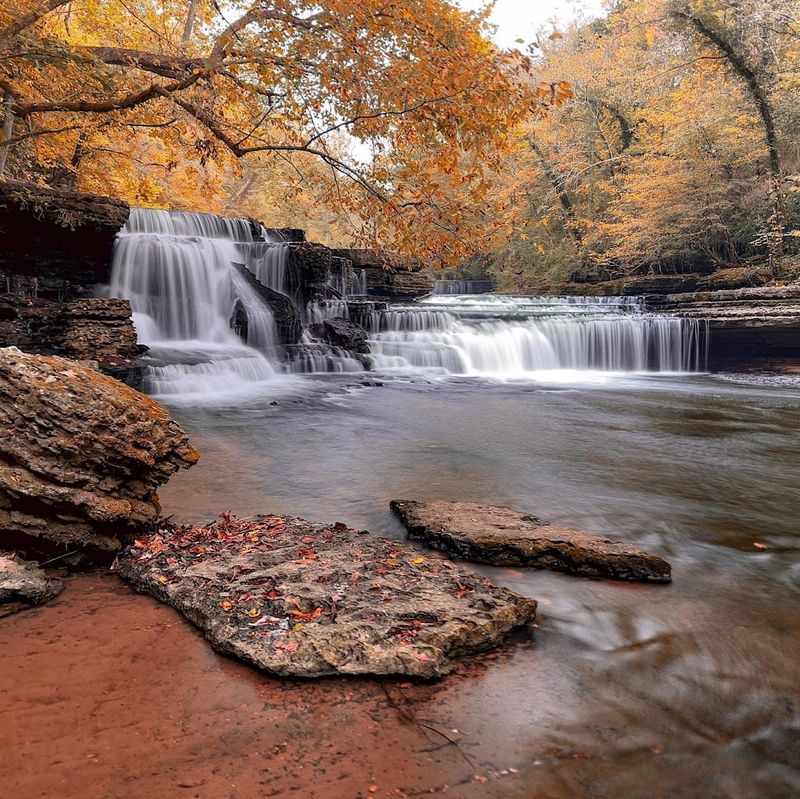
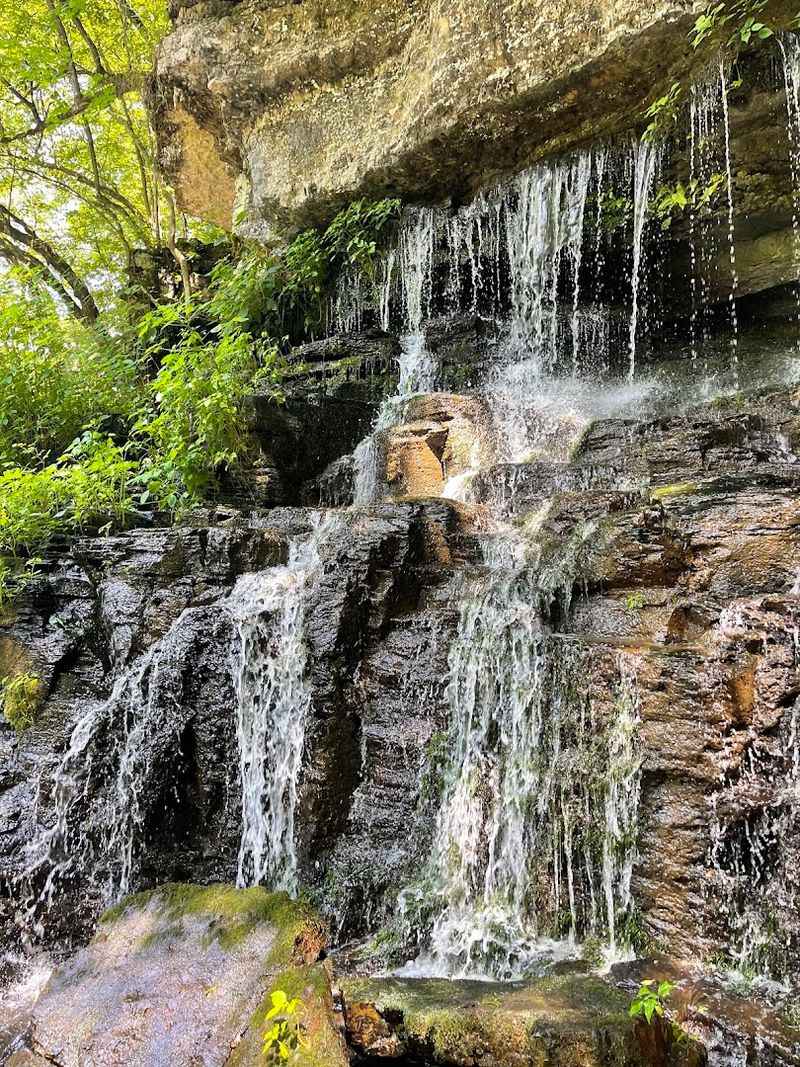
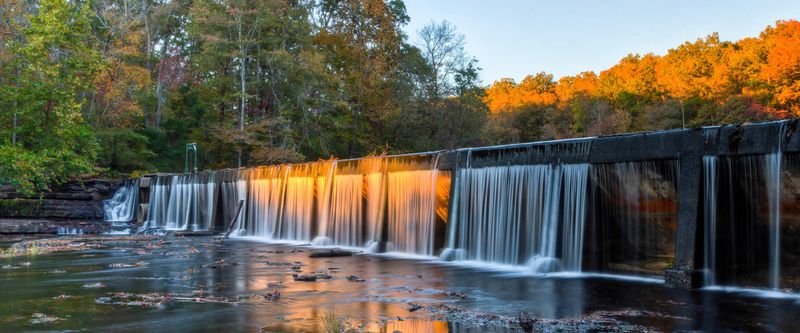
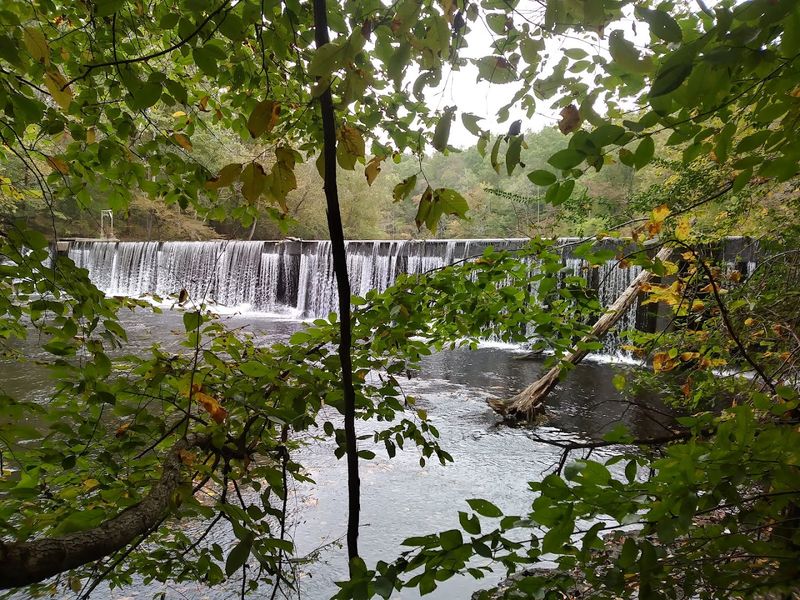
Big Falls and Little Falls are the park’s scenic showstoppers, and they’re accessible enough that most visitors make them priority stops. Big Falls drops in multiple tiers, creating a series of cascades that vary depending on recent rainfall. During spring runoff, the volume increases dramatically, while late summer sees it soften to more delicate streams.
Little Falls offers a different character—wider and more gentle, with easier access to the water’s edge. Families often wade here during warmer months, and the rocky shelves make natural seating areas for picnics or just watching the current flow past. Both falls are within a half-mile of the main parking area, making them achievable even for casual walkers.
Beyond the named waterfalls, smaller cascades and spring seeps appear throughout the trail system, especially after rain. The limestone geology creates natural drainage patterns that feed these seasonal water features. Wildflowers cluster near these moisture sources—trillium, bloodroot, and wild geranium in spring, followed by summer bloomers like cardinal flower near the water’s edge.
The wooded paths themselves deserve attention. Mature hardwoods create a canopy that filters sunlight into shifting patterns across the forest floor.
Why A Visit Here Feels Just As Rewarding For Nature Lovers As History Buffs
Some parks lean heavily into one identity, but Old Stone Fort refuses to choose between a nature destination and a historical site. The result is a place that satisfies multiple interests without feeling scattered or unfocused. You can spend your entire visit focused on the archaeology and leave satisfied, or ignore the historical context completely and still have an excellent hiking experience.
The trail system deserves credit for this balance. Rather than separating the earthworks from the natural features, the paths integrate them. You’ll round a bend following the river, then suddenly encounter a section of ancient wall.
Seasonal changes add another layer of interest. Spring brings wildflower explosions that carpet the forest floor—bloodroot, trillium, and Virginia bluebells create waves of color. Fall transforms the hardwood canopy into a patchwork of reds and golds, while winter reveals the underlying structure of both the landscape and the earthworks more clearly.
Birdwatchers appreciate the variety of habitats compressed into a relatively small area. River edges, upland forests, and limestone bluffs each attract different species. Spring and fall migrations bring waves of warblers and other songbirds through the park.
What To Know Before Spending The Day At Old Stone Fort State Archaeological Park
The park opens at 8 AM and closes at 4:30 PM daily, with extended hours during peak season. Arriving early, especially on weekends, ensures parking availability—the lot fills quickly by mid-morning during spring and fall. Restrooms are located near the playground area and inside the museum building, though only service animals are permitted in the museum itself.
Trail conditions vary significantly depending on recent weather. Some paths run along bluff edges with steep drop-offs and can be slippery when wet. Sturdy hiking shoes with good traction are strongly recommended over casual sneakers.
The trails offer different difficulty levels, and the park’s layout allows you to customize your route. The main waterfall loop is relatively easy and family-friendly, while the full perimeter trail involves more elevation change and rougher terrain. Trail markers are clear and frequent, but downloading a trail map beforehand or grabbing one at the entrance helps with navigation.
Dogs are welcome on leashes throughout the trail system but aren’t allowed inside the museum. Remember to pack out everything you bring in—trash receptacles are limited to the main facilities area. Cell service can be spotty along some trail sections.
For Travelers Looking Beyond The Usual Stops, Old Stone Fort Is A Tennessee Gem Worth Exploring
Located just off I-24 near Manchester, the park sits roughly 30 minutes from Murfreesboro and an hour southeast of Nashville. It’s close enough to major routes for an easy day trip but far enough off the beaten path to maintain a peaceful atmosphere. Most visitors stumble upon it accidentally or hear about it through word-of-mouth rather than seeing it on typical Tennessee tourism lists.
That relative obscurity works in your favor. Even on busy weekends, the trail system absorbs crowds well enough that you’ll have long stretches of solitude. Weekdays feel almost private, with parking lots hosting just a handful of vehicles.
The campground offers spacious sites for those wanting to extend their stay, with clean facilities and easy trail access right from the camping area.
The combination of features here—ancient archaeology, multiple waterfalls, two rivers, extensive trails, and genuine seasonal wildflower displays—creates something that feels more substantial than a quick roadside attraction. It’s a place that rewards a full day of exploration rather than a brief photo stop.
Whether you’re a Tennessee resident looking for a new weekend destination or a traveler passing through on I-24, Old Stone Fort delivers an experience that feels authentic and unhurried.