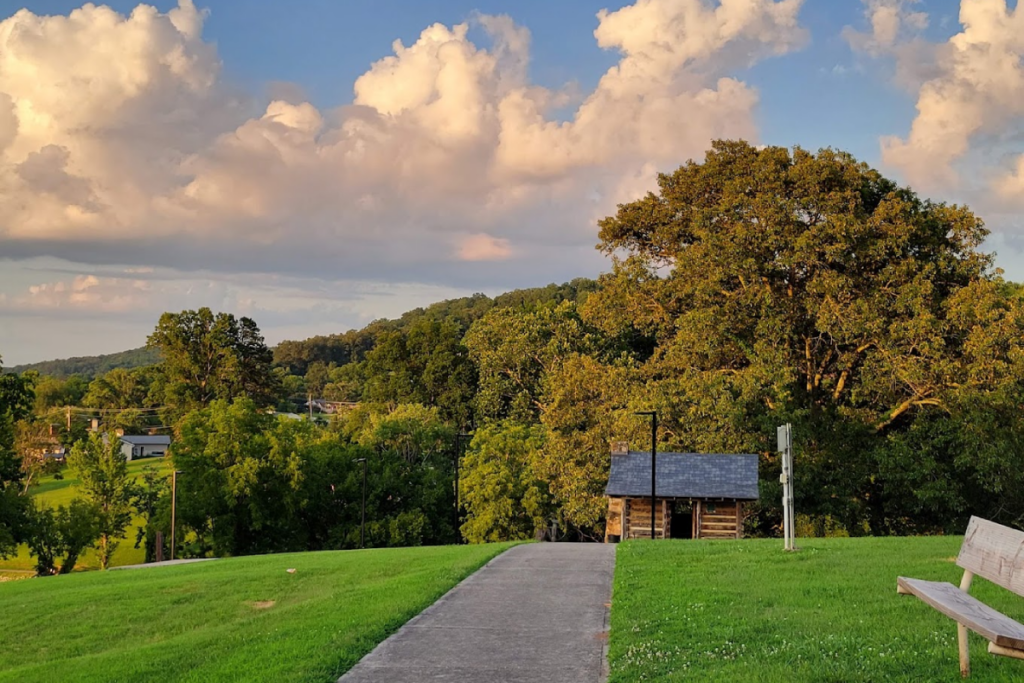
Tennessee holds more than two centuries of American stories within its borders. From ancient Indigenous mounds to Revolutionary-era forts, Civil War battlefields to Victorian villages, the state preserves places where history actually happened.
These 13 sites let you walk the same ground as presidents, explorers, soldiers, and pioneers who shaped the nation.
1. Andrew Johnson National Historic Site, Greeneville
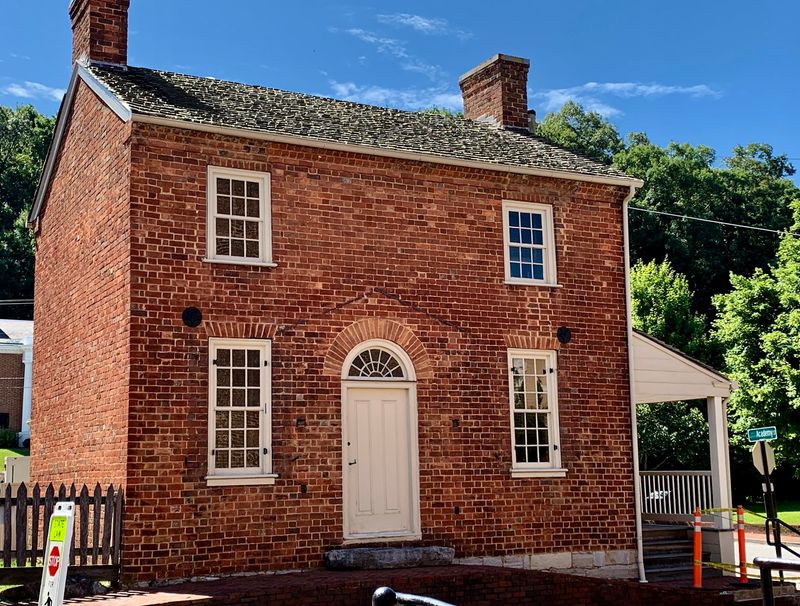
Walking into Andrew Johnson’s tailor shop feels like stepping through a time portal. The simple brick building where he stitched clothes and debated politics still stands in downtown Greeneville, complete with period tools and furnishings.
This is where a man who never attended formal school taught himself to read and write while working his trade.
The site includes multiple buildings that trace Johnson’s rise from tailor to president. His two homes show the progression of his political career, while the museum digs deep into his controversial presidency during Reconstruction.
You can see personal items, political documents, and exhibits that don’t shy away from the complicated parts of his legacy.
Johnson’s burial site sits on a hill overlooking the town he called home for most of his life. His grave is topped with an eagle and draped with an American flag, symbols he requested himself.
The monument offers great views and a quiet place to reflect on one of America’s most turbulent political periods.
Rangers lead programs that explore Johnson’s impeachment trial, his conflicts with Congress, and his attempts to reunify the nation after the Civil War. These aren’t boring lectures but engaging conversations about power, principle, and the messy reality of democracy.
The site does an excellent job showing how local politics can lead to national impact.
Plan to spend at least two hours here if you want the full experience. The buildings are within walking distance of each other in historic downtown Greeneville.
Summer can get steamy, so morning visits work best. The museum’s air conditioning provides welcome relief between outdoor explorations of Johnson’s world.
2. Tipton-Haynes State Historic Site, Johnson City
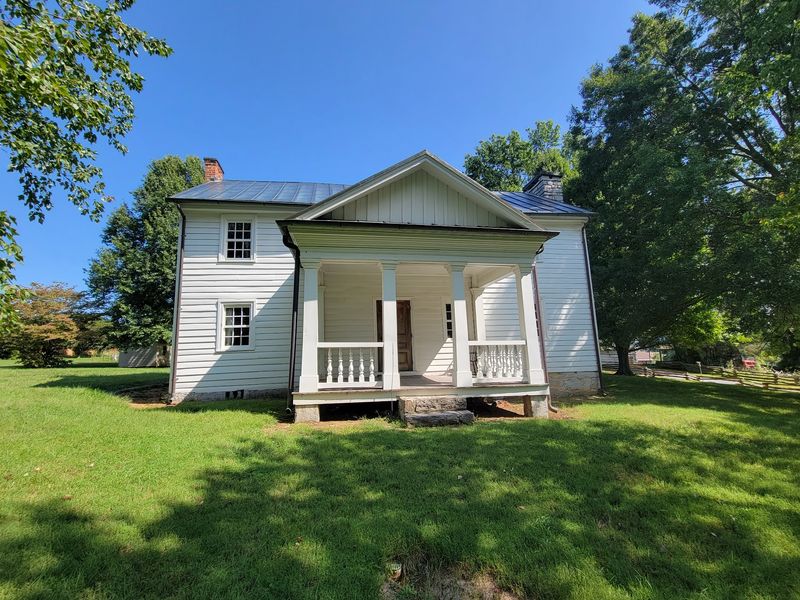
This property packs more history per acre than almost anywhere else in Tennessee. The land has witnessed Indigenous activity, frontier settlement, Revolutionary War drama, a thriving 19th-century farm, and Civil War conflict.
Each layer of history left its mark on the landscape and buildings you can explore today.
The centerpiece is a beautiful limestone house that grew from a simple cabin into an elegant home over several decades. Colonel John Tipton built the original structure in the 1780s, and later owner Landon Carter Haynes expanded it significantly.
Walking through the rooms, you see how Tennessee architecture evolved as the frontier became more civilized and prosperous.
Outside, the property includes a cave spring that provided water for centuries, a buffalo trail worn into the limestone, and outbuildings that show how a self-sufficient farm operated. The spring stays a constant cool temperature year-round and was crucial for survival in early Tennessee.
Costumed interpreters bring the site to life during special events, demonstrating period crafts and daily tasks. You might see blacksmithing, cooking over an open hearth, or textile work using authentic techniques.
These demonstrations make history tangible in ways that reading alone never could.
The site hosts excellent educational programs that connect different eras of Tennessee history. One visit might focus on Cherokee presence in the region, another on Civil War skirmishes that happened on the property.
The staff does great work helping visitors understand how national events affected real people in this specific place. Spring and fall offer the most comfortable weather for exploring the grounds and buildings.
3. Historic Rugby, Rugby
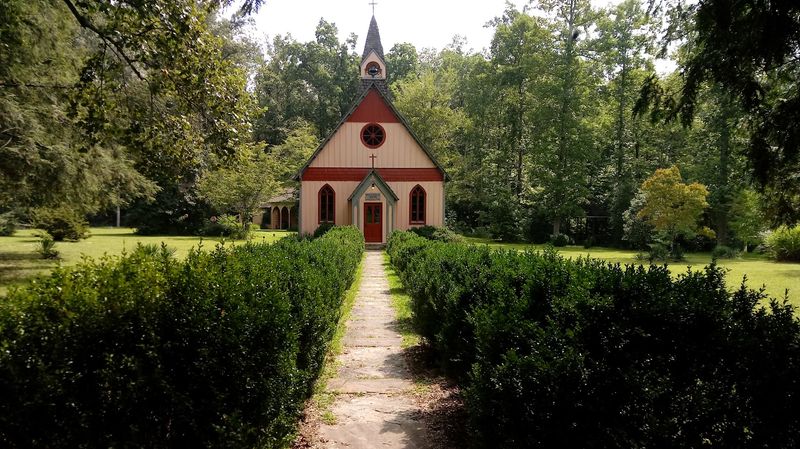
British author Thomas Hughes dreamed of creating a utopian community where younger sons of English gentry could build new lives. In 1880, he chose the Cumberland Plateau to make that dream real.
The result was Rugby, a planned Victorian village that attracted settlers from England and America with promises of equality, culture, and opportunity in the wilderness.
The experiment didn’t last long as a functioning community, but the village survived remarkably intact. Today you can tour original buildings including the 1882 Christ Church Episcopal, still holding services with its original organ and stained glass.
The Thomas Hughes Free Public Library contains 7,000 Victorian-era volumes on its original shelves, making it one of the oldest public libraries in continuous operation in Tennessee.
Walking Rugby’s quiet streets feels genuinely different from other historic sites. The British influence shows in the architecture, the layout, and even the plants in restored gardens.
Board-and-batten cottages with gingerbread trim sit among towering trees, creating an atmosphere that’s equal parts Appalachian and English countryside.
Guided tours reveal fascinating stories of the people who came here seeking fresh starts. Some succeeded, others failed spectacularly, but all left behind letters, diaries, and artifacts that paint vivid pictures of Victorian life on the American frontier.
The contrast between their refined cultural aspirations and the rough reality of frontier Tennessee makes for compelling history.
The village hosts Victorian-themed events throughout the year, including a famous Christmas celebration that transforms the site with period decorations and traditions. Spring wildflowers carpet the surrounding plateau, making it an especially beautiful time to visit.
Plan for a half-day to fully appreciate the buildings, museum exhibits, and scenic trails that wind through the historic district.
4. Fort Loudoun State Historic Park, Vonore
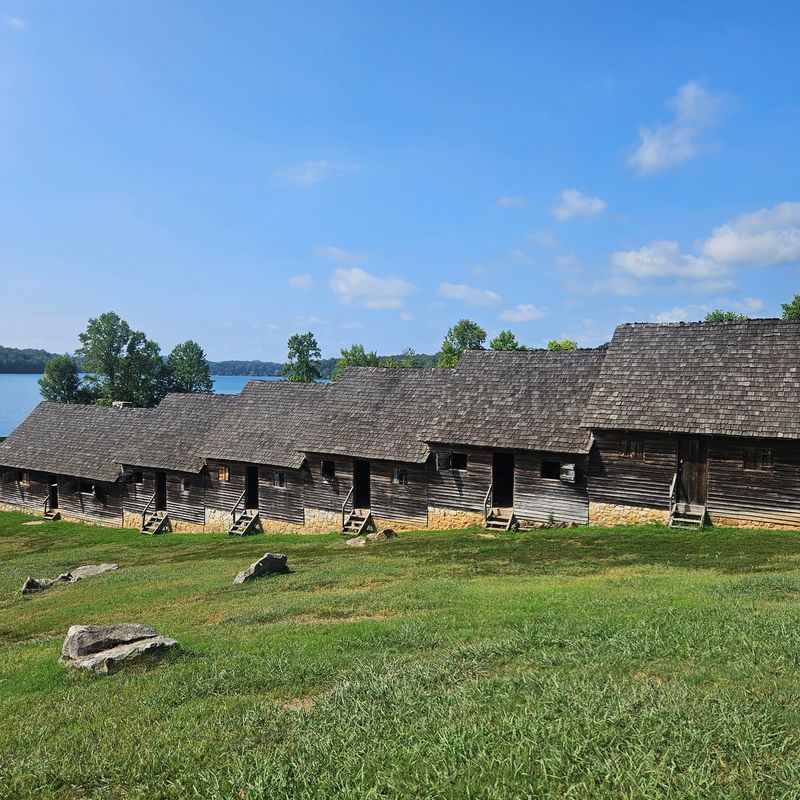
Britain built this fort in 1756 deep in Cherokee territory, making it the westernmost British outpost in North America at the time. The location wasn’t random but strategic, placed to strengthen the alliance between the British and Cherokee against French expansion.
For a few years, it worked, serving as a hub for trade, diplomacy, and military coordination.
Then everything fell apart. Tensions escalated, the alliance crumbled, and in 1760 the Cherokee laid siege to the fort. After months of dwindling supplies, the British garrison surrendered and attempted to retreat. Cherokee warriors attacked during the withdrawal, killing many soldiers in what became one of the most significant British defeats during the colonial period.
Today’s reconstruction sits near the original location, which now lies underwater due to Tellico Lake. The rebuilt fort uses archaeological evidence and historical records to recreate the layout, buildings, and fortifications as accurately as possible.
Walking through the wooden palisade gates and into the compound gives you a real sense of how isolated and vulnerable this outpost must have felt.
The visitor center does excellent work explaining both British and Cherokee perspectives on the fort’s history. Exhibits include artifacts recovered before the lake flooded the original site, plus displays on 18th-century military life and Cherokee culture.
This balanced approach helps visitors understand the complex relationships and conflicts that defined the colonial frontier.
Rangers offer programs on colonial military tactics, Cherokee history, and the archaeological work that made the reconstruction possible. The lakeside setting is gorgeous, especially in fall when the surrounding mountains explode with color.
Bring a picnic and plan to explore the trails that connect the fort to other parts of the park. Summer weekends sometimes feature living history demonstrations with period-dressed interpreters.
5. Fort Southwest Point State Historic Park, Kingston
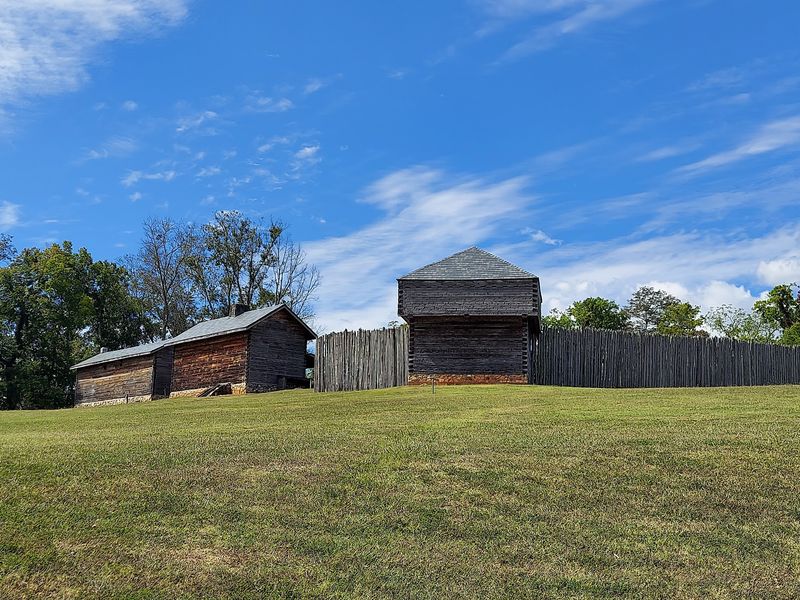
Federal troops built this fort in 1797 at a crucial river junction where the Clinch meets the Tennessee. The location gave them control over water routes and positioned them to manage relations with the Cherokee Nation during a tense period of American expansion.
For nearly two decades, Fort Southwest Point served as military headquarters, supply depot, and the office of the Cherokee Indian agent.
The fort was larger and more sophisticated than most frontier posts. At its peak, it included blockhouses, barracks, officers’ quarters, a hospital, and various support buildings surrounded by a wooden stockade.
Soldiers stationed here dealt with everything from routine supply management to delicate diplomatic negotiations that could mean peace or war with the Cherokee.
Archaeological excavations have revealed incredible details about daily life at the fort. Researchers found buttons, buckles, pottery fragments, tools, and even gaming pieces that soldiers used to pass time between duties.
These discoveries informed the reconstruction of several buildings you can explore today, including a blockhouse that shows how troops lived and worked on the frontier.
The site’s museum displays artifacts and tells stories that go beyond military history. You’ll learn about the Cherokee families who lived nearby, the enslaved people who labored at the fort, and the complex web of relationships that defined this multicultural frontier community.
The exhibits avoid simplistic narratives and present the messy reality of early American expansion.
Walking the grounds, you can still see earthwork remains from the original fortifications. Interpretive signs explain the fort’s layout and function while trails lead to overlooks with views of the river junction that made this location so important.
The park hosts living history events several times a year when costumed interpreters demonstrate military drills, frontier crafts, and cooking techniques from the early 1800s.
6. Wynnewood State Historic Site, Castalian Springs
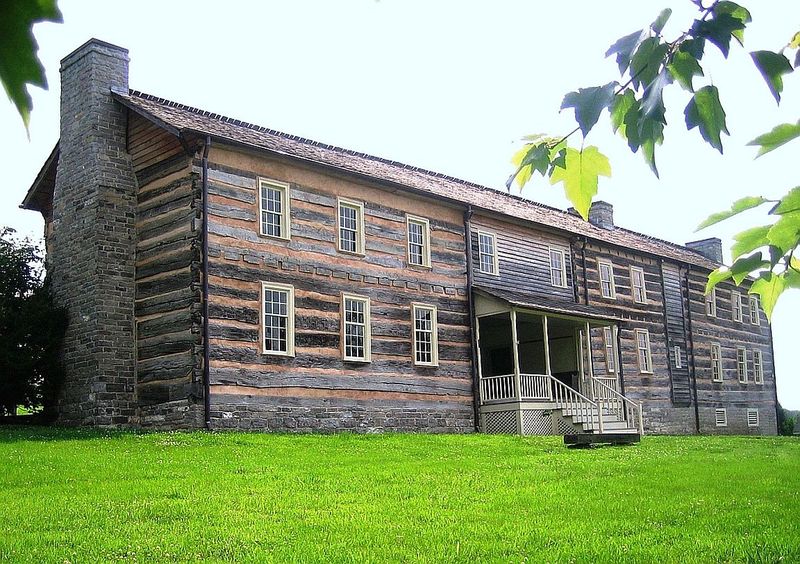
This massive log structure stretches 142 feet long, making it one of Tennessee’s largest surviving log buildings. Built in 1828 as Castalian Springs Inn, it served stagecoach travelers on the busy route between Knoxville and Nashville.
Imagine bone-rattling coach rides ending here, where guests could finally eat a hot meal, sleep in a real bed, and hear news from other travelers passing through.
The building’s scale is impressive even today. Constructed from massive logs joined with dovetail notches, it required serious engineering skill and enormous amounts of timber.
Walking through the rooms, you notice details like wide plank floors, huge fireplaces, and hand-hewn beams that show the craftsmanship of early Tennessee builders.
Wynnewood changed hands and purposes several times over the decades. After its stagecoach days ended, it served as a family home, a Civil War hospital, and eventually fell into disrepair.
Preservationists fought to save it, and after extensive restoration work, the site reopened to visitors who can now appreciate this remarkable piece of frontier architecture.
The property includes more than just the main building. Outbuildings, gardens, and grounds recreate the atmosphere of a working stagecoach stop. You can explore a detached kitchen where cooks prepared meals for hungry travelers, see where horses were stabled and changed, and walk paths that connect different parts of the complex.
Guided tours reveal stories of the people who built, operated, and stayed at Wynnewood. Some tales are dramatic, like Civil War soldiers recovering from wounds in the converted hospital. Others are quieter but equally fascinating, showing how ordinary people traveled and communicated in early Tennessee.
The site hosts special events including heritage craft demonstrations and seasonal celebrations.
7. Port Royal State Historic Park, Adams
Rivers were the interstate highways of early America, and Port Royal thrived as a river town where boats stopped to trade, load cargo, and let passengers stretch their legs. Founded in 1797 along the Red River, it buzzed with activity for decades as flatboats and steamboats connected Tennessee to markets downriver.
Then railroads changed everything, and Port Royal faded into quiet obscurity.
The 1859 Weakley General Store survived as a beautiful example of mid-19th century commercial architecture. Step inside and you’re surrounded by original shelving, counters, and the kind of goods frontier families needed.
The store sold everything from fabric and tools to medicines and candy, serving as community gathering spot and economic hub for the surrounding area.
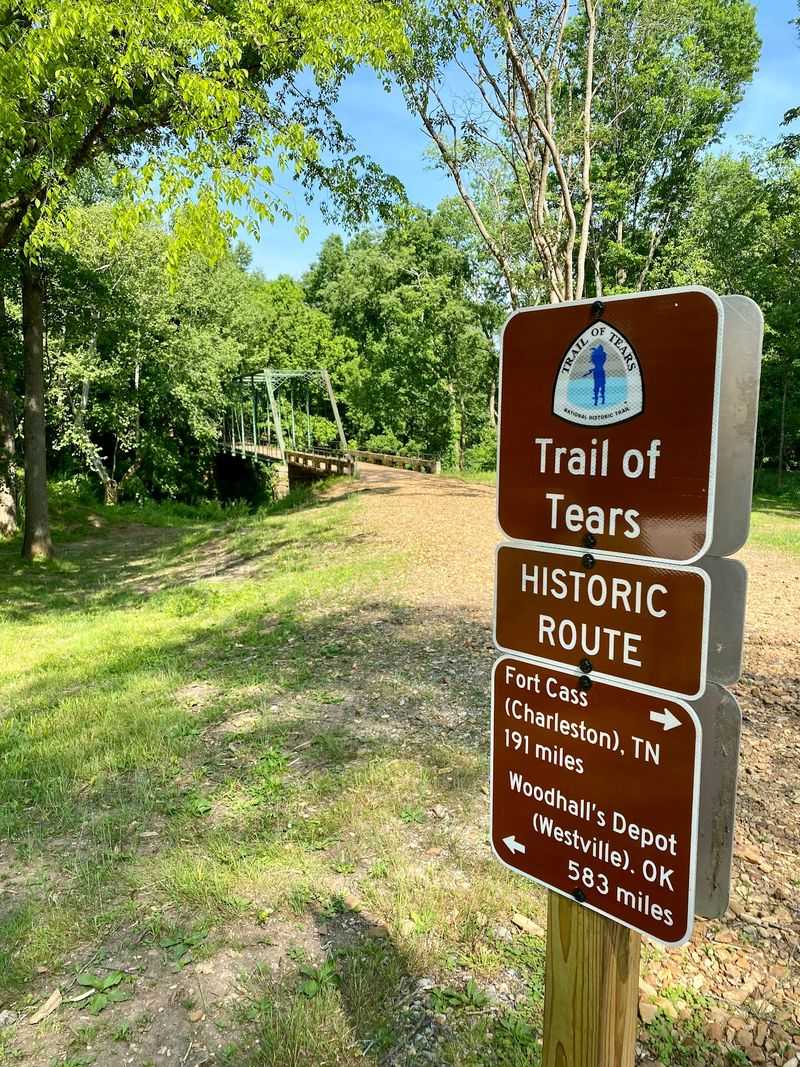
Port Royal holds deeper, more somber significance as a crossing point on the Trail of Tears. In the winter of 1838-1839, Cherokee people forcibly removed from their homelands passed through here on their devastating journey west.
The park preserves a section of that trail and interprets this painful chapter of American history with the respect and gravity it deserves.
Walking the preserved trail section, you follow the actual path Cherokee families traveled under armed guard. Interpretive signs share their stories and help visitors understand the human cost of removal policies.
It’s a powerful, emotional experience that connects Tennessee’s history to broader national tragedies.
The park combines these different historical layers into a cohesive visit. You can explore the general store, walk the Trail of Tears section, and see remnants of the old river town all in one trip.
Rangers offer programs that tie these stories together, showing how commerce, community, and forced migration all happened in this one small riverside location. The Red River provides a scenic backdrop, especially pretty in early morning light.
Bring walking shoes for the trails and plan time to really absorb the stories this place holds.
8. Meriwether Lewis Monument and Gravesite, Hohenwald
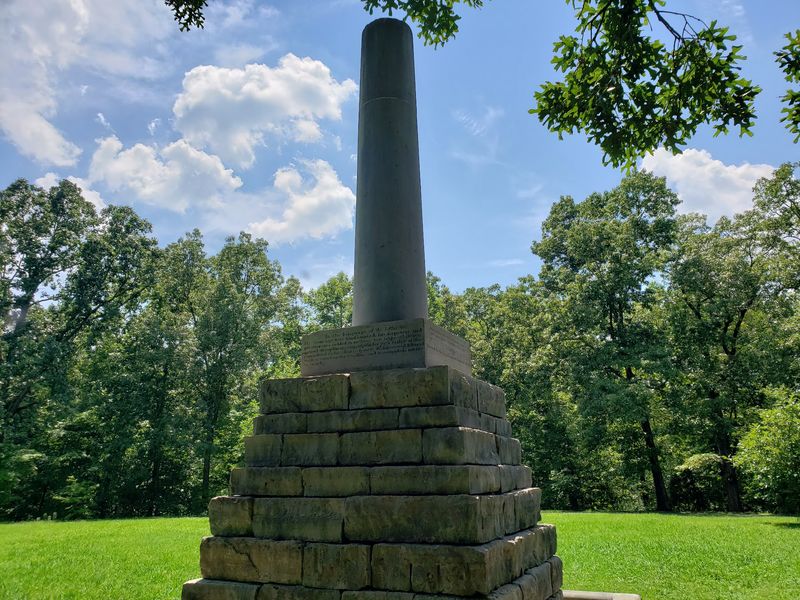
On October 11, 1809, explorer Meriwether Lewis died under mysterious circumstances at Grinder’s Stand, a rough inn along the Natchez Trace. He was only 35 years old and just three years removed from his triumphant return from the Pacific Ocean.
Whether his death was suicide or murder remains one of American history’s enduring mysteries, debated by historians and Lewis enthusiasts to this day.
Tennessee recognized the site’s importance remarkably early, protecting it beginning in 1848. That makes this one of the oldest historic preservation efforts in the state.
The monument erected over Lewis’s grave is a broken column, symbolizing a life cut short before its potential was fully realized. The symbolism hits hard when you consider everything Lewis accomplished and might have done if he’d lived longer.
The site sits along the scenic Natchez Trace Parkway, surrounded by woods that probably look much like they did in 1809. A short trail leads from the parking area to the monument and reconstructed cabin representing the type of building where Lewis spent his final hours.
The peaceful setting contrasts sharply with the violent or desperate end Lewis met here.
Interpretive exhibits explore Lewis’s life, the Lewis and Clark Expedition, and the various theories about his death. Rangers present the evidence without forcing conclusions, letting visitors draw their own judgments about what happened that October night.
The mystery adds a layer of intrigue that makes the site more than just another grave marker.
The Natchez Trace itself is worth exploring beyond just this stop. The parkway follows an ancient trail used by Indigenous peoples, then by settlers, traders, and travelers moving between Nashville and Natchez.
Lewis was traveling this route heading to Washington when he stopped at Grinder’s Stand. Spring wildflowers and fall foliage make the surrounding parkway especially beautiful for a longer drive or bike ride.
9. Carter House, Franklin
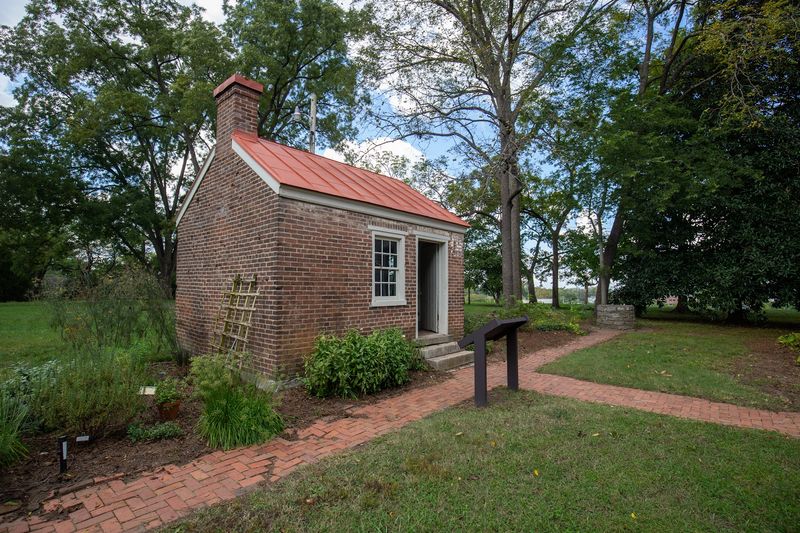
On November 30, 1864, the Battle of Franklin raged around and through the Carter family’s property. For five horrific hours, Confederate and Union forces clashed in what would become one of the Civil War’s bloodiest engagements.
The Carter family huddled in their basement while thousands of soldiers fought, died, and were wounded literally in their yard.
The house still bears scars from that terrible day. More than 1,000 bullet holes pock the exterior walls, silent testimony to the battle’s intensity. Inside, you can see where soldiers took cover, where the wounded were treated, and where the Carter family waited in terror for the fighting to end. Few historic sites offer such visceral, physical evidence of combat.
Captain Tod Carter, son of the family, fought with the Confederate army that attacked his own home. He was mortally wounded just yards from his front door and died in the house two days after the battle.
That personal tragedy within the larger military disaster makes the Carter House story especially poignant and memorable.
Guided tours don’t sugarcoat the battle’s brutality or the war’s causes. Knowledgeable guides explain military tactics, share soldiers’ accounts, and discuss how the battle fit into the larger Atlanta Campaign.
The tours balance military history with human stories, making the past feel immediate and real rather than distant and abstract.
The property includes the main house, outbuildings, and grounds that preserve the battlefield landscape. You can see the Federal entrenchments the Confederates attacked, understand the terrain that shaped the fighting, and visit the museum with artifacts recovered from the battlefield.
Carter House works closely with nearby Carnton Plantation to tell the full Battle of Franklin story. Plan to visit both sites if you want complete understanding of this crucial engagement.
November programs mark the battle’s anniversary with special tours and living history presentations.
10. Alex Haley Museum and Interpretive Center, Henning
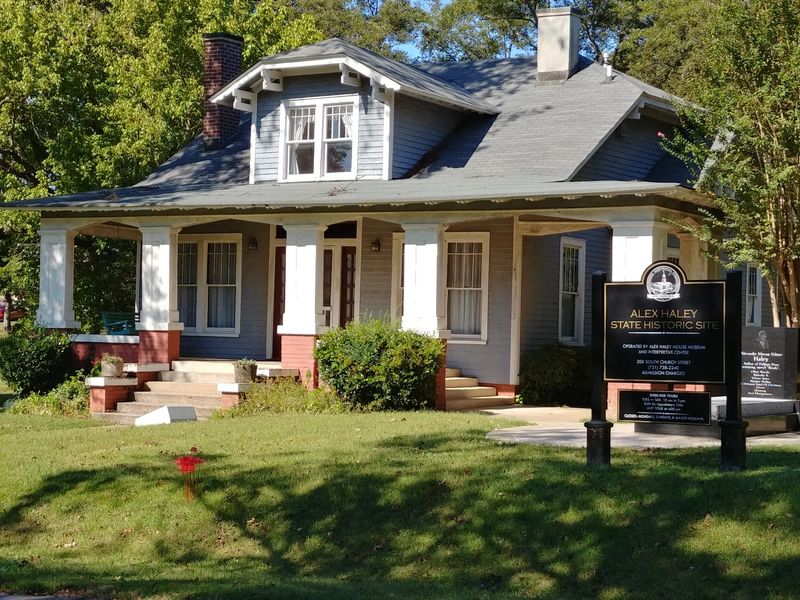
Alex Haley spent his boyhood summers on this front porch, listening to his grandmother and great-aunts tell family stories. Those stories, passed down through generations, eventually became Roots, the groundbreaking book and miniseries that changed how Americans understood slavery, genealogy, and African American history.
The house where it all began is now a museum that honors Haley’s legacy and explores his family’s remarkable journey.
Walking through the rooms where Haley lived feels intimate and personal. You see family photographs, personal items, and the spaces where he heard the stories that shaped his life’s work.
His grandmother Cynthia told him about Kunta Kinte, the African ancestor captured and enslaved, beginning the family narrative Haley would spend decades researching and writing.
The museum doesn’t just celebrate Haley’s success but examines his research methods, the controversies around Roots’ accuracy, and the book’s massive cultural impact. When Roots aired on television in 1977, it drew record audiences and sparked national conversations about race, history, and identity.
The museum’s exhibits place Haley’s work in context, showing both its achievements and its limitations.
Interpretive programs explore genealogy and family history research, inspired by Haley’s own journey tracing his roots. Staff help visitors understand how to research their own family stories and why those stories matter.
These programs make the museum relevant beyond just Haley fans, connecting to anyone interested in where they came from.
The site is officially part of Tennessee’s state historic sites system, recognizing Haley’s importance to Tennessee and American culture. The small town of Henning takes pride in its connection to Haley, and local volunteers help staff and maintain the museum.
Visit during Black History Month for special programming, or come during quieter times for a more contemplative experience. The museum is small, so an hour covers most exhibits, but the stories will stick with you much longer.
11. Pinson Mounds State Archaeological Park, Pinson
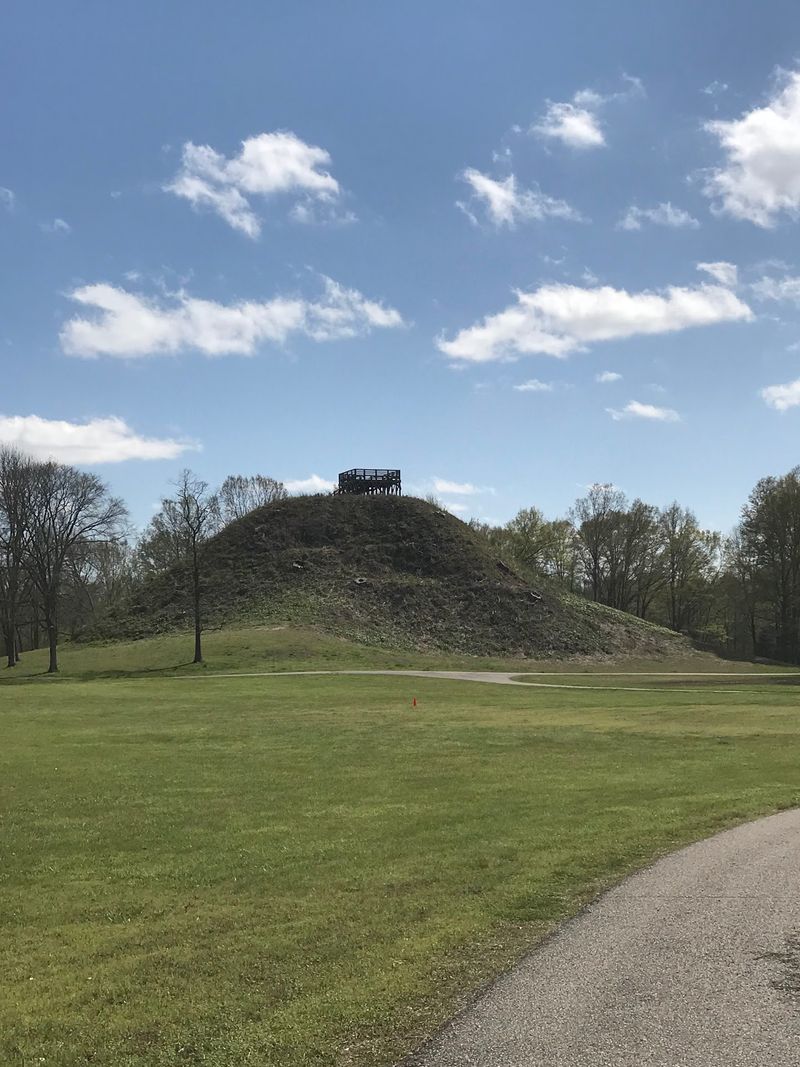
Nearly 2,000 years ago, Indigenous people built a ceremonial complex here that covered more than 400 acres. They moved millions of cubic feet of earth by hand, creating mounds, earthworks, and geometric enclosures for reasons archaeologists still work to fully understand.
Sauls Mound, the second-tallest surviving Indigenous mound in the United States, rises 72 feet above the surrounding landscape, a testament to the engineering skill and social organization of its builders.
Pinson Mounds represents the Middle Woodland period, a time when Native peoples across eastern North America built similar ceremonial centers. These weren’t villages where people lived daily but special places for gatherings, ceremonies, and possibly astronomical observations.
The sophistication required to design and construct these earthworks challenges outdated assumptions about prehistoric North American societies.
The park preserves at least 15 mounds plus various earthen enclosures and geometric shapes visible from aerial views. Walking trails connect different parts of the complex, letting you experience the site’s scale and layout.
Climbing to the top of Sauls Mound provides perspective on the landscape and a sense of accomplishment, though the wooden stairs make it easier than the original builders had it.
The museum does excellent work presenting what’s known about the mound builders while acknowledging gaps in our understanding. Artifacts found during archaeological excavations include pottery, tools, ornaments, and ceremonial objects that reveal details about the people’s lives and beliefs.
Interactive exhibits help visitors understand archaeological methods and why protecting sites like this matters for ongoing research.
Pinson Mounds offers crucial perspective in a list otherwise dominated by colonial and Civil War history. Indigenous peoples lived in Tennessee for thousands of years before European contact, and sites like this prove their societies were complex, organized, and capable of remarkable achievements.
Spring wildflowers bloom across the mounds, while fall offers cooler weather for hiking the five miles of trails. The park hosts an annual archaeology day with hands-on activities and expert presentations.
12. Shiloh National Military Park, Shiloh
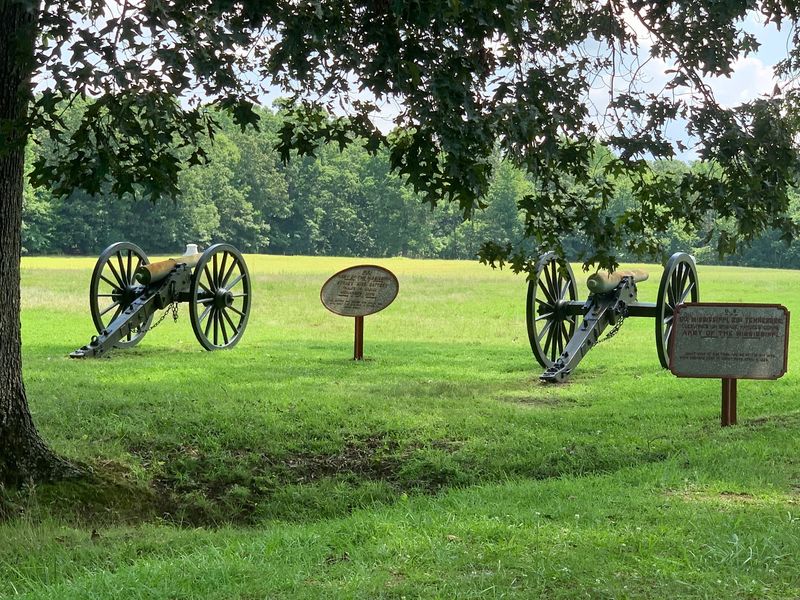
April 6-7, 1862, brought unimaginable violence to this quiet corner of southwestern Tennessee. Confederate forces launched a surprise attack on Union troops camped near Pittsburg Landing, beginning two days of savage fighting that left nearly 24,000 men killed, wounded, or missing.
Shiloh shattered illusions that the Civil War would be quick or easy, showing both sides the terrible cost ahead.
The battlefield remains remarkably well-preserved, with historic landscapes, monuments, and markers that help visitors understand the battle’s flow and fury. You can drive or bike a tour road that follows the fighting chronologically, stopping at key locations like the Hornet’s Nest, Bloody Pond, and the Peach Orchard.
Each stop reveals another chapter of the battle’s complex story.
Shiloh National Cemetery holds the graves of nearly 4,000 soldiers, most of them unknown. Walking among the white headstones drives home the battle’s human cost more powerfully than any statistic.
The cemetery’s peaceful beauty contrasts sharply with the violence that brought these men here, creating a space for reflection on war’s waste and sacrifice.
The visitor center features a film and museum exhibits that provide essential context before exploring the battlefield. You’ll learn about the commanders, the strategies, the weapons, and the soldiers who fought here.
The exhibits include artifacts recovered from the battlefield, personal items that belonged to individual soldiers, and detailed battle maps that clarify the confusing two-day engagement.
Rangers offer excellent programs and battlefield tours that bring the history to life. They explain tactics, share soldiers’ accounts, and help visitors understand what it felt like to fight in dense woods where visibility was measured in yards.
Archaeological work continues at Shiloh, regularly revealing new details about the battle and the people who fought it. Spring visits mean dealing with Tennessee heat and humidity, so early morning tours work best.
Fall offers comfortable weather and beautiful colors across the historic landscape. Plan a full day to properly explore this important but sobering site.
13. Johnsonville State Historic Park, New Johnsonville
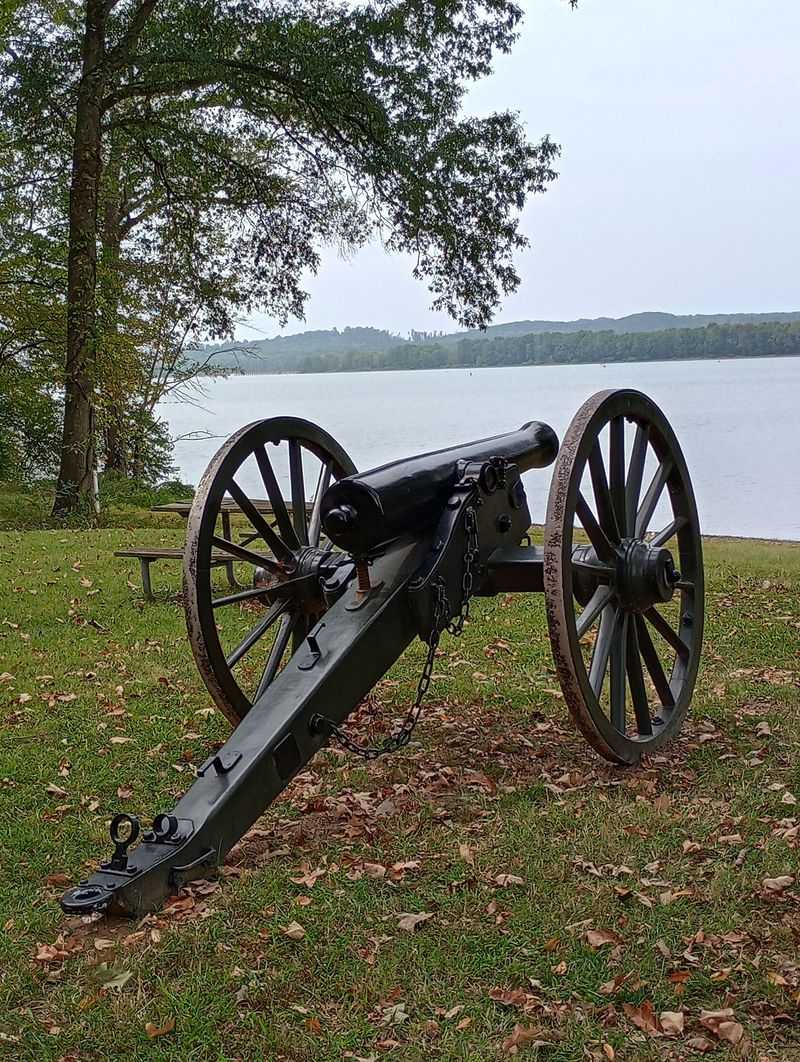
During the Civil War, the Union army built a massive supply depot here along the Tennessee River. Johnsonville became a crucial logistics hub, storing weapons, ammunition, food, and equipment needed to support military operations across the region.
Riverboats and trains converged here, making it a vital link in the Union supply chain and an irresistible target for Confederate forces.
In November 1864, Confederate General Nathan Bedford Forrest led a daring raid that destroyed much of the depot. His artillery bombarded the warehouses and riverboats, setting off spectacular explosions as ammunition stores detonated.
The raid didn’t change the war’s outcome but demonstrated how vulnerable supply lines remained even in areas the Union thought secure.
Today’s park preserves earthwork fortifications the Union built to protect the depot. You can walk the same defensive lines soldiers manned, see where artillery was positioned, and understand the site’s strategic importance.
The Tennessee River setting is beautiful, and the earthworks remain surprisingly well-defined despite 160 years of weather and vegetation.
The museum tells the depot’s story through artifacts, photographs, and exhibits about Civil War logistics. Most battle sites focus on combat, but Johnsonville highlights the unglamorous but essential work of moving and storing supplies.
This perspective helps visitors understand how armies actually functioned beyond the dramatic moments of battle.
Rangers lead programs on the Forrest raid, Civil War river warfare, and the lives of soldiers and civilians who worked at the depot. Special events sometimes include living history demonstrations with period-dressed interpreters showing military camp life and 19th-century skills.
Trails wind through the park beyond just the historic area, offering chances to spot wildlife and enjoy river views. Fishing is popular here, and the boat ramp provides river access for modern recreation alongside historical exploration.
Share this story