A blacksmith’s hammer rings through the trees while bread browns in a beehive oven and a schoolmaster waits to test visitors on their arithmetic.
Just a few miles from Cape May’s beaches, Historic Cold Spring Village trades Victorian mansions and boardwalk crowds for an earlier chapter of South Jersey life.
This 30-acre open-air museum gathers restored buildings, working trades, farm animals, and historically dressed interpreters into one remarkably walkable village. The focus is not on famous generals or grand estates.
Instead, the village shows how ordinary people cooked meals, printed notices, shaped iron, taught children, and made nearly everything they needed by hand.
That makes the experience feel less like a conventional museum visit and more like wandering into a community that happens to be running about two centuries behind schedule.
For families, history enthusiasts, and curious Shore visitors, it offers a wonderfully different way to spend an afternoon near Cape May.
Step Into South Jersey’s Age of Homespun
The period between roughly 1789 and 1840 is sometimes called South Jersey’s “age of homespun,” and the name tells you plenty. Rural families could not place an online order when they needed a basket, a cooking pot, or a new shirt.
Much of what they used had to be grown, shaped, sewn, forged, or traded within the community. Historic Cold Spring Village builds its interpretation around that practical, labor-intensive world.
This was also a period of major change. The young United States was finding its footing, transportation was improving, and small communities throughout Cape May County were becoming connected to wider markets.
Still, daily life remained intensely local. A farmer depended on a blacksmith to repair tools.
Families relied on mills, general stores, craftspeople, and one another. Even a simple loaf of bread represented hours of planting, harvesting, grinding, mixing, heating, and baking.
The village keeps its attention on those everyday systems. Instead of filling rooms with ropes and “do not touch” signs, it explains why a tool mattered and who would have used it.
Domestic work receives just as much attention as commercial trades. At the Spicer-Leaming House, for example, demonstrations may include open-hearth cooking and other household tasks once handled by women in rural communities.
The Corson-Hand House explores fiber arts such as carding wool, spinning thread, and weaving cloth. That grounded approach is what separates the place from a collection of old buildings.
Visitors begin to see how closely connected every job was. The basketmaker, farmer, printer, woodworker, and homemaker were all part of the same local economy.
By the end of a visit, “homespun” no longer sounds like a decorative style. It describes a way of life built around skill, patience, and an impressive amount of work before breakfast.
Wander Through 30 Acres of Living History
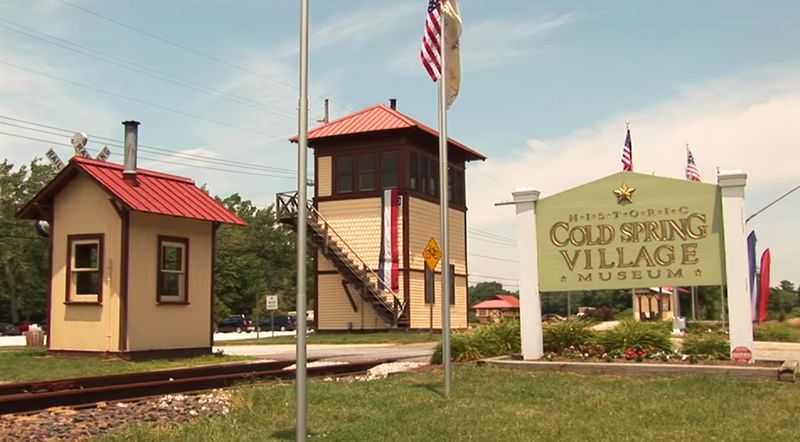
Three miles north of Cape May, the Shore’s usual soundtrack changes quickly. Traffic fades, gravel crunches underfoot, and shaded paths curve among weathered houses, workshops, barns, gardens, and split-rail fences.
Historic Cold Spring Village covers 30 acres, giving the museum enough room to feel like a small rural settlement rather than an exhibit arranged inside one building. The layout rewards an unhurried pace.
Visitors can move from a one-room schoolhouse to a working farm, stop beside a blacksmith shop, and then duck into a modest home that reveals how a family cooked and slept with limited space.
Trees provide welcome shade during the hotter part of the Cape May summer, although comfortable walking shoes are still a smart choice.
Most of the experience is outdoors, and exploring the village involves more walking than the word “museum” might suggest. The property began taking shape in 1973, when Dr. Joseph Salvatore and Patricia Anne Salvatore acquired Cold Spring Grange No. 132.
Over the following eight years, the family collected historic structures, furnishings, tools, and household objects from around the county.
Historic Cold Spring Village opened to the public on May 23, 1981, with the goal of recreating a rural South Jersey community rather than preserving one famous person’s home.
That origin explains the village’s wonderfully irregular feel. The buildings were not designed as matching attractions.
They came from different towns, served different purposes, and carry the marks of generations who adapted them as needs changed. One may have functioned as a home before becoming a business; another might reveal construction methods specific to Cape May County.
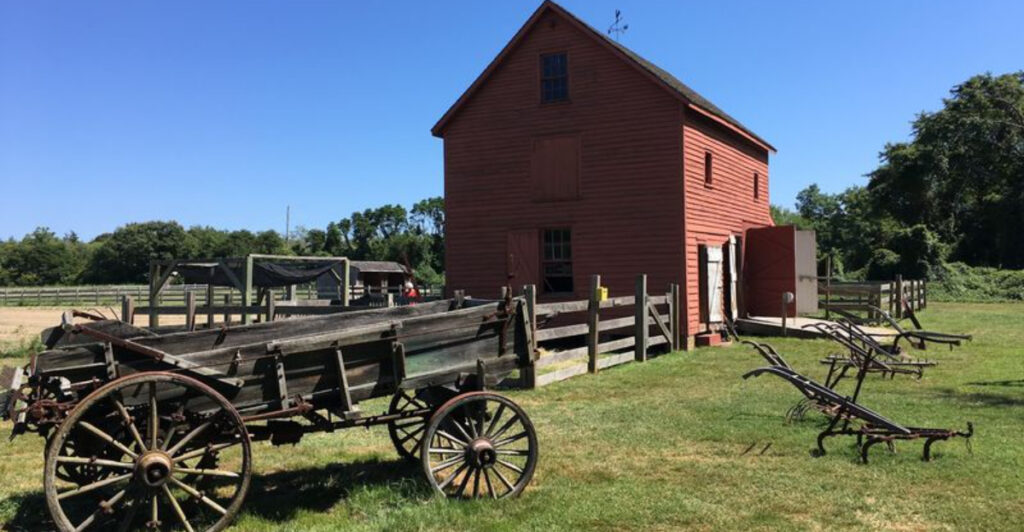
The grounds also include an eight-acre organic farm complex where heirloom crops are grown. The Lewis Corson Gandy Barn, built around 1880, houses farm equipment and animals.
It is a reminder that the village was not merely surrounded by agriculture. Farming shaped nearly every part of the community’s schedule, diet, economy, and survival.
Explore More Than Two Dozen Restored Buildings
Moving a historic building is a delicate business. Moving enough of them to create an entire village sounds almost unreasonable, yet that is precisely what happened here.
More than two dozen preserved and reconstructed structures now help tell the story of Cape May County, with many relocated from communities such as Tuckahoe, Dennisville, Dias Creek, and Cape May Court House.
Among the oldest is Coxe Hall Cottage, believed to date to around 1691 and considered the oldest known surviving building in Cape May County.
Its compact rooms illustrate domestic life without the polished grandeur found in Cape May’s famous Victorian houses. At the other end of the timeline stands Cold Spring Grange No. 132, built in 1912.
It is the only village building still occupying its original site and is listed on both the New Jersey and National Registers of Historic Places. The Marshallville Schoolhouse, dating to about 1850, presents the familiar image of a one-room rural school.
Inside, the schoolmaster or schoolmistress may quiz visitors using the teaching methods and expectations of the period. The 1836 Dennisville Inn offers another side of community life.
Built as a tavern and inn for Thomas Henderson, it once served travelers moving through Dennis Township and now contains a restored tavern and dining room. Small buildings often have the best stories.
The Village Print Shop occupies an approximately 1830 house once inhabited by Methodist Episcopal preacher David Gandy and his family. The Tuckahoe Shop, built around 1855, has served as a tailor shop, dry-goods store, municipal hall, and building and loan association.
Today, it houses bookbinding demonstrations. These structures are more than architectural props.
Original joists, uneven rooms, hand-planed boards, lean-to additions, and narrow stairs reveal how buildings evolved alongside the people using them. Nothing feels standardized because rural South Jersey itself was not standardized.
Homes doubled as workplaces, shops changed purposes, and useful buildings were altered instead of casually replaced.
Watch Forgotten Trades Come Back to Life
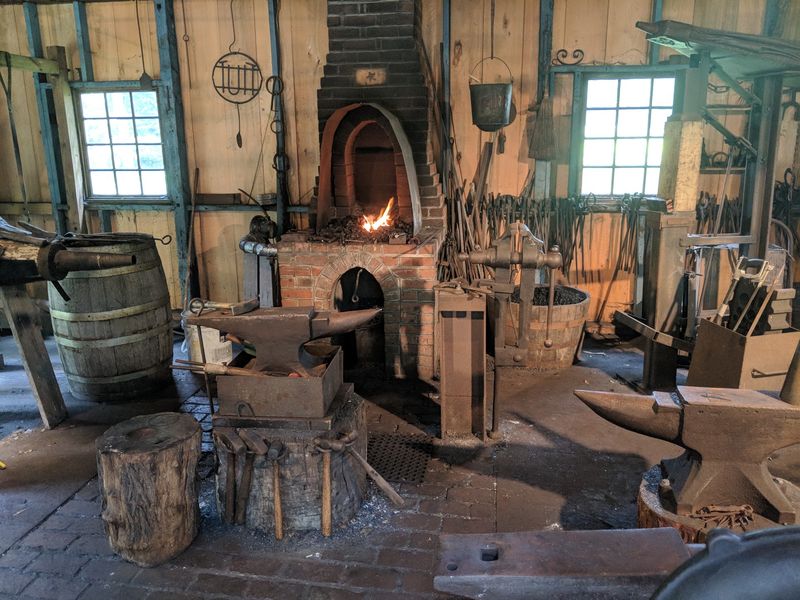
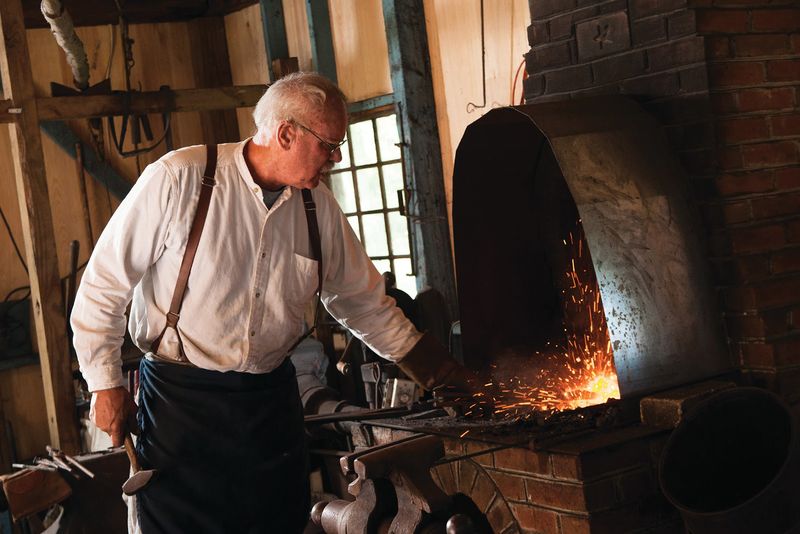
Follow the sharp clang of metal on metal and you will eventually reach the J. Finley Blacksmith Shop.
Inside, the forge demonstrates why the village blacksmith was part mechanic, part manufacturer, and part emergency problem-solver. Blacksmiths produced horseshoes, nails, tools, hinges, and repairs, while craftspeople in coastal Cape May County also supplied the region’s shipbuilding industry.
The shop itself was built around 1886 using timbers recycled from an earlier structure, probably a barn. Its wide double doors, unfinished interior, and single-story design reflect the practical construction of local blacksmith shops.
When the forge is operating, the heat, noise, and smell do more explanatory work than a wall label ever could. Elsewhere, printing demonstrations show how type was arranged by hand and pressed onto paper long before anyone could correct a typo with a keystroke.
In the Bookbindery, visitors can see the careful steps required to assemble and finish books. The basketmaker works on the porch of the circa-1830 David Taylor Shop, bending natural materials into containers that had to survive daily use rather than sit prettily on a shelf.
Fiber arts provide a different rhythm. At the 1837 Corson-Hand House, interpreters demonstrate spinning, weaving, and wool carding, with lacemaking and wool dyeing appearing during selected programs.
The pottery shop and kiln explain how common vessels were formed by hand, while woodworking demonstrations highlight the precision required when every cut depended on muscle, experience, and a sharp tool. Food preparation belongs in this same conversation.
Open-hearth cooking required constant attention to heat, timing, and fuel. Beehive-oven baking could produce sturdy loaves such as sourdough or corn, wheat, and rye bread, but only after the oven had been heated correctly and the embers managed.
Demonstrations vary by day, which keeps the village from feeling staged down to the minute. You may not see every trade operating during one visit.
What you do see, however, makes a convincing case that “old-fashioned simplicity” involved some extremely complicated skills.
Meet the Costumed Villagers Who Bring History Alive
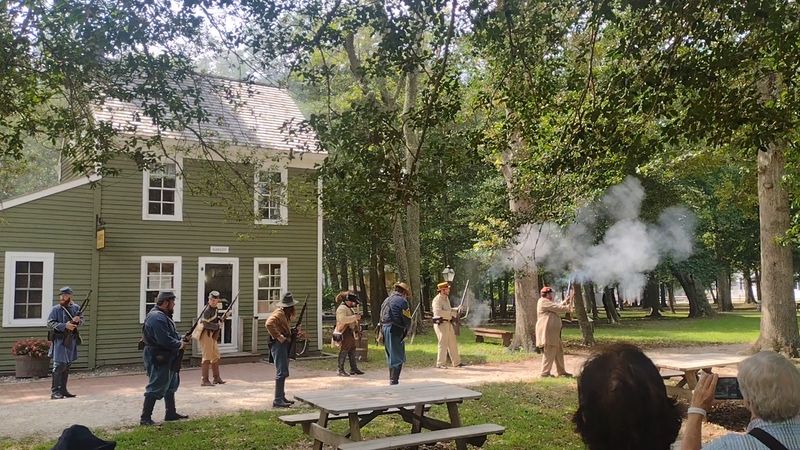
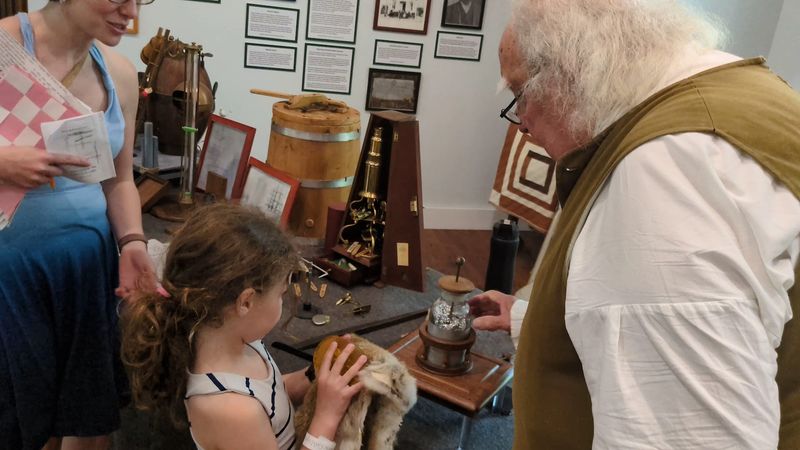
A loom without a weaver is an artifact. Put a knowledgeable interpreter beside it, and it becomes the center of a conversation about clothing, household labor, trade, and the price of making one usable length of fabric.
Historic Cold Spring Village relies on historically clothed interpreters to connect those dots, and they are the reason children often stay interested longer than their parents expect. These interpreters do more than recite memorized dates.
Each one works within a specific setting, whether that is a schoolroom, kitchen, print shop, farm, or craft workshop.
Ask why a house has such small rooms, how a family stored food, or what happened when a farm tool broke, and the answer usually leads somewhere more interesting than a textbook summary.
The schoolhouse is especially good at turning the tables on visitors. Modern students accustomed to laptops and group projects may find themselves facing recitation, strict classroom manners, and lessons delivered to several age groups in the same room.
Adults are not necessarily safe from the schoolmaster’s questions, either. At the Spicer-Leaming House, domestic demonstrations reveal the relentless schedule behind running a rural household.
Cooking over an open hearth was only one job among many. Gardening, preserving food, cleaning, sewing, and managing supplies demanded knowledge that was rarely recorded with the same attention given to politics or war.
The interpretation also allows the village to discuss the experiences of people whose lives were often overlooked in older historical displays, including women, laborers, craftspeople, and African Americans in 19th-century Cape May County.
That broader view matters because a working village was never the product of one occupation or one kind of family.
The best conversations tend to begin with ordinary questions. How long does it take to make a basket? What did children do after school? Did people really wear all those layers in summer?
The answers make the past recognizable without pretending it was quaint, easy, or universally pleasant.
Plan a Memorable Day at Historic Cold Spring Village
Historic Cold Spring Village is located at 735 Seashore Road in Cape May, close enough to combine with a Shore weekend but different enough to deserve several hours of its own.
For the 2026 regular season, the village is open Thursday through Sunday from 11 a.m. to 4 p.m. through Labor Day weekend, followed by selected special-event weekends in the fall.
Regular single-day admission is $16 for adults and $12 for children ages 3 through 12. Children younger than 3 enter free.
Active-duty military members receive free admission with identification, while military veterans receive a 10 percent discount. AAA and WHYY membership discounts are also available with a valid card.
One practical detail could save an annoying loop around the property. The Route 9 gate is currently closed, so visitors should use the Seashore Road entrance near Cold Spring Brewery.
Because the museum is largely outdoors, check the forecast, wear shoes suited to gravel and uneven ground, and allow more time than you would for a conventional indoor gallery. A basic walk-through can fill a few hours, while families who stop for demonstrations and conversations can easily stay until closing.
The Village Bakery, housed in the Ezra Norton House from Dias Creek, serves baked treats, beverages, and casual lunch items during the season. The Country Store occupies the historic Hathorn House and stocks jams, candy, books, craft kits, handspun wool, and locally made goods.
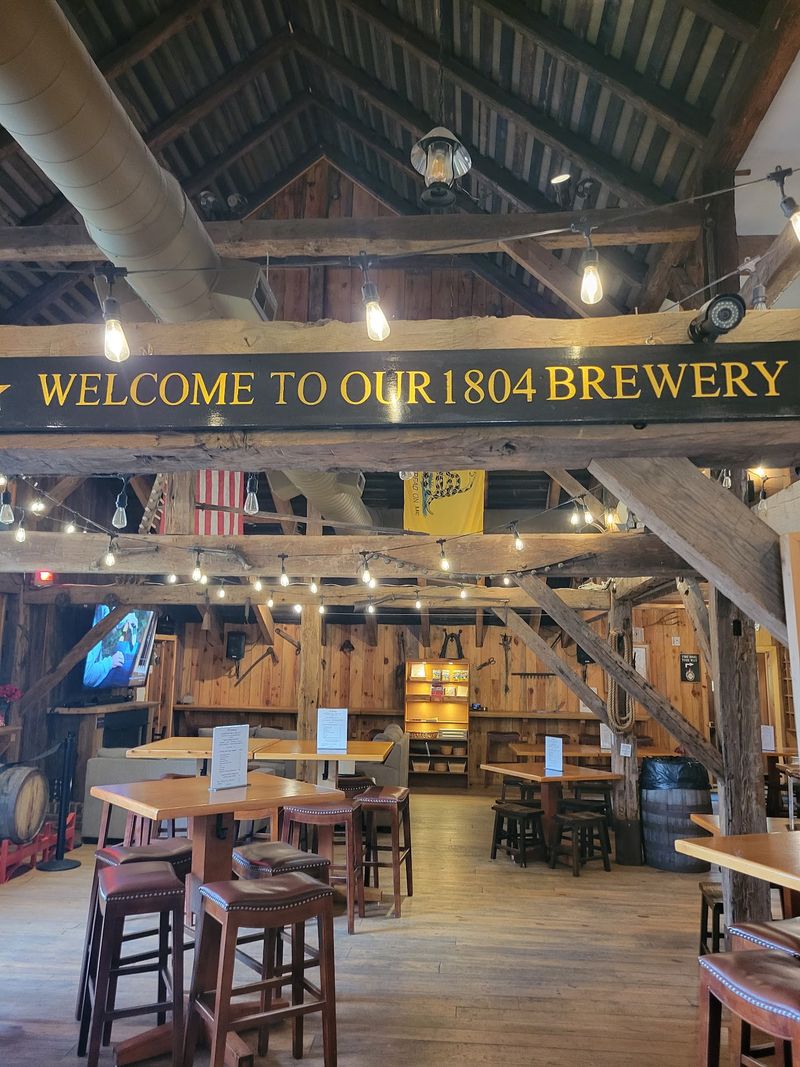
Nearby Cold Spring Brewery operates inside a restored 1804 English-style Cape May County barn. It is New Jersey’s first nonprofit brewery, with proceeds supporting the museum’s preservation work.
Special programming changes throughout the season and may feature maritime history, farming demonstrations, foodways, folklore, crafts, or fall celebrations.
On an ordinary afternoon, though, the village’s quieter details are often the ones that stick—the scrape of a hand tool, flour near an old oven, and a schoolroom desk polished smooth by generations of restless hands.
Share this story