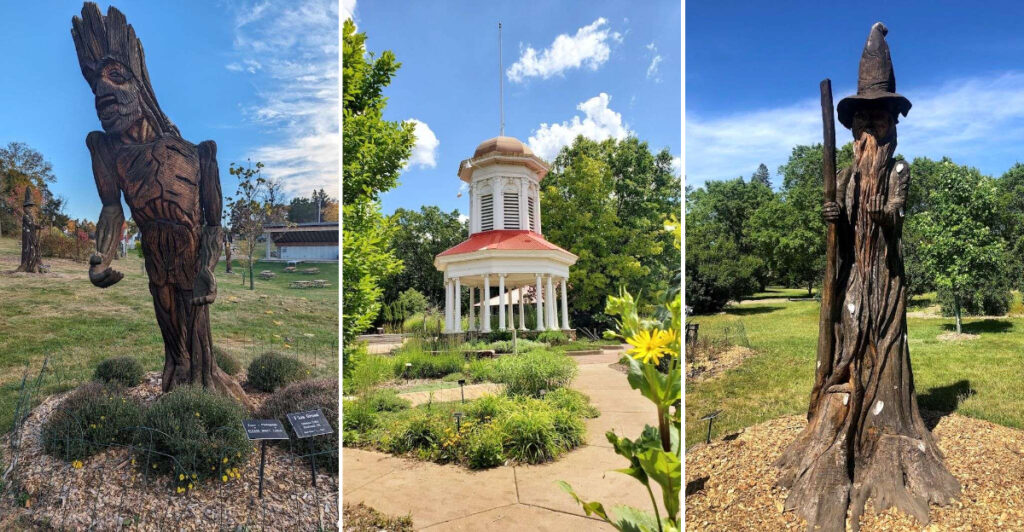
A city park feels completely different when it starts to look like an outdoor gallery, a garden escape, and a quiet walking retreat all at once. In Battle Creek, Michigan, the Leila Arboretum Society brings that rare mix to West Michigan Avenue with dozens of acres of towering trees, themed gardens, sculpted art, and winding paths that make the city feel far away for a while.
It is free to visit, easy to explore, and full of little discoveries that reward anyone willing to slow down. Photographers get striking backdrops, families get room to wander, and quiet walkers get the kind of peaceful green space that feels surprisingly expansive.
For anyone looking for a Michigan stop that blends nature, art, and breathing room, this Battle Creek gem delivers.
The Fantasy Forest: Where Carved Wood Becomes Something Otherworldly
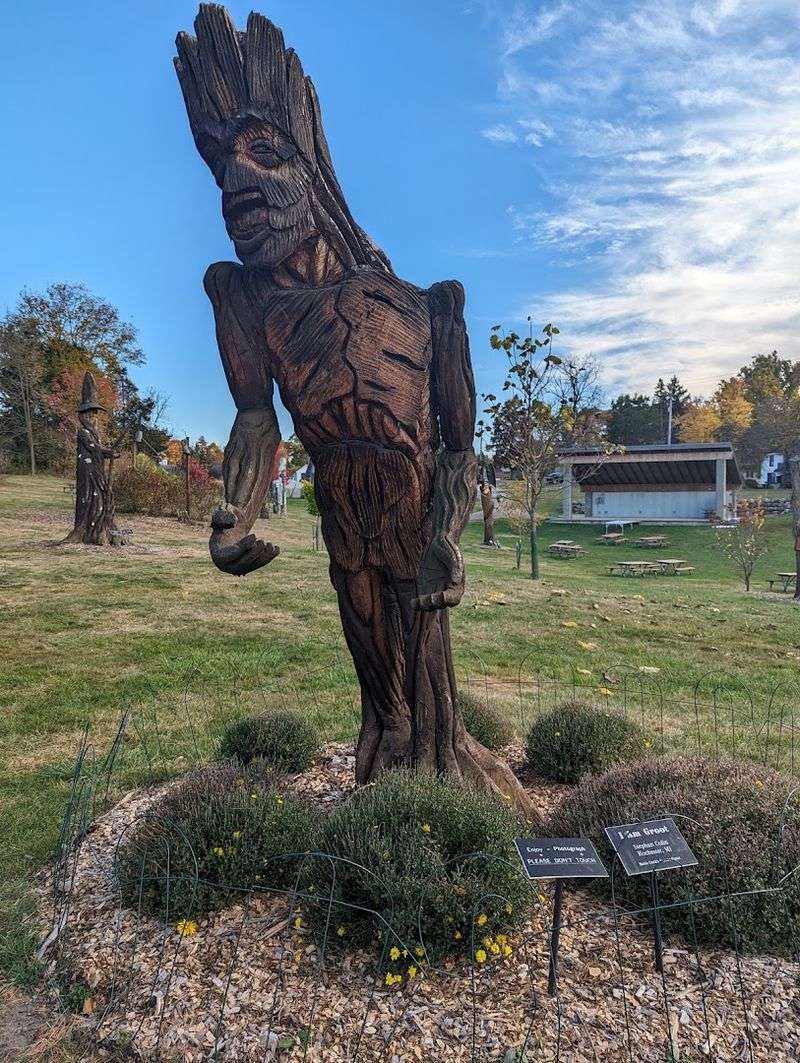
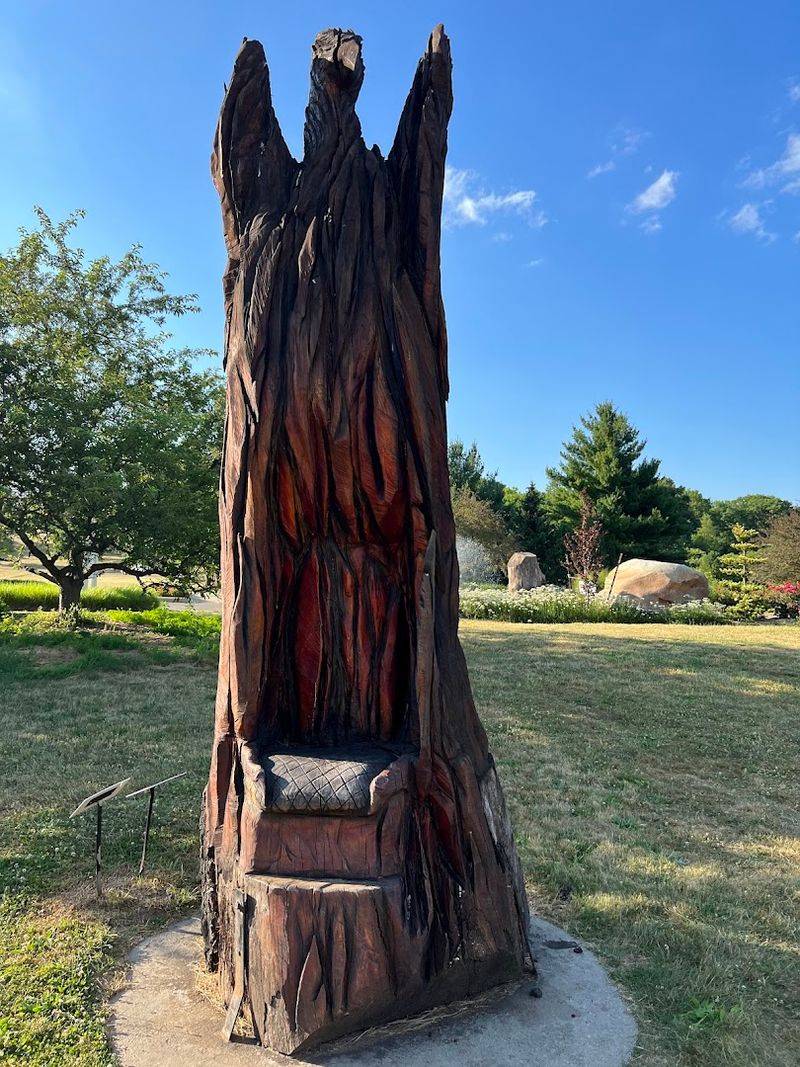
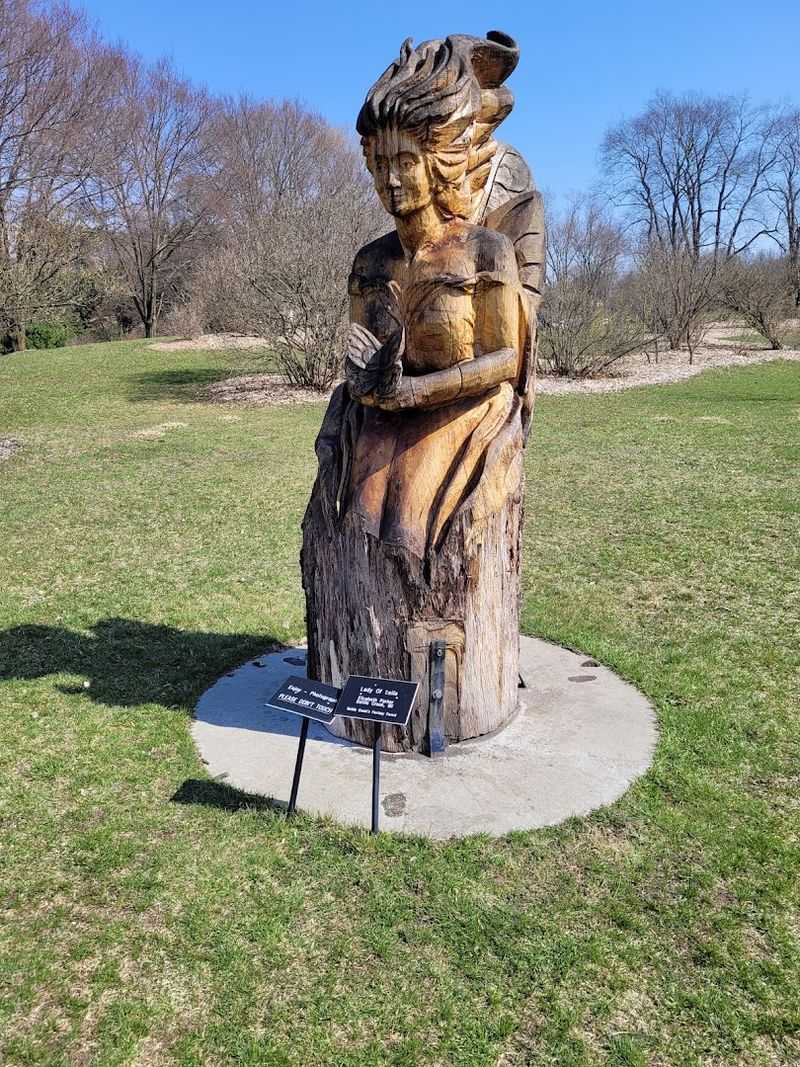
Stand at the entrance of the Fantasy Forest and the first thing you notice is a dragonfly the size of a golden retriever perched inside a hollowed tree trunk. These are not decorative props — they are full-scale chainsaw carvings embedded directly into the landscape, turning dead or damaged trees into permanent works of art that feel like they belong to a storybook world that somehow crossed over into real life.
Each sculpture tells its own story without a single word of explanation. Owls peer from bark.
Faces emerge from roots. Animals frozen mid-motion seem ready to leap off the wood at any second.
The craftsmanship is detailed enough that you catch new things on your second or third loop around the paths — a hidden figure tucked into a lower branch, or a carving that changes expression depending on the angle of the light.
Young children respond to this place with the kind of wide-eyed silence that usually only comes from screens. Grandparents who brought their grandkids here report that the two-year-olds in the group were completely transfixed by the dragonfly carving alone.
That reaction is not unusual — the sculptures are scaled and positioned in ways that feel interactive rather than hands-off.
Photography works beautifully here because the natural wood tones and forest backdrop create organic contrast without needing any filters. Morning light cuts through the canopy at sharp angles during spring and fall, giving the carvings a dramatic glow that flat midday sun simply cannot replicate.
The Fantasy Forest is free to visit, open daily, and consistently ranks as the most talked-about feature of the entire arboretum. Arrive early to experience it with fewer crowds and softer light.
Kaleidoscope Children’s Garden: A Colorful Corner Built for Small Explorers
Tucked behind a gate that closes promptly at 5 PM, the Kaleidoscope Children’s Garden operates on its own schedule — and its own logic. Designed with younger visitors in mind, this enclosed section of the arboretum features garden beds, playful structures, and a layout that encourages kids to wander, touch, and explore rather than simply observe from a distance.
It functions less like a formal garden and more like an outdoor classroom that forgot to bring the desks.
The space draws families back repeatedly because children respond differently to it at different ages. A toddler might spend twenty minutes crouched over a single patch of ground watching insects.
An older child might start mapping out the layout or asking questions about the plants. The garden creates that rare kind of engagement where kids direct the pace entirely on their own.
Honest visitors will note that some sections show wear — faded paint, weathered signage, and areas that could use refreshing. That reality is worth acknowledging.
Even so, the bones of the space remain strong, and the enclosed layout gives parents a sense of security that open arboretum paths cannot always provide. It is the kind of space where you can let a kid run ahead without constantly scanning the horizon.
An outhouse is available within the garden area, which is practical to know before visiting with young children. Picnic tables nearby make it easy to turn the visit into a longer outing with lunch packed in.
The gate closure at 5 PM is enforced, so plan arrivals for mid-morning or early afternoon to give the full experience enough time. Spring and summer bring the plantings to life in ways that fall and winter visits simply cannot match.
Michigan’s Free Arboretum Secret: No Ticket, No Catch, Just Open Gates
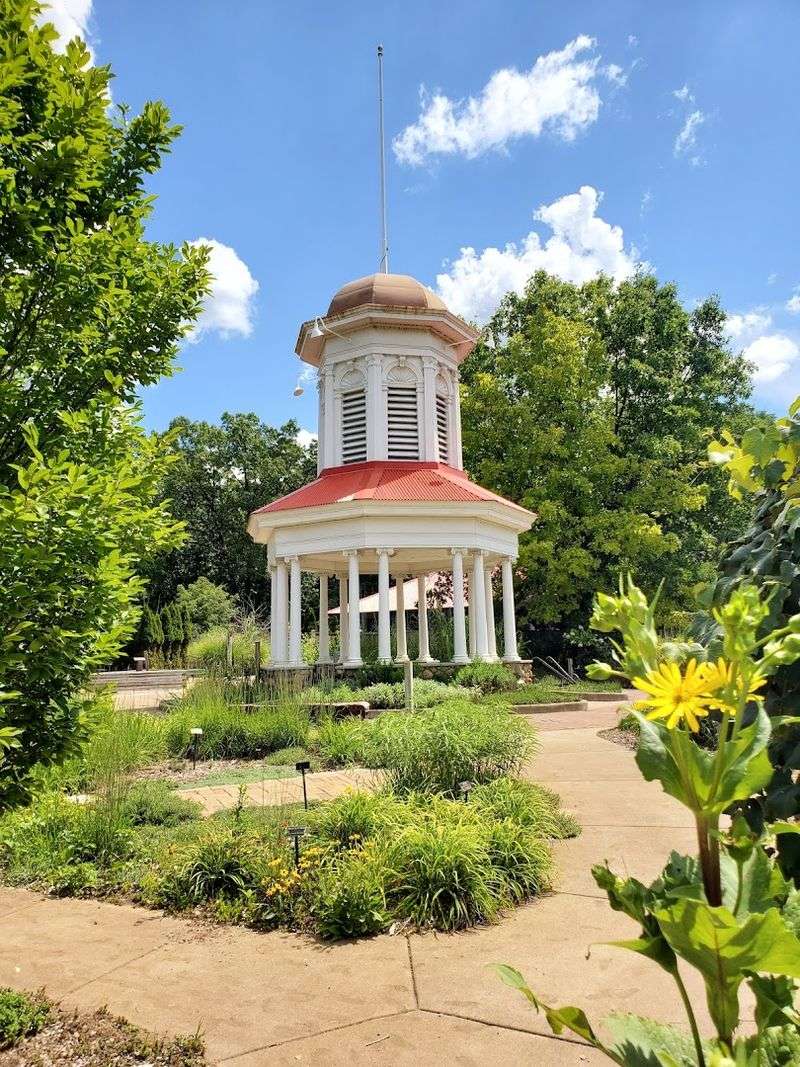
Free admission to a place this size feels like a clerical error that nobody has corrected. Leila Arboretum Society charges nothing to walk, explore, photograph, or simply sit.
The gates open at 6 AM every single day of the week, which means early risers can claim the paths before the rest of Battle Creek finishes its morning coffee. That combination of zero cost and early access is rarer than most people realize in Michigan’s public green spaces.
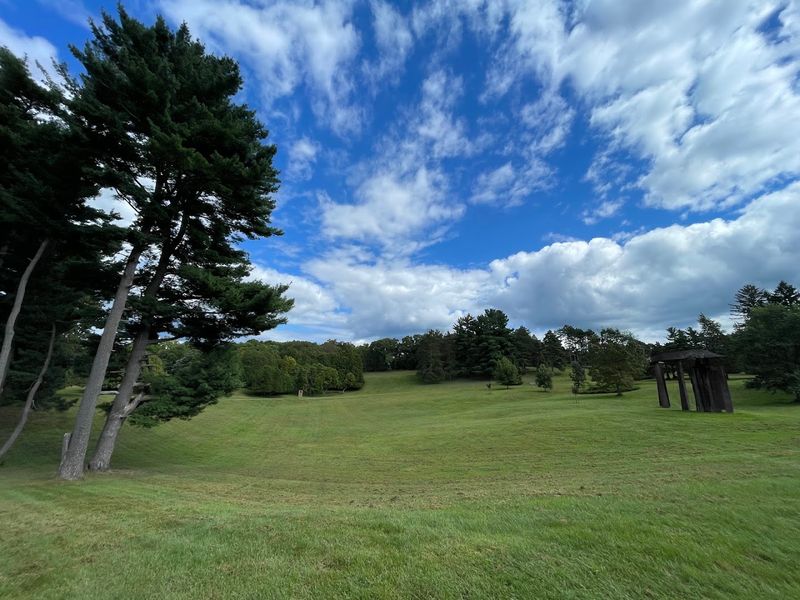
The arboretum spans enough acreage that a single visit rarely covers everything. Themed gardens, forest sections, open grassy fields, and paved accessible paths branch off in multiple directions from the main entrance area.
First-time visitors often underestimate how much ground there is to cover, which is actually a pleasant surprise — the kind of place that rewards return trips rather than punishing you for not having a full itinerary mapped in advance.
Accessibility deserves specific mention here. Paved paths run through significant portions of the property, making it possible to navigate with a wheelchair, stroller, or mobility aid without being restricted to a single route.
Families with members who have mobility needs have used this arboretum as a reliable outing destination because the terrain is genuinely navigable rather than theoretically accessible in name only.
Parking is plentiful and free, which eliminates one of the most common friction points of visiting public green spaces in urban Michigan. Dogs are welcome on leashes, adding another layer of appeal for pet owners looking for a longer walk than the typical neighborhood sidewalk provides.
The arboretum also hosts a farm stand near the entrance where fresh produce is sold at competitive prices — a practical bonus that makes the visit feel even more worthwhile on the way out.
Events, Festivals, and the Living Calendar That Keeps the Place Buzzing

Leila Arboretum is not a static destination — it runs on a calendar that changes with the seasons and brings entirely different energy to the property throughout the year. The New Wave Art and Music Festival draws crowds who might never have visited otherwise, turning the arboretum grounds into an outdoor venue that feels surprisingly well-suited for live performance.
Trees provide natural shade, open lawns create gathering space, and the sculptural environment adds a backdrop that no constructed festival ground can replicate.
Leilapalooza is another recurring event that locals circle on their calendars well in advance. Music festivals here tend to blend seamlessly with the surroundings rather than feeling like temporary installations dropped onto an unwilling landscape.
The arboretum’s scale gives events room to breathe without crowding the natural features that make the property worth visiting in the first place.
The annual plant sale in May is a different kind of event entirely — quieter, more focused, and surprisingly popular. Master gardeners from the area set up and answer questions directly from visitors, which turns what could be a simple retail transaction into an informal education session.
Prices run slightly higher than commercial greenhouses, but the sale functions as a fundraiser, and the quality of plants and the knowledge of the people selling them justify the difference for most buyers.
Festivus cardboard sled races hosted by the Moustache Society add a winter dimension that few arboretums anywhere in the country can claim. The Garden Tour in July and various seasonal events round out a programming schedule that gives repeat visitors a reason to return in every season.
Checking the schedule before visiting is worth the extra minute — arriving on an event day transforms the experience into something considerably more festive than a standard afternoon walk.
The History Behind the Hedges: How Battle Creek Built Something Lasting

Battle Creek is a city most commonly associated with cereal brands and industrial history, which makes the existence of a sprawling, art-filled arboretum in the middle of it feel like a deliberate act of counterculture. Leila Arboretum Society has roots that stretch back far enough that many of the trees on the property were planted by generations who are no longer alive to see them reach full height.
That kind of long-term investment in a public space says something distinct about the community that built and maintained it.
The arboretum began as a gift to the city and has evolved through the decades with additions, renovations, and the occasional period of reduced attention. The landscape reflects that layered history — some sections feel polished and intentional, while others carry the character of spaces that have been shaped by time more than by recent planning.
Neither quality is a flaw. Both contribute to the sense that this is a living place rather than a designed product.
Signage throughout the property identifies tree species, though some markers have been damaged or gone missing over the years. The gaps are noticeable but do not diminish the experience of walking among trees that have had decades to establish themselves.
The canopy in mature sections of the arboretum is dense enough in summer to drop the perceived temperature by several degrees compared to the open street just outside the property line.
A museum once operated on the grounds and drew visitors interested in the broader natural and cultural history of the area. Its closure during the pandemic left a gap that the arboretum community still feels.
The chess and checkers tables that remain on the property are a small but telling detail — this was always conceived as a place for people to stay and engage, not just pass through.
Disc Golf, Labyrinths, and the Surprising Range of Things to Do Here
Most arboretums ask you to look. Leila Arboretum asks you to play.
A disc golf course winds through the property and draws a dedicated crowd of players who show up early and stay late, weaving between trees with the same focus other visitors bring to photography or botany. The course adds kinetic energy to sections of the arboretum that might otherwise see less foot traffic, and it creates a natural overlap between outdoor recreation and natural appreciation that the property handles well.
A labyrinth sits on the grounds and offers something harder to categorize than a disc golf basket. Walking a labyrinth is a slow, deliberate activity — the kind of thing that feels slightly unusual until you are actually doing it, at which point the rhythm of the path takes over and the surrounding arboretum recedes into a kind of ambient backdrop.
It is one of the more unexpected features of the property and one that many first-time visitors walk past without realizing what it is.
The butterfly garden brings a different kind of engagement, one that is entirely dependent on timing and season. Peak butterfly activity in summer turns this section into something genuinely spectacular — the kind of natural event that happens on its own schedule and cannot be manufactured.
Arriving in late summer on a warm morning gives the best odds of seeing the garden at full capacity.
Open grassy fields throughout the property give families space to run, spread out, and use the arboretum in the most unstructured way possible. Kids who need to burn energy between more focused sections of the visit have room to do exactly that without disrupting anyone else’s experience.
The combination of structured activities, natural features, and open space makes the arboretum function differently for every type of visitor who walks through the gate.
Planning Your Visit: Timing, Seasons, and What to Bring to Get the Most Out of It
Spring is the season that transforms Leila Arboretum most dramatically. Flowers that spent the winter underground push through in waves from April onward, and the tree canopy shifts from bare branches to full green coverage within a matter of weeks.
Visiting in May lines up perfectly with the annual plant sale and gives access to the arboretum at one of its most visually rewarding points in the calendar year. The light is softer than summer, the crowds are smaller than peak season, and the whole property has a freshness that later months cannot replicate.
Summer brings the events calendar to full swing and keeps the gardens at maximum color. Early morning visits between 6 AM and 9 AM offer the best combination of cool temperatures, low crowds, and favorable photography light.
The arboretum closes at 5 PM daily, so late-afternoon arrivals should account for how much ground they want to cover — the property is large enough that two hours moves quickly if you are exploring thoroughly rather than strolling casually.
Fall delivers its own rewards in the form of foliage color across the mature tree sections. The wood sculptures in the Fantasy Forest take on a different character surrounded by orange and gold leaves, and the contrast between carved wood and autumn color creates some of the strongest photography compositions the property offers across any season.
Practical preparation makes a meaningful difference. Comfortable walking shoes are necessary because the paths vary between paved surfaces and softer ground depending on which section you are exploring.
Water and snacks are worth bringing since the on-site farm stand operates seasonally and may not always be stocked. Leashed dogs are welcome throughout the property. The arboretum sits at 928 W Michigan Ave in Battle Creek and offers ample free parking directly on site.
Share this story