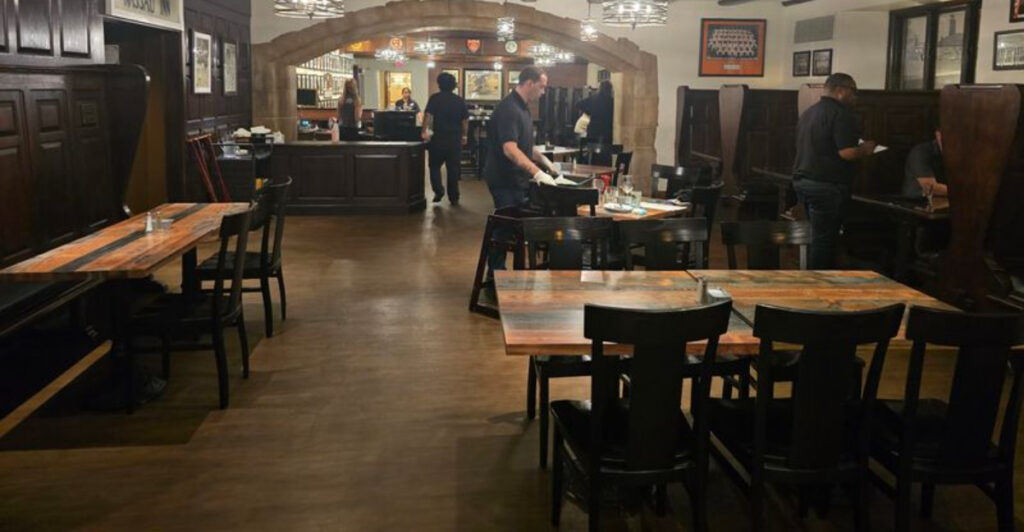
A 13-foot Norman Rockwell mural stretches above the bar, Albert Einstein’s name may be scratched into one of the oak tables, and a Revolutionary War musket rests elsewhere in the building. This is not a museum recreation.
It is the Yankee Doodle Tap Room, a working Princeton tavern where somebody at the next table may be watching a game while you inspect nearly three centuries of local lore. The restaurant occupies the Nassau Inn on Palmer Square, carrying forward a hospitality tradition that began in a house built in 1756.
The present inn opened in 1937, but relics, rituals, and stories from its predecessor came along for the move. Order a burger, look past the beer taps, and the layers start revealing themselves: colonial travelers, Continental soldiers, famous alumni, carved initials, and one enormous piece of American art.
Few New Jersey dining rooms make history feel this relaxed—or give you so much to examine between bites.
The Nassau Inn Story Began in 1756
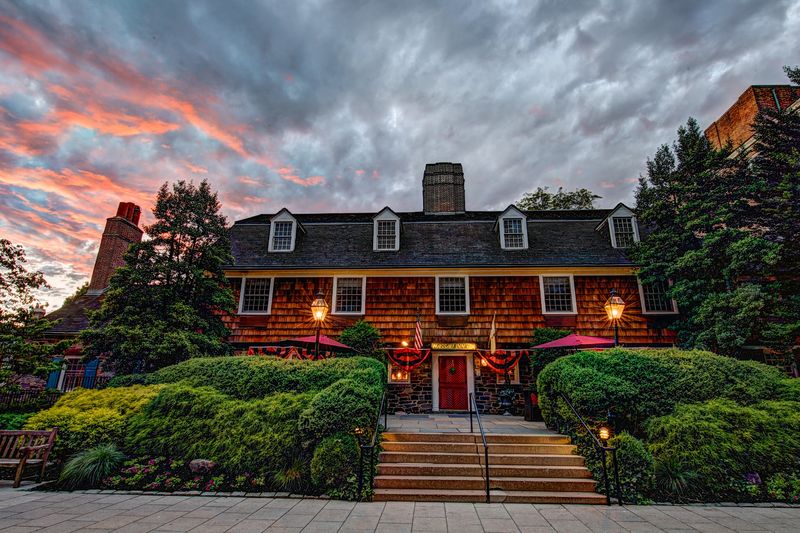
Some places wear their age quietly, and that is part of the charm here. The Nassau Inn is tied to a story that reaches back to 1756, giving Princeton one of those rare spots where everyday life and deep history seem to share the same table.
That long timeline matters because it helps visitors feel the town’s older rhythm. You are not just stepping into a business with a catchy backstory; you are entering a place connected to generations of meals, meetings, and changing streets.
It also helps to remember that historic inns often change over time. Buildings shift, locations can be updated, and interiors get refreshed, yet the larger story still carries forward through the name, traditions, and community memory.
For travelers, that makes the stop easier to enjoy. You do not need to be a history expert to appreciate how unusual it is for a tavern-linked story to stretch across nearly three centuries.
Before you visit, read a little about colonial Princeton so the dates mean more when you arrive. Even a quick timeline glance can turn lunch into a more meaningful stop.
Princeton’s Revolutionary Years Still Echo Through the Tavern
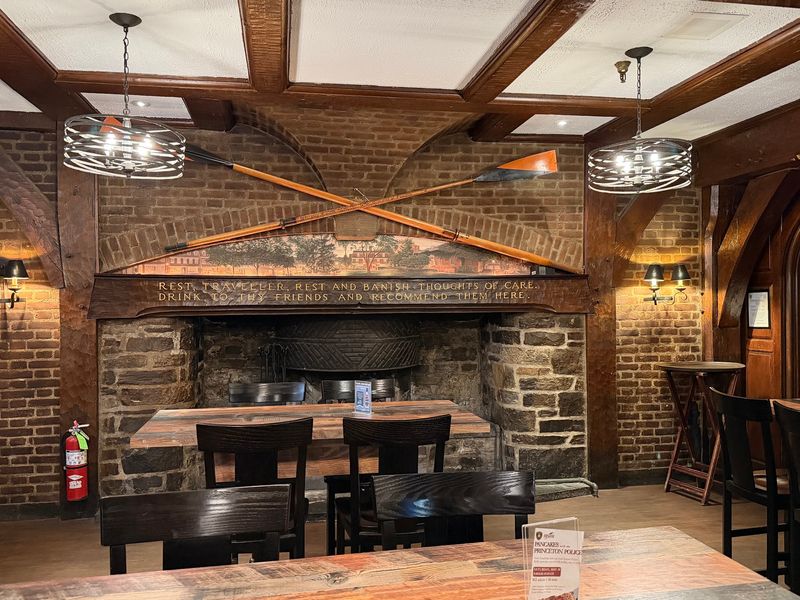
History can feel dusty in a textbook, but inside an old Princeton tavern it feels close enough to overhear. The town’s Revolutionary years still shape the mood, and that gives the visit an extra layer far beyond food and decor.
Princeton played a real role in the American story, so any long-running gathering place nearby naturally picks up that energy. Streets, buildings, and public spaces around the center of town can make you imagine soldiers, riders, students, and townspeople moving through days filled with tension and hope.
That does not mean every detail needs to be dramatic to be meaningful. Often, the strongest feeling comes from small things, like old wood, low light, brick paths, and the sense that many people stood in roughly the same area before you.
If you want the experience to land better, pair your stop with a walk around Princeton first. Seeing nearby historic markers or battle-related sites can help the tavern feel less like an isolated attraction and more like one living chapter in a much bigger local story for curious visitors today alike.
The Norman Rockwell Mural That Commands the Room
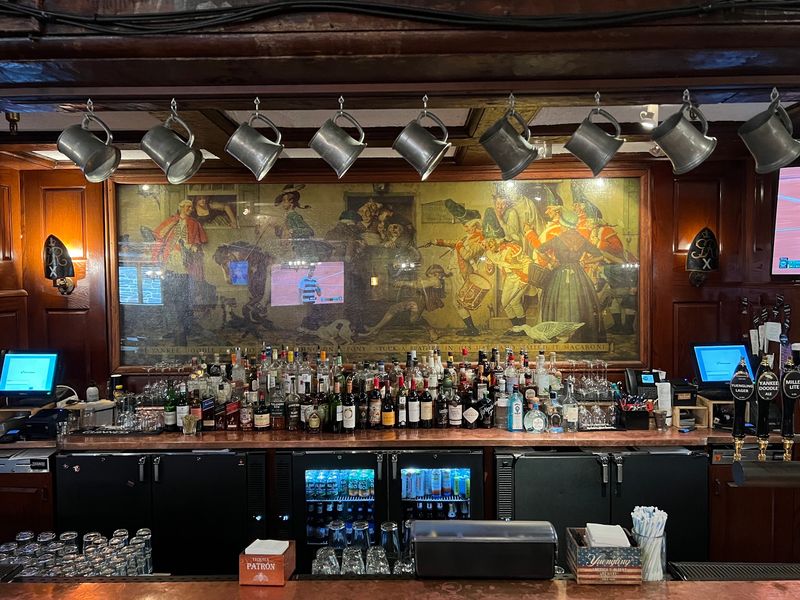
Then your eyes go up, and the room gets a little quieter. A Norman Rockwell mural has that effect, pulling attention with the kind of scene-making power that turns a meal into a moment.
Even visitors who do not know much about art usually understand why people stop and stare. Rockwell’s style is warm, story-driven, and packed with faces, gestures, and details that reward a second look.
What makes a mural like this so fun in a tavern setting is its scale. Instead of living in a museum with hushed rules, it becomes part of the daily atmosphere, hovering over conversations, celebrations, and ordinary lunches.
Try giving yourself a minute before checking the menu. Look for small expressions, bits of movement, and the way the picture seems to hold a whole crowd together in one frame.
If you are visiting with kids or friends, make it interactive by asking what each person notices first. That simple game can slow everyone down and turn wall art into one of the most memorable parts of the stop for Princeton visitors of any age.
Carved Tables Preserve Generations of Local Lore
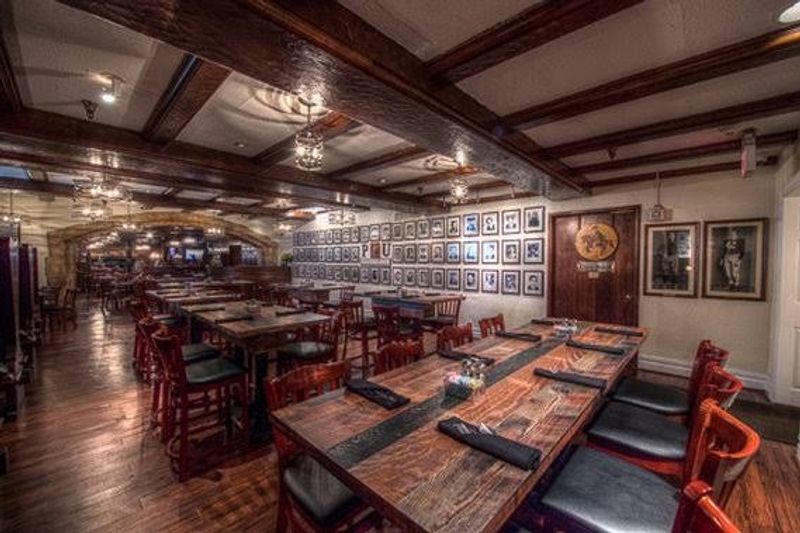
Not every piece of history hangs in a frame. At carved tables, the record feels more personal, like generations left behind tiny signatures of presence, boredom, pride, jokes, or affection.
Marks in old wood can spark mixed feelings, and that is fair. Modern visitors should never add their own scratches, but they can still appreciate how earlier carving turned ordinary furniture into a rough kind of community scrapbook.
Each line or initial hints at a person who wanted to be remembered for a second. Maybe it was a student, a local regular, a traveler passing through, or a couple trying to freeze one small moment in a busy world.
That is what makes the tables interesting beyond simple age. They show that history is not only made by famous names and major events, but also by everyday people who sat down, talked, laughed, and left a trace.
When you visit, look closely without touching too much. Reading old surfaces carefully can be oddly moving, and it may remind you that today’s casual lunch spots can become tomorrow’s treasured memory keepers too.
Classic Tavern Fare Keeps the History Approachable
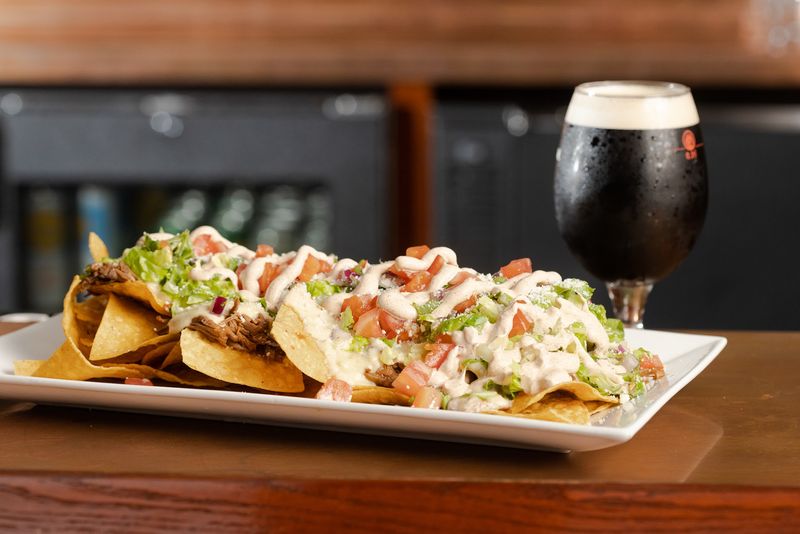
After all the old wood and big stories, food keeps the experience from feeling stiff. Classic tavern fare gives people an easy entry point, because a historic room is more fun when it also knows how to feed you well.
Think familiar, comforting choices instead of anything fussy. A place with this kind of personality often feels best when the menu matches the setting, with straightforward dishes that suit a relaxed lunch, a family dinner, or a quick break from walking around town.
That balance matters more than people expect. Good tavern food can make history feel welcoming, especially for kids, picky eaters, or anyone who likes their sightseeing with fries, soup, sandwiches, or a dependable dessert.
There is also something nice about not having to overplan. You can show up curious about the past, settle into the room, and let a simple meal anchor the visit in the present.
If you go during a busy Princeton day, leave time to sit. Part of the appeal is letting the setting and meal work together at an easy pace for everyone.
How to Make This Historic Stop Part of a Princeton Day Trip
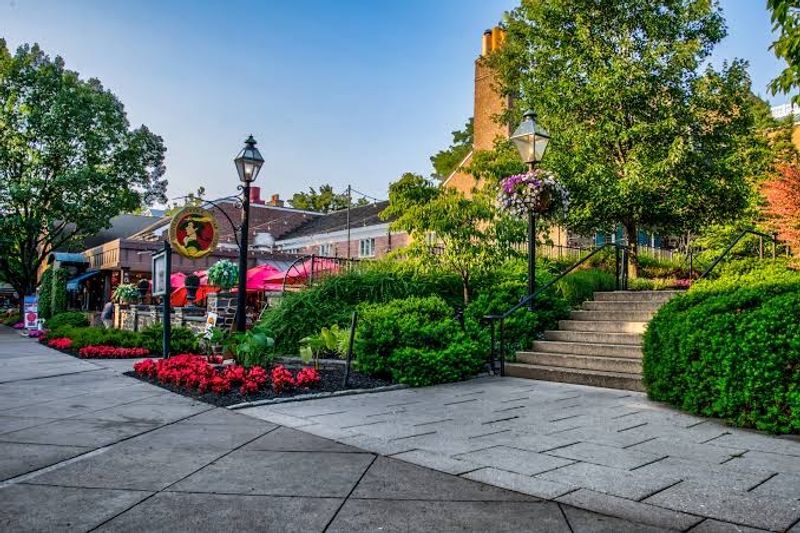
The smartest Princeton outings are the ones that do not try to cram in everything. A stop at a historic tavern works best when it fits naturally between the town’s walkable highlights instead of feeling like a separate mission.
Start with the simple stuff that makes Princeton pleasant on foot. Stroll near Nassau Street, look around campus edges, browse a local shop, or pause at a public green before heading inside for a meal or drink.
That approach keeps the day flexible, which is helpful in a place with so much to notice. You can shape the visit around your group, whether you are traveling with grandparents, teens, out-of-town friends, or somebody who just wants one solid photo and a good lunch.
Parking, timing, and weather also matter more than people think. Checking hours ahead, aiming for an off-peak window, and wearing comfortable shoes can make the whole plan smoother.
Most of all, leave room for wandering. Princeton is the kind of town where a historic inn and one unplanned detour can make the day feel full, not rushed somehow.