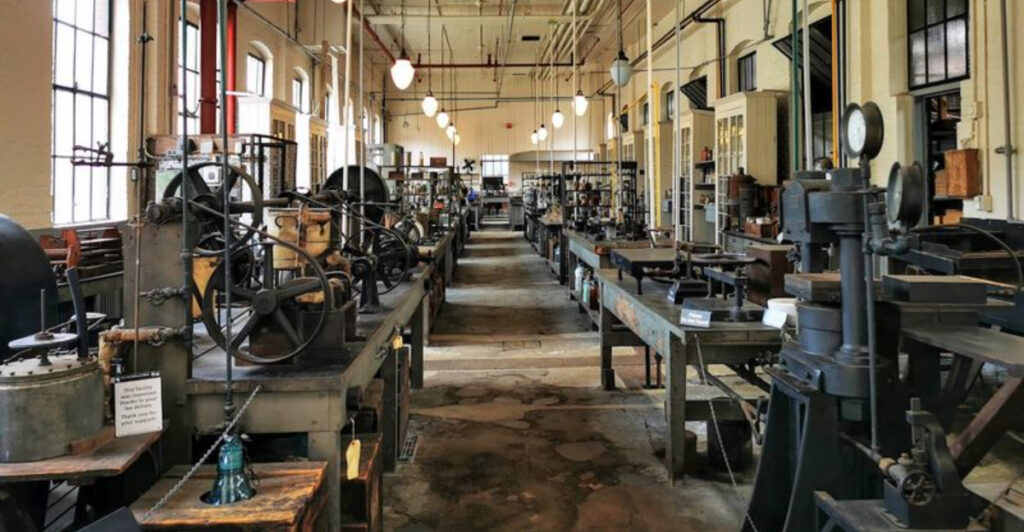
The first thing that gets you is the machinery. Not a replica, not a tidy “inspired by” setup, but the real belt-driven equipment, shelves of bottles, worktables, and rooms where Thomas Edison’s staff once chased ideas that would end up changing how people listened, watched, and lived.
Then, a few minutes later, you’re thinking about something completely different: the fact that the same visit can also take you to Glenmont, Edison’s 29-room Victorian home tucked inside leafy Llewellyn Park in West Orange. That contrast is what makes this place so good.
One half feels like an invention factory frozen mid-shift. The other feels like the private world behind the public legend.
At Thomas Edison National Historical Park, you are not getting a polished summary of the man. You are walking through the actual buildings where modern American industry, recorded sound, and early film were worked out in real time.
The New Jersey Place Where Edison’s Biggest Ideas Took Shape
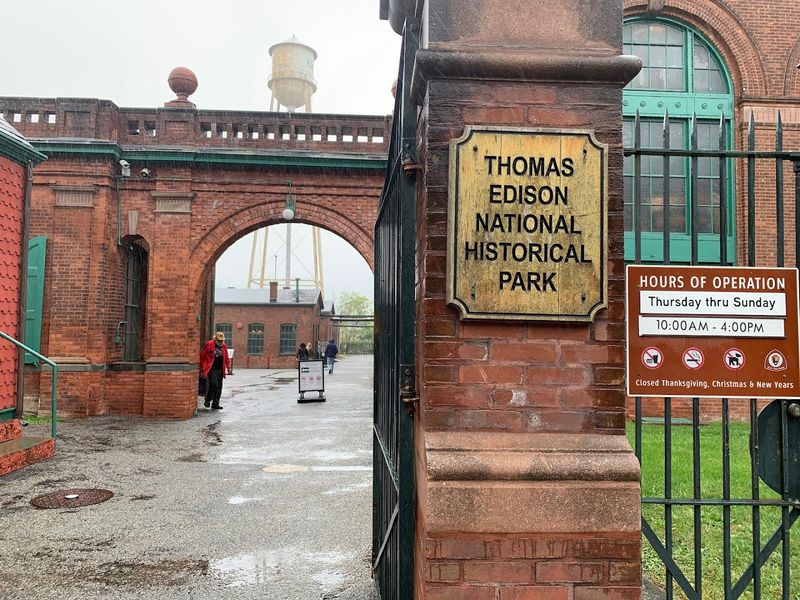
West Orange does not always get the same instant-history recognition as places like Philadelphia or Boston, but it absolutely deserves a spot in that conversation.
Edison opened this laboratory complex in 1887, and it stayed active through the 1920s, which means this was not some tiny one-room workshop where a lone genius tinkered for an afternoon. This was a serious industrial research campus, the kind of place where invention became organized work.
When the National Park Service calls it one of the places where modern America was invented, that sounds dramatic until you start looking at what happened here: sound recording, motion pictures, electric-light system improvements, batteries, and a whole method for turning ideas into usable products.
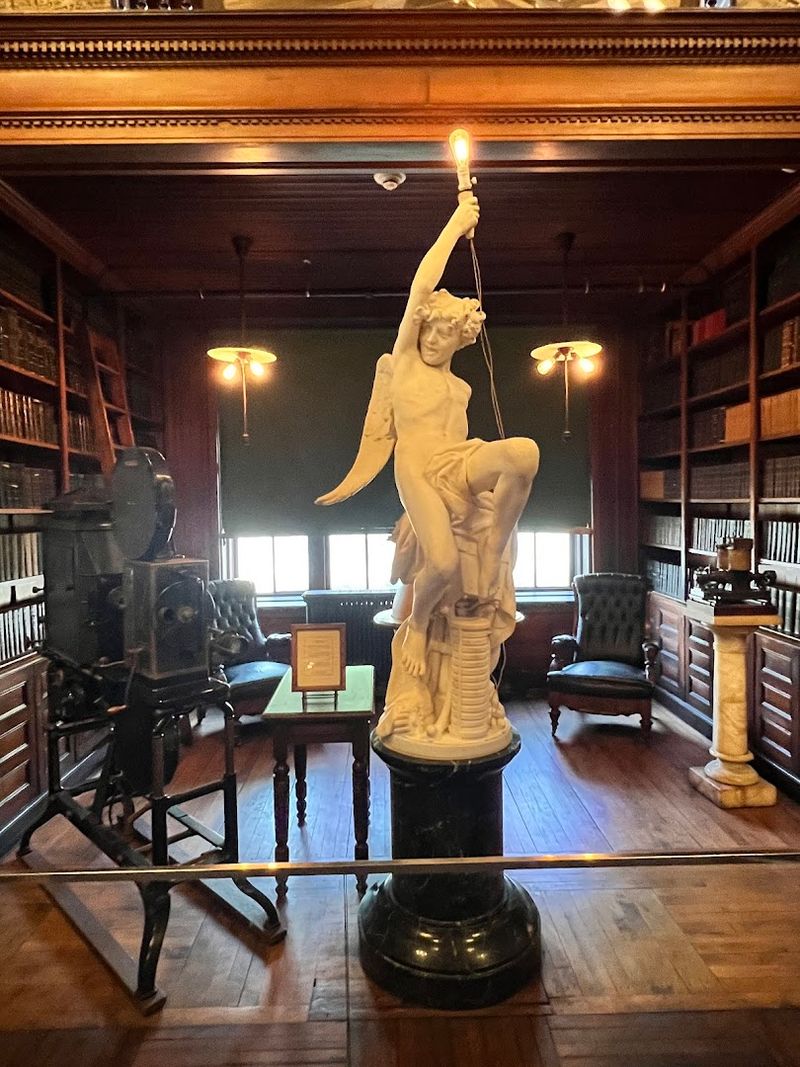
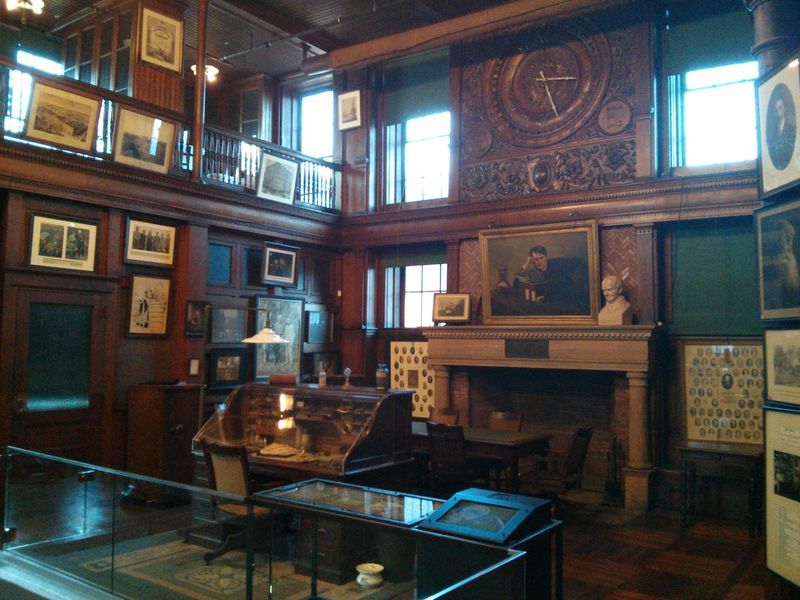
What makes the site especially compelling in person is that the scale still lands. The Main Laboratory Building alone has three floors open to visitors, with Edison’s library, machine shops, music room, and exhibit spaces still inside.
Out in the courtyard, you can see the pattern shop, blacksmith area, vaults, the water tower, and the replica of the Black Maria film studio. Even if you already know Edison as the light bulb guy from grade school, the place quickly corrects that oversimplified version.
He was running a system here, one built around teams, testing, and relentless iteration. There is also something deeply New Jersey about the whole setting.
The lab sits right on Main Street in West Orange, not on some distant rural estate but in a dense, lived-in North Jersey landscape where industry and neighborhoods have always rubbed shoulders. That location matters.
It reminds you that some of the biggest technological leaps in American history were not born in mythic isolation. They happened in a busy Essex County town, inside brick buildings that are still standing.
What It Feels Like to Walk Through Thomas Edison’s Actual Lab
Imagine the opposite of a sleek science museum. No glowing touchscreens pretending to be the past.
No minimalist cases with three objects and a wall label trying very hard to be dramatic. Edison’s lab feels crowded, mechanical, and wonderfully specific.
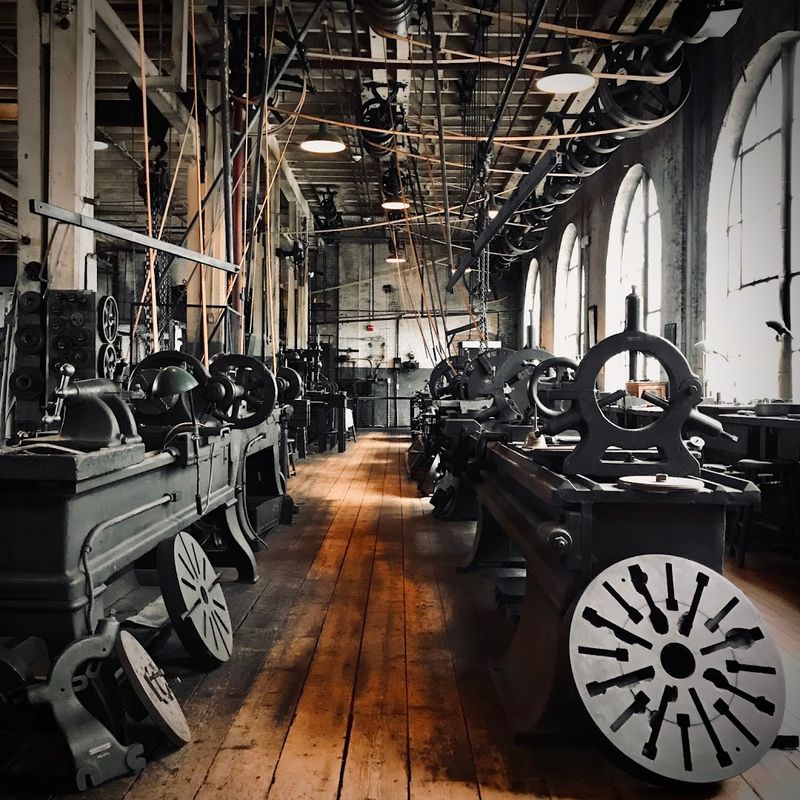
You move through spaces that still look ready for the workday to resume, with original machinery, long benches, jars, cabinets, and rooms arranged around the messy business of experimentation. The Main Laboratory Building is the star here, and it earns that role fast.
The library feels brainy in the best possible way, the machine shops look like invention with its sleeves rolled up, and the music room adds a curveball reminder that Edison cared as much about sound as sparks.
One of the strongest rooms is the Chemistry Laboratory, where the atmosphere shifts from industrial to almost eerie.
It has that rare museum quality of making your brain go quiet for a second. You stop reading labels and start staring.
The best way to describe the overall experience is that it shrinks the distance between legend and labor. You stop thinking in broad terms like innovation and start picturing the daily grind of prototypes, failures, noise, and repetition.
That is what sticks with you. Not just that Edison worked here, but that so much of what changed the world came out of spaces that still feel physical, busy, and surprisingly human.
Inside Glenmont Where the Edison Family Lived in West Orange
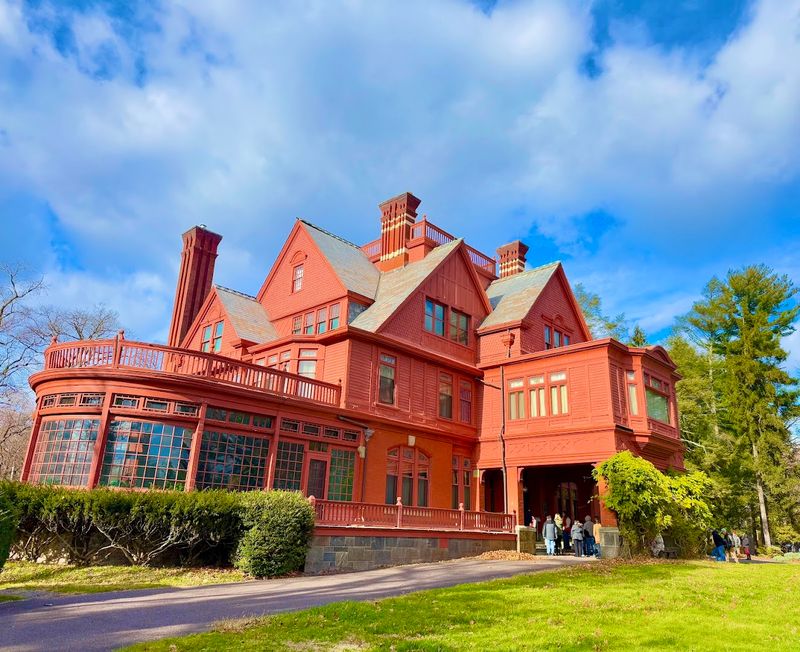
Then you get to Glenmont, and the whole story changes tone. If the laboratory is all motion and problem-solving, Glenmont is about status, taste, privacy, and the ordinary rhythms that happened around a famous man’s extraordinary work.
The house sits inside Llewellyn Park, one of those old North Jersey enclaves where the roads curve, the trees lean in, and everything suddenly feels removed from the traffic and storefronts you just left behind. The mansion itself is a 29-room Victorian home, and not a modest one.
Glenmont does not read like a generic old house tour. It has texture.
It has specific design pedigree. It has outbuildings, a greenhouse, a barn, a garage with Edison’s historic vehicles, and even poured-concrete structures tied to Edison’s own experiments and preferences.
The estate was not simply where he slept. It was part of the world he built around himself and his family for more than half his life.
There is one practical catch, and it is worth knowing in advance because it is easy to get wrong. You cannot just drive straight to Glenmont and wing it.
Visitors have to begin at the Laboratory Complex Visitor Center, where entry is handled and the separate Glenmont grounds access is coordinated. That extra step sounds fussy on paper, but in person it actually reinforces the idea that the lab and the home are two halves of one story.
You see the public Edison first, then the private one.
Why This Historic Site Is More Than a Typical House Museum
A lot of historic homes ask you to admire furniture and imagine a life. This place asks you to understand a process.
That is the difference. Thomas Edison National Historical Park is not compelling because it preserves a celebrity residence or because it displays some famous objects under glass.
It works because the site still communicates how invention happened here. The visitor center helps set that up, but the deeper point comes once you move through the campus itself.
The park preserves not just Edison’s name, but the ecosystem around him: library, machine shops, chemistry spaces, courtyard structures, circulation between buildings, and the link between work life and home life. That is also why the park appeals to more than one kind of visitor.
History lovers get the preserved architecture and original spaces. Science-minded visitors get the laboratory logic and research context.
Families get something much more concrete than the usual important person once lived here story. Even people who do not arrive with much Edison enthusiasm tend to respond once they see the scale of the place.
The preserved work environment makes the past legible in a way that biographies often do not. You can trace the route from idea to prototype to product with your own eyes.
It also helps that the site avoids the sterile feeling that sometimes creeps into big-name historic attractions. The buildings on Main Street still look like working buildings.
The courtyard still holds structures that explain the industrial operation. The home still feels tied to a real family life rather than a velvet-rope fantasy.
You leave with a much fuller picture of Edison, not because the park tells you he was complicated, but because it quietly shows you the world he occupied every day.
The Surprising Inventions and Film History You’ll Find Here
Most people show up expecting light bulbs and maybe a phonograph. Fair enough.
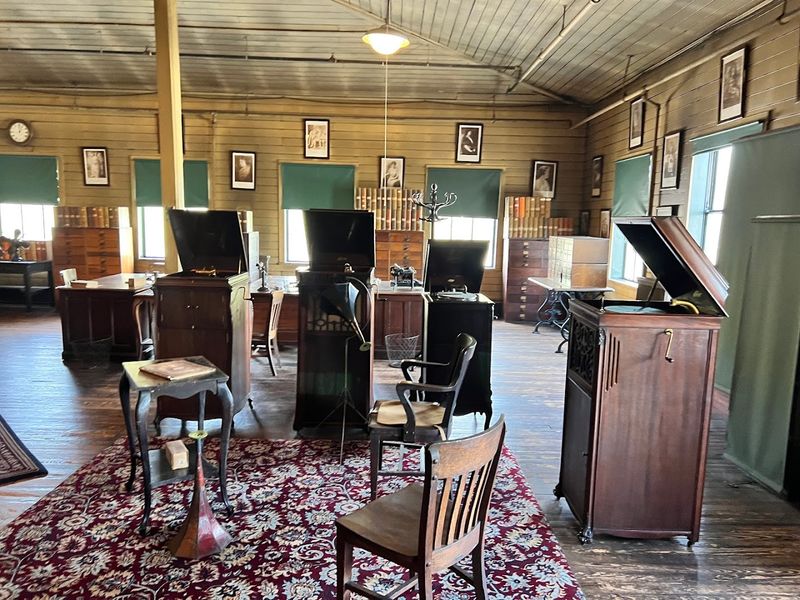
But one of the most fun things about this visit is realizing how quickly the story expands. Edison’s work on recorded sound is deeply present here, especially through the music room and the broader collections tied to the site.
You start the day thinking inventor, and by the middle of it you are thinking about media, entertainment, and the whole weird thrill of people first hearing reproduced sound. Then there is the movie history, which is where people tend to do a double take.
Edison first demonstrated motion pictures in the early 1890s and soon began commercial movie production in the Black Maria, the peculiar studio structure built on the laboratory grounds.
The original is gone, but the site includes a replica in the courtyard, and that detail alone is worth the trip because it jolts early film history out of abstraction.
Before Hollywood became Hollywood, one of cinema’s foundational experiments was happening here in West Orange. That is such a satisfying New Jersey fact because it feels both huge and oddly underappreciated.
The story gets even better once you learn that Edison and his team were trying to create something that would do for the eye what the phonograph had done for the ear. Suddenly the site is not just about invention in the broad, heroic sense.
It is about New Jersey helping invent the basic language of modern media. That is the kind of detail that sneaks up on visitors and ends up being the thing they talk about on the drive home.
What to Know Before Visiting Thomas Edison’s Home and Workshop
Here is the useful part your future self will appreciate. This is best treated as a half-day outing, not a quick stop you squeeze in between errands.
Start at the Laboratory Complex Visitor Center on Main Street in West Orange, because that is where the visit actually begins. If you are planning to see both the lab and Glenmont, give yourself enough time to do the place justice instead of rushing from building to building.
The lab rewards slow wandering. Glenmont adds another layer and shifts the mood entirely.
Comfortable shoes are a smart move, because even though this is not a sprawling outdoor park in the usual sense, you will be moving through multiple buildings and spaces with plenty to stop and look at. It is also worth checking current tour availability before you go, especially if the house is a priority.
Glenmont access is more structured than the lab visit, and some parts of the broader site may depend on staffing. That matters most for visitors who have their heart set on seeing every room or a specific space like the chemistry areas or vehicle garage.
The easiest way to enjoy the day is to go in knowing that this is not a flashy attraction built around gimmicks. Its strength is that it still feels real.
The rooms are not trying to impress you with spectacle. They impress you because the work happened there, the home life happened there, and the distance between those two worlds is shorter than most people expect.
Share this story