Car history feels a lot more exciting when it shows how one Michigan inventor helped change the way America moved. Along Museum Drive in downtown Lansing, the R.E. Olds Transportation Museum traces that story through the legacy of Ransom E. Olds, whose work helped shape the automotive world long before Henry Ford became the better-known name.
Inside, the collection moves from steam-powered carriages to classic Oldsmobiles and early-2000s models, giving visitors a clear look at how transportation evolved across generations. It is detailed enough for lifelong gearheads, approachable enough for curious kids, and full of the kind of Michigan innovation that deserves more attention.
Whether you have an hour or a full afternoon, this Lansing museum gives car lovers plenty to slow down for.
A Grand Entrance That Sets the Tone Immediately
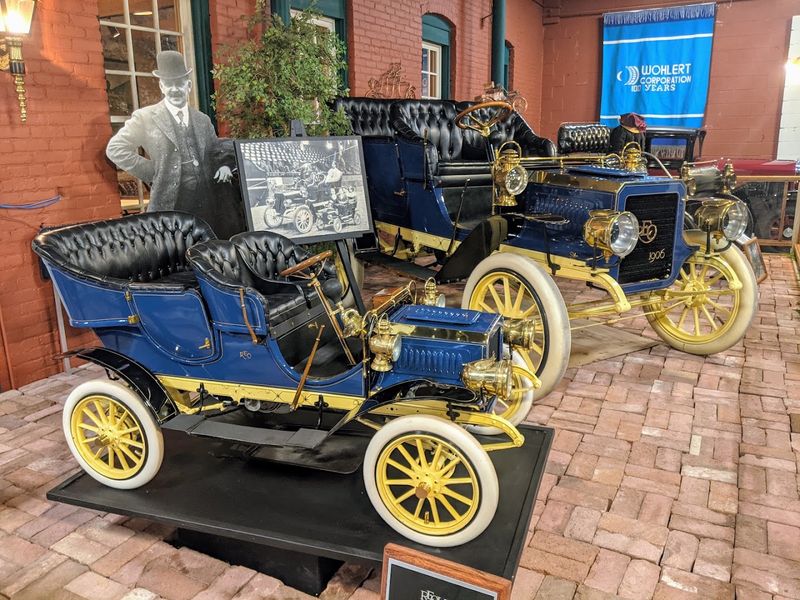
Before you even reach the first exhibit, a life-size statue of Ransom E. Olds greets you at the entrance, standing with the quiet confidence of someone who changed an entire industry.
It is a surprisingly personal touch for a museum of this size, and it immediately signals that this is not just a car show — it is the story of one man’s outsized impact on American manufacturing and transportation.
The front area doubles as the ticketing zone and gift shop, which is worth a slow browse on your way in. Oldsmobile memorabilia, model cars, and vintage-style souvenirs line the shelves, giving you a preview of the era you are about to walk through.
Admission pricing is refreshingly affordable — around seven dollars per adult — making this an easy choice for families traveling on a budget.
The layout opens naturally from the entrance, drawing your eye forward toward rows of gleaming cars without overwhelming you all at once. Staff members near the front are notably friendly and happy to point out highlights or answer questions before you set off on your own.
The museum operates on a self-guided format, which means you move at your own pace without feeling rushed through any section. That freedom matters here, because there is far more to absorb than a quick glance suggests.
First-time visitors often expect a compact exhibit and end up spending two to three hours without realizing it. The combination of a warm welcome, fair pricing, and an immediately visible wealth of exhibits makes the first few minutes inside feel like a genuine discovery rather than just another museum check-in.
Steam, Gears, and the Oldest Vehicles in the Collection
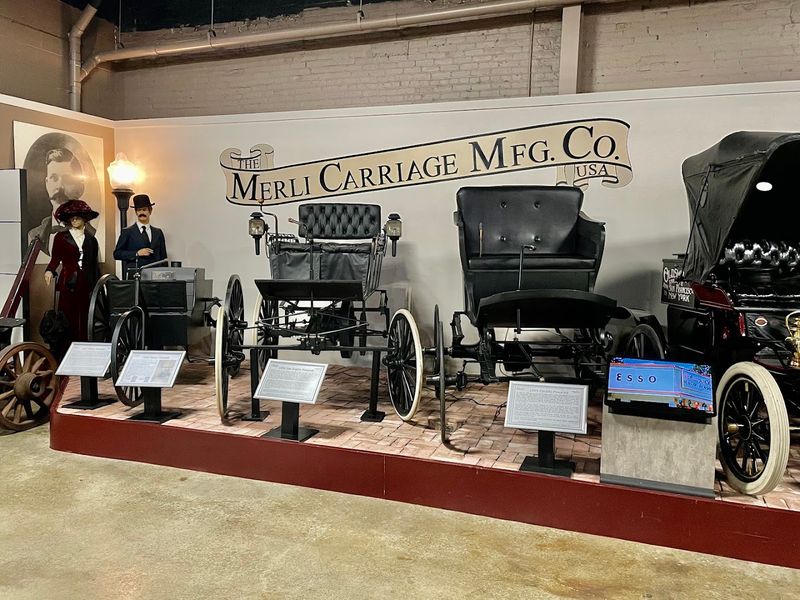
Long before gasoline engines ruled the road, Ransom Olds was experimenting with steam. The museum’s earliest vehicles date back to 1887, and seeing one of those steam-powered machines up close is genuinely jaw-dropping.
The craftsmanship is almost delicate by today’s standards — spindly wheels, brass fittings, and a frame that looks more like a fancy carriage than anything resembling a modern car.
Each early vehicle comes with detailed story cards that explain the context of the time period, the engineering challenges Olds faced, and what made each design a step forward. Those cards are easy to read and written clearly enough that younger visitors can follow along without losing interest.
They give the vehicles personality rather than just presenting them as static objects behind rope lines.
Moving through this section of the museum feels like watching an inventor’s mind at work in real time. You can trace the logical progression from steam to gasoline engines, and the displays make that transition feel dramatic rather than dry.
The 1901 Curved Dash Oldsmobile — often cited as one of the first mass-produced automobiles in American history — holds a place of honor in the collection and draws a lot of attention for good reason. Its simple, low-slung design looks almost toylike compared to later models, yet it represented a massive leap in accessibility for everyday Americans.
Ransom Olds did not just build cars; he figured out how to build them efficiently enough that ordinary people could actually afford them. That idea, displayed here through physical evidence rather than just text, lands with real weight.
Standing next to a vehicle that is well over a century old and still intact is a different kind of history lesson altogether.
The Breadth of the Collection Goes Way Beyond Cars
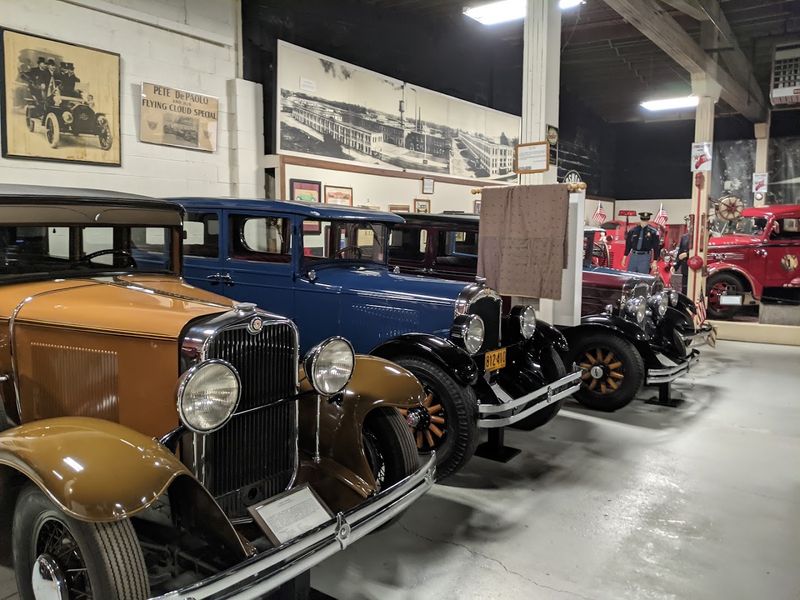
Most people arrive expecting a room full of Oldsmobiles, and they are right — but only partially. The collection sprawls well beyond passenger cars into territory that genuinely surprises first-time visitors.
Peterbilt trucks, REO Speed Wagons, vintage lawnmowers, snowblowers, boats, and tractors all share floor space with the automobiles, reflecting just how wide Ransom Olds cast his entrepreneurial net during his lifetime.
The Hurst Hairy Hauler is one standout that draws serious attention from anyone with even a passing interest in drag racing history. This wild, twin-engine exhibition vehicle was built for track performance and promotional spectacle, and it looks every bit as outrageous in person as its reputation suggests.
Seeing it parked alongside family sedans from the same era creates an almost comic contrast that says a lot about the range of American automotive culture.
Lawnmowers might sound like a strange addition to a car museum, but the Olds connection makes them genuinely interesting. Ransom Olds founded multiple companies across his career, and the range of machinery on display here illustrates how restless and inventive he remained throughout his life.
It reframes the entire visit — instead of a tribute to one product line, the museum becomes a portrait of an industrialist who kept pushing into new territory. Bicycles also appear in the collection, nodding to the transportation landscape of the late 1800s before cars dominated.
Each category of vehicle adds a new layer to the story rather than repeating the same point. By the time you have worked through the full floor, the sheer variety of what one man’s ambition produced starts to feel almost staggering.
It is a detail-rich collection that rewards slow, attentive browsing.
Oldsmobiles Across the Decades: A Rolling Timeline Through Michigan History
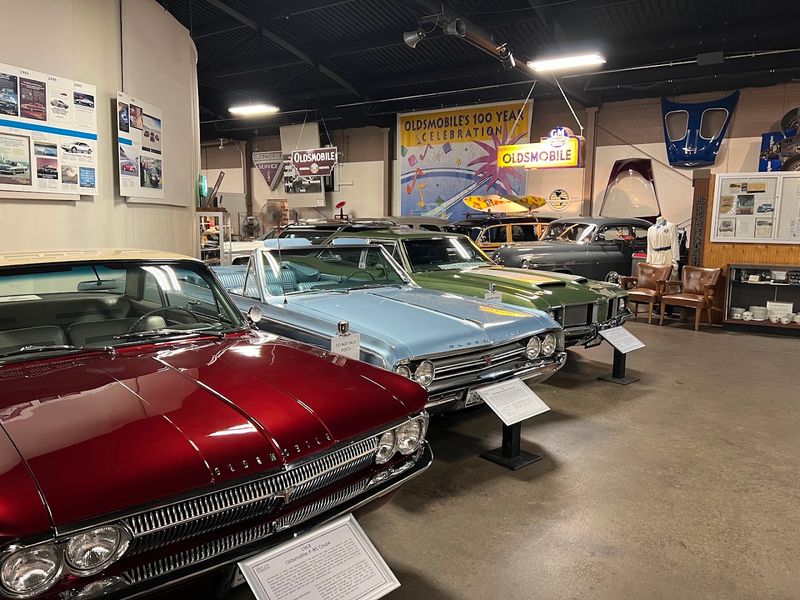
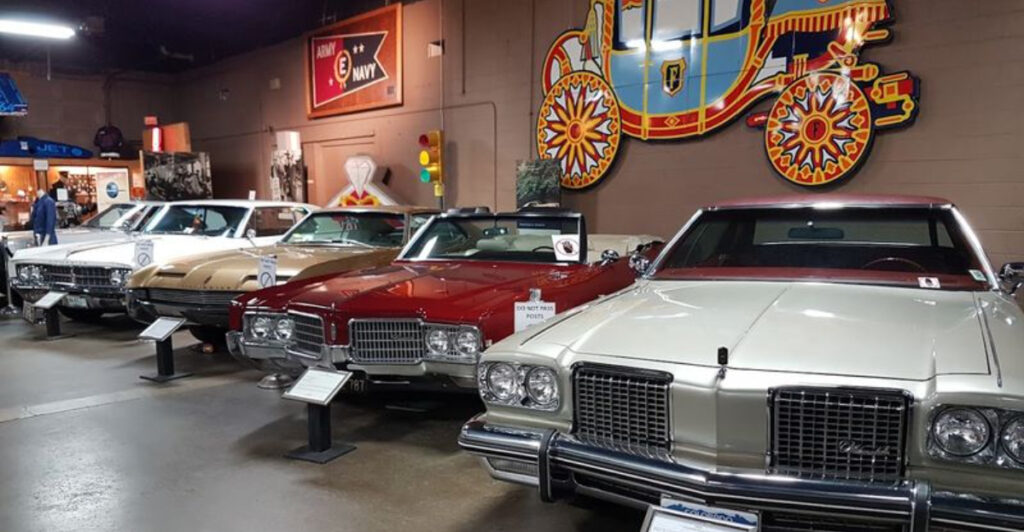
Nowhere else in Michigan will you find Oldsmobiles arranged in such careful chronological order, spanning from the earliest gasoline-powered models all the way through the brand’s final production years in the early 2000s. Walking the floor from one end to the other is essentially walking through American automotive design history, decade by decade, trim level by trim level.
The 1970s Cutlass models tend to draw the most lingering attention from visitors who grew up during that era. Wide hoods, bold color choices, and that distinctive boxy confidence of 1970s American design make those cars feel like cultural artifacts as much as engineering achievements.
Seeing them restored and polished under museum lighting brings out details that get lost in old photographs.
Earlier models from the 1920s and 1930s have a different kind of appeal — more formal, more upright, with interiors that look like rolling parlors compared to the bucket-seat layouts of later decades. The contrast between a 1920s Oldsmobile and a 1980s model parked nearby tells the whole story of how American tastes, road infrastructure, and manufacturing capabilities evolved over sixty years.
Story placards next to each vehicle fill in the gaps with production numbers, original prices, and design notes that make each car feel specific rather than generic. Original price tags are particularly striking — seeing what a new Oldsmobile cost in 1935 versus 1975 puts inflation and economic change into sharp perspective without requiring a single economics lesson.
The collection does not just display cars; it uses them as a timeline that makes abstract history feel concrete and touchable. That is the real strength of this section of the museum.
Photo Ops and Interactive Moments That Actually Deliver
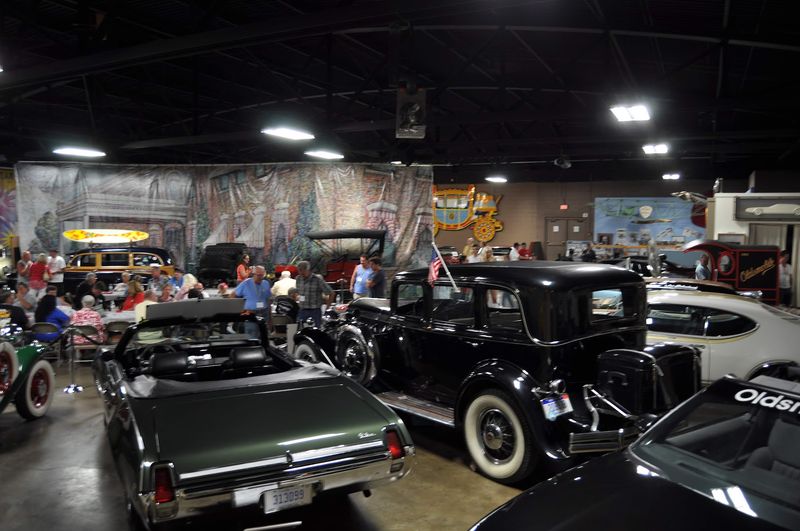
Two vehicles in the collection are open for visitors to actually sit in, which immediately separates this museum from the typical hands-off experience. One is an early 1900s car, and the other is a 1950s model — and the contrast between sitting in each one tells you more about automotive ergonomics than any wall panel could.
Climbing into the older vehicle feels almost theatrical, with its high seat position and narrow cabin. Settling into the 1950s car, by comparison, feels surprisingly roomy and stylish.
These photo opportunities are genuinely popular, especially for families visiting with kids. A four-year-old who might otherwise lose interest in display cases will happily spend ten minutes pretending to drive a car from seventy years ago.
The interactive element is simple but effective, and it gives younger visitors a physical connection to the history around them rather than just a visual one.
Beyond the sit-in vehicles, the museum’s layout itself encourages close-up viewing. Many cars are positioned so visitors can peer through windows, study dashboard details, and examine engine compartments where visible.
The proximity to the vehicles — without glass barriers separating you from them in most cases — creates a sense of access that larger automotive museums do not always offer. There is something different about being able to stand close enough to see the stitching on a 1960s seat or the texture of a chrome hood ornament.
The museum does not turn its collection into untouchable relics; it presents them as real objects with real histories that deserve close attention. That approach makes the whole experience feel more personal and less like a formal exhibition.
Bring your camera, because the lighting is genuinely good for photography.
Planning Your Visit to This Lansing, Michigan Gem
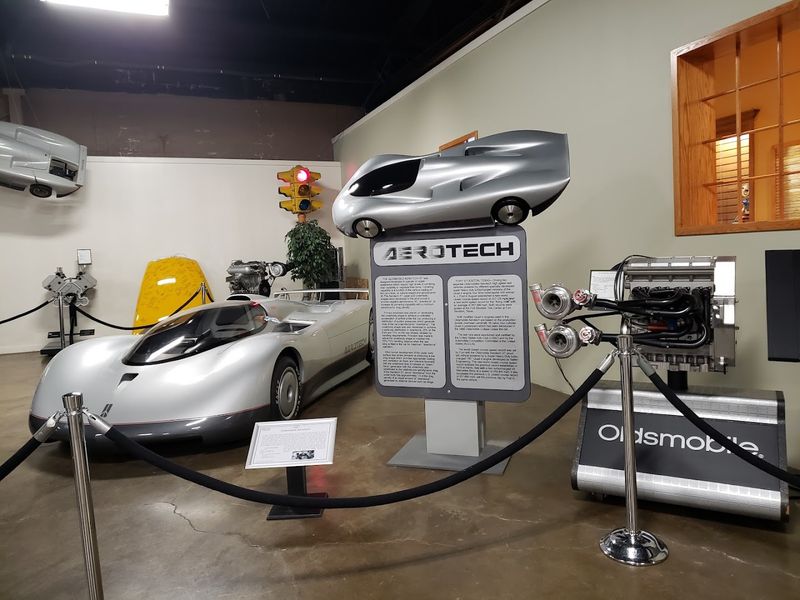
The museum sits at 240 Museum Drive in downtown Lansing, and free parking is available right outside — a detail that sounds small but genuinely matters in a city setting. Getting there is straightforward, and the location near the Lansing River Trail means you can pair a museum visit with an outdoor walk if the weather cooperates.
The surrounding area has enough going on to fill a full day without much planning effort.
Operating hours run Tuesday through Saturday from 10 AM to 5 PM, with Sunday hours from noon to 5 PM. The museum is closed on Mondays, so plan accordingly.
Arriving closer to opening time on a weekday tends to mean a quieter experience with more room to move through exhibits at your own pace. Weekend mornings can draw a few more visitors, particularly families, but the space handles the crowd reasonably well.
Budget somewhere between one and three hours depending on how deeply you want to engage with the exhibits. Speed-walkers can get through the highlights in under an hour, but anyone who stops to read the story cards, browse the gift shop, and spend time with the interactive vehicles will find two hours passing quickly.
Free guided tours are occasionally available and worth taking if your visit timing lines up — the added context from a knowledgeable guide changes the experience noticeably. Admission remains very affordable for the volume of content on offer, making this an easy recommendation for solo travelers, couples, families, and anyone passing through Lansing with a few hours to spare.
The museum holds a 4.8-star rating across hundreds of reviews, which is not an accident — consistent quality at this level reflects genuine curatorial care.
Why This Museum Stands Apart From Every Other Automotive Stop
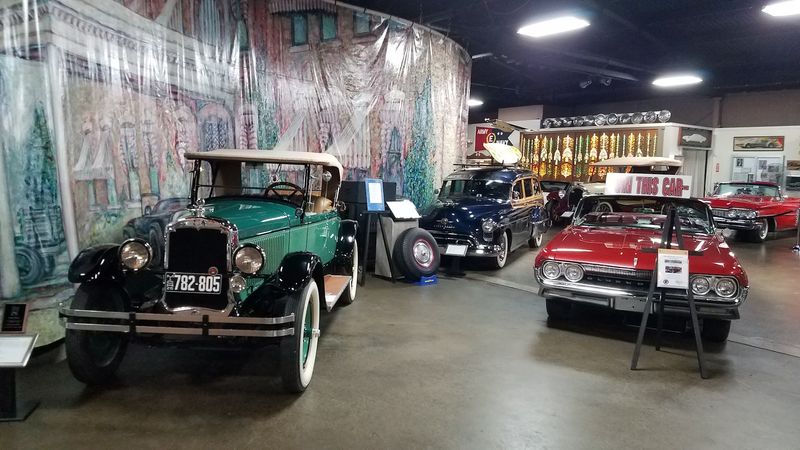
Plenty of automotive museums exist across the Midwest, but most of them function as trophy cases — beautiful cars lined up for visual appreciation without much connective tissue between them. The R.E.
Olds Transportation Museum does something different. It builds a narrative around a single person’s life and career, which gives every vehicle on the floor a reason to be there beyond its good looks or rarity.
Ransom E. Olds turns out to be a genuinely compelling historical figure.
He founded Oldsmobile in 1897, helped pioneer the assembly line concept before it became famous elsewhere, left that company, started REO Motor Car Company, and kept innovating well into his later years. The museum traces that full arc without reducing him to a footnote in someone else’s story.
By the end of a visit, most people leave knowing significantly more about this man than they expected to — and caring about it in a way that feels earned rather than lectured into them.
The collection itself earns high marks for organization and condition. Vehicles are clean, well-lit, and thoughtfully positioned.
Informational cards are readable and specific without being overwhelming. The gift shop offers a decent selection of Oldsmobile memorabilia and model cars for anyone who wants to take a piece of the visit home.
Staff members throughout the floor are present without being intrusive, available when you have questions but not hovering when you do not. For a museum of this size and admission price, the overall quality of the experience is genuinely impressive.
Visitors who come expecting a modest local attraction routinely leave recommending it to everyone they know — and that kind of word-of-mouth reputation is built one honest visit at a time.
Share this story