Texas has always done things bigger and bolder than anywhere else, but some architects have taken that spirit to wild new heights. Scattered across the Lone Star State are structures so strange they’ll make you stop mid-drive and wonder if you’re seeing things. From steel sculptures you can actually live in to fake designer stores in the middle of nowhere, these buildings prove that Texas embraces the unusual with open arms.
1. The Steel House by Robert Bruno (Ransom Canyon)
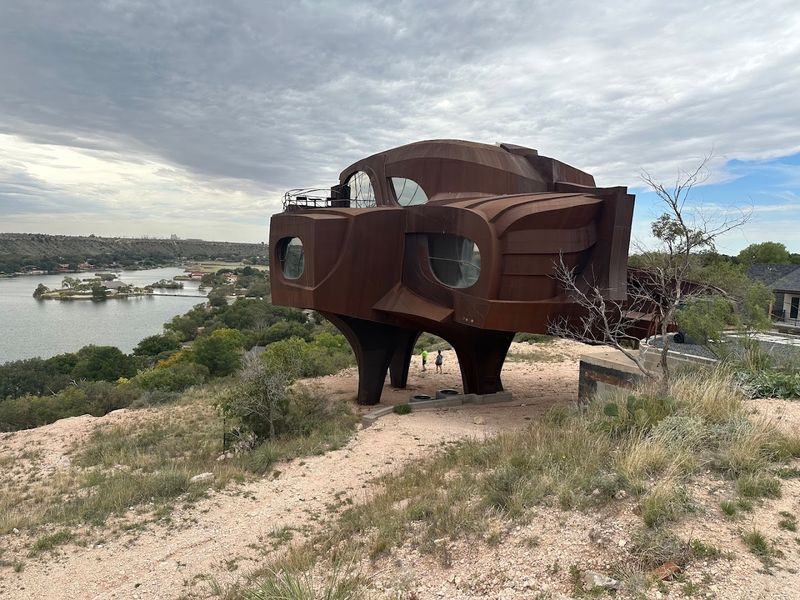
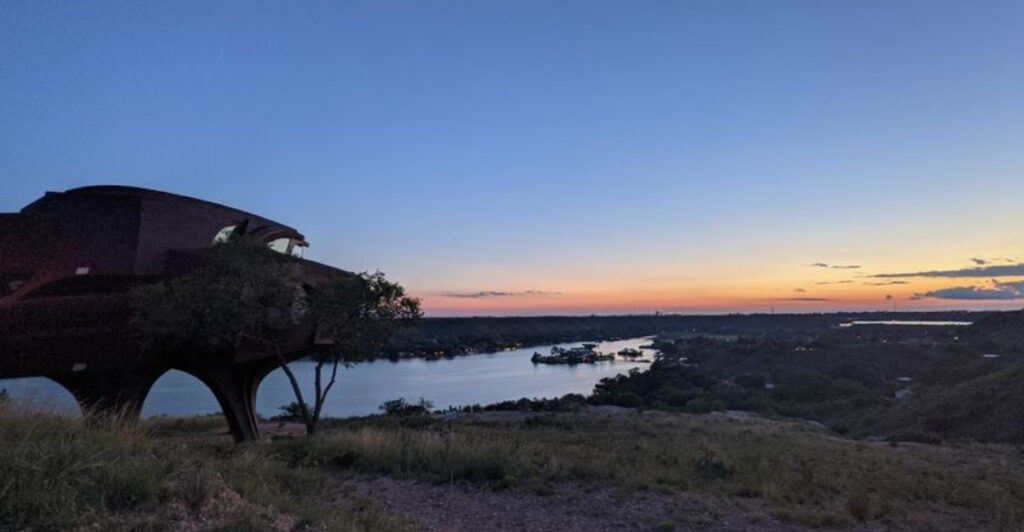
Perched on a cliff overlooking a canyon near Lubbock sits what looks like a giant steel spaceship that crash-landed in West Texas. Robert Bruno spent over three decades hand-welding this 2,200-square-foot home from 110 tons of steel, creating something that defies every rule of traditional architecture. The house curves and angles in ways that seem impossible, with no straight lines or right angles anywhere in sight.
Bruno started this passion project in 1973 while teaching architecture at Texas Tech University. He worked alone most of the time, hauling steel beams and welding them into place without any construction crew or fancy equipment. The building process became his life’s work, continuing until his death in 2008, leaving the interior still unfinished but the exterior standing as a testament to one person’s wild vision.
Walking around the structure feels like exploring alien technology. The walls flow like frozen metal waves, and small porthole windows peek out at unexpected angles. Inside, the space opens up into cavern-like rooms where steel ribs arc overhead like the skeleton of some massive creature.
The house sits on private property now, making it tough to visit up close, but you can spot it from certain vantage points around Ransom Canyon. Local folks have mixed feelings about it—some see it as a masterpiece of artistic dedication, while others think it’s just plain bizarre. Either way, nobody can deny it’s unlike anything else in Texas or probably the entire country.
What makes this building truly weird isn’t just its appearance but the sheer stubbornness behind it. Bruno worked in scorching summers and freezing winters, climbing scaffolding well into his seventies, all for a house he never fully completed. The Steel House stands as proof that sometimes the strangest buildings come from the most dedicated minds.
Art students and architecture enthusiasts make pilgrimages to glimpse this metallic oddity. Photographers love capturing it at sunset when the steel glows orange against the canyon backdrop. Though you can’t tour inside, just seeing this sculptural home from a distance makes you appreciate how far someone will go to build their dream, no matter how unconventional.
2. Prada Marfa (Marfa)
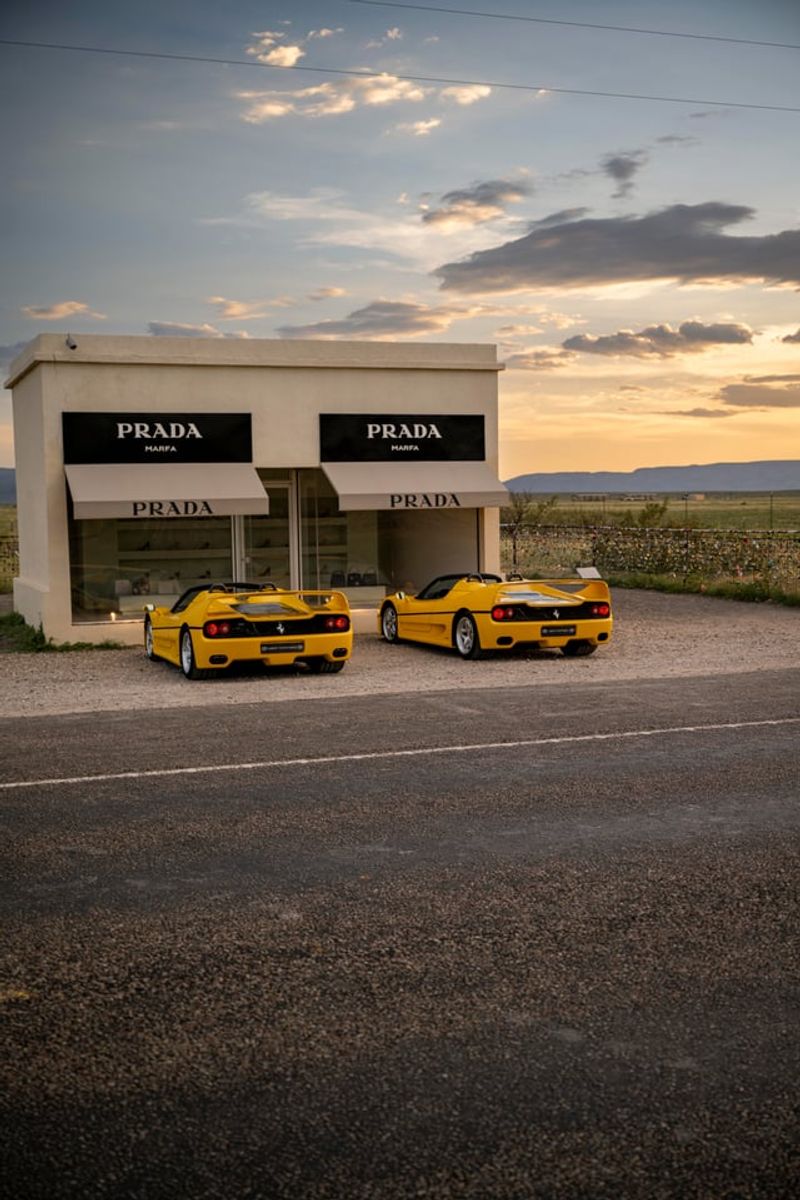
Right off Highway 90, about forty miles from Marfa, stands a perfectly pristine Prada store that will never sell you a single handbag. This isn’t a real shop—it’s a permanent art installation that artists Elmgreen and Dragset created in 2005 to comment on consumerism and luxury culture. The building looks exactly like a high-end boutique, complete with real Prada shoes and purses displayed in the windows, but the door doesn’t open for business.
The installation sits in absolute isolation, surrounded by nothing but desert scrub and the occasional tumbleweed. There’s no parking lot, no employees, and definitely no cash register. The shoes inside are all right-footed, and the bags are real Prada products from the fall 2005 collection, though they’ve been sitting there collecting dust for nearly two decades now.
Visitors from around the world make the trek to photograph themselves in front of this bizarre landmark. Some people pose like they’re shopping, others just stand there confused about what they’re looking at. The building has become one of West Texas’s most Instagrammed spots, which is pretty ironic for an art piece meant to critique consumer culture.
Vandals broke into Prada Marfa shortly after it opened, stealing the handbags and spray-painting the walls. The artists repaired it, restocking the display and repainting everything white again. Since then, it’s been hit by graffiti multiple times, but local volunteers and art lovers keep restoring it to its original pristine condition.
The structure technically violates local sign ordinances, which sparked debates about whether it’s art or advertising. After some legal wrangling, officials declared it a museum, which allowed it to stay put. That classification makes this the world’s smallest and weirdest museum, open 24 hours but never actually open at all.
What started as a commentary on luxury goods in the middle of nowhere has become exactly what it was mocking—a destination people travel to and photograph obsessively. Standing in front of this fake store feels surreal, like someone photoshopped a fashion boutique into the Texas desert. Yet somehow, it fits perfectly with Marfa’s reputation as an unexpected art hub in the middle of absolutely nowhere.
3. Chong Hua Sheng Mu Holy Palace / Palace of the Golden Orbs (Houston)
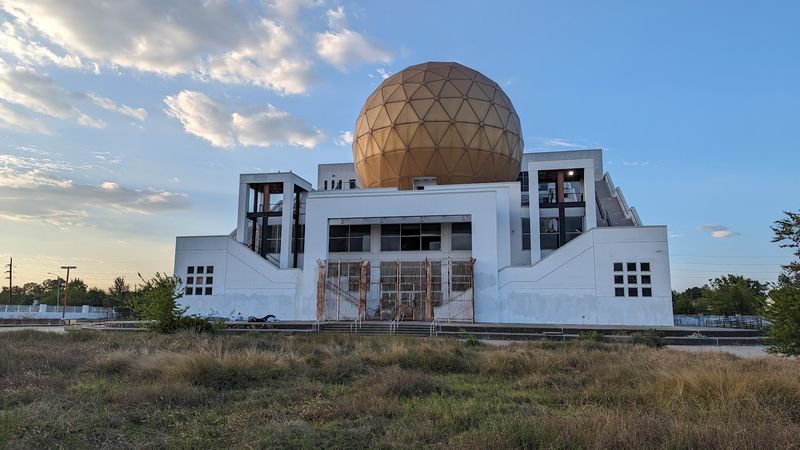
Cruising down Bellaire Boulevard in Houston’s Chinatown, you might think you’ve accidentally driven through a portal to another dimension. The Palace of the Golden Orbs rises from a strip mall parking lot like something transported straight from a fantasy novel, its gleaming golden spheres catching sunlight and turning heads for blocks around. This Taoist temple looks wildly out of place among the Vietnamese restaurants and bubble tea shops, but that’s exactly what makes it so memorable.
The official name is Chong Hua Sheng Mu Holy Palace, though everyone calls it the Palace of the Golden Orbs because of those impossible-to-miss spherical towers. Bright red walls covered in intricate Chinese designs support the golden domes, creating a color combination that practically vibrates against Houston’s typically gray sky. Dragons, phoenixes, and other traditional symbols decorate every available surface, making the building feel more like a theme park attraction than an actual place of worship.
Inside, the temple serves Houston’s Taoist community as a genuine religious center. Worshippers come to pray, make offerings, and participate in traditional ceremonies beneath ornate ceilings and among statues of various deities. The interior matches the exterior’s over-the-top aesthetic, with red and gold dominating the color scheme and incense smoke drifting through elaborately decorated halls.
What really throws people off is the location. This isn’t tucked away in some quiet neighborhood—it’s right there on a major street, sandwiched between regular businesses in one of Houston’s busiest commercial districts. You can grab Chinese groceries, eat soup dumplings, and visit an incredibly ornate temple all within a five-minute walk.
Only in Houston would something this visually striking blend into the everyday landscape of a shopping district.
Photographers and architecture fans regularly stop by to capture the building’s unique appearance. The golden orbs photograph especially well during golden hour when the setting sun makes them glow even brighter. Local residents have mostly gotten used to it, though newcomers still do double-takes when they first spot those spheres rising above the strip malls.
The temple represents how Houston embraces cultural diversity in the most visible ways possible. Rather than hiding religious architecture away, this building announces itself boldly, adding unexpected beauty to a commercial corridor. It’s weird, it’s wonderful, and it’s absolutely, perfectly Houston—a city where the extraordinary sits right next to the ordinary without anyone batting an eye.
Share this story