Michigan is one of those states that surprises you every single time you think you’ve seen it all. Beyond the famous lighthouses and packed summer beaches, there’s a whole other side of the state hiding in plain sight.
From a living ghost town on a lakeshore to a spring so clear it looks fake, Michigan keeps secrets better than most. Get ready to see your state — or someone else’s — in a completely new way.
1. Pere Marquette 1225 Steam Locomotive, Owosso
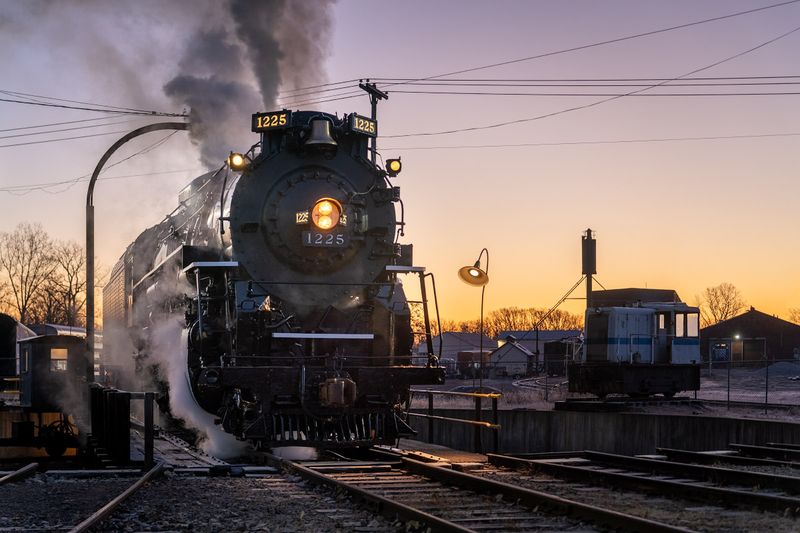
Most people drive right through Owosso without a second thought, but tucked inside the Steam Railroading Institute is one of the most impressive machines you’ll ever stand next to. The Pere Marquette 1225 is a full-size working steam locomotive, and yes — it still runs.
Built in 1941, this 1.2-million-pound beast hauls passengers on special seasonal excursions that feel like stepping into a black-and-white photograph come to life.
Here’s a fun fact most Michiganders don’t know: the 1225 was the real-life inspiration for the locomotive in the beloved holiday film “The Polar Express.” Author Chris Van Allsburg grew up in Michigan and based his iconic train on this very engine. So when you see that movie every December, you’re actually looking at a fictional version of something sitting right here in Owosso.
The institute itself is worth the trip even when the locomotive isn’t running. You can walk through the restoration shop, get surprisingly close to the engine, and watch mechanics work on vintage rail cars in real time.
It’s part museum, part working garage, and entirely fascinating. Kids go absolutely wide-eyed the moment they hear the whistle blow.
If you plan your visit around one of the holiday runs, book your tickets early — they sell out fast every year. The experience of riding behind a steam locomotive through Michigan’s countryside in winter is genuinely hard to describe.
It’s loud, smoky, and old in the best possible way. Whether you’re a train enthusiast or someone who just stumbled across the listing online, the Pere Marquette 1225 delivers an experience that feels rare and completely real.
2. Fishtown, Leland
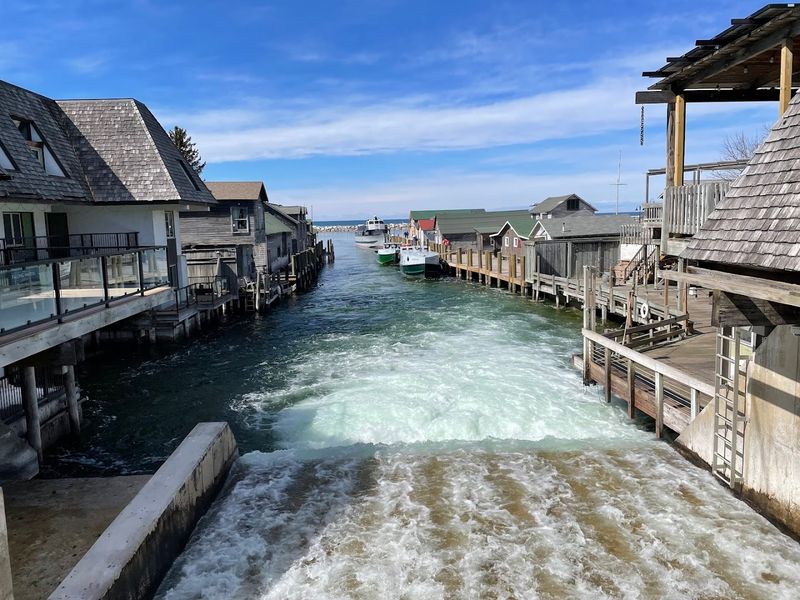
Fishtown in Leland might be the most photographed half-block in all of Michigan, and for good reason. A cluster of weathered cedar shanties leaning over the Leland River, it looks like something a movie set designer would dream up — except it’s completely authentic.
Commercial fishermen have worked out of these same rickety structures since the late 1800s, and some still do today.
What makes Fishtown genuinely special is that it hasn’t been turned into a polished tourist attraction. The smell of fish is real.
The nets hanging outside are real. The boats docked along the channel are actually used to pull whitefish and lake trout from Lake Michigan.
A nonprofit called the Fishtown Preservation Society works hard to keep the working waterfront alive rather than letting it become just another gift shop strip.
You can browse the handful of small shops selling smoked fish, local art, and handmade goods, but the real draw is just standing on the dock and watching the river move toward Lake Michigan. In peak summer, the channel fills with kayakers and charter boats heading out for the day.
In the shoulder seasons, it gets quiet enough that you can hear the wood creaking underfoot.
Leland itself is a charming small town worth spending a few hours in before or after your visit. The nearby Sleeping Bear Dunes National Lakeshore is only a short drive away, making Fishtown an easy stop on a broader northwest Michigan road trip.
But don’t just treat it as a photo op and move on. Grab some fresh-smoked whitefish from one of the market stalls and eat it on the dock — that’s the full Fishtown experience, no filter required.
3. Hidden Lake Gardens, Tipton
Hidden Lake Gardens doesn’t get nearly enough credit for what it actually is. Managed by Michigan State University, this 755-acre botanical paradise in Tipton sits quietly in the Irish Hills region, drawing garden lovers, photographers, and anyone who needs a few hours of genuine peace.
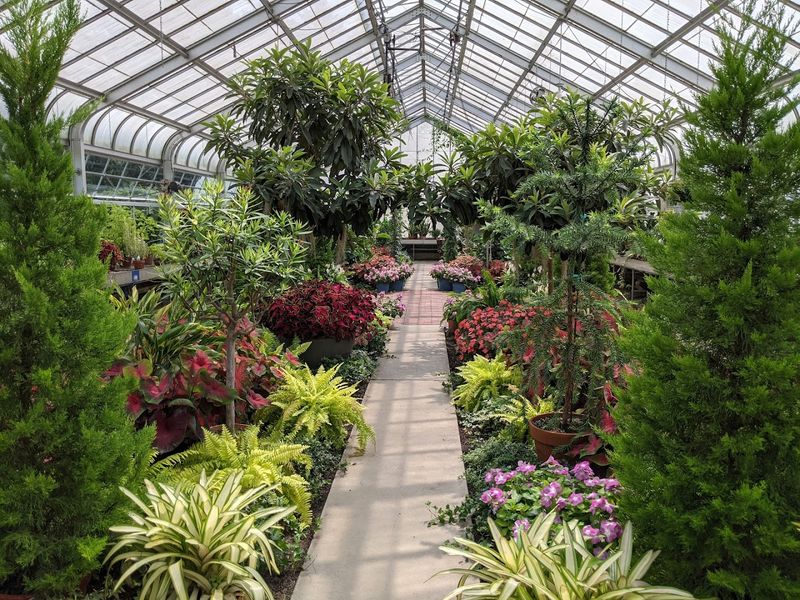
The grounds include five miles of paved roads you can drive through slowly, plus walking trails that wind past themed gardens, a bonsai collection, and a domed tropical conservatory.
The conservatory alone is worth the trip, especially in winter when you can step inside and instantly feel warm, humid air and see tropical plants towering overhead. It’s one of those experiences that feels a little surreal when there’s snow on the ground outside.
The bonsai collection is another quiet highlight — hundreds of miniature trees, some of them decades old, displayed with a level of care that borders on art.
Spring brings the most dramatic color, when thousands of tulips and flowering trees explode across the hillsides. Fall turns the whole property into a slow-burning palette of orange, red, and gold.
But honestly, there’s no bad season to visit. Even in the dead of winter, the conservatory and the stark architecture of bare trees against a gray sky have their own kind of beauty.
Admission is affordable and the pace of the place encourages you to slow down. There’s no rushing through Hidden Lake Gardens — the layout practically forces you to wander.
Bring a picnic, a good pair of walking shoes, and zero agenda. Whether you’re into horticulture or just need a break from screens and noise, this place delivers something quietly extraordinary that most people in Michigan still haven’t discovered.
4. The Heidelberg Project, Detroit

No place in Michigan quite prepares you for the Heidelberg Project. Standing on Heidelberg Street in Detroit, you’re surrounded by houses covered in painted polka dots, stuffed animals nailed to walls, old shoes hanging from trees, and thousands of found objects arranged into something that’s part protest, part celebration, and entirely its own category of art.
It started in 1986 when artist Tyree Guyton decided to transform his neglected neighborhood using whatever he could find.
What Guyton created isn’t a museum or a gallery — it’s a living, evolving outdoor art environment that has changed the conversation about Detroit’s east side for nearly four decades. The project has faced controversy, including city-ordered demolitions, but it keeps growing back.
That resilience is actually part of what the project is about: the idea that creativity can survive and even thrive in places that have been written off.
Visiting feels different from most art experiences. There’s no ticket booth, no audio guide, no velvet rope.
You walk the street, look closely at things, and form your own reaction. Some pieces are funny.
Some are haunting. Some are so layered with objects and meaning that you could stare for ten minutes and still not see everything.
It’s the kind of place that starts conversations between strangers.
The Heidelberg Project draws visitors from all over the world, yet plenty of Michiganders have never made the trip. If you consider yourself someone who appreciates art that takes real risks, this is mandatory.
Go on a weekday morning for a quieter experience, bring a camera, and talk to anyone you meet there. The neighborhood itself is part of the story, and walking it with open eyes is the whole point.
5. Kitch-iti-kipi, Palms Book State Park near Manistique
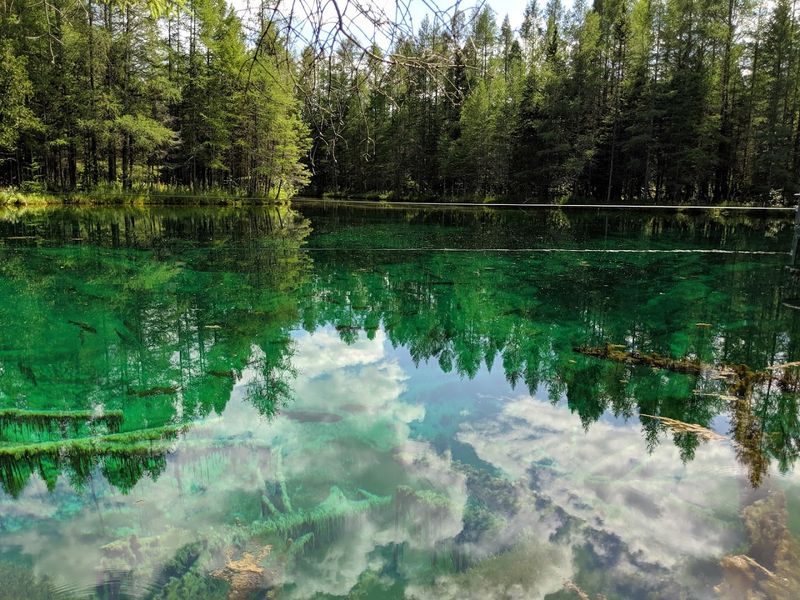
Standing at the edge of Kitch-iti-kipi and looking down into forty feet of water so clear you can read the bottom like a page — that’s a moment that tends to rewire how you think about Michigan’s natural world. Known as “The Big Spring,” this is the largest natural freshwater spring in Michigan, pumping out roughly 10,000 gallons of 45-degree water every single minute.
The color is an otherworldly blue-green that doesn’t look real until you’re actually there.
Getting out over the spring is part of the experience. Visitors pull themselves across the water on a self-operated observation raft, which is basically a flat platform with a rope system.
There’s no motor, no guide — just you and whoever else is on the raft, hauling hand-over-hand across the surface while looking straight down through glass-clear water at massive brown trout drifting below. It’s low-tech in the best way.
The spring maintains that 45-degree temperature year-round, which means it never freezes. Visiting in winter gives you a surreal contrast: snow on the ground, bare trees, and this impossibly turquoise pool steaming slightly in the cold air.
It looks like something from another planet. Summer visits are more crowded but no less stunning — the color of the water pops even harder against the bright green of the surrounding forest.
Palms Book State Park is a day-use area, so there’s no camping on site, but the nearby town of Manistique has lodging options and its own waterfront charm. The spring sits just off US-2, making it an easy stop on an Upper Peninsula road trip.
Once you’ve seen Kitch-iti-kipi in person, photos of it will never quite do it justice again.
6. The Secret Garden, Mackinac Island
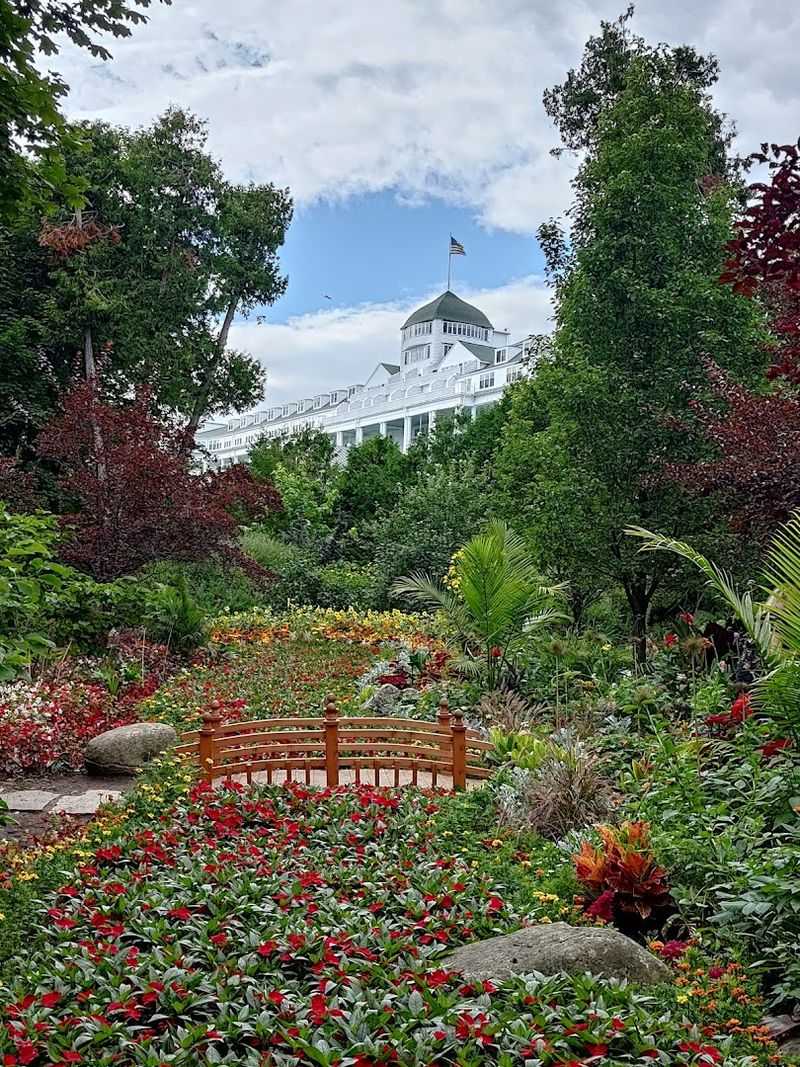
Mackinac Island gets millions of visitors every year, but most of them follow the same loop: fudge shops, the Grand Hotel, Arch Rock, and maybe a bike rental. The Secret Garden sits quietly off that main circuit, tucked behind a stone wall in a part of the island that most tourists walk right past.
Finding it feels genuinely earned, which makes the experience of stepping inside all the more satisfying.
The garden is a study in what happens when a space is tended with real patience. Layers of perennials, climbing roses, and carefully pruned shrubs create a sense of enclosure that makes the noise of the island — the clip-clop of horse hooves, the chatter of tourists — fade away almost immediately.
It’s the kind of place where people naturally lower their voices without being asked.
Mackinac Island operates without cars, which already gives it a slower, more deliberate energy than most Michigan destinations. The Secret Garden amplifies that feeling.
Visiting on a weekday morning, before the ferry crowds arrive, gives you a version of the island that feels almost private. The light through the trees at that hour is something photographers specifically time their trips around.
If you’re planning an island visit, build in time to wander beyond the main street. The less-trafficked interior trails and historic residential areas hold surprises that the souvenir shops can’t offer.
The Secret Garden is one of those surprises — small in scale but big in the kind of quiet it offers. It’s a reminder that even one of Michigan’s most visited destinations still has corners worth discovering for the first time.
7. Capri Drive-In, Coldwater

Drive-in movie theaters are rare enough in 2024 that finding one still operating feels like discovering something from a parallel timeline. The Capri Drive-In in Coldwater has been running since 1964, and on a warm Friday night in summer, it fills up with a mix of families, couples, and people who drove an hour just to say they did it.
There’s a specific energy at a drive-in that no indoor theater can replicate — partly the nostalgia, partly the freedom of watching a movie in your own car.
The Capri typically shows double features, which means you’re getting two movies for one admission price. Bring blankets, lawn chairs, and snacks from the concession stand — the classics like popcorn and hot dogs are all there, and the prices are refreshingly reasonable compared to multiplex concessions.
Tune your car radio to the designated FM frequency and the audio comes right through your speakers with surprisingly good quality.
What makes the Capri worth the trip isn’t just the novelty. It’s the whole atmosphere of the thing: kids running around between cars before the show starts, the sky going from orange to purple to black, the massive screen flickering to life.
The social experience is built into the format in a way that modern theaters have mostly abandoned. You end up talking to the people parked next to you.
Coldwater itself is a solid small Michigan town with good food options nearby. The drive-in season runs roughly from spring through early fall, so check their schedule before making the trip.
Going once is enough to understand why people who grew up with drive-ins feel a specific kind of sadness about their disappearance — and why the Capri’s survival feels worth celebrating.
8. McCourtie Park, Cement City
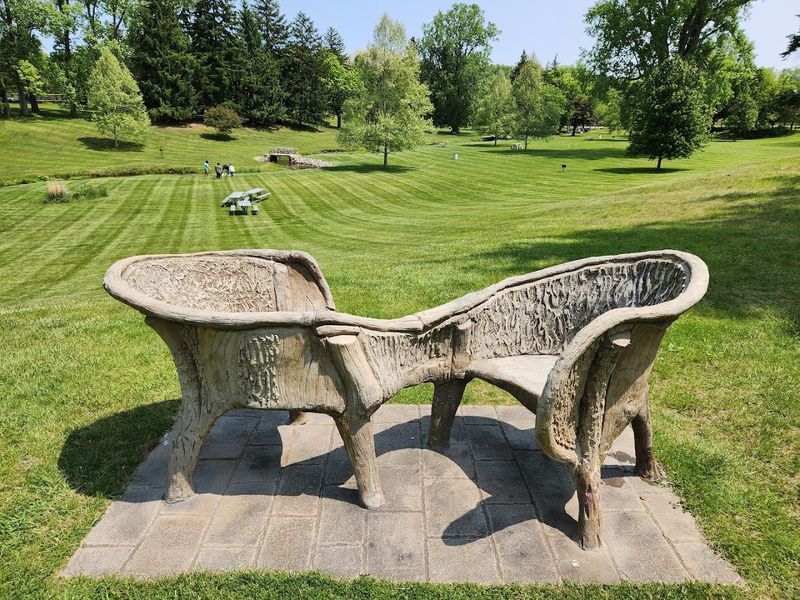
The name “Cement City” doesn’t exactly promise magic, but McCourtie Park is one of the most genuinely strange and wonderful places in Michigan. In the 1920s and 30s, a cement company executive named W.H.L.
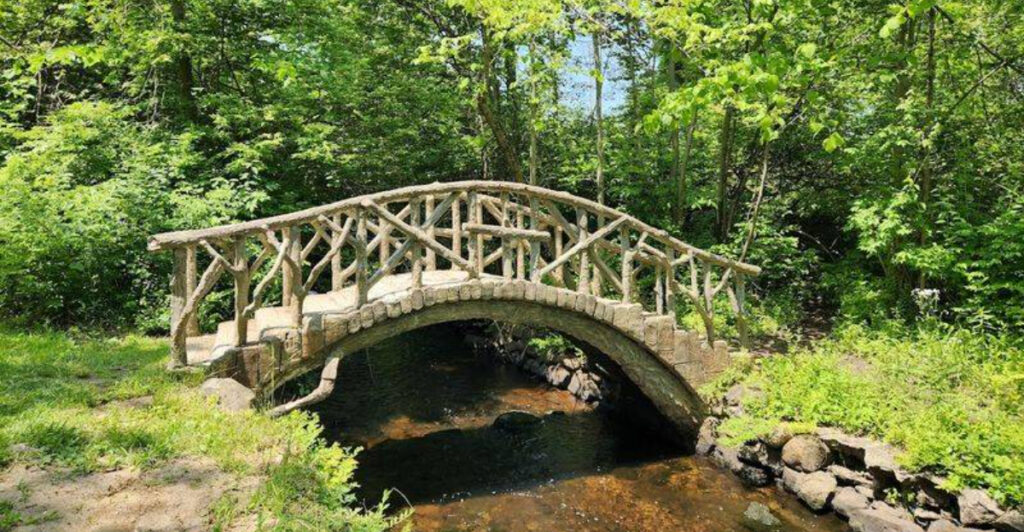
McCourtie hired a group of Mexican artisans to transform his estate into an elaborate fantasy landscape made almost entirely of concrete. What they built — seventeen bridges, fake tree trunks, staircases, and sculptures, all crafted from cement — still stands today in a public park that most Michigan residents have never heard of.
The craftsmanship is jaw-dropping up close. The concrete tree trunks are textured to mimic real bark so convincingly that first-time visitors sometimes do a double take.
Each bridge is unique in design, some with railings that look like twisted branches, others with decorative inlays and carved animal figures. Walking the property feels like wandering through someone’s elaborate personal mythology, which is essentially what it is.
The park is free and open to the public, which makes it one of the best-value destinations in the state. It’s small enough to walk in under an hour, but most people end up lingering longer than expected because there’s always another detail to notice.
Bring good walking shoes and a camera — the light in late afternoon turns the concrete a warm gold that looks stunning in photos.
McCourtie Park sits in Hillsdale County, an area of Michigan that doesn’t get much tourist traffic, which only adds to the feeling of discovery when you find it. It’s the kind of place that makes you wonder how many other stories like this are scattered across the state, waiting for someone curious enough to look.
Cement City earned its unusual name, but this park earns something rarer: genuine surprise.
9. Laughing Whitefish Falls State Park, Sundell
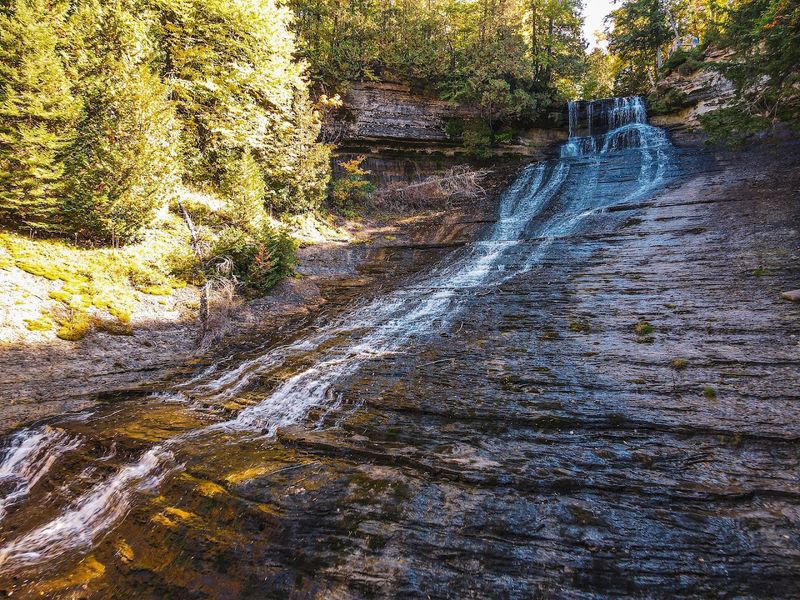
Upper Peninsula waterfall chasers have a long list to work through, but Laughing Whitefish Falls tends to stop people in their tracks in a way that even the more famous falls don’t always manage. The hike in is straightforward — about a mile and a half round trip through dense northern forest — and the payoff is a multi-tiered waterfall dropping roughly 30 feet over ancient Precambrian rock formations that have been shaped by water for longer than humans have been around to notice.
The falls are named for the Laughing Whitefish River, and in spring or after heavy rain, the volume of water coming over those rock ledges is genuinely powerful. The sound hits you before you see it.
Standing at the base of the falls, with mist drifting back toward the trail, is the kind of sensory experience that’s hard to replicate in a photo. The rock layers visible at the falls are a geology lesson you didn’t know you needed.
Sundell is a small community in Alger County, and the park itself is rustic — don’t expect a visitor center or manicured facilities. That’s part of the appeal.
This is the UP at its most honest: a good trail, a spectacular natural feature, and none of the infrastructure that sometimes makes outdoor spaces feel like theme parks. Pack your own water, wear layers, and account for muddy sections on the trail.
The park is far enough off the main UP tourist circuit that you’re unlikely to find it crowded even in peak summer. If you’re making a loop through the central Upper Peninsula, it pairs well with nearby Pictured Rocks National Lakeshore.
Laughing Whitefish Falls is the kind of find that makes you feel like you’ve earned something — because you kind of have.
10. Tunnel of Trees, M-119
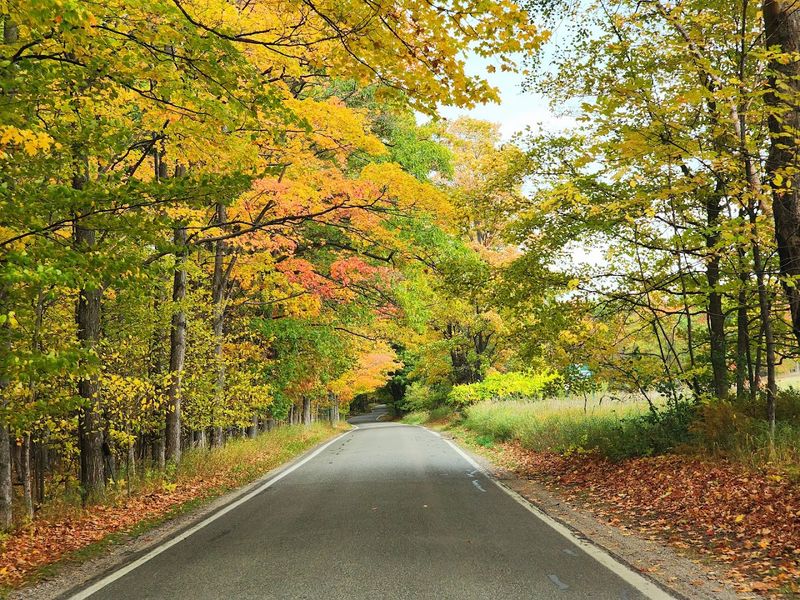
There’s a reason the stretch of M-119 between Harbor Springs and Cross Village has been called one of the most scenic drives in the entire country. For about 20 miles, the road winds along a bluff above Lake Michigan, passing through a forest so dense that the tree canopy closes overhead like a tunnel — hence the name.
In fall, the color is so saturated it almost looks digitally enhanced. In spring, the new green is so bright it almost hurts to look at.
The road is narrow and curvy, which means this is not a drive for people in a hurry. That’s the point.
You’re meant to slow down, pull over at the occasional clearing where Lake Michigan flashes into view, and let the experience accumulate. The combination of old hardwood forest, the occasional historic cabin, and those glimpses of blue water creates something that feels more like a movie than a commute.
Fall color season on M-119 typically peaks in mid-October, and on peak weekends, the road does see traffic. Going on a weekday, or even early on a weekend morning, gives you a version of the drive that feels almost meditative.
The light filtering through the canopy at those hours is something photographers plan entire trips around.
At the northern end, the village of Cross Village is home to Legs Inn, a legendary Polish restaurant inside a building decorated with driftwood and found objects. It’s been there since 1921 and is worth stopping for even if you’re not hungry.
The Tunnel of Trees drive works as a standalone afternoon or as part of a longer northern Michigan trip — either way, it’s the kind of road that makes you want to turn around and do it again.
11. Turnip Rock, Port Austin
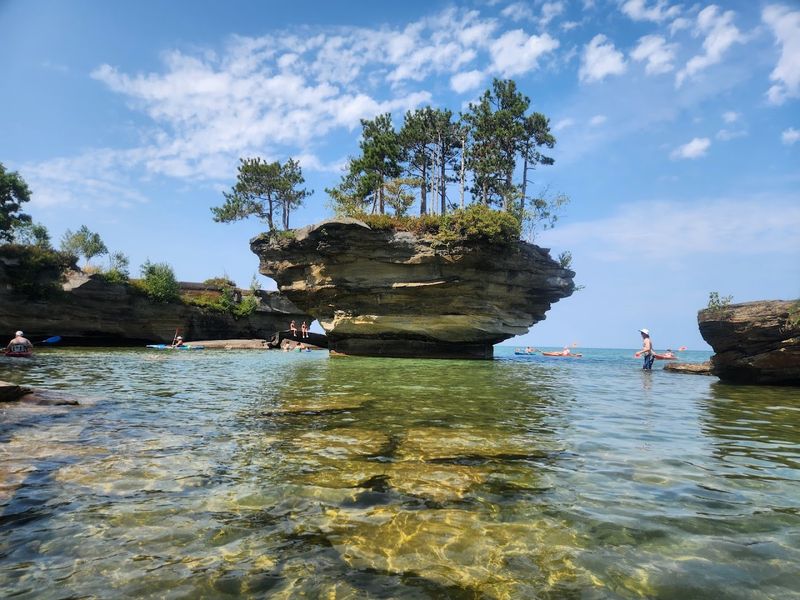
Turnip Rock is one of those Michigan landmarks that looks completely impossible until you see it with your own eyes. A narrow pillar of rock rising out of Lake Huron, topped with a cluster of windswept trees that somehow grow out of solid stone — it looks like something from a fantasy novel.
Located near Port Austin at the tip of Michigan’s Thumb, it can only be reached by water, which is exactly what keeps it special.
Most visitors rent kayaks from local outfitters in Port Austin and paddle out to the formation, a trip of roughly two to three miles round trip depending on your launch point. The paddle takes you along a rocky Lake Huron shoreline that’s beautiful in its own right, with clear water shallow enough to see the bottom and occasional rock formations breaking the surface.
On a calm summer morning, the whole experience feels almost surreal.
The name comes from the rock’s shape — wider at the top than the base, like an upside-down turnip. Up close, you can see the layers of sedimentary rock and the roots of the trees clinging to cracks in the stone.
It’s a reminder that nature doesn’t need grand scale to be impressive. Sometimes a single weird, stubborn rock formation in the middle of a lake does the job just fine.
Port Austin itself is a laid-back Thumb town with good food, a farmers market, and the kind of unhurried pace that’s increasingly rare in Michigan’s more popular resort areas. Plan your kayak trip for early morning when wind and waves are typically calmer, and check with outfitters about current conditions before heading out.
Turnip Rock rewards the effort with a view that’s genuinely hard to find anywhere else in the Midwest.
Share this story