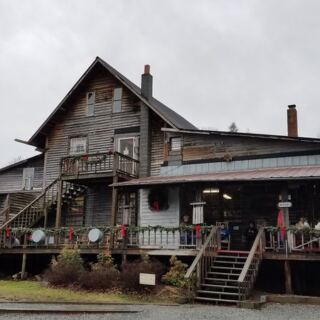
The front doors at Porta have seen a lot more than dinner plans.
Before people were walking through them for wood-fired pizza, cocktails, wedding receptions, and late-night dancing, this 911 Kingsley Street building was part of the old Asbury Park music circuit, the kind of place where a regular night out could accidentally become Jersey folklore.
That is the fun little jolt of eating here: you are not just sliding into a big, lively pizzeria a few blocks from the boardwalk.
You are stepping into a room tied to the moment Bruce Springsteen and Clarence Clemons first crossed paths, long before that saxophone sound became one of New Jersey’s most recognizable musical signatures.
Porta opened in 2011, but the building’s story reaches back to the days when Asbury Park’s clubs, bars, and boardwalk rooms were busy shaping something louder than dinner conversation.
The Asbury Park Pizzeria Hiding a Rock and Roll Backstory
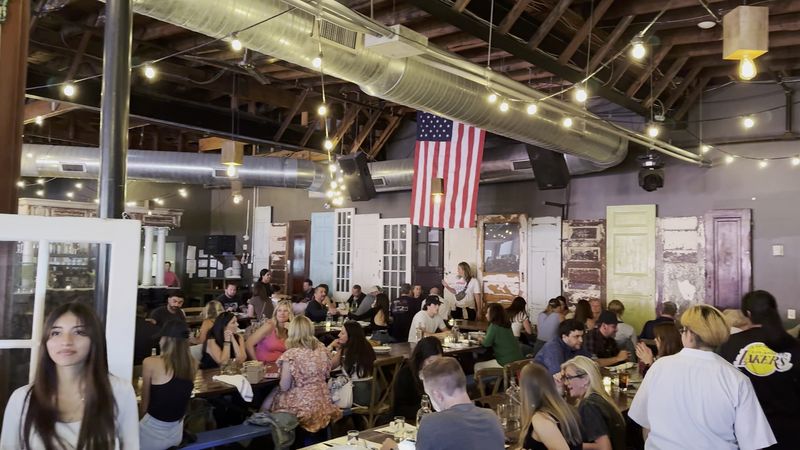
Porta does not exactly whisper. On a busy night, the place feels like somebody took a Neapolitan pizzeria, a shore-town beer hall, a wedding venue, and a dance floor and taught them how to share one building.
Long communal tables fill with groups splitting pies. Servers weave past trays of mozzarella, meatballs, and pizzas blistered at the edges.
Somewhere between the dining room and the bar, someone is probably deciding whether this is a quick dinner or the beginning of a much longer night. That makes the backstory even better, because this is not some roped-off relic where history sits behind glass.
Porta is alive, loud, and still doing what Asbury Park has always done well: mixing food, music, strangers, locals, and a little bit of beautiful chaos under one roof. The restaurant sits in the former home of the Student Prince, a once-famous local venue connected to Bruce Springsteen and Clarence Clemons.
Today, the official address is 911 Kingsley Street, close enough to the ocean that the whole place still carries that loose, salty, post-beach energy. The funny thing is, you could eat here without knowing any of that.
You could order a Margherita, share a Carbonara pizza, stay too late, and leave happy. But once you know what happened in this building, Porta gets an extra layer.
The walls are not decorated like a shrine, and that is part of the charm. The history is baked into the room rather than shouted from every corner.
It is there in the scale of the place, in the late-night schedule, and in the way Porta still understands that Asbury Park works best when dinner has the option of turning into a story.
How Porta Took Over the Former Student Prince Building
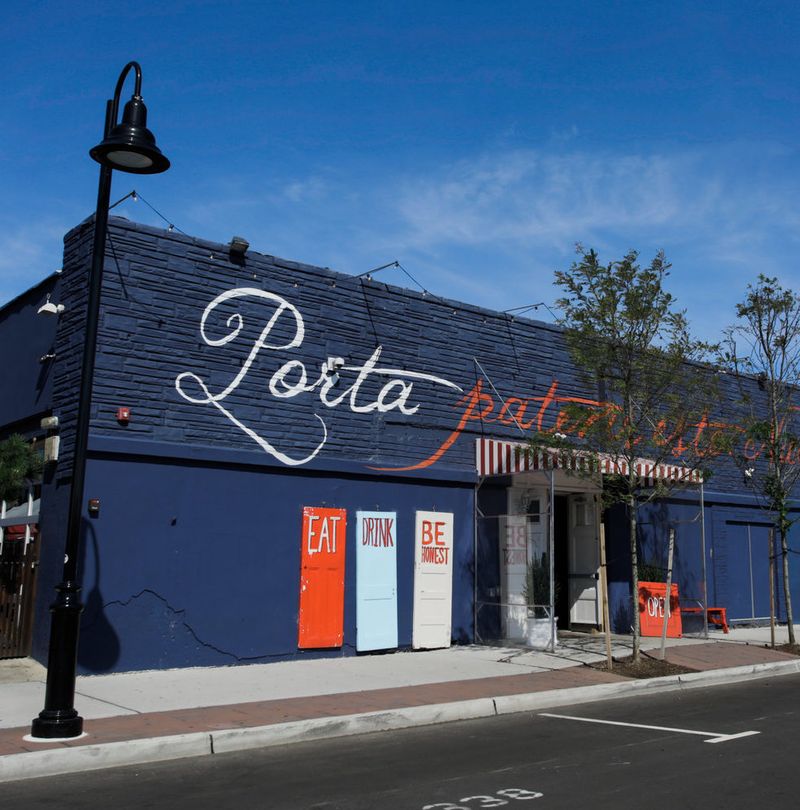
The Student Prince belonged to a very different Asbury Park, one where the city’s music reputation was still being built in real time. Before the Stone Pony became the name every out-of-towner recognized, clubs and bars around town were already giving young musicians space to stretch out, trade sounds, and build followings.
The Student Prince was one of those rooms. Brucebase lists the venue at 911 Kingsley Avenue and notes it as a major part of the local music scene, with Springsteen performing there dozens of times.
Porta, meanwhile, now gives the same address a totally different rhythm, but not a sanitized one. When it opened in 2011, it did not turn the building into a quiet little nostalgia piece.
It turned it into a big, bustling restaurant that could handle lunch, dinner, brunch, private events, late-night pizza, and a dance party schedule without losing the feeling that something might happen after your second drink. That choice matters.
A lot of old music buildings become plaques, condos, or trivia questions. This one became a place where people still gather in big numbers, just with San Marzano tomatoes and cocktails added to the equation.
Porta’s current hours help tell the story. Monday through Thursday, lunch runs from noon to 4 p.m., dinner from 4 to 9:30 p.m., and the bar stays open until 10.
Fridays stretch further, with late-night pizza until 1 a.m. and a dance party from 10 p.m. to 2 a.m. Saturdays bring brunch, dinner, and a bar open until midnight.
It is a restaurant, sure, but it is also a room that still knows how to hold a crowd.
The Night Bruce Springsteen and Clarence Clemons Became Jersey Shore Legend
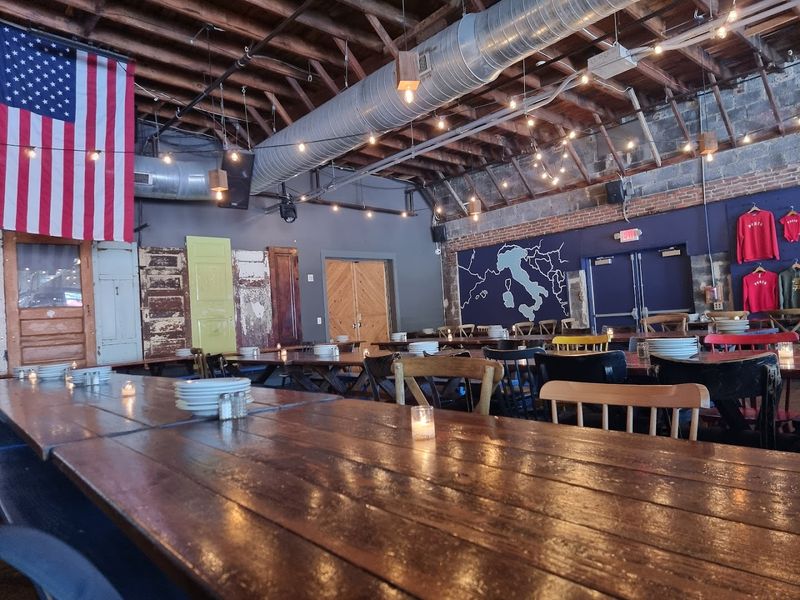
The most famous part of the Student Prince story sounds almost too perfect, which is exactly why people keep telling it. In September 1971, Clarence Clemons was playing nearby with Norman Seldin & The Joyful Noyze while Bruce Springsteen was performing at the Student Prince.
The accepted local legend has Clemons making his way over, walking into the room, and joining Springsteen onstage.
That meeting became one of the great origin moments in New Jersey music, not because anyone in the crowd knew they were watching history, but because the partnership that followed helped define the sound of the E Street Band.
Clarence Clemons was not just another sax player who wandered in with a horn case. He became “The Big Man,” the towering stage presence whose saxophone could make a Springsteen song feel bigger, warmer, and more cinematic in about four bars.
The first meeting has been retold with stormy weather, dramatic timing, and the kind of entrance that belongs in a movie, but even stripped down to the basics, the moment still lands. Two musicians crossed paths in Asbury Park, clicked almost immediately, and went on to become part of the state’s musical identity.
That is why Porta’s building feels different once you know the story. You can be sitting there with a pizza cutter in one hand and a drink in the other, but the room has this invisible second soundtrack.
Not background music, exactly. More like a reminder that Asbury Park’s best stories often started in ordinary places: a club, a bar, a borrowed stage, a night when somebody decided to walk over and see who was playing.
Why the Old Music Club Still Gives the Restaurant Its Edge
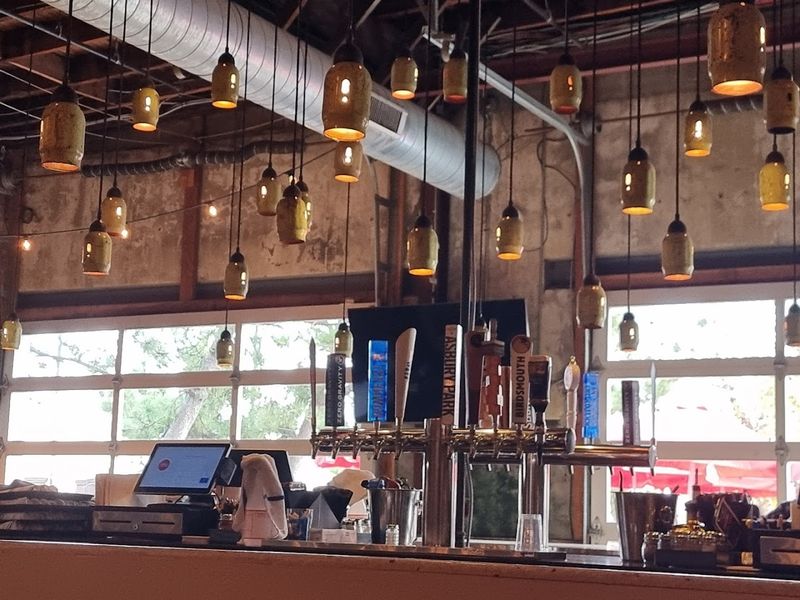
Asbury Park has never been very good at acting polished, and that is a compliment. The city’s personality comes from the mix: boardwalk grandness, battered old buildings, new restaurants, music history, beach traffic, locals who have seen every version of town, and visitors who arrive thinking they discovered it first.
Porta fits that mix because it does not feel like a delicate adaptive-reuse project. It feels like a working room.
The old Student Prince connection gives it weight, but the restaurant’s edge comes from how it uses the space now.
The Abbot Room hosts late-night dance parties, the dining room handles live entertainment and Jazz Brunch, and the whole operation has the relaxed confidence of a place that can feed a family at 1 p.m. and still be wide awake after dark.
That is very Asbury Park. It is not trying to separate daytime from nighttime, locals from visitors, food from music, or history from the present.
Everything overlaps. You might see a table of parents with kids splitting pizza near a group dressed for a night out.
You might come in for dinner and realize the energy is slowly shifting toward the bar. You might be there on a Sunday when jazz fills the dining room and the whole place feels like brunch wandered into a rehearsal.
The rock-and-roll past helps, but Porta would not work if it only had a famous backstory. The restaurant keeps the building useful, social, and loud in the right ways.
That is why the history does not feel dusty. It feels like part of the current, humming life of the block.
Neapolitan Pizza, Communal Tables, and Late Night Asbury Energy

The pizza is the reason Porta can get away with being this much of a scene. The place could have all the Springsteen lore in the world, but if the pies were forgettable, people would treat it like a novelty stop.
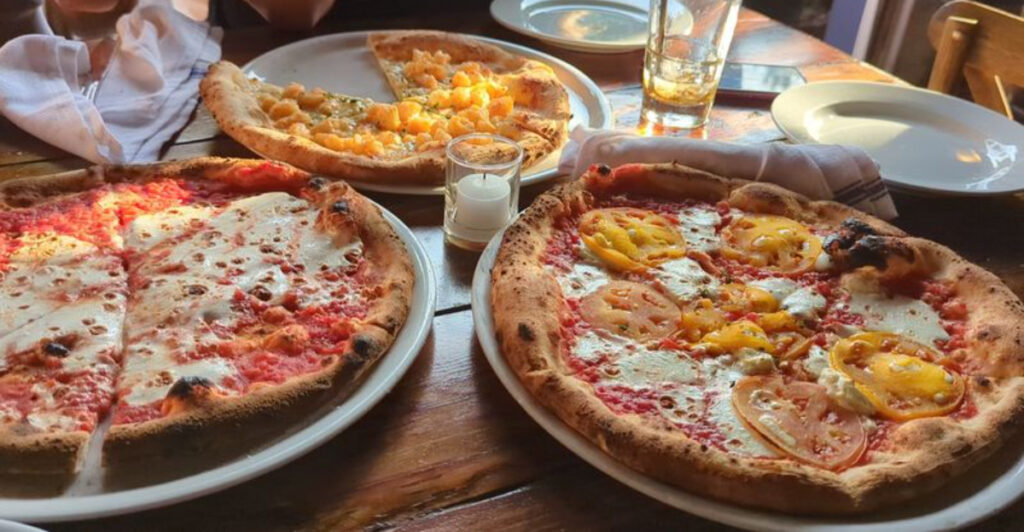
Instead, the menu gives you exactly the kind of food that works in a big, shared, high-energy room. The Margherita keeps it classic with San Marzano tomatoes, mozzarella, Parmigiano Reggiano, basil, and extra virgin olive oil.
The Meatball Pizza goes heavier, with meatballs, mozzarella, Pecorino Romano, parsley, and those same San Marzano tomatoes. The Carbonara pizza is the one that sounds like it should be too much and then makes perfect sense: guanciale, Parmigiano Reggiano, egg, parsley, black pepper, and olive oil.
Recent online ordering menus have listed pies around the high teens to low twenties, including Margherita at $18, Meatball Pizza at $19, and Carbonara at $23, though Porta’s menu changes seasonally. Starters lean into the same shareable mood, from marinated olives and house mozzarella to hand-rolled meatballs.
The room helps the food make sense. Long tables turn dinner into a small community event, especially when everyone is passing slices, reaching for drinks, and pretending they only want “one more piece.” Then the clock changes the personality of the place.
Friday brings late-night pizza until 1 a.m. and a dance party that runs until 2 a.m., which is about as clear a signal as a restaurant can send that dessert does not have to be the end of the night.
How Porta Keeps Asbury Park’s Creative Spirit Alive Today
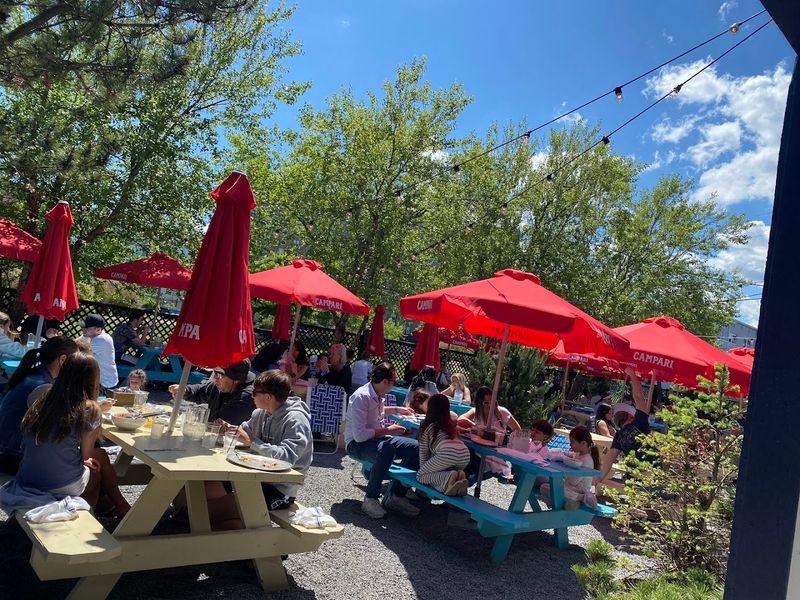
The best thing Porta does with its history is not freezing it in place. Asbury Park already has plenty of landmarks, legends, and music-pilgrimage stops, but the city feels most like itself when the past is being used rather than merely admired.
Porta keeps this building in motion. It serves lunch every day, brunch on weekends, dinner into the evening, drinks during opening hours, and late-night action when the schedule calls for it.
It hosts entertainment, community events, pop-ups, private parties, weddings, and dance nights in a space that once belonged to another era of Asbury Park nightlife. That continuity feels more honest than turning the old Student Prince into a museum of what happened in 1971.
The building still gathers people. It still gets loud.
It still has nights that probably look a little different depending on who is telling the story the next morning. The food is part of that, but so is the setup: communal tables, big rooms, an address close to the boardwalk, and a rhythm that lets a casual pizza dinner slide naturally toward music, drinks, and movement.
In a town where creative energy has always come from collision, Porta understands the assignment. It is polished enough to be a destination and loose enough to feel like Asbury Park.
Somewhere beneath the clatter of plates, the scrape of chairs, the bass from the next room, and the smell of blistered pizza crust, the old Student Prince story is still doing what great local history should do. It gives the present a little extra electricity.
Share this story