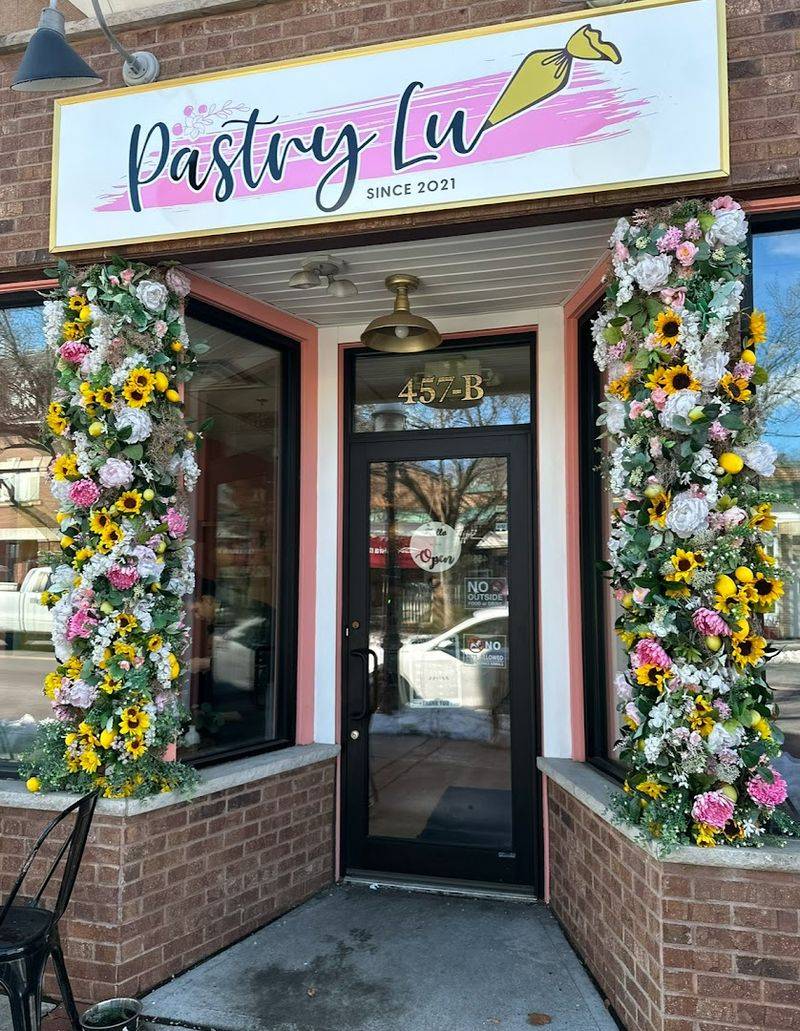
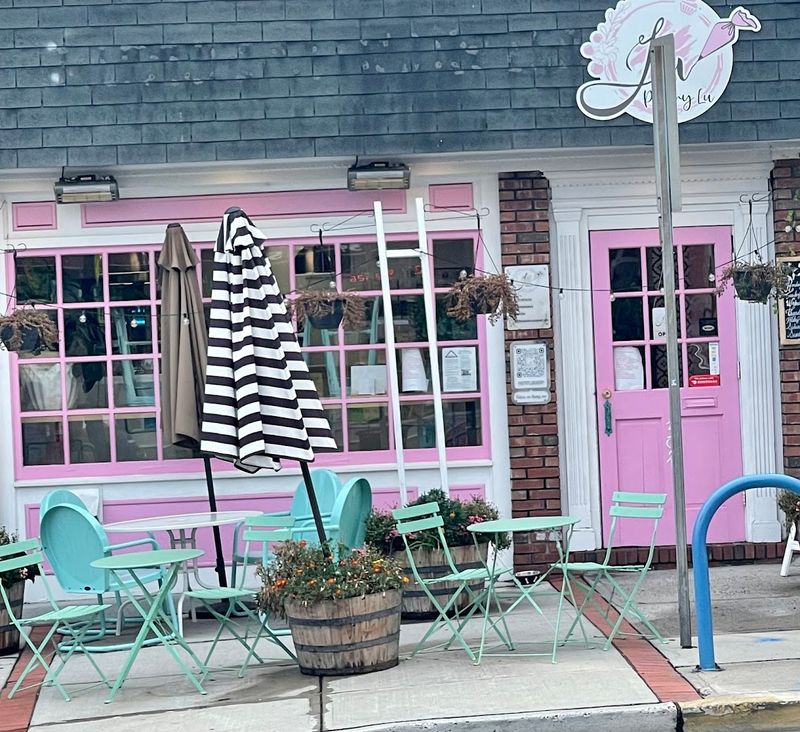
A bright pink storefront is not exactly designed to blend into the background, especially when it is planted along Metuchen’s busy Main Street. Pastry Lu looks cheerful before you even step through the door, but the real attention-grabber waits inside the display case.
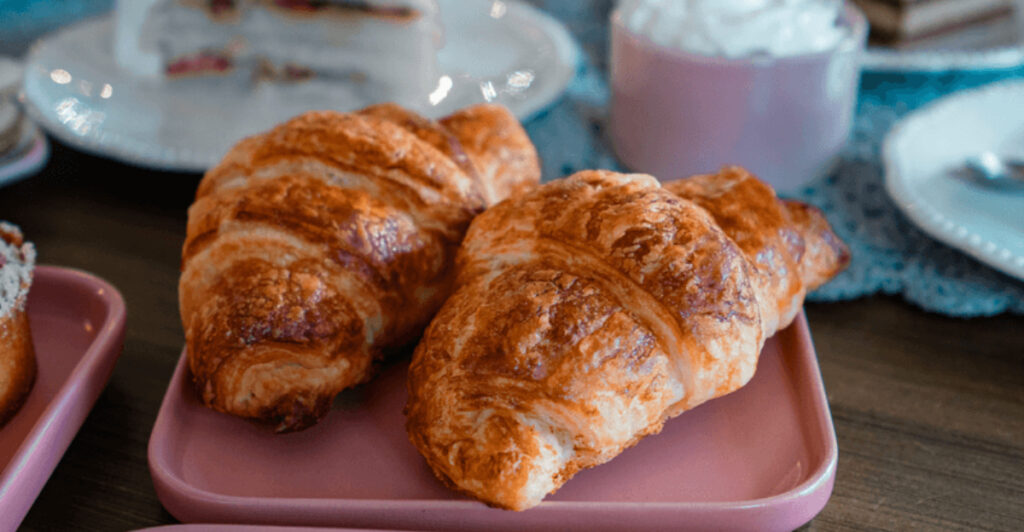
Its croissants have deeply browned shells, delicate ridges, and the sort of crisp exterior that sends crumbs flying onto your shirt after the first bite. That minor mess is part of the deal.
Owner and pastry chef Luisania “Lu” Moronta makes the dough in-house, using the French techniques she studied professionally in New York City. The bakery also folds Lu’s Dominican roots into its menu, pairing classic pastry methods with guava, dulce de leche, coconut, passion fruit, and tres leches.
The result is not a stiff imitation of a Parisian shop. It is something more personal, unmistakably local, and increasingly difficult for Metuchen residents to keep quiet about.
The Pink Main Street Bakery Metuchen Locals Keep Talking About
You could walk past plenty of storefronts on a downtown errand without giving them a second look. Pastry Lu is not one of them.
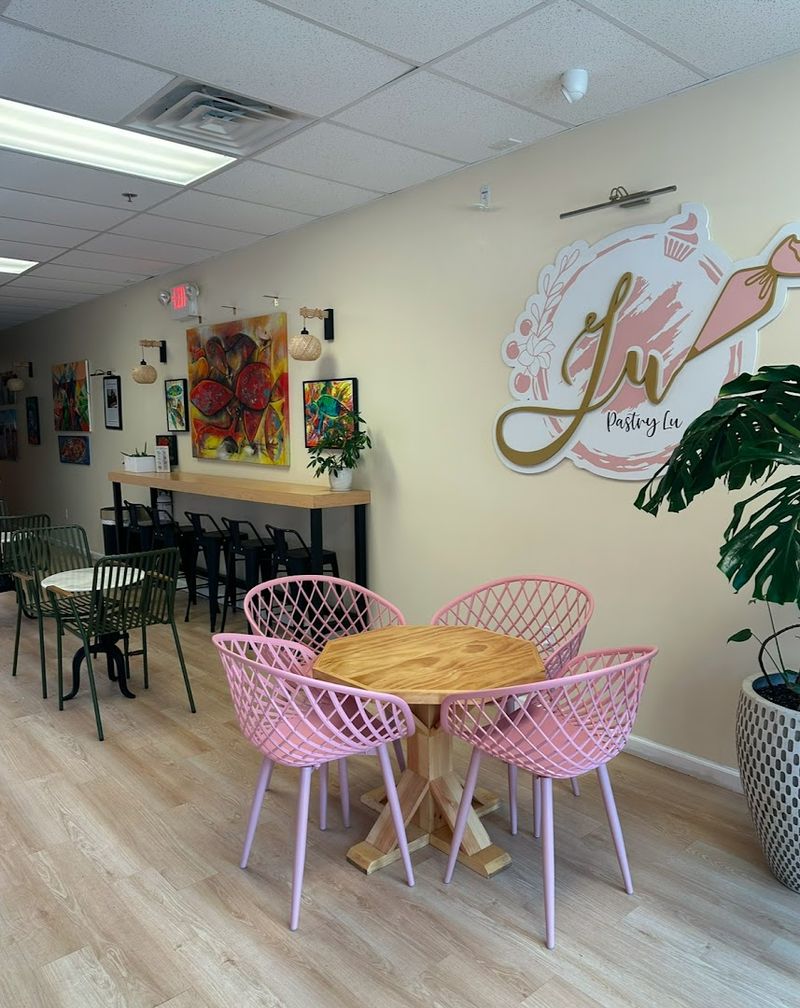
The bakery’s pink exterior, flower-filled entrance, and matching touches inside make 457-B Main Street easy to spot, even before the smell of butter and coffee starts doing its persuasive work.
The current space is larger than the bakery’s original location near the Metuchen train station, giving customers room to linger instead of balancing a pastry box on the hood of the car.
Pink chairs sit around wooden tables, colorful artwork brightens the walls, and the pastry cases remain the obvious center of gravity. This is still a functioning neighborhood bakery rather than a carefully staged photo set.
Regulars stop in for coffee, friends settle in to catch up, and customers scan the display with the serious concentration usually reserved for important financial decisions. The bakery’s downtown setting helps, too.
Metuchen has the kind of compact Main Street where breakfast can easily turn into a few hours of browsing shops, walking side streets, and pretending the pastry box in your hand will make it home untouched. Pastry Lu fits naturally into that rhythm while bringing a splash of color that is entirely its own.
Owners Lu Moronta and Juan Carlos Valdez moved into this bigger Main Street home in August 2024, several years after opening the business in April 2021. The expansion feels like evidence of what locals already figured out: this was never going to remain a tiny secret for long.
The Traditional French Technique Behind Every Flaky Layer
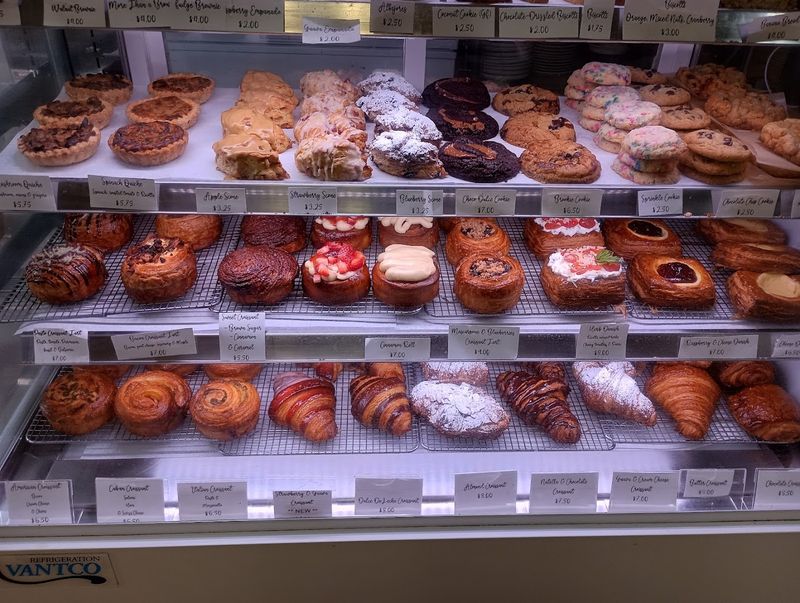
A proper croissant begins with patience, which is inconvenient for anyone hoping to fake one quickly. The dough must be rolled, folded around butter, chilled, and rolled again, creating alternating layers that expand in the oven.
Rush the temperature, pressure, or timing, and the butter can leak out before it has the chance to produce that airy honeycomb inside. Get it right, and the finished pastry feels almost suspiciously light in your hand.
Lu learned the foundations of that process while studying Pastry Arts at the French Culinary Institute in New York City. Her training covered croissants, Danishes, puff pastry, and other classic French preparations, giving her the technical base for the laminated dough that now anchors Pastry Lu’s pastry case.
The bakery says its croissant dough is made in-house and baked fresh daily, a detail that matters once you break one open. Rather than revealing a thick, bready middle, a well-executed croissant separates into curved chambers divided by whisper-thin walls of dough.
The exterior provides the crunch; the center stays tender and stretchy. Butter is present in every bite, but it should taste rich rather than oily.
None of that happens accidentally. It comes from controlling the dough through repeated folds and rests, then giving it enough time to proof before baking.
That labor may be hidden by the time the pastry reaches the counter, but the evidence is scattered all over the plate in a small blizzard of golden flakes.
The Butter Croissant That Proves Simple Can Be Spectacular
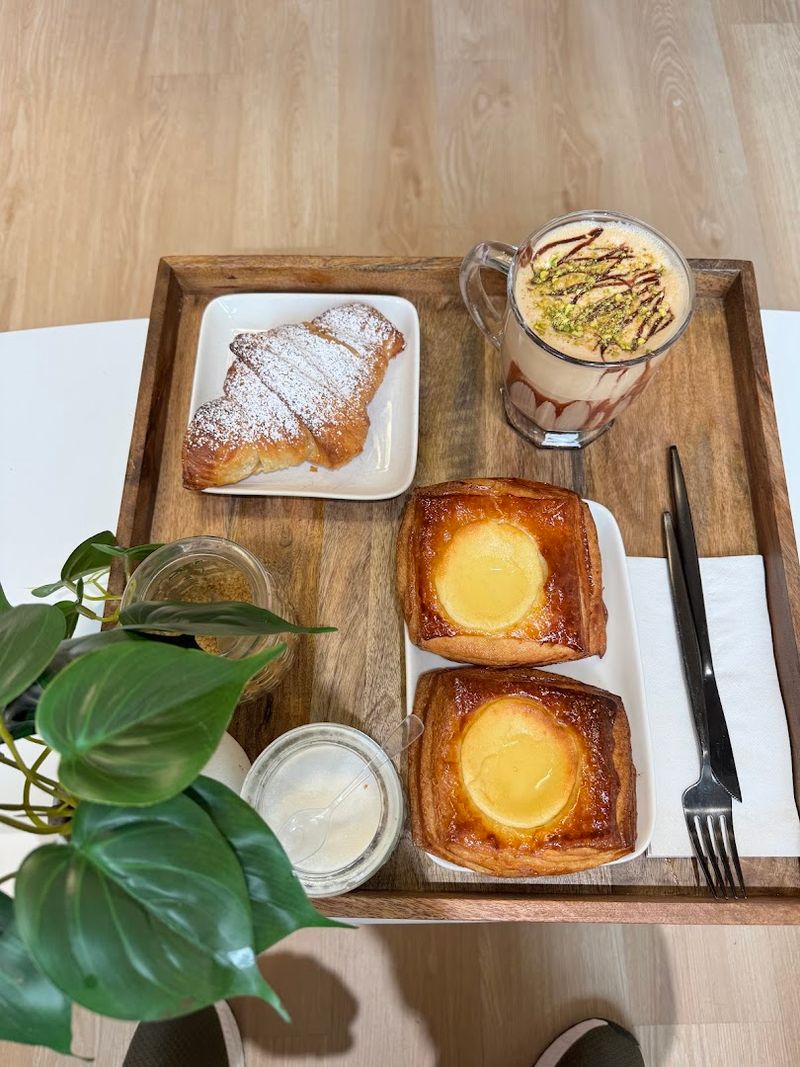
There is nowhere for a plain croissant to hide. Chocolate can rescue an average dough, almond cream can cover a multitude of sins, and enough cinnamon caramel can make almost anything enjoyable.
A butter croissant gets flour, yeast, salt, sugar, butter, and technique. That is about it.
At Pastry Lu, the classic version costs $5 and serves as the clearest introduction to what the bakery does well. Its outside is crisp enough to crack audibly, while the center pulls apart in soft, layered ribbons.
The flavor is noticeably buttery without leaving the pastry feeling heavy, which is precisely the balancing act that separates a true croissant from a crescent-shaped dinner roll. Eating one fresh is the ideal move.
Start at one end and the pointed tip snaps cleanly; move toward the middle and the texture becomes progressively softer and more open. You will probably end up with flakes on the table, your lap, and whatever dark-colored shirt seemed like a good idea that morning.
Consider that the bakery equivalent of a good barbecue stain. Coffee provides the obvious partner, especially something unsweetened enough to cut through the richness.
Yet the croissant does not require jam, cream, or another topping to feel complete. In fact, ordering it plain is the best way to notice the precision behind it.
Each fold has contributed to the shape, texture, and rise, transforming a short list of ordinary ingredients into something remarkably fragile and complex. Sometimes the least decorated item in the case makes the strongest argument.
Sweet and Savory Croissants Worth Trying Next
Once the plain croissant establishes trust, the menu starts having a little more fun. The $5.50 pain au chocolat wraps the same laminated dough around chocolate, giving the pastry just enough sweetness without turning breakfast into a full-scale sugar event.
The $8.50 almond croissant heads decisively toward dessert territory, adding a richer filling and making an excellent choice for anyone who believes powdered sugar is an acceptable morning accessory.
Pastry Lu also offers a $5.50 sweet croissant roll topped with brown sugar, cinnamon, and caramel, a sticky, spiral-shaped option that lands somewhere between a croissant and a cinnamon bun.
The savory lineup is where the bakery’s personality becomes especially clear. The $6.50 American Croissant rolls bacon and cream cheese into the dough and finishes it with chives.
The Cuban version combines ham, Swiss cheese, and mustard, turning the pastry into a flaky nod to the classic sandwich. An Italian roll brings together house-made pesto and mozzarella, while The Pepperoni fills its layers with mozzarella, roasted tomatoes, and pepperoni.
It is essentially pizza wearing a far more elegant jacket. These are not dainty two-bite pastries, either.
The fillings make them substantial enough for breakfast or lunch, while the croissant dough keeps them lighter and crisper than a standard sandwich roll. Availability can change as trays sell out, so the display case may ultimately make the decision for you.
That is hardly a hardship when the choices include melted cheese, chocolate, caramel, and butter folded into nearly every direction.
Tres Leches, Cakes, and More Temptations Beyond the Pastry Case
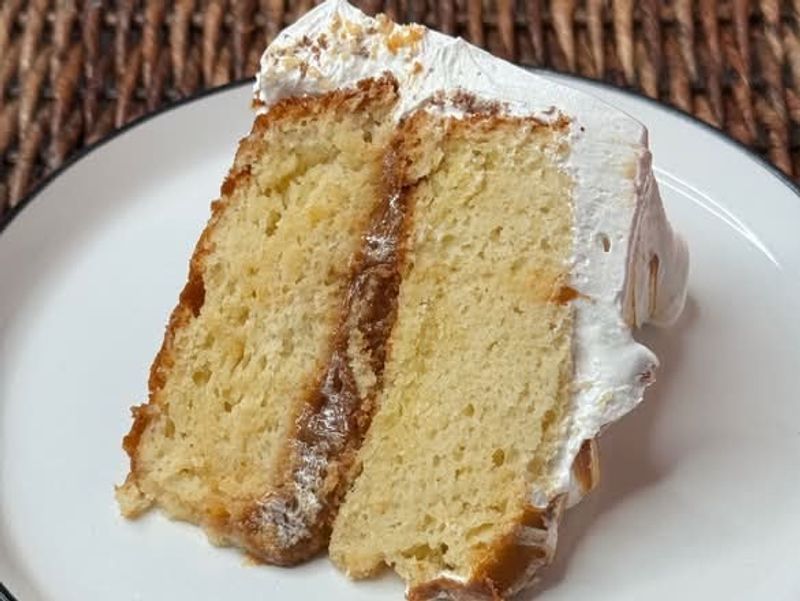
Croissants may attract the morning crowd, but tres leches is the dessert that built Pastry Lu’s earliest following. The traditional $9 serving starts with vanilla sponge cake soaked in three milks and finished with Italian meringue.
From there, the bakery treats the classic as a launching point rather than a fixed formula. Banana tres leches adds caramelized banana sauce and vanilla Chantilly.
Mango receives fruit mousse and house-made compote, while passion fruit versions bring a tart edge that cuts through the sweet milk-soaked cake. Guava and cream, coconut, dulce de leche, birthday cake, coffee with salted caramel, and Nutella coffee are among the other variations listed on the menu, generally priced from $9 to $11.
It is a lineup that reflects Lu’s Dominican background as clearly as the croissants reflect her French training. The pastry case keeps going after that.
There are raspberry-and-cheese Danishes, guava-and-cream-cheese pastries, cinnamon rolls, scones, banana bread, brownies, flan, cheesecakes, and giant cookies.
The Choco-Dulce cookie hides dulce de leche inside rich chocolate dough with a pinch of sea salt, while the Brookie stuffs brownie and chocolate into an oversized chocolate-chip cookie.
Cake slices include tiramisu made with house-brewed Colombian coffee, triple chocolate cake, pineapple carrot cake, and Dominican vanilla cake layered with either dulce de leche or guava. The menu is broad enough to make focus difficult, but its identity remains consistent: French pastry discipline meets the bright, comforting flavors Lu grew up loving.
How Pastry Lu Turned a Pandemic Setback Into a Local Success Story
Pastry Lu began with a job loss, a family connection, and an unexpectedly enormous appetite for tres leches. When restaurant work disappeared during the COVID-19 pandemic, Lu redirected her energy toward baking cakes for her sister’s coffee shop in Washington Heights.
Demand quickly grew to roughly 500 tres leches servings a week, proving that the idea had potential far beyond a temporary side project. Juan Carlos, Lu’s husband and business partner, had long encouraged her to open a bakery of her own.
After finding a vacant storefront near the Metuchen train station, the couple opened Pastry Lu in April 2021. Lu brought years of professional pastry experience, formal French training, and memories of the baking classes she took while growing up in La Vega in the Dominican Republic.
Juan Carlos helped turn that talent into an operating business, handling the practical details while supporting a menu that felt distinctly theirs. The original bakery developed a loyal following, but another challenge arrived when its building was sold.
Instead of closing the chapter, the couple moved into the larger 457-B Main Street location in August 2024. The current bakery feels like the full expression of what started during an uncertain moment: a colorful gathering place with ambitious pastries, Dominican flavors, serious coffee, and enough pink to brighten the grayest New Jersey morning.
The croissants may be the item everyone discusses first, but the deeper appeal is the story baked into them—one of technical skill, cultural memory, family encouragement, and a setback that opened the door to something better.
Share this story