A dosa arrives at the table with its crisp, golden edges stretching well beyond the plate. Nearby, spoons dip into fragrant sambar, warm bread disappears beneath chickpea curry, and someone heads back to the buffet before finishing their first helping.
This is lunchtime at Sapthagiri Taste of India, a casual Jersey City favorite that proves a meatless meal can still require a serious appetite. The dining room is modest, but the food carries diners from the rich paneer dishes of northern India to the rice, lentils, chutneys, and crepes associated with the south.
Its all-you-can-eat spread makes that journey especially easy: take a small scoop, taste it, and return for more when something wins you over. Even newcomers can explore without committing to one unfamiliar entrée.
Between the colorful curries, tangy soups, crisp snacks, and syrupy sweets, every trip to the buffet offers a different combination—and very little chance of leaving hungry.
1. Sapthagiri Brings the Flavors of India to Jersey City
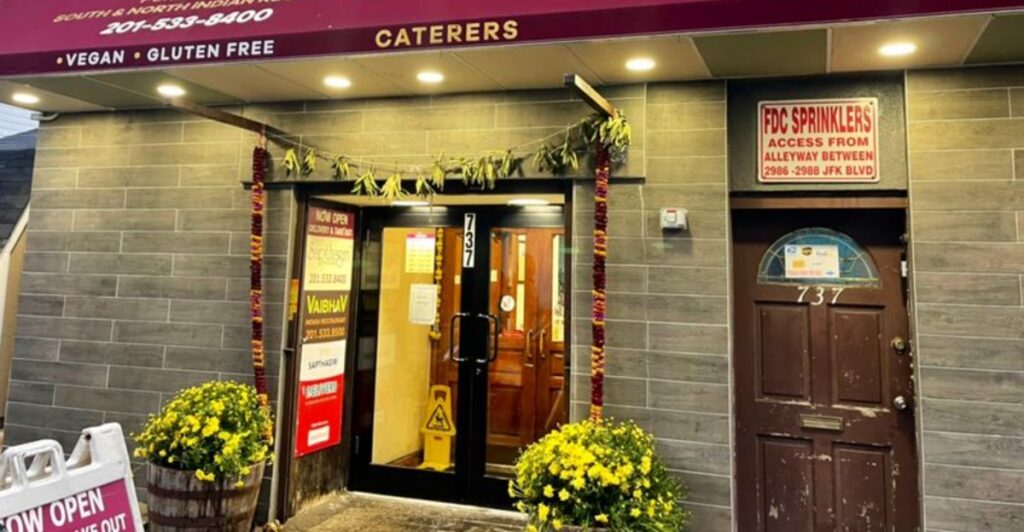
Jersey City’s stretch of Newark Avenue near Journal Square is one of those neighborhoods where deciding what to eat can take longer than eating it. Indian groceries, sweet shops, bakeries, and restaurants crowd the blocks, creating a food district that rewards anyone willing to arrive hungry.
Sapthagiri Taste of India fits naturally into that landscape at 737 Newark Avenue, only a short walk from the Journal Square PATH station. Its name refers to seven sacred hills, and its kitchen draws from both northern and southern Indian traditions.
That range matters. Many American diners first encounter Indian food through familiar northern dishes built around paneer, chickpeas, rich gravies, and breads.
Sapthagiri serves those comforts, but it also digs deeper into southern staples such as dosa, idli, vada, sambar, rasam, kootu, and poriyal. One meal can move from creamy and mellow to tangy, peppery, crisp, and bright without ever leaving the vegetarian menu.
The restaurant is entirely meat-free, but it does not treat vegetarian cooking as a limitation or a substitute for something else. Lentils provide body, paneer adds richness, potatoes soak up spices, and fermented rice-and-lentil batters become everything from delicate crepes to soft steamed cakes.
Coconut chutney, pickles, papadum, and tamarind-based sauces supply the sharp little contrasts that keep each plate interesting. That breadth has helped Sapthagiri become more than a convenient lunch stop.
Families settle in over thalis, regulars know precisely which dosa they want, and first-timers get an unusually approachable introduction to regional Indian cooking.
In a neighborhood full of strong competition, Sapthagiri has earned its place by offering both the dishes people already love and the ones they may not know to request yet.
2. The No-Frills Dining Room Keeps the Focus on the Food
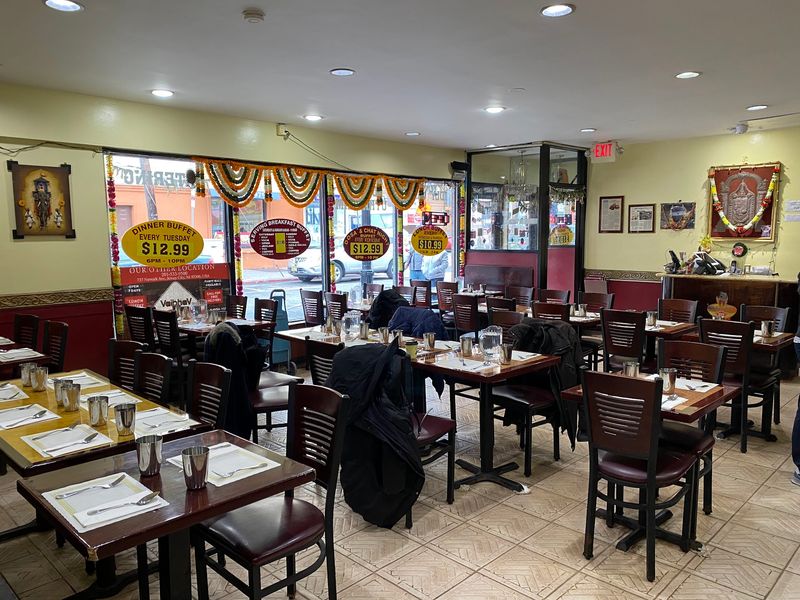
There is no dramatic reveal when you walk inside. The room is bright, practical, and arranged for people who came to eat rather than pose beside a flower wall.
Tables sit close enough to give the place some energy during busy periods, while simple decorative touches add warmth without turning dinner into a themed production. Sapthagiri’s straightforward setup is especially well suited to a buffet.
Diners can move easily between their seats and the serving area, empty plates are cleared, and the steady rhythm of people returning for another helping becomes part of the scene. At lunchtime, office workers can get in and out without waiting for several courses.
Parents do not have to worry about children sitting through a formal meal. Groups with wildly different tastes can each build a plate without negotiating a single shared order.
The lack of ceremony also makes unfamiliar food feel less intimidating. Nobody expects you to know the difference between rasam and sambar before sitting down, and nobody will object if your first plate contains an unlikely alliance of rice, paneer, fried snacks, and three sauces.
The buffet encourages experimentation on your own terms. Take a spoonful, see what happens, and adjust the second round accordingly.
This is also a dining room where a casual outfit looks perfectly at home. The restaurant sits on a busy commercial block, so people drift in while shopping along Newark Avenue, commuting through Journal Square, or meeting relatives for an easy family meal.
Conversation, clattering dishes, and the scent of toasted spices do more for the mood than elaborate décor ever could. The room serves its purpose without fuss: it gives the food plenty of space to make the impression.
Once a freshly cooked dosa lands on the table or a hot tray is replenished, very few diners are studying the walls anyway.
3. The Vegetarian Buffet Turns Lunch Into a Flavor-Packed Feast
The smartest first move at the buffet is not grabbing a plate. It is taking a slow look at the entire spread before committing valuable stomach space.
The lineup can change, but Sapthagiri’s strength is the number of flavors and textures it can create from vegetables, legumes, rice, dairy, herbs, and spices.
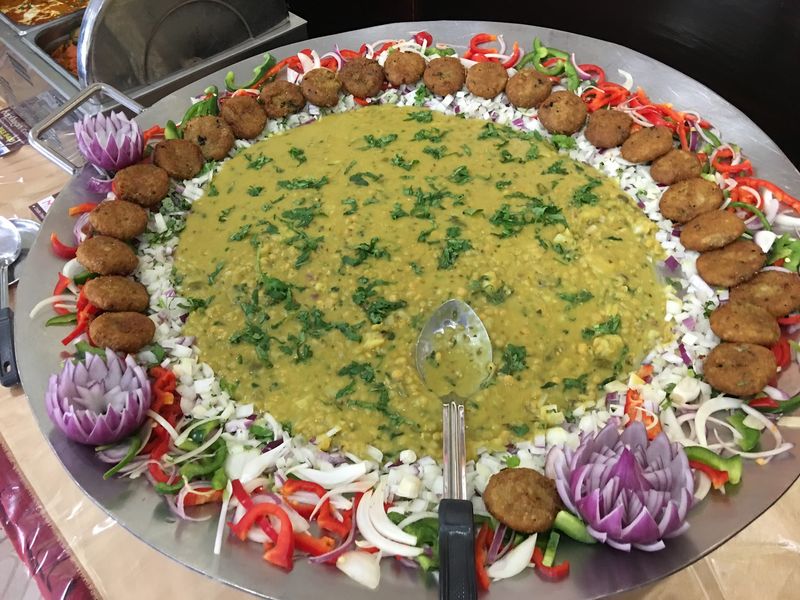
A typical plate might begin with fragrant rice and dal, then pick up a vegetable curry, a spoonful of chickpeas, something creamy involving paneer, and a crisp fried snack for contrast.
Add cooling chutney or yogurt, and suddenly the word “vegetarian” feels far too small to describe what is happening. Dal is one of the quiet stars.
This lentil preparation may look simple beside the brighter curries, but its gentle richness makes it an ideal partner for rice or bread. Paneer plays a different role, bringing a soft, substantial bite that holds up well in tomato-based or spiced gravies.
Vegetable dishes are not shoved into the corner as obligatory sides; they are seasoned and cooked as the main event. The buffet format lets diners create new combinations with every trip.
One round can lean comforting, with rice, dal, and mild curry. The next can turn sharper with sambar, pickle, chutney, and a snack fresh from the fryer.
It is worth starting with modest portions because the biggest mistake here is filling a plate as though there will be no second chance. There will be plenty.
The buffet is particularly useful for anyone unfamiliar with Indian cuisine, since ordering a full entrée based only on its name can feel like a gamble. Here, a small taste costs no additional commitment.
It also works well for mixed groups: adventurous diners can explore, cautious eaters can stay with familiar flavors, and everyone can return to the dish that disappeared fastest from the first plate.
Buffet selections and service schedules may vary, but when the full spread is running, lunch becomes less of an order and more of a delicious survey course.
4. South Indian Specialties Make This Spread Stand Out
A bowl of sambar can explain Sapthagiri better than a dozen descriptions. Tangy, savory, and packed with lentils and vegetables, it is both substantial enough to spoon over rice and light enough to accompany a dosa or idli.
Then there is rasam, a thinner, peppery soup whose bright flavor can wake up the palate between richer bites. These dishes help distinguish Sapthagiri from restaurants that focus almost exclusively on the creamy curries and clay-oven cooking most familiar to American diners.
South Indian cuisine gives rice and lentils remarkable range. Idli transforms fermented batter into soft, snowy cakes designed to absorb sambar and chutney.
Medu vada takes lentils in the opposite direction, frying the batter into savory, doughnut-shaped rounds with crisp exteriors and tender centers.
Kootu pairs vegetables and lentils in a preparation that is hearty without feeling heavy, while poriyal typically brings finely chopped vegetables together with spices and, often, coconut.
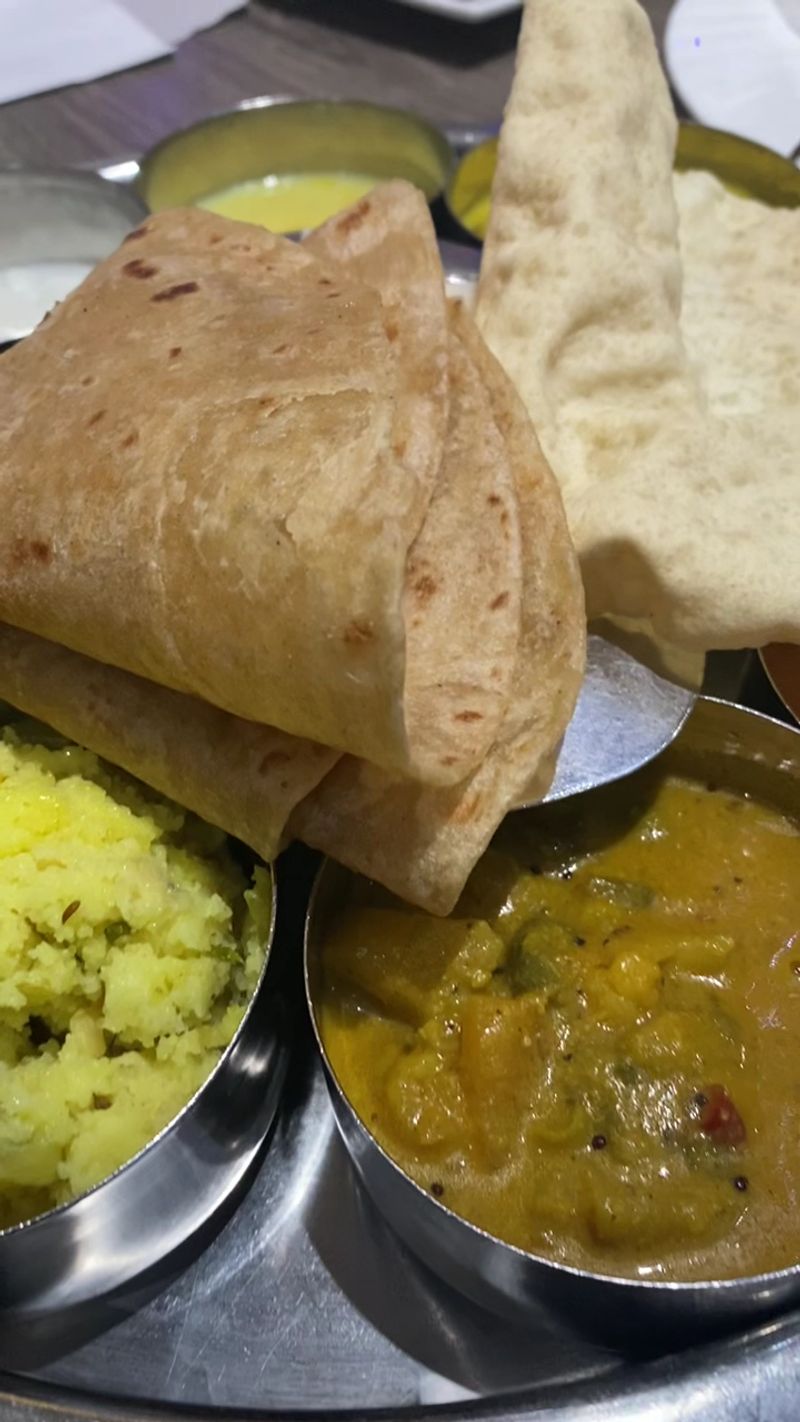
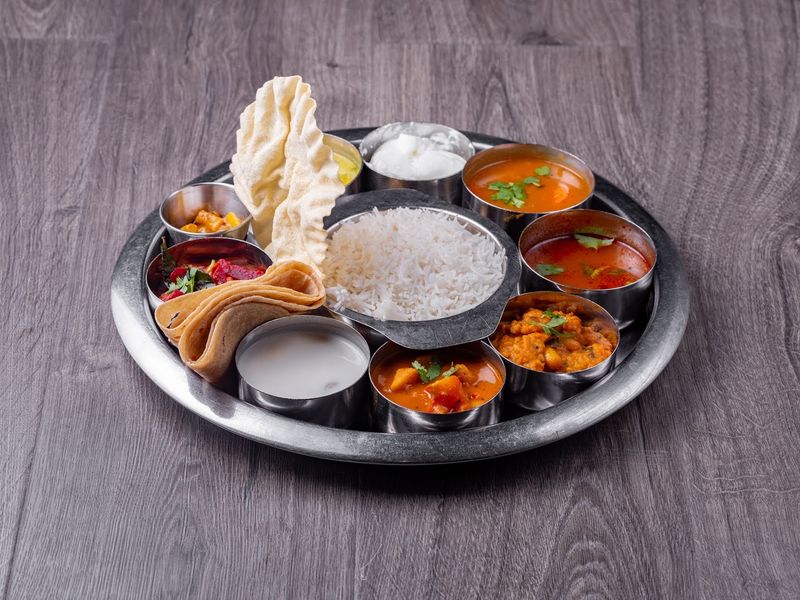
The South Indian thali gathers many of those elements into one structured meal. Sapthagiri’s version includes rasam, sambar, kootu, dal, poriyal, rice, chapati, yogurt, pickle, papadum, and something sweet.
It is an excellent backup when the buffet is unavailable, but it is also worth ordering on its own because every component has a job. Rice softens the sharper flavors, pickle supplies a concentrated jolt, yogurt cools things down, and papadum adds a brittle crunch.
The appeal comes from moving among them rather than eating each item in isolation. A spoonful of rice with sambar tastes different after a bite of pickle; a piece of chapati becomes richer when dragged through dal.
Nothing stays monotonous for long. For diners whose idea of Indian food begins and ends with tikka masala, these southern specialties open an entirely different door—one filled with fermented tang, toasted spices, curry leaves, coconut, lentils, and some of the most satisfying breakfast and lunch foods in Jersey City.
5. Fresh Dosas and Indian Street Food Are Worth Exploring
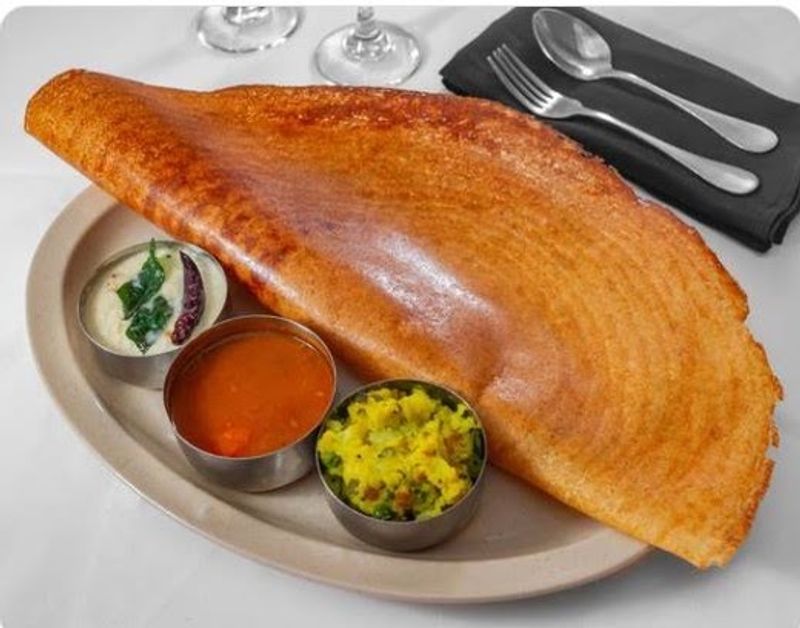
Listen for the crackle when the edge of a dosa breaks. That sound is your clue that this is not a floppy crepe with ambitions; it is a thin, deeply crisp shell ready to be torn apart and dipped into sambar and chutney.
Sapthagiri offers several versions, including butter masala dosa, set dosa, and onion chili masala dosa. The butter masala version wraps a potato mixture inside a crepe roasted with butter, while the set dosa arrives as two smaller, softer pancakes with potato and green-pea curry.
Dosas are prepared to order, which makes them worth adding even if the buffet has already supplied more than enough food. They arrive hot, and their texture is best before steam from the filling begins softening the center.
The menu’s street-food side brings another round of contrasts. Chole bhatura pairs chickpea curry with an enormous piece of fried bread that balloons dramatically from the plate.
Tear off a corner, scoop up the chole, and try not to eat the entire thing before anyone else at the table gets a turn.
Samosas offer the familiar satisfaction of crisp pastry around spiced potato and peas, while aloo bonda takes seasoned potato, onion, and cashews, coats the mixture in chickpea batter, and fries it until golden.
Chaat dishes are even livelier. Depending on the selection, crisp wafers or puffed rice may meet potatoes, chickpeas, yogurt, herbs, and sweet-and-tangy chutneys in a mixture that is crunchy, creamy, cool, spicy, and sticky at once.
For something gentler, idli provides a soft landing; for more crunch, medu vada is ready for a dip in sambar. Dessert should not be ignored, even after multiple buffet rounds.
Gulab jamun brings warm spice and syrup-soaked sweetness, while creamy kheer carries the fragrance of cardamom. The sensible strategy is to share—but the food has a way of making sensible plans disappear.
6. What to Know Before Visiting Sapthagiri Taste of India

The burgundy awning at 737 Newark Avenue places Sapthagiri in Jersey City’s Journal Square area, roughly a ten-minute walk from the Journal Square transportation hub. That makes the PATH a far easier option than driving for visitors coming from Manhattan or elsewhere along the rail line.
Drivers should allow time to find street parking or use a nearby paid facility; this is a busy commercial neighborhood, not a suburban restaurant surrounded by an oversized lot. The restaurant lists its phone number as 201-533-8400 and publishes daily operating hours of 10:30 a.m. to 10:30 p.m.
Because buffet hours, prices, and individual dishes can change independently of the restaurant’s general schedule, calling ahead is the safest move if the all-you-can-eat spread is the main reason for the trip. The large à la carte menu means the visit is hardly wasted if the buffet is not running.
Current posted choices include a mini thali for $13.99, a Sapthagiri special thali for $16.49, and vegan, gluten-free, North Indian, and South Indian thalis for $18.99.
Other listed prices include $6.99 for idli, $7.49 for medu vada, $9.49 for butter masala dosa, and $15.99 for chole bhatura, though diners should confirm prices before ordering.
The entire restaurant is vegetarian, and the menu clearly includes vegan and gluten-free thali options. Anyone with celiac disease or a serious food allergy should still ask about ingredients, shared cookware, and cross-contact, particularly at a buffet.
Takeout and delivery are useful alternatives, but dishes built around texture—especially dosa, vada, and bhatura—are at their best in the dining room, moments after leaving the kitchen.
Sapthagiri works equally well for a quick lunch and a sprawling group meal, but its most memorable version begins with a nearly empty plate and ends with everyone insisting they can manage just one more taste.
Share this story