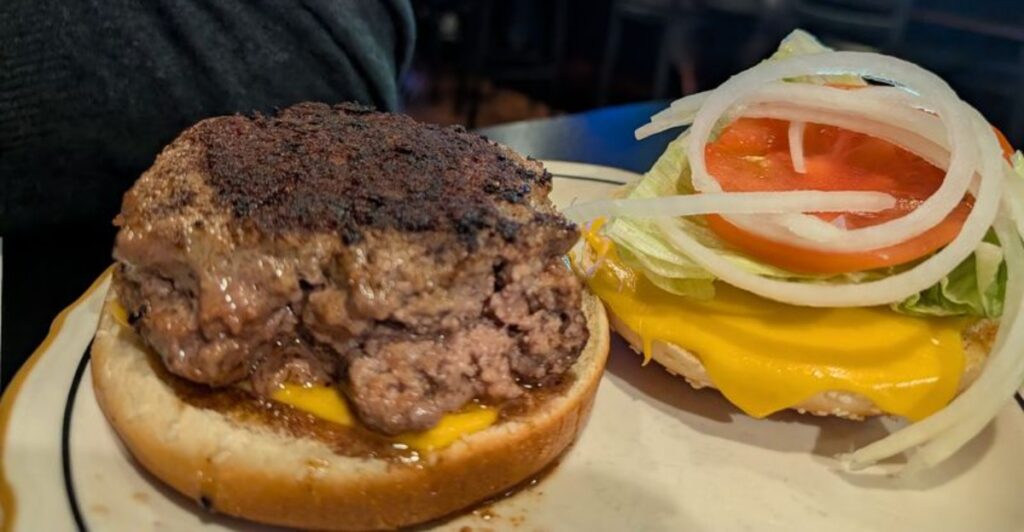
The burger lands with the confidence of something that knows it has already won. Twelve ounces of beef sit inside a roll that suddenly looks comically undersized, with melted cheese slipping down the sides and juices threatening every clean napkin on the table.
This is not a tidy little smash burger designed to disappear in four polite bites. It is a two-handed project, and that is precisely the appeal.
Krug’s Tavern has occupied the same Newark corner since 1932, long enough to watch food trends come, go, and return wearing fancier names. Inside, however, the formula remains wonderfully direct: make the food hearty, pour the drinks cold, and treat customers like neighbors.
The tavern’s enormous burgers now attract hungry visitors from across New Jersey, but Krug’s has never lost the personality of the Ironbound gathering place it was built to be. Come prepared for a little grease on your fingers and absolutely no regrets about it.
Krug’s Tavern Has Anchored Newark’s Ironbound Since 1932
Long before the Ironbound became one of New Jersey’s best-known dining neighborhoods, Frank and Laura Krug were pouring drinks at 118 Wilson Avenue.
They opened Krug’s Tavern in March 1932, planting a neighborhood bar at the corner of Wilson Avenue and Napoleon Street during one of the hardest years of the Great Depression.
More than nine decades later, the tavern remains in the same location. The surrounding neighborhood, traditionally known to longtime Newark residents as Down Neck, has changed dramatically around it.
Portuguese bakeries, Brazilian restaurants, seafood grills, warehouses, and tightly packed homes now share the streets near the Passaic River. Krug’s has endured through World War II, Newark’s turbulent 1960s, changing industries, and several waves of redevelopment without turning itself into a polished imitation of an old bar.
Its history includes one especially unexpected political footnote. During the 1980 presidential campaign, George H.W. Bush, then running for vice president alongside Ronald Reagan, visited Krug’s and addressed a crowd gathered in the parking lot.
The tavern’s local standing received a more permanent acknowledgment in 2015, when the city dedicated the corner as Krug’s Tavern Way.
That street sign feels appropriate because Krug’s story is inseparable from the neighborhood around it. The business has supported Ironbound organizations, Little League teams, police officers, firefighters, and ambulance workers over the years, while Newark residents have made the bar part of their own routines.
The celebrated burgers brought Krug’s a much wider audience, but this was a neighborhood institution decades before anyone arrived carrying a statewide dining checklist. Its staying power comes from being useful as well as historic—a familiar corner where people can still meet, eat, and catch up without ceremony.
Krug’s Tavern’s official history
Four Generations Have Kept This Neighborhood Institution in the Family
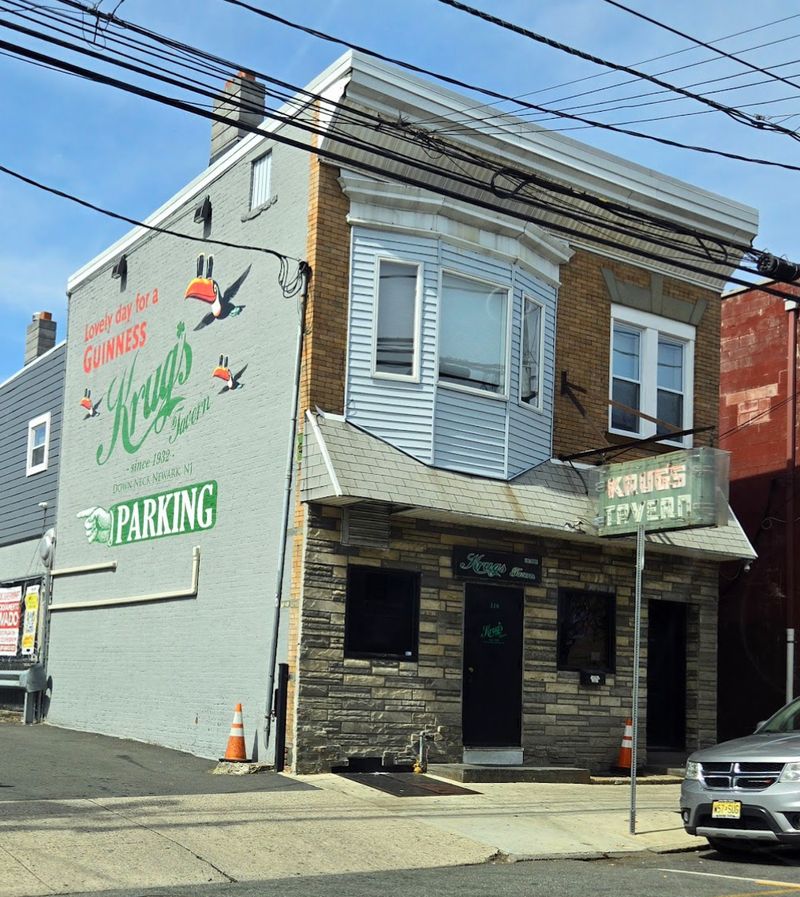
Keeping a restaurant open for more than 90 years is impressive. Keeping it in one family, at one Newark address, through four generations is the kind of continuity that deserves a family tree beside the menu.
Founders Frank and Laura Krug raised three children—Frank, Robert, and Edna—who all helped with the business. After Frank Krug died, Edna and her husband, Casper LaMotta, took charge and carried the tavern into its next era.
In 1980, management passed to their sons, Frank and Gary LaMotta, along with their wives, Susan and Ellen. The names have changed behind the bar and grill, but the family connection has not.
Ellen LaMotta has remained a central figure in the business, while younger relatives have stepped into familiar roles. Joyce can be found working the grill, Christina tending bar, Gary greeting customers, and Frankie helping on weekends.
Great-grandchildren of the founders have also become part of the operation, extending the story into yet another generation. That kind of involvement gives Krug’s its lived-in personality.
Family history is not framed on a wall and separated from daily business; it is taking orders, cooking burgers, and recognizing regulars as they walk through the door. Even the LaMotta name carries an interesting Newark connection.
Casper LaMotta was related to middleweight boxing champion Jake LaMotta, whose life inspired Raging Bull, though Krug’s fame rests firmly on its own accomplishments. The tavern’s survival has required more than nostalgia.
Every generation has had to respond to a changing city and a larger crowd while protecting the straightforward character that regulars value. The dining area itself grew after burger recognition brought new customers, with a former pool room converted to provide additional seating.
Krug’s expanded because it needed room, not because anyone was chasing a fashionable new concept. That difference matters.
The family has allowed the tavern to evolve without sanding away the quirks that make it recognizable.
The No-Frills Tavern Still Feels Refreshingly Old School
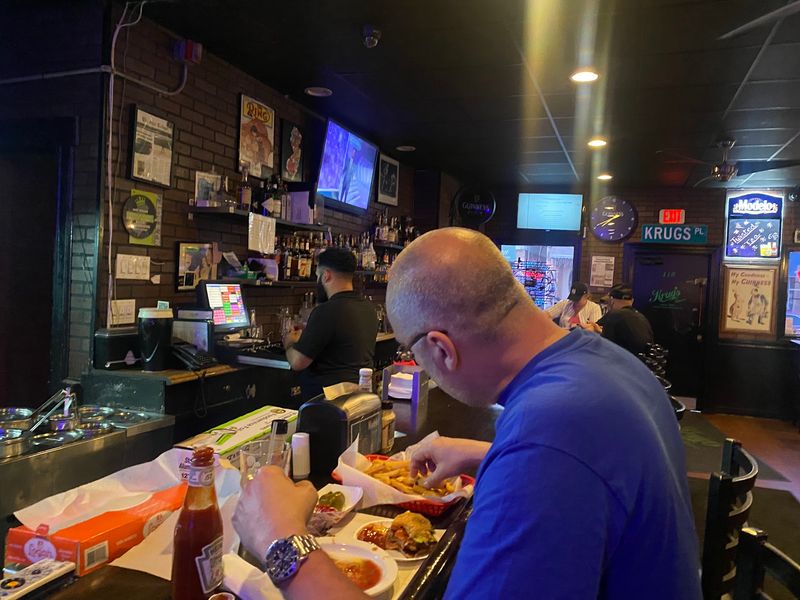
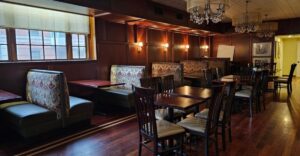
Walk into Krug’s expecting a glossy restaurant makeover and you may wonder whether you missed the entrance. The tavern is compact, casual, and more concerned with feeding people than impressing them with coordinated décor.
A long wooden bar runs through the room, televisions provide the background soundtrack, and closely arranged tables make it easy to overhear debates about sports, traffic, and the correct burger toppings. Nothing feels staged for nostalgia.
The place looks old school because it actually is. Krug’s began as the sort of neighborhood shot-and-beer bar where Newark dockworkers, police officers, firefighters, and nearby residents could settle onto a stool without needing an occasion.
Traces of that working-class identity remain, even as the burger reputation draws diners who may have driven an hour to get there. Regulars sit beside first-timers attempting to photograph a 12-ounce cheeseburger before the top bun starts sliding.
The mix gives the room energy without making it feel manufactured. There is no elaborate dress code, no precious presentation, and little patience for pretending that a giant burger should be handled with a knife and fork.
Grab it, lean over the plate, and accept that at least one napkin will surrender immediately. The old bar also provides an appealing contrast to the Ironbound’s larger dining rooms and bustling churrascarias.
Krug’s is not trying to compete with white tablecloths or tableside theatrics. Its pleasures are smaller and more familiar: a cold beer within arm’s reach, a sizzling grill close enough to smell, and a meal that looks exactly as substantial as promised.
The limited space can feel lively during busy periods, particularly around dinner and on weekends, but that closeness is part of the experience. Krug’s does not recreate the neighborhood tavern atmosphere as a theme.
It simply keeps opening the doors and letting the neighborhood atmosphere happen.
Twelve-Ounce Burgers Arrive Thick Juicy and Seriously Filling
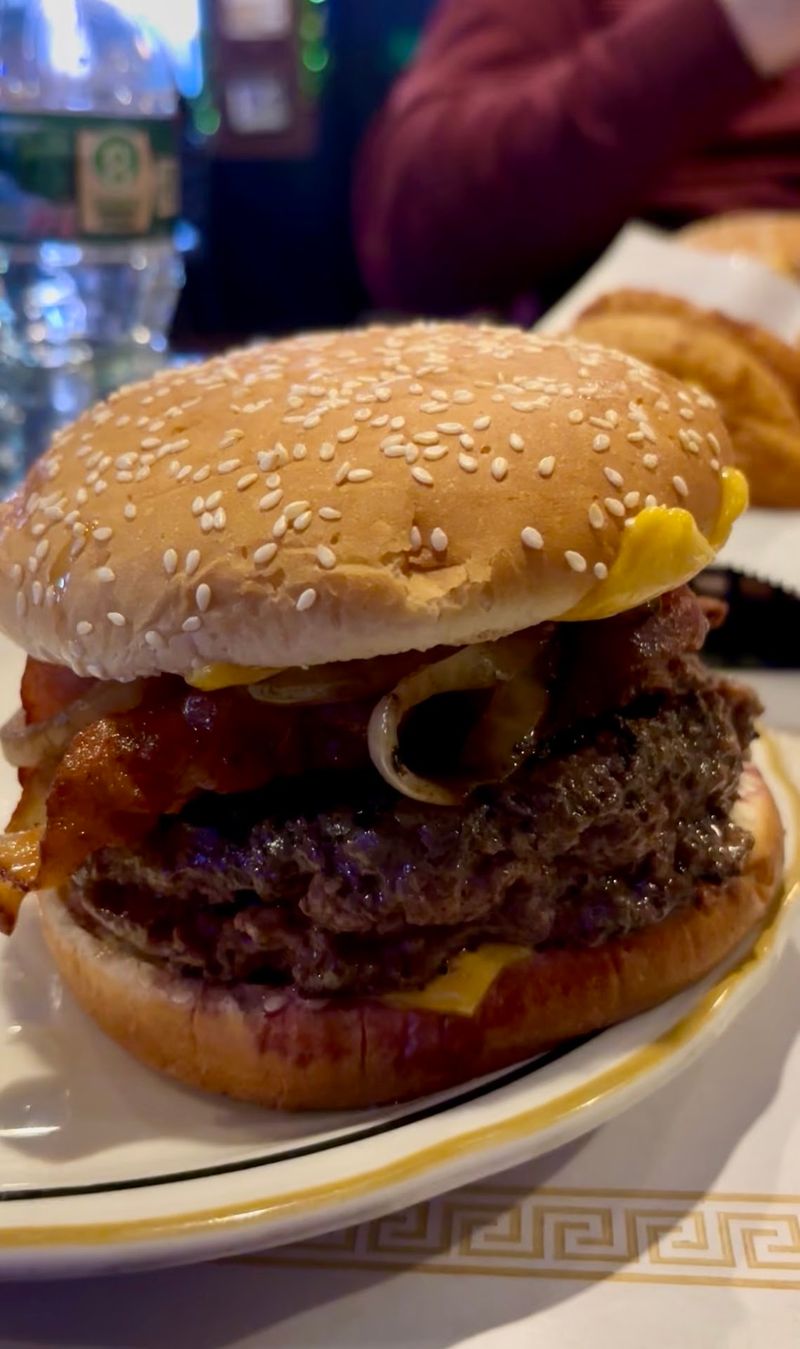
The first thing to understand about a Krug’s burger is that “big” does not mean wide and flat. Each patty contains 12 ounces of beef, or three-quarters of a pound, and arrives with the thickness of a serious steakhouse burger.
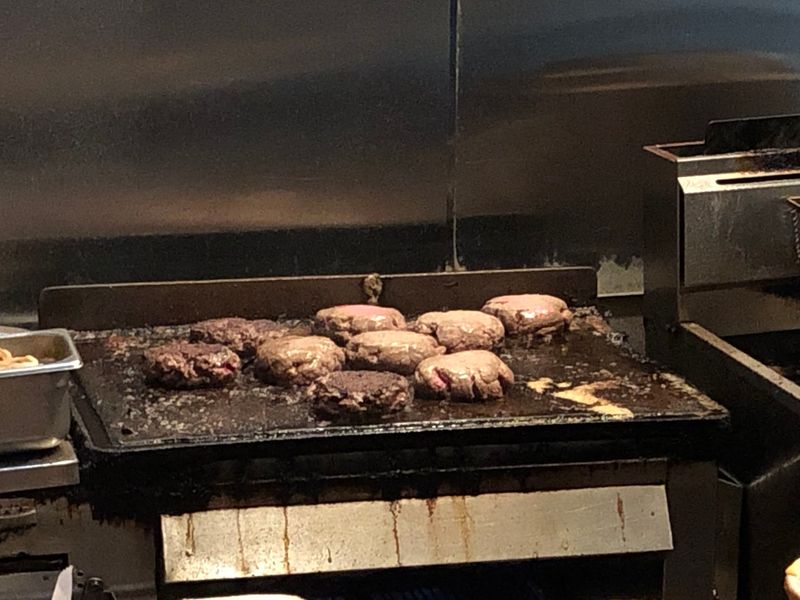
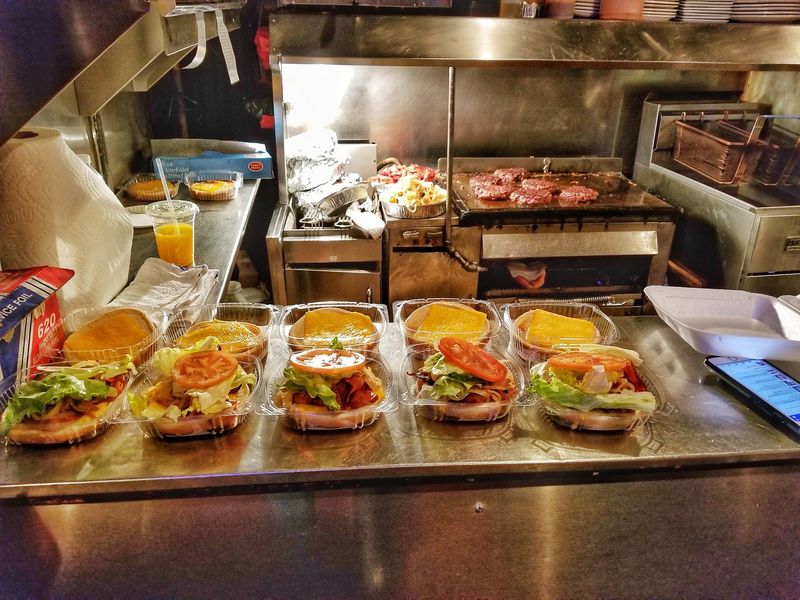
It takes time to cook that much meat properly on a flat-top grill, so this is not fast food despite the familiar bun-and-fries format. The wait pays off when the exterior develops a dark sear while the center stays juicy.
American cheese is the natural choice for the classic cheeseburger, melting into the crevices rather than sitting on top like a stiff orange square. Lettuce, tomato, raw onion, and other familiar toppings can add crunch, but the beef remains the main event.
Structural challenges are inevitable. The roll is sturdy enough to make an honest attempt, yet a burger this thick tends to shift once the cheese, toppings, and juices begin working together.
Keep the plate underneath, rotate strategically, and resist the urge to wear anything that fears grease. Krug’s was known locally long before its burgers drew statewide attention, but the grill became a much bigger part of the tavern’s identity during the 2010s.
The restaurant earned recognition for its burgers in 2010 and was voted best in North Jersey the following year. More acclaim followed, transforming a local bar favorite into the meal people now cross county lines to try.
The wildest customers go beyond the standard patty and request doubles or even triples, creating towers that seem less like lunch and more like engineering experiments. One patty, however, is plenty for most appetites.
Fries on the side complete the plate, though finishing everything may require patience and a pause halfway through. The giant size earns the initial attention, but the browned crust, juicy center, and uncomplicated seasoning explain why the burger became famous.
Taylor Ham and Pizza Burgers Give the Classics a Jersey Twist
A tavern can serve a plain hamburger anywhere. It takes a New Jersey tavern to place Taylor ham on top and assume everyone understands why that is an excellent idea.
Krug’s Taylor Ham Cheeseburger combines its already massive beef patty with slices of the salty breakfast meat and melted cheese. The result is rich, smoky, and unapologetically Jersey, especially for anyone accustomed to beginning the day with Taylor ham, egg, and cheese on a roll.
Here, the familiar pork product clocks in for the dinner shift. The Pizza Burger follows a different local instinct by adding mozzarella and the tavern’s homemade marinara sauce.
It eats like the messiest possible meeting between a neighborhood pizzeria and a corner bar, with stretchy cheese and red sauce slipping toward the bottom bun. That homemade marinara is important to Krug’s identity; the kitchen was known for its sauce-covered shrimp and calamari before the burgers became headline material.
Using it on beef brings two of the tavern’s strongest traditions onto one plate. The Buffalo Bleu Cheese Burger turns up the volume with crumbled blue cheese and Buffalo sauce, adding sharpness and heat to the substantial patty.
Bacon burgers and bacon cheeseburgers offer a more conventional path, although “conventional” becomes a flexible word when the starting point is three-quarters of a pound of beef. These variations work because the kitchen does not overload the menu with novelty combinations created solely for photographs.
Each one is easy to understand, rooted in flavors the tavern already handles well, and substantial enough to satisfy without adding a pile of unrelated toppings. First-time visitors may want the regular cheeseburger to appreciate the seared beef without distraction.
On a return visit, though, the Taylor Ham Cheeseburger makes a persuasive case. It tastes specific to its setting—a giant Newark tavern burger wearing the state’s favorite breakfast meat like a badge.
Spicy Shrimp and Italian Hot Dogs Make the Rest of the Menu Worth Exploring
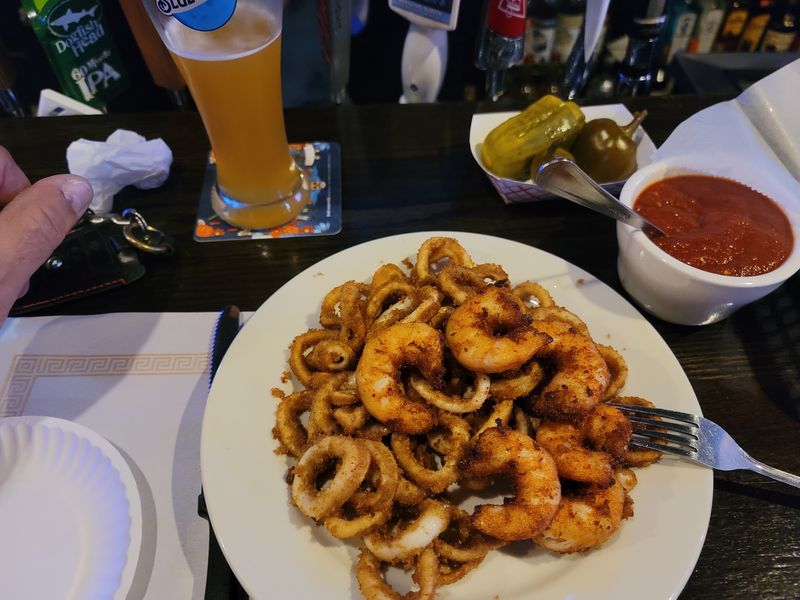
Before Krug’s became synonymous with enormous burgers, plenty of regulars came for the seafood. Fried shrimp remain one of the smartest ways to begin a meal, particularly when coated in the tavern’s homemade marinara.
The sauce can be ordered sweet, medium, or hot, allowing diners to choose between a gentle tomato richness and a version with enough heat to demand another sip of beer. Shrimp also appear in Buffalo, barbecue, scampi, and house-secret preparations.
Fried calamari receives the same marinara treatment, while wings, mozzarella sticks, jalapeño poppers, and a thin-crust bar pie cover the familiar tavern-food essentials. The Italian hot dog delivers another distinctly Newark-style meal.
Two hot dogs are tucked into pizza bread with peppers, onions, and French fries, creating a hefty sandwich in which the potatoes are not a side but part of the architecture.
Krug’s also serves cheesesteaks made with ribeye, meatball sandwiches, chicken Parmesan, shrimp Parmesan, and hot sandwiches that make it entirely possible to leave happy without ordering the famous burger.
Daily comfort-food specials have included fresh ham and hot roast beef, the sort of plates that make sense in a neighborhood bar where lunch can stretch into an afternoon conversation.
Portions run hearty throughout the menu, so pairing spicy shrimp with a full 12-ounce burger is best approached as a shared project unless everyone at the table arrived exceptionally hungry.
Krug’s is located at 118 Wilson Avenue in Newark. The tavern is currently open Tuesday through Saturday from 11 a.m. to 11 p.m. and Sunday from noon to 11 p.m., with Monday reserved for a well-earned day off.
Those practical hours fit the personality of the place. Krug’s remains a working neighborhood tavern where lunch, dinner, drinks, and nearly a century of Newark history all squeeze comfortably beneath the same roof.
Share this story