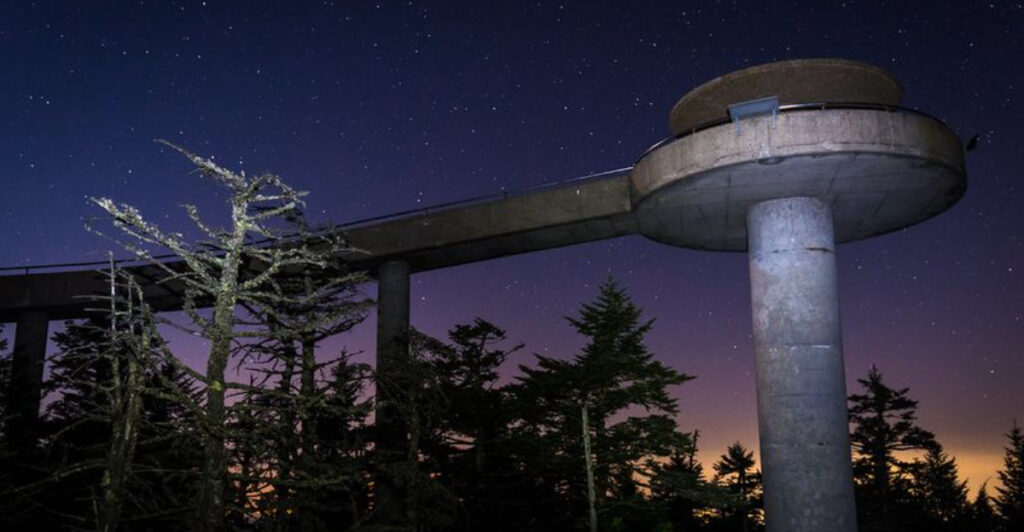
The Great Smoky Mountains rise along Tennessee’s eastern border like ancient sentinels, their peaks shrouded in the famous mist that gives them their name. These towering summits aren’t just beautiful—they’re home to some of the most diverse ecosystems in North America and offer adventures that range from challenging scrambles to peaceful forest walks.
Whether you’re an experienced hiker or just love stunning mountain views, knowing which peaks stand tallest helps you appreciate the true grandeur of this legendary landscape.
1. Clingmans Dome (Kuwohi)
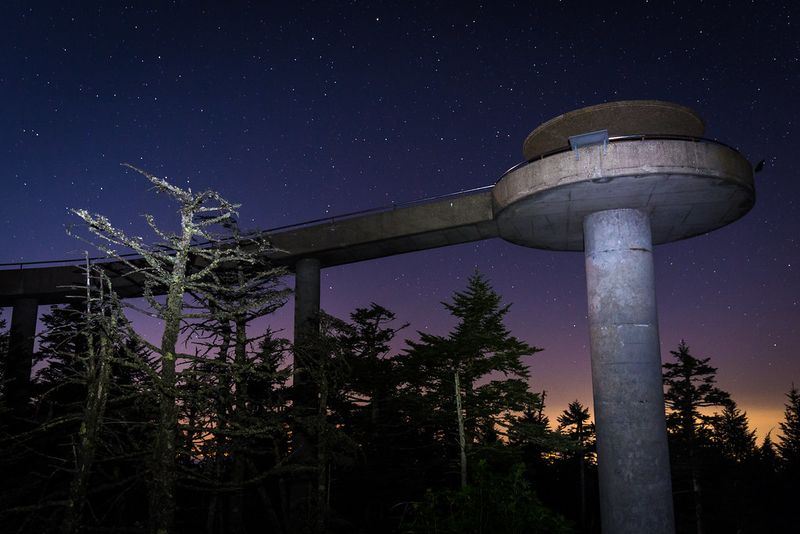
Standing at 6,643 feet, this giant claims the title of Tennessee’s highest point and the third-tallest mountain east of the Mississippi River. The Cherokee people recently reclaimed its original name, Kuwohi, meaning “mulberry place,” reconnecting the peak to its indigenous heritage.
A paved road takes you within half a mile of the summit, where a steep but short trail leads to a unique observation tower. The spiral ramp wraps around like something from a science fiction movie, offering 360-degree views that can stretch across five states on clear days.
Clouds often roll through at this elevation, creating an otherworldly atmosphere where you’re literally walking through the sky. Winter transforms the area into a snowy wonderland, though the access road closes from December through March.
The Fraser fir forest surrounding the summit tells a sobering environmental story, with many trees standing as silver skeletons after an invasive insect infestation. Despite this challenge, the peak remains Tennessee’s most visited high-elevation destination, drawing people who want to say they’ve stood at the state’s very top.
2. Mount Le Conte
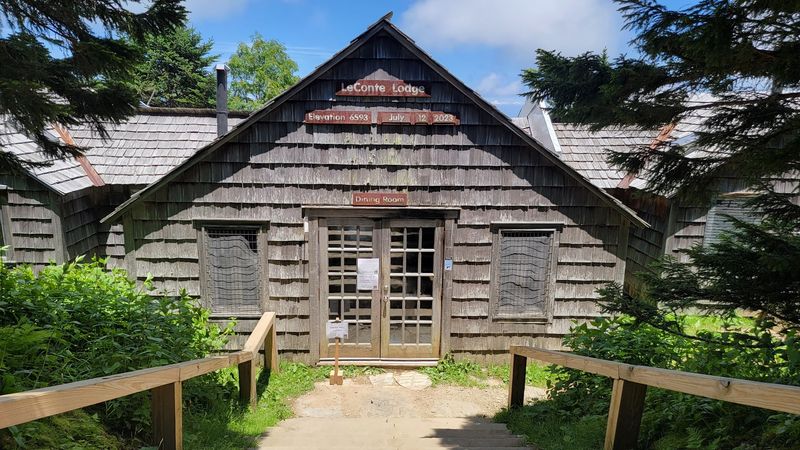
At 6,593 feet, Mount Le Conte rises more dramatically than any other peak in the Smokies, shooting up over a mile from its base. What makes this mountain special isn’t just its height—it’s the journey getting there, since there’s no road access and five different trails converge at its summit.
The mountain hosts the only lodge you can’t drive to in the entire national park. LeConte Lodge operates from March through November, and guests hike in with just what they can carry, enjoying rustic cabins perched near the clouds.
Alum Cave Trail offers the most dramatic route up, passing through a massive rock overhang and along sections with cable handrails bolted into sheer cliffs. Rainbow Falls Trail takes you past an 80-foot waterfall that creates stunning prisms of color when sunlight hits the spray just right.
Sunrise from Myrtle Point, one of Le Conte’s rocky outcrops, ranks among the most spectacular shows in Tennessee. The mountain’s western face catches the first light, painting the valleys below in shades of pink and gold while you stand above a sea of morning fog.
3. Mount Guyot
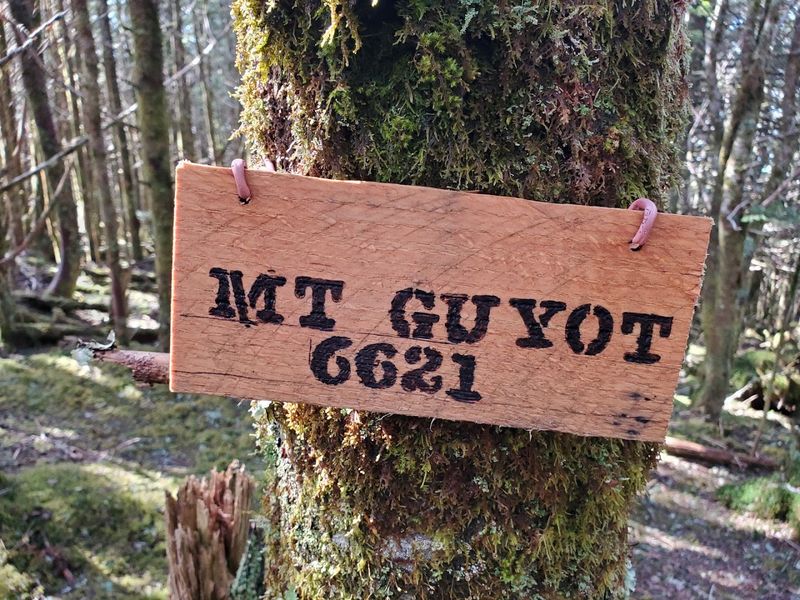
Reaching 6,621 feet, Mount Guyot stands as Tennessee’s second-highest peak, yet most visitors to the Smokies have never heard of it. This mountain doesn’t court attention—thick forests cover its summit, blocking views and keeping the peak hidden from casual observers below.
Named after Arnold Henry Guyot, a Swiss geographer who mapped the Smokies in the 1850s, the mountain remains one of the most remote high points in the range. Getting there requires a serious commitment, with the shortest route clocking in around 13 miles round trip through rugged backcountry.
The Appalachian Trail crosses near the summit, and thru-hikers trudging from Georgia to Maine pass through without fanfare. Unlike showier peaks with observation platforms and parking lots, Guyot offers only the quiet company of red squirrels and the whisper of wind through Fraser firs.
What the mountain lacks in views, it makes up for in wilderness solitude. You won’t find crowds here taking selfies or families on day hikes—just dedicated adventurers willing to earn their elevation through sweat and miles of forest trail, experiencing the Smokies as they existed before tourism discovered them.
4. Old Black
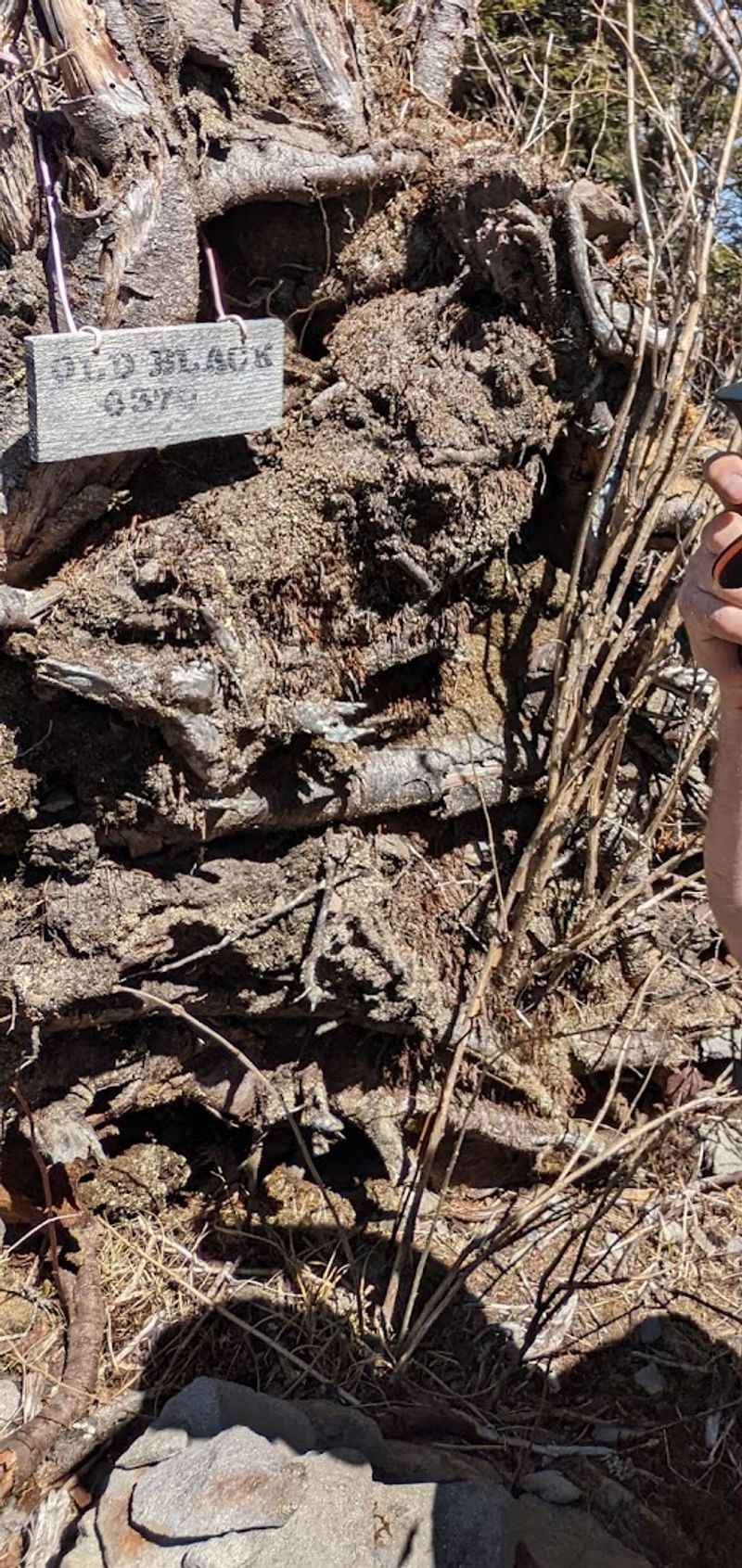
Old Black rises to 6,370 feet along the Tennessee-North Carolina border, earning its name from the dark appearance of the spruce-fir forest blanketing its slopes. From distant viewpoints, this evergreen cloak looks almost black against the sky, especially when storm clouds gather behind it.
The mountain sits in one of the wildest sections of the Smokies, accessible only via the Appalachian Trail or long backcountry routes. Most hikers reach it by starting at Cosby Campground and climbing through Snake Den Ridge, a name that tells you something about the journey’s character.
Unlike some peaks where you scramble over rocks to reach a dramatic summit, Old Black’s highest point hides beneath dense forest canopy. A small sign marks the spot where Tennessee reaches skyward, but trees block any panoramic reward—this mountain makes you work without offering the usual payoff.
Yet there’s something honest about Old Black’s refusal to perform for visitors. It represents the Smokies at their most authentic, where nature doesn’t arrange itself for Instagram moments but simply exists in raw, unpolished grandeur that demands respect rather than admiration from a distance.
5. Mount Kephart
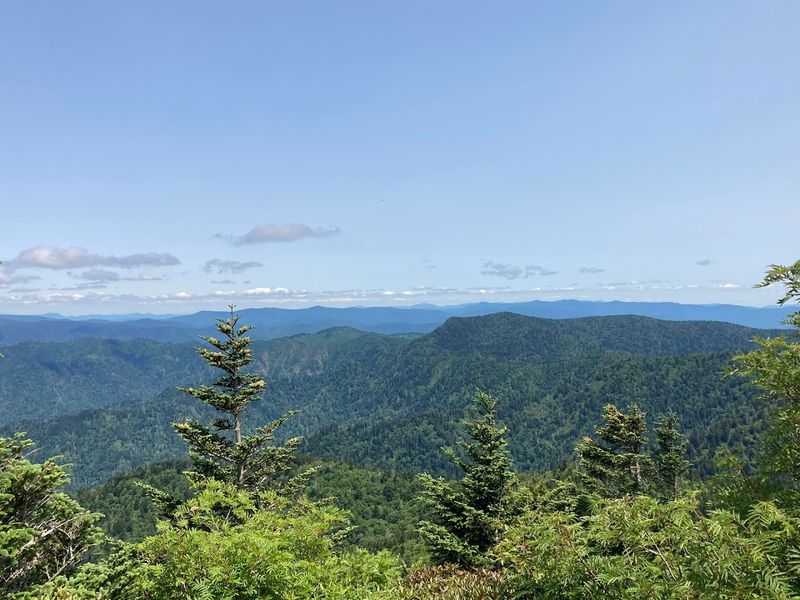
Mount Kephart honors Horace Kephart, the writer and outdoorsman whose passionate advocacy helped establish Great Smoky Mountains National Park. At 6,217 feet, this peak stands as a living memorial to the man who called these mountains home and fought to protect them for future generations.
The mountain sits just east of Newfound Gap, making it more accessible than many high peaks in the range. A hike to the summit via the Appalachian Trail covers about four miles round trip, passing through beautiful hardwood forests that transition to spruce-fir ecosystems as you climb.
The Boulevard Trail splits off near the summit, leading adventurous hikers onward to Mount Le Conte. This junction sees plenty of foot traffic during peak season, with backpackers adjusting their packs and day-hikers deciding whether to push for one more peak.
From certain angles on the summit, you can spot the distinctive concrete observation tower on Clingmans Dome rising in the distance. Mount Kephart offers something its taller neighbor doesn’t—a sense of earned accomplishment without the tour buses and paved paths, giving you a genuine mountain experience that Kephart himself would have appreciated.
6. Charlies Bunion
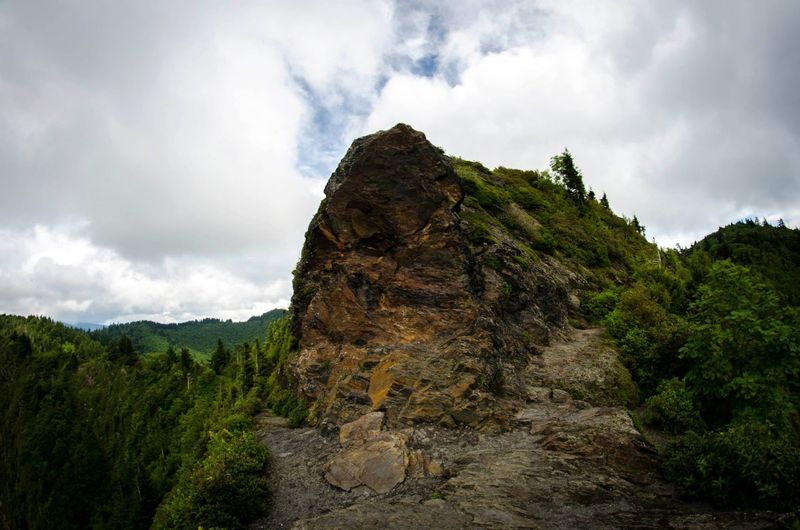
Charlies Bunion isn’t technically a separate peak but rather a dramatic rocky outcrop at 5,564 feet that juts out like a stone balcony over the valleys below. The name supposedly came from Charlie Conner, a local mountain guide whose bunion-covered foot reminded someone of the knobby rock formation.
A 1925 wildfire followed by torrential rains stripped away soil and vegetation, exposing the bare rock spine that makes this spot so distinctive. What began as an environmental disaster created one of the most photographed viewpoints in the entire Smokies, proving nature sometimes sculpts beauty through destruction.
The eight-mile round trip hike from Newfound Gap ranks as a Smokies classic, challenging enough to feel like an achievement but doable for most reasonably fit hikers. Spring brings wildflowers along the trail, while autumn paints the surrounding mountains in impossible shades of red and gold.
Standing on the exposed rock with nothing but air beneath your feet creates a thrilling sense of exposure that’s rare in the heavily forested Smokies. You can see for miles in every direction, watching clouds cast shadows across ridgelines and hawks riding thermal currents far below your perch on this spectacular stone bunion.
7. Mount Collins
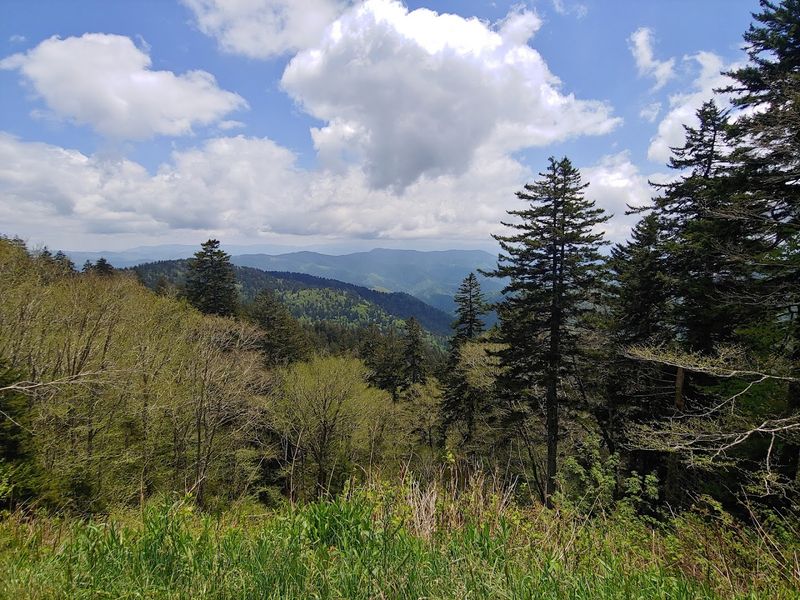
Mount Collins reaches 6,188 feet along the main crest of the Smokies, positioned between Clingmans Dome and Newfound Gap. Named after Robert Collins, a local resident from the 1800s, this mountain sees thousands of hikers pass nearby each year, though relatively few actually summit it.
The Appalachian Trail runs right over Mount Collins, but dense forest obscures the actual high point from the main path. A short side trail leads to the true summit, where you’ll find a small clearing and a sense of accomplishment but no sweeping vistas—the trees keep their secrets here.
What makes Mount Collins interesting is its role as a transition zone between different forest types. As you hike along its slopes, you pass through distinct ecological layers, each with its own character and collection of plant species adapted to specific elevations.
Mount Collins Shelter sits on the northern slope, providing a rustic three-sided structure where backpackers can spend the night surrounded by the sounds of the mountain forest. Staying here offers a different experience than bagging the summit—you become part of the mountain’s rhythm rather than just a visitor passing through on the way to somewhere more famous.
8. Sugarland Mountain
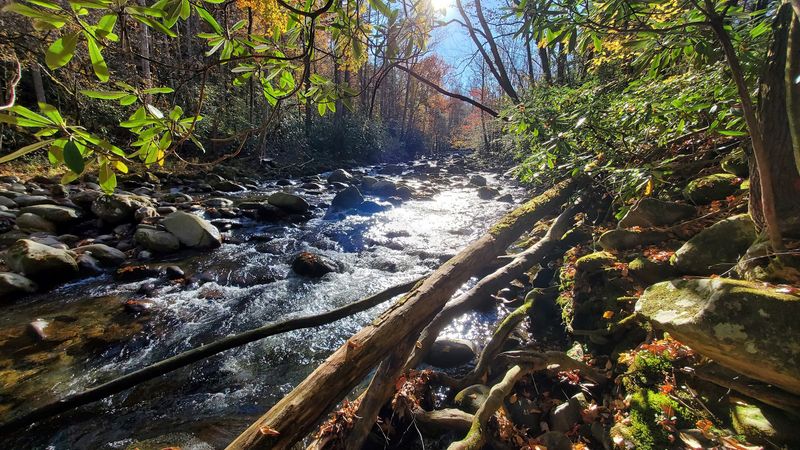
Sugarland Mountain forms a long ridge reaching approximately 5,530 feet at its highest point, stretching between Clingmans Dome and the park’s lower elevations near Gatlinburg. The name likely comes from the sugar maple trees that once dominated certain slopes, though the origin remains somewhat mysterious like many old mountain names.
Unlike the dramatic rocky peaks that grab headlines, Sugarland Mountain offers a gentler introduction to high-elevation hiking in the Smokies. The Sugarland Mountain Trail runs for about 12 miles along the ridge, providing a less-crowded alternative to more famous routes while still delivering that satisfying sense of being deep in mountain wilderness.
Wildflowers put on spectacular shows here during spring and early summer, with trilliums, violets, and lady slippers decorating the forest floor. The mountain’s diverse habitats support black bears, white-tailed deer, and wild turkeys, making wildlife encounters fairly common for observant hikers.
From certain points along the ridge, you can look down into the Fighting Creek drainage or across toward Mount Le Conte’s massive bulk dominating the eastern skyline. Sugarland Mountain might not claim any elevation records, but it represents the Smokies at their most characteristic—thickly forested, quietly beautiful, and full of the kind of peaceful solitude that makes you understand why people fall in love with these ancient mountains.
Share this story