A steel truss bridge barely wide enough for two careful drivers stretches across the Delaware River, linking New Jersey with Pennsylvania as it has for more than a century.
On the Jersey side, the road slips into Titusville, a tiny village where old houses face the water, cyclists roll beside a 19th-century canal, and Revolutionary history sits quietly behind split-rail fences.
Titusville is small enough to miss if you stay focused on Washington Crossing State Park. That would be a mistake.
This Hopewell Township community packs an unusual amount into roughly half a square mile, including a nationally recognized historic district, a towpath made for leisurely bike rides, and two local restaurants that understand the restorative power of tomato pie and ice cream.
You can walk through a house connected to Washington’s famous crossing, follow wooded trails, eat beside the river, and still make it home before dark. That is a very good return on one tank of gas.
Meet Titusville on the Banks of the Delaware
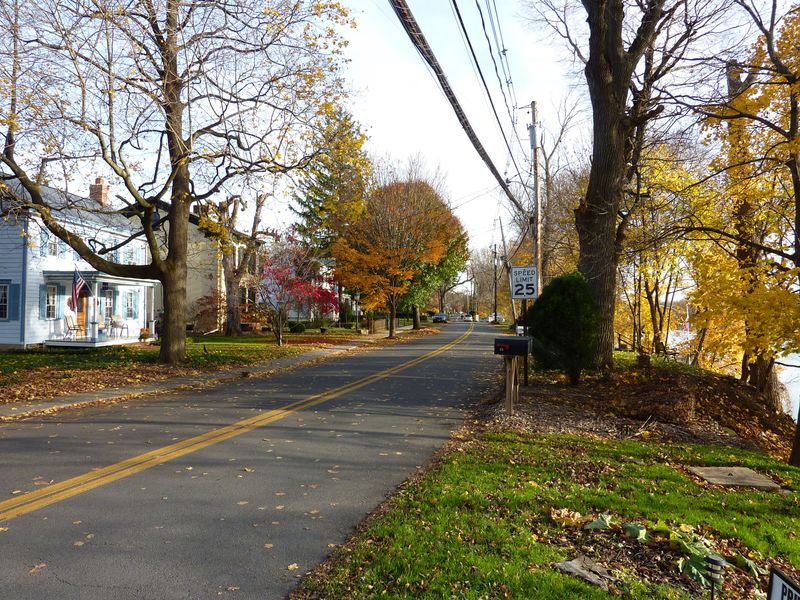
Titusville is not a polished downtown filled with matching storefronts and weekend crowds. It is a compact riverside village with old homes, narrow streets, a post office, a church, a few places to eat, and the Delaware River always somewhere nearby.
That modest scale is a large part of its appeal. The community sits in Hopewell Township, directly across the river from Washington Crossing, Pennsylvania.
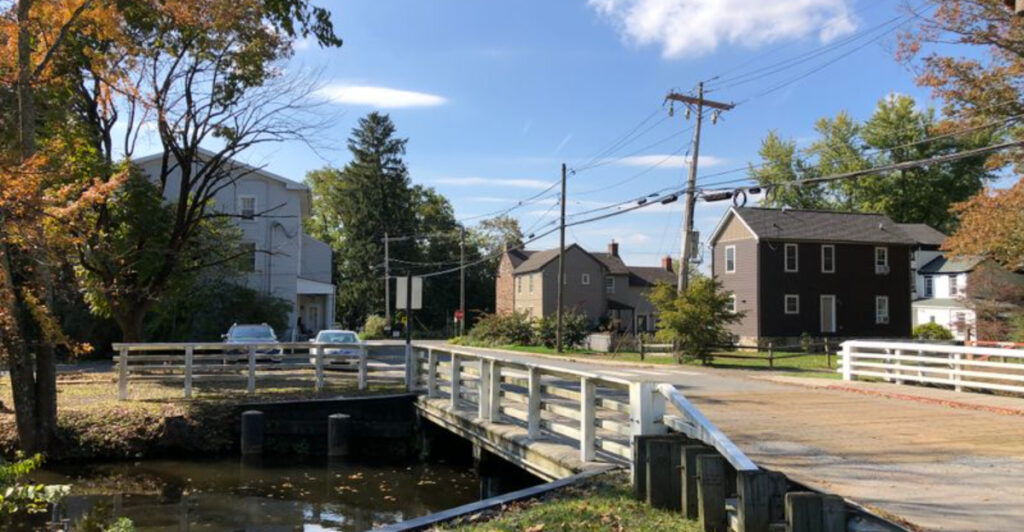
The 877-foot Washington Crossing Bridge connects the two, using stone-faced piers that date to an earlier bridge built in the 1830s. Its current steel superstructure opened in 1905.
With a roadway only about 15 feet wide, crossing it can feel like a brief test of mutual trust between opposing drivers. A wooden pedestrian walkway runs alongside the traffic and provides an excellent river view.
The village takes its name from the Titus family, which settled in the area during the early 1700s. Joseph Titus eventually assembled a farmstead of nearly 300 acres and helped develop the community around sawmills and a fishery.
Titusville grew busier after the Delaware and Raritan Feeder Canal arrived in the 1830s and the Belvidere Delaware Railroad followed in the 1850s. Evidence of that period remains visible.
The Titusville Historic District, added to the National Register of Historic Places in 1983, includes about 100 contributing buildings. Among them are tidy frame houses, former commercial properties, and the Titusville Presbyterian Church, whose congregation dates to 1838.
The best way to appreciate the village is slowly. Park legally, watch for traffic along Route 29, and wander the quieter streets near the canal.
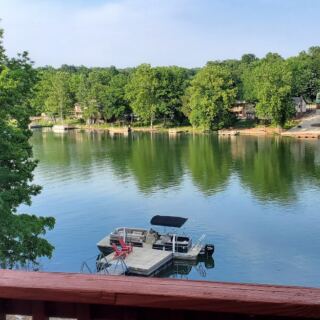
Titusville does not present itself like an attraction. It simply carries on around its old buildings, river views, and backyard docks, which makes discovering it feel unusually personal.
Step Into Revolutionary History
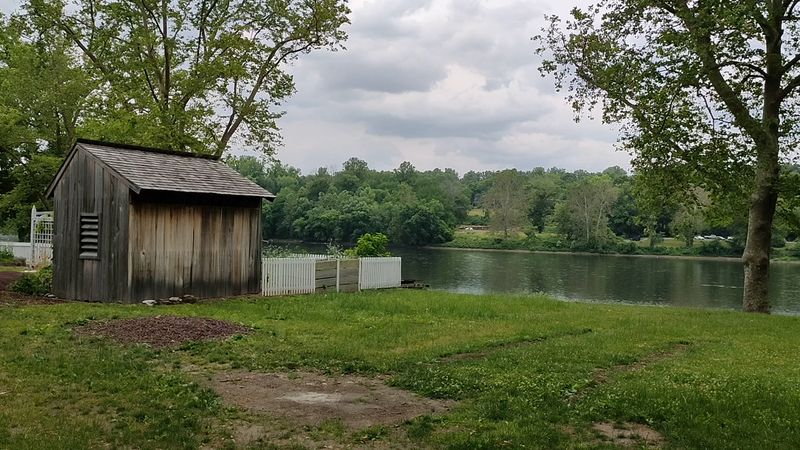
On Christmas night in 1776, the Delaware River was not the peaceful backdrop visitors see today. A winter storm was throwing sleet and snow at George Washington’s troops as boats carried approximately 2,400 soldiers, horses, and artillery from Pennsylvania to the New Jersey shore.
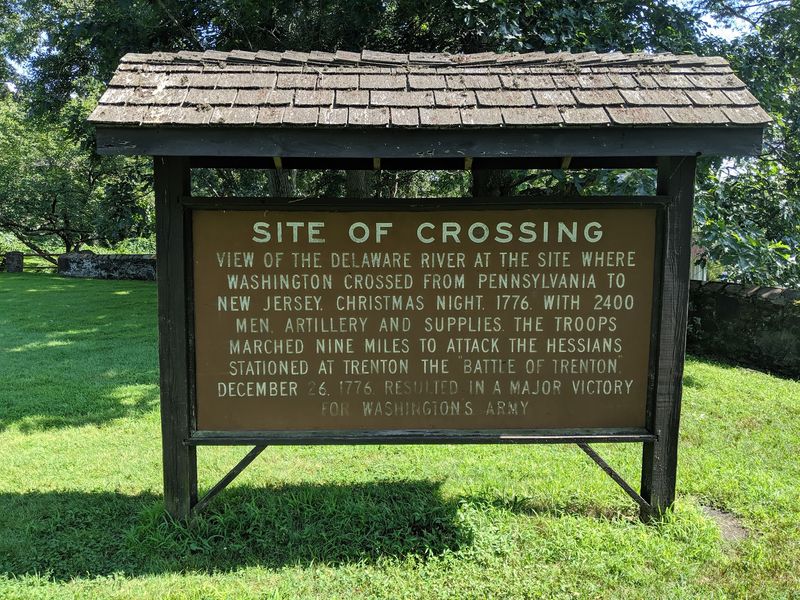
The operation continued for hours, followed by a difficult march toward Trenton and a victory that changed the momentum of the American Revolution. The New Jersey landing area is now part of Washington Crossing State Park, but the most intimate place to understand the story is the Johnson Ferry House.
Built around 1740, the gambrel-roof farmhouse stood near the ferry operated by James Slack at the time of the crossing. Washington and other officers likely used the house while the Continental Army regrouped on the Jersey side.
Inside, the building is furnished with period pieces and reproductions arranged in spaces such as the keeping room, parlor, pantry, and bedchambers. An 18th-century-style kitchen garden outside helps fill in the domestic side of the story.
The crossing becomes easier to comprehend when you are standing in a house where people cooked, worked, and watched an army arrive during a brutal storm. The park’s museum adds the military context.
Its collection includes Revolutionary War weapons, uniforms, documents, maps, and other artifacts associated with the conflict. Exhibits focus on the Ten Crucial Days between December 25, 1776, and January 3, 1777, when the crossing and the battles of Trenton and Princeton revived a struggling American cause.
Hours for the museum and Johnson Ferry House may differ from the park’s general operating hours, and construction projects connected with America’s 250th anniversary have affected access around the site. Check the current schedule before leaving home.
Even when an interior is closed, the landscape still tells a powerful story. The riverbank, ferry-house grounds, and route leading east make the famous crossing feel less like a painting and more like a risky operation carried out by cold, exhausted people.
Explore Washington Crossing State Park
A red-tailed hawk circles above an open field while, a few minutes away, hikers disappear into oak and tulip-poplar woods. Washington Crossing State Park may be known for one winter night in 1776, but its natural side can easily occupy the better part of a modern afternoon.
About 13 miles of marked trails cross the property. Many routes travel over flat or gently rolling ground, making the park approachable for casual walkers who did not arrive dressed for a wilderness expedition.
The 1.4-mile Continental Lane Trail runs through the middle of the park and follows, in part, an old farm road. It links the area around Johnson Ferry House with the park’s interior and gives visitors a sense of the route troops faced after landing.
Mountain bikers can use roughly five miles of designated trail in the Phillips Farm day-use area. Other sections pass through meadows, forest, and stream corridors, with enough intersections to build either a short loop or a longer outing.
A map is worth keeping handy because several trails connect, overlap, or emerge near different parking areas. The 140-acre Washington Crossing Natural Area protects mature woodland and provides habitat for birds, deer, foxes, and smaller animals.
Near the park’s Nature Interpretive Center, exhibits and seasonal programs examine local plants, wildlife, and geology. The property also contains picnic areas, a playground, fishing access, group camping facilities, and an open-air theater.
The main entrance is at 355 Washington Crossing-Pennington Road. The park generally opens at 8 a.m., and admission is free, but individual buildings and facilities keep separate schedules.
Ongoing improvement work can temporarily change parking patterns or close walkways, so follow posted signs instead of relying on an old mental map. Bring sturdy shoes after rain.
The easier trails are friendly, but New Jersey mud remains impressively committed to its work. In autumn, the fields and hardwood forest put on the biggest show; in winter, bare trees reveal the rolling terrain and make it easier to imagine the landscape the Continental Army encountered.
Walk or Bike Along the Delaware and Raritan Canal
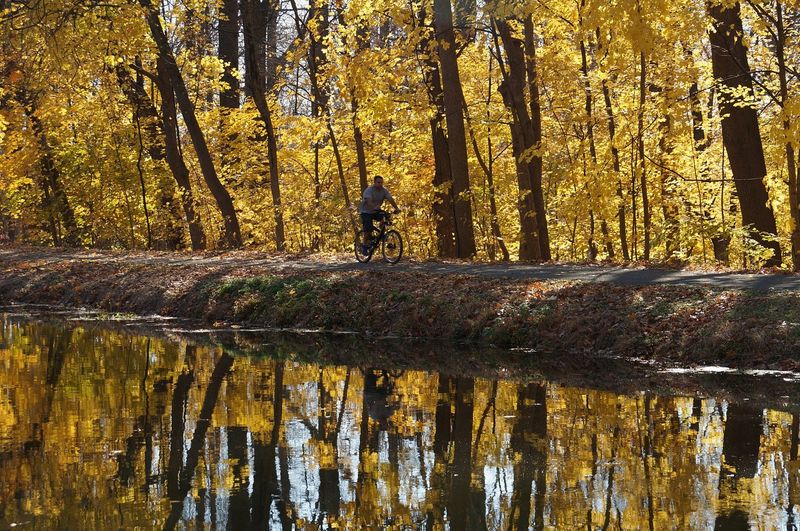
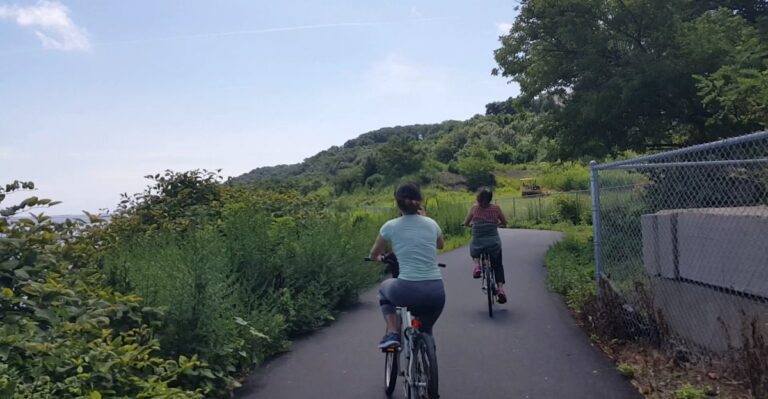
The towpath through Titusville once belonged to mules pulling cargo boats. Today, its traffic consists mostly of bicycles, running shoes, dog leashes, and the occasional goose refusing to yield the right of way.
This is the feeder section of Delaware and Raritan Canal State Park, a linear greenway extending for more than 70 miles across central New Jersey. The canal was built during the 1830s to move goods between the Delaware and Raritan rivers.
Through Titusville, it runs parallel to the Delaware, separated from the river by a narrow strip of land and Route 29 in places. The trail’s level, crushed-stone surface makes it particularly good for an unhurried ride.
A hybrid, gravel, or mountain bike will handle it comfortably; skinny road tires can be less agreeable after wet weather. Walkers can start near the village and choose a distance without committing to a complicated loop.
For an easy outing, the canal mileage table places Titusville about 1.2 miles from Washington Crossing, creating a manageable 2.4-mile round trip. Heading north, Moore’s Creek is approximately 2.2 miles away.
Lambertville is about 5.2 miles from Titusville, turning that route into a little more than 10 miles round trip and providing a convenient excuse for a coffee or lunch break. Look beyond the water as you travel.
Old bridge sites, former railroad alignments, stonework, and surviving canal structures hint at the corridor’s industrial past. The tracks of the old Belvidere Delaware Railroad were removed after freight service ended, and part of that transportation route became a recreational trail.
The canal is often glassy enough to reflect entire trees, while the Delaware flashes through openings on the opposite side. Turtles crowd sunny logs in warm weather, great blue herons hunt the shallows, and spring brings a loud chorus from frogs hidden along the bank.
There are road crossings and narrow access points, so slow down around bridges and village streets. A bell helps when approaching walkers from behind.
Nobody enjoys being startled off a towpath by a cyclist silently auditioning for the Tour de France.
Grab a Bite at a Local Favorite
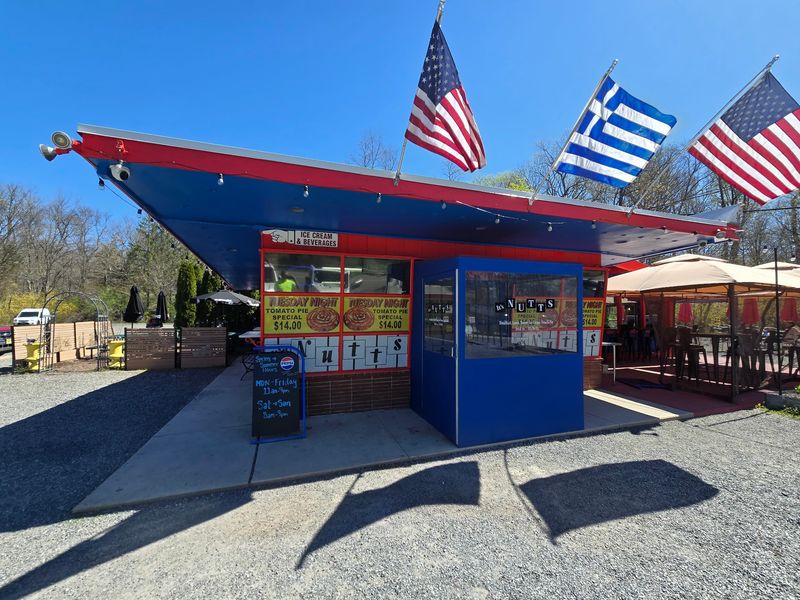
Titusville has no sprawling restaurant district, but it does have a remarkably effective two-stop dining plan. Both local favorites sit on River Road, and each makes sense after a few hours outside.
It’s Nutts at 1382 River Road is the casual choice for breakfast, lunch, dinner, or the strategically important afternoon ice cream. The menu ranges from burgers and sandwiches to chicken souvlaki, salads, quesadillas, and pizza.
Its classic tomato pie starts at about $12.95, while the chicken souvlaki is around $17.95. Prices can change, of course, but the portions are designed for people who have been walking rather than posing beside trail signs.
Weekend breakfast is served from 8 to 11:45 a.m., with pancakes, eggs, and other diner-style staples. Regular hours are generally 11 a.m. to 8 p.m. Monday through Thursday, 11 a.m. to 9 p.m. Friday, 8 a.m. to 9 p.m. Saturday, and 8 a.m. to 8 p.m. Sunday.
In warm weather, the outdoor tables and ice cream window can be as much a part of the visit as the meal itself. A few doors away at 1339 River Road, Patriots Crossing Tavern and Wine Shop takes the day in a pub direction.
The independent tavern opened in 2012 inside a historic building near the bridge. Burgers, wings, quesadillas, pulled pork, sandwiches, and rotating specials cover the hearty end of the spectrum.
There is also a full bar and an attached wine and liquor shop. The outdoor deck is the prized seat when the weather cooperates.
From there, diners can look toward the Washington Crossing Bridge and the river while traffic hums over the steel deck. The tavern even opens on Christmas Day, when reenactors from the annual crossing have traditionally stopped in to warm up.
Neither place requires fancy planning. Check current hours, arrive hungry, and accept that choosing between tomato pie and tavern food is the most difficult logistical problem Titusville is likely to present.
Turn Your Visit Into the Perfect Day Trip
The cleanest Titusville itinerary begins in the morning, before Route 29 picks up traffic and the most convenient parking areas get busy. Start at Washington Crossing State Park’s main entrance on Washington Crossing-Pennington Road rather than trying to improvise a roadside space near the river.
Give the historic sites the first part of the day. If the Johnson Ferry House or museum is open, allow at least an hour to see the exhibits without rushing.
Then walk a section of Continental Lane Trail or choose one of the park’s shorter woodland routes. A picnic works well here, but saving your appetite for River Road is a respectable decision.
After lunch at It’s Nutts or Patriots Crossing, move closer to the village and canal. A walk from Titusville toward Washington Crossing and back covers roughly 2.4 miles.
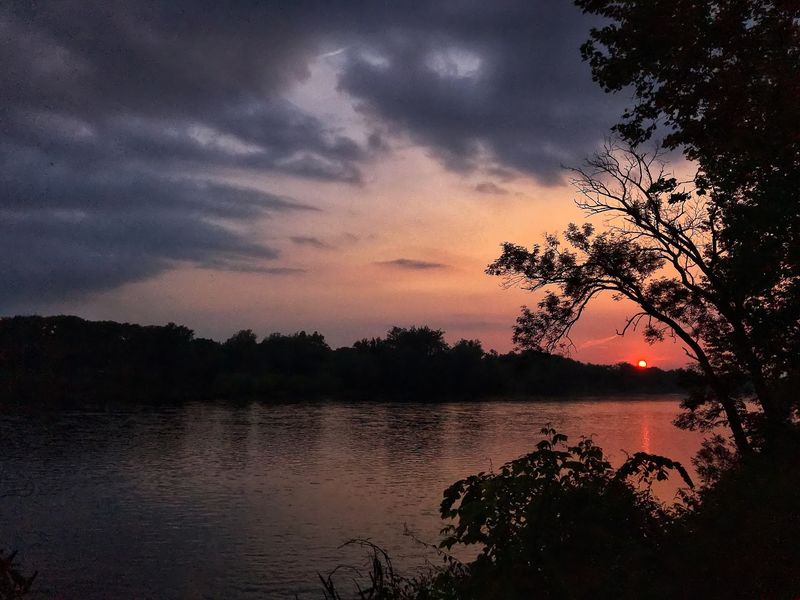
Cyclists with more time can head north toward Lambertville, although that option turns a relaxed outing into a ride of more than 10 miles. Finish near the river, where late-afternoon light catches the steel framework of the Washington Crossing Bridge.
Driving estimates depend heavily on traffic, but Titusville is roughly an hour from Philadelphia and about 90 minutes from New York City under favorable conditions. Trenton and Princeton are much closer, making the village an especially easy escape from central New Jersey.
Spring and fall offer the most comfortable trail weather. Summer brings fuller foliage, ice cream weather, and more visitors, while winter strips the landscape down to the river, fields, and historic contours.
Around the annual December crossing events, expect special programming and larger crowds. Before leaving, confirm the park’s building hours and review any construction notices.
The grounds generally operate from 8 a.m. to 8 p.m., but museum access, tours, and seasonal facilities follow their own schedules. Bring water, use a real trail map, and avoid parking along narrow village roads where signs prohibit it.
Titusville works best when the schedule stays loose. Its pleasures are small and specific: the rattle of tires on an old steel bridge, a heron lifting from the canal, muddy shoes beside a tavern table, and a river that has carried far more history than this quiet village lets on.
Share this story