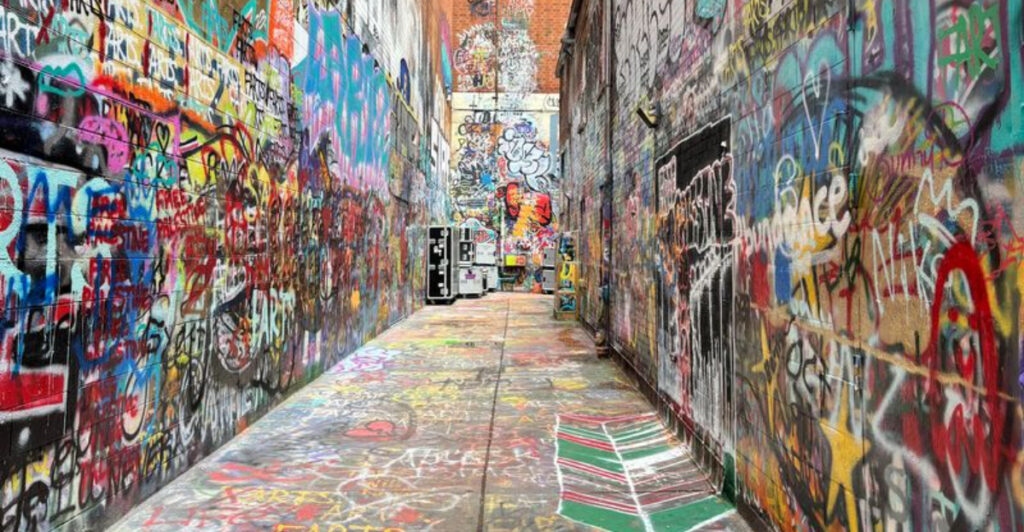
Street art feels different when the walls never stay the same for long. In downtown Ann Arbor, Michigan, Graffiti Alley turns a narrow passage into a constantly changing burst of color, commentary, humor, and city energy.
Visitors come for photos and bold visuals, but the alley also works like a living public canvas, reflecting whatever people are feeling, questioning, celebrating, or pushing back against in the moment. That sense of movement is what makes the space more than a quick backdrop.
For anyone exploring Ann Arbor, this bright little stretch offers one of the city’s most expressive and unpredictable stops.
A Narrow Passage That Hits Like a Color Blast
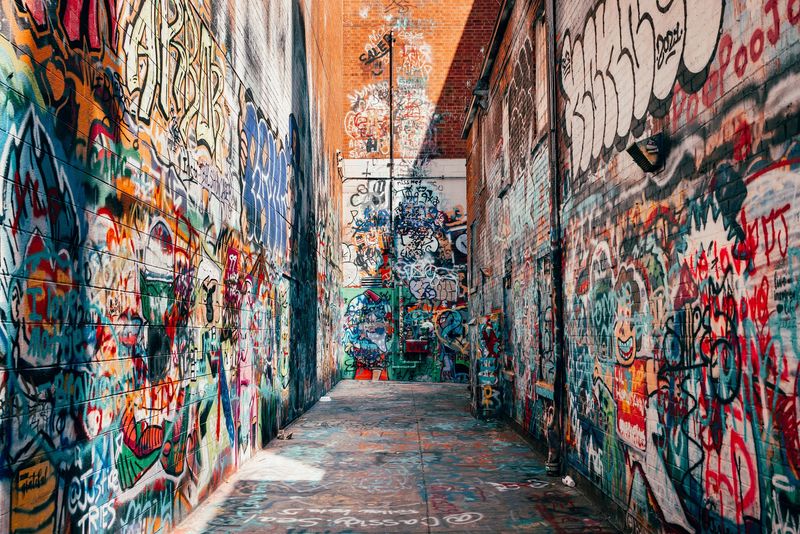
The surprise starts before a full step inside. From the street, Graffiti Alley looks like a regular downtown cut-through, but the walls quickly explode into layers of color, symbols, names, jokes, and giant painted letters that bounce against the brick.
Nothing stays neat for long here, and that is part of the point. Fresh paint can appear over older work, so the alley reads like a public notebook where Ann Arbor keeps rewriting the page in louder and brighter ink.
Looking up helps as much as looking straight ahead. Paint often climbs high on the walls, which gives the whole space a vertical rush and makes the alley seem taller, busier, and more packed with motion than its actual size suggests.
Daylight brings out sharp contrast in every surface. Blues pop against concrete, pinks glow next to silver and black, and even rough patches, drips, and overspray add to the visual punch instead of looking like mistakes.
Because the passage is narrow, the artwork surrounds people instead of sitting politely at a distance. That closeness changes the experience, since every step reveals new details, from tiny doodles and phrases to large pieces built to grab attention fast.
For first-time visitors, the best move is to slow down at the entrance instead of rushing through. Give your eyes a minute to adjust, scan both sides, then walk the length once for impact and a second time for the details hidden inside the noise.
Where the Artwork Never Holds Still
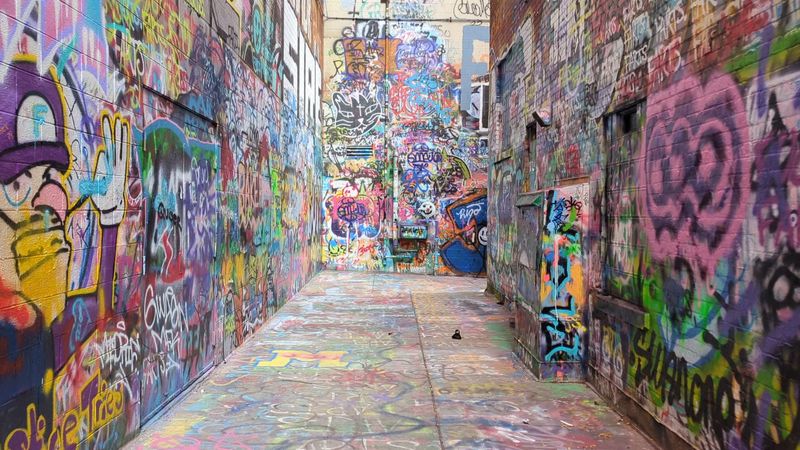
One visit never tells the whole story. Graffiti Alley is known for changing often, which means the version seen today may be partly gone next week, replaced by a new layer of paint, a new message, or a fresh visual joke.
That constant turnover gives the alley a pulse. Instead of treating art as fixed and protected behind glass, the space works like an open conversation where one image can answer another, erase another, or build on what came before.
Some sections look polished and carefully planned, with bold outlines and balanced color choices. A few feet away, fast tags, rough scribbles, and quick phrases take over, showing the difference between long effort and sudden impulse on the same wall.
That mix matters because it reflects the real speed of a college town. Ann Arbor moves through class schedules, game days, protests, music, and late-night energy, and the alley’s shifting surfaces seem to catch those mood swings in real time.
Anyone hoping to photograph the place should remember that the background is never guaranteed. A favorite mural may disappear, so taking pictures when something grabs attention is smarter than planning to come back later and expecting the same scene.
Regular return visits make sense here in a way they do not at more fixed attractions. Even a short pass through can reveal a different color story, a different mood on the walls, and a different chapter in this downtown space’s ongoing visual argument.
Michigan Street Art with a Campus Pulse
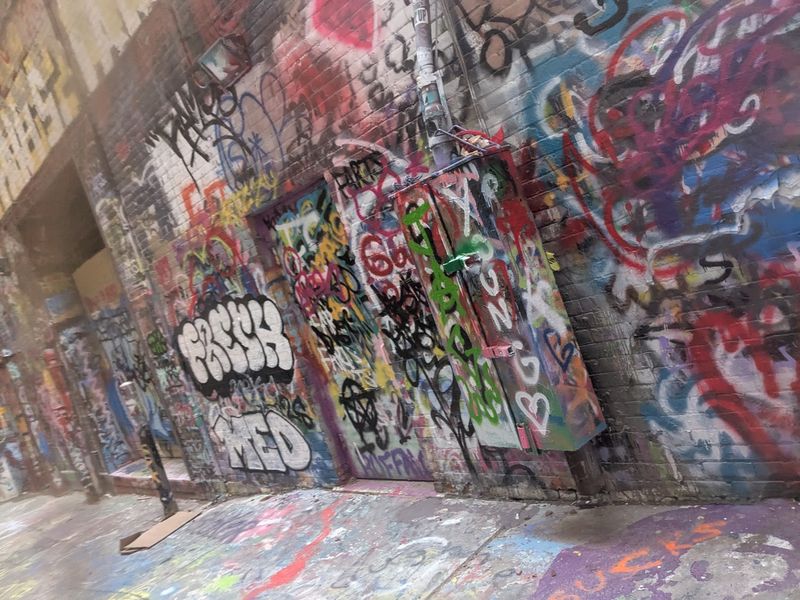
College-town energy runs through this alley even when no class is in session. Graffiti Alley sits in the middle of downtown Ann Arbor, close to shops, restaurants, and the wider rhythm of a city shaped in part by student life.
That setting helps explain why the walls can hold so many different tones at once. One section may carry playful drawings, another may push bold lettering, and somewhere nearby a message can appear that reflects stress, pride, sarcasm, or celebration.
Public expression has a different flavor in a place where ideas move quickly. Ann Arbor is used to debate, performance, art, activism, and experimentation, so an alley where paint can become a fast reaction fits naturally into the city’s character.
The location also means the alley is rarely isolated from daily life. A walk through might happen between coffee stops, after dinner, before a concert, or during a casual downtown loop, which makes the art feel woven into ordinary movement rather than separated from it.
That downtown closeness gives the place a broad audience. Students, locals, photographers, curious travelers, and people simply cutting through the block all meet the same walls, each bringing a different reason for looking and a different way of reading the images.
Seen in that context, the alley is more than a photo backdrop. It acts like a visual side street of Ann Arbor’s larger conversation, where paint records passing moods and where the city of Michigan shows one of its most direct and unfiltered public faces.
The Free Photo Stop with Better Backgrounds Than Most Murals

Some places ask for a ticket before they offer a memorable backdrop. Graffiti Alley does the opposite, giving downtown Ann Arbor a free, walk-through setting where portraits, group shots, short videos, and casual snapshots all get instant visual energy.
The strongest photos usually come from using the walls as texture rather than trying to fit everything into one frame. A close crop can pull out drips, letters, and color clashes, while a wider angle shows how the alley wraps a person in art.
Lighting changes the look more than many people expect. During the day, colors appear clearer and easier to separate, but later hours can add mood, reflections, and deeper shadows that make the painted surfaces seem rougher and more dramatic.
Because the art is layered and dense, almost any few feet can work as a backdrop. Still, it helps to walk the full length first, notice where colors complement clothing, and pick walls that support the subject instead of swallowing them in visual noise.
Video works well here too, especially when the camera moves. A slow pan along the brick can capture the alley’s changing details, and walking shots reveal how one color field gives way to another in quick bursts rather than smooth transitions.
Practical habits make the experience easier. Go during a less crowded moment if possible, stay aware of others moving through the space, and keep an eye on the ground so the hunt for a strong shot does not end with a crooked step or a rushed exit.
A Public Canvas, Not a Museum Hall
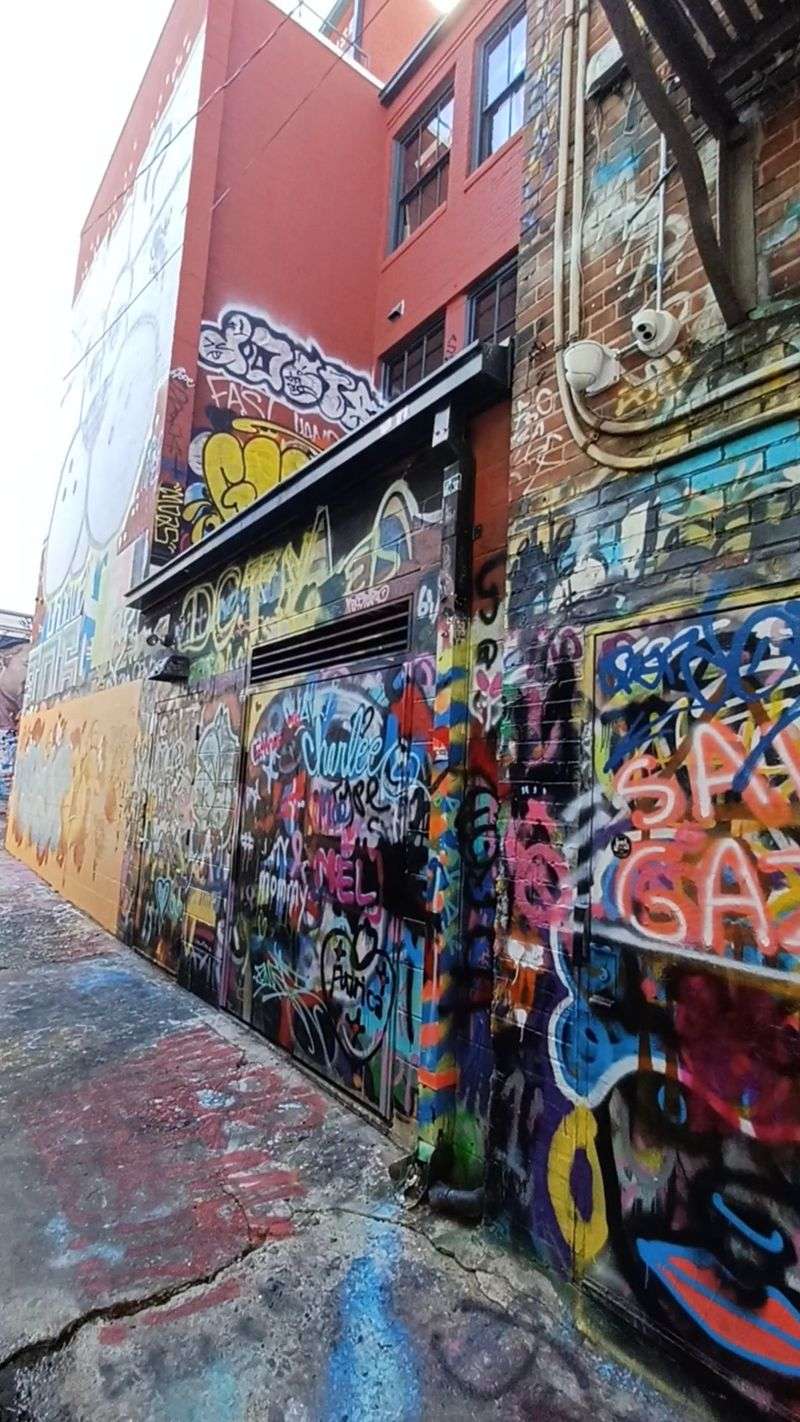
Rules feel different when art lives outside. Graffiti Alley is not arranged like a museum, and that difference changes how people read the space, because the value here comes from energy, openness, and turnover rather than careful preservation.
Walls in formal galleries usually protect finished pieces from touch, weather, and interruption. Here, paint can be added, covered, challenged, or replaced, which gives the alley a rough honesty that polished art spaces often cannot offer.
That openness also makes the alley more democratic than many art settings. A trained artist, a student testing ideas, or someone with a fast message can all leave visual traces, so the space reflects many voices instead of one approved curatorial style.
Not every mark will be beautiful, thoughtful, or even pleasant. Some sections may look rushed, crude, or messy, but that uneven quality is part of understanding the alley as a living surface rather than a collection of permanent masterpieces.
Seen that way, the place teaches an easy lesson about public art. Creative expression in a city can be colorful and impressive, but it can also be noisy, imperfect, funny, impulsive, and shaped by whoever shows up with something to say.
Visitors get more from the alley when they stop expecting polish and start noticing interaction. One layer answers another, clean lettering competes with wild shapes, and old paint peeks through fresh color, turning the brick into a record of shared use instead of a finished display.
Best Times to Walk Through Without Missing the Point
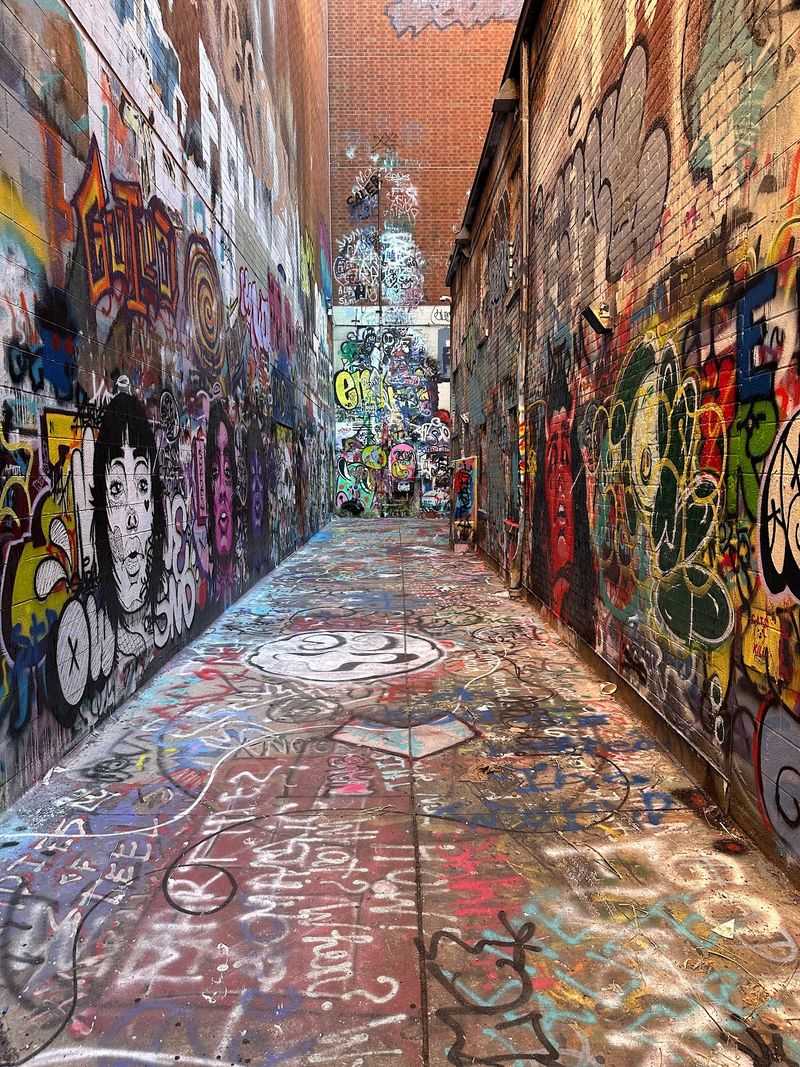
Timing changes the experience almost as much as the paint does. Graffiti Alley is open all day and night, so the question is not whether it is accessible, but what kind of visit matches the reason for going.
Morning and midday are best for seeing color clearly. Sunlight helps separate layers, highlights the textures of brick and spray paint, and makes the alley easier to photograph if the goal is crisp detail rather than dramatic shadow.
Late afternoon can be a smart middle ground. Downtown still feels active, the alley often keeps some useful light, and the surrounding restaurants and shops make it easy to fold a walk-through into a larger Ann Arbor outing.
After dark, the mood shifts. The same walls can look sharper, stranger, or less welcoming depending on the light and how busy the area is, so evening visits work better for those who prefer an edgier urban look and stay alert to surroundings.
Short visits are common because the alley is not huge, yet rushing misses the best parts. Walking through once for the overall effect, then doubling back to inspect favorite sections, usually turns a quick stop into a fuller look without taking much time.
Comfort matters too. Wear shoes that handle uneven city ground, bring paint only if participation is allowed and planned responsibly, and avoid expecting nearby supplies at the last minute.
A little preparation keeps the visit focused on the walls instead of minor hassles.
Why Ann Arbor’s Mood Board Lives in an Alley
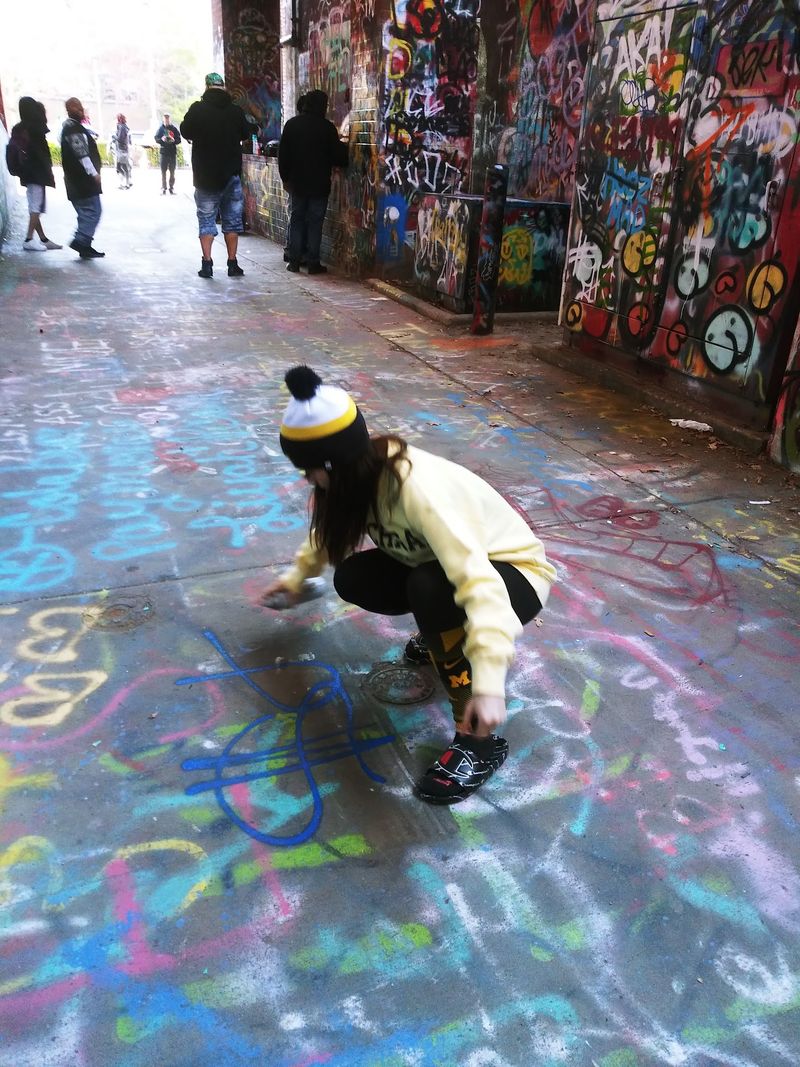
Every city has places that explain it faster than a brochure can. In Ann Arbor, Graffiti Alley works that way by turning a simple downtown passage into a loud, changing board of moods, where color and text reveal humor, tension, pride, and restless creativity.
The alley stands out because it does not ask for one official message. It allows contradictions to sit side by side, with playful images next to sharper statements and polished work next to quick tags, which mirrors the mixed voices of a real town.
That makes the space useful even for people who are not street art experts. A walk through offers a clear look at how public expression can be immediate, layered, and imperfect, while still saying something truthful about the place around it.
There is also a scale advantage here. Because the alley is compact, the impact arrives fast, and the art surrounds the viewer without a long hike, ticket line, or formal route, making it easy to fit into a regular downtown day.
Plenty of travelers want one quick stop that captures local character in a visual way. Graffiti Alley delivers that with brick, spray paint, movement, and constant change, giving Ann Arbor a bright pocket where the city’s current mood can show up in public.
For anyone deciding whether it deserves a detour, the answer depends on interest in raw, changing urban art. If bold color, open expression, and a little unpredictability sound appealing, this alley offers one of the clearest snapshots of Ann Arbor available on foot.