Dead River Falls sounds like the setting for a ghost story, but the real scene is all rushing water, dark stone, cedar shade, and some of the most dramatic trail-side views near Marquette. This is not a polished boardwalk waterfall stop where you stroll a few minutes and leave with one photo.
It is a rugged, scenic river hike that keeps unfolding in stages, with each bend revealing another cascade, another ledge, and another reason to keep going. If you like your beauty with a little grit under your boots, this Michigan favorite earns every step.
The Strange Start That Makes the Payoff Better
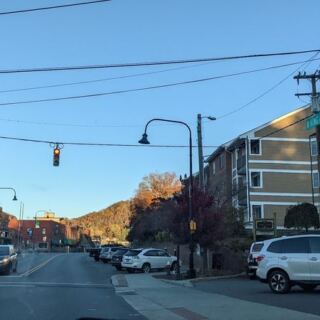
Dead River Falls does not open with postcard charm. The approach is famously odd, beginning near a plain parking area and a steep gravel climb that looks more functional than scenic.
That slightly confusing start is part of the place’s character, because the hike shifts from industrial edge to river wilderness in a surprisingly short span.
Within minutes, the mood changes. Trees close in, the sound of water starts cutting through the woods, and the trail drops toward a series of rocky channels that immediately feel wilder than the entrance suggested.
Instead of a single overlook with one tidy reveal, this hike introduces itself in fragments, with rapids here, a stair descent there, and glimpses of dark stone guiding the eye downstream.
That progression matters on a trail like this. Dead River Falls works best when it unfolds gradually, because the contrast sharpens every view and makes the first true sight of moving water hit harder.
The terrain also signals early that this is not a casual flip-flop outing, which helps set expectations before the route becomes rooty, sloped, and occasionally uneven.
By the time the river fully comes into view, the name starts to feel misleading. Nothing here looks lifeless or still.
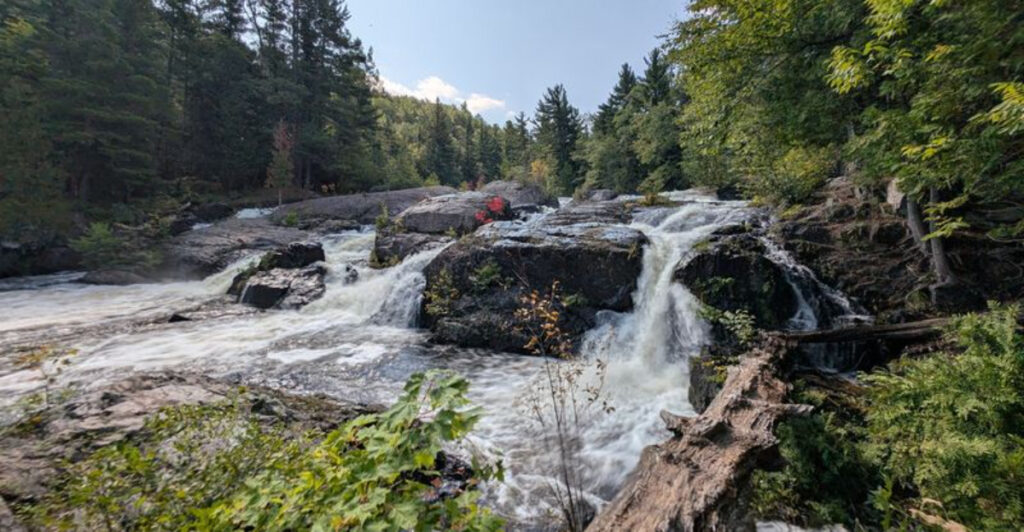
The river churns through rock shelves with force, white water flashes in broken ribbons, and the forested corridor around it feels energetic rather than ominous. That opening sequence, awkward parking lot to rushing river, is one of the reasons this hike sticks in your mind.
It does not hand over the scenery all at once. It makes you earn the transition, and then rewards you with a landscape that looks far more dramatic than the trailhead ever hints.
Why the Waterfall Count Keeps the Hike Interesting
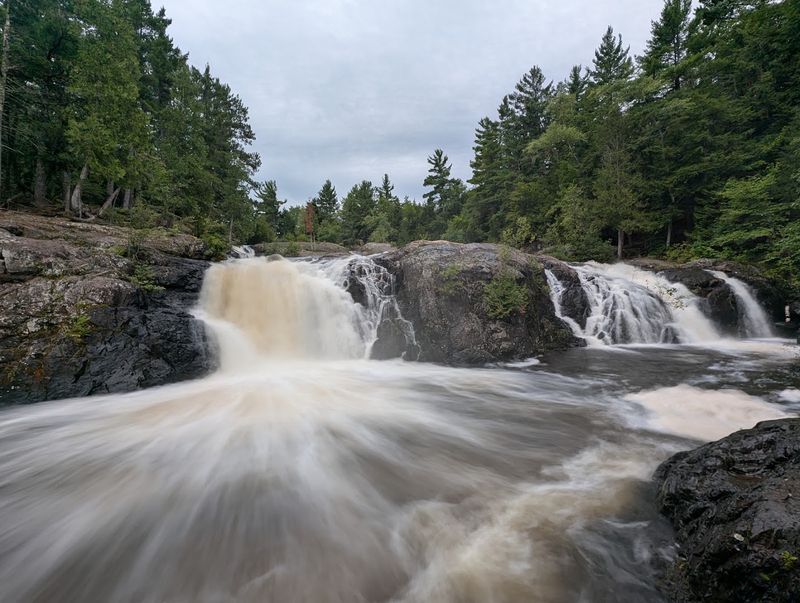
The biggest surprise at Dead River Falls is that it is not really a one-and-done waterfall stop. The river corridor holds multiple cascades and drops, which gives the hike a rolling sense of discovery instead of one dramatic moment followed by a walk back to the car.
That structure keeps the trail engaging because the scenery keeps changing as you move upstream and along the river.
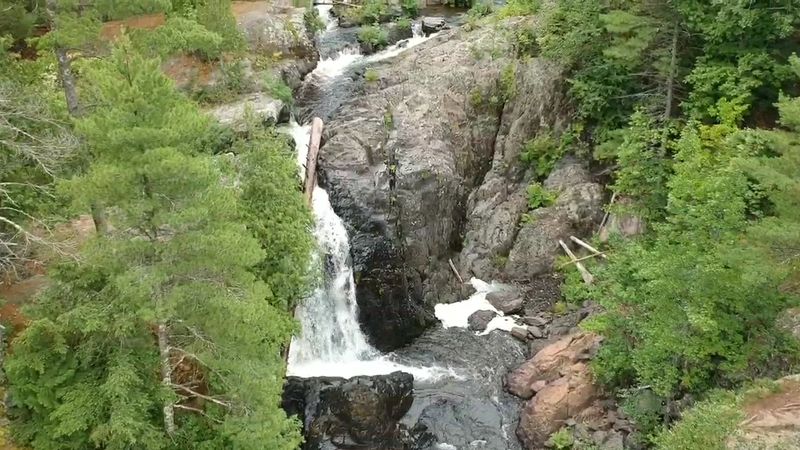
One section may present a broad tumble over angled rock, while another narrows into faster, louder water slipping between stone edges. In lower water, more of the bedrock shows, and the river starts looking sculpted, almost carved into terraces.
When water levels rise, the same features read differently, with more power and less exposed surface, so the landscape can feel fresh even for repeat hikers.
This layered format also changes how people experience the place. Some stop at the first beautiful viewpoint and still leave satisfied, while others keep going in search of the next cascade, the next ledge, or the next dramatic angle over the river.
The trail supports both styles because there is no single correct endpoint for appreciating the scenery.
That flexibility is a big reason the hike has such a strong reputation near Marquette. It rewards short efforts, but it also gives stronger hikers a reason to continue deeper along the social trail system.
Instead of building toward one famous splash-and-selfie moment, Dead River Falls keeps raising the visual stakes in increments. The water appears, disappears, then returns in another form, sometimes wider, sometimes steeper, sometimes framed by roots and trees.
For a relatively compact outing, the variety is impressive, and it turns a simple waterfall hike into a sequence of river scenes that feel active, textured, and constantly in motion.
Roots, Rock, and the Real Personality of the Trail
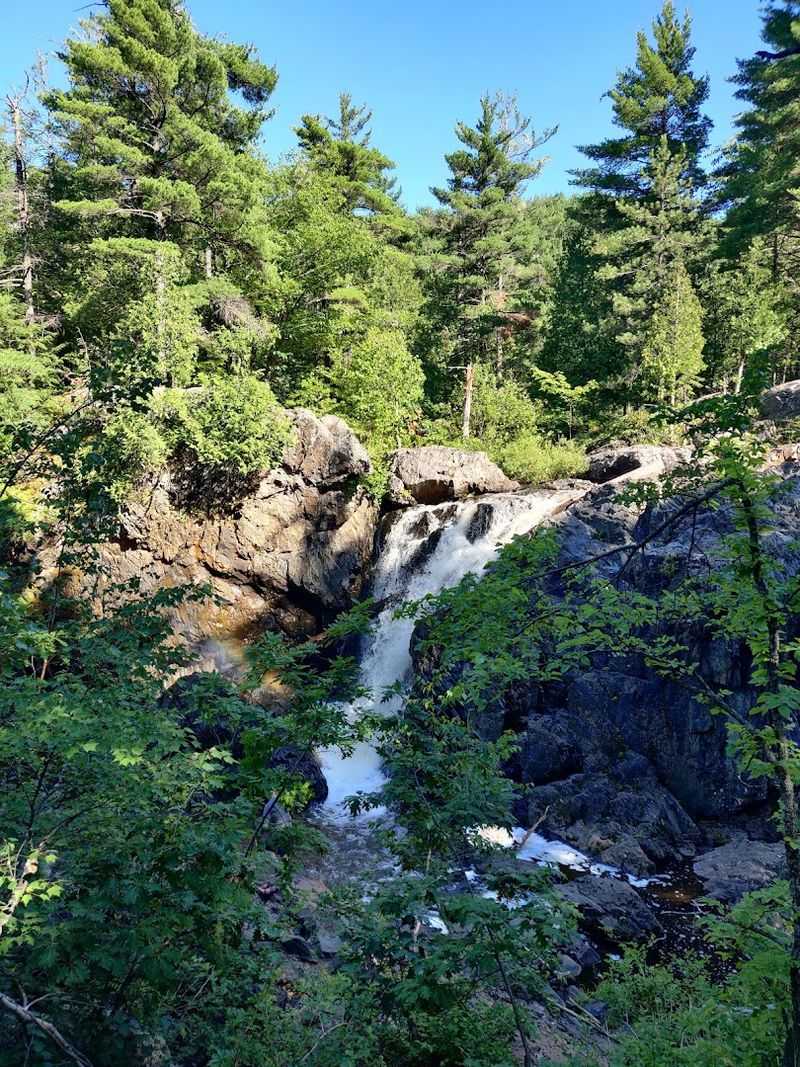
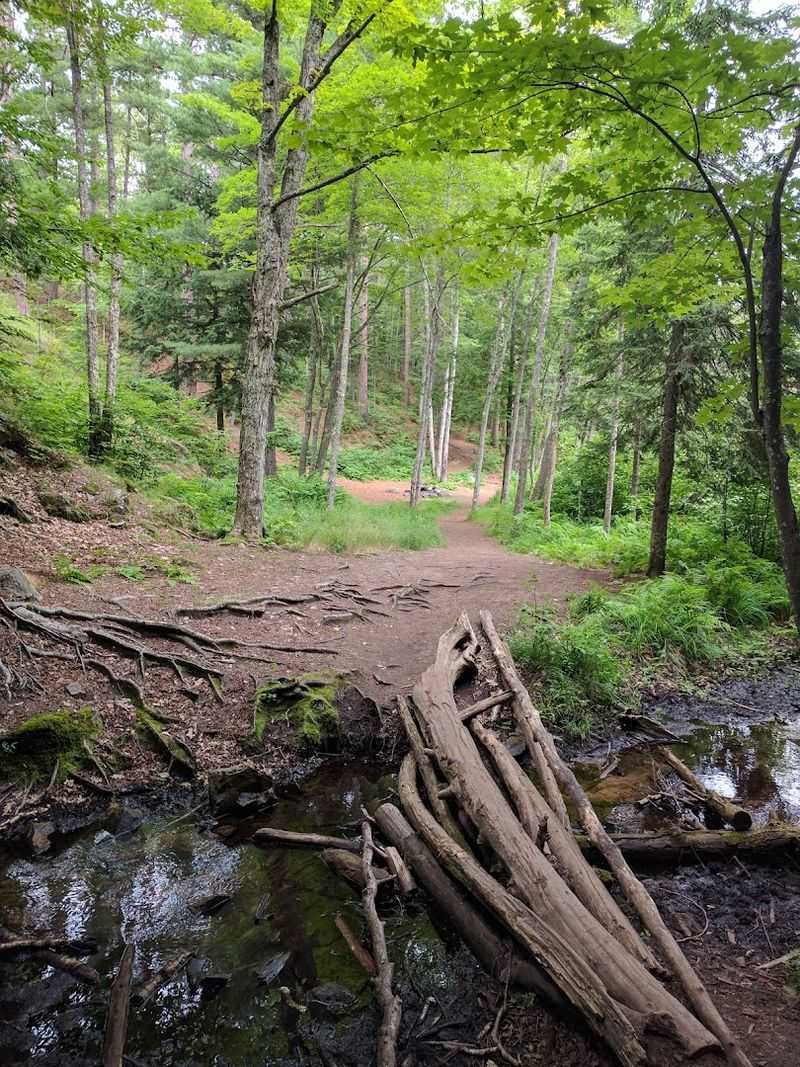
Dead River Falls earns its beauty through terrain that asks for attention. This is a social trail, not a neatly engineered path, and that distinction shows up quickly in exposed roots, elevation changes, uneven dirt, and occasional muddy or eroded stretches.
The route can be fun and manageable for many hikers, but it is much more satisfying when approached as a small adventure instead of a casual stroll.
Roots thread across the trail so often that they become part of the experience rather than an obstacle to complain about. In some places they even help with footing on steeper sections, acting like natural steps where the earth has worn away.
Elsewhere, hikers may encounter narrow crossings, rocky scrambles, or improvised foot placement that demands balance and a slower pace.
That ruggedness gives the place its personality. A polished trail with railings and broad gravel surfaces would make the waterfalls more accessible, but it would also flatten the sense of immersion that defines this hike.
Here, the ground keeps you tuned into the landscape, and every lookout feels a little more earned because the path to it is active and physical.
Good footwear changes everything. Shoes with grip matter more than speed, and this is not the route for slippery sandals or distracted walking while staring at a phone.
The terrain can also affect who should attempt the full hike, since steep sections and technical spots may not suit everyone, especially very young kids or anyone uneasy on uneven ground. Still, for hikers who like trails with texture, Dead River Falls gets the balance right.
It is challenging enough to feel engaging, but not so extreme that the scenery becomes secondary. The roots, the dirt, the occasional scramble, and the river always nearby combine into a trail experience that feels distinctly Upper Peninsula, raw around the edges and better because of it.
A Wild Pocket of Michigan Beside an Unexpected Backdrop
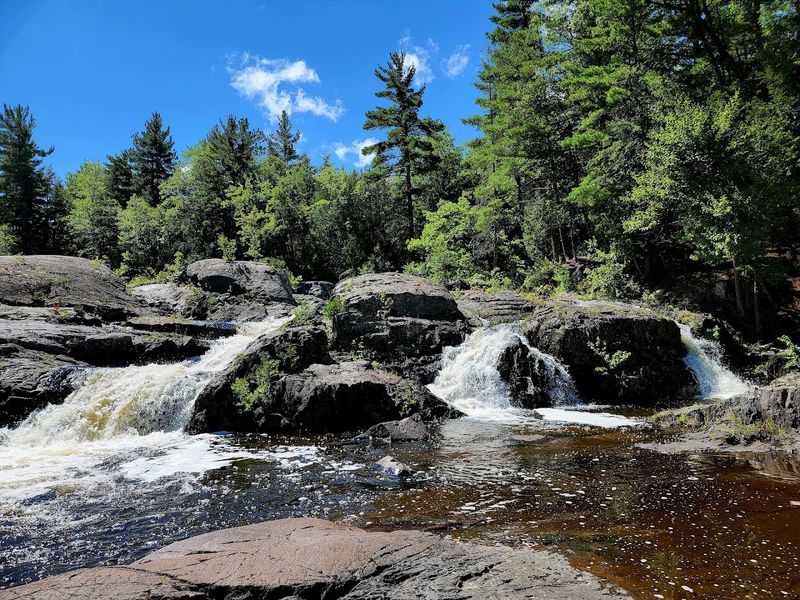
Part of Dead River Falls’ appeal comes from where it sits. This is not deep-backcountry isolation reached after an all-day trek, and it is not a manicured urban park either.
The waterfall exists in a pocket where Marquette Township’s practical landscape brushes up against a surprisingly rugged river corridor, creating a contrast that makes the natural section feel even more striking.
The approach near a utility or access area can throw first-time hikers off, especially if they expect a classic scenic trailhead with interpretive signs and a polished welcome. Then the path bends toward forest and stone, and the setting changes fast.
That transition is a reminder that northern Michigan beauty does not always arrive in a cinematic package. Sometimes it hides beside ordinary infrastructure and waits for the terrain to reveal it.
In a way, that contrast fits the Upper Peninsula well. The region often blends working landscapes, mining history, forest roads, and wild shoreline or river scenery in the same outing.
Dead River Falls reflects that layered identity. It is scenic, but not precious.
It is dramatic, but not detached from the lived-in character of the Marquette area.
The name adds another twist. “Dead River Falls” sounds severe, maybe even forbidding, yet the place itself is full of motion, sound, and summer energy, especially when water levels are strong and people are exploring different ledges along the route. That tension between ominous name and lively landscape gives the hike extra personality.
In Michigan, especially around Lake Superior country, some of the best places are not introduced with polished romance. They reveal themselves through contrast, through rough edges, through the moment when a plain beginning suddenly opens into rushing water and black rock.
Dead River Falls stands out because it captures that shift so clearly, and because the setting feels rooted in the real landscape around Marquette, not separated from it.
Best Timing for the Most Rewarding Walk
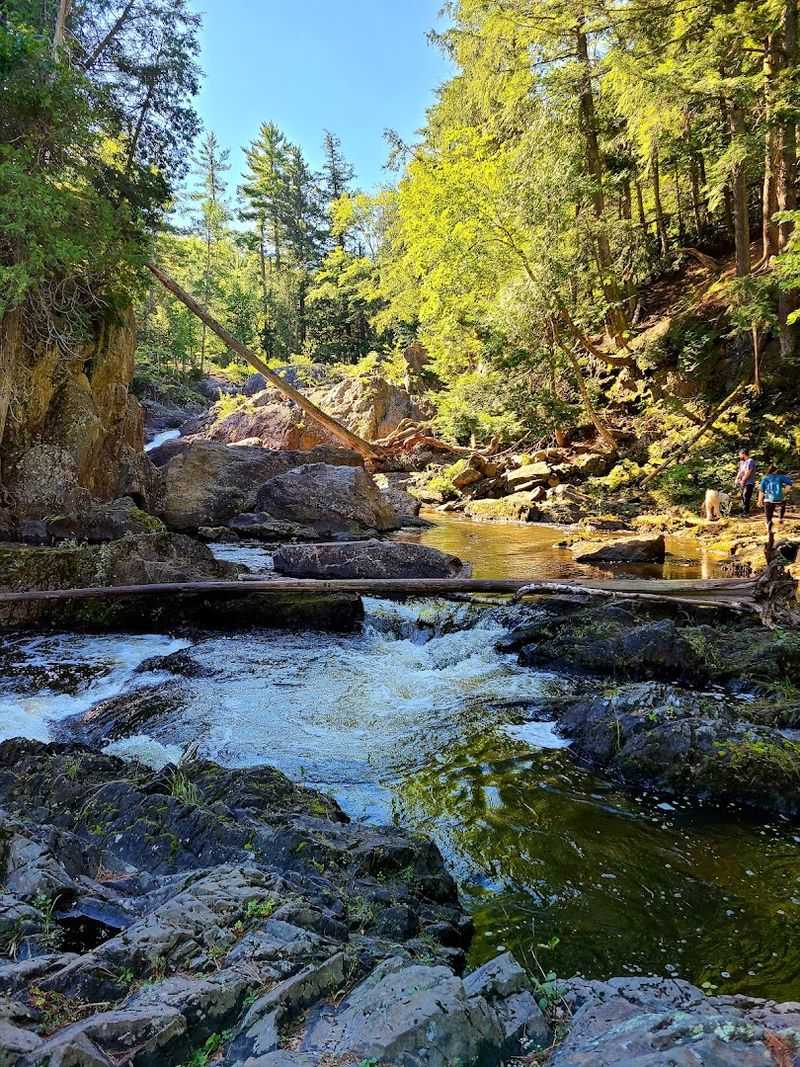
Timing changes this hike more than many first-time visitors expect. Because Dead River Falls follows a river corridor with multiple viewpoints, the experience can shift with water levels, recent weather, and the time of day you arrive.
A bright afternoon may spotlight the rock and forest vividly, while a quieter morning can make the sound of the water feel even bigger.
For hikers who want a calmer pace and more room to pick careful footing, earlier is often better. The trail’s narrower sections and scenic perches are easier to enjoy when there is less stop-and-start traffic, especially on warm weekends.
Earlier light can also flatter the setting by catching mist, highlighting moving water, and keeping the air cooler for the initial climb.
Season matters too. Spring and early summer may bring stronger flow and louder cascades, which can make the river look especially dramatic, though muddier footing is more likely.
Later in the season, exposed rock shelves can become more visible, opening different vantage points and changing how the falls read visually from each overlook.
Even within the same season, the best approach is not to rush. Dead River Falls is more rewarding when treated as a stop-and-look hike rather than a mileage goal.
Pause at the first cascade, keep an eye on where the river bends, and notice how each section reframes the water differently. If conditions are damp, slow down on roots and steeper drops.
If the trail is dry, there is more freedom to explore the full sequence of viewpoints without feeling hurried. In Michigan, a lot of waterfall outings are over almost as soon as they begin.
This one improves when you give it a little time and choose your window carefully. The reward is not only prettier light or better footing, but a fuller sense of how the river builds its drama section by section.
The Practical Truth Before You Lace Up
Dead River Falls is beautiful enough to inspire spontaneous detours, but it is better handled with a little preparation. The hike is free to access and close enough to Marquette to be tempting as a casual add-on, yet the terrain calls for more intention than that.
Sturdy shoes, attention to footing, and a willingness to navigate a less formal trail system all improve the day immediately.
The route is often described as moderately difficult, and that tracks with the realities on the ground. There is a steep climb near the start, followed by dirt paths, roots, elevation changes, and a few spots where balance matters.
Depending on conditions, hikers may encounter muddy sections, streamside rock, or simple crossings that are easy for some and awkward for others.
That does not mean the hike is only for experts. It means this is the kind of place where realistic expectations matter more than bravado.
Families with older kids, confident casual hikers, and regular trail walkers can enjoy it, but this is not the best pick for anyone who needs a smooth, maintained surface or dislikes exposure to rugged terrain. Trekking poles can help, and bug spray is a smart idea in warmer months.
The most useful mindset is to treat the route as flexible. Go as far as conditions, comfort, and energy allow, because several scenic sections appear along the way and there is no rule saying every visitor needs the full experience.
Watch your step near edges, respect changing water conditions, and save the sandals for town. Dead River Falls delivers some of the most exciting waterfall scenery around Marquette precisely because it remains a little rough and a little demanding.
With the right shoes and a patient pace, the practical side fades into the background and the river takes over, loud, cold, and far more beautiful than its name prepares you for.
Share this story