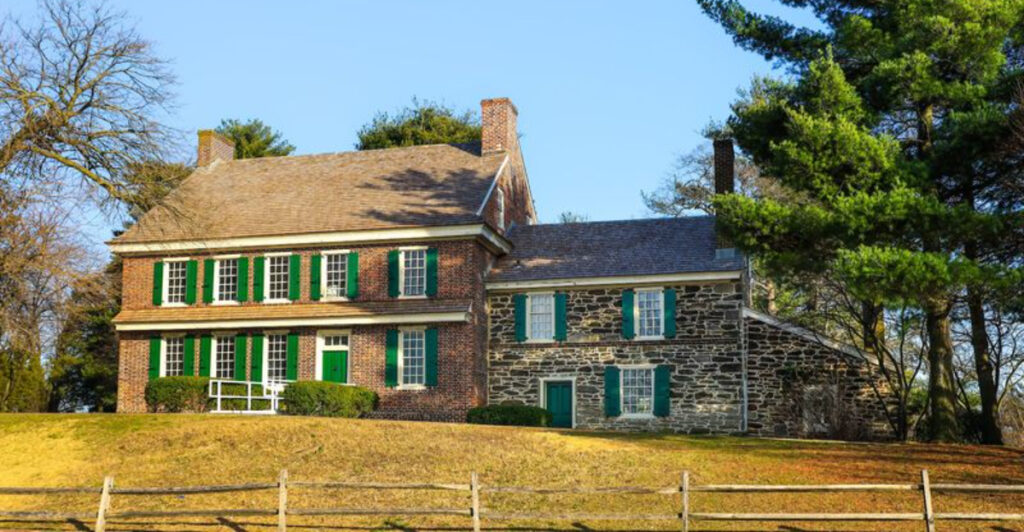
A cannonball came through this house nearly 250 years ago, and the wall still tells on it. Not in a polished, theme-park way, either. The James and Ann Whitall House at Red Bank Battlefield in National Park, New Jersey, keeps its Revolutionary War history uncomfortably close to the surface.
You can stand in a handsome 1748 Georgian home that once anchored a 400-acre plantation on the Delaware River and then notice the part that refuses to behave like distant history: battle damage, preserved in place, and dark stains associated with the wounded men treated here after the Battle of Red Bank on October 22, 1777.
The contrast is what gets you. One minute it is gardens, river breeze, old-house proportions, and Quaker restraint.
The next, you are reminded that Fort Mercer stood just north of the house, Hessian troops attacked in force, and this quiet home became part of one of the Philadelphia campaign’s most dramatic episodes.
The South Jersey house that still wears the Battle of Red Bank
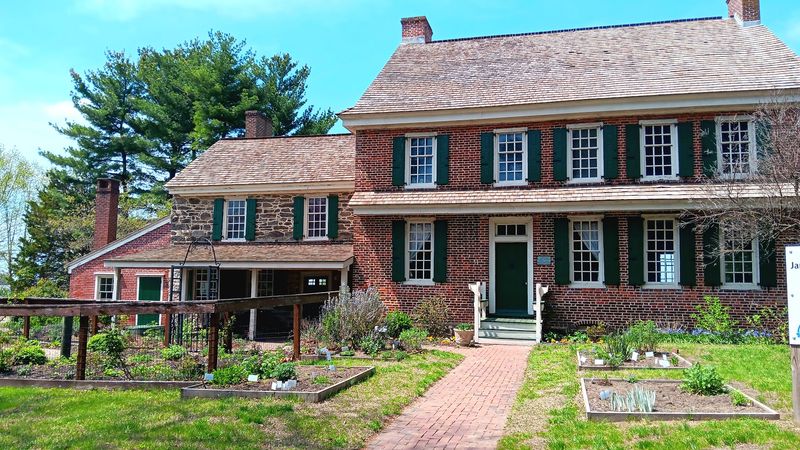
Plenty of historic homes have a good story. This one has receipts.
The Whitall House, built in 1748, sits inside today’s Red Bank Battlefield park on the Delaware waterfront in Gloucester County, and what makes it special is not just that it survived the Revolution. It is that the house still visibly carries that day in 1777 when war arrived at the doorstep.
On October 22, Hessian forces attacked nearby Fort Mercer in what became known as the Battle of Red Bank, and the fighting left marks on the Whitall property that visitors can still connect to a real place, a real date, and a real family who happened to be living there.
That matters because Revolutionary War history can sometimes get flattened into statues, textbook names, and one more plaque beside one more field.
Here, the story is stubbornly physical. Ann and James Whitall were Quakers who had built out a substantial plantation at Red Bank with orchards, a lumberyard, a shad fishery, livestock, and a ferry.
This was not some decorative manor dropped into history after the fact. It was a working place, and then the military geography of the Philadelphia campaign crashed into it when American forces established Fort Mercer immediately north of the house.
The location explains everything. After the British took Philadelphia in 1777, control of the Delaware River became crucial, and Fort Mercer on the New Jersey side, along with Fort Mifflin across the river, helped block British resupply.
That made Red Bank strategically important and very dangerous very quickly. The American defenders under Colonel Christopher Greene held off the Hessian assault, inflicting heavy losses and scoring a badly needed American victory.
The house was close enough to feel the battle in the most literal way possible. Today, the setting can seem deceptively calm.
You show up during regular visiting hours, and then the house quietly reminds you that this landscape once held gunfire, panic, and a line between survival and catastrophe.
Why the scars on the wall matter more than any museum label
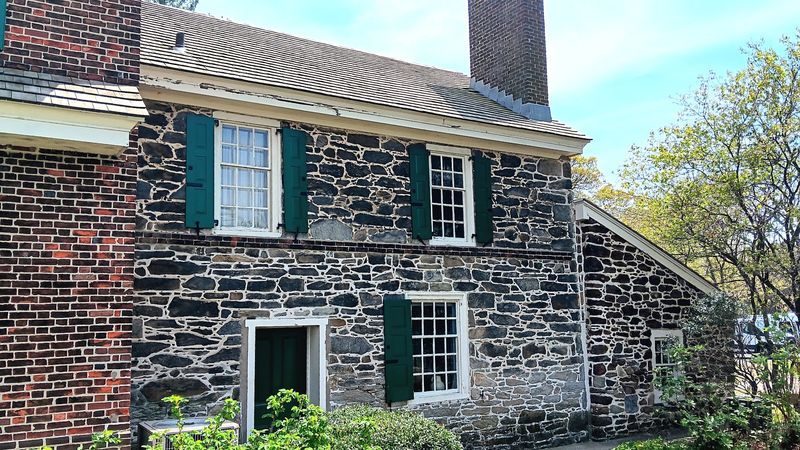
Here is the thing about preserved damage: it short-circuits your ability to keep history at a comfortable distance. A label can tell you a battle happened.
A gouge, a broken surface, or a wall struck by artillery does something different. It takes all those big, abstract Revolutionary War words people half-remember from school and turns them into one blunt fact: somebody’s house got hit.
The Whitall House is often described as a fine example of 18th-century Georgian architecture, and it is easy to see why. The symmetry, the proportions, the river-facing setting, the sense of order all read like the kind of colonial home people expect to encounter on a heritage site.
Then you remember that the house did not merely witness the Battle of Red Bank from a safe remove. It absorbed it.
That is a very different emotional experience from touring a restored room where everything has been tidied back into a generalized colonial-life blur. The scars also make the Whitalls themselves easier to understand.
James and Ann were not military celebrities angling for a place in the history books. They were Quakers, people whose religious commitments leaned toward peace, and yet their property was pulled into one of the war’s most consequential regional clashes.
The visible damage keeps that tension alive. This was not a family staging patriot theater from the front porch.
This was a household caught where military necessity, geography, and conscience collided. And that is why the wall matters more than any polished interpretive panel ever could.
Once you have seen an old house that still shows where the war touched it, the Revolution stops looking like a pageant of uniforms and starts reading as disruption. Suddenly the house is not just historic.
It is interrupted. That is a much stronger word, and in this case, the most honest one.
The day Ann Whitall stayed put while war closed in
Imagine being told to leave because soldiers are coming and deciding, very calmly, that you are not going anywhere. That is the Ann Whitall detail people remember for good reason.
In 1777, as danger gathered along the Delaware and local residents were urged to flee, Ann Whitall refused to leave her home. Even after a cannonball hit the house, she reportedly kept working and moved her spinning wheel into the basement.
It is one of those details that sounds almost too neat for legend, except it has survived because it captures the stubborn, human scale of the place. That refusal lands differently once you remember who she was.
Ann Whitall was not a fictional colonial dame invented to spice up a tour script. She was a real South Jersey Quaker woman whose family’s home and livelihood stood on a large plantation at Red Bank.
The Whitalls raised nine children there, and the property was a working enterprise with crops, animals, river access, and trade. Staying put was not just an act of personal stubbornness.
It was also a decision made by someone rooted in a specific place, with a household and a world attached to it. There is also a moral tension tucked into the story that makes it more interesting than standard patriotic folklore.
The American victory at Red Bank is rightly celebrated in Revolutionary history, but the Whitalls themselves reportedly never forgave the American forces for the destruction done to their property. That detail keeps the story from becoming too tidy.
Heroism, in this house, is not simple flag-waving. Ann is remembered as the Heroine of Red Bank for caring for the wounded and dying, yet the family also lived with the consequences of military decisions made on their land.
So when people talk about Ann Whitall staying put, it is worth hearing the full note, not just the dramatic one. Yes, it is a remarkable act of resolve.
It is also a glimpse into what war asks of civilians who never volunteered for the battlefield but end up living in its shadow anyway. In this house, courage looks less like triumph and more like endurance.
What those haunting floor stains still say about 1777
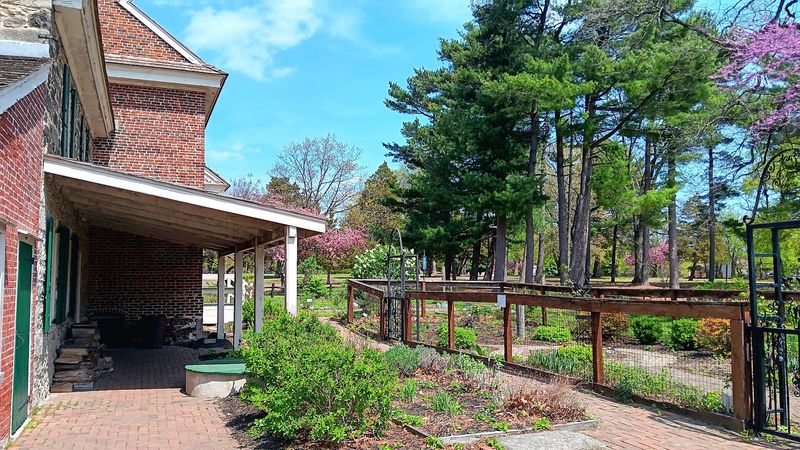
Not every piece of evidence needs a speech. Some of it just sits there and dares you to over-explain it.
The so-called hospital stains associated with the Whitall House are part of the site’s enduring reputation because they force a visitor into the least glamorous truth about war: after the gunfire, bodies still had to be carried somewhere. During and after the Battle of Red Bank, the Whitall home served as a field hospital.
That context gives the stains their power. Whether a visitor first encounters them as physical marks, oral history, or part of the guided interpretation, the meaning is the same.
This was not only a place of attack. It was a place of aftermath.
It is also worth pausing on the word hospital, because people tend to hear it with modern ears. In 1777, a field hospital inside a private home did not mean bright lighting, sterile instruments, and a tidy nurses’ station.
It meant urgency, limited supplies, blood, pain, noise, and rooms suddenly repurposed for triage. The Whitall House was drawn into that reality because it was close, substantial, and standing.
A domestic interior became a medical one in the roughest possible way. That is why the stains unsettle people more than the cannonball story does.
Damage to a wall feels dramatic and cinematic. Stains on a floor feel intimate.
They suggest time spent suffering inside the house, not just violence striking it from outside. They pull the story away from battlefield maneuver and into the slower, uglier human cost that follows combat.
For all the talk of tactics and victories, this is the detail that most efficiently ruins any temptation to romanticize the era. And yet they also do something else.
They preserve a trace of care. A house used as a hospital is still a house that sheltered the wounded, however imperfectly.
So the stains say two things at once. War came here. And somebody tried to tend to what war had done.
How a quiet Quaker home became a battlefield hospital
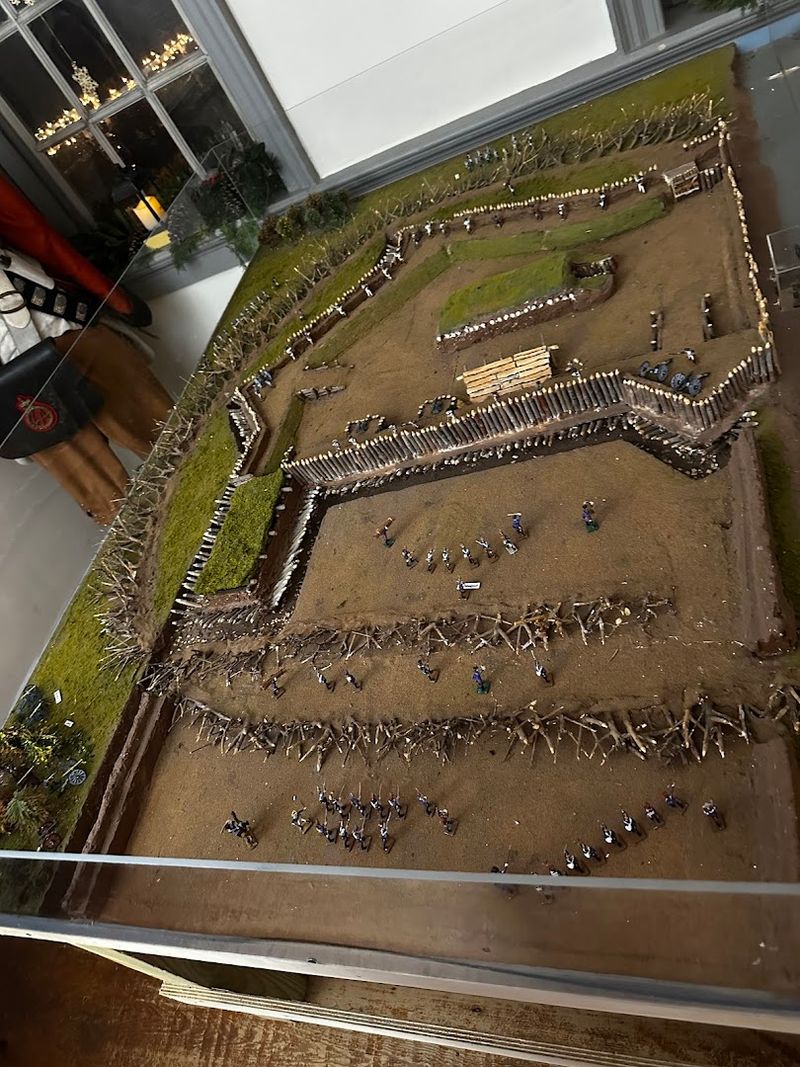
Before soldiers, trenches, and artillery entered the picture, Red Bank was a working waterfront plantation run by Ann and James Whitall. The property had orchards, a lumberyard, a shad fishery, livestock, and a ferry, all of which tells you this was no isolated farmhouse.
It was economically active, well situated on the Delaware, and deeply tied to the rhythms of trade and labor. Then the Philadelphia campaign made that strategic location impossible to ignore.
Once American forces built Fort Mercer immediately north of the house, the Whitall property became part of the military map whether the family liked it or not. The battle itself helps explain why the house was pressed into service.
On October 22, 1777, Hessian troops under Colonel Carl von Donop attacked Fort Mercer and were repulsed by the American defenders under Colonel Christopher Greene. It was a violent clash, and a fight that bloody, that close to the house, was always going to create an immediate need for space to treat the wounded.
The Whitall home became that space. There is a particularly New Jersey quality to this whole episode that gets overlooked.
The state’s Revolutionary sites are often talked about as if they were all battle monuments first and lived places second. Red Bank flips that order.
The battlefield and the house are inseparable. You are not visiting a fort and then, incidentally, an old home nearby.
You are seeing how military history folded itself into daily life on one South Jersey property. That is a more revealing story than battlefield statistics alone.
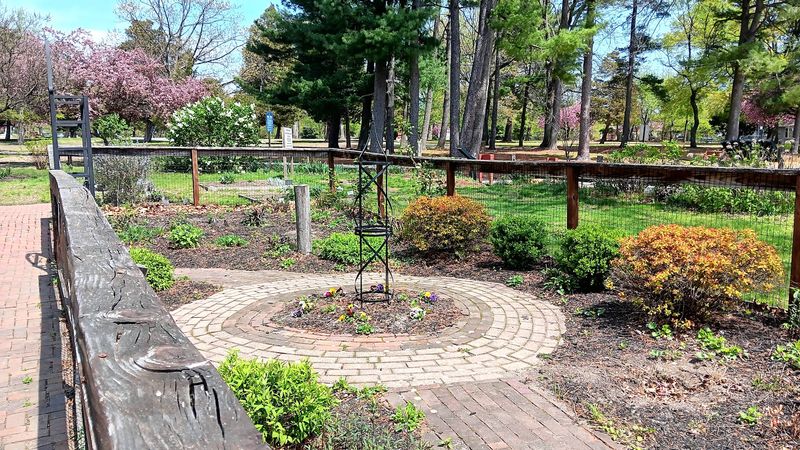
The present-day site still preserves that overlap. The park includes the remains of Fort Mercer, Revolutionary monuments, historic gardens, and the house itself, where interpretation also reaches beyond generals and maneuvers to include labor, class, and the people whose daily lives made the plantation function.
In other words, the house is no longer presented as a neat stage set for one heroic moment. It is treated more accurately as a place where war, work, and conscience all met under one roof.
Why this Revolutionary War landmark still feels so immediate
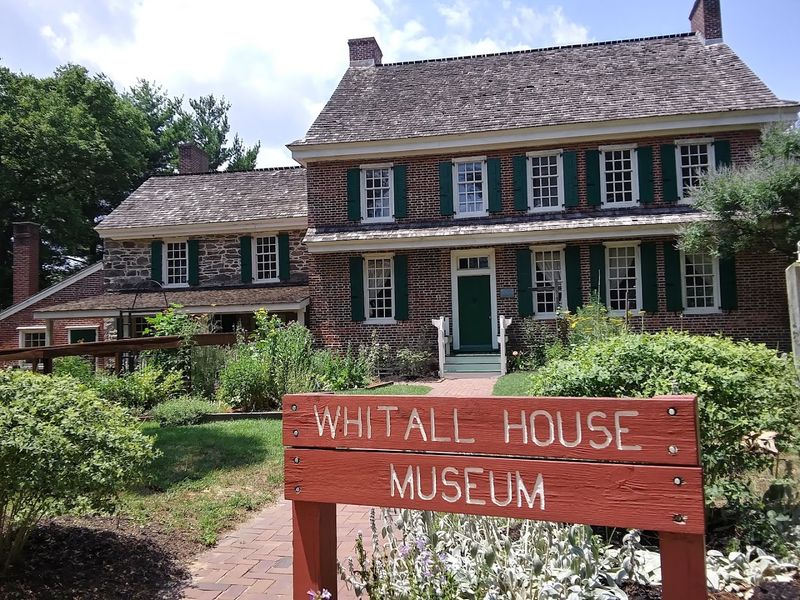
One reason is practical. This is not some once-a-year curiosity you have to catch during a special reenactment weekend.
Red Bank Battlefield is a public park, and the Whitall House is still the kind of place you can visit without ceremony and then spend the rest of the day thinking about. That ordinary accessibility grounds the site in present-day New Jersey life.
You can fit it into an afternoon, and then suddenly you are standing inside a house where the year 1777 does not feel remotely decorative. Another reason is that the place resists the usual heritage-site smoothing.
The Whitall House is not compelling because everything has been cleaned up into a flattering colonial postcard. It is compelling because the interpretation keeps the messiness intact.
The Americans won at Red Bank, yes. The Hessians suffered heavy losses, yes.
But the Whitalls reportedly never forgave the American forces for the damage done to their property. Ann Whitall is remembered for ministering to the wounded, yet the family’s Quaker identity complicates any simple martial celebration.
That complexity is exactly what makes the landmark feel alive rather than embalmed. There is also the matter of scale.
So much Revolutionary War history comes packaged as grand national destiny. Red Bank works on a human scale instead.
A house. A wall. A basement. A floor. A family who lived there. A battle fought close enough that the interior of the home became part of the event.
Once history shrinks down to those dimensions, it gets harder to treat it like background scenery. That is why this landmark still lands with unusual force.
The Whitall House does not ask you to imagine the Revolution as a distant tableau. It shows you where it tore through ordinary rooms and then lingered there.
Even now, the damage does not read like a relic. It reads like interruption that never fully left.
Share this story