On most beach vacations, you pick your water and commit. You spread your towel by the Atlantic, or you chase sunset on the bay side, and that’s your day.
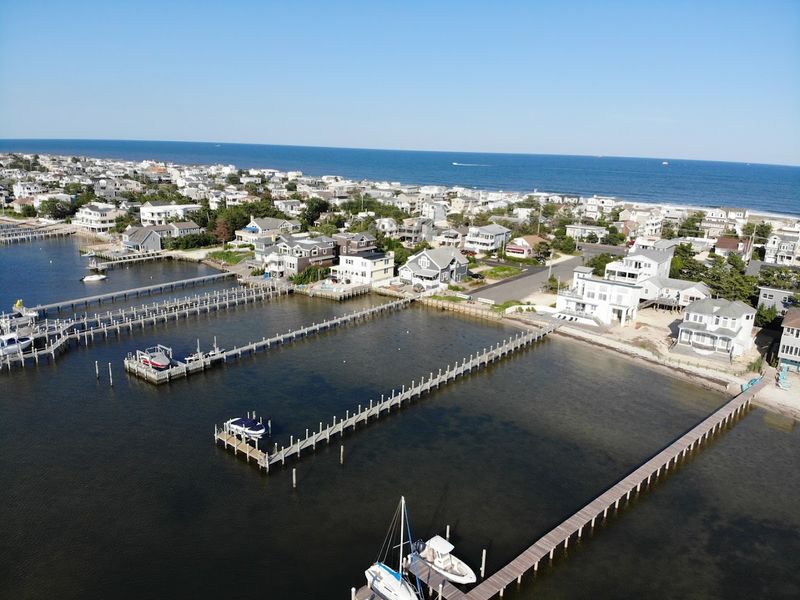
Harvey Cedars does not operate like that. Here, you can hear the ocean in one direction, spot Barnegat Bay in the other, and walk between them in less time than it takes to finish an iced coffee.
That little trick works because Harvey Cedars sits on an especially narrow stretch of Long Beach Island, a borough that takes up just 0.56 square miles of land and has been its own municipality since 1894.
The result is a shore town that feels unusually easy, unusually human-scaled, and just a little smug about how well it all works.
You can spend the morning in real surf, cross a few quiet blocks lined with beach houses and hydrangeas, and be on calmer water before your flip-flops have stopped squeaking.
Why Harvey Cedars Feels Different From Other Jersey Shore Towns
A lot of Jersey Shore towns are fun in a loud, everybody-has-a-plan kind of way. Harvey Cedars is different because it never seems to be trying that hard.
The borough is tiny, the scale stays low, and even in summer it feels more like a place people have figured out how to enjoy than a place built to impress outsiders. That starts with geography, but it turns into atmosphere fast.
You are on Long Beach Island, yet the pace here is noticeably calmer than the busier stretches to the south. The town’s summer calendar tells the story pretty well: beach yoga at 80th Street, SUP yoga at the Sunset Park boat launch, concerts in the park, an arts festival, kids’ nights, tennis camp, soccer camp.
Even the schedule reads like a town that prefers good routines to chaos. There is also an old-school continuity here that gives Harvey Cedars more texture than a postcard-pretty beach town usually gets.
The borough’s local history traces the name back to early lore about a figure called Harvey and notes that the area drew whalers and salt-hay harvesters centuries before anybody thought about weekend rentals and beach badges.
The Harvey Cedars Bible Conference, which has occupied the former Harvey Cedars Hotel site since 1941, adds another layer to the town’s long memory.
None of that history makes the place feel stuffy. It just explains why Harvey Cedars feels settled rather than manufactured.
Then there is the simple fact that this is a borough with a year-round population under 400, which helps explain why the place still feels personal even when summer fills in around it. You are not dealing with a town trying to become the next big thing.
You are dealing with one that already knows exactly what it is. That confidence shows up everywhere, from the uncluttered residential streets to the way locals talk about Sunset Park like it is both public space and shared backyard.
Harvey Cedars does not pull you in with spectacle. It wins by making everything feel close, manageable, and quietly worth returning to.
The Five Minute Walk That Takes You From Surf To Still Water
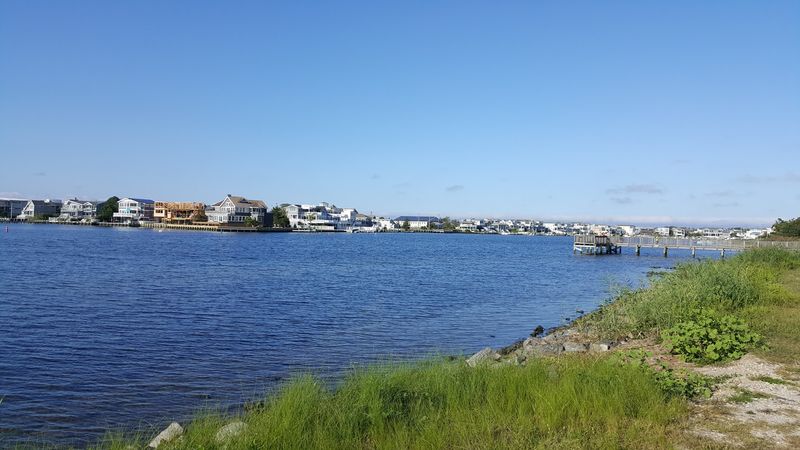
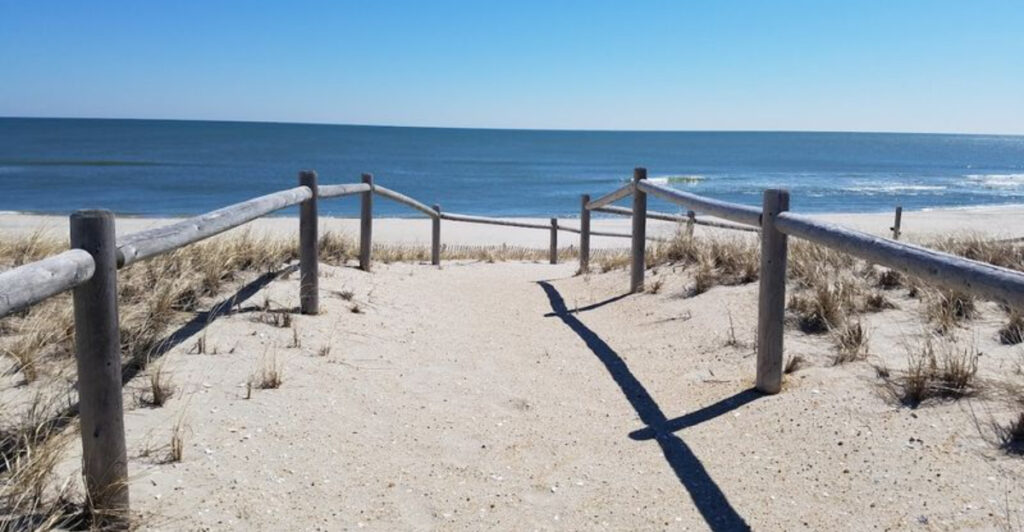
Try this once and you will understand the entire appeal of Harvey Cedars without anybody having to explain it. Start on the ocean side around 80th Street, where the Atlantic still behaves like the Atlantic should, with enough movement to wake you up properly.
Then head west. You pass a handful of tidy houses, some bikes leaning against railings, a couple of gardens trying their best in salty air, and then suddenly the whole mood changes.
The wind softens. The water flattens out.
You are looking at Barnegat Bay. That short crossing is not just a fun fact for visitors to repeat over dinner.
It shapes how a day works here. In Harvey Cedars, you do not need to choose between wave time and paddle time, or between a breezy ocean morning and a bay sunset later on.
The town’s own programming practically builds around that dual-water setup, with beach yoga at 80th Street and SUP yoga at the Sunset Park boat launch. The local marina leans into the same idea, offering kayaks, paddleboards, sailboats, wing foils, and e-foils.
In a bigger shore town, changing your mind halfway through the day usually means moving the car, fighting for another parking spot, and losing momentum. Here it just means turning around and walking a few blocks.
The ocean side keeps enough structure to be easy. Harvey Cedars Beach Patrol lists guarded beaches in season at 86th, 83rd, 80th, 76th, 73rd, 69th, Middlesex, Atlantic, Hudson, Cape May, and the 54th Street Boulevard easement, with Hudson Avenue also designated as a surfing beach.
If you are visiting in peak season, beach badges are required for anyone age 12 and older. Practical detail, yes, but in Harvey Cedars the practical stuff is part of why the town feels so easy to use.
What Makes This Narrow Stretch of Long Beach Island So Special
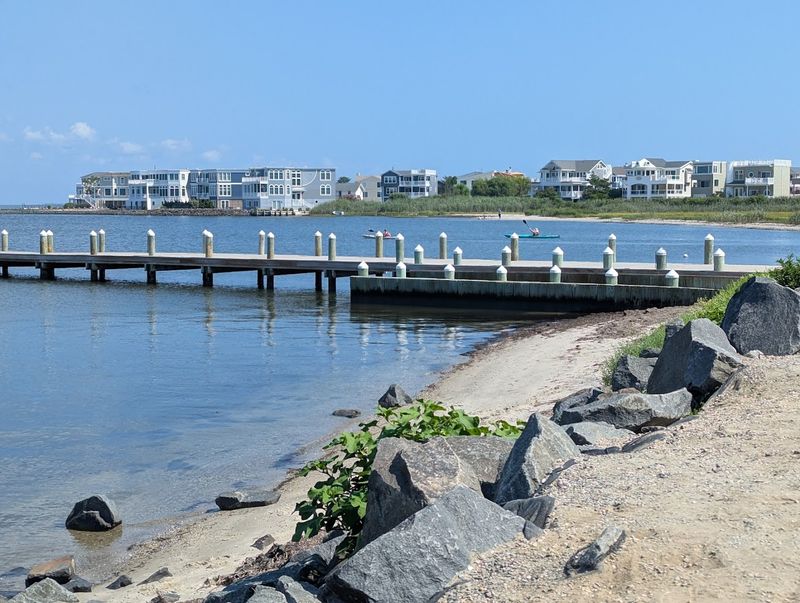
Here is the thing that gives Harvey Cedars its edge: compression. Everything good about a shore day has been pulled closer together.
The Atlantic is on one side. Barnegat Bay is on the other.
Sunset Park sits on West Salem Avenue as a kind of town commons with concerts, craft fairs, an arts festival, sports programs, and the boat launch that turns the bay from scenery into actual afternoon plans.
Because the town is so compact, that whole setup feels less like a spread-out resort map and more like a neighborhood where the water keeps interrupting.
The bay side matters just as much as the beach here, and Harvey Cedars treats it that way. Sunset Park is not some overlooked backside bonus.
It is where summer events happen, where locals come for concerts, and where visitors can watch the light soften over the water without needing a reservation or a strategy. This is not a place where the bay is decorative.
It is active, useful, and woven into the daily rhythm. You also feel that narrow-strip logic in the businesses that have lasted here.
Neptune Market has been in Harvey Cedars since 1946 and still sells the kind of essentials that make a shore day run smoothly, from deli food to seafood to grab-and-go basics.
Birdy’s, on Long Beach Boulevard, has carved out a more modern version of the same community role, pairing craft coffee, pastries, and brunch-friendly food with a distinctly local ethos built around nearby makers, Jersey seafood, and Long Beach Island artists.
Neither place feels parachuted in. They feel like businesses that make sense in a town where life is lived partly outdoors and often between one shoreline and the other.
How to Spend a Full Day Between the Ocean and the Bay
The smart move is to start early, before the sun has fully committed to being bossy. Grab coffee and breakfast at Birdy’s Cafe and Artisan Market on Long Beach Boulevard.
The place has leaned hard into local sourcing from the start, and it works for Harvey Cedars because the menu feels a little more thoughtful than standard beach-town fuel without becoming precious about it.
This is a very good town for a proper breakfast sandwich, a pastry you did not technically need, and one more coffee than you planned on.
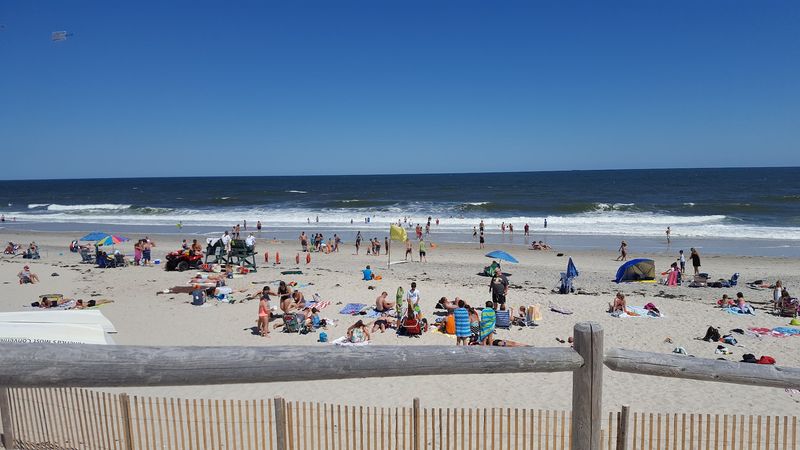
From there, head to the ocean side around 80th Street or one of the other guarded beaches and give the Atlantic your morning. By late morning, do the walk.
Cross town slowly, let the pace reset, and land on the bay side at Sunset Park. If you are feeling energetic, Harvey Cedars Marina is the obvious next stop.
The marina rents kayaks, paddleboards, and sailboats, which is exactly the kind of inventory you want in a place where calm bay water is sitting right there asking to be used. If you are not feeling athletic, no problem.
Harvey Cedars also supports the kind of deeply respectable summer activity known as sitting near the bay and doing almost nothing with total commitment. Lunch can go two ways.
Keep it simple with Neptune Market, which has been feeding locals and visitors since 1946 and is one of those places that earns its role as a reliable shore staple.
Or stay a little longer and angle toward dinner at Black Eyed Susans on Long Beach Boulevard, where the menu leans into seafood and pasta rather than fried-boardwalk autopilot. End the day back on the bay side for sunset. Harvey Cedars really saves its quietest magic for then.
The Quiet Charm That Keeps Harvey Cedars From Feeling Overcrowded
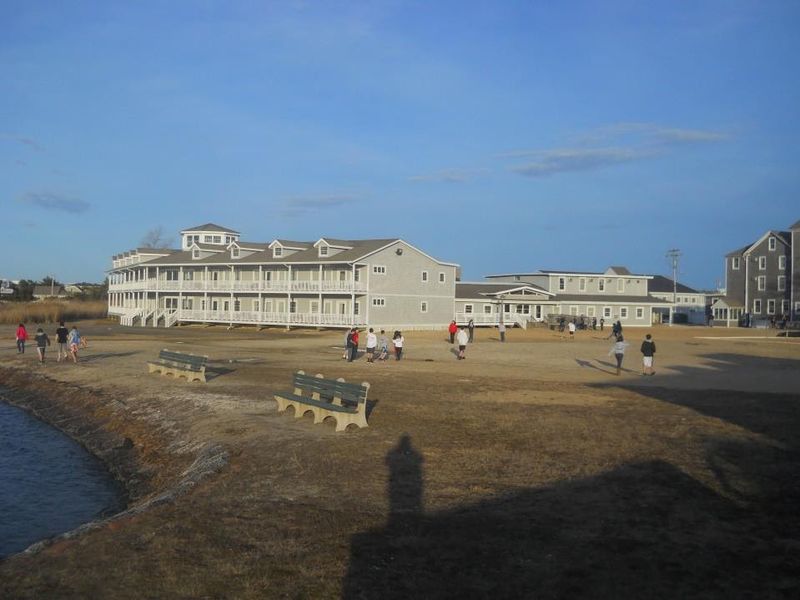
The easiest way to explain Harvey Cedars is to say that it knows how to leave space between things. Space between houses.
Space between plans. Space between one part of the day and the next.
Even the popular areas feel breathable. Sunset Park hosts concerts, craft days, sports camps, and the annual arts festival, but because it is a true public gathering spot instead of a cramped afterthought, the activity spreads out in a pleasant way.
The same goes for the beach side. Yes, Harvey Cedars is part of Long Beach Island, and yes, summer gets busy, but the town’s scale and layout prevent it from tipping into that shoulder-to-shoulder feeling people claim they love and then spend all day complaining about.
The town also helps itself by staying more residential than commercial. You are not walking a strip built wall-to-wall for impulse spending.
You are moving through a place where markets, cafes, and restaurants exist because people actually use them, not because somebody needed to fill every available storefront. That makes a difference.
Neptune Market still reads like a neighborhood institution, not a nostalgia prop. Birdy’s feels contemporary, but not generic.
Even the recurring food setup for summer concerts in Sunset Park, where local names rotate through, feels refreshingly local rather than outsourced. Then there is the practical side of calm.
Harvey Cedars offers beach wheelchairs and accessible beach access at key points, details that matter because they signal a town trying to be usable, not just attractive. A place feels less hectic when it has thought about how people actually move through it.
Harvey Cedars is good at that. The whole borough seems built around the idea that shore time should involve less friction, fewer logistics, and more moments where you look up and realize the water is closer than you remembered.
Why Harvey Cedars Leaves Such a Lasting Impression
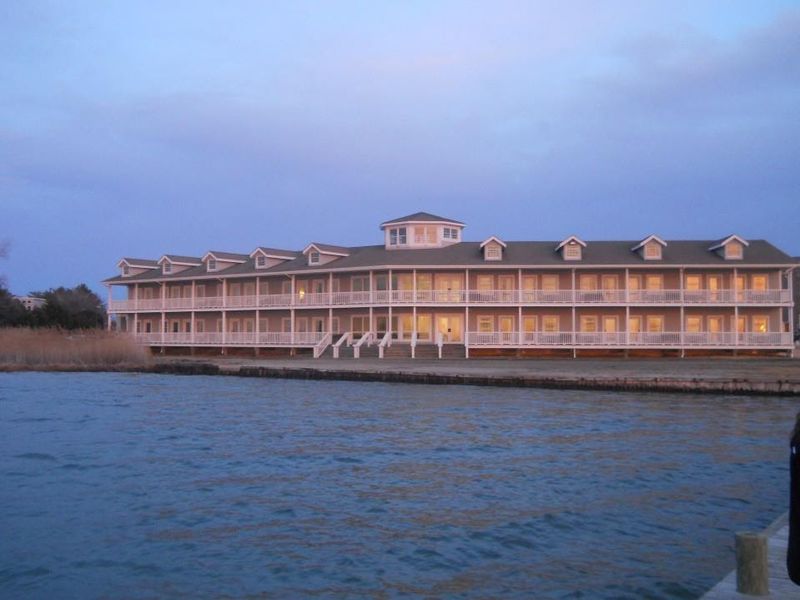
Some shore towns give you a highlight reel. Harvey Cedars gives you a rhythm.
That is why it lingers. You remember the mechanics of it first: ocean in the morning, bay in the afternoon, sunset without having to relocate your entire life to catch it.
You remember that the town is small enough to be legible almost immediately, but not so sparse that it feels sleepy in a bad way. You remember how easy it was to buy a beach badge, find a guarded stretch of sand, drift over to Sunset Park, and somehow end the day feeling like you had done a lot without ever rushing.
And then the smaller details start sticking. Birdy’s feels like the kind of place where one coffee turns into breakfast and breakfast turns into plans.
Neptune Market being open year-round since 1946 tells you something else, namely that Harvey Cedars is not just a summer-stage set that gets packed away after Labor Day. The beach yoga at 80th Street and the paddleboarding on the bay side are tiny examples, but they capture the whole spirit of the place.
Harvey Cedars is not trying to separate beach life from bay life, or locals from visitors, or activity from idling around. It blends them.
That blend is what raises Harvey Cedars above being merely pretty. Plenty of New Jersey shore towns are pretty.
Fewer are this coherent. Fewer let you cross from real surf to still, reflective bay water in a matter of blocks and somehow make that feel normal by day two.
Once you have spent time here, the usual shore-town tradeoffs start to feel slightly annoying. Why should sunset require a drive?
Why should paddleboarding feel like a separate excursion? Why should a beach day involve so much staging and schlepping?
Harvey Cedars spoils you a little. Not with flash, but with ease.
And that turns out to be the harder thing to forget.
Share this story