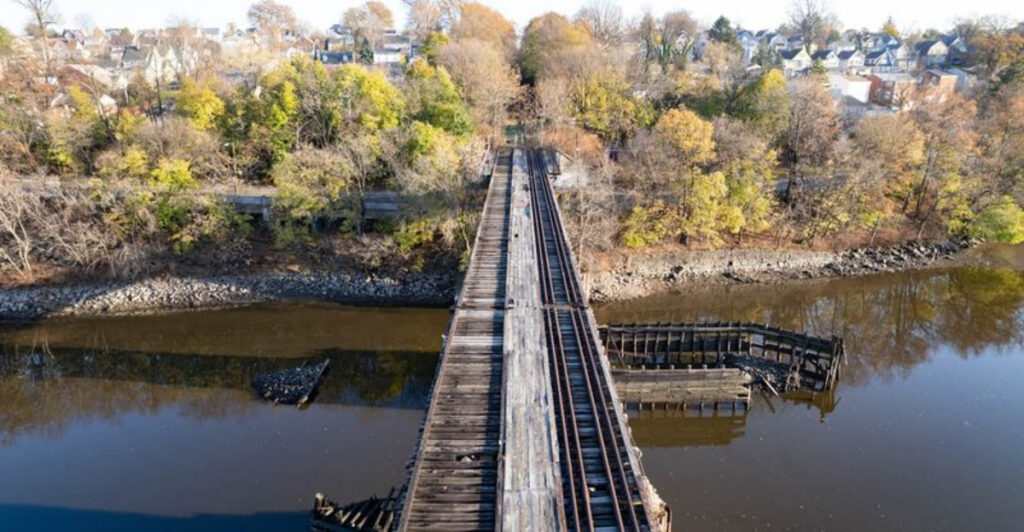
A 13-by-31-foot room in Kearny once had more authority than most train stations ever get. Hidden inside the eastbound depot at West Arlington Station, a small interlocking tower helped decide when trains could roll, when switches could move, and when the WR Draw could swing open over the Passaic River.
That is a lot of responsibility for a station most people today would drive past without realizing anything unusual ever happened there.
The stop sat near North Midland Avenue and Passaic Avenue, along the old New York and Greenwood Lake route, where commuters once moved between Hudson County, Newark, Jersey City, and communities farther west.
Then the passenger trains stopped. The depot lingered.
The tower’s job faded into railroad memory. And in 1983, the abandoned building burned down, leaving behind one of those very New Jersey stories where transportation history, industrial grit, and local mystery all meet beside the tracks.
The Forgotten Kearny Station With a Job Most Passengers Never Saw
West Arlington Station was never trying to be grand. It was not Hoboken Terminal with its soaring waiting room, and it was not Newark Penn with crowds pouring through at all hours.
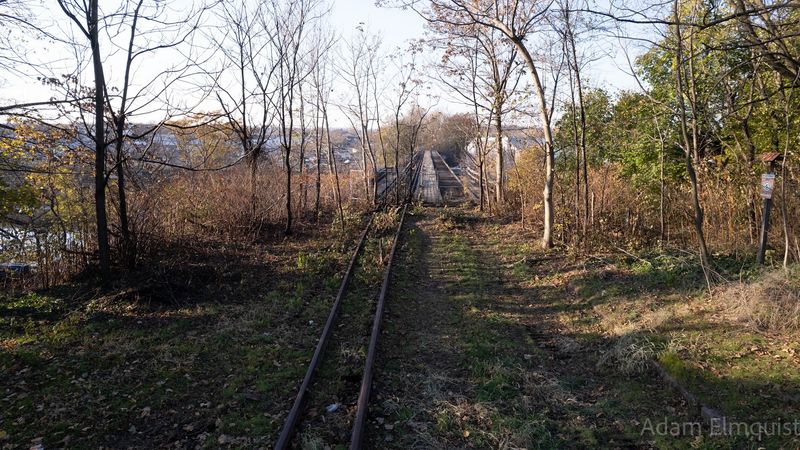
This was a smaller, workaday Hudson County stop, perched near Passaic Avenue in Kearny’s Arlington area, where trains on the Erie Railroad’s New York and Greenwood Lake line once gave local riders a practical way in and out.
Kearny had more than one station on that route, including Arlington and West Arlington, and the names alone can make the history feel like a local trivia trap.
West Arlington originally opened in 1873, when railroads were still turning northern New Jersey’s towns, mills, and river crossings into a tighter commuter map. In its earliest years, the station was associated with the Kearny name, and older references sometimes used slightly different spellings before West Arlington became the name people remember.
The station itself was modest: two tracks, two low-level side platforms, and depot buildings that served passengers in the plain, functional way small railroad stops usually did. But the eastbound depot had a second life that most casual riders would not have seen.
Built into it was an interlocking tower, and that changed everything. While commuters were thinking about getting to work, getting home, or making the next connection, operators inside were handling signals, switches, and the movements tied to a nearby swing bridge.
That is what makes West Arlington more than just another vanished station. It was not only a place where people waited for trains.
It was a control point, a working piece of railroad infrastructure with a serious job hiding behind an ordinary station face.
How West Arlington Station Became Tied to the Passaic River
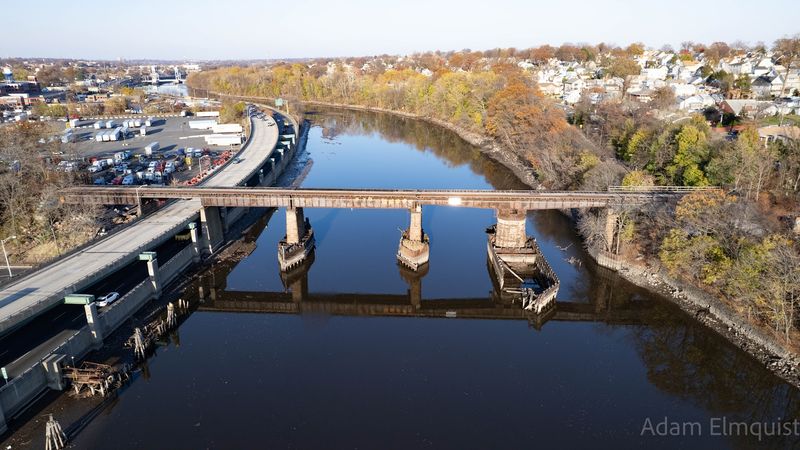
The Passaic River is the reason this little station’s story gets interesting. In this part of North Jersey, the river is not just scenery drifting past old industrial towns.
It is a working barrier, a boundary, and for more than a century, a transportation problem that engineers had to keep solving. West Arlington sat close to the river in Kearny, with Newark just across the water, and any railroad line moving through this area had to deal with the same basic question: how do you get trains across without blocking boats below?
The answer was the WR Draw, also known as the West Arlington Drawbridge, a swing bridge built to carry the rail line over the Passaic. A fixed bridge would have been simpler, but the lower Passaic was a navigable industrial waterway, and river traffic still mattered.
Barges, workboats, and other vessels needed a way through, so the bridge had to move. That meant West Arlington Station was connected to more than the timetable.
It was connected to the rhythm of the river. The platforms sat near the bridge approach, and the eastbound depot housed the tower equipment that helped coordinate bridge and rail movements.
It is easy to miss how complicated that was. A train could not simply barrel forward while a bridge was open.
A bridge could not swing whenever it pleased if a train was lined up to cross. Signals, switches, bridge locks, and operator judgment all had to work together.
In a place like Kearny, where roads, rail lines, rivers, and industrial land all press tightly against one another, that coordination was not a luxury. It was the whole game.
West Arlington’s ordinary-looking station building became part of that choreography, quietly linking commuter rail and river navigation in one compact, practical space.
The Swing Bridge That Made This Stop So Unusual
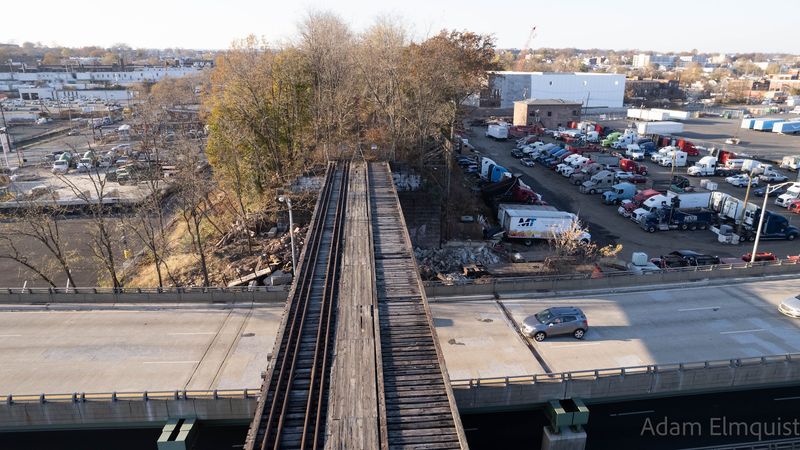
Most train stations have a fairly predictable purpose: passengers arrive, trains stop, people get on, people get off, and somebody complains that the schedule used to be better. West Arlington had that familiar commuter rhythm, but it also had a moving bridge in its backyard, which puts it in a much stranger category.
The WR Draw was a swing bridge, meaning its span rotated horizontally to open a channel for boats rather than lifting upward like the drawbridges many people picture at the Shore. Think of it less like a door rising and more like a massive steel turntable pivoting over the river.
That design was useful on the Passaic, but it required careful coordination with the railroad. Trains are not forgiving machines.
A bridge has to be locked, aligned, and signaled properly before anything crosses it, and the people operating the system had to make sure no conflicting movement was possible. That is where West Arlington’s tower mattered.
The station was tied directly into the bridge’s operation, making it part passenger stop, part railroad nerve center. This was not a romantic little depot where the hardest decision was whether to repaint the trim.
It helped manage the safe movement of trains over a movable river crossing. The surrounding landscape made the whole setup even more North Jersey.
Nearby were Passaic Avenue, the river, industrial property, and later highway infrastructure that only added to the layered feeling of the place. The bridge did its job for generations, long after passenger service at West Arlington disappeared.
Today, the WR Draw no longer swings open for river traffic, and its working days are behind it. Still, the structure remains a reminder that this was once a place where a small station, a wide river, and a heavy piece of movable steel all depended on one another.
Inside the Tower That Controlled the WR Draw
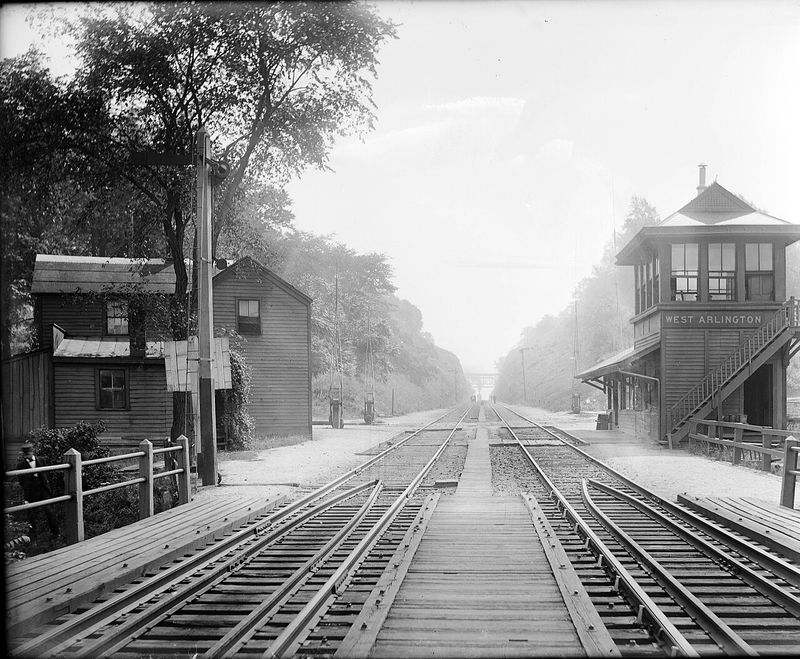
The most fascinating part of West Arlington was not the platform. It was the tower room tucked into the eastbound depot, where railroad work happened in a way that was physical, precise, and very unlike the screen-based systems people imagine today.
The interlocking equipment installed there used 16 levers, the kind of hardware that gave operators a direct, hands-on relationship with switches, signals, and bridge movements. These were not decorative antiques when they were in service.
They were working controls, and each one mattered. An interlocking system is designed to prevent dangerous conflicts, so if one route is set, another movement that could cause trouble is blocked.
In plain English, it is the railroad’s way of saying, “No, you may not accidentally send a train where the bridge or another train already has business.”
The tower at West Arlington helped control the WR Draw, but its responsibilities also reached beyond the immediate bridge. It was part of a wider operating network tied to nearby rail junctions and branches, including movements connected with areas such as Forest Hill and Great Notch.
That made the little room feel bigger than its measurements. Inside, an operator had to understand the territory, the timing, and the consequences of each action.
Picture a commuter train due in the morning rush, a switch needing to be lined, a river movement waiting, and signals that must tell the truth every single time. There was no room for guesswork.
Old railroad towers can look charming in hindsight, but they were serious workplaces. West Arlington’s tower was a place of routine tension, where safety depended on procedure and attention.
That is why the station’s story sticks. The building may have looked modest from the outside, but inside, it held the controls for a bridge, a rail line, and a small slice of North Jersey’s transportation order.
Why Passenger Service Finally Disappeared in 1966
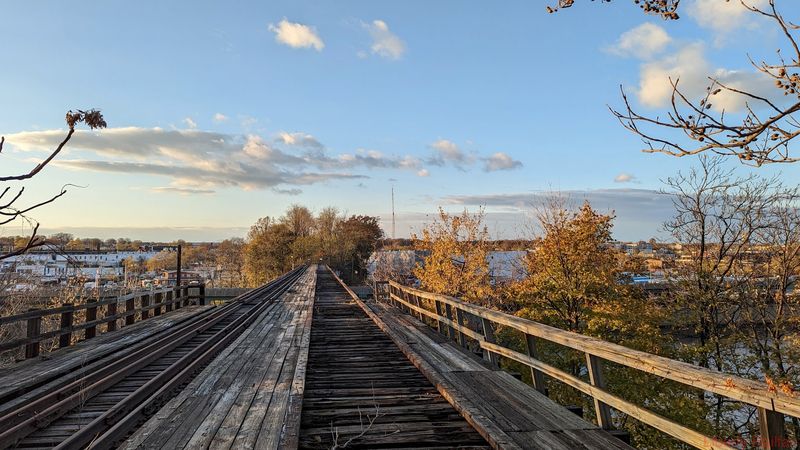
By the 1960s, West Arlington was running out of passenger life. That did not happen overnight.
Small railroad stations across New Jersey had been losing ground for years as cars, highways, shifting job patterns, and railroad financial problems changed how people moved.
A stop that made sense in the late 1800s could look painfully vulnerable by the mid-20th century, especially if ridership thinned and the railroad had to justify every train, every crew, and every maintained structure.
West Arlington’s final passenger service ended on September 30, 1966, under the Erie-Lackawanna Railroad, and by then the station was far from its earlier usefulness. In its last stretch, service had been reduced to only a few weekday trains, the kind of bare-bones schedule that tells you a station is surviving more than thriving.
The westbound side no longer had much in the way of passenger comfort, and the eastbound depot’s importance was increasingly tied to railroad operations rather than crowds of riders. Once the trains stopped serving passengers there, the station lost the public routine that keeps a place visible.
No more morning regulars. No more evening commuters stepping down with newspapers, briefcases, or grocery bags.
No more reason for most people to know the building’s purpose. The bridge and railroad corridor still had work left to do, but West Arlington Station as a passenger stop had slipped into the past.
That is often how these places disappear first: not with a wrecking ball, but with a timetable change. One day the train no longer stops, and the community slowly learns to look elsewhere.
The structure may remain for years afterward, but its role becomes harder to explain. West Arlington became one of those landmarks locals might point to with a half-memory: the old station by the bridge, the one that used to control something important.
What the 1983 Fire Left Behind
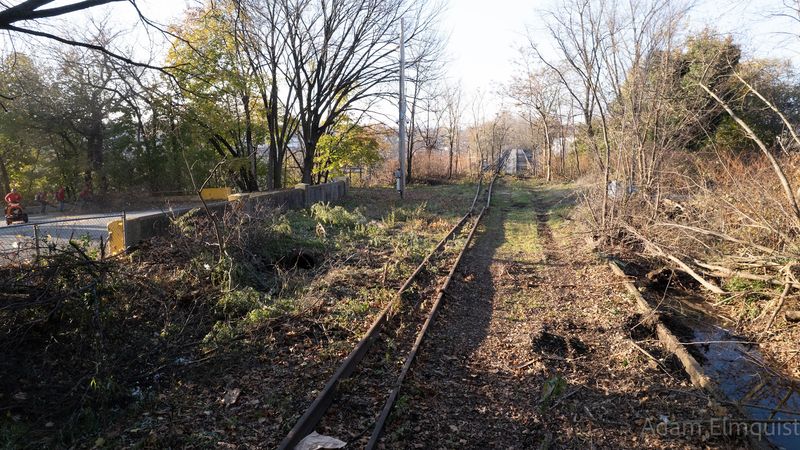
Abandoned railroad buildings have a way of surviving just long enough to make people assume they will always be there. West Arlington’s eastbound depot did exactly that after passenger service ended.
For 17 years, it lingered beside the old line, no longer welcoming riders but still carrying the memory of the station and the tower that had once controlled the WR Draw. Then, in 1983, the building burned down.
The fire erased the most recognizable piece of the site, taking with it the depot, the tower room, and the physical heart of the story. What remained was not nothing, but it was less complete.
The bridge, the rail alignment, and traces of the old corridor could still suggest what had been there, but the building that made West Arlington so unusual was gone. That kind of loss feels especially frustrating because the station did not disappear in a grand redevelopment or an intentional act of preservation gone wrong.
It simply sat unused until fire finished the work that abandonment had started. The WR Draw, however, kept the story from vanishing entirely.
Even after the station building was gone, the bridge remained over the Passaic, a steel reminder of the days when trains, signals, switches, and river traffic all had to be coordinated from that modest Kearny stop. Later changes to rail service eventually left the bridge without its old role, and it no longer moves the way it once did.
Still, its presence gives the area a stubborn kind of memory. You can lose the depot and still feel the shape of the place.
You can lose the tower and still understand why it mattered. West Arlington Station is gone, but the bridge and the river still hold the outline of its strange, practical, very New Jersey life.
Share this story