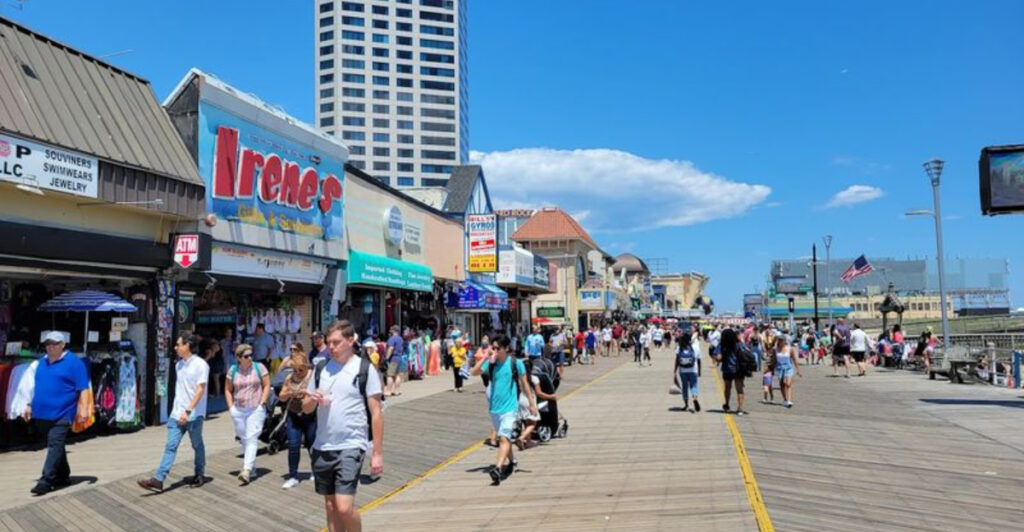
The Atlantic City Boardwalk began with one deeply unglamorous problem: sand. Not romance, not nostalgia, not some grand seaside vision painted in gold. Sand in train cars. Sand in hotel lobbies.
Sand in the polished places where Victorian vacationers expected to look respectable after stepping off the beach. Out of that nuisance came an eight-foot-wide wooden walkway in 1870, proposed by railroad conductor Alexander Boardman and hotel owner Jacob Keim, and it changed the Jersey Shore forever.
Today, the Boardwalk runs about 5.5 miles along Atlantic City and into neighboring Ventnor, carrying casinos, candy shops, arcades, tram cars, ocean views, and more than 150 years of shore memories underfoot.
It is loud in spots, quiet in others, a little weathered, completely recognizable, and still one of New Jersey’s great public stages.
How a Simple Sand Problem Created America’s First Boardwalk
Atlantic City did not invent the beach vacation, but it absolutely helped invent the way Americans move through one. Before the Boardwalk, visitors arrived by rail, crossed the sand, wandered between hotels and bathing areas, and dragged half the shoreline back with them.
The stuff got into railroad cars, hotel carpets, shoes, skirts, and probably more than a few fancy summer tempers. City history credits Alexander Boardman, a conductor on the Atlantic City-Camden Railroad, and hotel owner Jacob Keim with proposing a wooden footwalk to solve the problem in 1870.
The first version was only eight feet wide, but it cost a serious chunk of money for the young resort town and immediately gave Atlantic City something no other American seaside town had. That first Boardwalk was not meant to be the carnival spine we know now.
It was practical, seasonal, and modest. Early versions were taken up during the winter, partly because storms could be brutal and partly because nobody yet understood that this simple path would become the city’s signature.
But once people had a clean, easy way to stroll beside the ocean, the idea stuck. That is the funny thing about the Atlantic City Boardwalk.
Its origin story is not glamorous, which makes it better. It was not built because someone wanted an icon.
It was built because sand was annoying. Then the hotels, shops, piers, food stands, rolling chairs, and crowds followed.
What started as a housekeeping fix became America’s first boardwalk and one of the most copied seaside ideas in the country. Every shore town with a raised wooden walkway owes at least a little nod to Atlantic City.
Why Atlantic City Became the Jersey Shore’s Original Playground
By the late 1800s, Atlantic City had something other beach towns envied: access. The railroad made the trip from Philadelphia manageable, and that mattered.
A shore town can have beautiful surf and fresh air, but if people cannot get there without a heroic effort, it stays a local secret. Atlantic City did not stay secret for long.
Trains brought city crowds to the coast, and the Boardwalk gave them a place to parade once they arrived. There was also a health angle, which sounds quaint now but was a major selling point then.
Sea air was treated almost like medicine. Visitors came to breathe, bathe, rest, and be seen doing all three in proper resort fashion.
Atlantic City sold the idea that the ocean could fix what city life had worn down. Conveniently, it also offered enough entertainment to keep the supposedly restful trip from becoming boring.
The Boardwalk turned that mix into theater. You could stroll past grand hotels, look at the Atlantic, buy sweets, hear music, and watch strangers from three counties over pretending not to watch you back.
That people-watching tradition is still alive. It just wears flip-flops now.
Atlantic City became the Jersey Shore’s original playground because it understood that a beach day is rarely just about the beach. People want movement.
They want snacks. They want something to do after the sunburn sets in.
The Boardwalk gave visitors a route, a rhythm, and a reason to linger. Long before casino towers changed the skyline, Atlantic City had already figured out the basic shore formula: ocean on one side, spectacle on the other, and everybody walking straight through the middle.
What Makes the 5.5 Mile Walk Feel Bigger Than a Tourist Strip
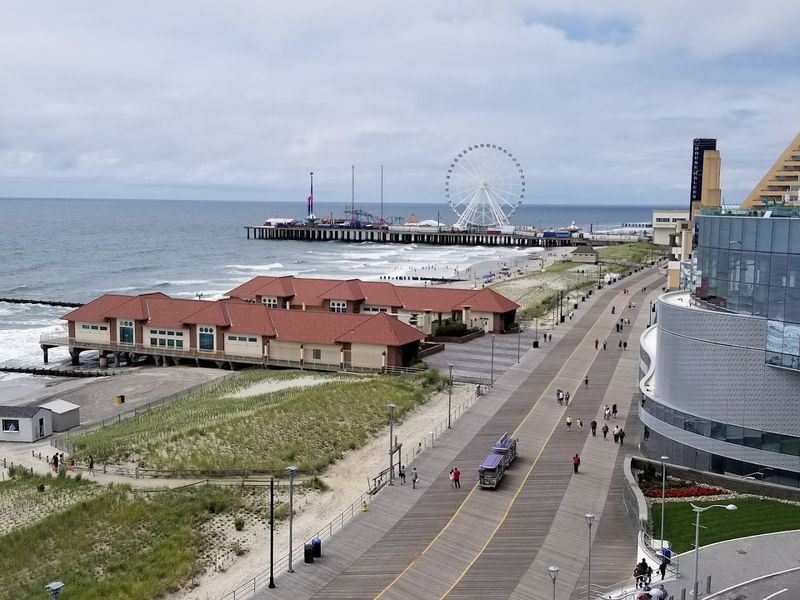
Start near the northern end by Ocean Casino Resort and the mood is wide-open Atlantic City: big sky, beach grass, casino glass, and the Steel Pier stretching out over the water. Keep moving and the Boardwalk keeps changing.
The tram cars roll by with their familiar warning, bikes appear during permitted morning hours, and somewhere nearby someone is almost certainly carrying fries, pizza, or a cardboard box of fudge. The route is long enough that walking the whole thing feels less like checking off an attraction and more like crossing through several versions of the city.
The Boardwalk runs about four miles in Atlantic City, then continues into Ventnor for a total of roughly 5.5 miles. That distance matters.
A short boardwalk can be charming, but Atlantic City’s has room to stretch out, fray at the edges, and surprise you. You can pass casino entrances, old-school souvenir shops, beach bars, Boardwalk Hall, quiet benches, loud arcades, and stretches where the ocean suddenly takes over the whole mood.
One very Atlantic City detail is the transportation. The electric Boardwalk trams run between Ocean Casino Resort and Tropicana, with stops near places like Steel Pier and Boardwalk Hall.
They are useful if you underestimate the distance, which plenty of people do. Five and a half miles sounds breezy until the sun, salt air, and one too many slices catch up with you.
What keeps the walk from feeling like a simple tourist strip is the mix. Atlantic City is not polished into one neat personality.
It is historic, commercial, strange, resilient, flashy, worn-in, and beautiful in flashes. The Boardwalk lets all of that sit side by side without asking it to match.
From Salt Water Taffy to Steel Pier Traditions That Still Define the Boardwalk
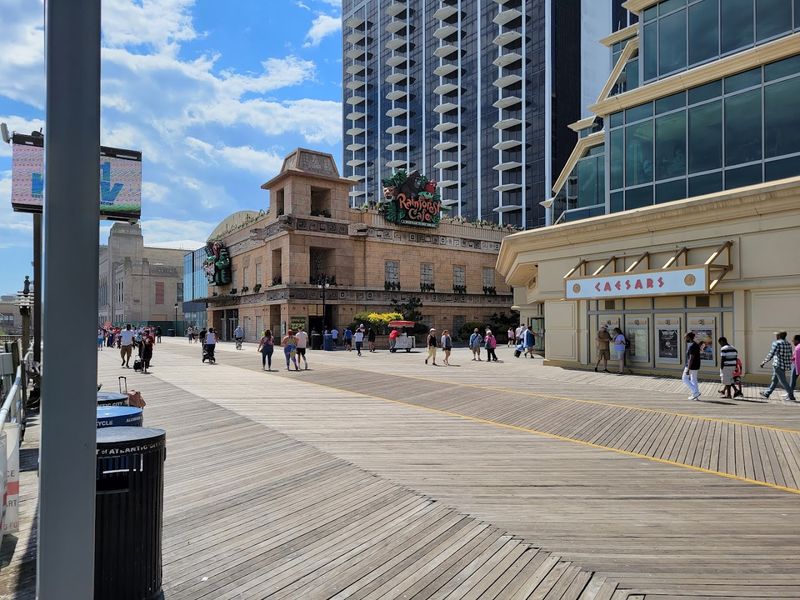
The Atlantic City Boardwalk has always understood the power of a snack with a story. Salt water taffy is the obvious example, and no, locals do not need anyone to explain that it is not actually made from ocean water.
One famous version of the name is tied to candy seller David Bradley, whose shop was supposedly flooded by seawater before he jokingly referred to his candy as “salt water taffy.”
Whether every detail of that tale is neat enough for a history textbook hardly matters on the Boardwalk. The story fits the place: a little messy, a little funny, and too good not to repeat.
That kind of lore is exactly why Boardwalk food hits differently here. A box of taffy is not just candy.
It is a souvenir that fits in a glove compartment and survives the ride home. Add in fudge, funnel cake, pizza slices, lemonade, frozen custard, and fries eaten straight from the container, and the Boardwalk becomes a walking menu of shore habits people refuse to outgrow.
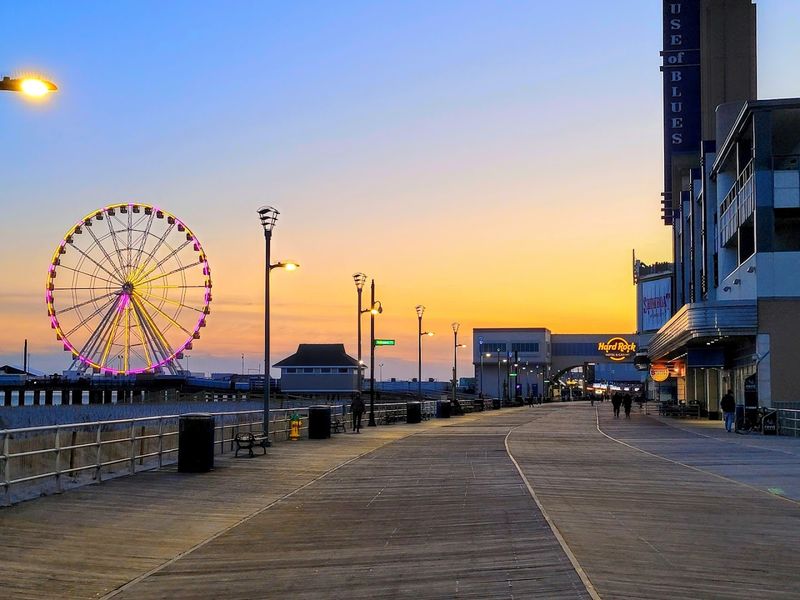
Then there is Steel Pier, which gives the Boardwalk its classic amusement-park silhouette. The pier opened in the late 1890s and eventually became one of the country’s famous entertainment piers, hosting concerts, exhibits, stunts, rides, and all sorts of only-in-Atlantic-City spectacle.
Today, the modern Steel Pier still brings that over-the-water thrill with rides, games, and the kind of ocean view that makes even adults pretend they are only getting on the Ferris wheel for the kids. The best Boardwalk traditions are not frozen in time.
They keep adapting. Taffy shops sell to new generations.
Steel Pier glows differently than it did a century ago. The details change, but the basic pleasure is stubbornly familiar: walk, eat, look around, repeat.
How Casinos Changed the Skyline Without Erasing the Past
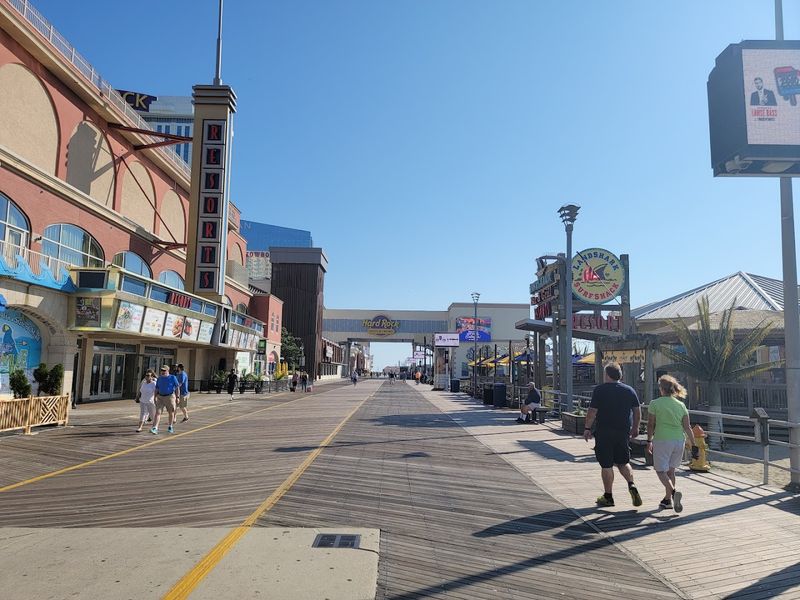
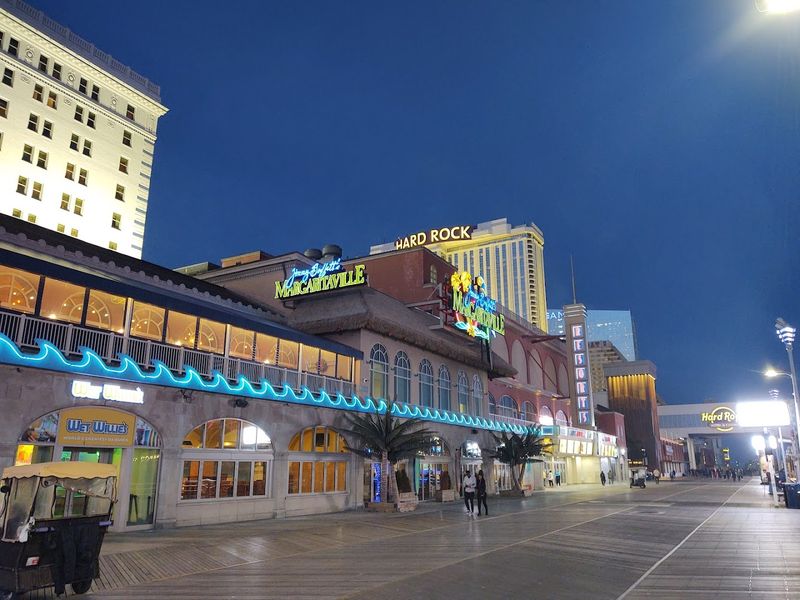
Casinos arrived like a thunderclap. When Resorts International opened in 1978, it became Atlantic City’s first casino and marked the beginning of a new era for the resort town.
The Boardwalk suddenly had a different kind of neighbor. Instead of only hotels, shops, piers, and theaters, huge gaming resorts began reshaping the skyline with towers, neon, parking garages, restaurants, and round-the-clock energy.
It would be easy to say casinos swallowed the old Atlantic City whole, but that is not quite right. They changed the city, absolutely.
They shifted the economy, altered the visual rhythm of the Boardwalk, and brought in visitors who may have cared more about blackjack tables than beach chairs. But they did not erase the Boardwalk’s older identity.
You can still stand outside a casino entrance with salt air in your face and hear gulls cutting through the traffic noise. You can still walk a few minutes and find candy counters, T-shirt racks, arcade sounds, and families heading toward the sand with towels under their arms.
That tension is part of Atlantic City now. It is not a museum piece, and it is not only a casino town.
Boardwalk Hall is a perfect reminder. Dedicated in 1929, the building remains one of the city’s great landmarks, and its massive pipe organ is known as one of the largest musical instruments in the world.
That is not casino history. That is Atlantic City history, still sitting right there on the boards. The casino era added scale. It added money, risk, reinvention, and plenty of debate.
But the Boardwalk keeps doing what it has always done best: absorbing whatever Atlantic City becomes next while keeping the ocean in view.
Why the Atlantic City Boardwalk Still Feels Like a New Jersey Rite of Passage
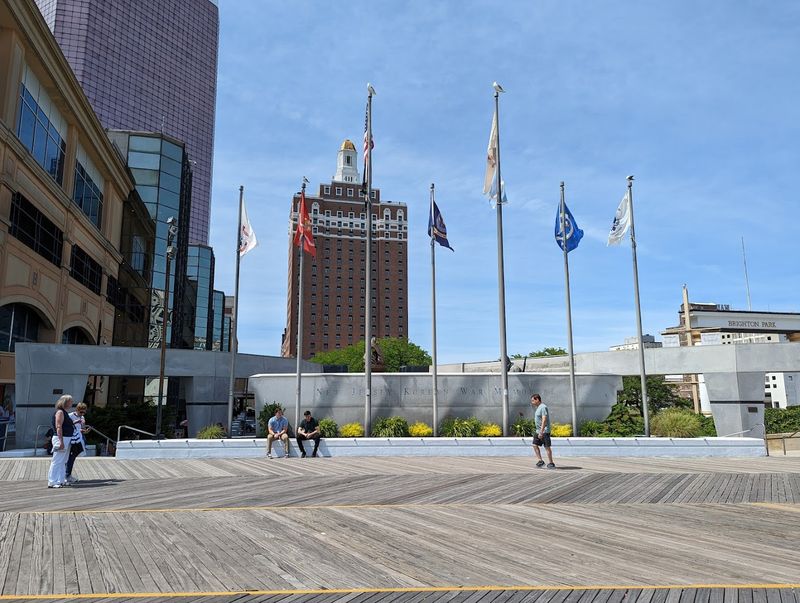
Every New Jerseyan has a slightly different Atlantic City Boardwalk in their head. For one person, it is a childhood tram ride, knees sticking to the seat, waiting for the next stop near Steel Pier.
For someone else, it is a first concert at Boardwalk Hall, a late-night slice after a show, or a windy winter walk when the casinos are glowing but the beach is empty. That is why the place still matters.
It is not one memory. It is a container for thousands of them. The Boardwalk also refuses to be too neat, which is very New Jersey of it. It has glamorous views and rough edges.
It can be loud, funny, sentimental, chaotic, and oddly peaceful within the same mile. You might pass a bachelor party, a family pushing a stroller, retirees on a bench, teenagers taking photos, joggers, fishermen, casino guests, and someone carefully guarding a box of taffy like it contains state secrets.
Somehow, none of it feels out of place. Its age gives it weight, but its daily life keeps it from becoming precious.
The Atlantic City Boardwalk has been around since 1870, making it the oldest boardwalk in America, yet it still functions as a real public walkway rather than a roped-off landmark. People use it to get somewhere, kill time, eat badly in the best way, stare at the ocean, and remember versions of themselves from past summers.
That is the quiet magic under all the noise. The Boardwalk is famous because it was first, but it endures because it still feels ordinary enough to belong to everyone.
It is a 5.5-mile piece of New Jersey muscle memory, weathered by salt air, rebuilt by habit, and still carrying people along the shore more than 150 years after a little too much sand caused a very good idea.
Share this story