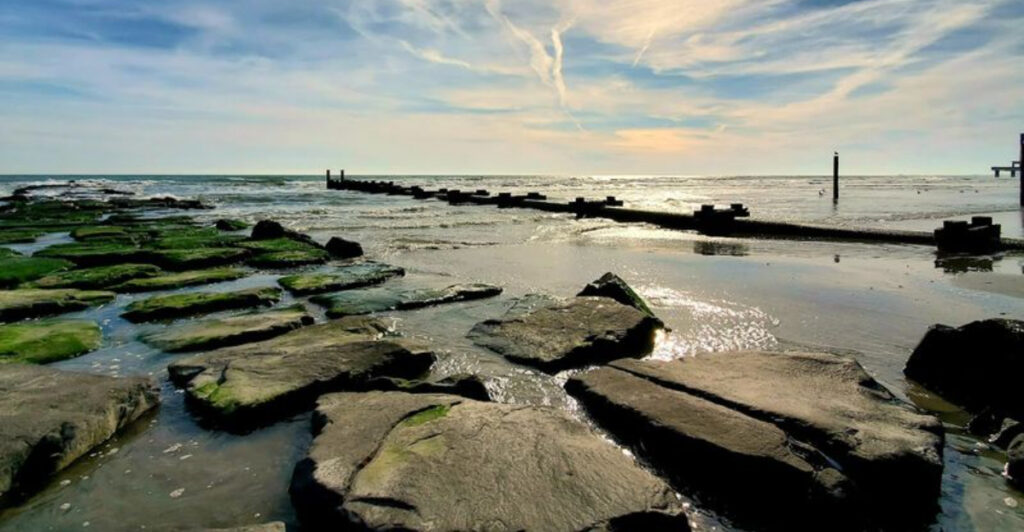
A fried chicken picnic basket, a beach towel, and the Atlantic City surf should have been simple summer things. But on the stretch of sand near Missouri Avenue, they carried a much heavier story.
This was the shoreline where Black families were pushed during the segregation era, close enough to hear the same waves and see the same Boardwalk lights, yet clearly reminded that not every piece of the resort city was meant for them. And still, the place refused to become only a symbol of exclusion.
It became loud with music, crowded with families, dotted with sharp summer outfits, and remembered through photographs that feel almost cinematic. The beach nicknamed Chicken Bone Beach started with a cruelty Atlantic City preferred not to spotlight.
What grew there, though, was something much stronger: Black leisure, Black community, and a kind of joy that would not ask permission to exist.
The Missouri Avenue Beach Atlantic City Tried to Forget
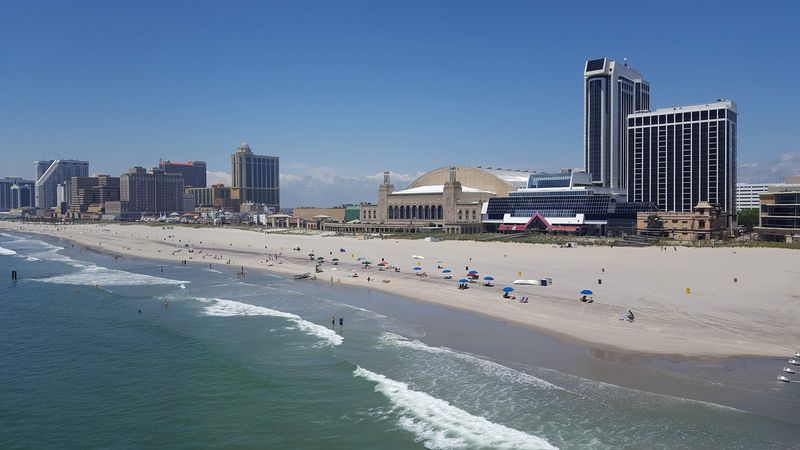
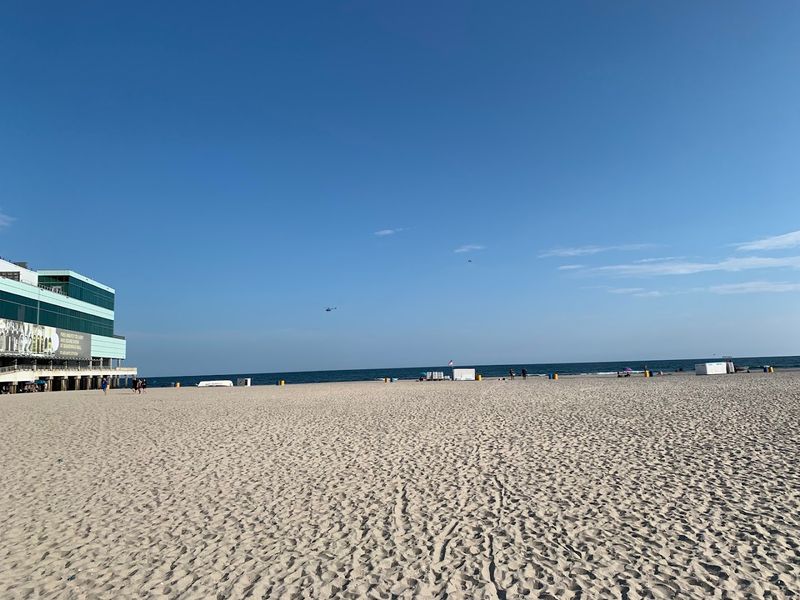
Missouri Avenue Beach sits in the heart of Atlantic City’s famous shoreline, not far from the Boardwalk spectacle that made the city one of America’s best-known resort towns. For generations, Atlantic City sold itself on sea air, rolling chairs, grand hotels, and the idea that anyone could escape ordinary life for a few days by the ocean.
The catch, of course, was in that word “anyone.” For Black visitors and residents, the promise came with boundaries, spoken and unspoken.
The beach near Missouri Avenue became the section where African Americans were restricted during the segregation era, even though the waves did not know where one “allowed” beach ended and another began.
The area is often described as the beach around Missouri Avenue, near the city-owned Convention Hall area, and it became widely known as Chicken Bone Beach. State and local accounts trace this exclusion to the early 1900s, with segregation hardened by decisions involving city leaders and hotel interests in the 1920s.
What makes the story so striking is not simply that Atlantic City segregated its beaches. Many shore towns, hotels, restaurants, and amusement districts across the country practiced their own versions of that same ugliness.
What stands out is how close this history was to the city’s postcard image. Chicken Bone Beach was not hidden in some distant corner.
It was part of the same Atlantic City shoreline tourists celebrated, steps from the Boardwalk and within sight of the city’s bright commercial energy.
For a long time, though, the story lived more strongly in family memory, old photographs, and community preservation than in the official version of Atlantic City people were encouraged to remember.
How Segregation Pushed Black Beachgoers to One Stretch of Sand
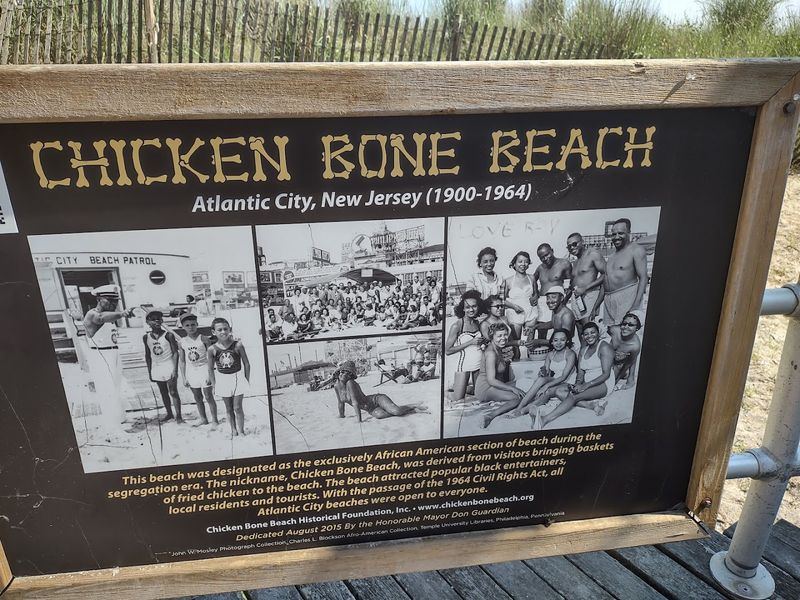
The mechanics of segregation in Atlantic City did not always need big signs to do damage. Sometimes the line was enforced by custom, pressure, police, hotel owners, lifeguard assignments, restaurant discrimination, and the simple knowledge that Black beachgoers were expected to stay in one place.
The result was clear enough: African Americans were largely excluded from most sections of the city’s beach and Boardwalk and pushed toward Missouri Avenue.
Historical accounts describe Black residents and visitors being socially restricted to the Missouri Avenue beach area beginning around 1900, with city beach segregation continuing for decades.
That restriction shaped the whole beach day. If nearby restaurants would not serve Black families fairly, or at all, people packed their own meals.
Fried chicken traveled well, tasted good cold, and belonged naturally in a beach basket alongside napkins, fruit, biscuits, and whatever else could survive a summer afternoon in the sand. Those picnics were practical, but they also became part of the beach’s identity.
The insult was that Black families had to plan around exclusion. The triumph was that they turned the restriction into a day that still had flavor, music, gossip, children running in and out of the surf, and adults making room for dignity under the sun.
Atlantic City’s wider beaches did not fully open in the way they should have until the civil rights changes of the 1960s, and the Civil Rights Act of 1964 is often cited as the turning point for the end of official beach segregation there. By then, Missouri Avenue Beach had already become more than a place people were forced to go.
It had become a place people remembered.
Why Chicken Bone Beach Became a Summer Haven
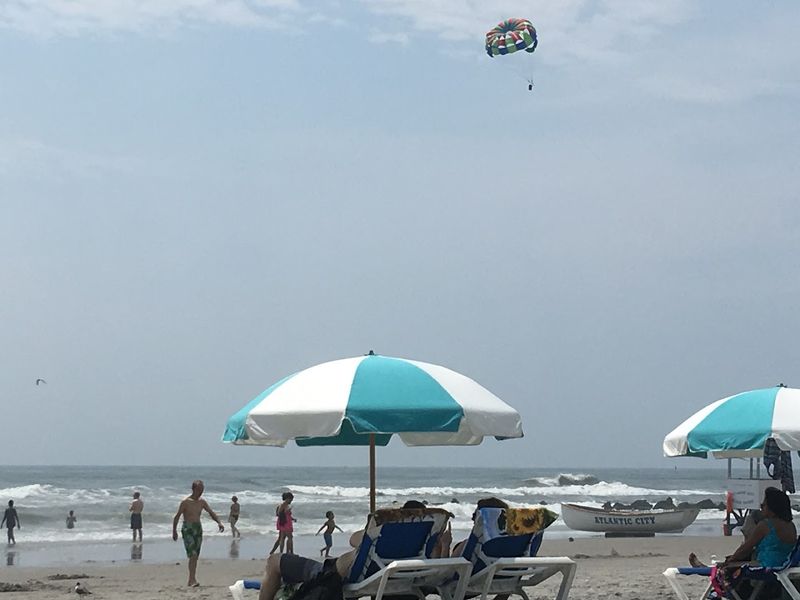
Here is the twist that makes Chicken Bone Beach so powerful: the beach was born from exclusion, but the memories that survived are often full of life. Families came dressed for the day, not as an afterthought but as an occasion.
The shore was a social stage, and people treated it that way. Photographs from the era show beachgoers posing with confidence, style, and ease, the kind of images that make you wish you could hear the conversations happening just outside the frame.
Researcher and author Cheryl Woodruff-Brooks, who studied the John W. Mosley Photograph Collection at Temple University, described seeing images of families, children, mixed-race couples, celebrities, and civic leaders all sharing the same beach world.
She also noted that people dressed carefully because being photographed there mattered; the beach had its own “Hollywood-ness.” That detail says a lot. Chicken Bone Beach was not merely a backup option.
It became a place where people presented themselves beautifully in a society that too often tried to diminish them. There were bathing suits, hats, sunglasses, beach umbrellas, picnics, flirtations, reunions, and the happy chaos of children who only cared that the water was cold and the sand was hot.
The energy was helped by Atlantic City’s larger Black cultural scene, especially the Northside, where restaurants, clubs, hotels, and entertainment venues created a thriving world beyond the white-controlled resort image. In that context, the beach became part of a full summer rhythm.
You could have music at night, Boardwalk air after dark, and then a daytime return to the sand where familiar faces kept appearing. The city may have drawn the boundary, but the people inside it made the place feel expansive.
The Families Entertainers and Leaders Who Gave the Beach Its Soul
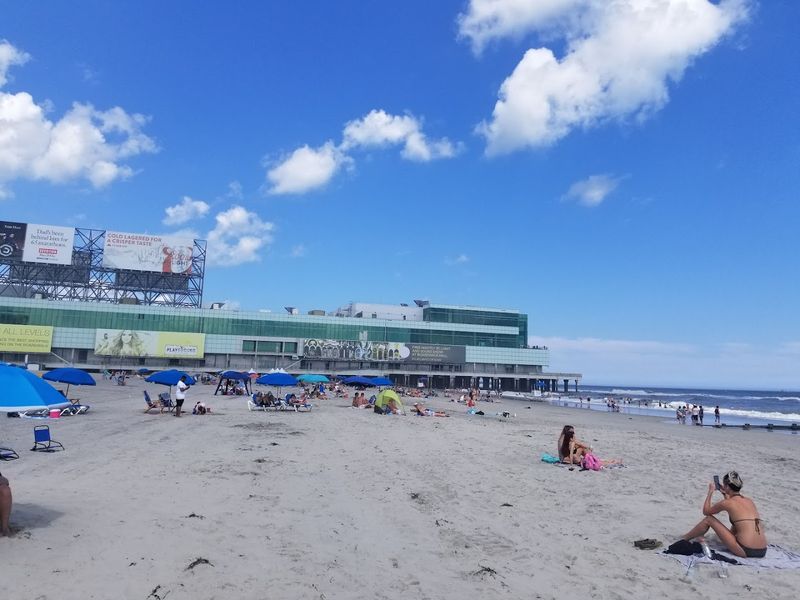
Atlantic City had serious star power in the mid-20th century, and Chicken Bone Beach was close enough to the action that fame and everyday life sometimes shared the same sand.
Black entertainers who performed in town could not always move freely through the same spaces as white celebrities, so Missouri Avenue Beach became a gathering place where artists, athletes, leaders, and regular families crossed paths in a way that still feels extraordinary.
Historical markers and cultural accounts connect the beach with Sammy Davis Jr., Jackie “Moms” Mabley, Club Harlem showgirls, and other performers who helped give the area its sparkle.
Other documented names tied to the beach and its photographic record include Martin Luther King Jr., Joe Louis, Josephine Baker, Billie Holiday, Dinah Washington, and Dorothy Dandridge.
That is not just a name-dropping list. It shows how important Atlantic City was as a Black cultural crossroads.
Club Harlem on Kentucky Avenue was one of the city’s legendary venues, and the Northside had an entertainment scene that pulled in major talent even while segregation narrowed where those same people could sleep, eat, swim, and relax.
The most quietly moving image may be the snapshot of Dr. Martin Luther King Jr. relaxing at Chicken Bone Beach.
Temple University Libraries identifies the photo as King on the segregated beach, a reminder that even a civil rights leader associated with marches, pulpits, and history-book seriousness needed rest by the water. That is part of the beach’s soul too.
It was not only a stage for famous people. It was a place where Black people claimed softness, laughter, fashion, family, and leisure in a country that constantly demanded endurance.
How a Painful Nickname Became a Point of Pride
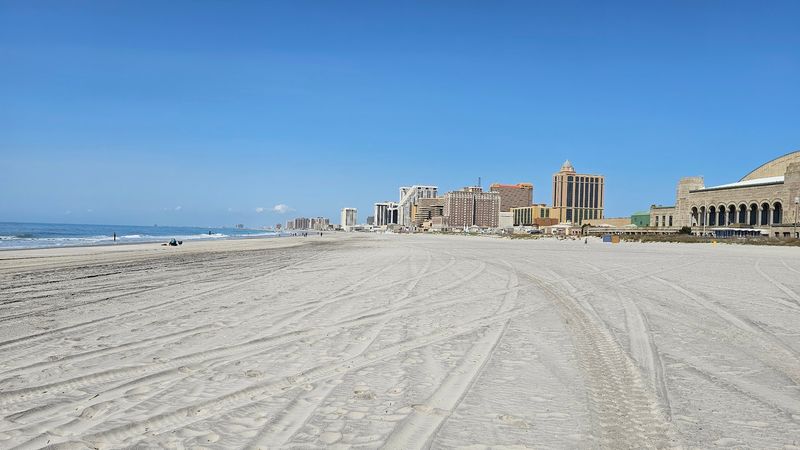
The name Chicken Bone Beach can hit the ear two ways at once. On one side, it carries the sting of a nickname rooted in segregation, discrimination, and the way Black families had to bring their own food because nearby establishments often would not welcome them.
On the other, it has been reclaimed so fully that it now sounds less like an insult and more like a badge of survival with a little Jersey Shore attitude baked in. The common explanation is straightforward: families brought picnic baskets, often with fried chicken, and the leftover bones became associated with the beach.
The Chicken Bone Beach Historical Foundation describes the name as a colloquial nod to the popular leftovers from beach picnic baskets, while other accounts emphasize that those meals were tied to discriminatory treatment in Atlantic City’s dining spaces. Either way, the name stuck because the people did.
That is the important part. Plenty of places are renamed to make history easier to swallow.
Chicken Bone Beach does the opposite. It keeps the uncomfortable truth right on the surface, then turns it toward pride. It says, yes, people were pushed here. Yes, they were denied access.
Yes, they had to bring their own food, make their own fun, and protect their own dignity. And somehow, they made a beach that people still talk about with tenderness.
Atlantic City Council declared Chicken Bone Beach a historical landmark in 1997, the same year the Chicken Bone Beach Historical Foundation was founded to preserve the legacy and connect it to jazz, youth education, and Black cultural history.
That recognition matters because the name no longer belongs to the people who used segregation to limit Black joy. It belongs to the community that outlasted them.
The Foundation Keeping Chicken Bone Beach Alive Today
The story did not end when Atlantic City’s beaches desegregated. In some ways, that is when the harder preservation work began.
Without people insisting on memory, Chicken Bone Beach could have faded into the general blur of shore history, reduced to a nickname older residents knew and everyone else walked past. The Chicken Bone Beach Historical Foundation changed that.
Founded in 1997 by Henrietta Shelton, the organization was created to honor the beach’s history while using jazz as a living bridge between generations. Its mission focuses on Black heritage, family values, unity in Atlantic County, youth education, and exposure to jazz as an original American art form.
That mission shows up in concrete ways. The foundation has sponsored free summer jazz concerts at Kennedy Plaza near Boardwalk Hall, hosted tuition-free youth summer jazz camps for Atlantic City students, and kept the beach’s story connected to music instead of letting it sit frozen behind a plaque.
In 2026, the history gained another layer of recognition when Chicken Bone Beach received a New Jersey Black Heritage Trail marker at Missouri Avenue and the Boardwalk.
Atlantic City officials also launched a Black Cultural Heritage Tour highlighting 15 sites tied to the city’s Black history, including the Northside and landmarks connected to Black culture, sports, entertainment, and community life.
The marker made Chicken Bone Beach Atlantic City’s first physical New Jersey Black Heritage Trail marker, joining a statewide effort to connect stories of Black life and resiliency across New Jersey. That is why the beach still feels bigger than its footprint.
It is sand, surf, music, memory, and proof that even a place created by exclusion can be reclaimed as a landmark of pride.
Share this story