Ninety-seven percent. That’s the share of buildings in one downtown historic district that count as historically significant. Most towns are thrilled to have one old courthouse.
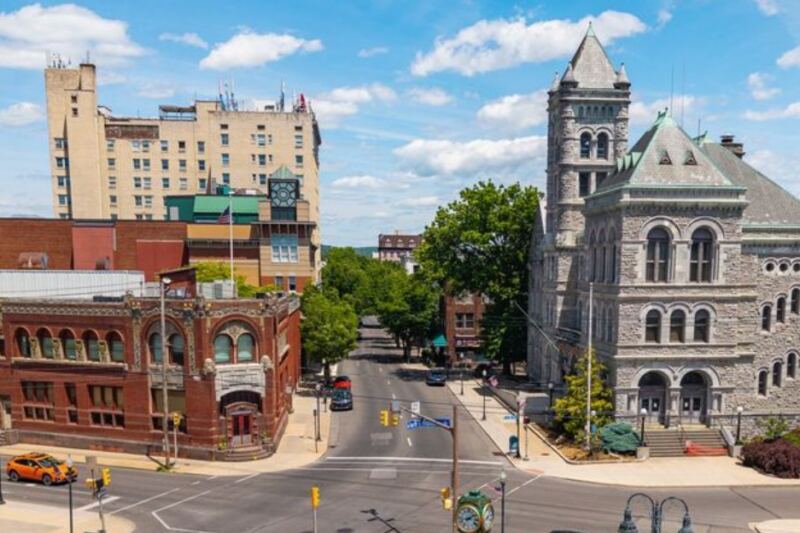
This Pennsylvania borough packs 976 contributing buildings into about 178 acres. Most went up between 1850 and 1930, when coal and railroads ran the show. Queen Anne, Italianate, and Second Empire styles line the streets like a living architecture textbook.
I like how none of it feels roped off. People still live in these homes, shop in these storefronts, and catch trains at a station from 1874.
The oldest house even hides half of an 1801 log cabin behind it. I can’t imagine walking past that every day without peeking. It’s the kind of place that makes you want to slow down and look a little closer.
1. Almost the Whole Town Made the National Register
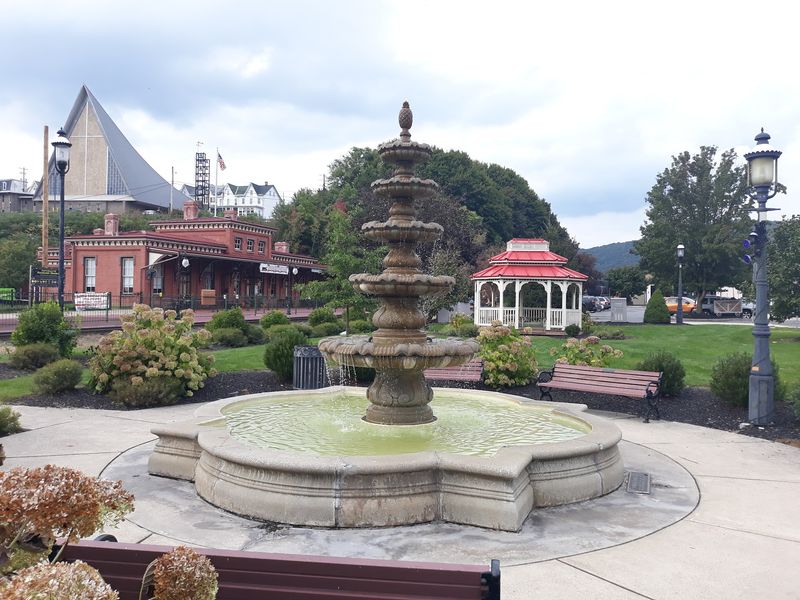
Tamaqua earned a spot on the National Register of Historic Places in 2001.
The Tamaqua Historic District covers both downtown and the neighborhoods around it.
The numbers are wild for a borough of under 7,000 people.
The district includes 976 contributing buildings, plus three sites, eight structures, and three objects.
Here’s the kicker.
About 97 percent of everything counted was judged historically significant.
That’s not a few pretty blocks with a parking lot problem.
The district stretches across roughly 178.6 acres.
Most of the buildings date from 1850 to 1930, the busy years of coal and rail.
Tamaqua sits in eastern Schuylkill County, Pennsylvania, where Routes 209 and 309 cross.
It’s often called a gateway to the Anthracite Region, near the Pocono foothills.
That location explains a lot.
Coal money built these streets, and the town never bulldozed its past away.
Plan to wander on foot.
A car window just can’t keep up with this many cornices and porches.
Bring a phone with plenty of storage, too.
You’ll likely snap photos of houses you can’t even name yet.
2. Spot Six Architectural Styles Without a Textbook
Architecture nerds, this one’s your playground.
The streets mix Queen Anne, Late Victorian, Italianate, Colonial Revival, Second Empire, and Eastern Stick styles.
Don’t worry if those names sound fancy.
A few quick clues make spotting them surprisingly fun.
Queen Anne homes often show off with towers, fancy trim, and busy rooflines.
Italianate buildings usually have deep roof edges held up by decorative brackets.
Second Empire is the easiest win.
Look for a mansard roof, the boxy kind with steep sides that look like a hat.
Many homes here are two-story brick and frame buildings.
They sit close together, which gives the neighborhoods a snug, walkable feel.
Turn it into a game if you bring kids along.
Whoever spots the most mansard roofs picks the lunch spot.
Remember that most of these houses are private homes.
Admire from the sidewalk and skip the porch steps.
Honestly, the sidewalk view is the best seat anyway.
You get the full rooflines, the trim details, and the whole street in one frame.
Few Pennsylvania towns offer this much style variety in such a small space.
3. Half a Log Cabin From 1801 Is Still Hiding Out
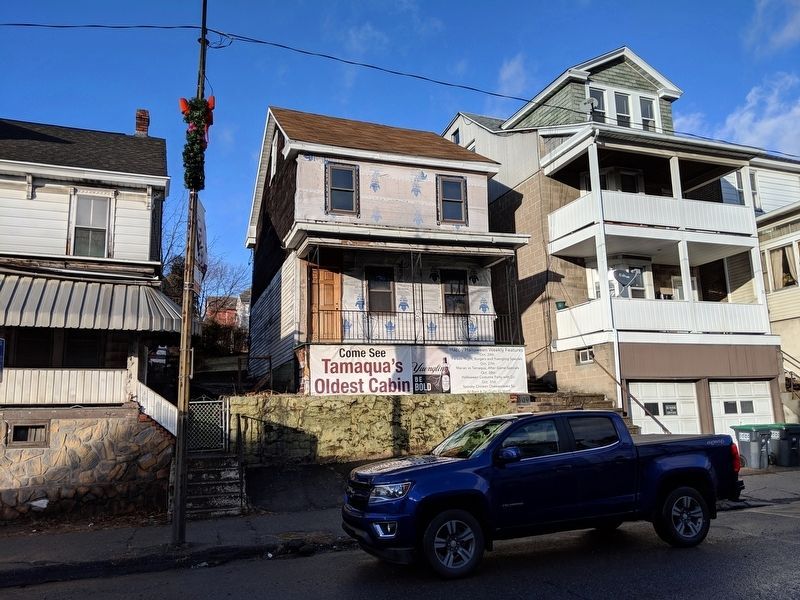
Talk about playing hide-and-seek for two centuries.
The Burkhardt Moser Log Home was built in 1801 by the town’s founder.
It’s still the oldest home in Tamaqua.
Roughly half of that original cabin survives behind a house on East Broad Street.
That detail tells you a lot about this town.
Instead of tearing old things down, people simply built around them.
Tamaqua itself traces its founding to 1799.
So this cabin went up just a couple of years after the town got started.
Not far away stands the Little Schuylkill Hotel, built in 1827.
It was the town’s first hotel and its first stone building.
It also ranked among the area’s earliest commercial buildings.
Today it serves as private residences, so enjoy it from the street.
Seeing these two early landmarks helps the rest of the district make sense.
Everything Victorian came later, stacked on this frontier start.
Here’s a fun way to frame your walk.
Start with the oldest spots, then let the fancier coal-boom buildings show how fast things grew.
It’s a timeline you can stroll in an afternoon.
4. Catch a Train From an 1874 Station That Still Works
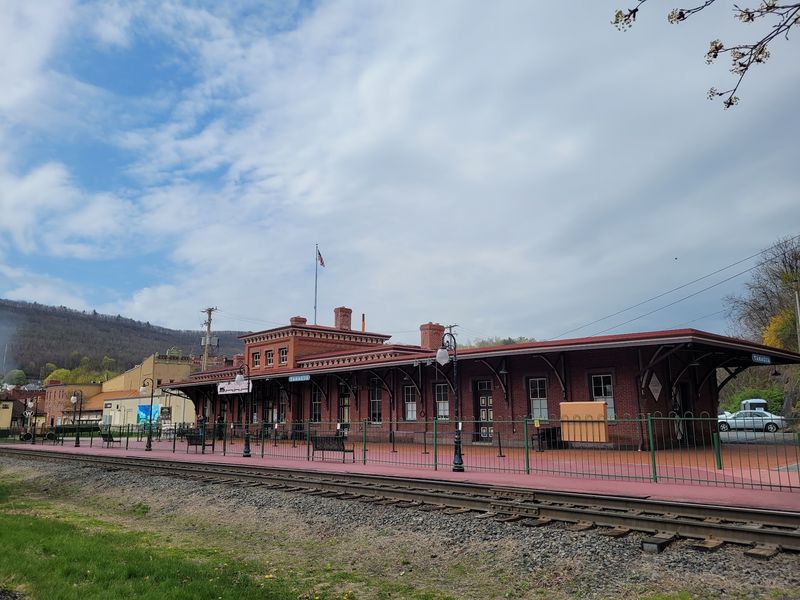
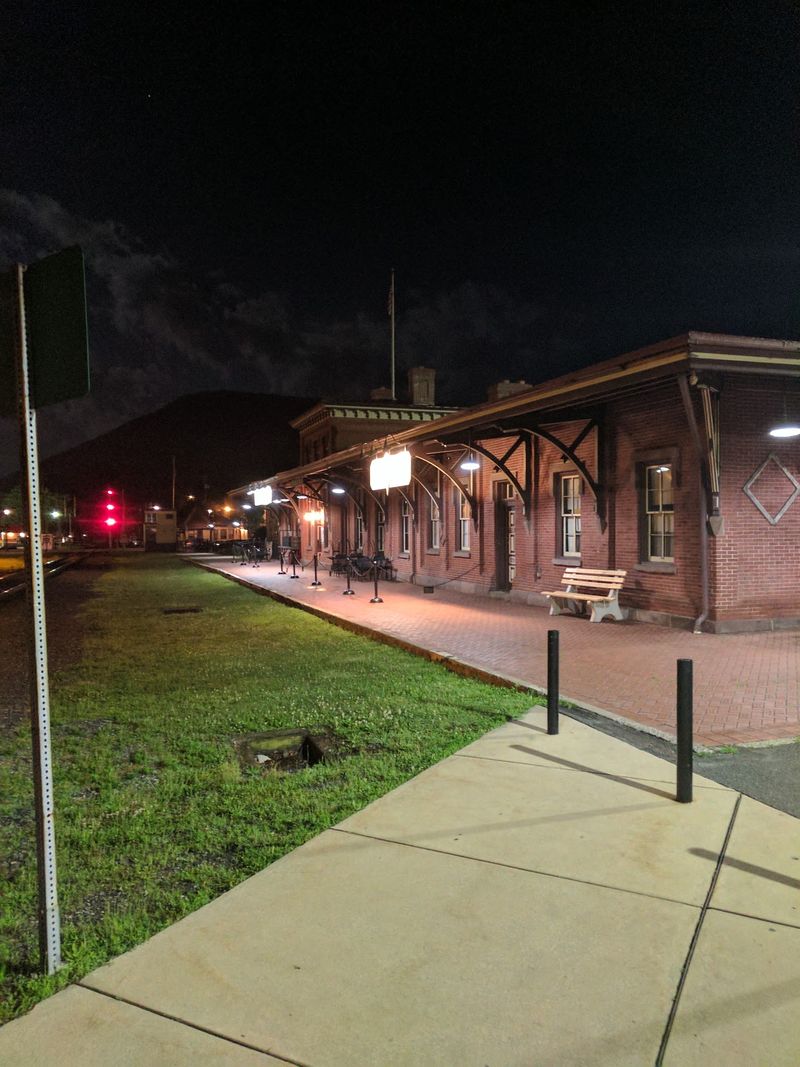
Trains still pull into a depot that’s older than the light bulb business.
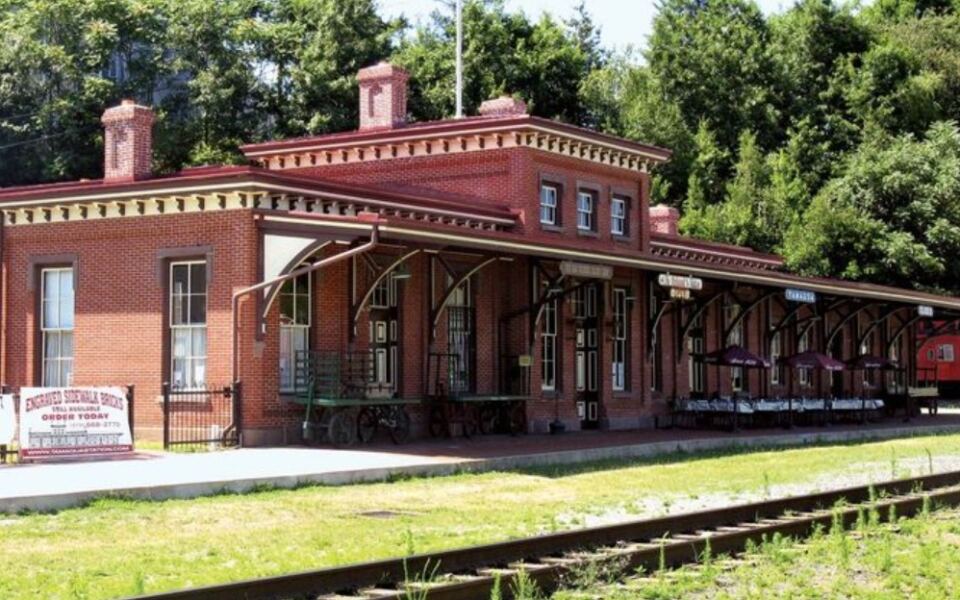
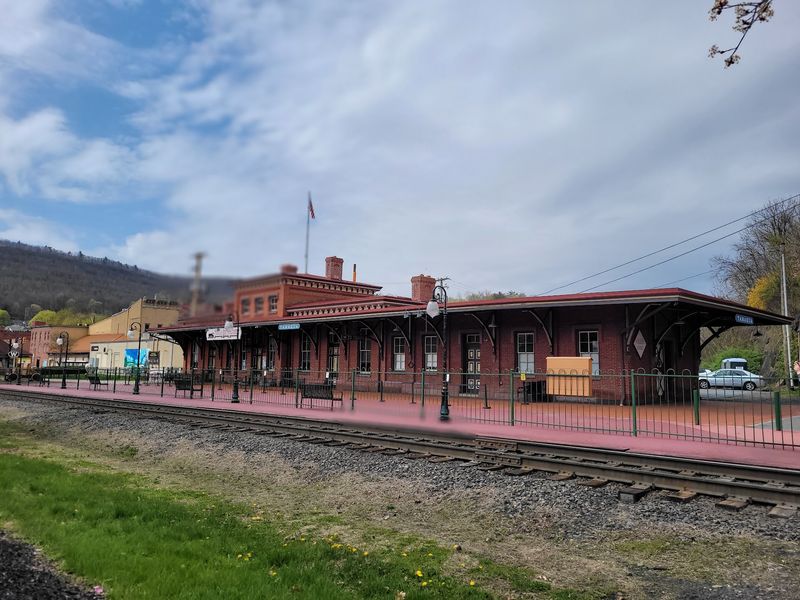
Tamaqua Station is an Italianate railroad station built in 1874.
It holds its own separate listing on the National Register of Historic Places.
So it’s historic twice over, which feels a little like showing off.
The station once served the Philadelphia and Reading Railroad, a big driver of the town’s growth.
Today it works as a visitor center.
It also acts as a boarding point for excursion trains.
The Reading Blue Mountain and Northern Railroad runs scenic rides from here to Jim Thorpe.
That makes an easy two-town day trip.
Ride through the hills, then explore another historic Pennsylvania spot at the other end.
Hungry before boarding?
The Tamaqua Station Restaurant serves food right inside the old depot.
You’ll find it at 18 North Railroad Street, Tamaqua, PA 18252.
Eating in a building from 1874 makes even a regular lunch feel like an event.
Check the railroad’s schedule before you go, since excursion dates can change by season.
5. Thomas Edison’s Company Helped Light These Streets
In 1885, Tamaqua got something most American towns could only dream about.
It became home to the nation’s second incandescent municipal lighting system.
Thomas Edison’s Edison Electric Illuminating Company was involved in the project.
That’s a pretty big name for a coal town’s resume.
Think about how new electric light was back then.
Most homes still relied on gas lamps or candles after dark.
So Tamaqua was quietly ahead of the curve.
Coal money and railroad traffic gave the town both the cash and the reason to modernize.
Nothing about that system is a museum you can tour on a street corner.
But the story adds a fun layer to an evening stroll downtown.
Those brick storefronts once stood under some of the earliest electric streetlights in the country.
Pretty cool for a borough you might have driven right past.
Share this one with the science fan in your life.
It turns a history walk into a tech story.
Also, it’s a great trivia card to keep handy.
Few people guess Pennsylvania coal country played a part in lighting history.
6. Coal Country Secrets Live at the Museum and Cemeteries
Coal shaped everything here, including some of the region’s most dramatic stories.
Tamaqua sat at the center of the Molly Maguires saga in the 1860s and 1870s.
The Molly Maguires were a secret Irish society linked to the anthracite coal fields.
Their story still sparks debate among historians today.
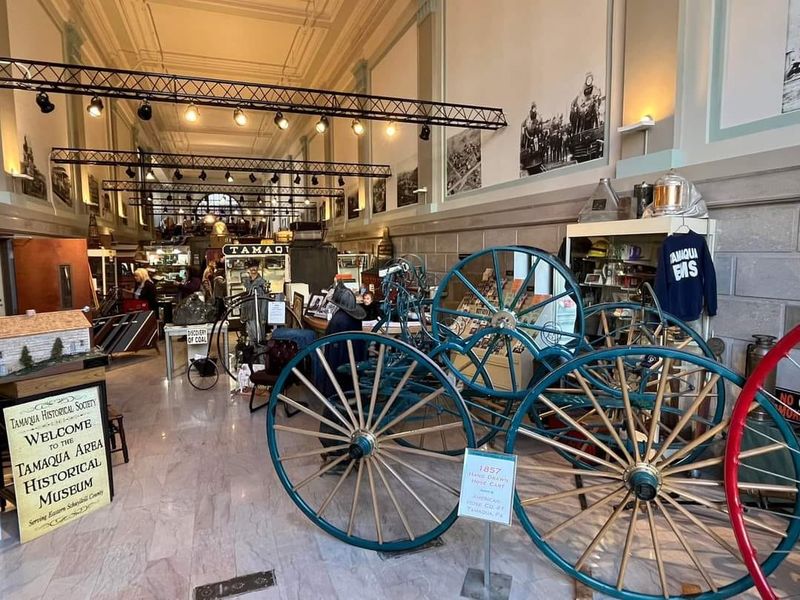
Start at the Tamaqua Historical Society Museum, 118 West Broad Street, Tamaqua, PA 18252.
It holds artifacts, photographs, and documents from the town’s past.
The museum also offers rotating exhibits and guided tours.
A tour is the smart move if you want the stories behind the buildings.
History buffs can also visit St. Jerome’s Roman Catholic Cemetery, established in 1837.
Several alleged Molly Maguires are buried there.
The Odd Fellows Cemetery adds a different mood.
It’s a Victorian garden cemetery from 1865, resting place of prominent local figures.
Garden cemeteries were designed as peaceful places to stroll.
Walk quietly and treat the grounds with respect.
Together, these stops turn pretty facades into real lives.
Suddenly every brick has a backstory.
7. Your Summer Swim Comes With a Forest and a Century of Backstory
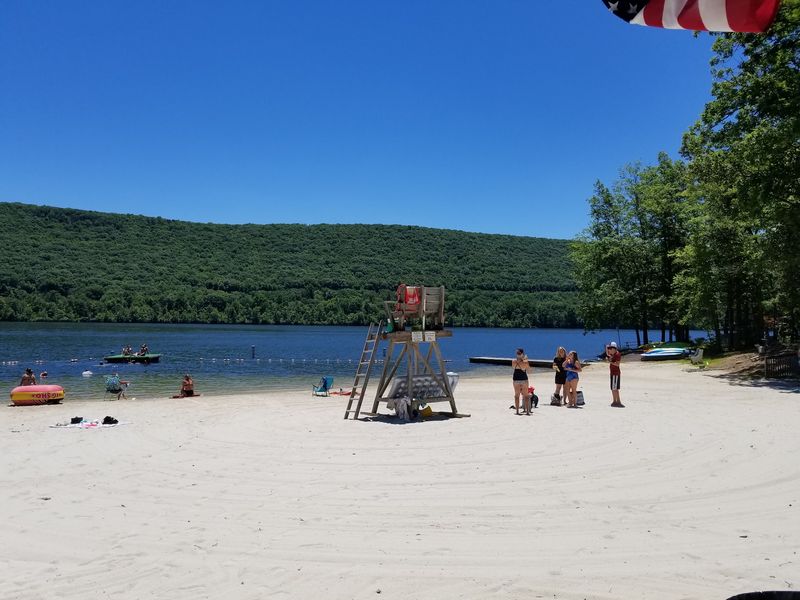
Even the town pool has history.
The Howard D.
Buehler Memorial Pool at Bungalow Park has drawn swimmers since 1900.
The park itself dates back to the late 1800s.
It sits at Catawissa Street and Lafayette Street, wrapped in forest.
The pool is no tiny backyard splash zone.
It holds up to 500 people and has six 50-meter racing lanes.
Thrill seekers get three diving boards and two slides.
Little swimmers get a kiddie area with fountains and a gentle sloped entry.
A concession stand handles snack emergencies.
Every family knows those happen about twenty minutes after arrival.
Outside the water, Bungalow Park offers hiking trails, a large pavilion, a playground, and a baseball field.
That’s a full day without leaving the shade.
Timing matters here.
The pool opens seasonally from June through mid-August, seven days a week, 11 AM to 7 PM.
Pack sunscreen, towels, and a change of clothes for the trails.
Then let the kids burn energy while you enjoy the trees.
It’s classic small-town summer done right.
8. Save Room for Cannoli, Pizza, and Plenty of Pasta
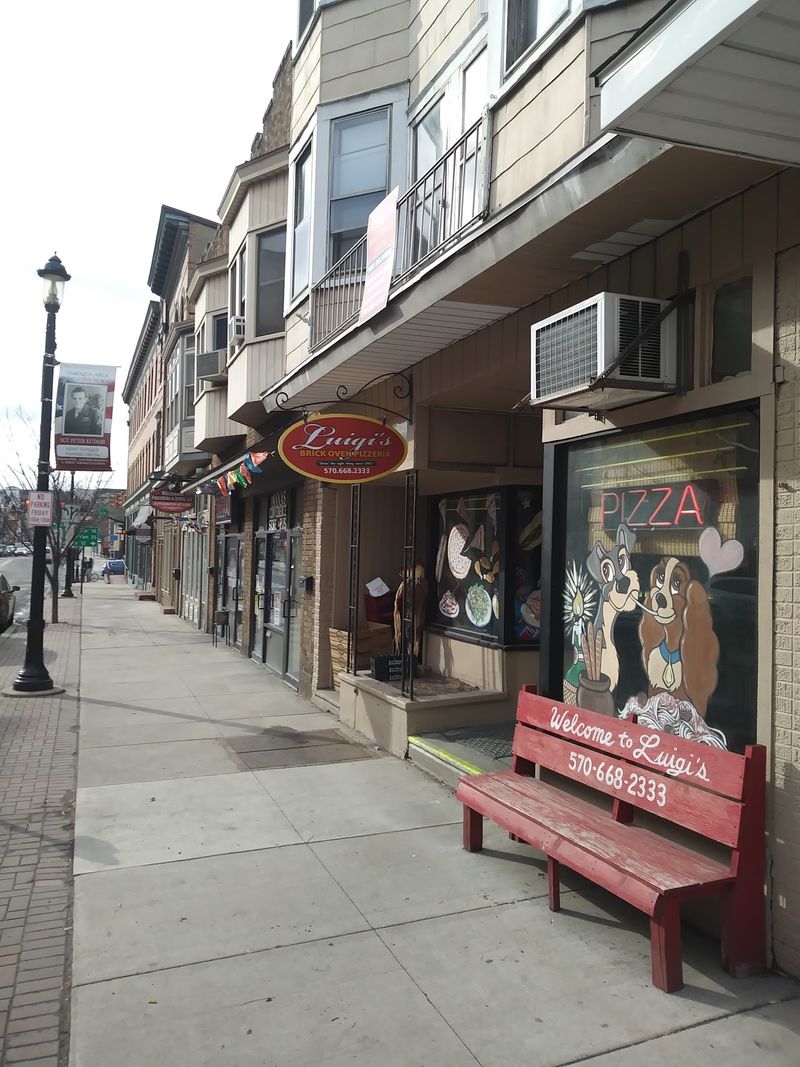
Italian food runs deep in this town’s dining scene.
You could plan a whole day around it and nobody would judge.
La Dolce Casa – DiMaggio’s sits at 16 West Broad Street.
It’s an easy stop while exploring the historic downtown.
Over on North Railroad Street, you’ll find two more.
Tommy’s Italian Specialty Shop is at number 41, and Padora’s Italian Bakery is at 122.
Craving pizza?
Luigi’s Brick Oven Pizzeria is at 121 East Broad Street.
Notice a pattern?
Nearly all of these spots sit on the same historic streets you’ll already be walking.
That makes refueling ridiculously convenient.
Admire a mansard roof, grab a bite, then go find another one.
Railroad Street is a handy pairing with the train station.
Plan a bakery stop before or after your excursion ride.
Hours and menus can change, so check ahead before heading out.
That way nobody ends up staring at a closed door with an empty stomach.
In a town this rich in history, good food feels like part of the tour.
Your appetite will agree.
9. Stay the Night and Catch a Parade or Ball Drop
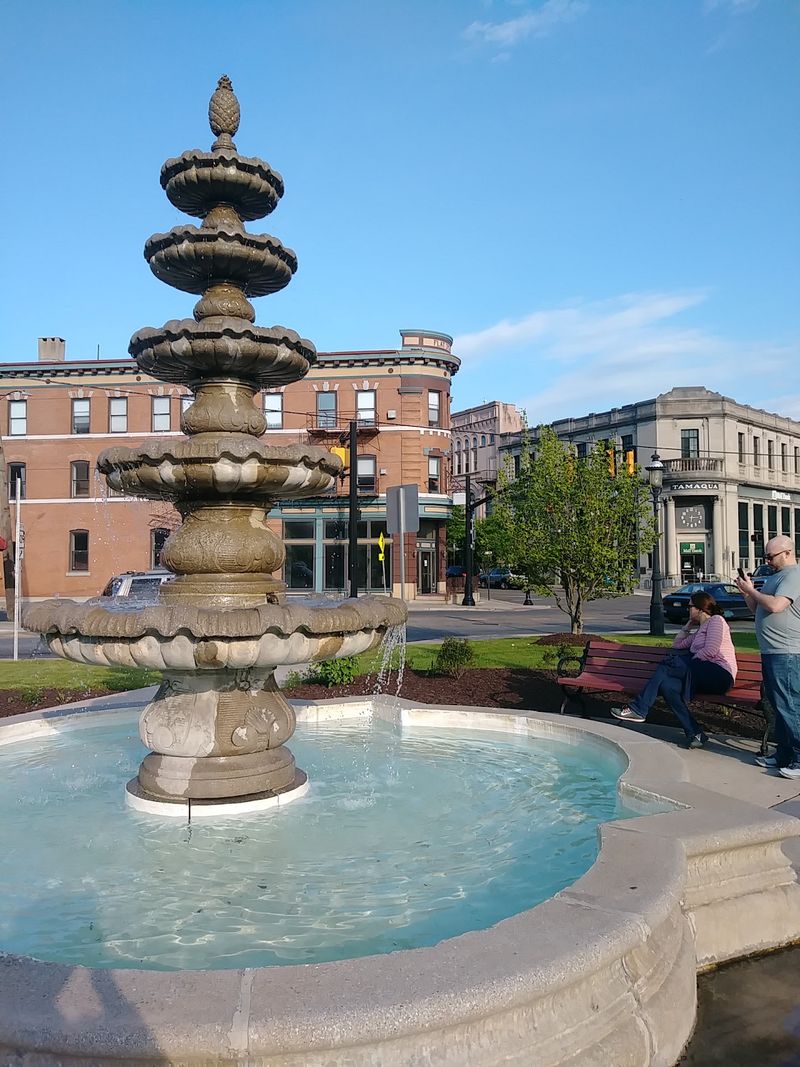
One afternoon won’t cover 976 historic buildings.
Luckily, the Bischoff Inn offers a cozy base near downtown shops, restaurants, and attractions.
Staying overnight lets you see streets in different light.
Morning walks and evening strolls feel like two separate towns.
Culture fans should check out the Tamaqua Community Arts Center.
It’s housed in a historic church and hosts art classes and live music year-round.
Of course it’s in a historic building.
At this point, would you expect anything else?
Tamaqua also throws some fun yearly events.
A New Year’s Eve ball drop rings in January, and a notable Halloween parade fills the fall.
A spooky parade past Victorian houses sounds pretty much perfect.
Plan around it if October fits your calendar.
Nature lovers can head to the Owl Creek Reservoir Recreation Area.
It offers kayaking, catch-and-release fishing, and electric motor boating.
That calm water makes a nice break from sidewalk sightseeing.
Paddle in the morning, then return downtown for dinner.
Tamaqua proves a small Pennsylvania town can hold a weekend’s worth of surprises.
Every street seems to have one more.
Share this story