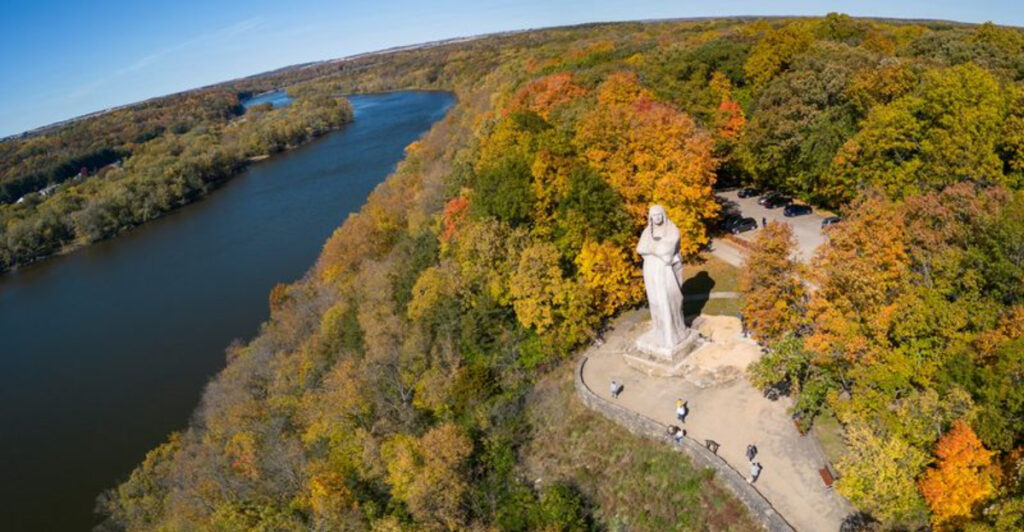
Tucked above the Rock River on a high bluff, the 48-foot Black Hawk Statue stands quietly among the trees, commanding attention without saying a word. It’s more than a landmark—it’s an experience, the kind that naturally slows your pace and invites reflection.
The scale, setting, and craftsmanship combine to create a powerful sense of place that lingers long after you leave. Visitors often find themselves lingering longer than planned, taking in both the sculpture and the surrounding views. If you appreciate meaningful public art, this stop delivers something unforgettable in a surprisingly peaceful setting.
First Look From The Bluff
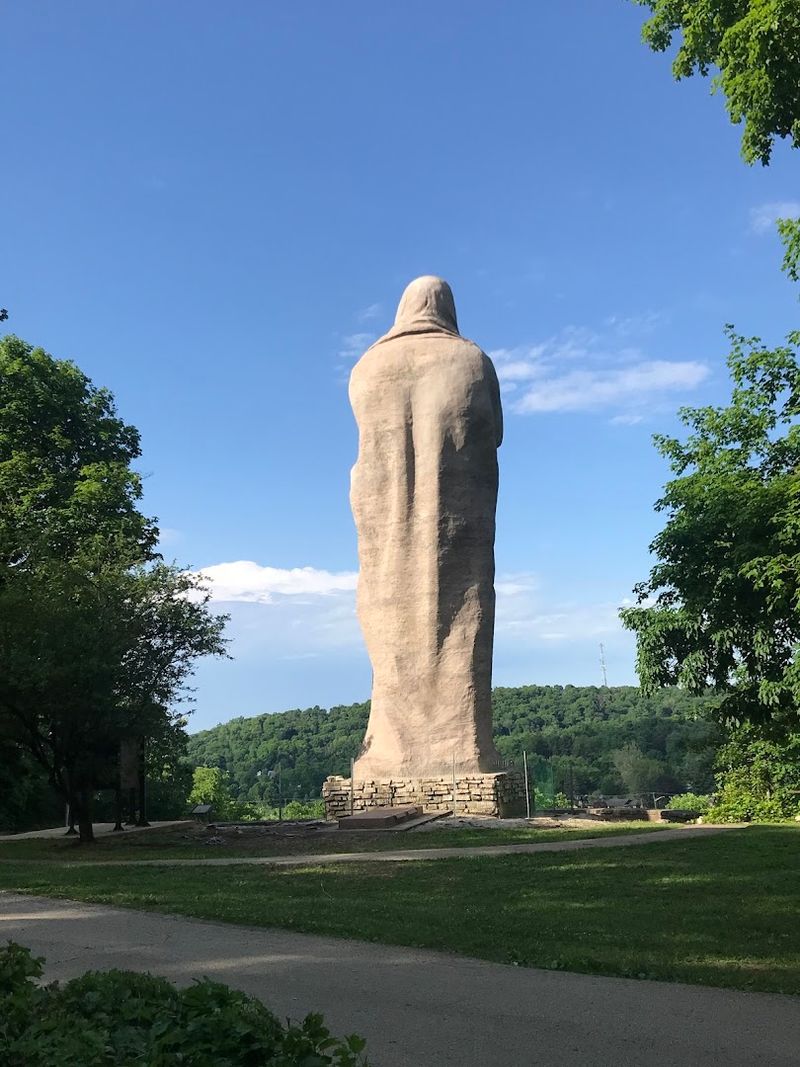
The first step out of your car feels like a quiet pause, followed by a small, involuntary gasp. The Black Hawk Statue rises ahead, taller than the surrounding trees, steady and watchful above the Rock River. You notice the scale immediately, but it’s the stillness that settles in right after that makes the moment land.
It doesn’t feel dramatic or staged—just quietly powerful in a way that catches you off guard. As you walk closer, the details begin to take shape. The folds of the cloak ripple like fabric caught mid-motion, though it’s reinforced concrete that has held up through decades of wind, rain, and shifting seasons.
The face remains calm and distant, not focused on you but somewhere far beyond, which only adds to its presence. There’s a sense that it’s been standing here long before you arrived—and will remain long after you leave.
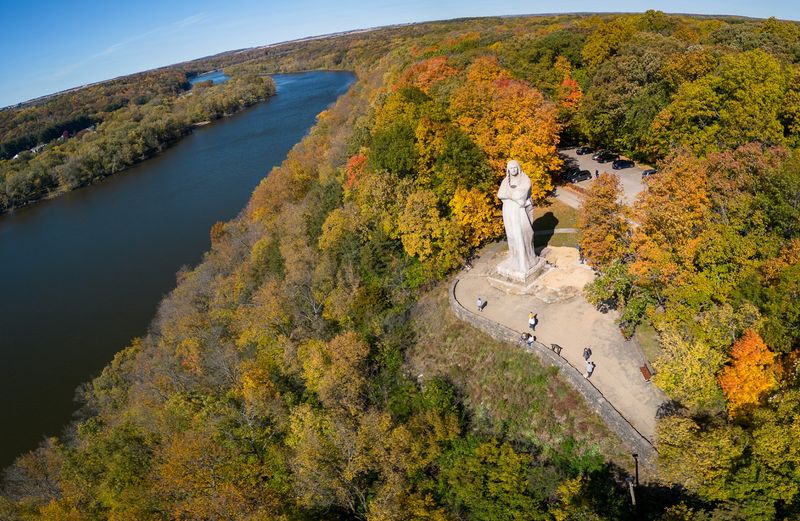
The overlook frames everything in a way that feels almost intentional. The river stretches out below, the town sits quietly in the distance, and the sky opens wide above it all. If you arrive near sunset, the light softens and warms, casting a glow across the surface so the statue seems to shift with the colors of the evening.
Take time to circle the base slowly. Up close, you’ll notice fine textures, small imperfections, and the natural wear that comes with years in the open air. Those details add depth rather than distraction, and even a short visit tends to stretch because nothing here asks you to hurry.
The Story Behind Black Hawk
History settles over this bluff in a way that feels quiet but persistent, like something you notice more the longer you stand still. Sculptor Lorado Taft began work on the statue in the early 1900s, completing it around 1911.
Since then, it has remained a constant presence above the Rock River, watched over by generations who have come and gone beneath it. Though inspired by Black Hawk, the Sauk leader who resisted U.S. expansion in the early 19th century, the statue is not meant to be a direct likeness.
Instead, it represents something broader—a symbolic figure meant to reflect Native presence, resilience, and connection to this landscape. You read the posture before anything else. The stance feels rooted and deliberate, more about presence than identity.
Its nickname, “The Eternal Indian,” speaks to that intention, though today it also invites more thoughtful reflection about how history is represented and remembered. The scale alone is striking, but what lingers is the sense of time embedded in the figure, standing quietly as the world around it continues to change.
Interpretation here isn’t fixed. The signage offers context, but the setting does just as much of the work. Wind through the trees, the movement of the river below, and the stillness of the statue all combine into something that feels layered rather than explained. It’s a place that encourages you to pause, observe, and consider more than one perspective.
Up Close With The Sculpture
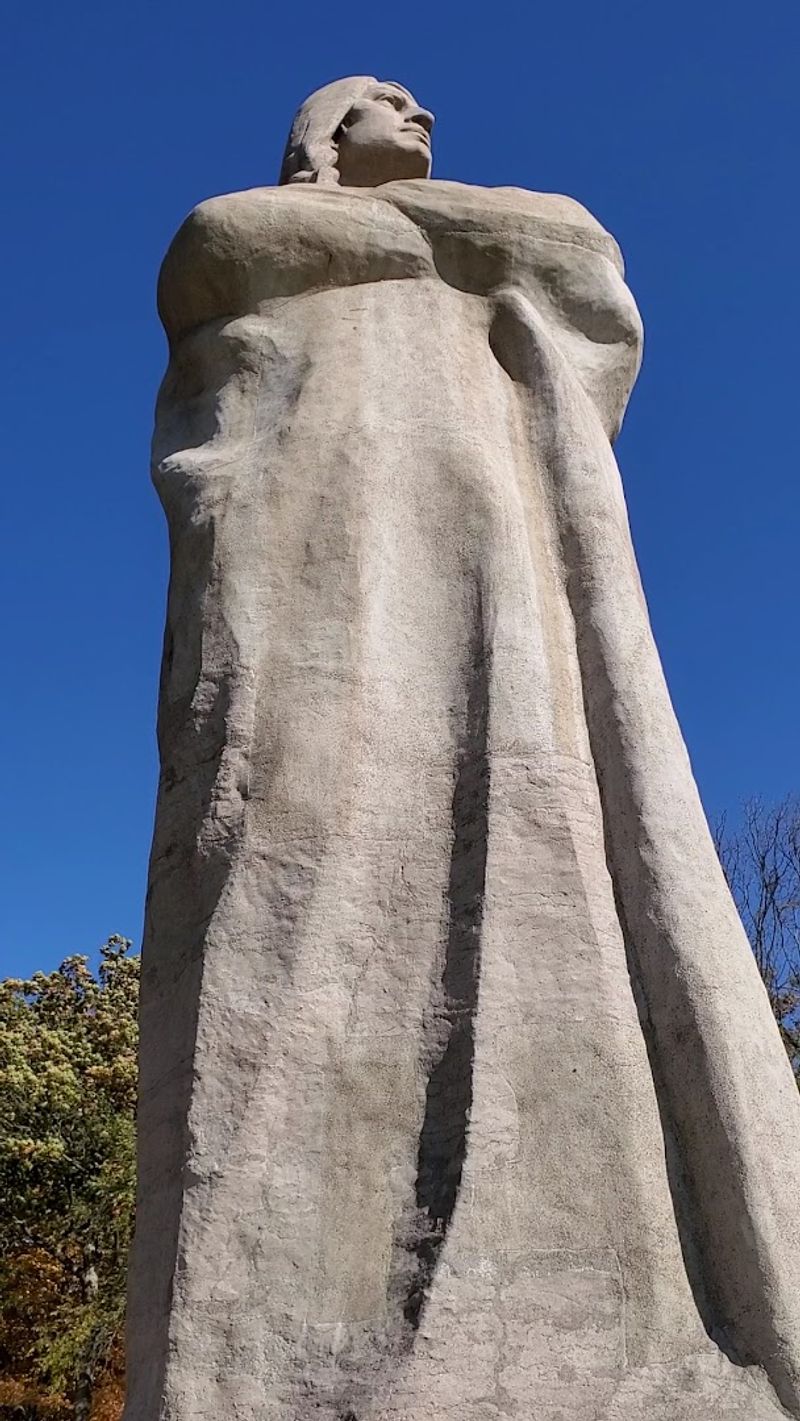
Step in close and the statue begins to read differently, less like a landmark and more like something you can study. The surface unfolds in layers of rough and smooth patches, each one catching light in its own way. From the river side, sunlight sharpens the ridges and softens the curves, giving the figure a subtle sense of movement despite its stillness.
The material itself tells part of the story. Reinforced concrete might sound utilitarian, but at the time it was both a practical and ambitious choice. Over the years, weather has left its mark—fine cracks, softened edges, and tonal shifts that give the surface a lived-in quality.
Where restoration has been done, it blends carefully into the original, preserving the overall feel without erasing its age. Shift your position and the sculpture changes again. Looking up along the length of the cloak, the folds create deep channels of shadow that move as the light shifts.
In the morning, those lines feel sharper and more defined. By late afternoon, they soften, and the entire figure takes on a warmer, more diffuse presence. It’s tempting to reach out, but observation works better here.
Let your eyes—or your camera—do the close work. Wide angles exaggerate the height, while tighter shots pull out texture and pattern. The longer you look, the more the surface reveals, rewarding patience with detail you won’t catch at a glance.
The View That Steals The Show
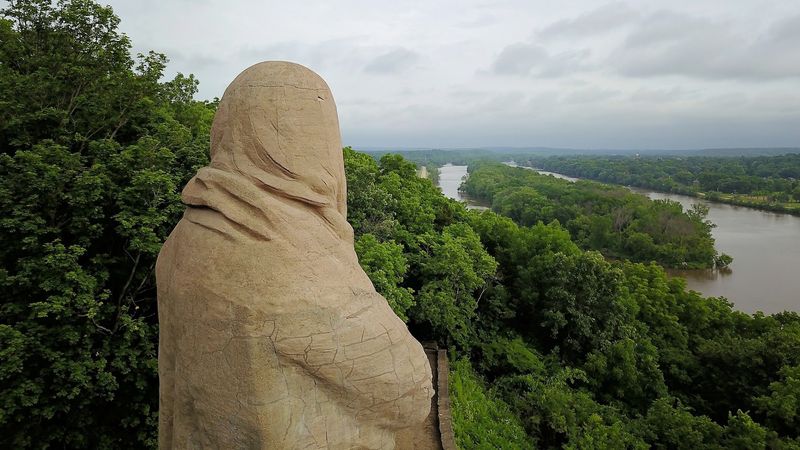
Even if you come for the statue, the view quickly makes its own case. The Rock River curves wide below, moving with a steady, reflective calm that draws your attention just as much as the sculpture behind you. On quieter days, you can hear the water faintly, a soft, continuous sound that settles into the background.
Shift your position slightly and the scene rearranges itself. Trees frame the river like moving curtains, opening and closing with each breeze. Birds ride the air rising off the bluff, tracing slow arcs overhead before disappearing into the distance.
It’s a landscape that doesn’t stay still, even when everything feels calm. Light changes everything here. Early morning brings a softer clarity, where the valley feels open and undisturbed. By sunset, the tones deepen and warm, turning the statue into a dark silhouette against a glowing horizon.
On overcast days, the mood shifts again—colors flatten, shadows stretch, and the entire bluff takes on a quieter, more introspective feel. It’s worth putting your camera down for a few minutes. Stand still, watch the movement of the river, and let your eyes adjust to the scale of the space.
Time seems to loosen here, stretching just enough to make the moment feel longer than expected. The longer you stay, the more the view becomes part of the experience, not just a backdrop but something you carry with you when you leave.
Stairs, Trails, And Little Adventures
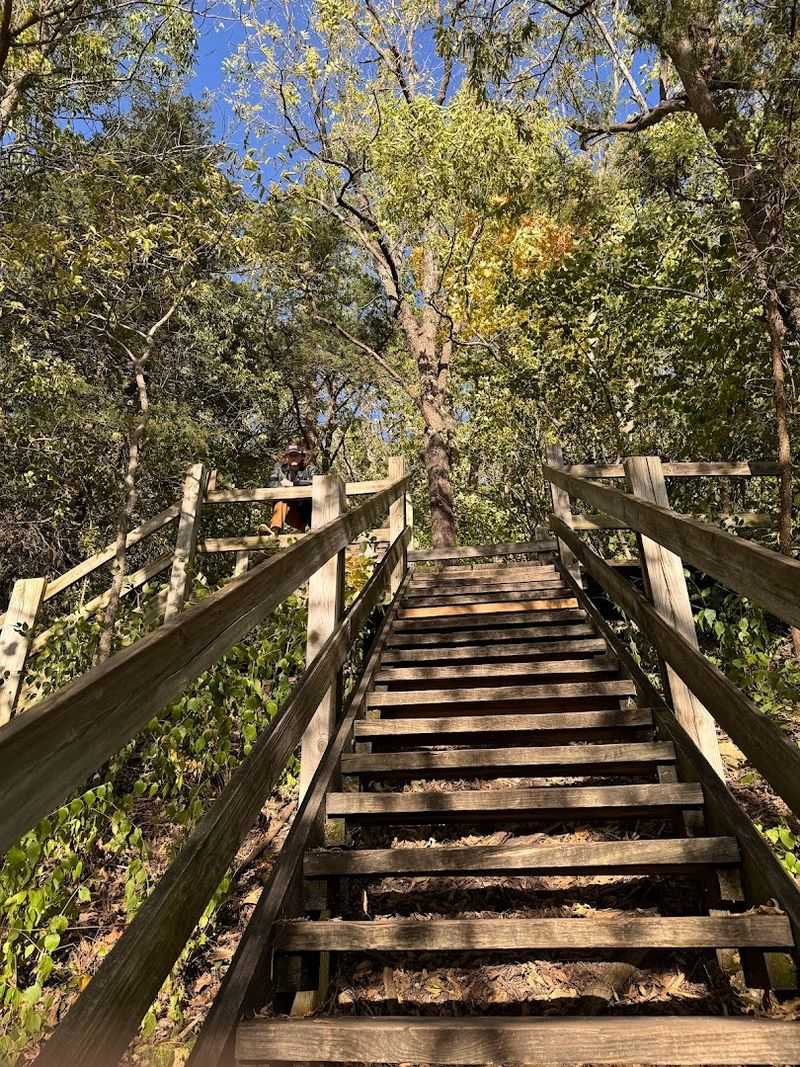
If you’re up for a little movement, the wooden staircase leading down toward the river is worth the effort. The descent is steeper than it first appears, and the steps seem to stretch on longer than expected. It’s manageable, but you’ll want to pace yourself—especially knowing the return climb will feel noticeably tougher on the way back up.
Beyond the stairs, the trails around the bluff offer short but rewarding loops. They’re not long hikes, but they give you a different perspective on the landscape, with filtered views through the trees, birds moving through the canopy, and pockets of shade that make it easy to slow your pace.
The terrain changes just enough to keep things interesting without demanding too much. Conditions can shift with the seasons, so a little preparation goes a long way. After rain, lower areas near the river can turn muddy, while fallen leaves in autumn or dry dust in summer can make sections slightly slick.
Comfortable shoes with a bit of grip make the experience smoother and let you focus on the surroundings instead of your footing. When you make your way back to the top, the overlook feels different the second time around.
Benches give you a chance to catch your breath, and the view seems more earned. That combination of light effort and quiet scenery tends to stay with you, turning a simple walk into something a little more memorable.
When To Visit For The Best Experience
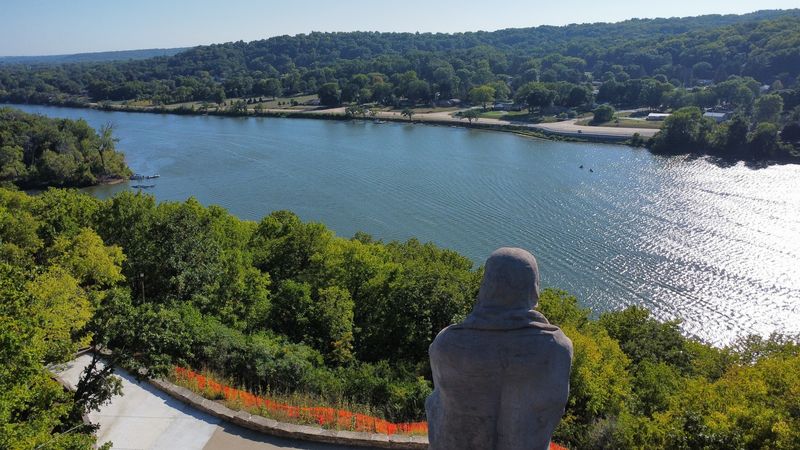
Timing changes everything here, and even small shifts in light can transform the entire scene. Morning light cuts cleanly across the surface, sharpening every fold and giving the statue a more defined, almost sculptural crispness.
By late afternoon, the tone softens and warms, turning the concrete into a gentle gradient that feels more atmospheric than precise. Each season brings its own version of the bluff. Spring adds fresh greens and clearer air along the river, making everything feel open and renewed.
Summer stretches the day with wide skies and long golden hours, perfect if you want to linger without watching the clock. Autumn stands out the most, with the surrounding trees shifting into deep reds and copper tones that frame the statue in a way that feels almost staged.
Winter has its own appeal if you’re prepared for it. Snow settles into the details of the sculpture, outlining shapes you might not notice otherwise. The park also grows quieter, and the sound of the river carries farther in the still air. Just be ready for wind—it moves freely across the bluff and adds a noticeable chill.
If you’re planning to take photos, flexibility helps. A wide lens captures the full scale of the statue and landscape, while a telephoto lens pulls out textures and distant curves in the river. No matter what you bring, light will do most of the work for you.
What Makes This Place So Special
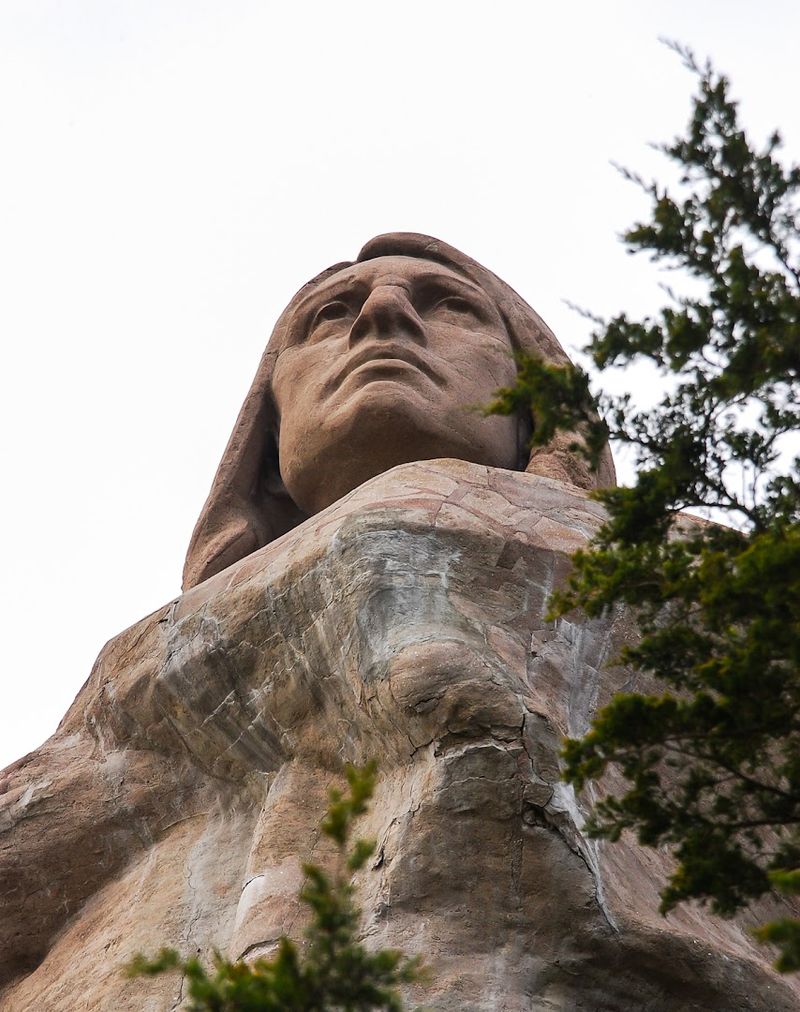
There are plenty of scenic overlooks and public sculptures, but very few places where both feel equally important. That’s what sets this one apart. The Black Hawk Statue isn’t just something you look at—it’s something you experience alongside everything around it.
The scale, the silence, and the setting all work together in a way that feels intentional without being overwhelming. Part of what stays with you is the balance. The statue holds its ground without dominating the landscape, and the landscape never feels like a backdrop.
Instead, the two exist in quiet conversation, each one shaping how you see the other. The longer you stay, the more that connection becomes clear. There’s also a sense of stillness here that’s harder to find than it should be.
Even when other visitors are nearby, the space encourages a slower pace. Conversations soften, footsteps pause, and people naturally give the moment a little more attention than they expected. It’s not something the place asks for—it’s something it creates on its own.
You don’t need hours to feel the impact, but giving yourself time makes a difference. A few extra minutes, one more walk around the base, or a final look out over the river tends to deepen the experience. By the time you leave, it’s not just the height or the view you remember. It’s the feeling of having been somewhere that asked you to slow down—and quietly made it worth it.
Share this story