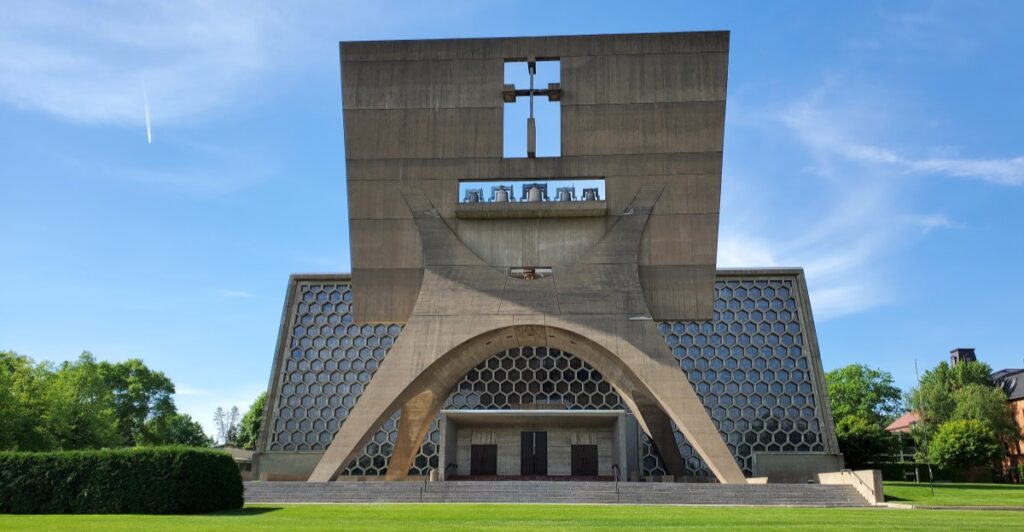
Thousands of Minnesotans cruise along the freeway west of St. Cloud every week without realizing that a community of Benedictine monks prays a few minutes away. Tucked among trees, lakes, and trails near Collegeville sits one of the most striking places of worship in the Midwest, and it doesn’t advertise itself with billboards or flashing signs.
The church here is a bold slab of modern architecture with a wall of stained glass that people compare to a honeycomb. A rare handwritten Bible draws groups from out of state, and a lakeside trail leads to a tiny chapel.
There is also a gift shop staffed by brothers, a pottery studio, and a woodworking shop. Keep reading to learn what makes this quiet spot worth a detour, how to time a stop around daily prayer, and which corners even regular passersby miss.
A Monastery Hiding in Plain Sight
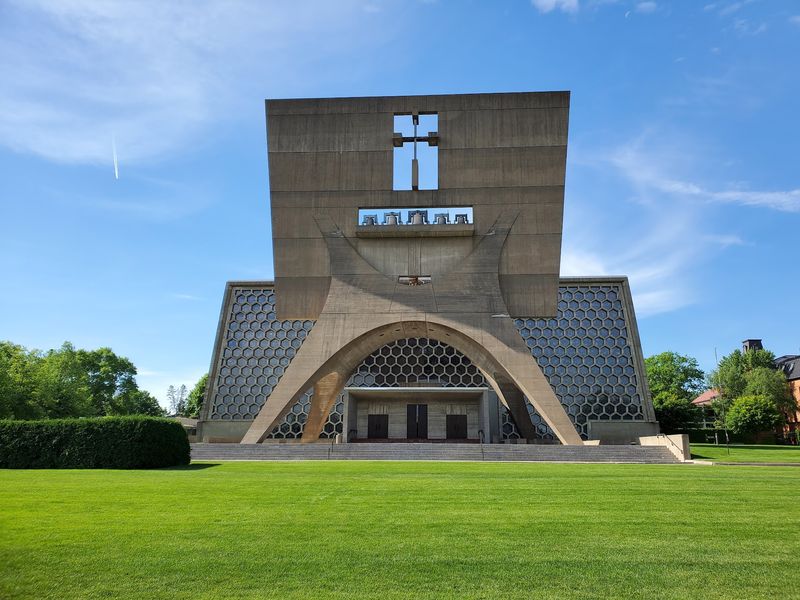
Right off the interstate in central Minnesota, a community of Benedictine monks keeps a schedule of prayer that has nothing to do with rush hour. Saint John’s Abbey sits at 2900 Abbey Plaza, Collegeville, MN 56321, in the United States.
Many travelers between the Twin Cities and points west never take the exit. That is a shame, because a short side trip off the freeway leads to one of the most talked-about church buildings in the state.
The abbey shares its grounds with Saint John’s University, a rural campus with lakes, wooded trails, and historic buildings. The campus also houses a high school for day students and residents.
The setting feels more like a small village than a single landmark. There is a church, a guest house, a gift shop, a bookstore, workshops, and a cemetery, all within walking distance.
People stop for a half hour, while others spend three full days exploring. The beauty of the place is that both approaches work.
So the next time the highway signs for Collegeville flash by, consider it an invitation rather than background scenery.
Roots Stretching Back to the 1800s
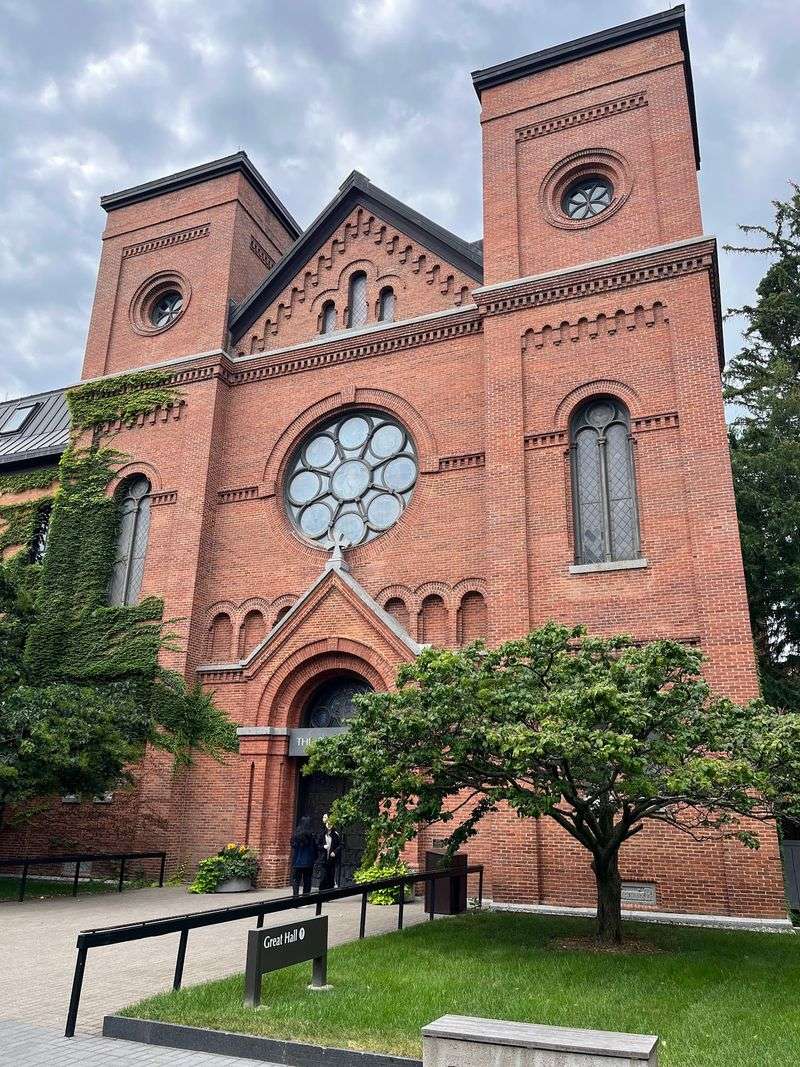
History runs deep on these grounds. The school connected to the abbey is considered one of the oldest in Minnesota, chartered in the mid 1800s.
That long timeline shows up in the buildings. The campus mixes older structures with the famous modern church, so a single stroll covers more than a century of design.
The monks here also have a fascinating link to a Benedictine community in Muenster, Saskatchewan. Settlers there reportedly agreed to come only if some of the monks came with them.
It is a small story with a big message. Faith communities often grew around people who were willing to travel together into the unknown.
A little research before visiting adds a lot of meaning to the trip. Knowing the backstory turns quiet hallways and old stone into chapters of a larger tale.
The Great Hall, which once served as the original church, is one of the clearest windows into that past. It now holds the gift shop, so history and souvenirs share the same address.
Concrete, Angles, and a Lot of Nerve
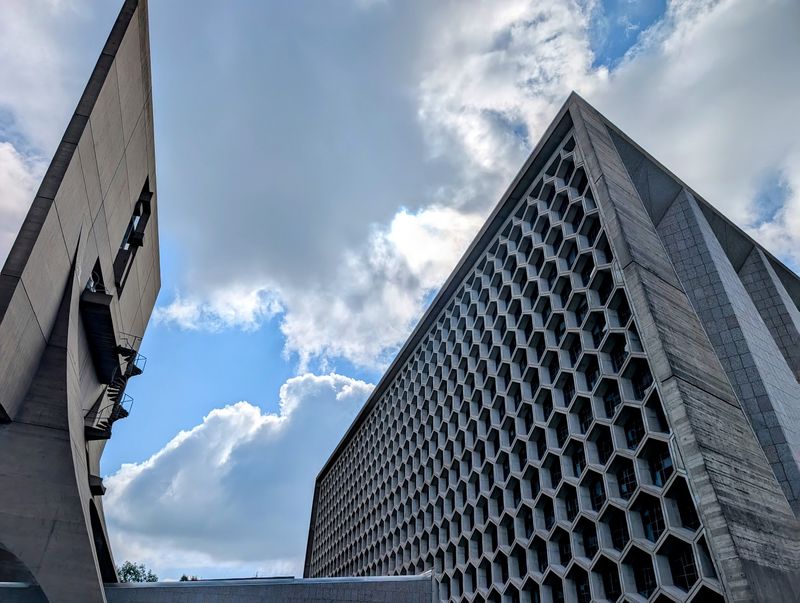
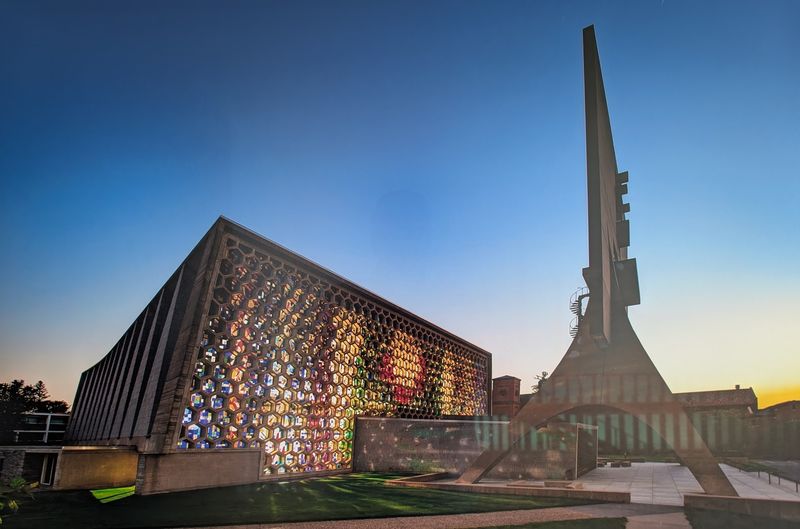
Love it or debate it, the Abbey Church refuses to be ignored. The building is all concrete and straight lines, a daring choice that was cutting edge in its day.
Some folks wish it had softer curves. Most, though, call it amazing, unique, and one of the most artistic places of worship they have seen.
The bell banner out front is a landmark on its own. It stands like a giant concrete sign announcing that something unusual waits inside.
The size is impressive, yet the space still feels welcoming rather than cold. That balance is harder to pull off than it looks.
Architecture fans will want extra time here. Every angle offers a different take on how modern design can serve an ancient purpose.
For a structure built of such heavy material, it has a surprising way of making people slow down and stay a while.
The Honeycomb Wall of Glass
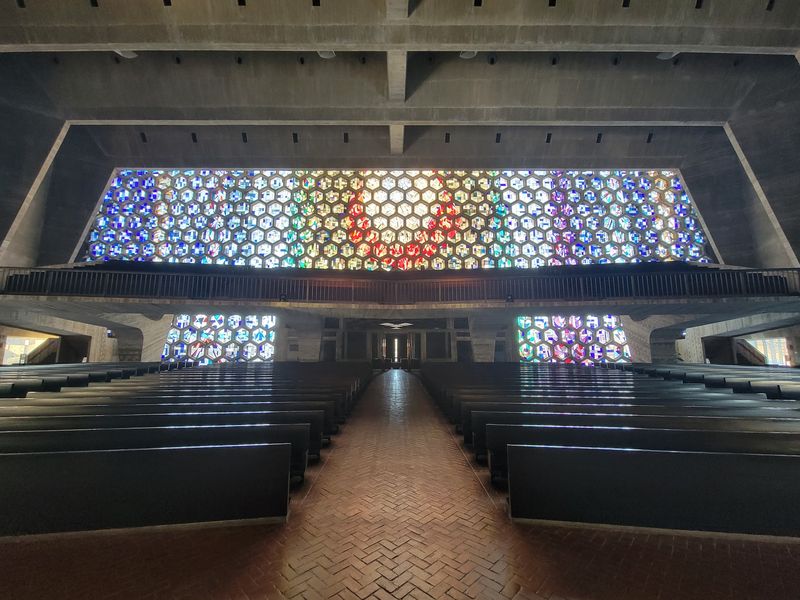
One wall steals the show, and nobody seems to mind. Stained glass covers the entire surface in a pattern that many compare to a beehive.
The colors and shapes are unlike typical church windows. Instead of saints in robes, the design leans on geometry repeated across a huge space.
It is the kind of feature people name as a must-see. Even short stops usually include a long pause in front of it.
Photographers appreciate the natural light that flows through during summer ceremonies. Wedding photos taken here are often described as timeless.
The glass also explains why the interior earns as much praise as the exterior. Concrete outside, color inside, and the contrast works.
Bring patience along with a camera. The pattern rewards a second and third look, because new details keep turning up.
Praying the Hours With the Monks
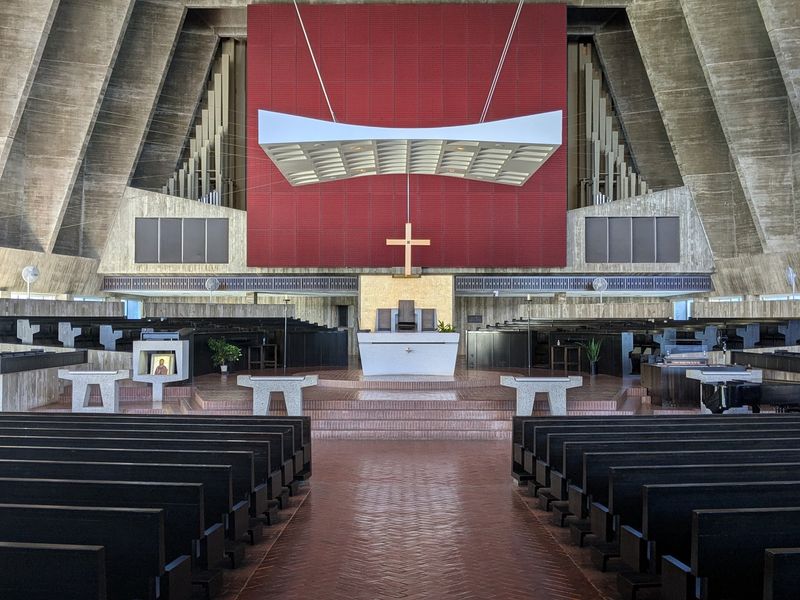
Here is something most tourist stops cannot offer. Guests are welcome to join the monks for daily prayer.
Prayer happens every day at specified times, with morning, afternoon, and evening options. Mass is held on Sundays, and there is also a late afternoon Mass.
Some people return year after year just for this. They find it deeply meaningful to pray the hours alongside the community.
Evening prayer, in particular, gets called just the ticket for a weary heart. No special background is needed to sit quietly and take part.
The church’s acoustics are often described as amazing, which suits a space built for chant and voice. It adds to the sense of calm.
Timing a stop around one of these gatherings changes the visit completely. A building tour becomes a living experience.
Quiet Corners and Side Chapels
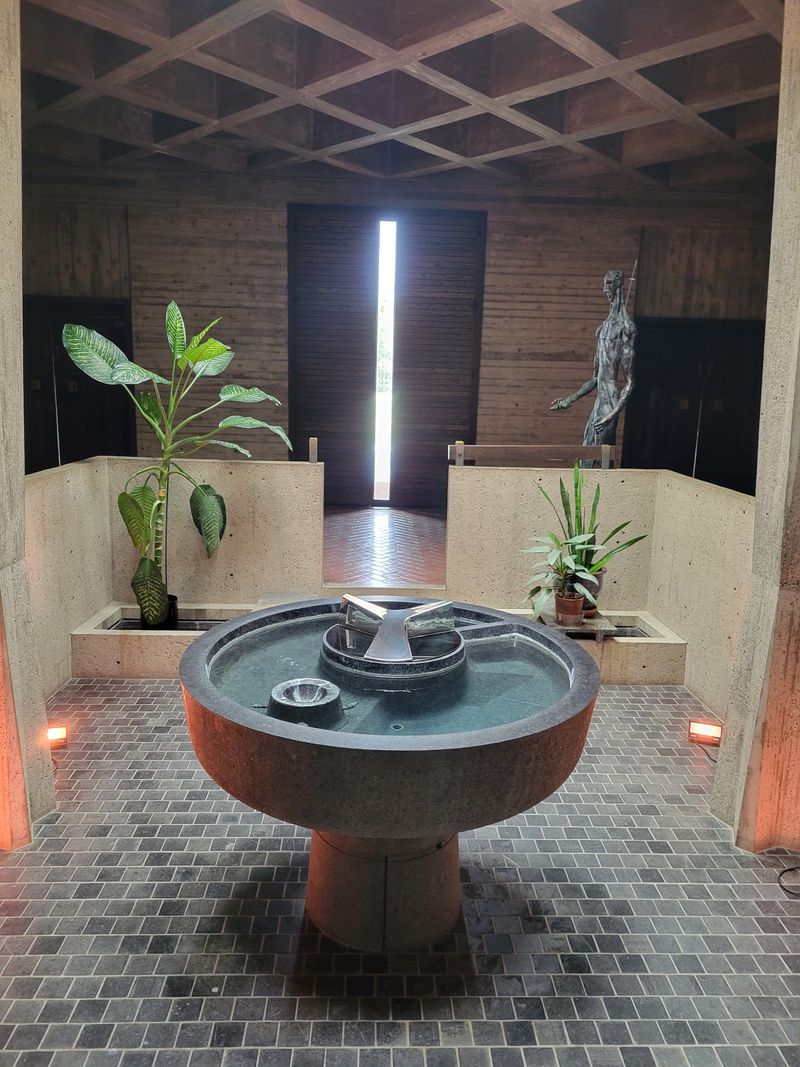
Not every treasure here is enormous. Tucked along the main church are side chapels made for stillness.
A half hour break from a long drive can be spent sitting in one of them. It is a simple, free way to reset before getting back on the road.
People describe the place with words like peaceful, restorative, and necessary. That three-word summary says plenty.
The church team is also organized and easy to work with, which matters for weddings and group events. Clubs have used the grounds as a meeting spot too.
Quiet is the main currency inside. Phones go silent, voices drop, and the pace naturally shifts.
Nobody needs an agenda to enjoy these corners. Sometimes the best plan is to sit, be still, and let the afternoon move on without you.
An Original Saint John’s Bible
Groups travel across several states for one book. The original Saint John’s Bible is kept in the Alcuin Library on campus.
A church group from Colorado Springs once made the trip specifically to see it. They spent three days working with the curator.
Crafters and lovers of handmade work have extra reason to care. A hand-illuminated Bible is a remarkable feat of calligraphy and art.
Seeing it is a highlight for anyone who appreciates artistry made slowly and carefully. It is described simply as absolutely stunning.
Planning ahead is wise for groups hoping for a deeper look. Contacting the abbey through its website is the best starting point.
Few road trip detours end with a page of history this impressive. It might just be the most memorable bookmark in Minnesota.
Workshops for Makers at Heart
Calling all crafters: the campus has a creative side worth exploring. A wood and organ shop and a pottery studio are part of the grounds.
These spaces show that monastery life is not only about prayer. Work with the hands is part of the Benedictine rhythm too.
Groups touring the campus have included both workshops on their walks. It is an easy add-on for anyone interested in traditional skills.
The Liturgical Press is also based here, and its bookstore is worth a visit. Readers can browse titles produced right on site.
For makers, it is inspiring to see craft treated as something meaningful. Simplicity and beauty show up in the workmanship.
Leave a little time for wandering between buildings. The next creative surprise may be just around a corner.
Bread, Books, and a Brother at the Register
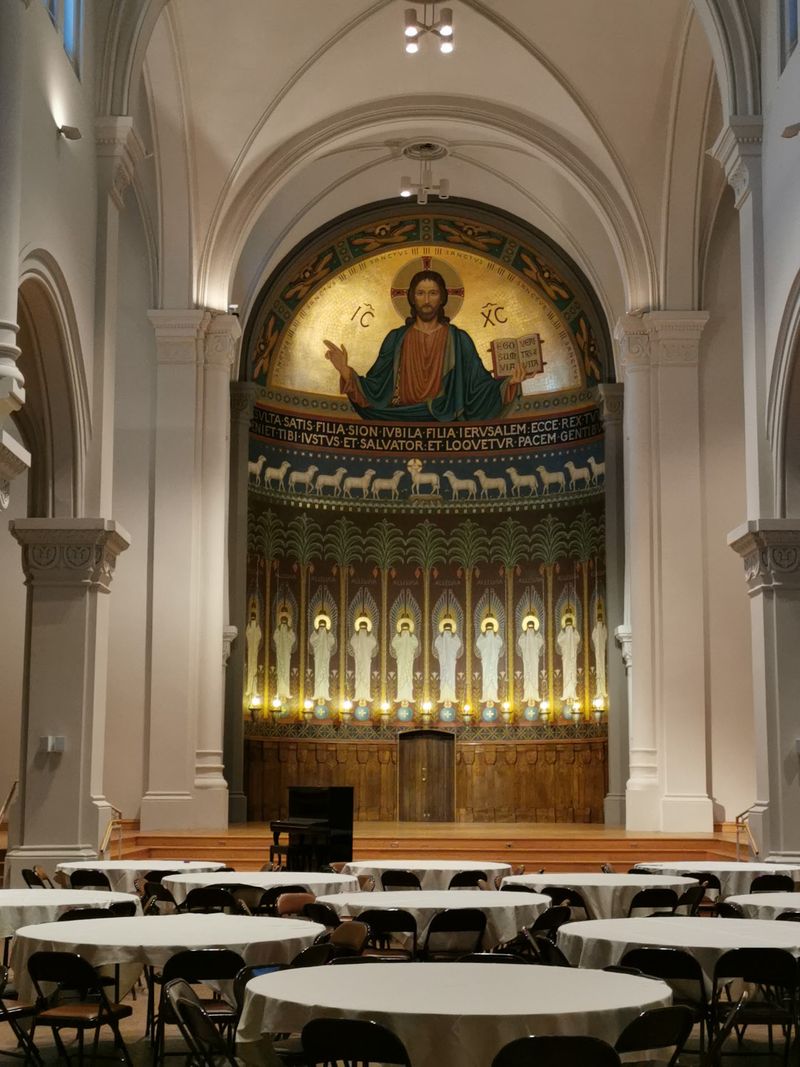
Souvenir shopping takes on a gentler tone in the Great Hall. The abbey runs a little gift shop there, often staffed by one of the Benedictine brothers.
Bread is among the items people have picked up and enjoyed. Shoppers leave feeling welcome as well as stocked up.
Purchases here do more than fill a tote bag. Buying something or leaving a small donation helps support the community that keeps the grounds open.
That simple gesture is a nice way to say thanks. Admission to the church is not the point, but generosity is appreciated.
Pair the shop with a stop at the Liturgical Press bookstore for a fuller browse. Between them, there is plenty to bring home.
It is retail therapy with a side of genuine hospitality, and that combination is rare.
The Lake Walk to a Blue and Gold Chapel
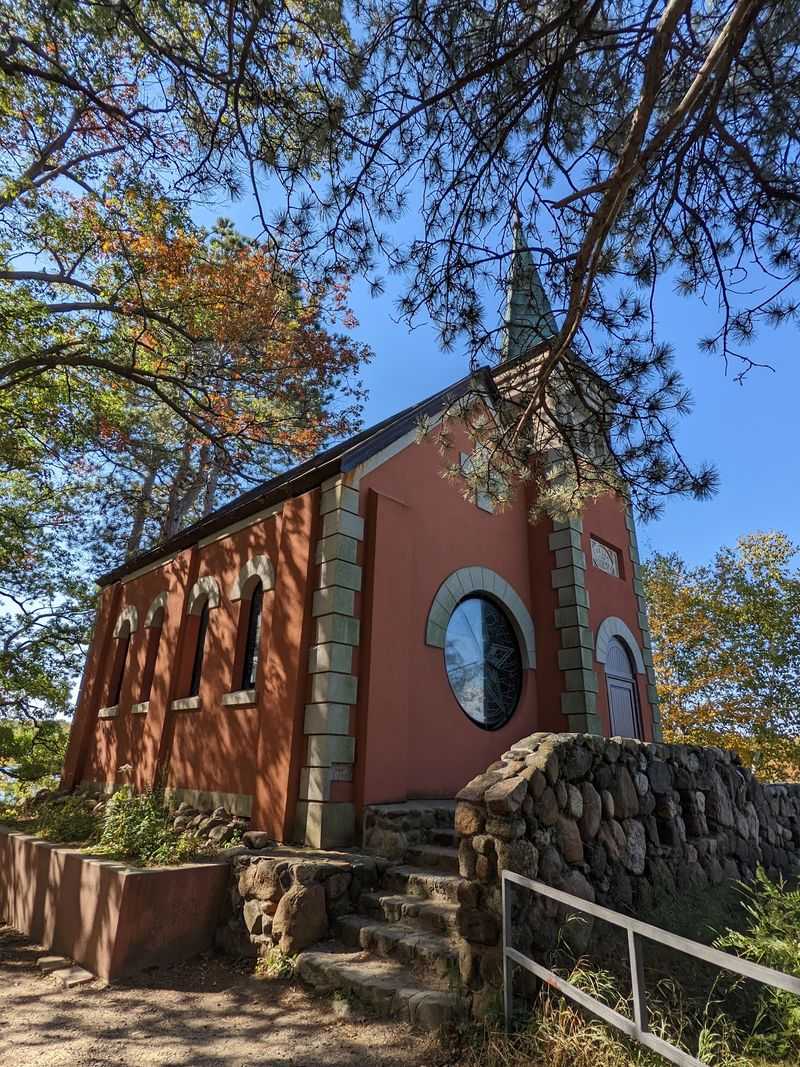
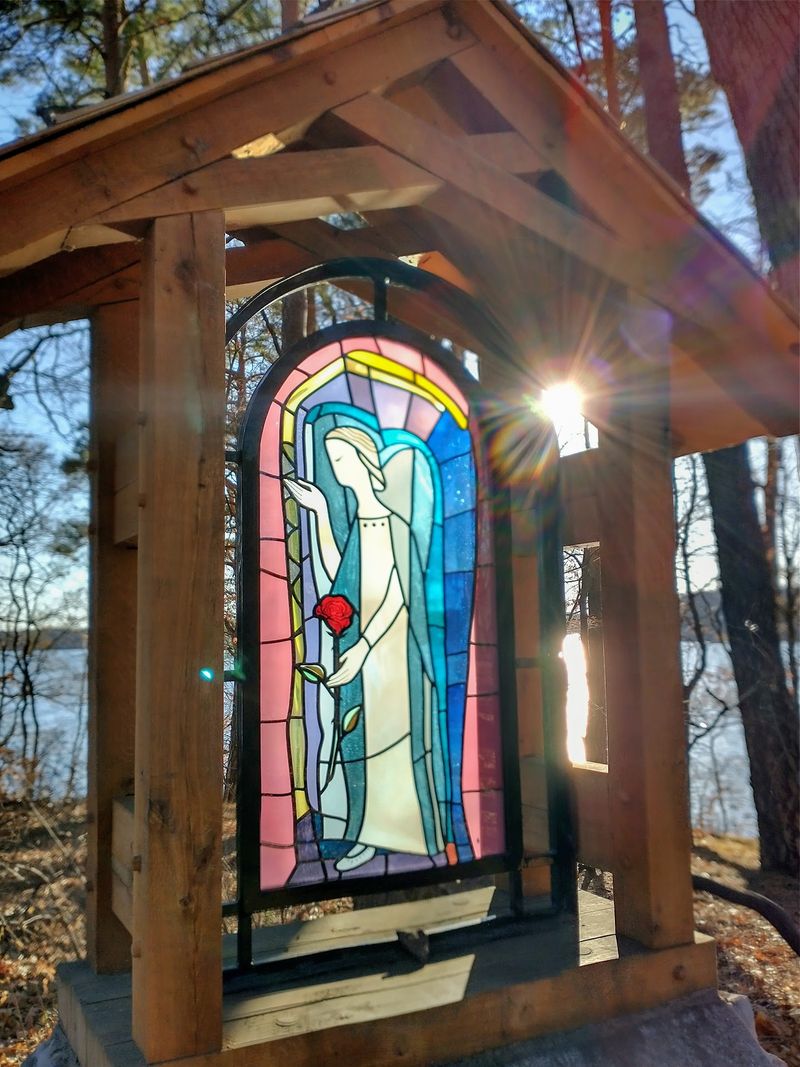
Some of the best views require a little legwork. The Lake Walk winds around Lake Sagatagan and ends at a small chapel with blue and gold stained glass.
To find it, head to the beach and take the trail that heads to the left. The chapel appears to have been remodeled in recent years.
Fall is a favorite season, when the trees light up across the campus. Views in every direction make the route a photographer’s playground.
Expect company on nice days, since the trail is popular. A sign asks that dogs stay home, so plan accordingly.
Hikers return even in winter, when the trails stay open for exploring. Cyclists also ride out and finish with a walk.
Please pack out everything you bring. Longtime regulars treasure this spot and hope it stays clean for years to come.
Overnight Retreats in the Guest House
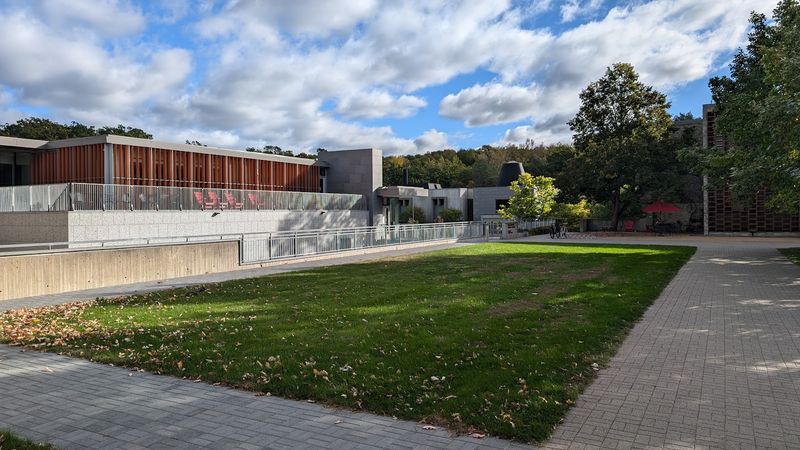
A day trip can easily turn into a weekend. The Abbey Guesthouse welcomes overnight guests and retreat groups.
Rooms are described as very clean and efficient. Staff are friendly, and the meals earn praise as well.
Retreat groups find the setting ideal. Quiet trails, daily prayer, and comfortable lodging make a strong combination.
Even one night can feel like a real escape. Sitting still, walking the grounds, or joining evening prayer fills the hours nicely.
Groups have also dined at the Great Hall during longer stays. It adds a sense of community to the experience.
Hospitality here reflects Benedictine values, which emphasize welcoming each guest. That spirit shows up from check-in to checkout.
Planning a Smooth Stop
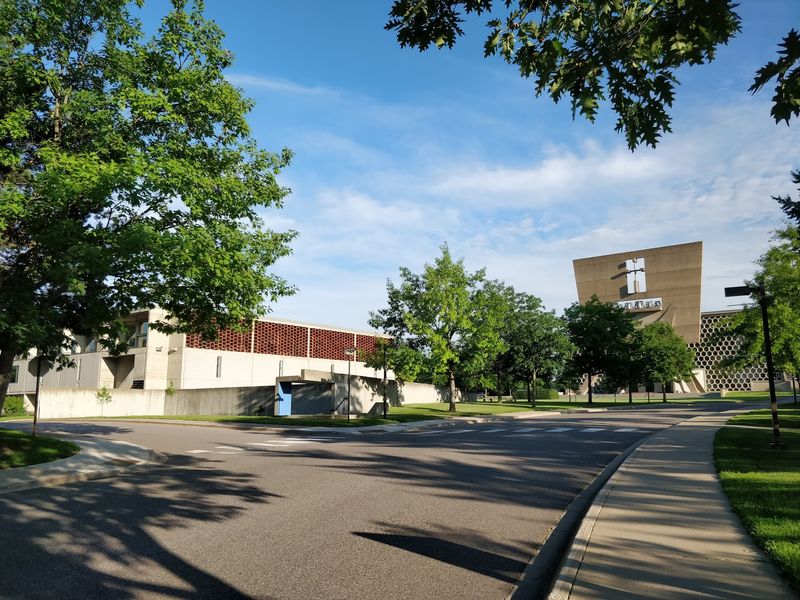
Good news for spontaneous types: a visit here requires very little planning. The abbey sits a short side trip off the freeway near Collegeville.
A quick stop of thirty minutes covers the church and a side chapel. A full day leaves time for the Lake Walk, cemetery, and shops.
Check the abbey website before going for current prayer and Mass times. Sunday Mass and daily prayer follow set schedules.
Bring a camera and comfortable shoes. The campus is compact but full of places to wander.
Wedding couples and groups should reach out early, since the church is a popular venue. The team is known for being organized.
The cemetery, a short walk beyond the abbey, is another peaceful place to reflect. Add it to the route for a calm finish.
Worth Taking the Exit
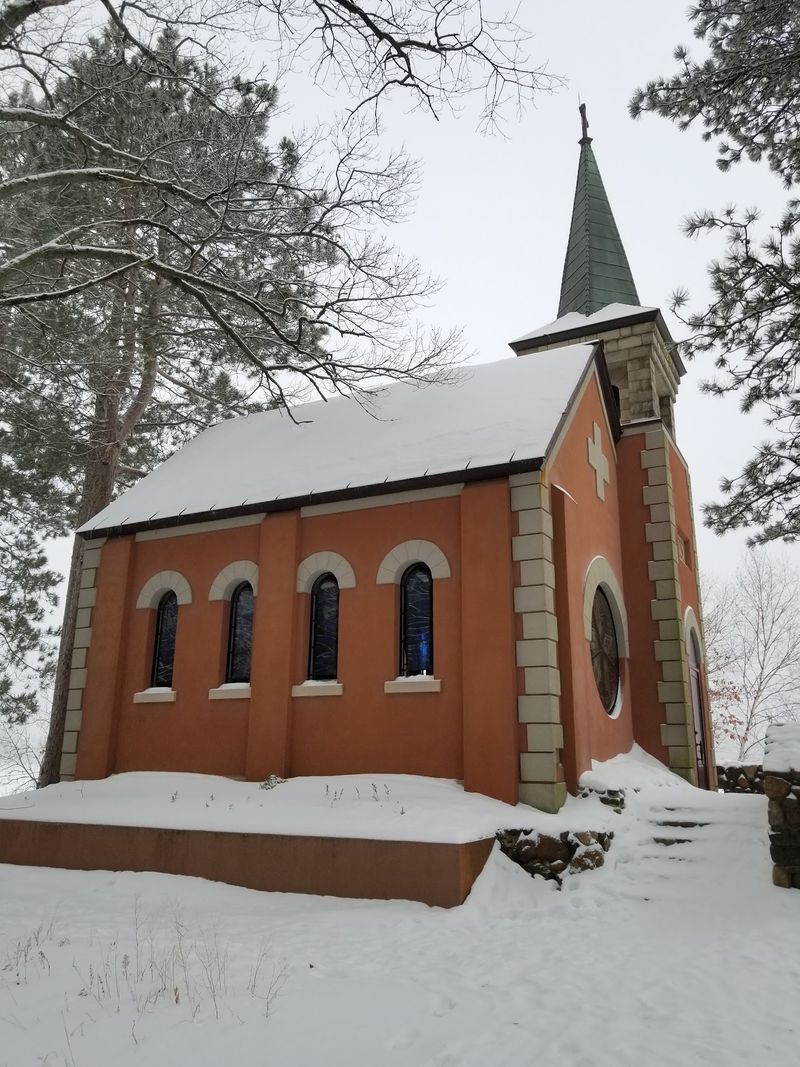
Some places shout for attention, and others simply wait. Saint John’s Abbey belongs firmly in the second group.
With a 4.8-star reputation across hundreds of opinions, its fans are loud even if the abbey is quiet. The praise covers architecture, hospitality, trails, and history.
Crafters can explore the pottery and wood shops and marvel at the handmade Bible. Hikers get a lake trail and a hidden chapel.
Anyone needing a break from the road gets a free, calm space to breathe. The monks keep the doors open and the prayers going.
It works as a half-hour detour or a three-day retreat. Few stops in Minnesota are this flexible.
Next time Collegeville pops up on a highway sign, flip the blinker. The monastery most locals miss deserves a few more people in on the secret.
Share this story