If you have ever wanted roadside whimsy to pull double duty as a history lesson, the Teapot Dome Historical Site in Zillah delivers with a grin that comes layered over a scandal, because this tiny teapot shaped gas station turns national outrage from the 1920s into a friendly landmark you can actually touch, photograph, and talk about with your family on a quick break from I 82.
You roll up, spot the bright white siding and red lid against Yakima Valley sky, and then realize the spout and handle are not just cute, they are a pointed reminder of the Teapot Dome oil scandal that rattled Washington, D.C., a cautionary tale about public trust that somehow feels surprisingly inviting when told by a building barely larger than a shed and set beside a tidy park with clean restrooms, memorials, and room for kids to stretch.
The address is 117 1st Ave, the rating is a steady 4.7 stars from hundreds of visitors, the hours are short and simple at 10 AM to 1 PM Wednesday through Saturday, and the experience lands right in that sweet spot where you can learn something substantial while still snapping a playful photo that makes your friends ask where on earth you found a teapot with a gas station pedigree.
Come for the quirk, stay for the story, and leave with the easy satisfaction of finding a place where local care, national history, and a few well-placed architectural jokes combine into a stop that respects your time, rewards your curiosity, and gives you exactly what a road trip needs most: a memory that sticks without trying too hard.
1. From Scandal to Symbol
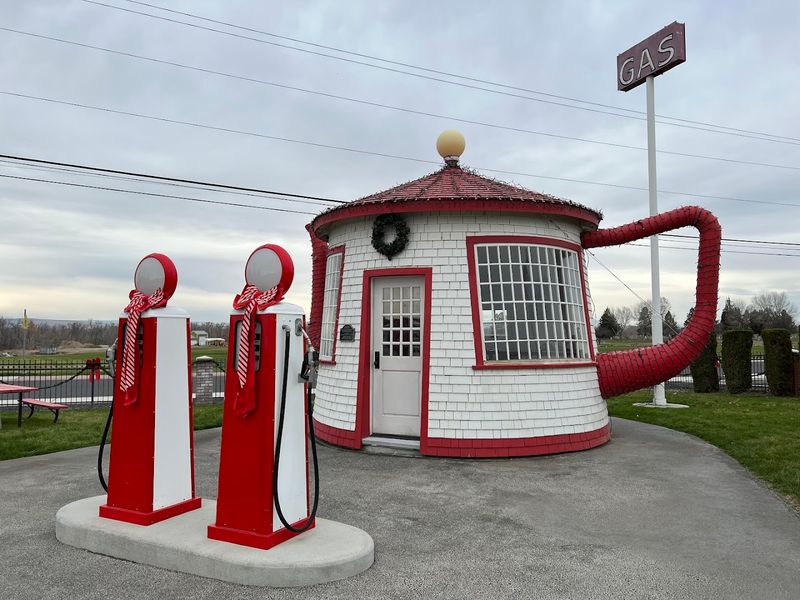
The Teapot Dome Historical Site gets its delightful shape from a very serious story.
In the early 1920s, the Teapot Dome oil scandal rocked the United States, exposing secret leases and backroom favors that outraged the public.
Locals in Zillah took that national anger and turned it into a visual pun you can touch, a tiny service station in the unmistakable silhouette of a teapot.
Built in 1922, the station quickly became a roadside wink at political folly, and it still tells that cautionary tale without a lecture.
You walk up, smile, and remember that accountability matters, even in small towns ringed by orchards and basalt ridges.
Listed on the National Register of Historic Places, the structure has been preserved, relocated, and lovingly interpreted.
Panels summarize the scandal, staff answers questions when open, and the cupola handle and spout feel like props from civic theater.
It is playful history that still nudges you to think critically.
2. The Architecture That Winks
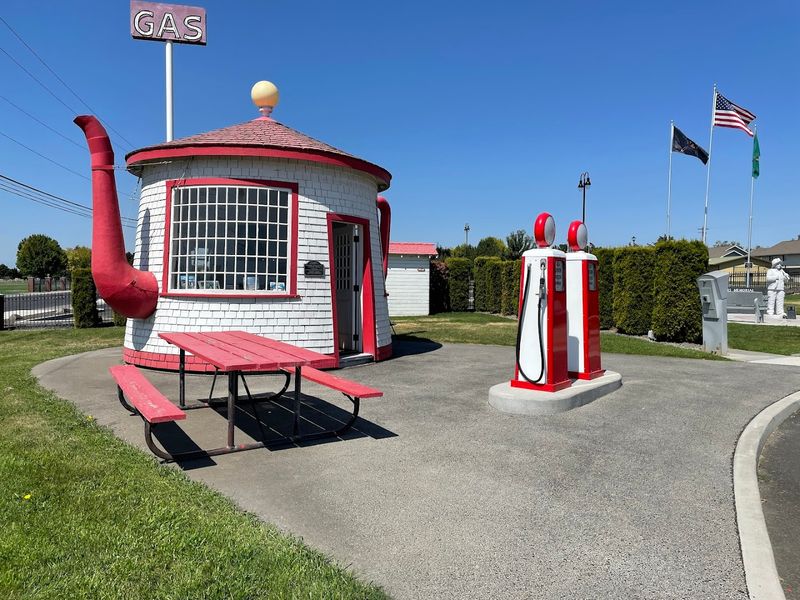
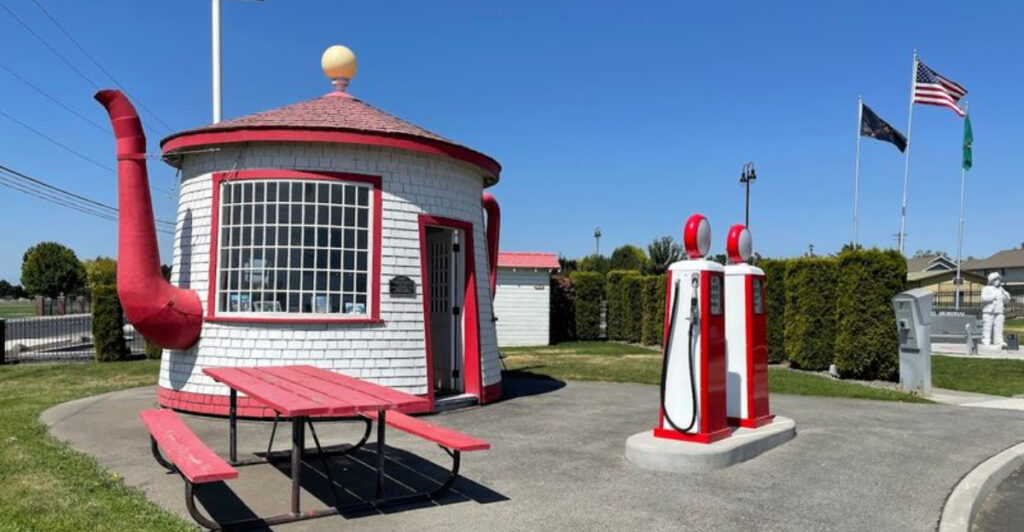
At first glance you notice the red shingle roof shaped like a lid, the white shiplap walls, and the stout spout jutting from the side.
The circular plan lets light arc across the tiny office, while the cupola forms the knob that completes the joke.
Everything is scaled to human height, so kids feel welcome and you never lose the friendly, handmade spirit.
The original gas pumps stood out front, and interpretive photos show their style, porcelain faces gleaming like clockwork.
Craftsmen restored the siding, fascia, and windows, honoring the 1920s proportions without plastic fakery.
You can trace the seams and see how whimsy met carpentry, a union that still feels sturdy under the Yakima Valley sun.
Look up and you will spot flagpoles, tidy brick edging, and that bright paint that photographs beautifully.
The spout frames the sky, the handle curves like a question, and suddenly the architecture starts a conversation that you are invited to finish.
3. Roadside Moves and Preservation
Road trips built this station’s legend, and the Teapot followed travelers as highways shifted across the Yakima Valley.
For decades, it stood along busy routes, pumping gas and winks to passing motorists.
Even after the pumps went quiet, the building refused to fade, hitching a ride to safer ground so future drivers could still pull over and grin.
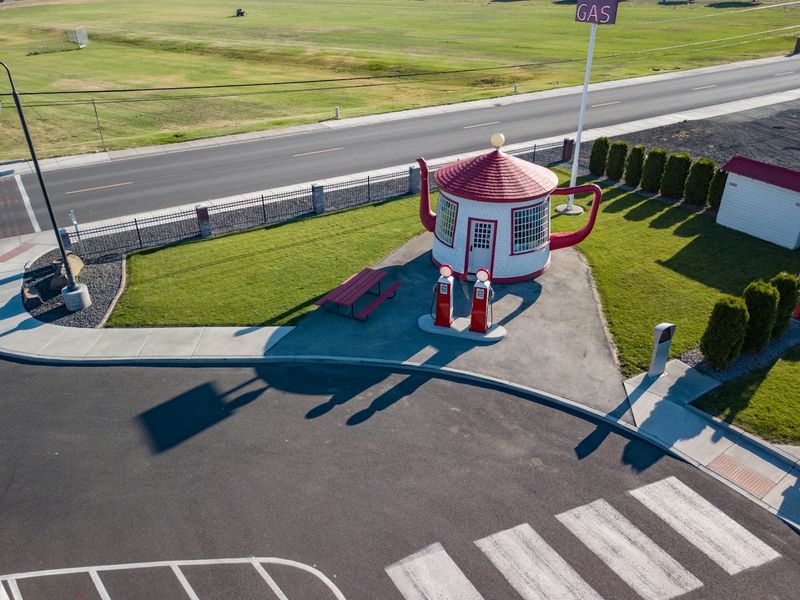
In 2012, the City of Zillah relocated the structure to 117 1st Ave, creating a petite park with parking, restrooms, and interpretive panels.
Volunteers and contractors reset the frame, spruced the siding, and gave the roof a proper shine.
It sits steps from the Fallen Firefighters Memorial and a veterans tribute, which only deepens the sense of civic pride.
Today it is a curated stop with regular open hours midweek, short but meaningful.
You can peek through windows when closed, study photographs, and watch kids trace the curve of the spout.
The move kept the joke alive and made the lesson easier to reach.
4. How to Visit Today
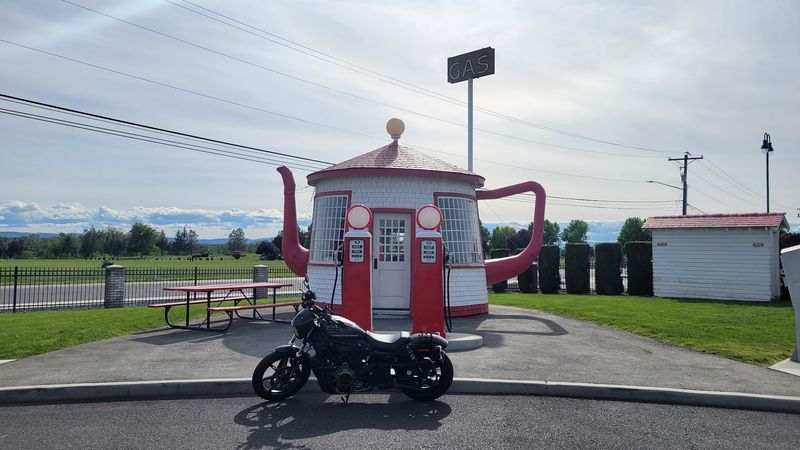
Planning a stop is easy if you know the schedule.
The site keeps short museum-style hours, opening 10 AM to 1 PM Wednesday through Saturday, and closing Sunday through Tuesday.
That window fits a late breakfast in Zillah or a midmorning break from I 82, and the restrooms in the adjacent park help keep the drive comfortable.
Parking is free, with room for a handful of cars and even the occasional camper, according to reviews.
When doors are open, a friendly staffer can share stories and point out details you might miss.
When closed, you can still explore the memorials, let kids test the playground, and peek through the windows for a glimpse of the interior.
Bring a camera and curiosity, plus water in summer because the Yakima sun can be bright.
If you have accessibility needs, the paths are short and smooth.
Call the city if you have group questions at +1 509 829 5151.
5. Memorials Beside the Teapot
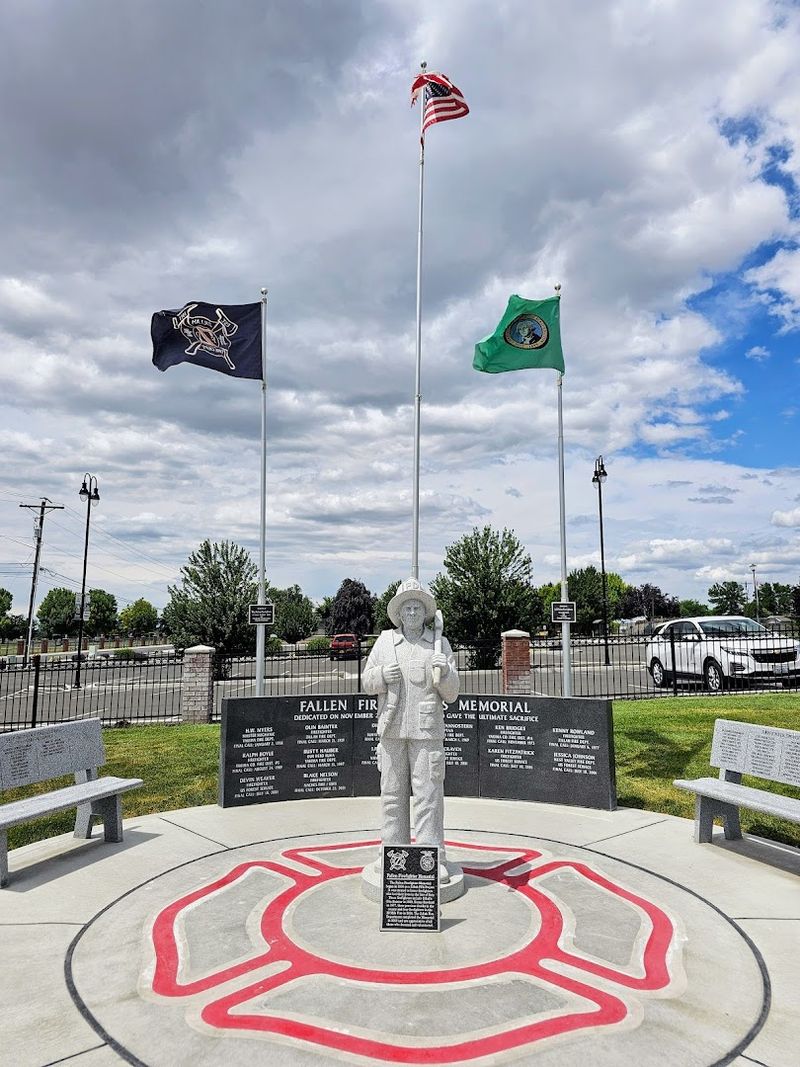
Right beside the teapot, a solemn plaza honors firefighters who gave everything in the line of duty.
Granite, metal, and flags anchor the space, and the landscaping is kept tidy so families can linger with dignity.
Many visitors mention the memorial first, a reminder that lighthearted architecture can share ground with deep gratitude.
There is also a veterans tribute adjacent to the lawn, with plaques and markers that invite a quiet pause.
Benches catch late morning shade, and the hum of nearby traffic softens into the background while you read names and dates.
It adds a layer of service and sacrifice to a stop that might otherwise have been a quick selfie.
If you bring kids, talk about community helpers, history, and respect before posing for pictures.
This corner of Zillah proves a roadside attraction can also be a common square.
You leave with photos, yes, but also with perspective gathered under waving flags.
6. Voices From Visitors
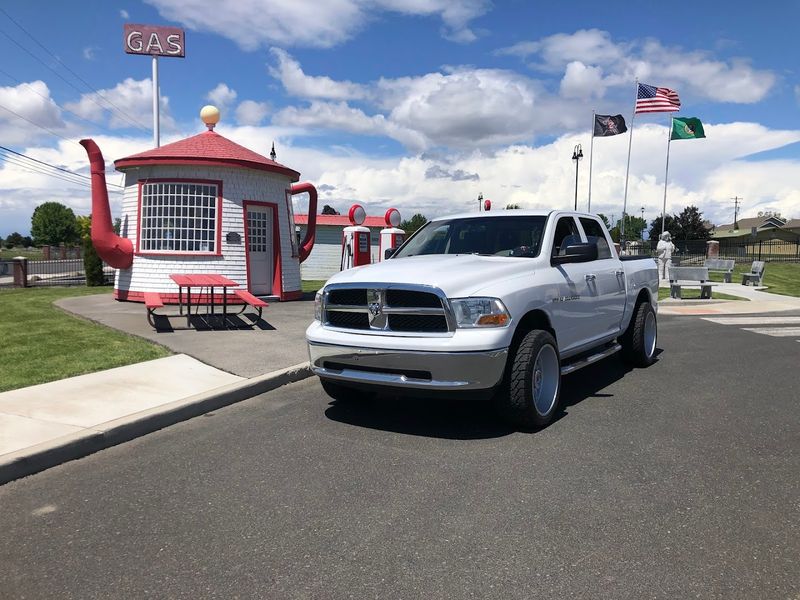
Scan the posted reviews and you will notice a consistent theme.
People praise the clean restrooms, the easy parking, and the quick detour off the highway that breaks up a long day.
Many mention the firefighters and veterans memorials, while others laugh about snapping I am a little teapot poses beside the spout.
Travelers towing campers appreciate the turn radius and simple lot, and parents appreciate the adjacent playground and water features added to the park.
Some comment that the interior is not always open, and a few wish for more merchandise, but the friendliness of the staff gets warm notes.
The consensus is clear, a neat little stop with a long history and a lot of heart.
Locals drop by with visiting relatives, sharing where the station stood decades ago before the move.
You feel welcomed into that story as soon as you step out of the car.
Three minutes from the highway, and memories start rolling.
7. Photos, Families, and Quick Exits
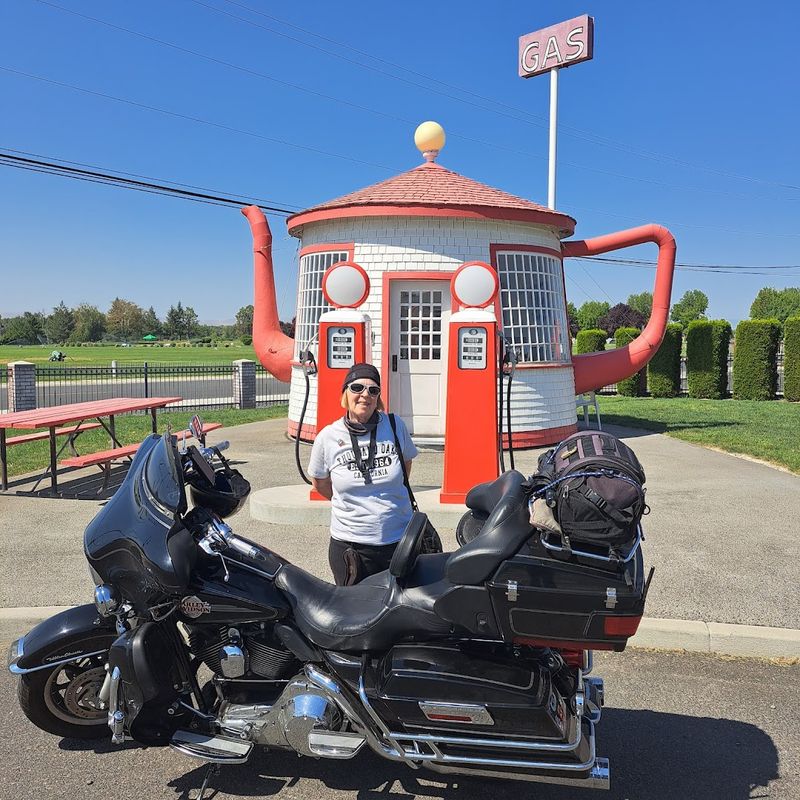
Bring a sense of play and a wide lens, because the teapot shape rewards angles and close-ups.
Early light pops the white siding, and midday sky reflects blue along the spout rim.
Step back to include the flags and memorials, then move in to frame textures in the shingles and the ridged cap of the cupola.
If you are traveling with kids, there is room to wiggle without stepping into traffic, and the playground keeps energy happy.
Pets can walk on a leash across the tidy grass, and picnic tables make a quick snack easy.
Restrooms are closed, which might be the most photographed relief on a long desert drive.
When you leave, you can rejoin I 82 quickly, with gas and coffee available back toward the highway.
Zillah’s downtown has tacos and treats if you need a longer pause.
Either way, your camera roll will carry both charm and a history lesson home.
Share this story