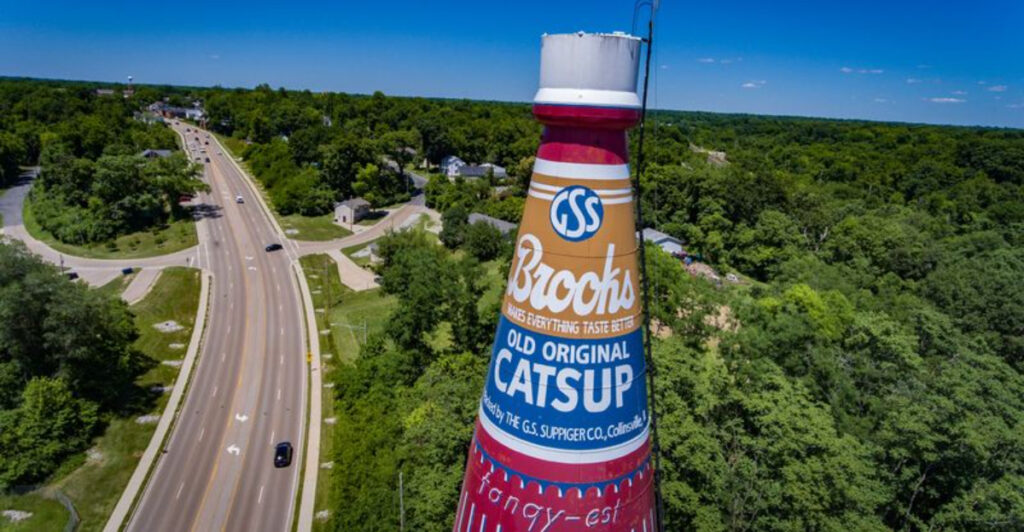
A towering bottle of catsup rising above the roadside is the kind of sight that makes you wonder whether you really saw what you think you did. In Collinsville, the World’s Largest Catsup Bottle transforms a vintage water tower into one of Illinois’ most unmistakable roadside landmarks.
Designed to resemble a giant Brooks Catsup bottle, the quirky structure has become a beloved piece of local history and an irresistible photo stop. You cannot exactly squeeze it onto a burger, but that hardly diminishes the fun. In Collinsville, even a water tower knows how to make an entrance.
A Water Tower Dressed Like a Condiment
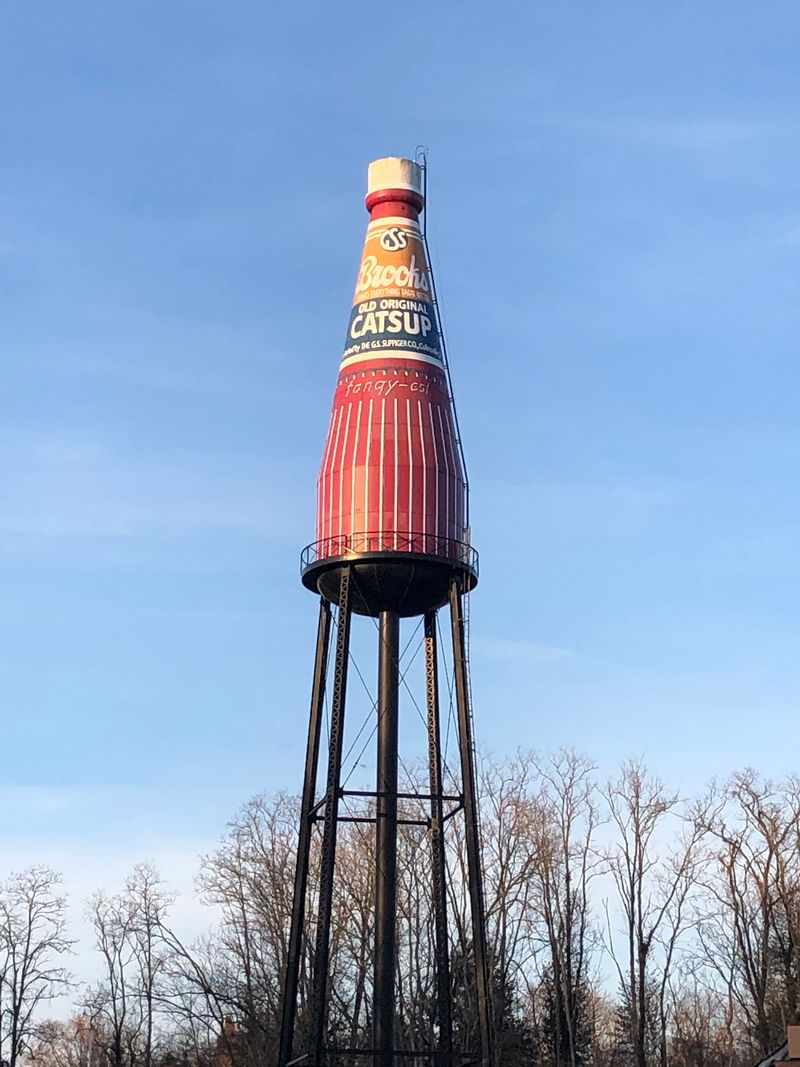
At first glance, the joke lands fast. Rising high above South Morrison Avenue, the landmark looks like somebody took a grocery shelf item and stretched it toward the clouds.
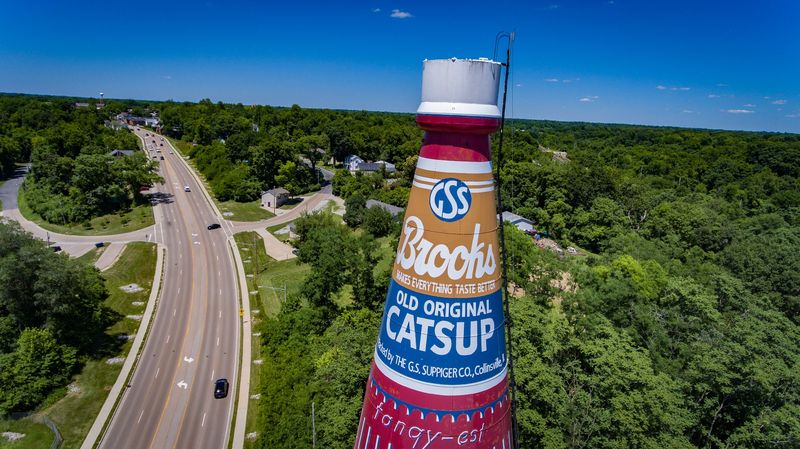
Then the second surprise kicks in: it is not a giant bottle at all, but a working water tower shaped and painted to resemble a Brooks Catsup bottle.
That simple twist explains why the place is so memorable. Most roadside attractions are built only to be looked at, but this one started with a practical job.
It held water for the nearby plant, and its bottle design turned an industrial need into a piece of local identity that still catches drivers off guard today.
The proportions are part of the fun. The narrow stem, rounded bottle body, and red cap shape read clearly even from a distance, which is why the tower remains easy to spot as traffic moves past.
Unlike flashy theme park signs, the design is clean and old-school, almost like a product label escaped into the skyline.
Kids usually get the joke right away, while adults tend to stare a second longer and laugh once the shape fully clicks. That delay is part of the charm. The tower does not try too hard, and that makes it even funnier.
If the goal is to see a landmark that is strange in the best possible way, this one delivers quickly. Bring a camera with a wide view, because the full height can be tricky to fit into one frame.
A few slow steps back from the road-facing view can help the bottle shape stand out better against the sky, especially on a clear day when the white tank and red top look bold and crisp.
Why Collinsville, Illinois Owns This Odd Claim to Fame
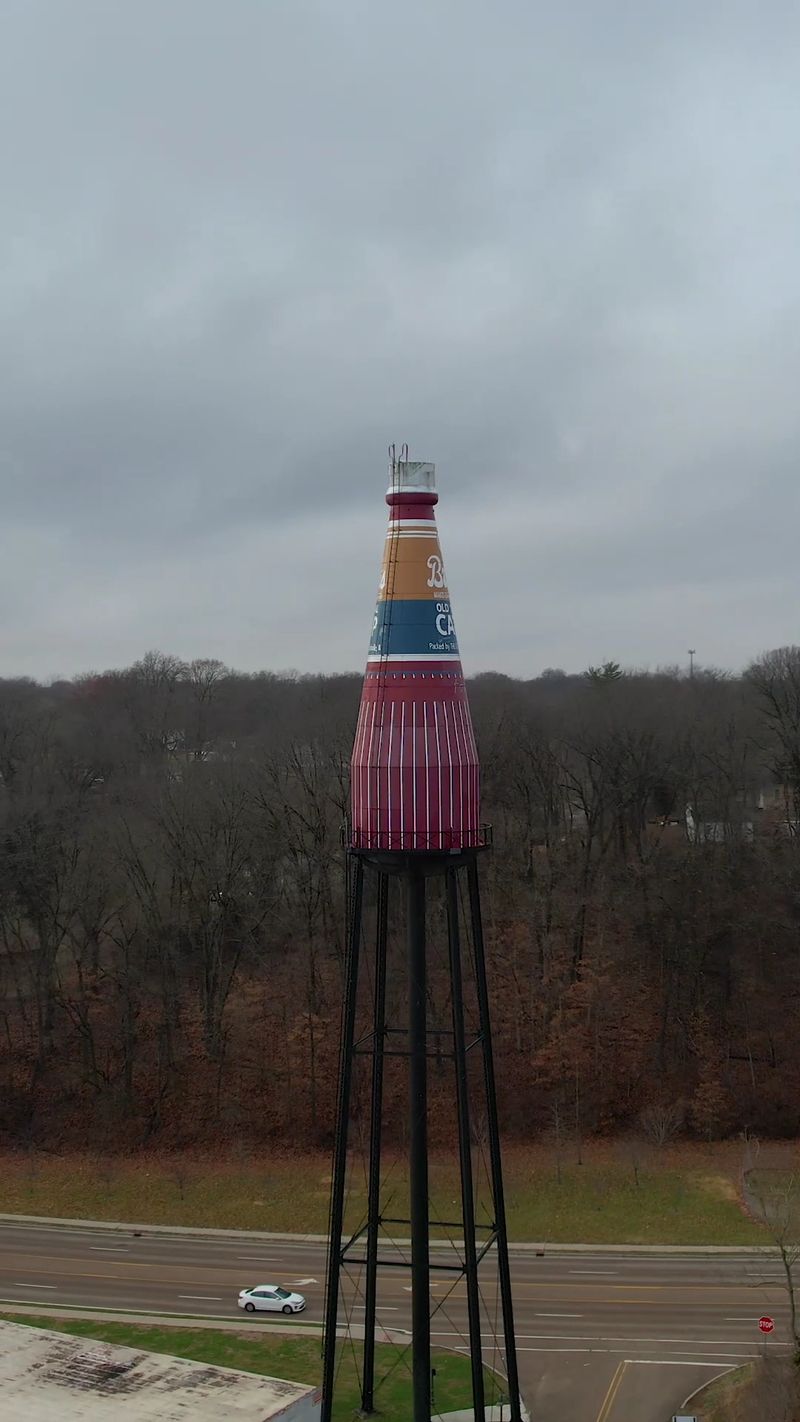
Every town has a detail that makes people slow down. In Collinsville, that detail happens to be a giant catsup bottle rising above a busy road.
It is the kind of sight that gives a place instant personality, especially in a region filled with practical buildings, highway traffic, and everyday errands.
The Illinois setting matters more than it may seem at first. This is not a random sculpture dropped into a parking lot for attention.
The bottle grew out of the local food business that once used the site, so the landmark connects directly to the town’s working past instead of sitting apart from it.
That connection gives Collinsville a fun balance of industry and whimsy. The tower stands near an active commercial area, which makes the view a little unexpected.
One minute the surroundings look ordinary, and the next minute there is a giant condiment shape above everything, turning a normal drive into a story people want to retell.
Because it is so specific, the landmark helps the town stand out in a crowded map of Midwest attractions. Some places lean on broad claims or oversized statues with weak local ties.
Collinsville has a structure with real roots, and that gives the bottle more staying power than a simple novelty stop.
For travelers, the location is useful too. The site sits close enough to the St. Louis area to work as a quick detour, yet it still carries its own small-town identity.
That means a visit can fit into a bigger day of exploring without much trouble. In practical terms, Collinsville gets a landmark that is funny, historic, and easy to remember, all from one bottle-shaped tower that keeps watch over the road.
The Brooks Story Behind the Bottle
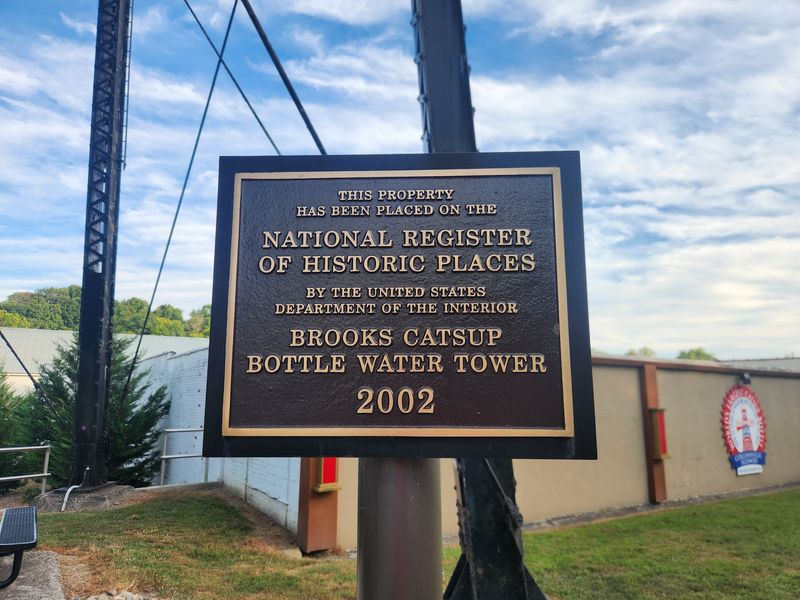
Long before it became a bucket-list photo stop, the tower served a company purpose. The structure was built for the G.S. Suppiger Company, the maker of Brooks Catsup, and its design linked the brand directly to the skyline.
Instead of hiding the water supply behind a plain tank, the company turned it into a giant ad that also did real work.
That kind of thinking says a lot about the era that produced it. Mid-century roadside America loved bold product images, memorable shapes, and brand names large enough to be seen from far away.
The catsup bottle fit right into that spirit while still acting as a useful part of the factory site. The tower is often called a bottle, but the truth is more interesting. It represents a moment when industry, marketing, and design crossed paths in a very public way.
A plain utility structure became part business tool, part visual mascot, and that mix helps explain why the site still matters.
Even after the original factory connection changed over time, the tower kept its symbolic pull. The Brooks name still gives the landmark context, turning a funny shape into a piece of local food history.
Without that backstory, it would be a neat object. With it, the place becomes a marker of how products once shaped towns and roadsides.
For younger visitors, the lesson is easy to grasp. A company made catsup, needed water, and built a tower that looked like the thing it sold.
For adults, there is another layer: this tower shows how everyday business history can survive in unexpected forms. A bottle above Collinsville may sound silly, but it also tells a practical, very American story in one glance.
Saved From Disappearing
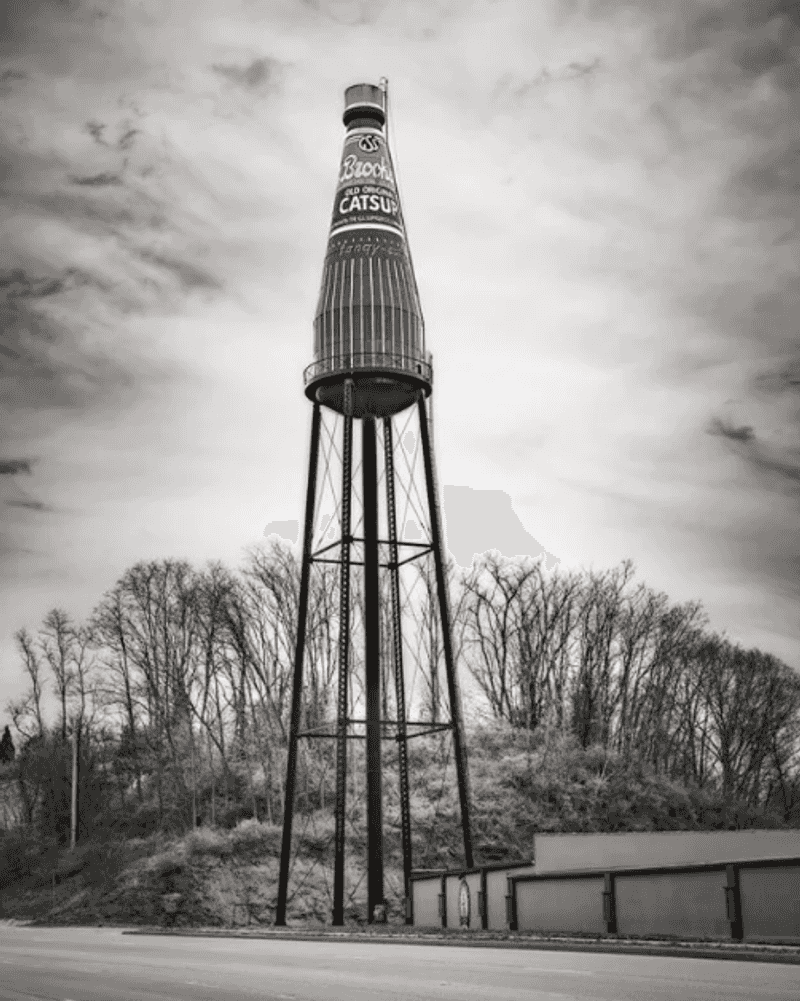
Plenty of odd landmarks vanish when tastes change or old industrial sites shut down. This one did not disappear, and that is a big part of its appeal.
The bottle tower survived because people decided it mattered enough to protect, even after its original business life had faded.
That rescue adds a human layer to the site. It is easy to laugh at a giant catsup bottle, but saving it took effort, money, and patience.
Community supporters worked to preserve the structure rather than let it be torn down, treating it as a real piece of local heritage instead of a throwaway curiosity.
The result is more meaningful than simple nostalgia. Preservation here was not about freezing a perfect postcard scene.
It was about recognizing that unusual landmarks can tell the story of a place just as clearly as grand courthouses or famous mansions do.
The bottle also gained wider recognition over time, which helped confirm that this quirky structure belonged in the history conversation. That matters because once a landmark is seen as historically important, people stop dismissing it as roadside nonsense.
They begin to read it as design, commerce, engineering, and community memory all stacked together. Standing below it now, the tower carries that second story quietly. It is still funny.
It is still weird. Yet it also represents a small victory for local pride, the kind that keeps a town from losing one of its most distinctive sights.
For visitors, knowing that background changes the experience. The photo becomes more than a joke shot for social media.
It turns into proof that everyday places are worth saving when they reflect a town’s character. In Collinsville, preservation did not produce a grand monument. It kept a giant catsup bottle in the sky, which may be even better.
Best Angles for Photos and a Quick Stop
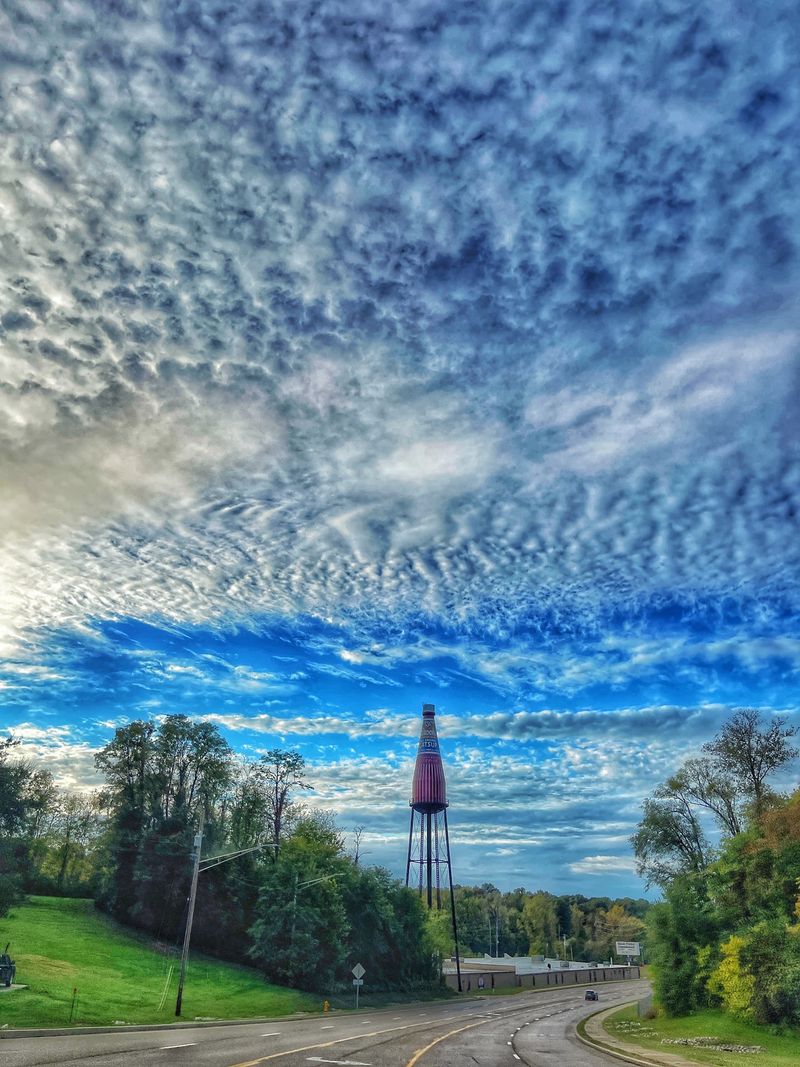
Some attractions ask for a full afternoon. The catsup bottle asks for smart timing and a camera ready to go. This is a short stop by nature, so the trick is knowing that the fun comes from seeing it clearly, snapping a few strong photos, and enjoying the absurd scale before heading on.
The best images usually come from a little distance. When standing too close, the tower can be hard to frame because of its height and the surrounding structures.
Backing up enough to catch the whole bottle shape, including the red cap area, makes the photo read better right away.
Light matters more here than people expect. Bright daytime skies help the white tower and red top pop, while softer evening light can add a warmer tone without flattening the shape.
If clouds are heavy, the bottle may blend into the background a bit, so clear weather often rewards the stop. Because the area is not laid out like a major tourist complex, a little awareness goes a long way. Traffic, nearby businesses, and sight lines can affect where you pause.
The smartest approach is to treat it as a quick roadside landmark, not a long wandering visit, and keep the focus on safe viewing.
Families, road trippers, and Route 66 fans often get the most out of the place by pairing it with other regional stops. That keeps expectations in line and makes the bottle feel like a lively chapter in a bigger travel day.
A few minutes is usually enough to appreciate the joke, learn the basics, and capture the proof. One practical tip stands above the rest: use a wide shot first, then try a tighter angle with a bit of nearby road, sign, or tree line for scale. The tower looks tallest when ordinary surroundings share the frame.
Small Details That Make the Stop Better
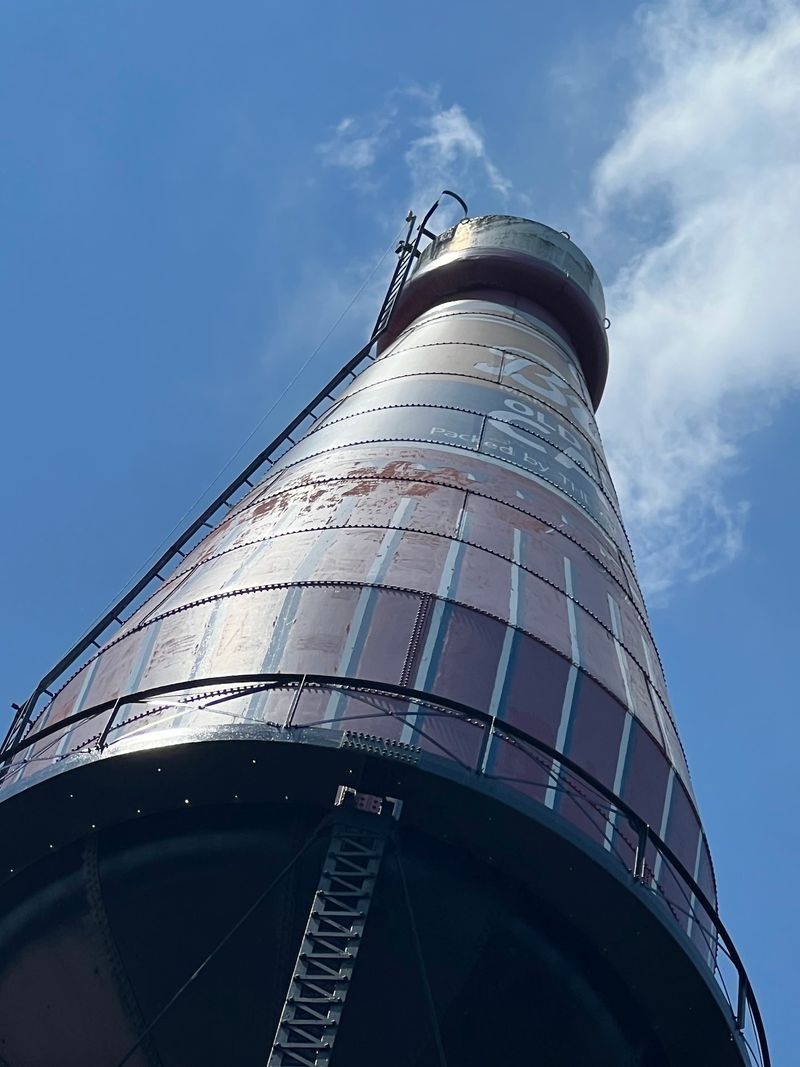
Roadside places often live or die by the little extras, and this one has a few details that shape the visit. The bottle itself is the headline, of course, but the surrounding features help explain how to experience the landmark without expecting a giant entertainment zone around it.
Start with the setting. The tower stands in a working area, not a polished theme attraction with fences, ticket booths, or oversized gift shops.
That plainness can surprise first-time visitors, yet it also keeps the stop honest. The landmark is right there in the middle of regular life, which makes the giant bottle look even stranger.
There is also a practical charm to the simple layout. A brief stop, a sign, a look upward, and maybe a few minutes at the nearby picnic table can be enough to turn a curiosity into a satisfying break from the road.
Instead of filling time with extras, the site lets the odd shape do the work. That stripped-down experience fits the bottle’s personality. A giant condiment water tower does not need dramatic staging.
It works best when it catches people slightly off guard, surrounded by ordinary pavement, buildings, and traffic. The contrast does half the storytelling.
Another useful detail is the open schedule. Since the landmark can be viewed at any hour, travelers passing through do not need to plan around narrow visiting windows.
That flexibility makes it easier to slip into a road trip, especially for families or drivers following a loose route. For anyone stopping by, the best mindset is simple: expect a fast, photo-friendly landmark with a few grounded details that add context.
Read what is available, look at the tower from more than one angle, and notice how the humble surroundings sharpen the joke. The giant bottle does not need spectacle. Its power comes from being huge, useful, and completely out of place.
Why This Quirky Landmark Still Wins the Road Trip Test
Road trips need variety. One hour might bring a museum, the next a snack stop, and then suddenly a giant catsup bottle appears over the road.
That unpredictable mix is exactly why the Collinsville landmark works so well. It turns a regular stretch of travel into a short burst of surprise, humor, and local history.
Not every stop has to be deep or time-consuming to be successful. The bottle passes a different test: does it give the trip a story people actually want to repeat later?
On that measure, it does very well. Saying there is a world-famous bottle-shaped water tower in Illinois is instantly more fun than saying the drive was fine.
The landmark also fits a classic American travel tradition. Oversized objects, playful design, and odd engineering have long given highways their own kind of culture.
The catsup bottle belongs to that world, but it avoids feeling fake because it began as a real utility structure tied to a real product and place.
Its strongest quality may be how quickly it gets the point across. A traveler does not need special background knowledge to enjoy it.
Kids understand the shape. Adults appreciate the history. Photo lovers get scale and color. Fans of roadside Americana get a preserved icon with genuine roots. There is also a nice lesson tucked inside the laugh. Places do not need to be grand to matter.
Sometimes a town’s most unforgettable landmark is a water tower painted like dinner-table condiment packaging, and that odd choice tells a fuller story than a polished monument might.
For anyone deciding whether to pull over, the answer depends on what makes travel fun. If giant, slightly absurd landmarks add energy to a day on the road, Collinsville delivers.
The stop is quick, the sight is unmistakable, and the payoff is immediate: one look up, one grin, and one very large catsup bottle against the Illinois sky.
Share this story