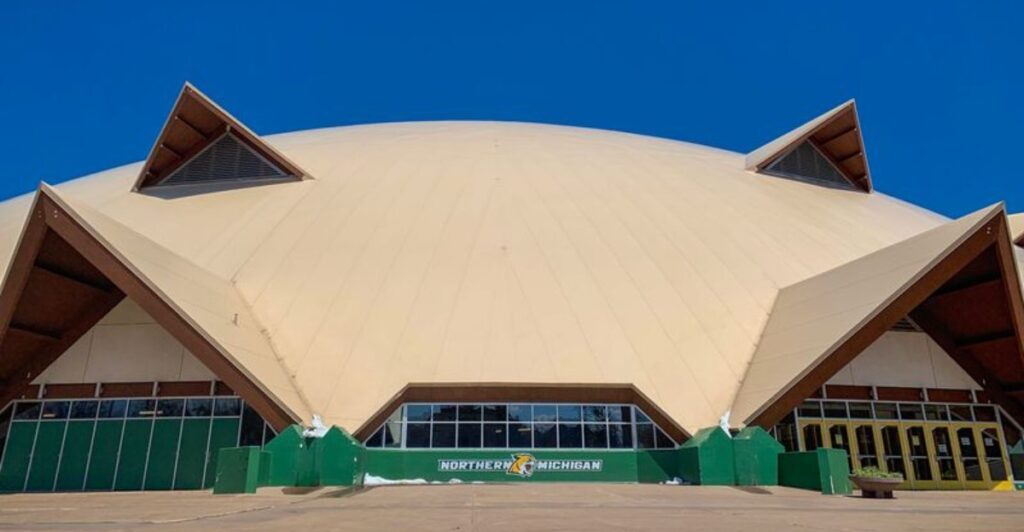
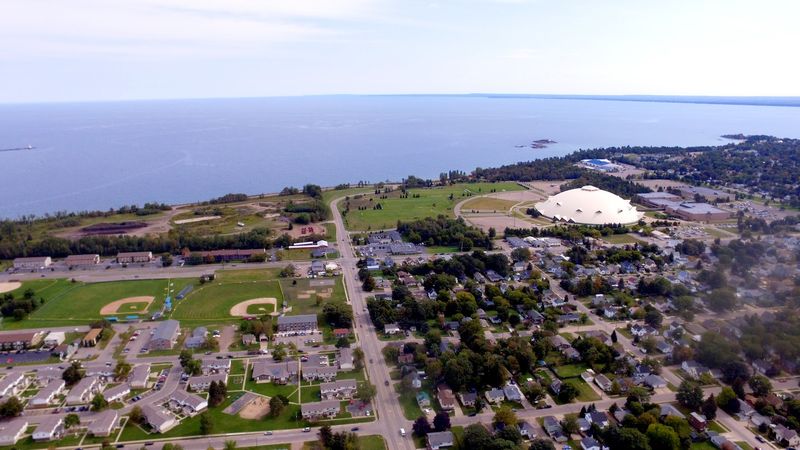
Marquette’s skyline gets a lot more interesting when one massive curve rises above the trees. From a scenic trail overlooking the city, hikers can spot the Superior Dome near Northern Michigan University, creating a view that feels surprisingly dramatic from the woods.
The appeal goes beyond its size, because this is the world’s largest wooden dome and one of the most unusual landmarks in Michigan’s Upper Peninsula. Seeing it from above adds a whole new layer to the experience, mixing forest scenery, city views, and a piece of architecture that is hard to ignore.
For anyone who likes Michigan trails with a landmark payoff, this Marquette view deserves a closer look.
A giant curve beyond the trees
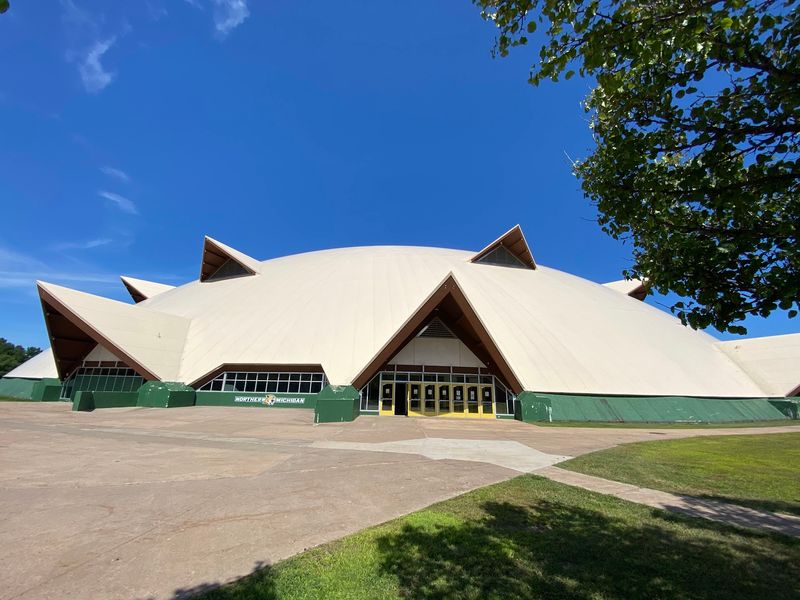
One of the coolest parts of exploring Marquette is finding a high trail view and suddenly spotting the Superior Dome below. The shape stands out right away.
Among trees, rock, water, and campus buildings, that smooth rounded roof looks almost unreal.
From an overlook, the dome does not read like a normal stadium. It looks more like a giant shell set into the city, wide and low from some angles, then surprisingly tall once your eyes lock on it.
That strange mix is exactly why the sight works so well from a trail. Nature gives you rough textures and uneven lines, while the dome answers with one bold curve.
Seeing it from above also helps you understand Marquette a little better. Northern Michigan University is part of daily life here, not tucked away from everything else.
The dome sits close enough to become part of the broader landscape, so a hike and a campus landmark can share the same moment.
If you are walking a scenic route near town, pause when the trees open up. Look for the bright, rounded profile near the university area.
On a clear day, the building becomes an easy visual anchor, especially if you enjoy picking out local landmarks from high ground.
That outside view adds a layer of surprise before you ever reach the front doors. First, you meet the dome as part of the scenery.
Then, once you head down from the trail and toward campus, you get to trade that distant shape for the full-size version waiting at ground level.
Why the Yooper Dome looks unlike any other stadium
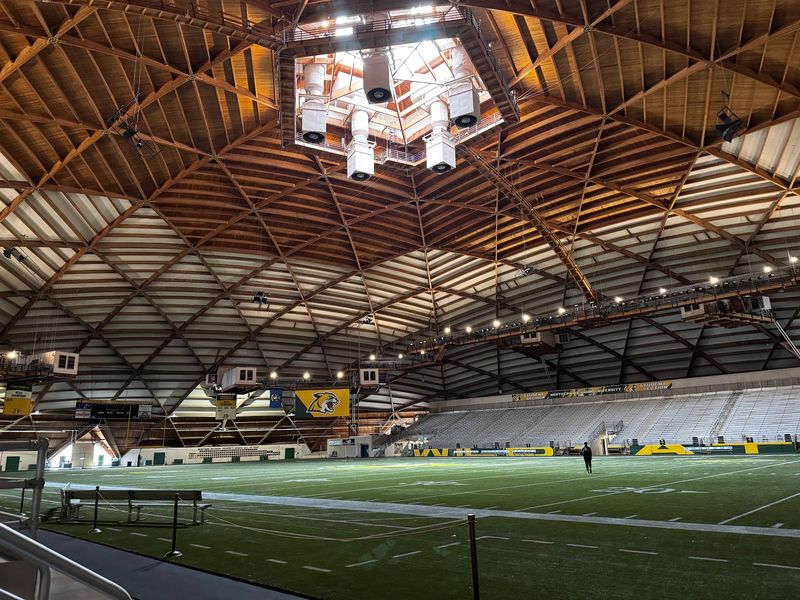
At first glance, the Superior Dome seems simple because it is one giant curve. Then the numbers start to sink in, and the place gets much more impressive.
This Marquette landmark is known as the world’s largest wooden dome, a title that instantly separates it from ordinary stadiums.
The nickname Yooper Dome fits the setting perfectly. In Michigan’s Upper Peninsula, big weather is normal, and practical design matters.
A huge enclosed building makes sense here, but the material choice is what turns the structure into a conversation piece. Wood gives the dome a special identity, especially in a region where forests, mills, and cold-weather building know-how have always mattered.
Its size is not a small detail tucked into a brochure. The dome is broad enough to cover a football field and then some, with a roofline that creates a striking silhouette from far away.
Even before you go inside, the scale tells you this was meant to be more than a basic campus facility.
Another reason the building grabs attention is that domes usually bring to mind steel, concrete, or high-tech materials. Here, the story is different.
The structure became famous because wood is not just decoration. It is central to the design, and that makes the building memorable for sports fans, architecture buffs, and curious travelers alike.
If you enjoy places that combine engineering with regional character, this one delivers quickly. The Superior Dome is large, useful, and unusual all at once.
Plenty of stadiums can host events, but very few can also make you stop and think about how they were built the second you see them.
Step inside the wooden bowl
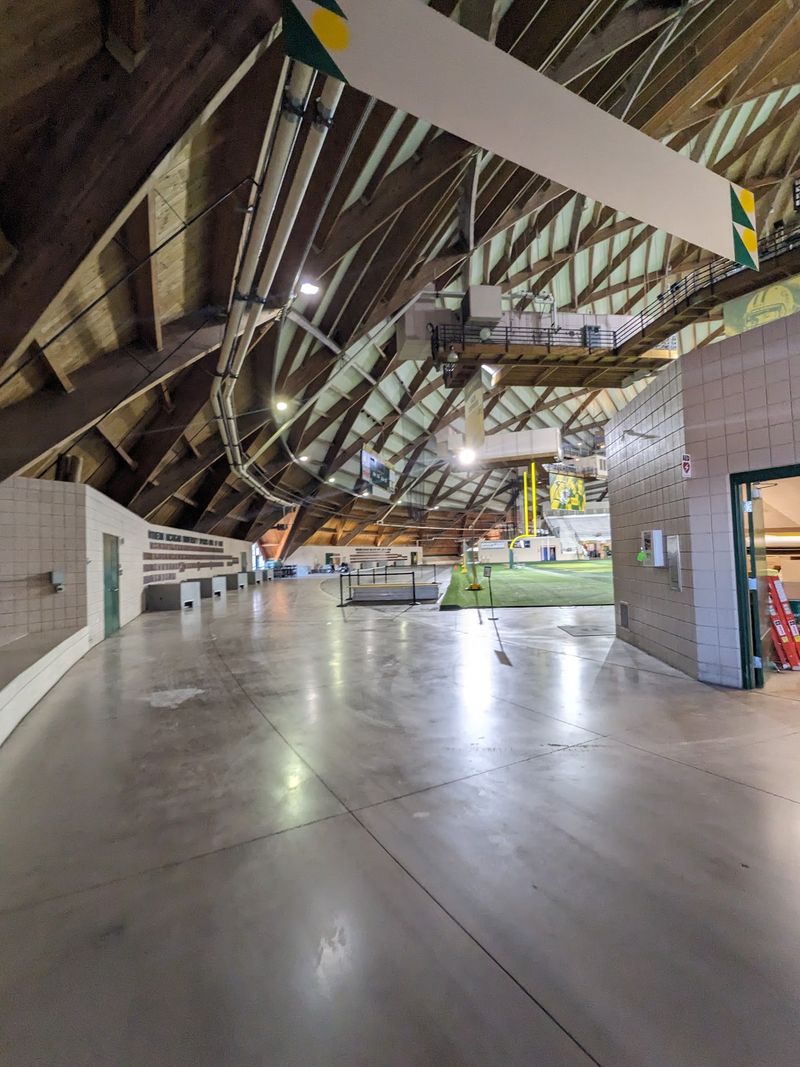
Walking through the doors changes the whole experience because the outside never fully prepares you for the interior volume. The space opens up fast.
Suddenly you are under a huge wooden ceiling with long lines, repeating beams, and enough room for a full field below.
That is where the dome becomes more than a photo stop. It works as an active sports facility for Northern Michigan University, and the layout supports much more than one game at a time.
Football, other athletic events, large ceremonies, and community gatherings all make sense here because the building is designed for flexible use.
One detail that many first-time visitors appreciate is the indoor walking area separate from the field. That means the dome can feel useful even on a quiet day when no major event is happening.
If the schedule allows public access, you can move around the perimeter, stretch your legs, and take in the structure at your own pace.
The wood overhead does a lot for the mood of the room. Big stadiums can sometimes feel cold or harsh, but the dome’s timber frame adds warmth without shrinking the scale.
Looking up is part of the visit, especially when the beams and catwalks start to reveal how much planning went into the roof.
There are also displays and sports-related pieces inside, which give the visit more texture than a quick lap around the concourse. Instead of being only a giant shell, the building has small points of interest tucked into its public areas.
By the time you leave, the dome usually feels less like a single attraction and more like a compact introduction to NMU athletics and local pride.
Built for Upper Peninsula weather, not just wow factor
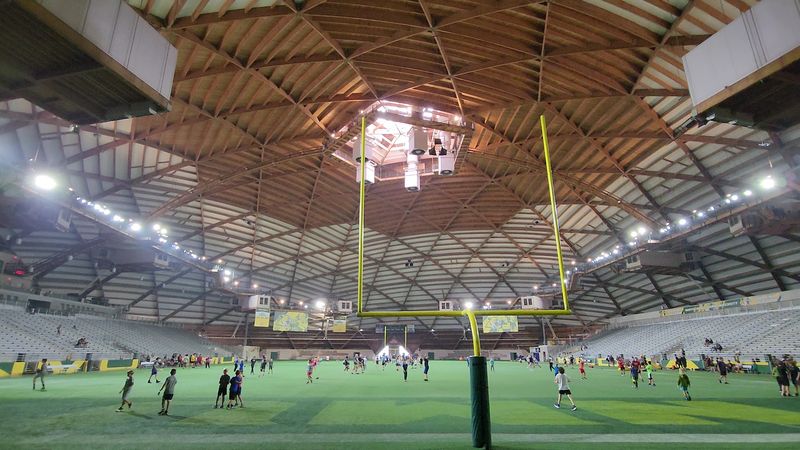
Flashy buildings can look great in photos and still make little sense where they stand. The Superior Dome is different.
In the Upper Peninsula, where snow, wind, and long winters shape daily life, a massive enclosed venue is practical before it is impressive.
That practical side helps explain why the dome matters so much in Marquette. A place this size can keep sports, walking, training, and major events going when the weather outside turns rough.
On a calm summer day, it is easy to admire the form. During a hard winter stretch, the design starts to look downright smart.
The building is known for handling serious northern conditions, and that reputation fits the region. Upper Peninsula weather is not a minor footnote here.
It affects how campuses run, how communities gather, and how athletes train. A sturdy indoor facility gives NMU a dependable space that works through seasons that can shift quickly and hit hard.
There is also something fitting about a wooden dome in a heavily wooded part of the state. Even if you arrive focused on sports, the structure quietly reflects local materials and local needs.
It belongs in this landscape in a way that a standard boxy arena might not.
For travelers, that means the Superior Dome tells a broader Michigan story than its nickname alone suggests. It is a landmark shaped by climate, geography, and everyday use.
Seeing it from a scenic trail is interesting because the dome pops against the natural setting. Understanding why it exists in exactly this form is even better.
The building is bold, yes, but it is also a practical answer to life in a place where winter always gets a vote.
A campus landmark with local stories tucked inside
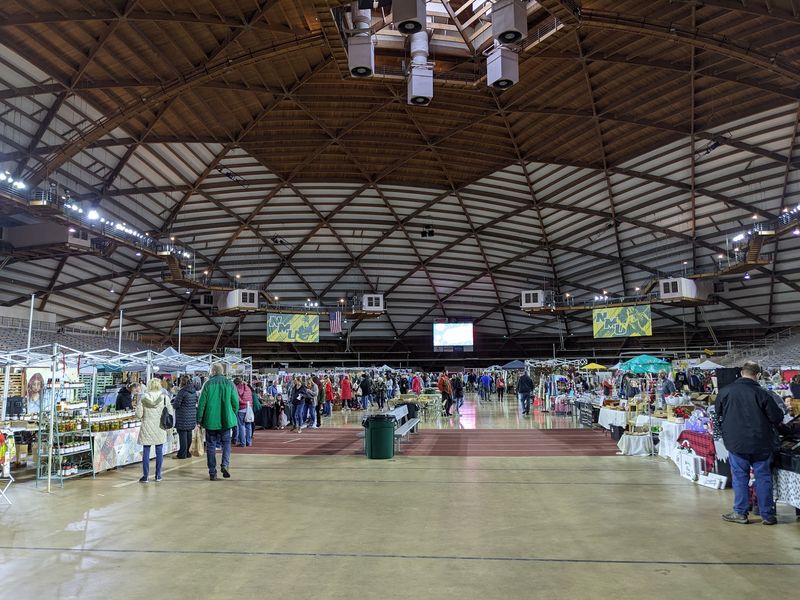
Big buildings often impress for a minute and then run out of things to say. The Superior Dome has more layers than that.
Along with sports action and large events, it also carries pieces of NMU history and Upper Peninsula identity inside its public spaces.
As you move through the concourse, the building starts acting like a small campus showcase. Display cases, athletic memorabilia, honors, and regional touches help break up the giant scale.
Instead of staring only at seating and turf, you get little windows into the school’s teams, achievements, and connection to the area.
That matters because the dome is not hidden away as a closed-off venue used only on special dates. It serves as a gathering place for football games, graduation ceremonies, community shows, and casual walks when public hours allow.
A building with that many roles becomes part stadium, part meeting place, and part local landmark.
The nickname Yooper Dome adds a friendly note, too. It links the structure to Upper Peninsula culture in a way that feels direct and local, not polished for a brochure.
Even travelers passing through can pick up on that right away. The dome belongs to campus life, but it also belongs to the wider character of Marquette.
If you like places that show personality in small details, slow down long enough to notice the exhibits and side features. The giant roof may be the headline, but the supporting material gives the visit depth.
You leave understanding not only that the building is large and unusual, but also that it has been folded into real routines, school traditions, and regional pride over many years on the NMU campus.
How to pair the trail view with a smart dome visit
A good visit here works best in two parts. Start with the scenic trail view if the weather is clear, then head down to campus to see the Superior Dome up close.
That sequence makes the building more satisfying because you first understand its place in the landscape, then its size in real life.
Morning or early afternoon often gives the easiest light for both hiking and quick campus exploring. On the trail, you can take your time at overlooks and watch for the dome’s broad outline near the university.
Once you reach NMU, the shape you saw from above turns into doors, walkways, seating areas, and the huge interior space.
Before going inside, it helps to check whether the dome is open to the public that day. Because it hosts athletics, practices, games, graduation events, and other gatherings, access can change.
A little planning saves you from arriving during a closed period and missing the indoor walking area or exhibits.
Comfort matters here more than people expect. If your day includes both a trail and the dome, wear shoes that work for rock, dirt, and campus pavement.
Bring a jacket for lake-area weather outside, even if you expect a comfortable indoor stop later. Marquette conditions can shift fast.
Parking and circulation around a large venue are usually easier when no major event is starting. If there is a football game or ceremony on the calendar, expect a busier atmosphere and more energy around the entrances.
Either way, pairing the overlook with the indoor visit gives you the full story. You get the scenic reveal, the architectural surprise, and the chance to stand beneath one of the most unusual sports roofs in Michigan.
Where woods, campus, and engineering meet

Some landmarks are best appreciated from one perfect angle and lose their punch after that. The Superior Dome gains power as you see it in stages.
First it appears from a scenic trail as a curious shape in the distance. Then it turns into a giant wooden venue that makes full sense only when you stand inside.
That two-part experience is a big reason the dome stands out in Marquette. You are not simply driving up to a stadium in a parking lot and checking it off a list.
The building becomes part of a broader scene that includes rocky high points, forested paths, nearby campus life, and the weather-driven reality of the Upper Peninsula.
Its claim as the world’s largest wooden dome gives the place instant interest, but the setting keeps that fact from feeling dry or technical. From above, the roof reads as a bold mark on the landscape.
Up close, the timber structure, field space, walking area, and displays make the building useful as well as unusual.
For travelers who like seeing how a place fits together, this is where the dome really wins. It links outdoor Marquette with indoor community life.
It also shows how a university building can become a city landmark without losing its everyday purpose.
If your route includes a scenic Michigan trail and some time on the NMU campus, the Superior Dome earns a place on the plan. You get architecture, regional identity, and a strong visual payoff in one stop.
Few buildings look this surprising from the woods and this impressive from the inside, which is exactly why the Yooper Dome keeps drawing attention long after the first glimpse.
Share this story