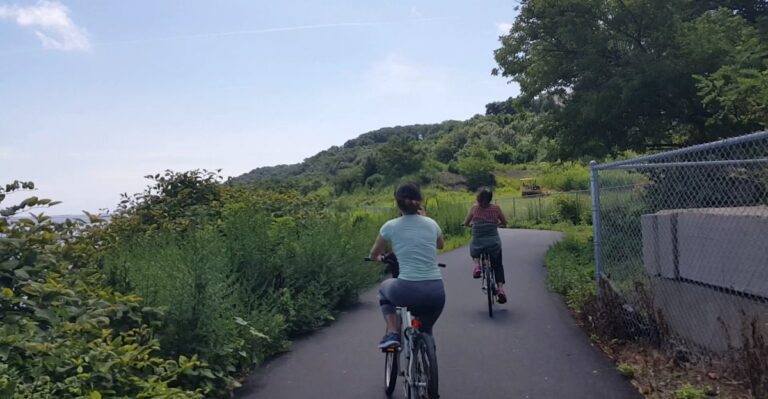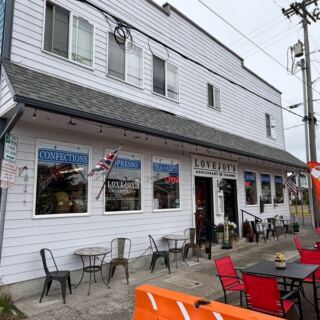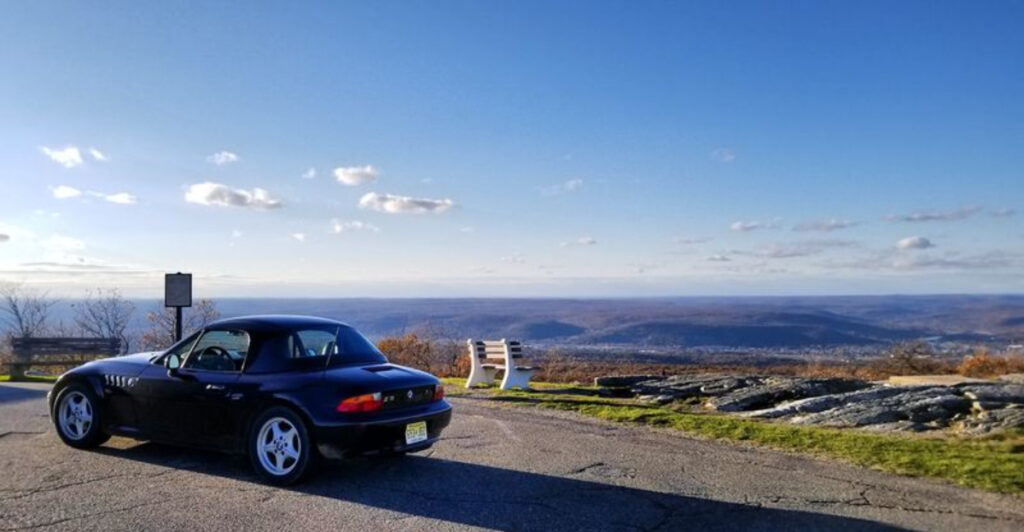
A narrow road slips between cranberry bogs, a lighthouse rises beyond the marsh, and the only charge so far is whatever disappeared from the gas gauge.
New Jersey is unusually good at this kind of day: a few hours behind the wheel can deliver mountain overlooks, Revolutionary War history, coastal wildlife, antique shops, canal paths, and beaches without requiring a hotel reservation or a stack of admission tickets.
The trick is choosing roads where the scenery and stops do most of the entertaining. Pack lunch, bring walking shoes, and leave enough time for the turnoff that looks too interesting to ignore.
Some of these routes cover nationally recognized scenic byways; others follow shore roads and wildlife areas that feel wonderfully removed from the nearest parkway exit.
All ten can be shaped around a modest budget, whether that means a picnic beside the Delaware, a free historic village, or nothing more elaborate than coffee and a long view.
1. Delaware River Scenic Byway: Lambertville, Stockton, and Frenchtown
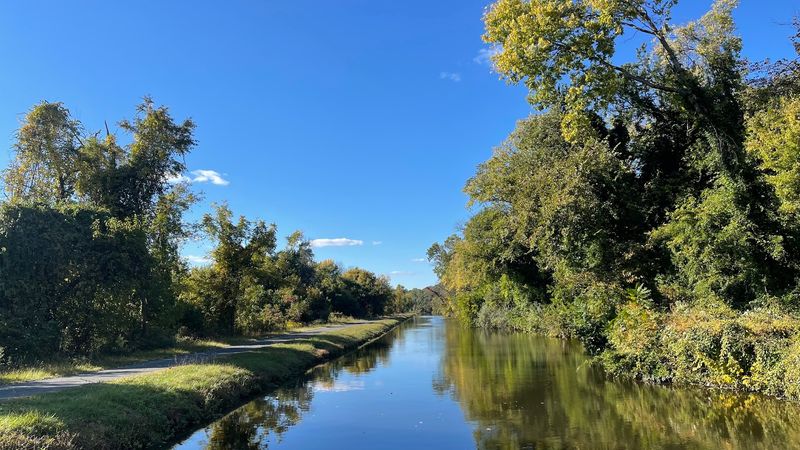
Route 29 hugs the Delaware closely enough to make the river feel like a traveling companion. Begin in Lambertville, where brick buildings, antiques shops, galleries, and old factory spaces give the downtown plenty to explore before the odometer starts moving.
Parking can become competitive on sunny weekends, so arriving before lunch saves time and makes a relaxed walk through town much easier. A coffee or bakery stop is enough to fuel the first leg without turning the outing into an expensive production.
North of Lambertville, the road parallels the Delaware and Raritan Canal through a corridor of wooded slopes, towpath access points, and stone houses. Stockton brings a worthwhile pause at Prallsville Mills, a preserved industrial complex beside the canal that looks especially handsome in autumn.
Continue toward Bull’s Island for a picnic or a towpath walk, then follow the river through Kingwood to Frenchtown. The final stop is compact but rewarding, with independent shops, colorful storefronts, casual cafés, and a bridge that offers an easy stroll over the Delaware.
Most of the day’s best moments—river views, historic streets, canal walks, and browsing—cost nothing. Pack lunch if the budget is tight, or save your spending for one good meal in Frenchtown before retracing the river south.
2. Pine Barrens Scenic Byway: Batsto Village to Tuckerton
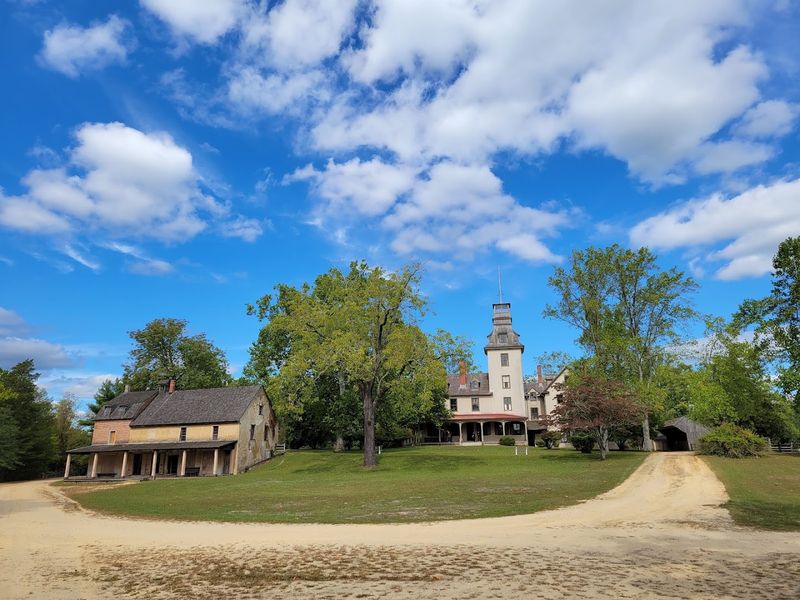
The road leaving Batsto Village wastes little time trading civilization for cedar water, sandy shoulders, and tall pines. Start by walking through the historic village at Wharton State Forest, where the ironmaster’s mansion, general store, sawmill, and workers’ buildings preserve a community shaped by bog iron and glassmaking.
Exploring the outdoor grounds is an easy, low-cost beginning, and the nearby trails can stretch the stop if everyone packed proper shoes. From Batsto, follow the scenic roads toward the Mullica River corridor and then east through the Pinelands.
The landscape is subtle rather than showy: pitch pines, white cedars, tea-colored streams, old cranberry country, and occasional clearings that seem miles from the nearest subdivision. That quiet is the main attraction.
Finish in Tuckerton, where a stroll along the waterfront or through the historic downtown adds a maritime chapter to the forest drive. The Tuckerton Seaport is a natural optional stop, though travelers keeping costs minimal can simply explore the public waterfront spaces and save their money for lunch.
Seafood, a diner meal, or a locally baked treat makes a satisfying finish without blowing the day’s budget. Download directions before leaving, keep the tank comfortably filled, and resist questionable unpaved turnoffs.
In the Pine Barrens, “shortcut” can quickly become a very sandy word.
3. Bayshore Heritage Byway: Salem to Cape May Point
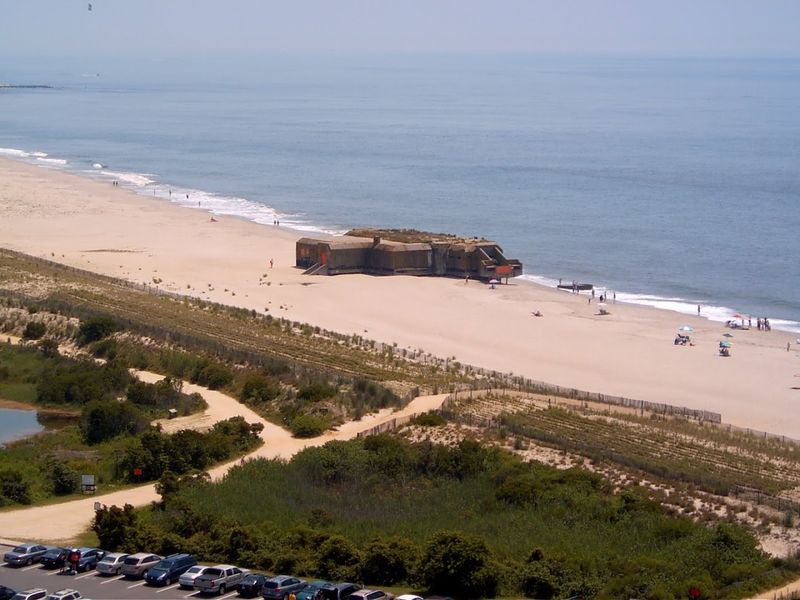
New Jersey’s western shoreline tells a quieter story than its Atlantic-facing resorts. Beginning in Salem, this journey follows the Delaware Bay through farmland, tidal rivers, wildlife refuges, fishing communities, and villages that rarely appear on conventional Shore itineraries.
Salem’s historic architecture establishes the mood before the route bends toward Alloway Creek and Lower Alloways Creek. Farther south, Fortescue offers broad bay views and the weathered character of a working waterfront.
The beach is better suited to walking, birding, and watching fishing boats than planning a classic boardwalk day, which helps keep spending close to zero. Continue through Cumberland County toward Bayshore Center at Bivalve, where the restored oyster-shipping sheds recall the region’s once-mighty shellfish industry.
Nearby wetlands attract migrating birds, particularly during spring and fall. The southern stretch passes through places such as Port Norris, Heislerville, and Maurice River Township before reaching Cape May County.
End at Cape May Point State Park, where trails cross coastal habitat beneath the striped Cape May Lighthouse. Climbing the lighthouse requires a ticket, but walking the park and admiring it from below can still provide a memorable finale.
Bring binoculars, water, and a packed meal because services become sparse along portions of the route. The payoff is a full day of scenery and history that feels far removed from New Jersey’s busier beach towns.
4. Palisades Scenic Byway: Fort Lee to Alpine
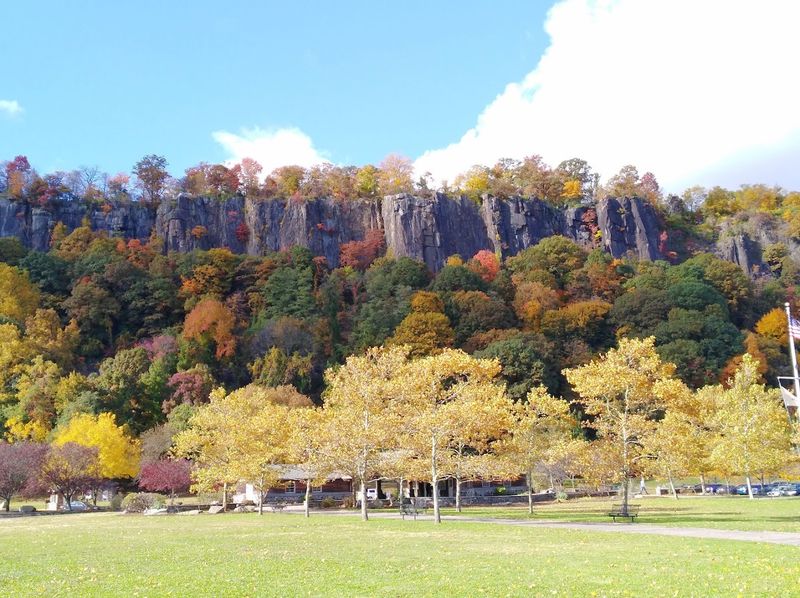
A few minutes after leaving Fort Lee, Manhattan starts appearing between trees from hundreds of feet above the Hudson. That quick shift—from busy streets to wooded overlooks—is what makes the Palisades such an efficient escape.
Enter the Palisades Interstate Parkway and work north at an unhurried pace, stopping at overlooks rather than treating the drive like a race to the state line. Rockefeller Lookout provides a sweeping view across the river, while Alpine Lookout adds another dramatic perch over the Hudson.
The overlooks are the budget traveler’s secret weapon: pull in, take a walk, unpack a snack, and enjoy a view that would command a steep price from a rooftop lounge. For more activity, choose one of the park’s trails, keeping in mind that routes descending toward the river also demand a climb back up.
The State Line Lookout area makes a practical final stop, with access to short walks and seasonal opportunities to watch migrating hawks. Henry Hudson Drive can add river-level scenery when sections are open, but closures sometimes affect this narrow road, so check conditions before setting out.
Pack food to avoid relying on concessions, and start early on autumn weekends when leaf color draws extra traffic. This trip proves that a skyline, sheer cliffs, forest trails, and a little legwork can fill an entire day without leaving North Jersey.
5. Western Highlands Scenic Byway: Hamburg to High Point
Route 23 begins climbing almost imperceptibly, then suddenly the ridgelines of Sussex County seem to fill the windshield. Hamburg makes a convenient starting point, with food and fuel available before the landscape becomes more rural.
From there, the drive passes through Franklin and Sussex, communities tied to the region’s mining and agricultural history. The old buildings and mountain backdrop give the route a distinctly northern-New Jersey character, far removed from the industrial images outsiders often associate with the state.
Continue toward Wantage for farm views, roadside stands, and a chance to buy a small seasonal treat directly from the people who grew it. The road eventually reaches High Point State Park, home to the highest elevation in New Jersey.
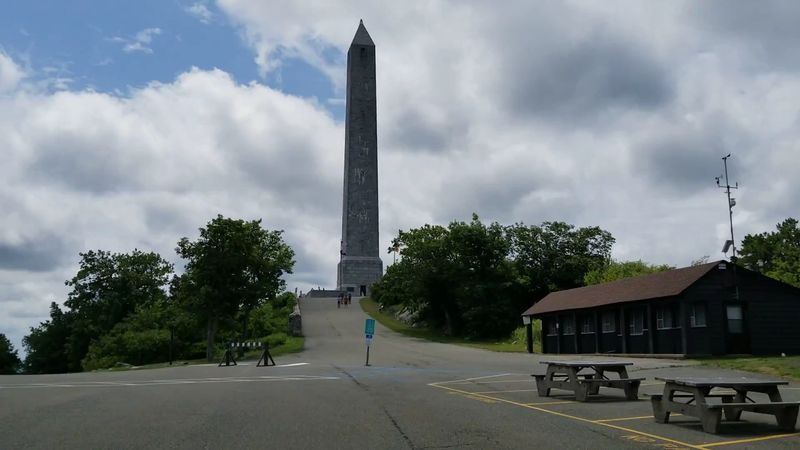
High Point Monument rises above the surrounding forest, and the park’s overlooks reveal long views across New Jersey, Pennsylvania, and New York. A short walk can provide plenty of scenery, while more energetic visitors can connect with longer trails, including sections near the Appalachian Trail.
Seasonal entrance fees may apply at state recreation areas, but the trip remains inexpensive if the car is packed with water and lunch. Check the forecast before leaving; the summit can be cooler and windier than the towns below.
Fall color is spectacular, but clear winter days often produce the sharpest distant views—and far fewer cars competing for the best pullouts.
6. Millstone Valley Scenic Byway: Kingston to Millstone
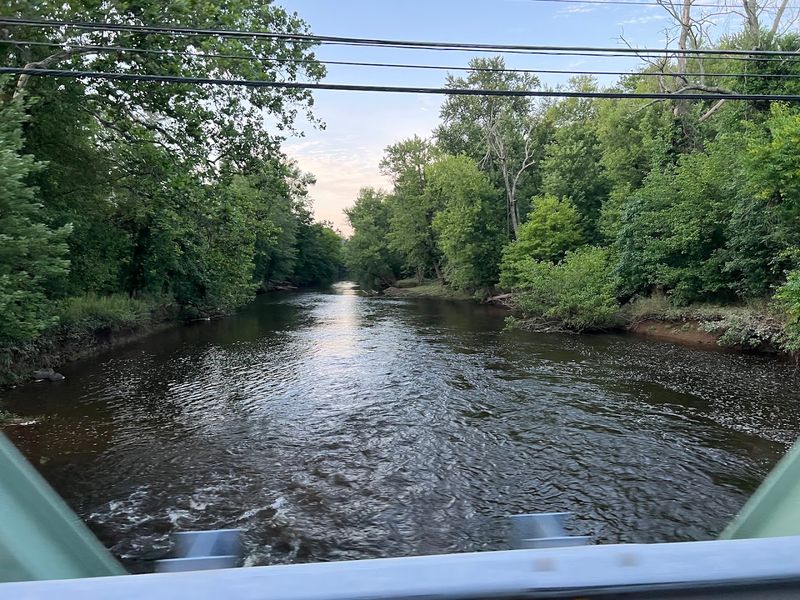
Two waterways shape this 27-mile loop: the natural Millstone River and the remarkably straight Delaware and Raritan Canal. Begin around Kingston, where historic buildings and canal access immediately slow the pace.
Canal Road carries the eastern side of the journey beneath mature trees, past old houses, farms, and stretches of towpath where walkers and cyclists move alongside the water. Griggstown is the centerpiece.
Its narrow canal bridge, mill buildings, and bridge tender’s house preserve the look of a small 19th-century transportation hub. The seasonal visitor center occupies one of those historic houses and is worth catching when weekend hours align, but the canal and village remain enjoyable even when the door is closed.
Continue north through Franklin Township before looping back along River Road, which follows the Millstone through a landscape of fields, woods, and historic properties. This is not a drive packed with commercial attractions, and that is precisely why it works on a tiny budget.
Stop for a towpath walk, watch for herons near the water, and bring bicycles if you want the road trip to become a half-day ride. Flooding can occasionally affect low-lying roads and crossings, so check conditions after heavy rain.
Otherwise, the route asks for little beyond a tank of gas, a picnic, and enough patience to enjoy central New Jersey at canal speed.
7. Upper Freehold Historic Farmland Byway: Allentown to Cream Ridge
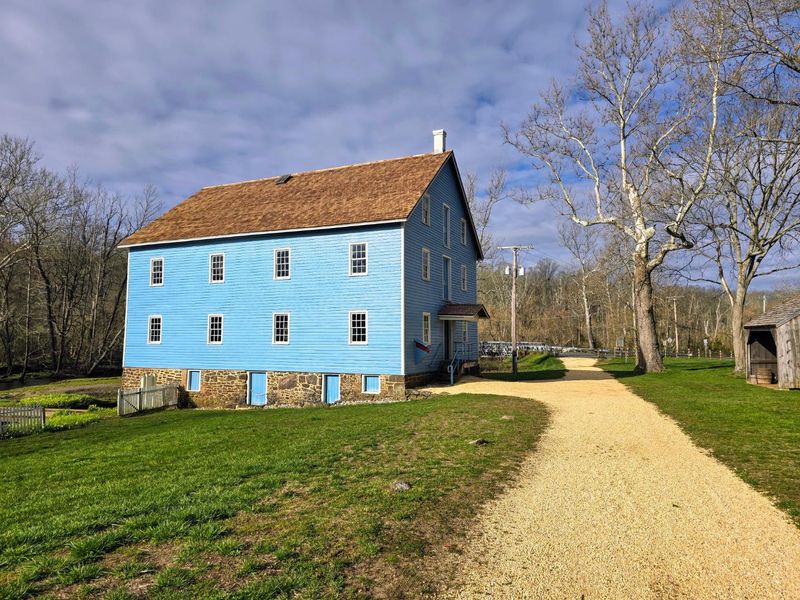
Fresh cider, horse farms, and stone walls replace exit ramps on this western Monmouth County drive. Allentown is the ideal opening stop, with a walkable historic district clustered around Main Street and the millpond.
Browse the small shops, admire the 18th- and 19th-century buildings, and pick up coffee before heading into the farmland surrounding town.
The byway follows country roads through Upper Freehold Township, where preserved fields, nurseries, equestrian properties, and old farmsteads create one of central New Jersey’s most pastoral drives.
Walnford, located within Crosswicks Creek Park, deserves the longest pause. The historic district includes an imposing mill, a Georgian-style house, farm buildings, and paths beside Crosswicks Creek.
Wandering the grounds adds genuine substance to the trip without requiring an expensive attraction ticket. From there, continue toward Cream Ridge, allowing time for whichever seasonal farm stand happens to look most inviting.
Spring brings green fields and blossoms, summer piles produce onto roadside tables, and fall turns the route into cider-and-pumpkin territory. Those harvest weekends can also bring crowds, so weekday or early-morning visits feel more relaxed.
Food is the easiest place to overspend along this route, particularly when farm markets are fully stocked. Set a snack budget, pack a picnic, and choose one local specialty.
A bag of apples and a warm doughnut are usually all the extravagance the day needs.
8. Warren Heritage Scenic Byway: Phillipsburg to Hackettstown
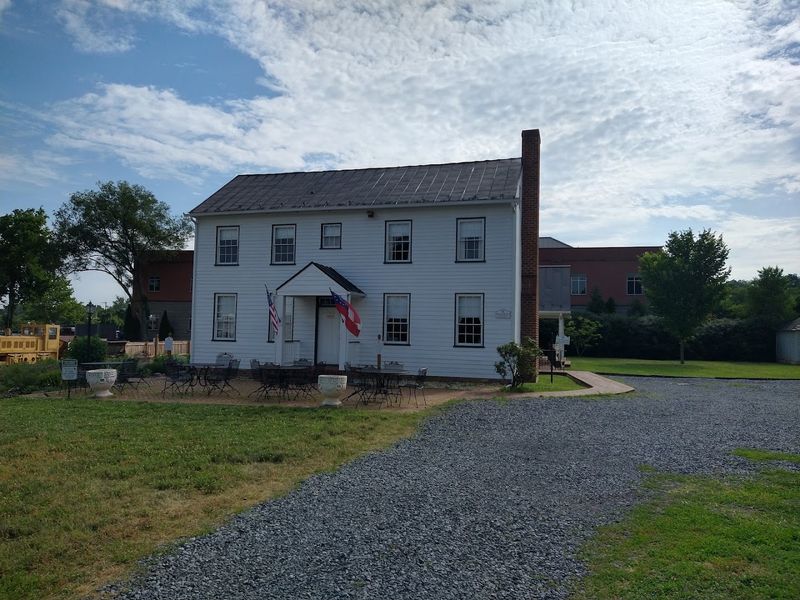
Industrial history, river towns, farmland, and mountain country all show up during this northwest New Jersey journey. Phillipsburg provides a fitting start beside the Delaware, where railroad heritage remains part of the town’s identity.
From the river, the route moves into Warren County’s rolling interior, passing open fields, ridges, historic villages, and roads that reward slow driving. Washington Borough makes a useful midpoint, with a traditional downtown where travelers can stop for an inexpensive lunch or coffee.
Outdoor options surround the route, including access to wildlife management areas, preserves, and state parks, so the day can be adjusted to match energy levels. Pequest Trout Hatchery and Natural Resource Education Center is one of the most distinctive potential stops when its public facilities and programs are available.
Elsewhere, a detour toward Jenny Jump State Forest adds wooded trails and broad views, while the Musconetcong River corridor brings quieter scenery closer to Hackettstown. Finish with a walk through Hackettstown’s downtown, where casual restaurants make it easy to find a satisfying meal without resort-town prices.
Because this byway covers a broad web of county and state roads rather than one obvious highway, save a route map before leaving. Cell service can become inconsistent in the hillier stretches.
That minor preparation buys a remarkably varied day whose biggest expenses are fuel, lunch, and perhaps something unnecessary but irresistible from a roadside farm stand.
9. Seven Bridges Road and the Great Bay: Tuckerton to New Gretna
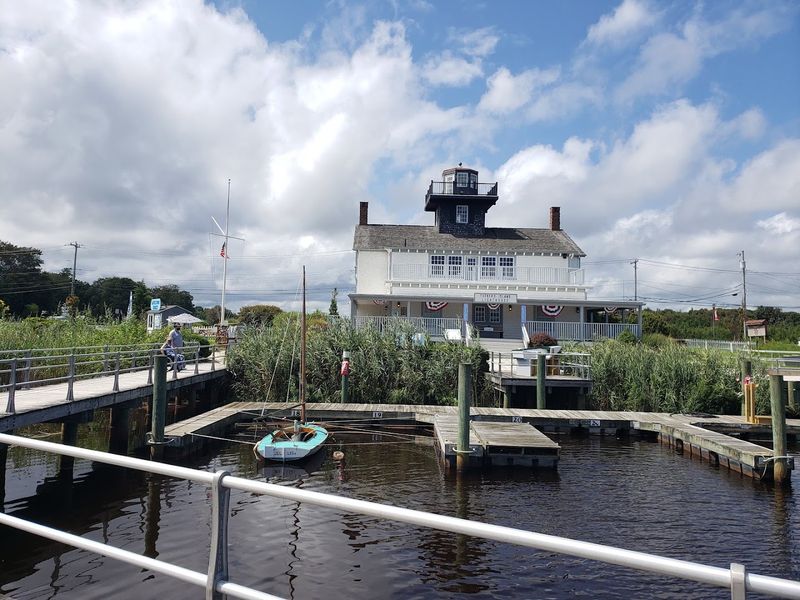
Open the windows near the marsh and the air immediately smells like salt, mud, and tidal grass. Great Bay Boulevard—widely nicknamed Seven Bridges Road—runs east from Tuckerton into an expansive wildlife management area, crossing a succession of narrow bridges as houses and traffic gradually disappear.
Marshland spreads toward the horizon, broken by tidal creeks, boat channels, weathered marine structures, and clusters of birds. Egrets, herons, ospreys, and seasonal migrants make binoculars more useful here than a shopping budget.
This is a road for stopping carefully at designated pull-offs, looking across the water, and accepting that the scenery is deliberately undeveloped. The drive eventually reaches the Rutgers University Marine Field Station near the end of the road; visitors should respect posted restrictions and avoid blocking access.
Back in Tuckerton, pick up Route 9 toward New Gretna, passing through the coastal Pinelands and the Mullica River region. A stop near Bass River or along the riverfront can extend the outing before finishing in the small community of New Gretna.
Pack food, insect repellent, and more water than you think you need. Summer mosquitoes can be ambitious, while high tides and storms may affect low sections of the boulevard.
Check local conditions before going and never drive through standing water. Done responsibly, this odd little road delivers one of South Jersey’s wildest landscapes for little more than the cost of gasoline.
10. Ocean Drive: Cape May to Ocean City
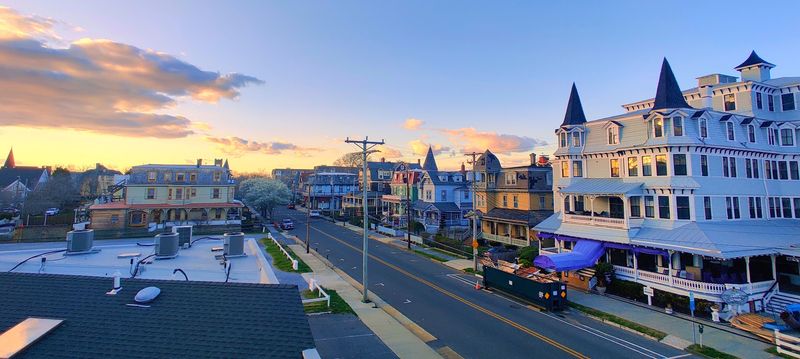
Painted Victorian porches give way to neon motels, drawbridges, fishing boats, and long bands of salt marsh on this island-hopping Shore route. Leave Cape May after an early walk through the historic district, when the streets are quiet and parking is easier to manage.
Ocean Drive heads north through the Wildwoods, where a stroll past the midcentury motels or along the boardwalk supplies plenty of free entertainment if you can resist every arcade and snack counter.
Continue through Stone Harbor and Avalon, taking time to walk near an inlet or browse a compact downtown rather than paying for a full slate of attractions.
The road then crosses more marshland on the way toward Sea Isle City and eventually Ocean City. Several bridges along the larger Ocean Drive route may collect modest tolls, so carry a payment method and treat those charges as the day’s admission price.
The scenery changes constantly: ocean glimpses between homes, docks stacked with traps, pleasure boats in narrow channels, and broad wetlands alive with birds. Ocean City makes a lively finish, especially near sunset, when the boardwalk can be enjoyed without buying a ride wristband.
Summer traffic can turn the drive into a crawl, so leave early or choose a spring or fall day. Bring beach chairs, lunch, and one firm rule about funnel cake spending.
The Shore is affordable right up until nobody is supervising the snack decisions.
Share this story