Summer road trips through Tennessee reveal some of the most stunning natural wonders in the American South. From underground caves to towering waterfalls, the state offers adventures that transform ordinary vacations into extraordinary memories.
Pack your cooler, fill up the gas tank, and get ready to explore destinations that showcase why Tennessee remains one of the country’s most exciting places to visit during the warm-weather months.
1. Fall Creek Falls State Park – Spencer
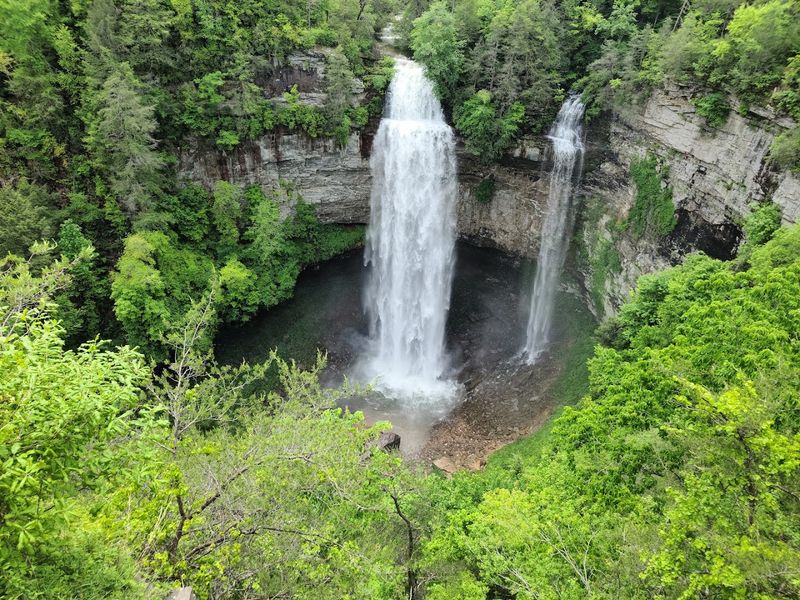
Towering at 256 feet, Fall Creek Falls claims the title of one of the tallest waterfalls east of the Mississippi River. The park surrounding this natural wonder covers over 26,000 acres of Cumberland Plateau terrain, making it one of Tennessee’s largest and most visited state parks.
Summer visitors find themselves immersed in a landscape where water seems to flow from every direction.
Multiple trails wind through the park, ranging from easy strolls to challenging hikes that reward effort with breathtaking overlook views. The suspension bridge near the main falls provides photo opportunities that fill up memory cards quickly.
Families often spend entire days exploring different waterfalls within the park boundaries, including Cane Creek Falls and Piney Falls.
Swimming areas offer relief from summer heat, while fishing enthusiasts cast lines into the park’s lake hoping for bass and bluegill. Campgrounds and cabins provide overnight options for those wanting to catch sunrise over the gorge.
The nature center educates visitors about local wildlife and geology. Whether you’re seeking adrenaline-pumping adventures or peaceful moments beside rushing water, this Spencer destination delivers experiences that justify the drive from anywhere in the state.
2. The Lost Sea Adventure – Sweetwater
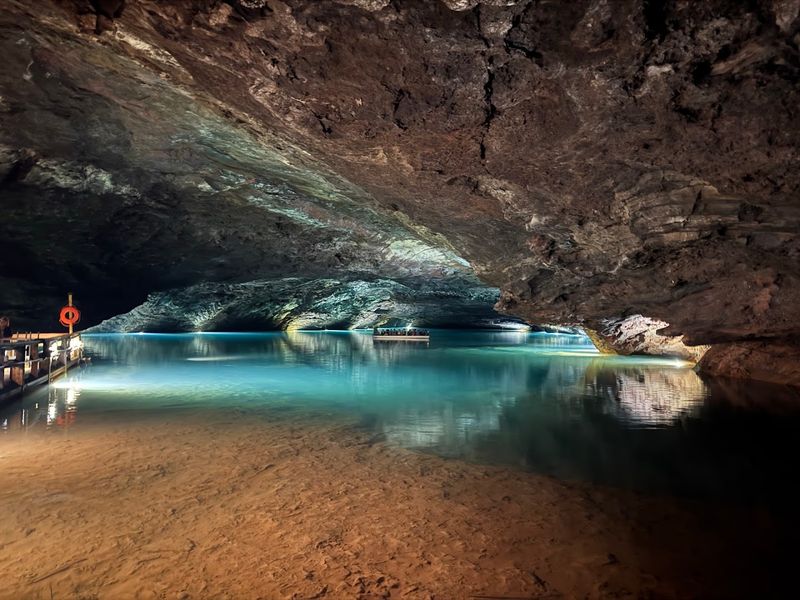
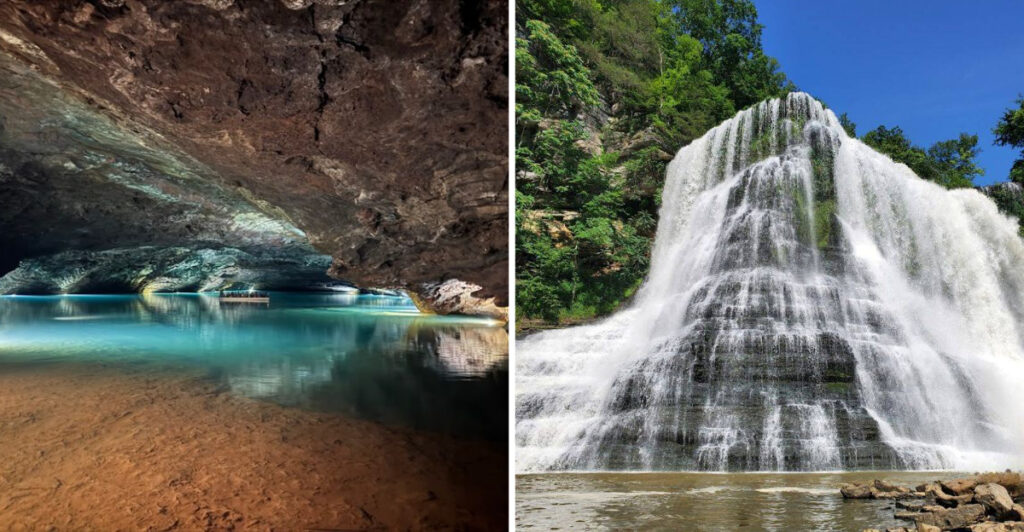
America’s largest underground lake sits beneath the Tennessee countryside, hidden from view until you descend into the cavern system. Listed in the Guinness Book of World Records, this subterranean wonder maintains a constant 58-degree temperature year-round, making it a refreshing escape from summer’s sweltering conditions.
The journey begins with a guided walk through passageways where history and geology merge.
Confederate soldiers once used these caves to mine saltpeter for gunpowder during the Civil War. Your guide shares stories about the cavern’s past while pointing out fascinating rock formations shaped over millions of years.
Then comes the highlight: boarding a glass-bottom boat that glides across the crystal-clear underground lake.
Rainbow trout swim beneath the boat, visible through the transparent floor as your guide navigates the four-acre lake. The cavern ceiling soars overhead, creating an otherworldly atmosphere that feels like exploring another planet.
Children particularly love the adventure aspect, while adults appreciate the geological significance.
Above ground, you can pan for gemstones or explore the nature trail. The entire tour lasts about 75 minutes, providing enough underground time without feeling rushed.
It’s educational entertainment that beats any theme park for creating lasting memories and beating the heat simultaneously.
3. Tuckaleechee Caverns – Townsend
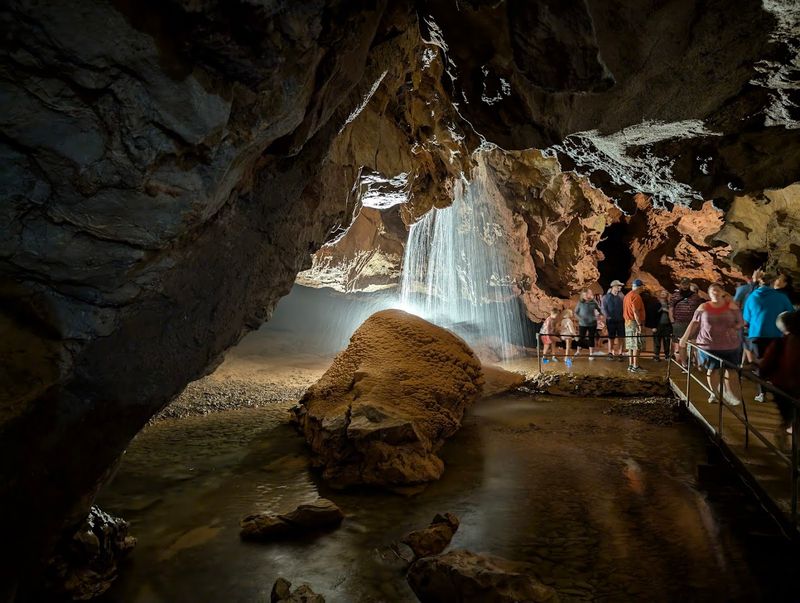
Known locally as the “Greatest Site Under the Smokies,” these caverns have been stunning visitors since they opened to the public in 1953. The temperature inside hovers around 58 degrees, which feels amazing after spending time in Tennessee’s humid summer weather.
What sets Tuckaleechee apart from other cave systems is the sheer size of its rooms and the spectacular formations within them.
The Big Room measures 400 feet long and 150 feet high, creating a natural cathedral that leaves people speechless. Stalactites hang from the ceiling like frozen waterfalls, while stalagmites rise from the floor in shapes that spark imagination.
The guided tour covers about a mile of walkways, all of which are paved and relatively easy to navigate for most fitness levels.
Two underground waterfalls add sound and movement to the experience. Silver Falls drops 210 feet, making it one of the highest underground waterfalls in the eastern United States.
The constant dripping and flowing water created these formations over countless centuries, and they continue growing today at rates measured in fractions of inches per century.
Tours run frequently throughout summer months, though arriving early helps avoid crowds. The entire experience takes roughly an hour.
Located near Townsend, it pairs perfectly with other Smoky Mountain adventures.
4. Great Smoky Mountains National Park – Gatlinburg
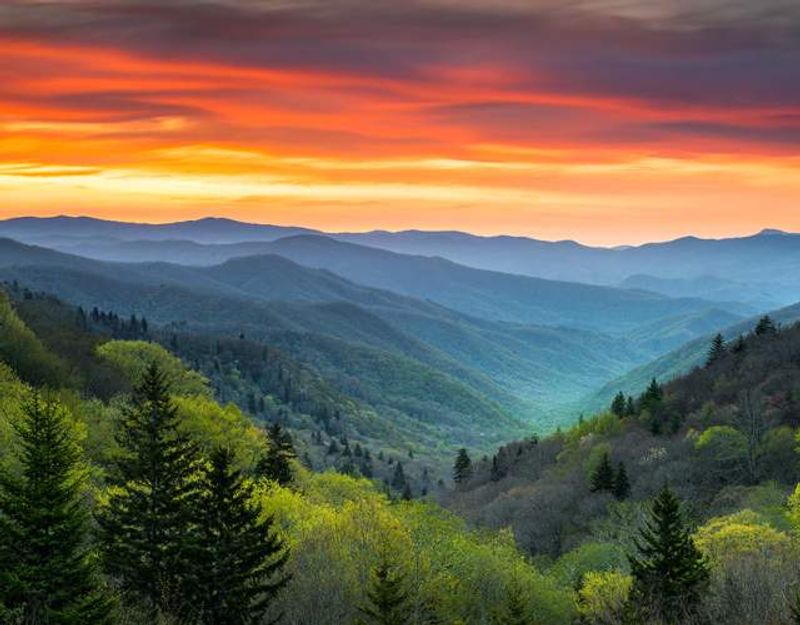
More people visit Great Smoky Mountains National Park than any other national park in America, and summer reveals exactly why. The park straddles the Tennessee-North Carolina border, with the Gatlinburg entrance serving as one of the most popular gateways.
Ancient mountains wear their characteristic blue-gray haze like a veil, created by moisture and organic compounds released by the dense forest.
Over 800 miles of trails crisscross the park, ranging from short nature walks to multi-day backcountry expeditions. Clingmans Dome, the highest point, offers panoramic views that stretch for miles on clear days.
Wildlife sightings happen regularly: black bears, elk, white-tailed deer, and wild turkeys all call this protected area home.
Wildflowers bloom throughout summer, painting meadows with color. Historic buildings scattered throughout the park tell stories of mountain settlers who carved out lives in these rugged hills.
Rushing streams provide soundtrack and scenery, with numerous waterfalls accessible via moderate hikes.
The park charges no admission fees, making it accessible to everyone regardless of budget. Campgrounds fill quickly during peak season, so reservations help secure spots.
Gatlinburg itself offers restaurants, shops, and attractions for those wanting amenities after days spent hiking. Whether you explore for an afternoon or a week, the Smokies deliver natural beauty that photographs can’t quite capture.
5. Cades Cove – Great Smoky Mountains National Park
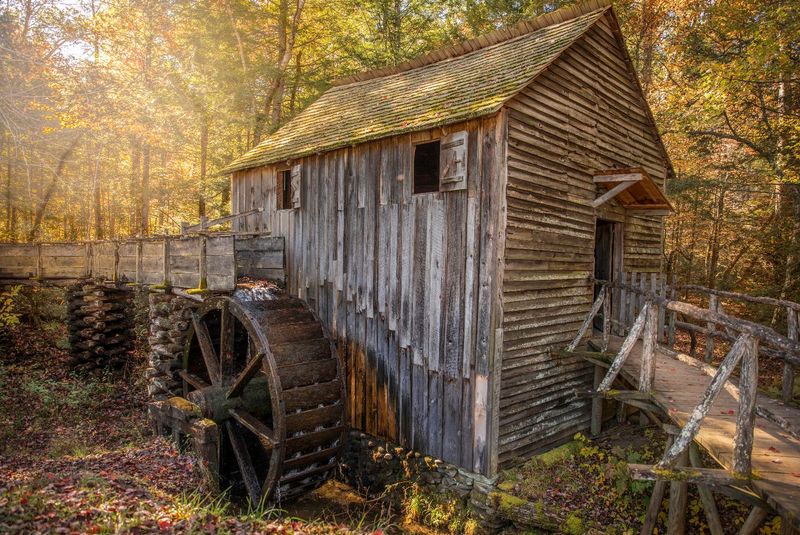
This broad valley within Great Smoky Mountains National Park preserves a snapshot of 19th-century Appalachian life. An 11-mile loop road circles the cove, passing historic churches, log cabins, and working grist mills that operated when this valley supported a thriving community.
Summer mornings often bring fog that settles into the valley, creating ethereal scenes as the sun burns through.
Wildlife viewing opportunities in Cades Cove exceed almost anywhere else in the park. White-tailed deer graze in open fields, often unbothered by cars slowly circling the loop.
Black bears make frequent appearances, particularly in early morning or evening hours. Turkey, coyotes, and even bobcats occasionally show themselves to patient observers.
The loop can be driven, but many visitors prefer bicycles, especially on Wednesday and Saturday mornings when the road closes to motor vehicles until 10 a.m. Pedaling allows you to stop frequently without worrying about traffic behind you.
Several churches still hold services, connecting present to past.
Cable Mill demonstrates how settlers ground corn into meal using water power. Rangers and volunteers share stories about families who once called this valley home.
Hiking trails branch off from the main loop, leading to waterfalls and additional historic sites. Plan several hours for the complete experience, as rushing through defeats the purpose of visiting this peaceful valley.
6. Burgess Falls State Park – Sparta
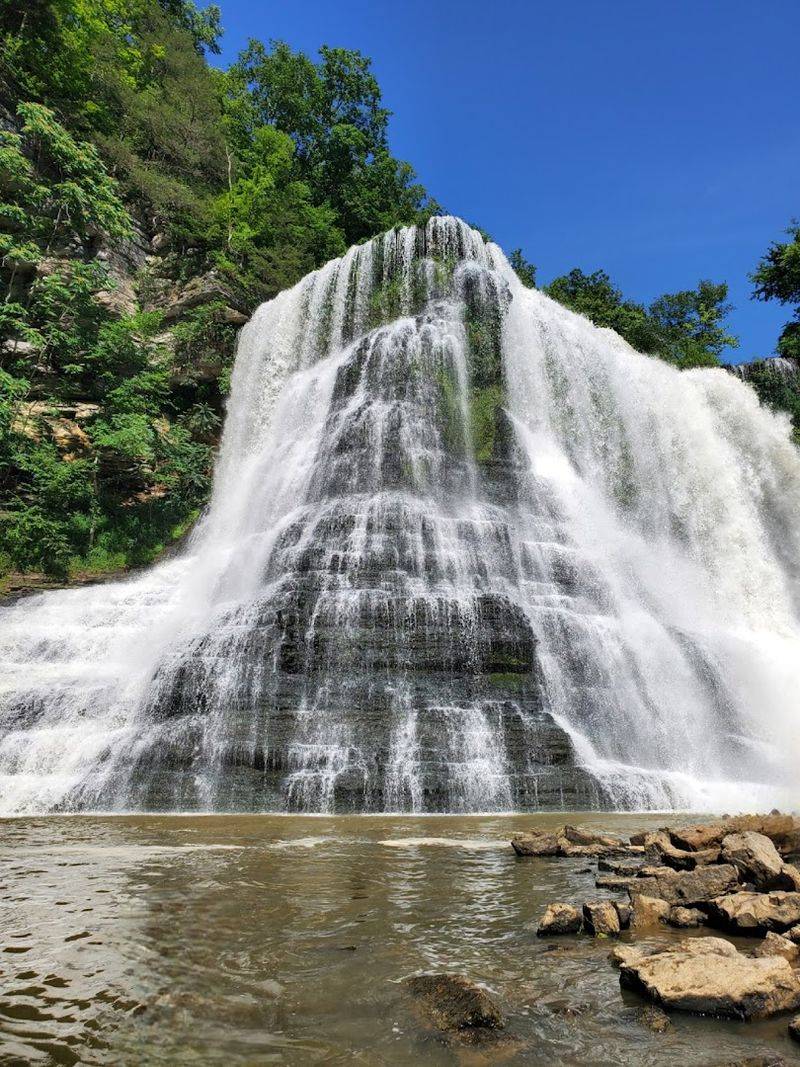
Four distinct waterfalls cascade along the Falling Water River as it cuts through this compact state park near Sparta. The finale, a 136-foot plunge into a rocky gorge, ranks among Tennessee’s most photographed natural features.
The hike to reach it spans just over a mile, making it achievable for families with children who can handle moderate trails.
The path follows the river downstream, allowing you to witness each waterfall’s personality. The first cascade appears quickly, a gentle introduction to what’s coming.
The second and third falls increase in drama, building anticipation. Then you round a bend and the main event appears: Burgess Falls dropping in a powerful curtain of white water.
Overlook platforms provide safe viewing spots, though the urge to scramble down to the base proves strong for adventurous types. Swimming isn’t officially permitted at the main falls, but upstream swimming holes attract those seeking relief from heat.
The river stays relatively cool even in July and August.
Fishing for smallmouth bass and rock bass keeps anglers busy in calmer sections. The park remains less crowded than some Tennessee destinations, offering a more intimate experience with nature.
Picnic areas near the parking lot provide spots for lunch before or after the hike. The entire outing takes about two to three hours, perfect for a half-day adventure.
7. Cummins Falls State Park – Cookeville
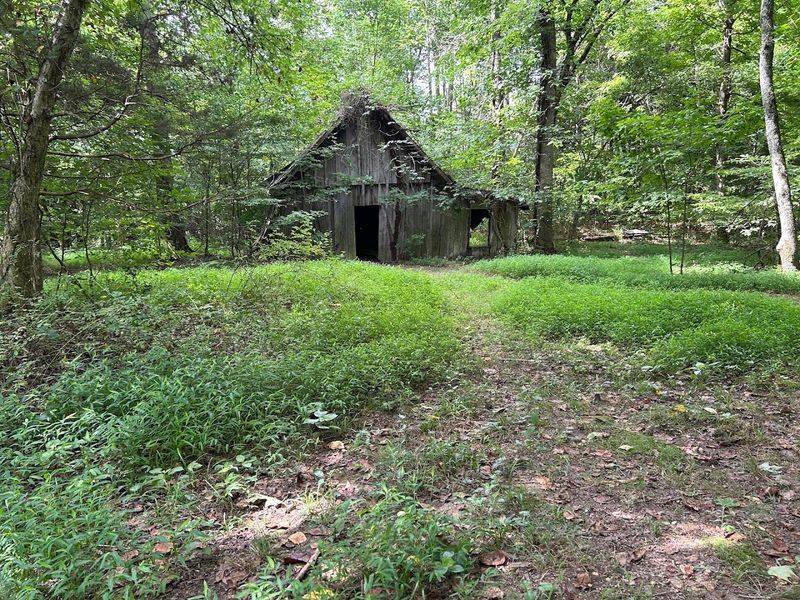
Swimming beneath a 75-foot waterfall creates memories that last forever. Cummins Falls State Park near Cookeville offers exactly that experience, drawing swimmers and hikers to one of Tennessee’s most beautiful natural swimming holes.
The journey requires commitment: a moderately challenging hike that includes rock-hopping and wading through the river itself.
The trail descends into a gorge, following the Blackburn Fork State Scenic River. Water levels vary with rainfall, so checking conditions before visiting prevents disappointment or dangerous situations.
During summer’s lower water periods, the hike becomes easier, though you’ll still get your feet wet crossing the stream multiple times.
The payoff appears when the gorge opens up and the falls come into view. Swimmers splash in the large pool at the base while others sun themselves on surrounding rocks.
The water stays refreshingly cool, fed by upstream springs and shaded by the gorge walls. Families, college students, and outdoor enthusiasts all mingle in this natural gathering spot.
Park regulations require permits during peak season to manage crowds and protect the fragile ecosystem. Arriving early improves your chances of securing entry.
Wear shoes with good grip that can get wet; water shoes or old sneakers work better than sandals. Pack out all trash and respect the natural environment.
The entire adventure takes three to four hours, including swimming time.
8. Rock Island State Park – Rock Island
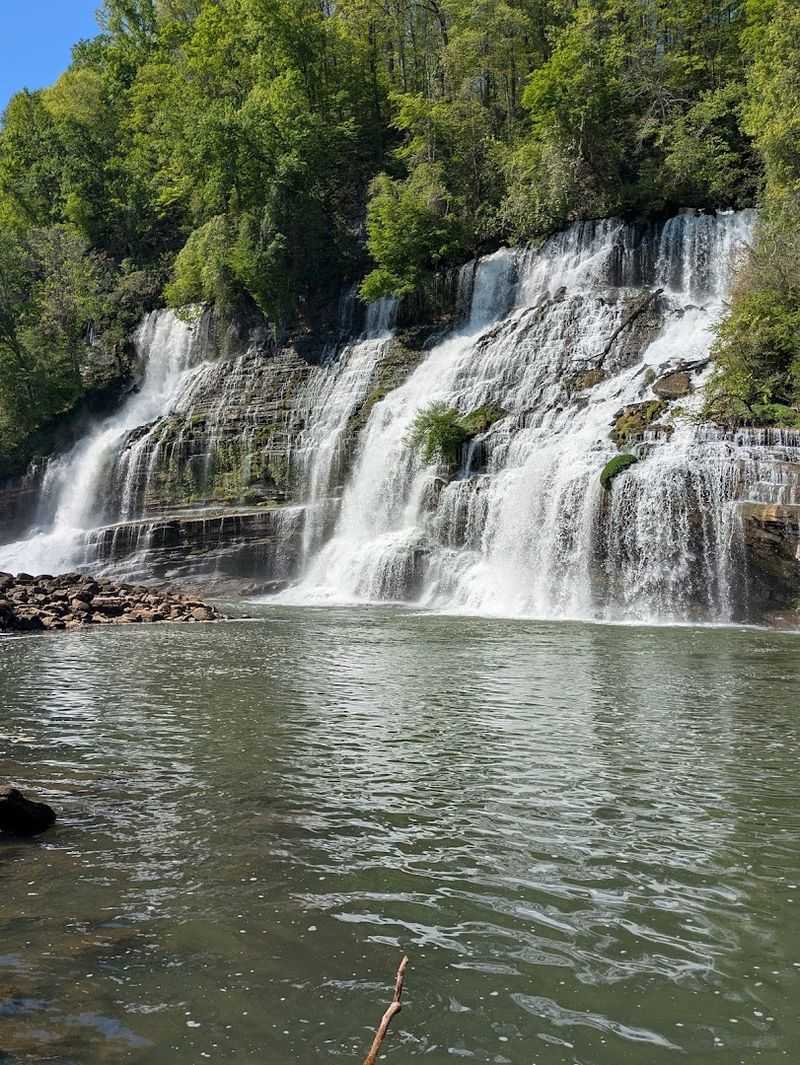
Where three rivers converge, nature created a playground of waterfalls, swimming holes, and dramatic rock formations. Rock Island State Park sits at the junction of the Caney Fork, Collins, and Rocky rivers, creating a landscape that feels more like the tropics than Middle Tennessee.
The water glows with an almost unnatural blue-green color, especially stunning in summer sunlight.
Great Falls Dam towers over one section of the park, a reminder of the hydroelectric history that shaped this area. The Twin Falls cascade side by side, accessible via a short trail that winds through forest and opens to viewing areas.
But the real attraction is the swimming hole below the falls, where brave souls jump from rocks into deep pools.
Kayakers and paddleboarders navigate the calmer sections of river, while others simply float on inner tubes. The park attracts a younger crowd on weekends, creating a social atmosphere different from more remote natural areas.
Lifeguards are not present, so swimming happens at your own risk.
Hiking trails explore the park’s 883 acres, passing historic sites including the old cotton mill ruins. Camping facilities accommodate both tent and RV campers.
The small-town charm of Rock Island itself adds to the appeal, with local eateries serving food that tastes better after a day spent in the water. Plan for crowds during holiday weekends and peak summer days.
9. Lookout Mountain Incline Railway – Chattanooga
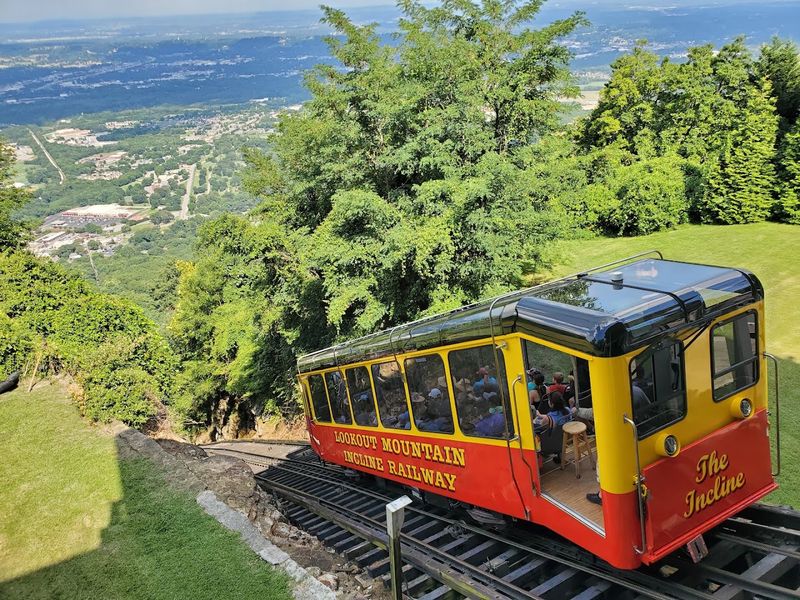
Billed as America’s steepest passenger railway, the Incline Railway has been hauling visitors up Lookout Mountain since 1895. The grade reaches 72.7 percent near the top, creating an experience that feels more like amusement park ride than transportation.
Yet this is serious engineering, a National Historic Site and Mechanical Engineering Landmark that continues operating with its original design principles.
The journey covers one mile, climbing 1,700 feet in elevation. As the bright red cable car ascends, Chattanooga spreads out below, offering increasingly spectacular views of the Tennessee River and surrounding valleys.
On clear summer days, you can see seven states from the top, though that claim requires some imagination and favorable atmospheric conditions.
The ride takes about 15 minutes each direction, with cars passing each other at the midpoint on the dual track system. Original cable cars were replaced with modern versions, but the experience remains true to its Victorian-era roots.
At the summit, attractions include Ruby Falls, Rock City Gardens, and various viewpoints.
The Incline operates year-round, but summer brings the best visibility and warmest weather for exploring the mountaintop. Combination tickets offer savings when visiting multiple Lookout Mountain attractions.
The lower station includes free parking and a small museum about the railway’s history. It’s tourist-friendly without feeling overly commercialized, maintaining charm that has attracted visitors for more than a century.
10. Reelfoot Lake State Park – Tiptonville
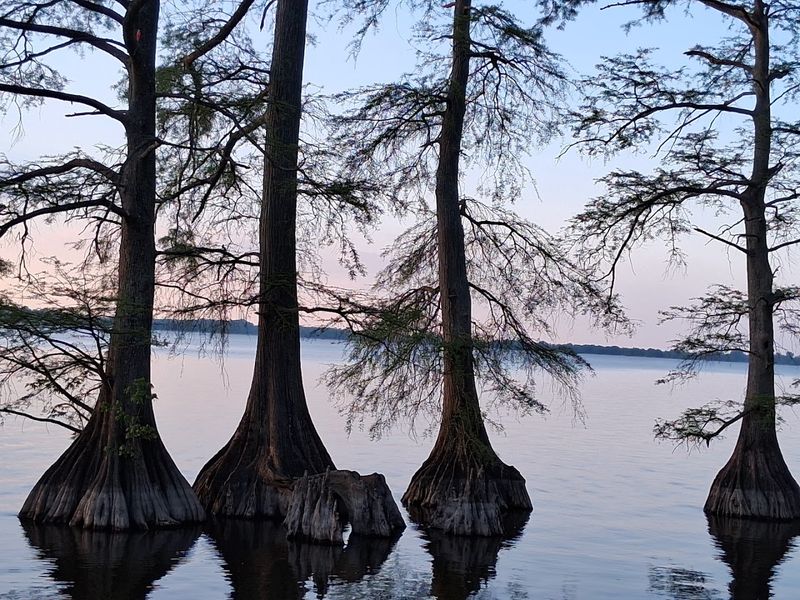
Created by a series of earthquakes in 1811-1812, Reelfoot Lake remains one of Tennessee’s most unique natural features. Bald cypress trees rise from shallow water, their knees protruding above the surface in alien-looking formations.
Located in the state’s northwest corner near Tiptonville, this 15,000-acre lake feels worlds away from the rest of Tennessee’s landscape.
Summer brings incredible bird-watching opportunities, though winter is actually peak season for observing bald eagles. Great blue herons, egrets, and other wading birds stalk the shallows hunting fish.
The lake teems with crappie, bass, and catfish, making it a fishing destination that draws anglers from surrounding states.
Boat tours explore the cypress forest, with guides sharing stories about the lake’s violent creation and the communities that adapted to this new landscape. Paddling your own canoe or kayak through the trees creates an almost mystical experience, especially during early morning when mist hangs over the water.
The lake averages only five feet deep, making it safe for beginners.
Visitor centers provide education about the unique ecosystem and the New Madrid Seismic Zone that created it. Boardwalk trails allow exploration without getting wet feet.
The park offers camping, cabins, and a lodge for overnight stays. It’s off the beaten path compared to other Tennessee destinations, which means smaller crowds and a more authentic encounter with nature’s power and resilience.
Share this story