Texas restaurants don’t just serve food. They create experiences that turn a regular meal into a story you’ll tell for years. From choosing your own steak straight from the cooler to dancing the Hokey Pokey between courses, these dining spots have built traditions so unique that people travel from across the country just to be part of them.
1. The Big Texan Steak Ranch – 72-Ounce Steak Challenge (Amarillo)
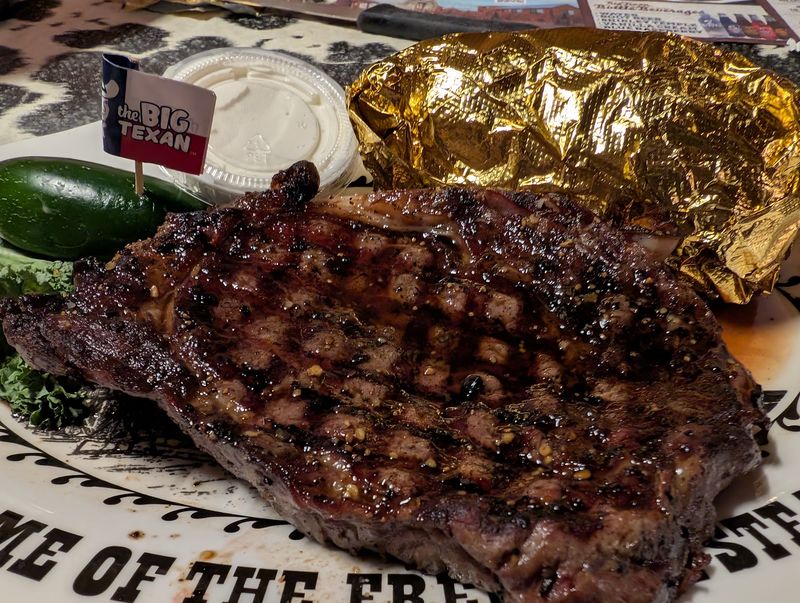
Since 1960, thousands of hungry challengers have stared down a massive slab of beef at this Amarillo landmark. The rules sound simple: finish a 72-ounce steak plus all the sides in under an hour, and your meal is free. Miss the deadline by even one minute, and you’re paying the full price plus the weight of your regret.
What makes this challenge legendary isn’t just the size. You also have to eat a shrimp cocktail, baked potato, salad, and dinner roll before the clock runs out. The restaurant seats challengers at a special raised platform where everyone in the dining room can watch your attempt.
Some people train for weeks, some show up on a whim, and about one in ten actually succeed.
The whole spectacle started as a marketing gimmick when the restaurant opened on old Route 66. Owner Bob Lee wanted something that would make travelers slam on their brakes and pull over. It worked so well that the challenge became more famous than the restaurant itself.
Today, over 68,000 people have attempted it, with success rates hovering around 8,500 winners.
Watching someone tackle this beast is half the entertainment. The first twenty minutes usually go smoothly, with confident cutting and chewing. Then reality sets in around the halfway mark when the meat sweats start.
By the final ten minutes, every bite becomes a battle of willpower over a very full stomach.
Even if you’re not brave enough to try, the restaurant keeps detailed records posted on the walls. You’ll see photos of winners from age 11 to 69, proving that determination comes in all sizes. The current record stands at under nine minutes, set by a competitive eater who made it look almost easy.
2. Magic Time Machine – Costumed Character Servers (San Antonio)
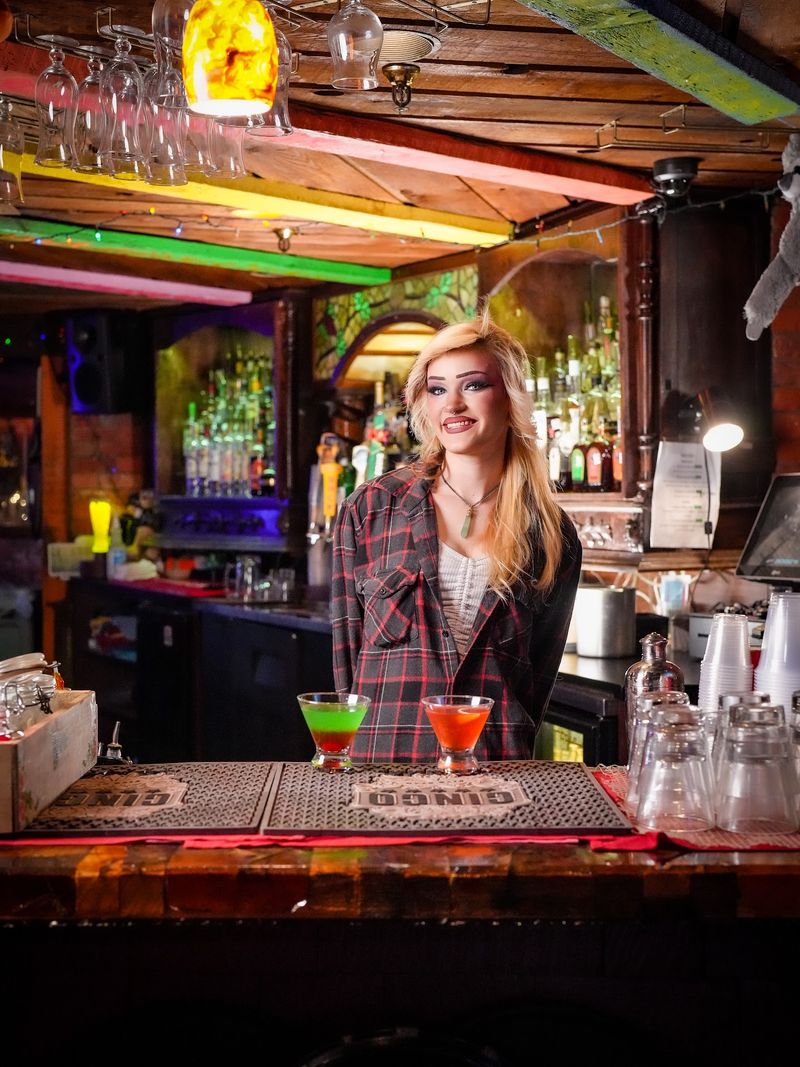
Walking through the doors feels like stepping into a time portal where your waiter might be Superman, Cleopatra, or Austin Powers. This San Antonio institution has been dressing servers in full costume since 1973, turning every meal into dinner theater without the ticket price. Your server commits completely to the character, staying in role from greeting to goodbye.
The concept started when founder Arnold Drake decided boring restaurants needed more excitement. He created themed dining rooms decorated like different time periods and locations, then hired servers willing to become actors for their shifts. A pirate might bring your appetizers while a flapper delivers your entree, each one improvising jokes and staying true to their character’s personality.
Kids absolutely lose their minds here, but adults get just as much joy from the experience. Servers undergo serious training to master their characters, learning catchphrases, mannerisms, and how to handle the inevitable requests for photos. The costume closet backstage reportedly holds over 200 different outfits, from historical figures to pop culture icons to original creations.
Special occasions get extra attention at Magic Time Machine. Birthday guests might find themselves serenaded by a group of mismatched characters, or called out by a superhero who announces their special day to the entire restaurant. Proposals happen regularly, often with servers recruited to help pull off elaborate character-driven schemes.
The food itself doesn’t play second fiddle to the theatrics. The menu features solid American fare with playful names that match the restaurant’s personality. But honestly, people don’t come here just for the steaks and seafood.
They come because nowhere else lets you have your dinner served by Wonder Woman while Dracula refills your drink and a cowboy delivers dessert to the next table.
3. Taste of Texas – Choose Your Own Steak (Houston)
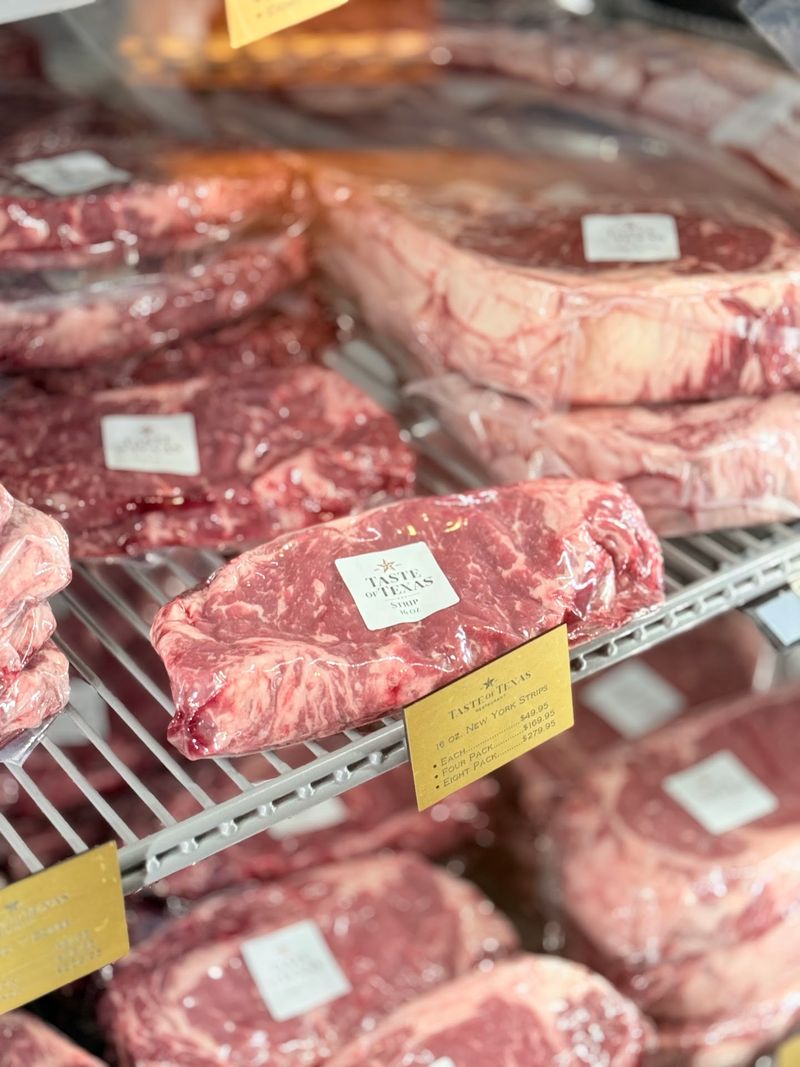
Most restaurants bring you a menu with steak descriptions and trust you’ll be happy with what arrives. Here in Houston, Taste of Texas hands you a tray and walks you into their refrigerated meat room where hundreds of cuts wait on display like edible artwork. You become your own butcher, examining marbling and thickness before selecting the exact piece that calls to you.
The tradition started in 1977 when founder Edd Hendee wanted customers to see the quality before ordering. Instead of hiding the meat prep behind kitchen doors, he built a massive walk-in cooler with glass walls right in the dining area. Guests bundle up slightly as they enter the chilled room, where a staff member explains the differences between ribeyes, strips, and filets while you browse.
This isn’t just theater, it’s educational. Many diners have never seen raw steaks in this context, and the experience teaches them what to look for in marbling, color, and cut quality. The meat expert answers questions about aging processes, grade differences, and cooking recommendations based on your selection.
You can pick a modest eight-ounce filet or go big with a massive cowboy ribeye that barely fits the plate.
Once you’ve chosen your steak, the kitchen cooks it exactly to your specifications. The personal selection process creates a psychological investment in the meal. You picked this specific piece of meat, studied its qualities, and approved it yourself.
When it arrives perfectly grilled at your table, there’s a satisfaction that goes beyond just eating a good steak.
The restaurant also maintains a salad bar and sides station where the same choose-your-own philosophy applies. But the meat room remains the star attraction, with first-time visitors often spending ten minutes examining options before making their selection. Regulars know exactly what they want and head straight for their preferred cut.
4. Babe’s Chicken Dinner House – The Hokey Pokey Dance (Carrollton)
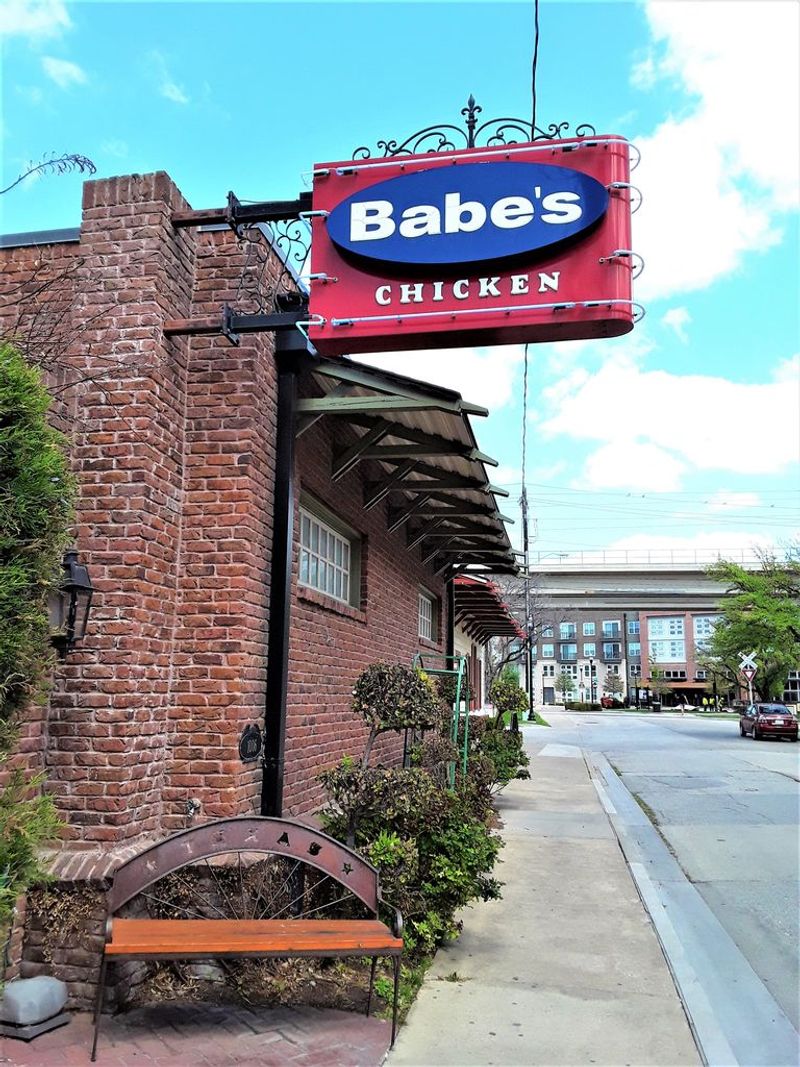
Right in the middle of your fried chicken dinner, the music suddenly changes and servers start clapping. Before you can process what’s happening, everyone in the restaurant is standing up to do the Hokey Pokey. Yes, that Hokey Pokey, the one you probably last performed at a kindergarten party.
And yes, participation is strongly encouraged.
This wonderfully weird tradition happens multiple times during each service at all Babe’s locations. Servers lead the charge, putting their right foot in and shaking it all about with genuine enthusiasm while diners join in with varying levels of coordination. Some families come prepared, jumping up immediately when the music starts.
Others sit frozen in confusion during their first visit until a friendly server pulls them to their feet.
The whole thing started as a way to create a family-friendly atmosphere that felt more like a reunion than a restaurant. Founder Paul Vinyard wanted people to relax, have fun, and not take themselves too seriously. What better way to break down social barriers than making strangers dance together between bites of mashed potatoes?
The strategy worked brilliantly, turning Babe’s into a destination for celebrations and gatherings.
Kids absolutely dominate the dance floor during these sessions, often showing more moves than the song technically requires. Parents get embarrassed, then get into it, then end up laughing harder than they have in weeks. By the time everyone sits back down, the energy in the room has shifted from separate tables to one big communal experience.
The food itself follows the family-style tradition, with servers bringing endless platters of fried chicken, chicken-fried steak, and all the Southern sides to share. But ask anyone about their Babe’s experience, and they’ll mention the Hokey Pokey before they mention the food. That’s intentional, and that’s exactly why people keep coming back with their kids, their parents, and anyone who needs a reminder not to take life so seriously.
5. Snow’s BBQ – Saturday-Only Barbecue Pilgrimage (Lexington)
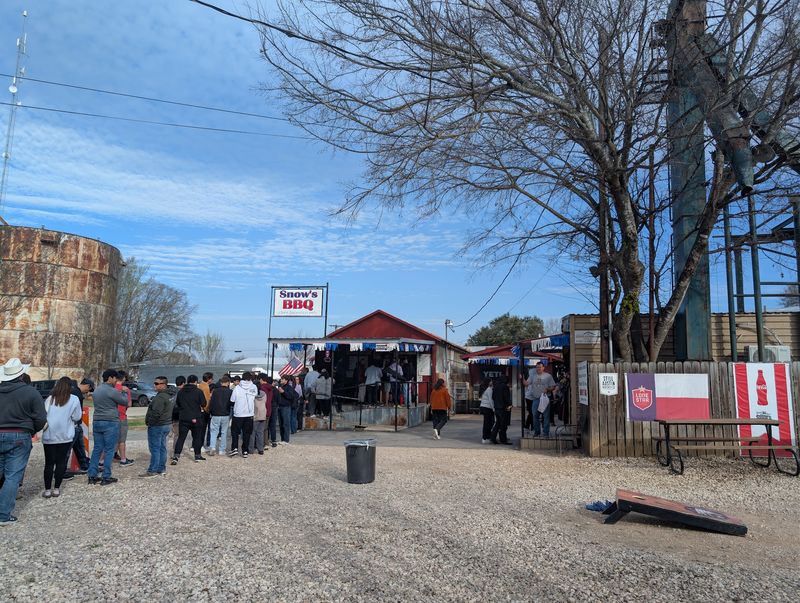
Lexington sits 50 miles from Austin in the middle of nowhere particular, population around 1,200. Every Saturday morning before sunrise, that population temporarily doubles as barbecue pilgrims arrive from across Texas and beyond. They’re all chasing the same thing: brisket from an 88-year-old pitmaster named Tootsie Tomanetz who only cooks one day a week.
Snow’s opens at 8 a.m. on Saturdays only, and they sell out by mid-morning most weeks. Serious fans start lining up around 6 a.m., sitting in lawn chairs outside this tiny building that looks more like a shed than a restaurant. There’s no option to come back tomorrow or try again on Tuesday.
Miss Saturday, and you wait seven more days for another chance.
Tootsie has been tending pits since the 1960s, and she still arrives around 2 a.m. every Saturday to start the fires. She uses all post oak wood, no gas or electricity, cooking briskets for up to 14 hours until they reach that perfect combination of smoke ring and tenderness. Texas Monthly named Snow’s the best barbecue in Texas, which only made the lines longer and the sell-out times earlier.
The Saturday-only schedule isn’t a marketing gimmick or an exclusivity play. Owner Kerry Bexley and Tootsie simply don’t want to work more than that. They have other jobs during the week, and this arrangement keeps barbecue fun instead of turning it into a grind.
The scarcity is real, born from personal choice rather than business strategy.
What makes the pilgrimage worthwhile isn’t just the exceptional brisket. It’s the whole experience of committing to the journey, waiting with other dedicated fans, and earning your meal through patience and planning. You can’t Uber Eats this experience or make a reservation.
You show up, you wait, and if you timed it right, you get some of the best barbecue in the state.
6. Blue Bonnet Cafe – Pie Happy Hour (Marble Falls)
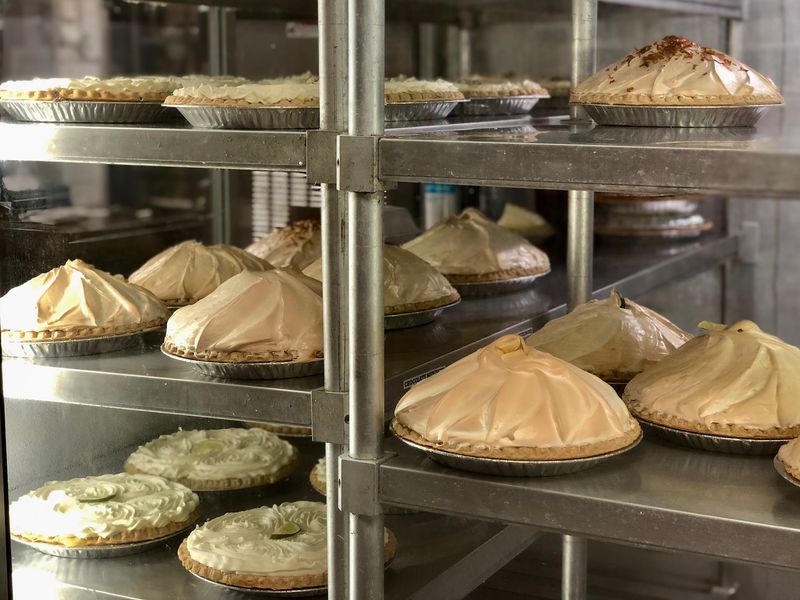
Between 3 and 5 p.m. every weekday, this Marble Falls institution does something that makes afternoon planning very difficult. They offer full slices of their famous homemade pies at happy hour prices, turning a quiet mid-afternoon into a packed house of pie enthusiasts. We’re talking about pies with meringue piled four inches high and fruit fillings made from scratch daily.
The Blue Bonnet has been serving pie since 1929, back when the building served as a simple cafe on the highway. Current owner Belinda Hoover maintains recipes that have been perfected over decades, with some dating back to the original owners. The pie case displays up to 30 different varieties on any given day, from classic pecan and coconut cream to seasonal specialties like strawberry rhubarb.
Pie Happy Hour wasn’t always a tradition. It started as a practical solution to afternoon lulls when the lunch rush ended and dinner crowds hadn’t arrived yet. Rather than let servers stand idle, management decided to promote the one thing Blue Bonnet does better than almost anyone: pie.
Word spread fast, and now locals schedule their entire afternoon around getting there before the good flavors sell out.
The strategy creates a completely different crowd than typical happy hours. Instead of office workers grabbing drinks, you get retired couples, remote workers taking breaks, and parents treating kids after school. Everyone’s there for sugar, not alcohol, and the vibe stays cheerful and family-friendly.
Some regulars show up multiple times per week, working their way through the entire pie rotation.
Watching the pie case throughout happy hour is like observing a countdown. The chocolate meringue usually goes first, followed closely by coconut cream and buttermilk. By 4:45, your options narrow considerably, and latecomers sometimes find only one or two slices remaining.
The whole thing resets the next day, creating a fresh competition for pie supremacy that keeps people coming back.
7. Kreuz Market – No-Fork Barbecue (Lockhart)
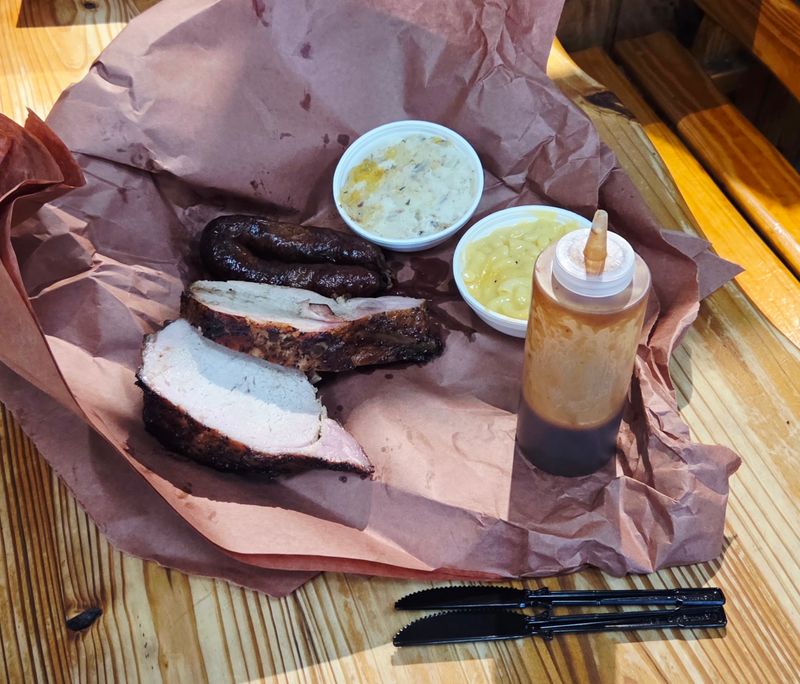
Ask for a fork at Kreuz Market and you’ll get a look that questions your understanding of barbecue fundamentals. This Lockhart legend has maintained a strict no-fork policy since 1900, serving all meat on butcher paper with nothing but a knife for cutting. Your hands are your utensils, and that’s not negotiable.
The tradition stems from old German meat market practices where smoked meats were sold by the pound and eaten immediately. Customers would buy their selection, get it wrapped in paper, and eat it right there or take it home. Forks never entered the equation because good barbecue doesn’t need them.
The meat should be tender enough to pull apart, and eating with your hands connects you more directly to the food.
Kreuz takes this philosophy seriously enough that they don’t even stock forks in the building. The serving line operates like an assembly process where you point at what you want, they cut it, weigh it, and wrap it in pink butcher paper. You carry your bundle to one of the long communal tables in the dining hall and unwrap your feast.
Napkins are provided in abundance because you’re going to need them.
First-timers often struggle with the concept, especially when tackling juicy brisket or sausage. But within a few bites, most people understand the method. Your hands provide better control than a fork ever could, letting you feel the texture and tear the meat along its natural grain.
The experience becomes more primal and satisfying, even if it’s messier.
The no-fork rule extends to sides as well, though Kreuz keeps those minimal anyway. They offer bread, crackers, cheese, pickles, onions, and avocado, but no traditional sides like beans or potato salad. The focus remains completely on the meat, the way founder Charlie Kreuz intended over a century ago.
Modern customers either embrace the tradition or go somewhere else, and Kreuz is perfectly fine with that arrangement.
8. City Market – Smoke-Room Ordering (Luling)
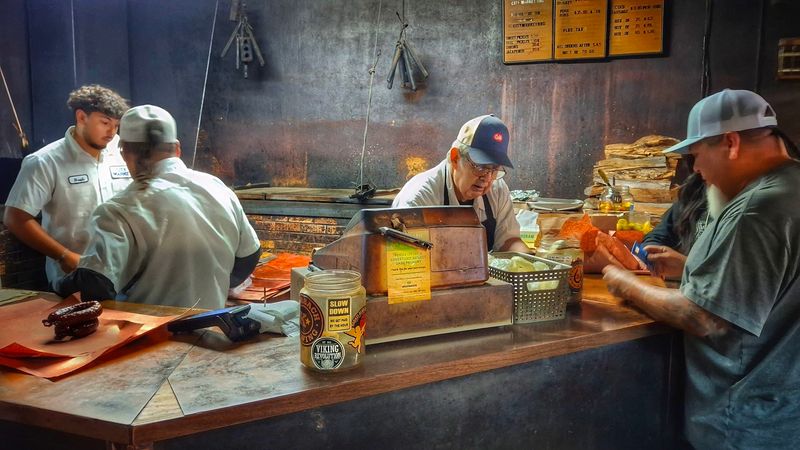
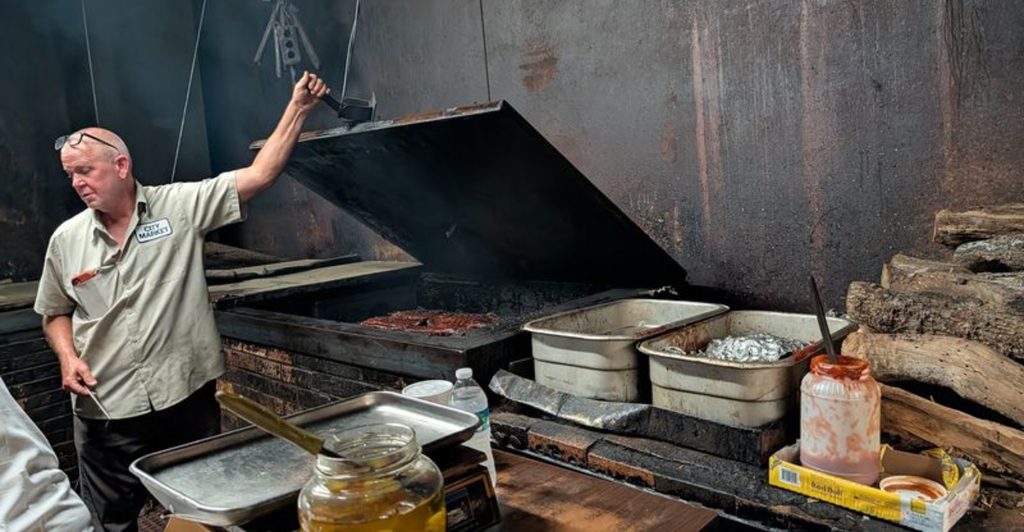
Forget browsing a menu at your table or ordering from a counter. At City Market in Luling, you walk directly into the smoke room where pitmasters work their craft, surrounded by brick pits that have been burning since 1958. You order your meat right there in the heat and smoke, watching as they pull briskets from the pit and slice your portions to order.
The smoke-room ordering system preserves the original meat market tradition when this place actually functioned as the town’s grocery store. Back then, the smoke room served as the meat department where customers would select their cuts fresh from the pit. When City Market transitioned to restaurant-only operation, they kept the ordering process exactly the same because it worked perfectly.
Walking into that smoke room hits you immediately with heat, the smell of burning post oak, and decades of smoke embedded in the brick walls. Pitmasters work in this environment for hours, tending fires and monitoring temperatures while customers file through pointing at brisket, ribs, or sausage. They slice everything right in front of you, wrapping it in butcher paper while you watch the fat glisten and the smoke ring reveal itself.
This direct interaction with the cooking process changes the entire dining experience. You’re not separated from your food by kitchen walls and serving staff. You see exactly where your brisket comes from, watch the pitmaster’s technique, and smell everything intensifying as they open the pit doors.
It creates transparency and connection that modern restaurants rarely offer.
After getting your meat, you carry it to the dining room yourself and grab sides from a separate area. The whole process feels more like a meat market visit than a restaurant meal, which is precisely the point. City Market could easily modernize this system, install air conditioning in the smoke room, or move ordering to a cleaner environment.
But that would erase the authenticity that makes this place special and keeps people driving to tiny Luling specifically for this experience.
9. The Oasis on Lake Travis – Sunset Bell Ringing (Austin)
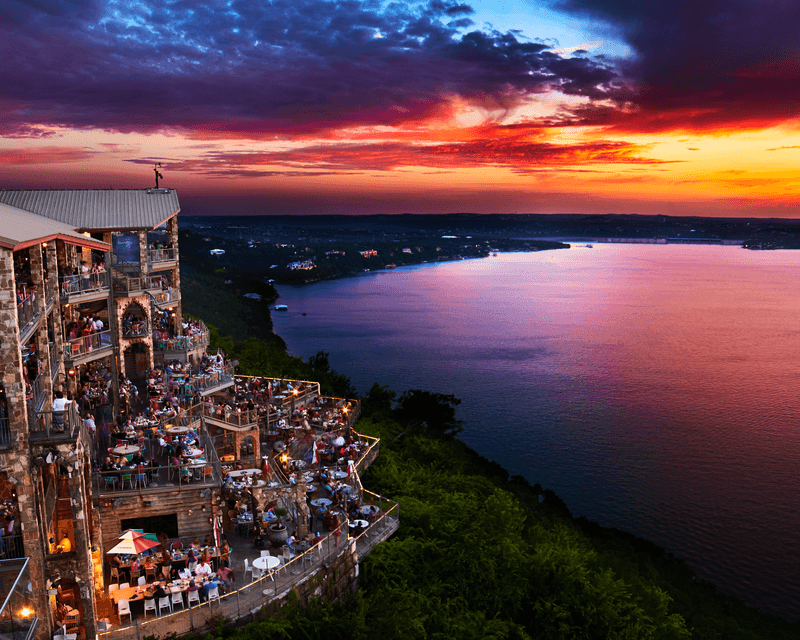
Every evening when the sun touches the horizon over Lake Travis, a brass bell rings out across The Oasis’s massive multi-level decks. Hundreds of diners pause their conversations, stop mid-bite, and turn toward the water to watch the sunset together. For those few minutes, strangers become a community united by nature’s daily show over the Texas Hill Country.
The bell tradition started decades ago as a simple way to make sure nobody missed the main attraction. The Oasis bills itself as the Sunset Capital of Texas, built specifically to showcase the view across Lake Travis as the sun drops behind the hills. Management realized that diners focused on their meals or conversations sometimes missed the whole spectacle, so they installed a bell as a gentle reminder to pay attention.
Now the bell ringing has become a ceremony in itself. A staff member walks to the designated bell location, waits for the perfect moment, then rings it with enough force to carry across all the decks. Conversations drop to whispers, phones come out for photos, and couples lean in closer as the sky transforms through shades of orange, pink, and purple.
Some people applaud when the sun finally disappears, others sit quietly appreciating the moment.
The tradition works because it creates a shared experience among people who arrived as separate parties. That family at the next table, the couple on their first date two sections over, and the birthday group near the railing all pause together. For a restaurant that can seat over 2,500 people across its sprawling decks, the bell provides a unifying moment that makes the massive space feel intimate.
Weather plays a huge role in sunset quality, and some nights deliver better shows than others. Cloudy evenings might produce muted colors while clear skies often create dramatic displays. But The Oasis rings the bell regardless, maintaining the tradition even when nature doesn’t fully cooperate.
Regulars know that some of the best sunsets happen on random Tuesday nights when you least expect them.
10. King’s Inn – No Printed Menus (Riviera)
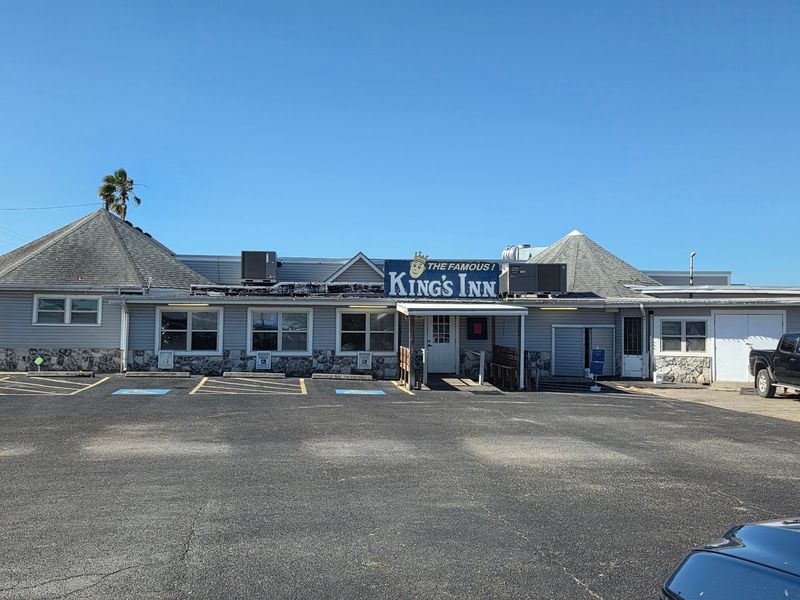
Sit down at King’s Inn and look around for a menu all you want. You won’t find one because they haven’t printed menus since opening in 1939. Your server will verbally recite the options, answer your questions, and take your order entirely from memory.
This tiny Riviera restaurant operates the same way it did when the King family started serving Mexican food to highway travelers eight decades ago.
The no-menu tradition began out of practical simplicity rather than intentional quirk. The original King’s Inn offered a small selection of dishes that didn’t change, so printing menus seemed unnecessary and expensive. As the restaurant gained fame, particularly for its crispy tacos and cabrito, the verbal ordering system became part of the identity.
Changing it now would feel like losing a piece of history.
First-time visitors often panic slightly when they realize there’s nothing to read or study. Servers handle this gracefully, patiently explaining the options and offering recommendations based on what people seem interested in. The menu isn’t huge, focusing on Tex-Mex classics done exceptionally well, so memorizing it doesn’t require extraordinary effort.
Most servers can recite ingredients, preparation methods, and even suggest combinations.
This system creates a more personal interaction than typical restaurant service. You have to actually talk to your server, ask questions, and engage in conversation rather than hiding behind a menu while deciding. For some diners, especially those who prefer studying options independently, this feels uncomfortable at first.
But most people quickly appreciate the human connection it requires.
The food itself justifies the journey to this small town between Corpus Christi and the border. King’s Inn has won awards and recognition for decades, drawing customers from across South Texas who make special trips specifically for the crispy tacos and perfectly seasoned cabrito. They could easily print menus now, maybe even offer online ordering or a website with full descriptions.
But that would modernize something that doesn’t need fixing, erasing a tradition that makes King’s Inn distinctly itself.
Share this story