Step inside the right Massachusetts church and the stained glass, carved stone, and soaring ceilings can make the neighborhood outside feel very far away. Across the state, historic churches bring Gothic arches, grand towers, ornate interiors, and other European-inspired details into busy cities and quieter communities.
The architecture is impressive on its own, but the buildings also tell stories about the congregations, immigrants, and neighborhoods that shaped them. Some deserve a slow walk around the exterior, while others reveal their best details once you step inside.
If you enjoy architecture with a sense of history, these Massachusetts churches can turn an ordinary outing into something that feels much farther from home.
1. St. Patrick’s Church – Lowell’s Irish Landmark
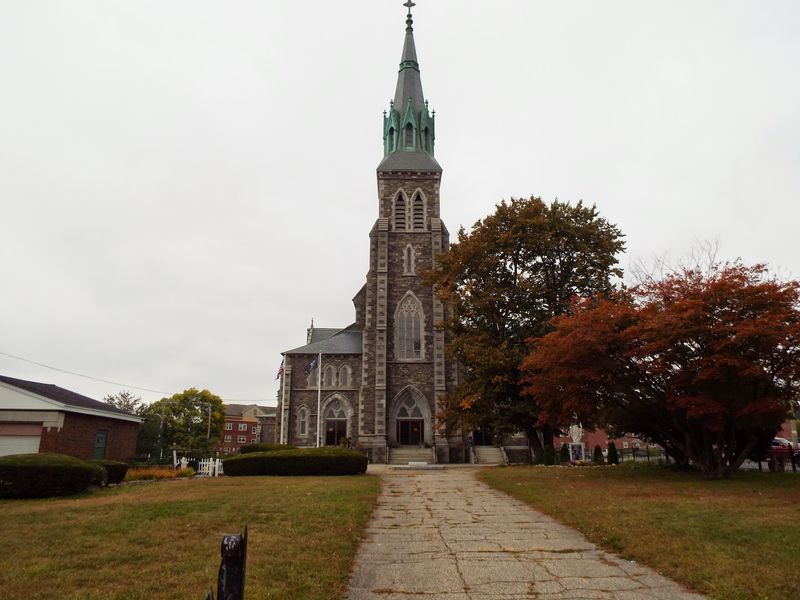
Look up before you check your phone: the spire at St. Patrick’s gives Lowell’s skyline a sharp, churchlike accent. Its pointed shapes and stone exterior bring to mind the Gothic churches you might pass in Ireland, without removing the building from its very Massachusetts setting.
The parish has deep ties to Lowell’s Irish community and the city’s industrial growth. That connection adds another layer to a visit, because the church belongs to the same story as the mills, canals, and neighborhoods around it.
Start outside, where you can study the tall windows and the way the building draws your eyes upward. Step back far enough to see the tower together with the main body of the church.
A close view catches details, but a wider view explains the design.
For photographs, try a position across the street rather than standing directly under the entrance. You’ll get less distortion and a better sense of scale.
Keep traffic, parked cars, and private doorways in mind, and never step into the road just to improve your angle.
Interior access should be checked through the parish before you go. A church can be open for worship without being available for casual sightseeing, and services deserve quiet space.
When entry is permitted, silence your phone and ask before photographing people, religious objects, or any active ceremony.
Pair the stop with a walk through Lowell’s canal and mill areas for a useful contrast. The industrial buildings explain how people worked, while St. Patrick’s shows where part of that community gathered.
Leave enough time to notice both rather than treating the church as a quick photo stop between destinations. Comfortable shoes help on a longer city walk, especially when you decide to explore another block after spotting an interesting roofline nearby.
Check the weather before leaving, too.
2. Trinity Church – Boston’s Romanesque Showstopper
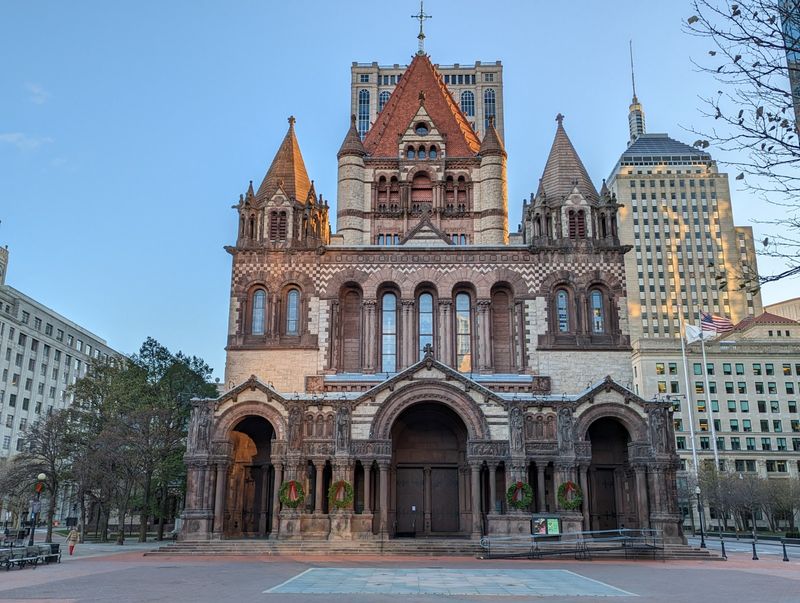
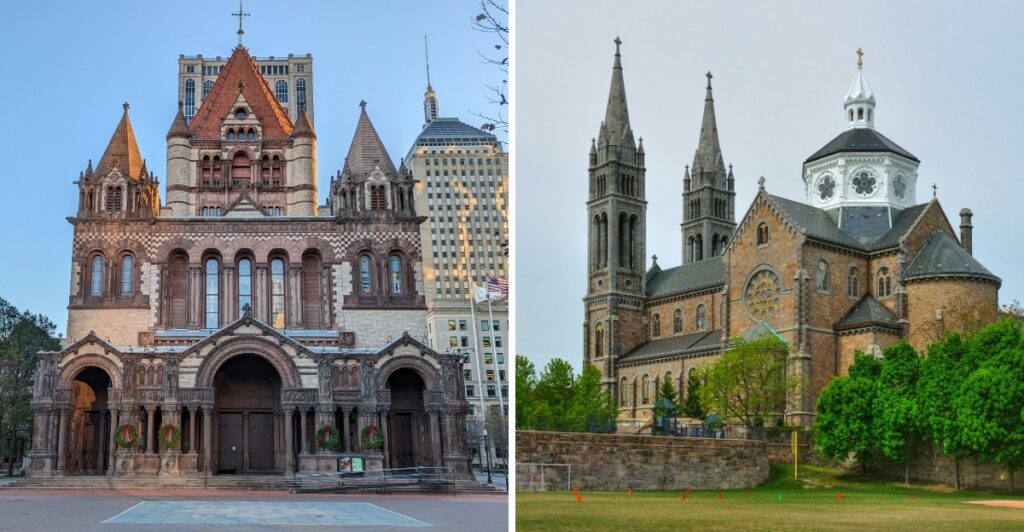
Copley Square offers a neat architectural trick: a church inspired by older European forms stands beside the glassy face of modern Boston. Trinity Church doesn’t need a needlelike spire to command attention.
Its broad tower, rounded arches, and richly colored stone do the heavy lifting.
Architect Henry Hobson Richardson designed the church, which became a defining example of Richardsonian Romanesque architecture. That name sounds like homework, but the visual idea is simple.
Think strong stone walls, deep arches, and a building that looks firmly planted rather than light and delicate.
Circle the exterior before heading inside, if visiting access is available. Different sides reveal changes in roof shapes, window groupings, and the arrangement of stone.
From farther back in the square, you can see how all those busy details fit into one clear outline.
The interior rewards a slower pace, with decorative painting and stained glass adding color beyond the stone exterior. Check the church’s current visitor information for tours, admission policies, and opening times.
Worship schedules and special events can change what parts of the building are accessible.
Photographers have several useful options here. A wide shot shows the church within Copley Square, while a tighter frame picks out an arch or tower detail.
Reflections in nearby glass can offer another perspective, though construction, weather, and street activity may affect your view.
Make this a walking stop rather than a parking challenge. Nearby transit puts you close to the square, and the Boston Public Library gives you another major architectural destination within easy reach.
Take a few minutes between buildings to compare their materials and shapes. Trinity’s heavy stone and rounded openings become even more noticeable when you have other facades beside them.
You don’t need specialist knowledge to spot the differences; a little patient looking is enough here.
3. Christ Church Cathedral – Springfield’s Gothic Pause
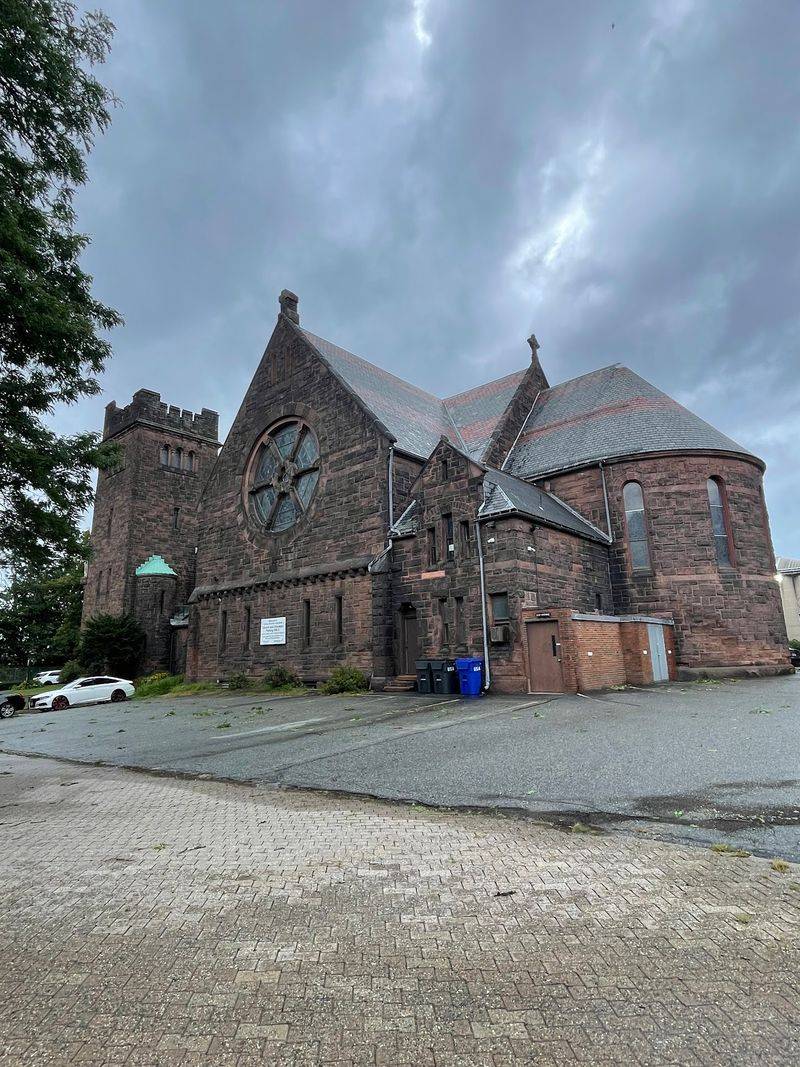
Downtown Springfield has a quieter side, and Christ Church Cathedral is a good place to notice it. The Episcopal cathedral’s Gothic character brings pointed arches and substantial masonry into the city streetscape.
The result suggests an English church setting, even with everyday traffic nearby.
A cathedral is the church associated with a bishop’s seat, not simply a label for an especially large building. Knowing that makes the name more useful.
You’re looking at a place with a role in a wider church community, as well as an architectural presence.
Begin by studying the windows from outside. Their pointed tops are an easy way to recognize the Gothic tradition without learning a long list of terms.
Follow the lines upward, then notice how the heavier walls balance the narrow openings and keep the design grounded.
Instead of trying to capture every detail at once, choose one part of the exterior to examine closely. A doorway, window surround, or stretch of stone can reveal more than a rushed overall photograph.
Cloudy weather can actually help by softening shadows across the masonry.
Before planning an indoor visit, contact the cathedral or check its current public information. Office hours, worship times, and visitor access are not always the same thing.
Ask about step-free entry if needed, and don’t assume that an older doorway tells you everything about accessibility.
Build a Springfield outing around nearby museums or downtown walking, but allow breathing room between stops. Church architecture is easier to appreciate when you’re not watching the clock every minute.
If the doors are closed, the exterior still gives you plenty to study from public space. Keep your route practical, check parking signs carefully, and bring a light layer when the forecast looks changeable.
A short, thoughtful stop works better than arriving with an ambitious schedule and no confirmed opening time.
4. St. Peter’s Catholic Church – Worcester’s Neighborhood Grandeur
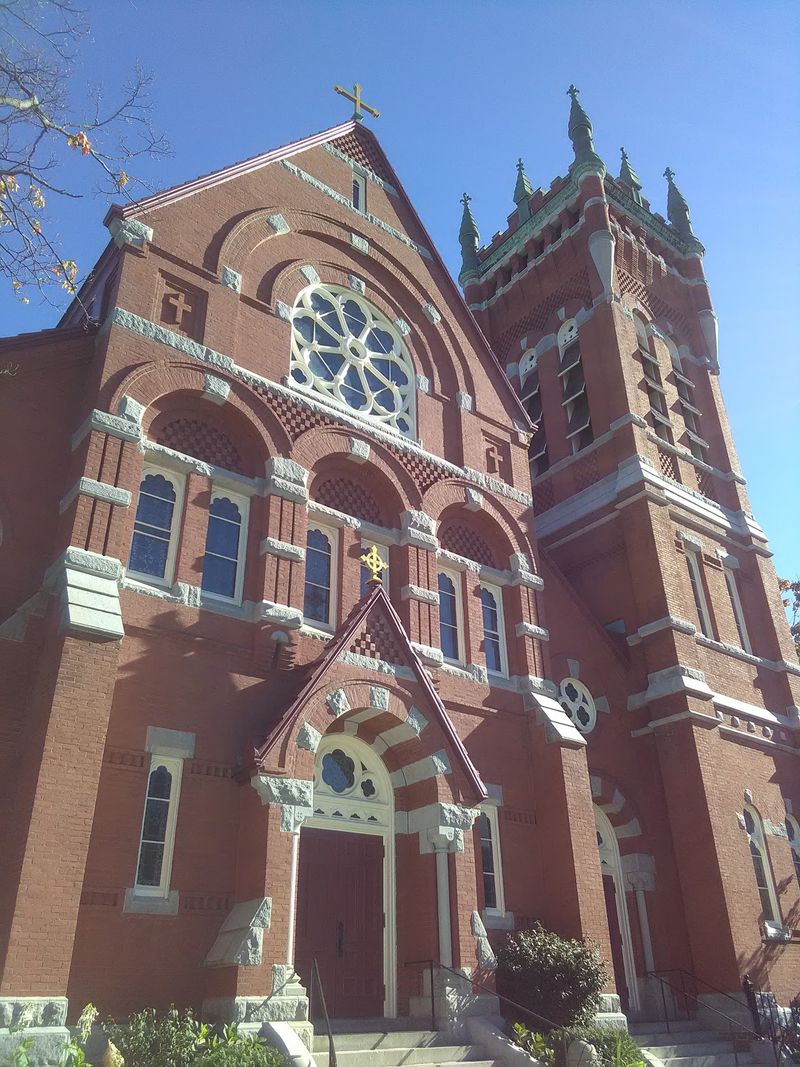
A neighborhood church can make a stronger impression than a famous landmark, especially when its roofline suddenly rises above familiar storefronts. St. Peter’s Catholic Church brings that kind of presence to Worcester.
Its historic architecture gives an ordinary city walk a distinctly European-looking focal point.
The best approach is to notice the building in context rather than crop the neighborhood away immediately. Streets, nearby houses, and everyday activity show how a church fits into local life.
European church squares also mix grand architecture with errands, buses, and people heading home.
Once you have the wider view, turn your attention to the facade. Look for the relationship between the entrance, tall windows, and upper portions of the building.
You don’t need to identify every feature correctly to understand how the design creates height and visual weight.
For a useful photograph, take one broad image and one closer study of a detail that catches your eye. Avoid blocking the entrance while adjusting your camera.
If parishioners are arriving, move aside and let the building remain a working church rather than your photo backdrop.
Check current parish information before expecting to go inside. Access may depend on services, staffing, or scheduled activities, and an unlocked door is not an invitation to explore every room.
Stay in clearly public areas, speak quietly, and ask permission before taking interior photographs.
Worcester rewards a flexible route, so combine this stop with another church or a nearby cultural destination instead of racing between distant addresses. Give yourself time for parking and street crossings, particularly along busy roads.
If you’re comparing churches, note one difference at each: a window shape, building material, or tower outline. Those small observations make the day more interesting than collecting nearly identical pictures.
Finish your visit by checking the details you missed on the first look at the front entrance.
5. Basilica and Shrine of Our Lady of Perpetual Help – Boston’s Mission Hill Monument
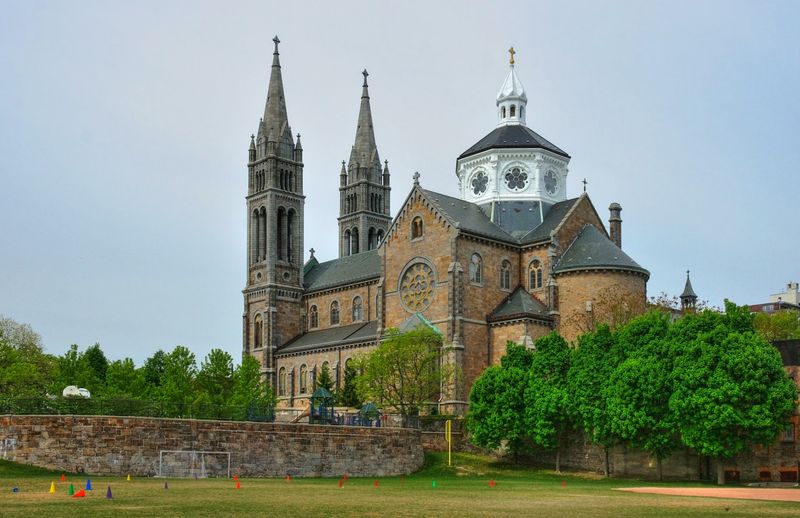
Two towers are better than one when your goal is to stop a sidewalk conversation mid-sentence. The Basilica and Shrine of Our Lady of Perpetual Help rises over Boston’s Mission Hill neighborhood with a commanding stone facade.
Locally, you’ll often hear it called Mission Church.
Its Romanesque character connects it visually with European churches built around strong walls and rounded arches. Compared with the sharp upward pull of Gothic designs, the exterior has a broader, heavier rhythm.
Look at the openings and you’ll quickly see the difference for yourself.
The words basilica and shrine describe religious distinctions, not just architectural size. The church is an active place of worship and devotion, so plan your visit with that purpose in mind.
Sightseeing should fit around parish life, never interrupt it or claim the best space.
Start with an outdoor view that includes both towers. Standing too close can make them lean dramatically in a phone photograph, so try backing up from a safe public spot.
Then move nearer to study the stonework and the arches around the entrances.
If you hope to see the interior, consult current church information before setting your schedule. Ask about visitor access, photography, and any areas reserved for prayer.
A quiet pause is welcome; wandering through during a service with a raised camera is a different matter.
Mission Hill’s slopes deserve a little planning, especially if hills or stairs are difficult for you. Choose footwear with a good grip and check the approach to the entrance in advance.
Public transportation can simplify the outing, but confirm your route rather than assuming the closest stop offers the easiest walk. Afterward, compare the church’s outline with the surrounding rooftops.
That contrast is part of its appeal: a large religious landmark woven into a lived-in Boston neighborhood, not isolated behind a sightseeing fence.
6. South Congregational Church – Springfield’s Stone-and-Spire Statement
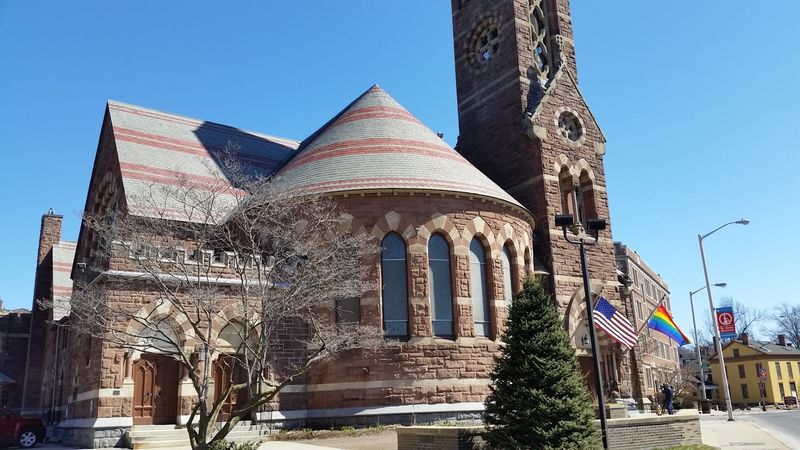
Some buildings announce themselves with color; South Congregational Church does it with shape. The Springfield church’s strong tower and Gothic lines give the eye a clear path upward.
Against a changing New England sky, that outline can be just as interesting as the smaller details.
Its European connection comes through the architectural language rather than a claim that it copies one particular overseas landmark. Pointed openings, vertical emphasis, and substantial stonework belong to a tradition used by many church builders.
Here, those ideas have a firmly local setting and purpose.
Try viewing the church from more than one direction. A front view makes the entrance and tower easy to compare, while an angled view helps you understand the building’s length.
Stay on public sidewalks and watch for uneven pavement while looking upward.
For a closer look, pick out the borders around windows and doors. Notice whether the lines are plain, layered, or decorated, then compare them with the larger wall surfaces.
This is an easy way to make architectural sightseeing active instead of simply standing still and admiring.
Indoor access needs a separate check with the congregation. Older churches may host worship, community programs, or private events that affect visiting times.
If you have questions about entry, stairs, or photographs, ask ahead so you can arrive with a realistic plan.
A Springfield church walk can be especially rewarding when you compare South Congregational with Christ Church Cathedral. Don’t worry about ranking them; focus on how each handles height, mass, and the street around it.
Bring water if you’re covering several blocks, and give yourself time at crossings. If the weather turns, shorten the route rather than rushing your observations.
You’ll remember a few carefully noticed details better than a long string of hurried stops. A simple note on your phone can help keep those differences straight afterward.
7. St. Stephen’s Episcopal Church – Pittsfield’s English-Inspired Corner
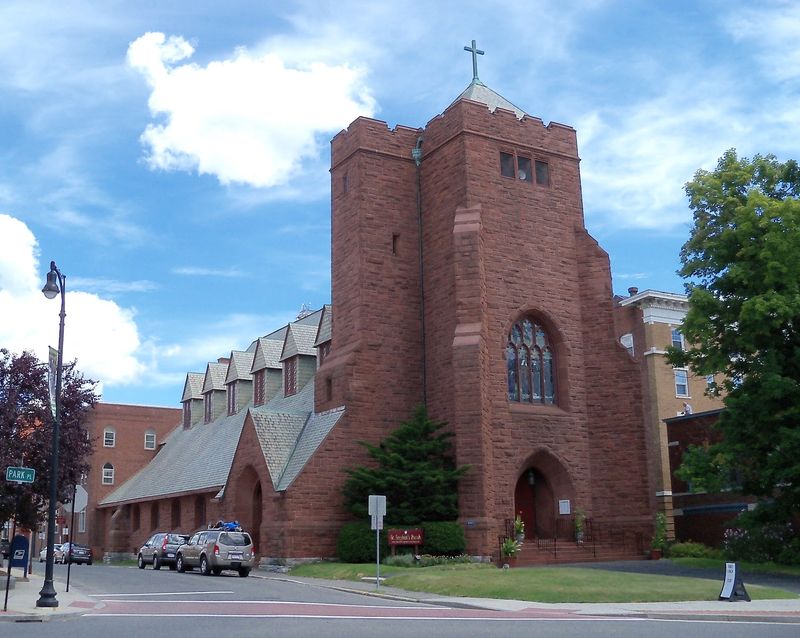
Trade Boston’s rush for Pittsfield’s town-center pace, and St. Stephen’s offers a different kind of church stop. Its stone exterior and Gothic details suggest the parish churches of England.
The surrounding Berkshire setting gives those familiar forms a fresh backdrop rather than a city-canyon frame.
Park Square provides useful context for understanding the church as part of downtown life. Instead of treating it as a separate monument, notice how it sits among streets and neighboring buildings.
That relationship makes the visit more grounded than a photograph cropped to show only stone.
Begin with the broad outline, then move your attention toward the pointed windows and entrance details. The Gothic style is easy to recognize once you start looking for upward lines.
Even a short exterior visit can give you a clear comparison with round-arched churches elsewhere in Massachusetts.
Light matters here, but you don’t need perfect sunshine. A bright overcast day can show surface texture without deep shadows hiding the details.
If you’re taking pictures near the square, choose your position carefully and never back into traffic while trying to fit the tower.
Check the parish’s current schedule before planning an interior look. Services, concerts, and other activities may shape access, and different events have different expectations for visitors.
If entry is possible, keep conversation low and allow anyone praying plenty of distance and privacy.
Make the church one part of a downtown Pittsfield outing rather than the only reason for a long drive. Nearby cultural stops, food, and a walk around the center can fill out the day without an exhausting itinerary.
Berkshire weather can shift quickly, so bring a layer and check conditions before leaving. If you’re traveling with children, turn the exterior visit into a simple spotting game: find pointed arches, count visible window groups, and compare the church roof with the buildings nearby.
8. Cathedral of the Holy Cross – Boston’s Grand Gothic Scale
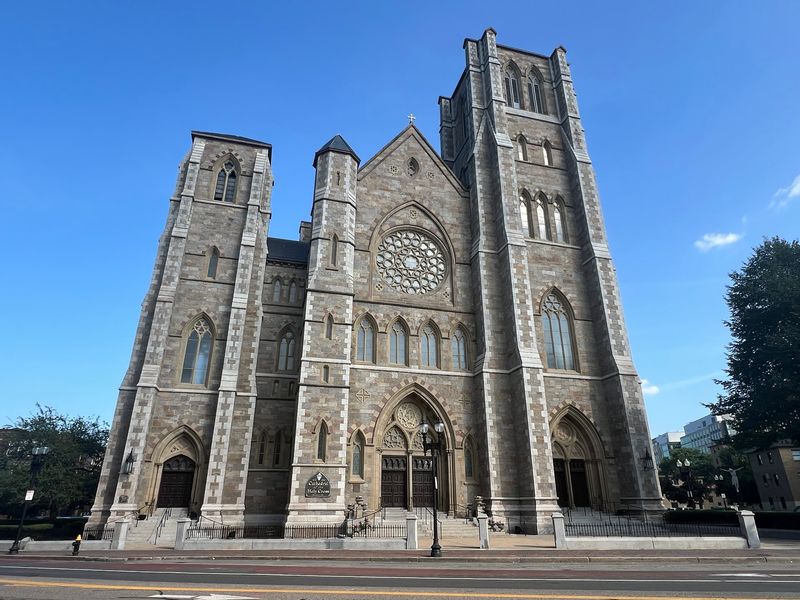
Scale is the first thing to register at the Cathedral of the Holy Cross. The South End landmark has the long, tall proportions associated with major European Gothic churches.
Stand nearby and the surrounding street helps explain just how much space the building occupies.
As the cathedral of the Roman Catholic Archdiocese of Boston, it serves a role beyond its immediate neighborhood. That wider importance is useful background, but the architecture needs no long introduction.
Pointed arches, large windows, and strong vertical lines give you plenty to examine right away.
Don’t stay fixed at the main entrance. A side view helps reveal the cathedral’s length and the repeated pattern of its architectural features.
From a safe sidewalk position, compare the rhythm of the windows with the heavier stone sections between them.
The interior, when open to visitors, gives a different sense of scale through the length of the main worship space. Check official information for current access and any special restrictions.
Large churches can host major liturgies or events that change an otherwise ordinary visiting day.
Keep photography considerate and simple. Avoid flash unless permission is clearly given, don’t aim at worshippers, and resist the urge to walk into restricted areas for a cleaner angle.
A photograph taken respectfully from an allowed spot is better than one that interrupts someone’s prayer.
The South End also rewards walking beyond the church, with rows of historic buildings providing another architectural comparison. Allow time for the neighborhood rather than rushing straight back to transit.
Comfortable shoes and a charged phone are useful, especially if you’re navigating unfamiliar streets. Before leaving, take one more wide look at the cathedral from farther away.
The smaller buildings around it make its proportions easier to grasp, and the full outline often tells you more than a close-up of a single doorway ever could alone.
9. St. John the Evangelist Church – Cambridge’s Close-Up Church Stop
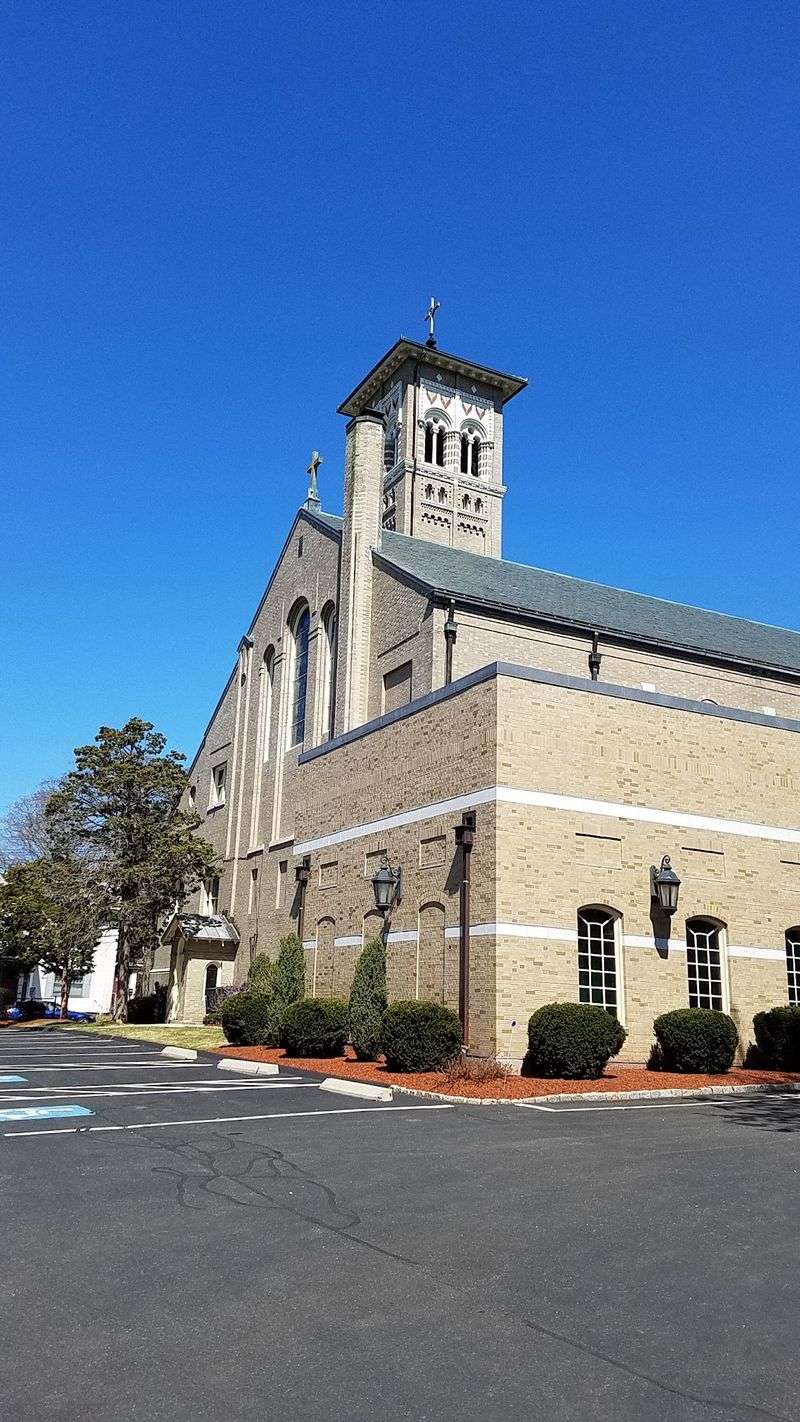
Not every church visit needs a sweeping square or a skyline-sized tower. St. John the Evangelist Church invites a closer look at Cambridge’s neighborhood architecture.
The appeal is in taking a familiar city setting and paying attention to the religious building within it.
Before you go, confirm the exact address and current parish information. Several Massachusetts churches share this dedication, and search results can easily point you toward a different city.
Checking the Cambridge location first saves the very unromantic experience of admiring the wrong church from your phone.
Once there, start with the entrance and work outward. Look at the window shapes, the materials, and the way the facade meets the sidewalk.
Those details are more helpful than assuming every historic church follows the same European style or has the same decorative features.
A good comparison is about proportions as much as ornament. Notice whether the doorway seems small beneath the upper wall, whether windows repeat in a clear pattern, and how the roof finishes the composition.
You can read a building this way without needing an architecture textbook.
For an indoor visit, ask about public access rather than relying on an old review or an undated photograph. Parish schedules and building use can change.
If the church is open, follow posted guidance, keep your voice low, and photograph only where permission allows.
Cambridge is well suited to combining a church stop with a neighborhood walk, but map the route before setting out. The city’s different districts are not all a quick stroll apart, and parking can complicate a casual plan.
Bring curiosity rather than a checklist of features you expect to find. An honest look at the actual building is more rewarding than forcing it to match a postcard from Europe.
Leave time to notice nearby houses and streets, which help explain its local setting.
10. Old North Church – Boston’s London-Style Skyline
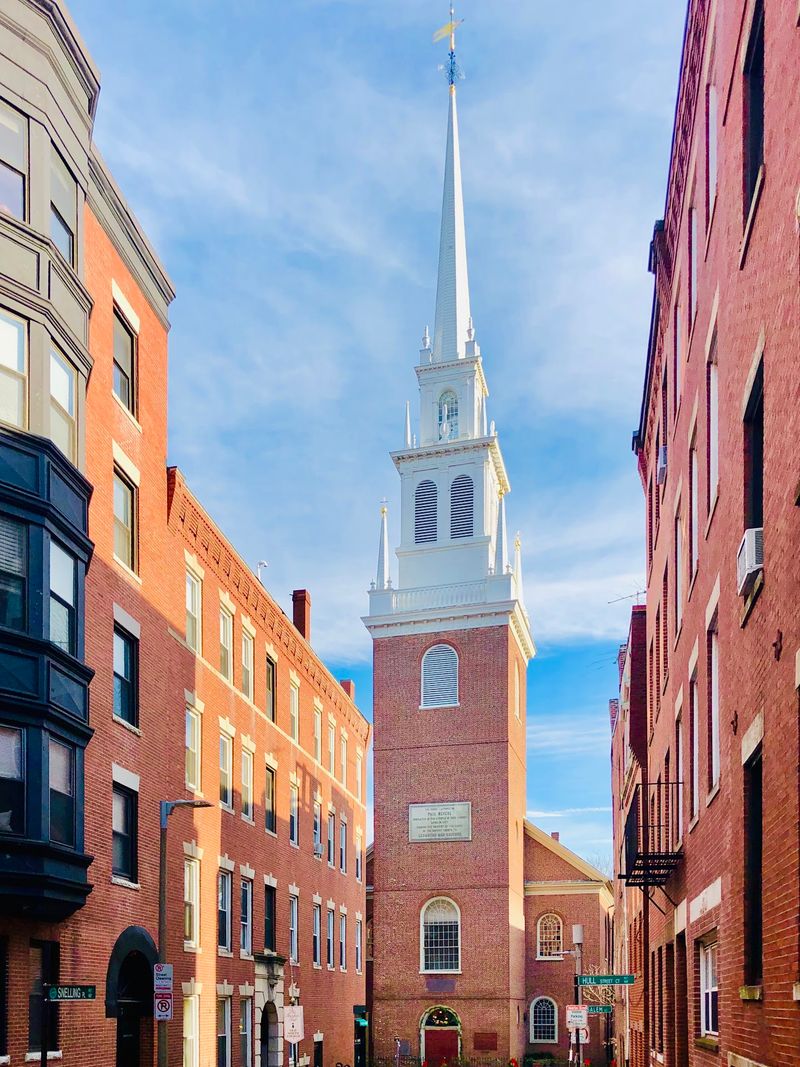
Forget heavy stone for a moment. Old North Church makes its European connection through red brick, balanced forms, and a tall white steeple associated with English church design.
In Boston’s North End, that combination creates a crisp landmark above the tightly packed streets.
The church is famous for the lantern signal connected with Paul Revere’s ride in 1775. That history draws plenty of attention, but don’t let it crowd out the architecture.
The building offers a useful change of pace from the Gothic and Romanesque churches on this list.
Look for symmetry rather than pointed arches. Georgian design often favors an orderly arrangement of windows and clear proportions, and Old North gives you an approachable example.
Its white upper structure also stands out sharply against the brick below and the sky behind it.
Because this is a major historic destination, check current visitor hours, ticket options, and tour information before arriving. Access arrangements may differ from those at a neighborhood parish.
Allow extra time during busy travel periods instead of expecting an empty entrance and an immediate indoor visit.
Inside, when admission is available, pay attention to the box pews and the layout of the worship space. They offer a different visual experience from long rows of open benches.
Follow staff instructions, stay out of closed areas, and check photography rules before reaching for your camera.
The surrounding North End makes this an easy stop to build into a longer walk, especially along the Freedom Trail. Narrow sidewalks can get crowded, so step aside before stopping to photograph the steeple.
You may need more than one viewpoint to see it clearly between nearby buildings. Finish by comparing the church’s orderly lines with the neighborhood’s busy street scene.
That contrast gives Old North its particular Boston character while keeping its English architectural roots easy to spot.
11. Cathedral of Saint Paul – Worcester’s Gothic Anchor
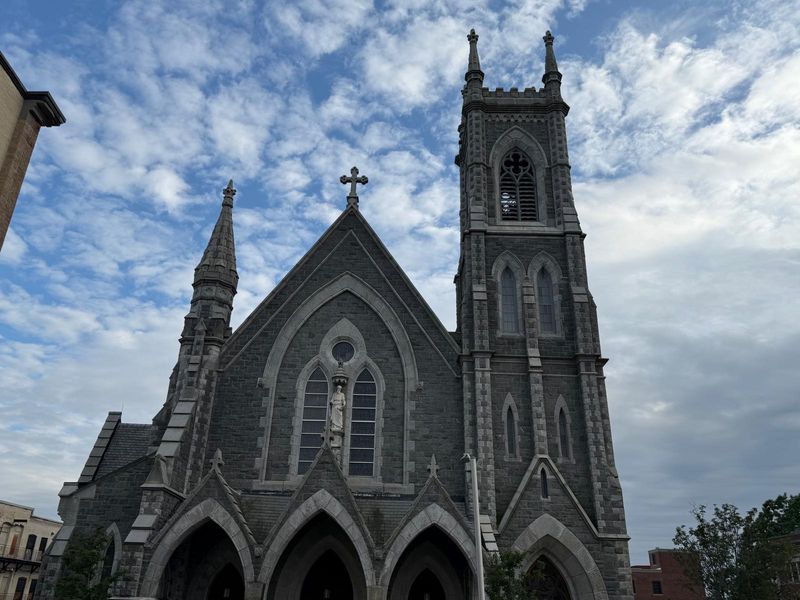
Worcester’s hills and streets give the Cathedral of Saint Paul a setting that changes as you approach. Its Gothic stone architecture adds a strong vertical presence to the city.
Rather than rushing straight to the door, give yourself a moment to take in the whole structure.
The cathedral serves the Roman Catholic Diocese of Worcester, making it both a local church and a wider religious center. Its architecture belongs to the Gothic Revival tradition.
That means older European design ideas were adapted for a later building, not transported stone by stone from overseas.
Pointed windows are a good starting point for understanding the exterior. Notice how their shapes repeat and how the tower changes the overall outline.
Compare the narrow openings with the broad wall surfaces, and you’ll begin to see the balance between height and solidity.
A slightly angled photograph can show more depth than a straight-on image. Include enough surrounding street to explain the cathedral’s setting, then take a separate close-up if a doorway or window interests you.
Watch your footing when looking upward, particularly on sloped sidewalks or near curbs.
Confirm opening times and visitor arrangements through current cathedral information. A scheduled service may offer entry for worship without making every part of the building available for touring.
Ask about accessible entrances when needed, and respect any areas set aside for clergy, staff, or private prayer.
For a practical Worcester outing, pair this stop with St. Peter’s and leave enough travel time between them. The comparison works best when you notice differences instead of searching for a winner.
Write down one feature from each church, such as a tower shape or window pattern, to keep the visits distinct. Check parking restrictions before leaving your car, carry water in warm weather, and don’t assume an interior visit will be possible without checking the schedule ahead.
12. St. Anne’s Shrine – Fall River’s French-Canadian Landmark
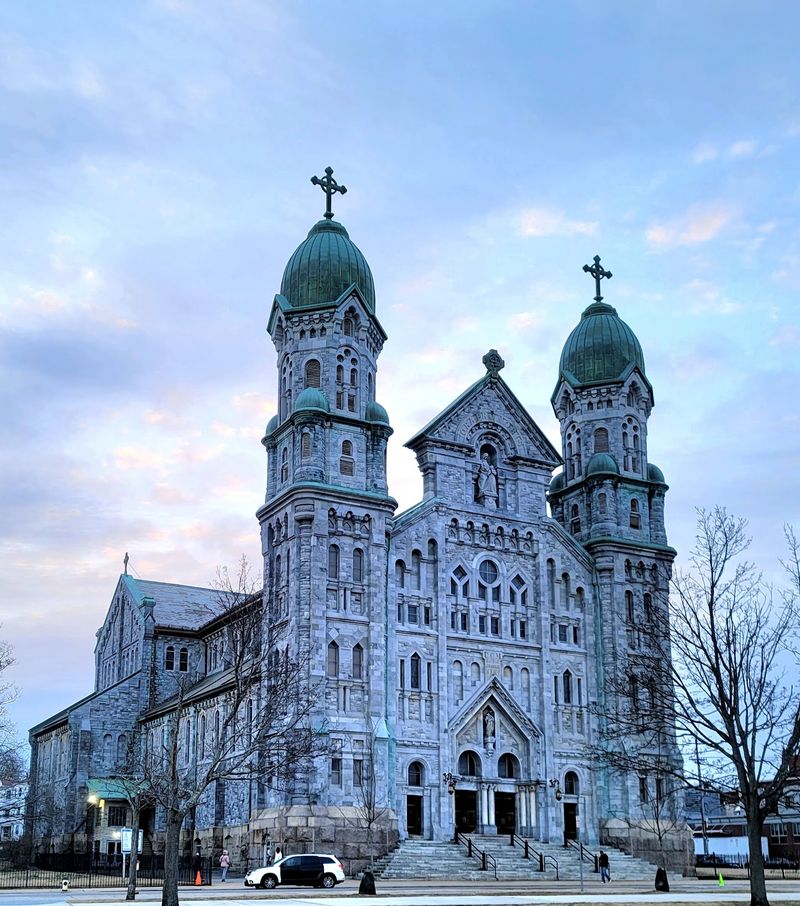
Fall River saves a bold finale for St. Anne’s Shrine, where twin towers give the exterior a powerful, balanced outline. The building’s scale and rounded architectural forms bring European religious landmarks to mind.
Its history also connects closely with the city’s French-Canadian Catholic community.
That community link matters because the church was not built as scenery. It grew from the lives and religious needs of people in an industrial city.
Looking at the building alongside Fall River’s wider history gives the stonework a human context beyond its impressive size.
Begin across from the facade wherever a safe public viewpoint allows. The full composition is easier to understand when both towers fit into your view.
After that, move closer to study the entrances and the curved openings that distinguish it from sharper Gothic designs.
Be especially careful when researching a visit here: shrine access and access to the upper church are not necessarily the same. Parts of the building have faced closure and restoration concerns.
Confirm current arrangements directly rather than trusting older travel posts, map listings, or interior photographs.
If a shrine area is open, follow its specific visitor guidance and remember that devotion remains the central purpose. Keep photography quiet and permitted, and don’t attempt to enter closed portions of the structure.
An exterior visit can still provide a substantial architectural experience without indoor access.
Nearby Kennedy Park offers another reason to slow down in this part of Fall River, though you should plan your route around weather and mobility needs. Bring a wide-angle option if you have one, but avoid stretching the towers with an extreme camera tilt.
A few steps backward often improve the picture more than a new lens. Before leaving, check the facade once more from a different angle; shifting light can bring out details that disappeared in your first view.
Share this story