Fog hanging over a mountain lake, waves rolling against an undeveloped barrier island, and the Manhattan skyline glowing across the Hudson may sound like scenes from three separate vacations. In New Jersey, they can all be found inside the state park system—and none requires a plane ticket or an elaborate itinerary.
A two-day reset can mean climbing to the state’s highest point, pedaling along an abandoned railroad, wandering through a preserved ironworking village, or simply sitting beside a cedar-colored stream with nowhere else to be. Some of these parks offer campsites, cabins, or shelters that make staying overnight easy.
Others work best as the centerpiece of a getaway built around a nearby town. Either way, they provide enough scenery and activity to make a regular weekend feel pleasantly removed from routine.
Pack sturdy shoes, check the weather, and leave a little room in the schedule. These 12 parks reward visitors who are willing to slow down.
1. High Point State Park – Sussex
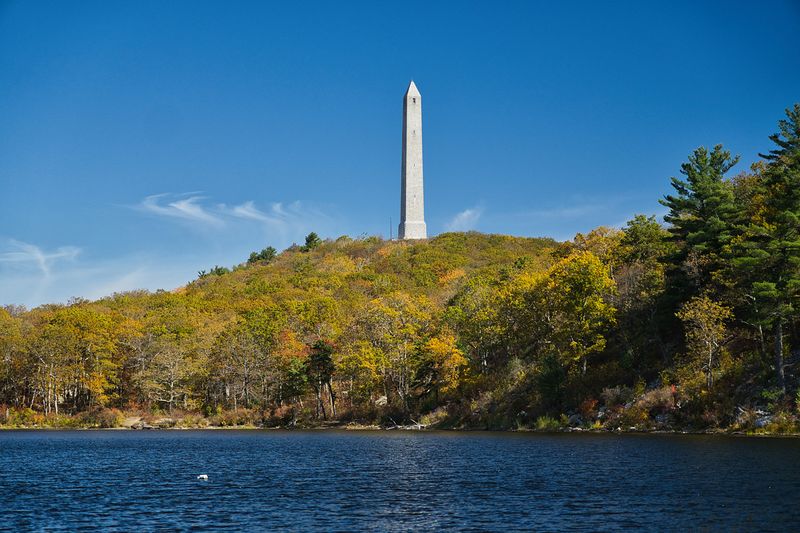
New Jersey’s highest natural elevation comes with a view that makes the climb—or drive—worth every turn. At 1,803 feet above sea level, High Point looks across the ridges and farmland of New Jersey, New York, and Pennsylvania.
The 220-foot New Jersey Veterans’ Memorial rises above the summit, giving the park a landmark that can be spotted long before you reach it. Clear days deliver enormous panoramas, while autumn covers the surrounding hills in layers of copper, red, and gold.
The Appalachian Trail crosses the park, but you do not need to tackle a major trek to enjoy the scenery. Shorter paths lead through forests, along ridgelines, and around Lake Marcia, where the mountain water and wooded shoreline create a much quieter scene than the summit.
Summer visitors can cool off at the designated swimming area when it is open, while cold-weather weekends bring opportunities for cross-country skiing and snowshoeing. The park has seasonal campsites and furnished cabins, making it one of the easier choices for a true overnight escape.
Reservations are smart during summer and peak foliage season, when the best dates disappear quickly. Even if you stay elsewhere in Sussex County, arrive early enough to explore beyond the monument.
The summit gets the attention, but the lake, trails, and cool mountain air are what turn a quick photo stop into a full weekend.
2. Wawayanda State Park – Hewitt
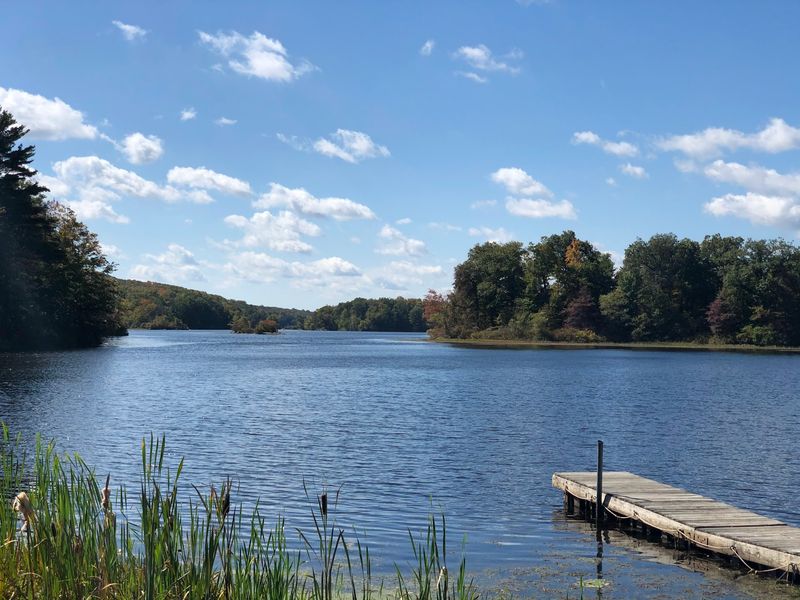
The water in Lake Wawayanda can look almost black beneath the surrounding forest, especially when the morning is still and the trees are reflected across its surface. That quiet lake is the center of a rugged park where northern hardwood forest, rocky trails, and wetlands create plenty of room to disappear for a day.
Canoes, kayaks, paddleboards, and small boats are popular here, while anglers come for bass, trout, pickerel, and landlocked salmon. On warm weekends, the designated swimming area gives families a gentler alternative to the more demanding trails.
Hikers have more than 60 miles of routes to consider, including a stretch of the Appalachian Trail and paths leading through hemlock groves, marshland, and old farm sites. The terrain can be rocky and wet, so hiking boots are a better choice than spotless sneakers.
Wawayanda also has campsites, group sites, and shelters, allowing visitors to remain inside the forest after the daytime crowd leaves. That is when the park becomes especially appealing: campfire smoke drifts between the trees, frogs start calling near the water, and the sky darkens without much nearby glare.
Black bears live throughout the region, so food must be stored properly and campsites kept clean. Plan one day around the lake and another around the trails.
Trying to squeeze both into a hurried afternoon misses the point of coming here.
3. Ringwood State Park – Ringwood
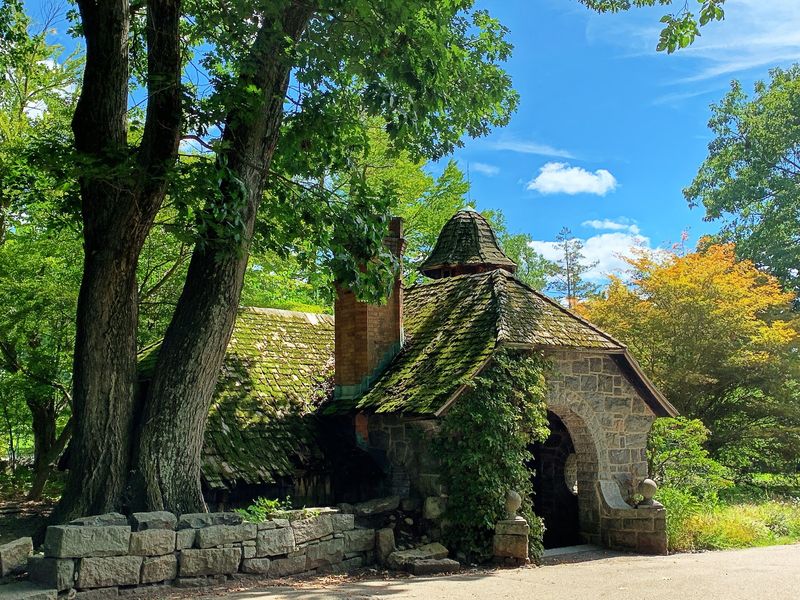
One morning at Ringwood can begin among polished manor rooms and end beside a mountain lake with muddy hiking boots by the car. That combination of cultivated beauty and rugged terrain is what separates this Passaic County park from a standard woodland outing.
The New Jersey Botanical Garden at Skylands displays formal gardens, specimen trees, and seasonal plantings across the former country estate surrounding Skylands Manor. Spring brings flowering trees and bulbs, summer fills the grounds with color, and fall adds a dramatic canopy above the stone paths.
A short drive away, Ringwood Manor preserves the home and grounds of families connected to the region’s iron industry. Between those historic sites stretches a network of trails through the Ramapo Mountains.
Mountain bikers favor the rocky routes, while hikers can choose anything from a manageable woodland loop to a longer, more technical outing. Shepherd Lake provides another change of pace, with paddling, fishing, picnic areas, and a sandy recreation area that becomes popular in warm weather.
There is no need to force everything into one day. Spend the first exploring the gardens and manor grounds, then return the next morning for the lake or a proper hike.
Ringwood does not offer regular overnight camping, but inns and hotels across northern Passaic and Bergen counties can serve as a base. Parking areas are spread among the park’s major attractions, so check a map before arriving instead of assuming every feature begins at one entrance.
4. Hacklebarney State Park – Long Valley
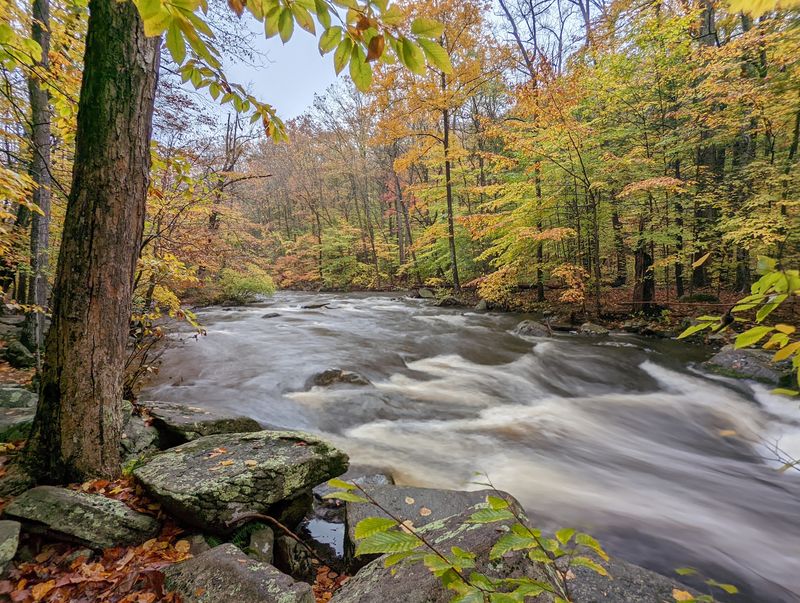
Follow the sound of rushing water and the trail soon drops into a ravine where the Black River tumbles around boulders beneath hemlocks and hardwoods. Hacklebarney is compact compared with New Jersey’s sprawling mountain parks, yet its steep slopes, bridges, stone steps, and cold streams give it an outsized sense of drama.
The Black River is joined by Rinehart and Trout brooks, producing a series of cascades that are particularly lively after rain or spring snowmelt. Trails range from broad, manageable paths to rockier stretches near the water, where exposed roots and damp stone demand attention.
This is not the place for flip-flops, even if the parking lot feels close. Autumn is the obvious showstopper, but hot summer days reveal another strength: the shaded ravine can feel noticeably cooler than the surrounding countryside.
Anglers come for trout, photographers settle near the cascades, and families often claim picnic tables for a leisurely lunch before walking down to the river. There is no campground, so treat Hacklebarney as the scenic anchor of a Long Valley weekend.
Nearby farms, orchards, and small-town restaurants make it easy to build out the second day without spending hours in the car. Parking can fill early during peak foliage weekends, and the most peaceful experience usually belongs to visitors who arrive in the morning.
Allow time to sit beside the water rather than treating the loop as a race back uphill.
5. Swartswood State Park – Swartswood
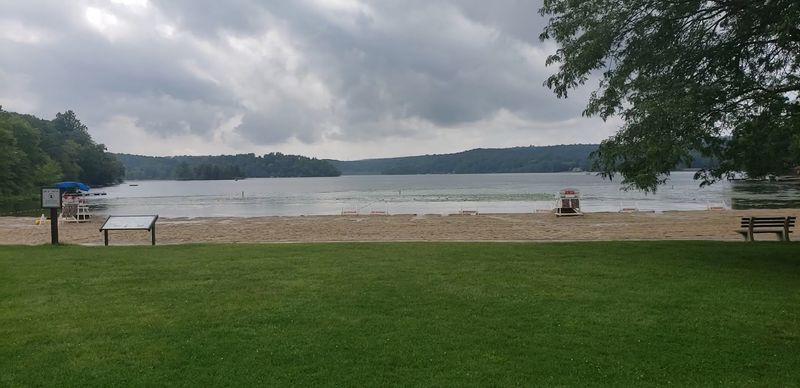
New Jersey’s first state park still understands the value of keeping things simple. Established in 1915, Swartswood wraps around a glacial lake in Sussex County, offering the sort of weekend that revolves around swimming, paddling, fishing, and deciding when to light the grill.
The 519-acre lake has a broad, open quality that distinguishes it from the darker forest lakes elsewhere in the Highlands. Kayakers can explore the shoreline, anglers can pursue bass, trout, pickerel, and panfish, and the designated beach becomes the main gathering place when summer temperatures climb.
A handful of trails lead through woods, fields, and wetland edges, including routes with lake views that are approachable for casual walkers. This is not primarily a park for chasing difficult summits.
Its appeal lies in having enough to do without feeling obliged to do all of it. Campsites, group facilities, and overnight shelters make a two-day stay practical, though reservations are worth making well ahead of popular summer weekends.
Bring supplies before settling in, since the surrounding area is rural and a forgotten ingredient can mean a longer errand than expected. Evenings tend to be the reward for staying over.
Day-use traffic fades, the lake surface calms, and the surrounding hills become silhouettes above the water. For an uncomplicated reset, spend one day on the lake, take a sunset walk, and leave the following morning open for breakfast outdoors and one last paddle.
6. Kittatinny Valley State Park – Andover
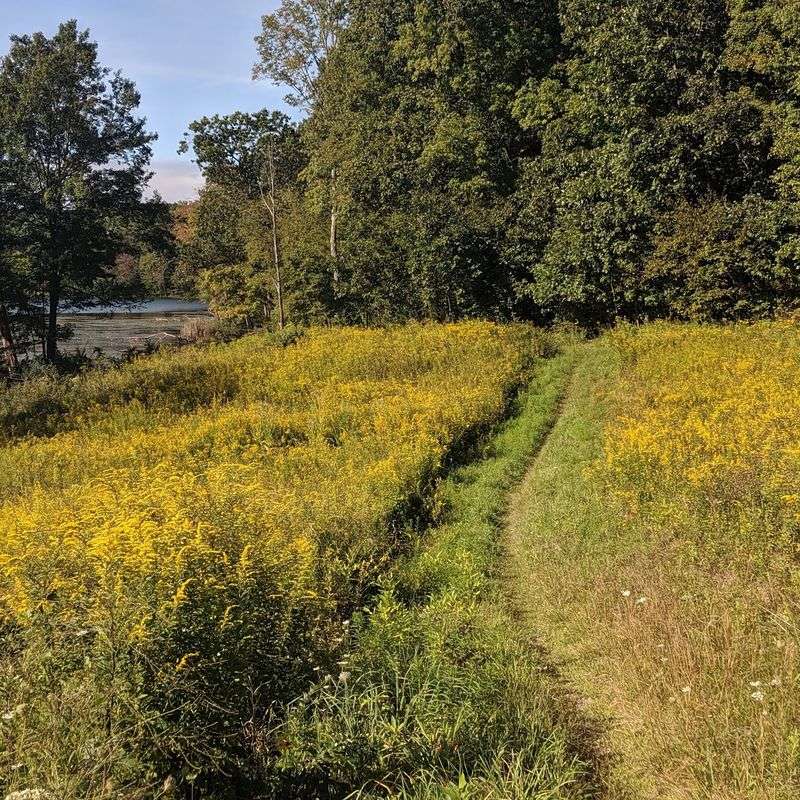
A small airplane lifting above Lake Aeroflex is not the usual soundtrack for a state park, but Kittatinny Valley has never been interested in being ordinary. Its boundaries contain the Aeroflex-Andover Airport, four lakes, wooded single-track paths, and miles of former railroad corridors converted into recreation trails.
Lake Aeroflex is the deepest natural lake in New Jersey, reaching depths that support cold-water fish such as trout and landlocked salmon. Boaters can launch kayaks, canoes, paddleboards, and vessels with electric motors, while quieter ponds offer additional spots for shoreline fishing.
Cyclists and walkers can follow the Sussex Branch and Paulinskill Valley rail trails along mostly level cinder surfaces, passing wetlands, rock cuts, old railroad traces, and long stretches of Sussex County countryside. Riders seeking more of a challenge can turn onto the park’s rugged mountain-bike trails.
Wildlife is another strong reason to slow down: more than 200 bird species have been recorded in the area, alongside beavers, foxes, bobcats, and black bears. Swimming is not permitted, and the park’s campsites are currently closed, so plan to stay in the Andover, Newton, or Sparta area.
Current construction and trail advisories can also affect particular parking lots or sections, making a quick check before departure worthwhile. Give the lake one day and the rail trails another.
The change in pace makes the park feel larger than it first appears.
7. Cheesequake State Park – Matawan
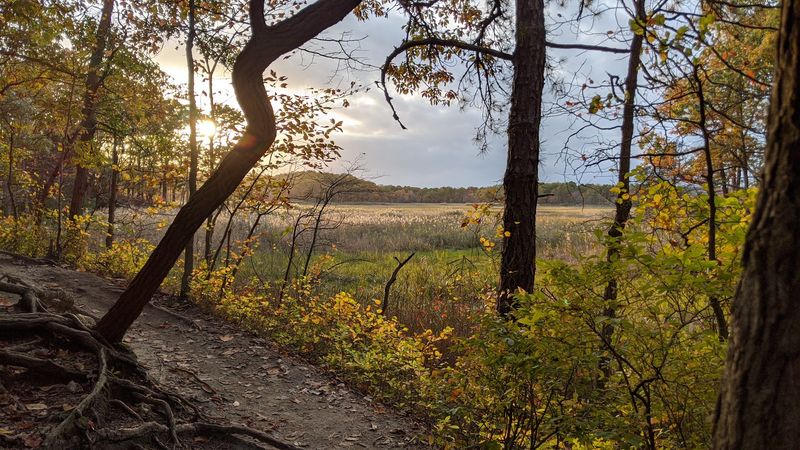
Pine barrens, hardwood forest, salt marsh, and a freshwater lake all meet inside one park just off the Garden State Parkway. Cheesequake occupies a genuine ecological transition zone, which explains why a short walk can shift from sandy pine woods to a boardwalk over wetlands buzzing with birdlife.
The trail system is approachable without being dull, offering loops that work for families, casual hikers, and anyone who wants an outdoor break without committing to an all-day climb.
The interpretive center helps put the changing habitats into context, while observation areas provide opportunities to watch herons, egrets, and other marsh birds.
Hooks Creek Lake supports fishing and seasonal recreation, and picnic grounds make it easy to turn a walk into an unhurried afternoon. Mountain bikers have designated terrain to explore, but trail access and conditions can change after wet weather, so posted rules deserve attention.
Cheesequake also has seasonal campsites and group camping facilities, an unusual convenience given its location between busy suburban corridors. That accessibility is part of the appeal: you can finish work, reach the park without a cross-state expedition, and wake up among trees the next morning.
Reserve ahead for warm-weather weekends and bring insect repellent when marsh mosquitoes are active. A good two-day plan pairs a longer trail loop and campsite evening with a slower morning near the wetlands.
The Parkway may be close, but the boardwalk, reeds, and frog calls do a convincing job of pushing it out of mind.
8. Allaire State Park – Wall Township
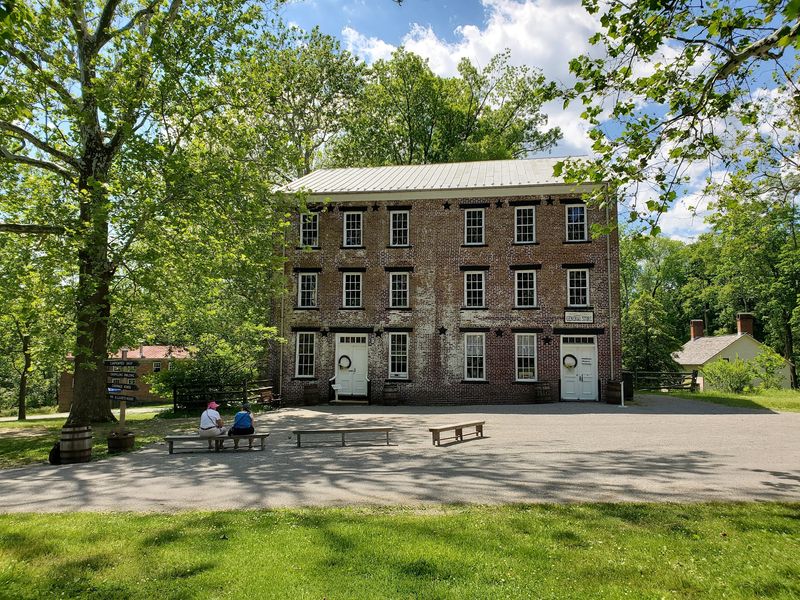
A blacksmith’s hammer striking hot iron is a surprisingly effective way to forget about email. At Historic Allaire Village, restored buildings and demonstrations recall the 19th-century industrial community that developed around James P. Allaire’s ironworks.
The general store, workers’ homes, chapel, and other structures give the park a human story that its woods alone could not tell.
Programs and building access vary by date, so visitors interested in demonstrations should check the event schedule before planning the weekend. The Pine Creek Railroad adds another family-friendly draw, operating vintage trains on select days beside the village.
Beyond the historic area, trails extend through forest and sandy terrain along the Manasquan River. Hikers, horseback riders, and mountain bikers share portions of the network, with mostly moderate terrain that allows plenty of distance without requiring mountain-level climbing.
Anglers can try the river, while picnic areas offer room to settle in between activities. Allaire has tent and trailer sites, group camping, and yurts, giving visitors several ways to stay overnight inside the park.
Those accommodations can be popular, especially when village events are scheduled. The smartest approach is to divide the weekend by mood: history and the railway on one day, trails and the river on the other.
Allaire’s location also puts the Shore within easy reach, but resist cramming in too many side trips. A quiet campsite evening after the village closes is part of what makes the park feel like a getaway rather than another packed itinerary.
9. Island Beach State Park – Seaside Park
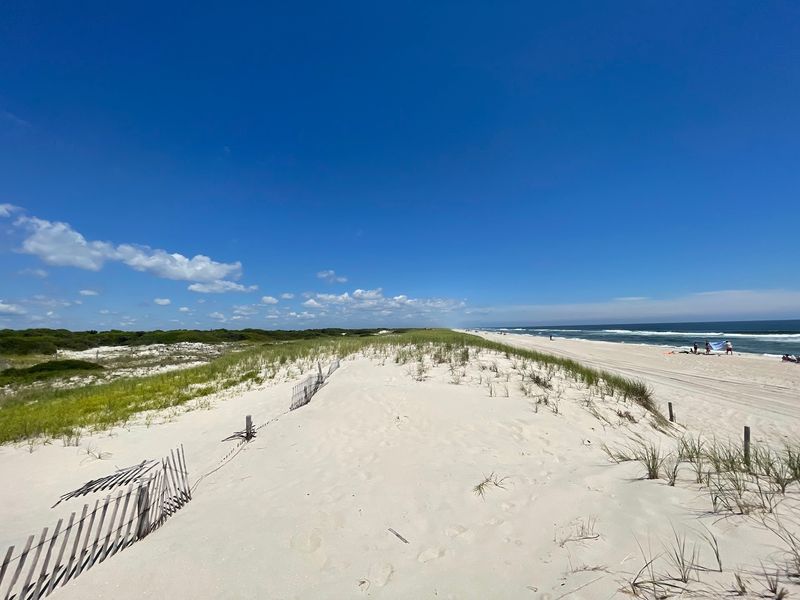
Past the boardwalks and tightly packed houses of Seaside Park, the road continues into nearly 10 miles of preserved barrier-island coastline. The change is immediate.
Buildings give way to dunes, maritime forest, tidal marshes, and long stretches of beach where the dominant sounds are surf and wind. Island Beach protects one of New Jersey’s largest remaining undeveloped barrier islands, giving visitors a look at the Shore before amusement rides and beach rentals became part of the scenery.
Swimming is allowed only in designated guarded areas when lifeguards are on duty, while other sections attract anglers, surfers, paddlers, birders, and walkers. Short nature trails cross different island habitats, and bayside access points reveal a calmer landscape of reeds, shallow water, and distant boats.
Ospreys are commonly seen overhead, and the park’s wildlife also includes foxes, waterfowl, and nesting shorebirds. There is no overnight campground, so book lodging in Seaside Park, Lavallette, or another nearby Shore community and use the park as the centerpiece of both days.
Summer vehicle capacity is limited, and entrance lines can form early on hot weekends. Arriving near opening time is the safest strategy.
Bring water, sun protection, and food rather than counting on frequent concessions. Spend the first day swimming or fishing, then return early the next morning for a quieter trail walk.
Sunrise here feels notably removed from the bright, busy Shore only a few miles north.
10. Double Trouble State Park – Bayville
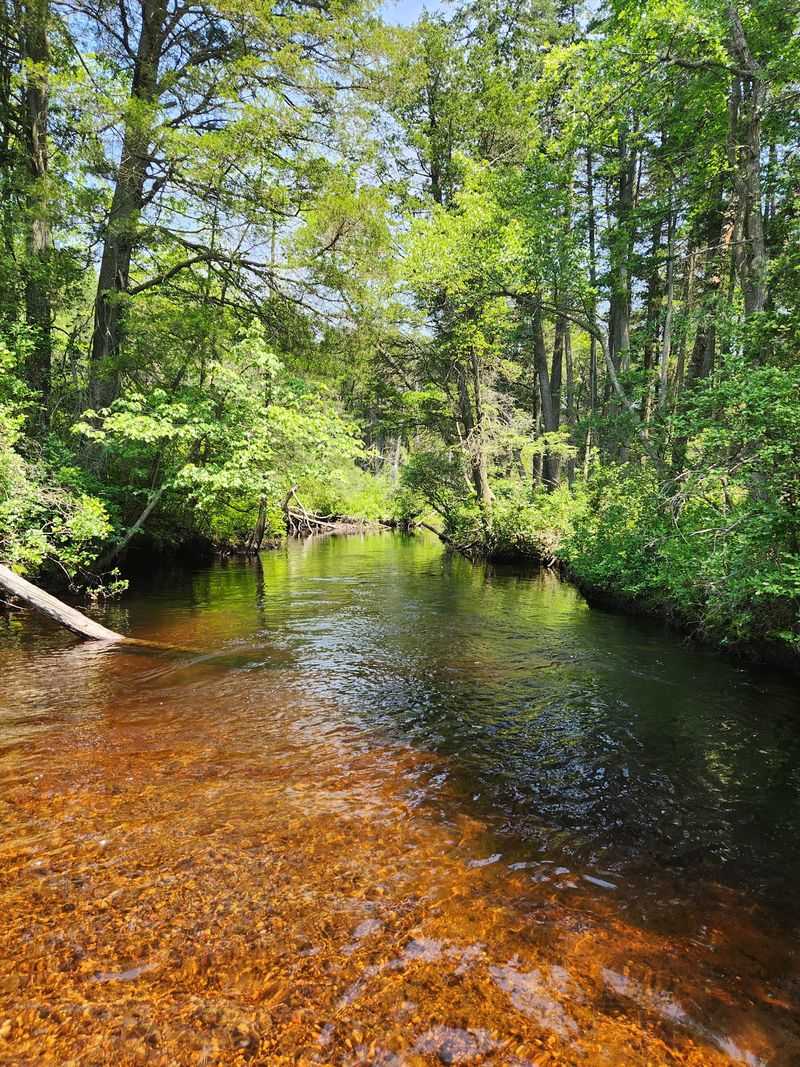
The name came from industrial mishaps, but the surviving village looks almost too orderly for such a dramatic label. Double Trouble preserves a former company town built around lumber and cranberry production, with a sawmill, cranberry sorting and packing house, schoolhouse, general store, cottages, and other structures standing beside Cedar Creek.
Guided village tours reveal how residents worked and lived, though tours and building access follow a limited schedule. Even when everything is closed, the grounds remain fascinating to explore from the outside.
Trails follow sandy roads through pine forest and around former cranberry bogs, where straight embankments and water-control channels show how thoroughly the landscape was engineered. Cedar Creek carries the tea-colored water associated with the Pine Barrens and provides a popular route for experienced paddlers.
Launch logistics and water conditions require advance planning, so this is not a trip to improvise with an unfamiliar canoe. On foot, the park is generally flat, but sandy surfaces can make a longer walk more tiring than the elevation suggests.
Double Trouble has no campground and relatively few amenities, which helps preserve its low-key character. Stay near Bayville, Toms River, or another Ocean County community and combine a village walk with a separate paddling day or a longer hike.
Bug spray matters in warm weather, while autumn brings cooler air and color around the bogs. Visitors expecting rides or polished museum displays will miss the appeal.
The pleasure lies in following the old roads and noticing how industry, water, and forest still overlap.
11. Parvin State Park – Pittsgrove
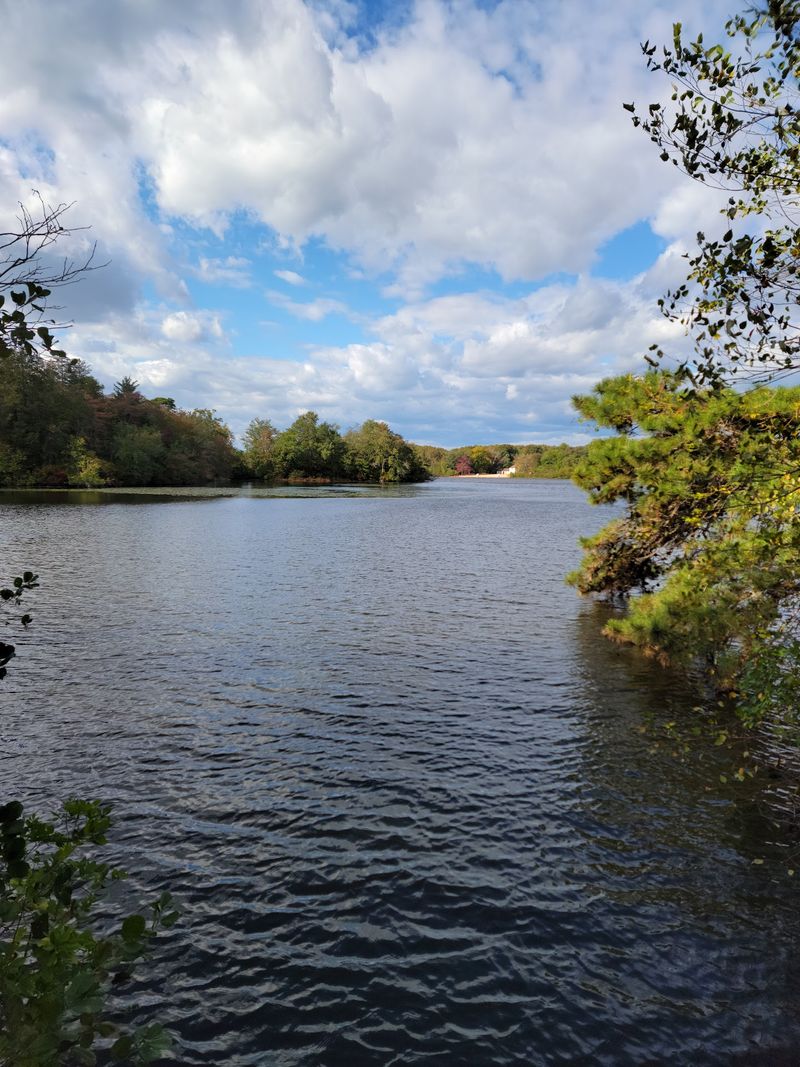
Morning mist on Parvin Lake can hide the opposite shore, leaving only a wooden dock, faint tree line, and the occasional ripple from a fish. That scene captures the softer side of South Jersey’s outdoors.
Located along the edge of the Pine Barrens, Parvin combines pine and hardwood forest with wetlands shaped by streams flowing toward the Maurice River. The lake supports kayaking, canoeing, and fishing, while a designated beach provides seasonal swimming when guarded.
Trails loop around the water and pass through swampy lowlands, upland woods, and areas that burst with mountain laurel in late spring. The paths are mostly manageable for casual hikers, although roots, mud, and mosquitoes can add their own complications.
Parvin’s history gives the peaceful setting an unexpected depth: the land was used by the Civilian Conservation Corps during the 1930s and later housed displaced Japanese Americans and German prisoners of war during World War II.
Today, campsites, group facilities, and furnished cabins make the park one of South Jersey’s most convenient choices for an overnight escape.
Cabins and prime campsites should be reserved early for summer and foliage weekends. Pack groceries before arriving and bring repellent during humid months.
A satisfying visit does not require constant activity. Paddle in the morning, walk the lake loop after lunch, and leave time to read beside the water. Parvin works best when the schedule is deliberately light, and the lake sets the pace.
12. Liberty State Park – Jersey City
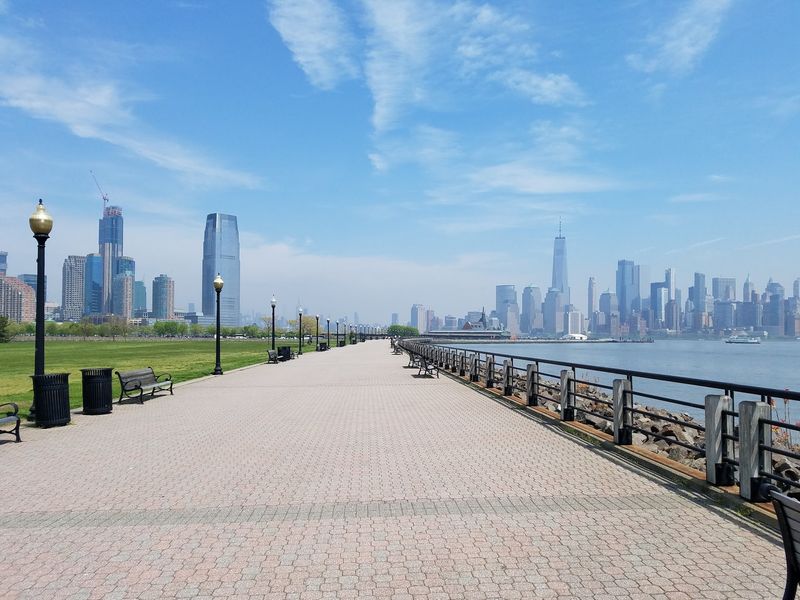
Few picnic tables come with a view of the Statue of Liberty, Ellis Island, and Lower Manhattan lined up across the water. Liberty State Park delivers that panorama without asking visitors to surrender every trace of open space.
Its broad lawns and Hudson River promenade give walkers, runners, cyclists, and families room to spread out while ferries and harbor traffic move through the background. The two-mile Liberty Walk links major viewpoints along the waterfront, including Empty Sky, New Jersey’s official September 11 memorial.
Nearby, the historic Central Railroad of New Jersey Terminal recalls the millions of immigrants who continued their journeys from Ellis Island through this transportation hub. The park also preserves a salt marsh nature area reached by trails near the Interpretive Center, creating a quieter counterpoint to the skyline.
Birdlife, reeds, and tidal water replace towers for a while, even though the city remains close. There is no camping, so make Jersey City your overnight base and treat the park as one half of an urban weekend.
The Liberty Science Center, waterfront restaurants, neighborhood cafés, and ferry access can easily fill the remaining hours. Parking is available, but weekends and major events bring crowds; public transportation and light rail can be convenient alternatives.
Visit once in daylight to explore the terminal and memorial, then return near sunset. As office lights appear across the Hudson, the same promenade becomes an entirely different experience—proof that a reset does not always require heading deep into the woods.
Share this story