At the top of New Jersey, a 220-foot monument rises above a ridge with three-state views. Farther south, tea-colored rivers slip through cedar swamps, a ten-mile barrier island holds back the Atlantic, and old cranberry bogs glow red beside a forgotten company village.
None of it requires a cross-country flight, a timed-entry reservation, or a week of vacation. New Jersey’s state parks and forests pack an unreasonable amount of scenery into a map: rocky summits, glacial lakes, waterfalls, maritime dunes, deep Pine Barrens, and trails that can feel remote once the parking lot disappears behind the trees.
Some of these places are popular, especially on warm weekends, but they rarely come with the scale of congestion found at the country’s headline national parks. Arrive early, bring a trail map, and pack out what you carry in.
These 12 escapes prove that the Garden State can deliver a big day outdoors.
1. High Point State Park
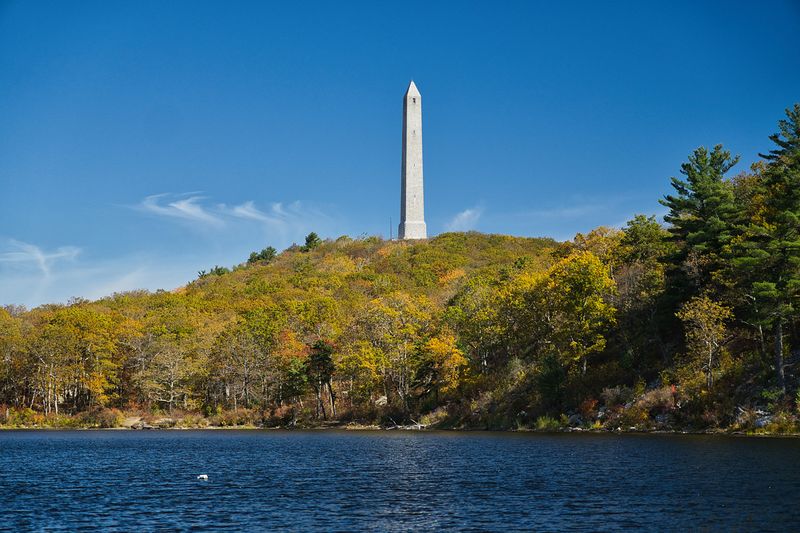
The view arrives before the hiking boots do. From the summit of Kittatinny Ridge, the land drops into broad valleys stretching across New Jersey, New York, and Pennsylvania, with the High Point Monument standing above it all like an exclamation point.
At 1,803 feet, this is the highest elevation in the state, and the panorama has the scale people usually associate with a much longer road trip. The easiest plan is to drive toward the monument, walk the grounds, and then earn a quieter perspective on one of the surrounding trails.
More than 50 miles of routes cross forests, wetlands, fields, and rocky ridgetops, including roughly 18 miles of the Appalachian Trail. The 2.5-mile Cedar Swamp Trail is a gentler surprise, circling an Atlantic white cedar bog in a place where that habitat seems almost comically out of position near a mountain summit.
Lake Marcia, picnic grounds, and camp areas make it easy to turn the visit into a full day, though swimming availability depends on the seasonal lifeguard schedule. Summer entrance fees apply, and the monument interior opens only when staffing allows, so check current conditions before making it the centerpiece of the trip.
For the calmest version of High Point, go on a weekday morning or return in late fall, when the wind has the ridge mostly to itself.
2. Worthington State Forest
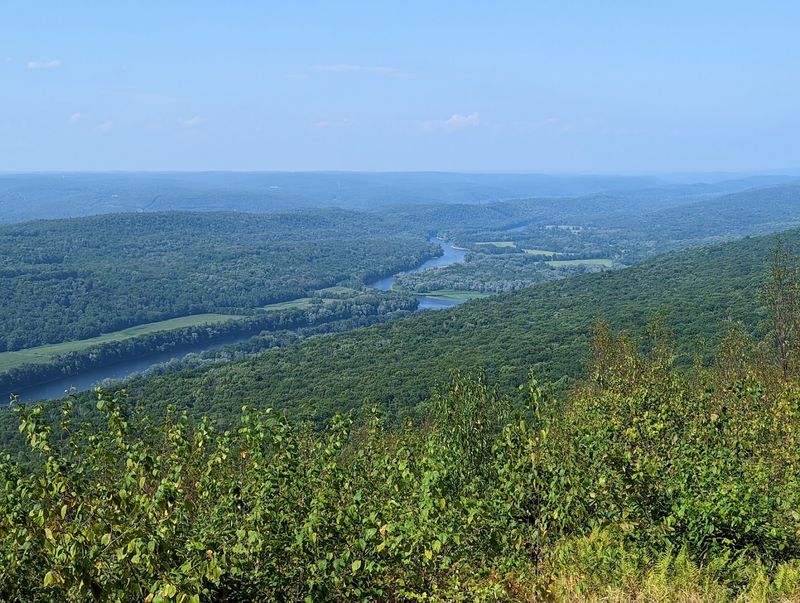
A red-blazed climb up Mount Tammany wastes no time introducing itself. The trail rises sharply over rock and exposed ledges, then pays off with a sweeping look through the Delaware Water Gap, where the river slices between mountains on the New Jersey–Pennsylvania line.
It is one of the state’s signature hikes for good reason, but Worthington has enough depth to reward visitors who skip the headline route. The forest contains more than two dozen miles of marked hiking trails, including a rugged stretch of the Appalachian Trail and paths following clear, boulder-strewn Dunnfield Creek.
Sunfish Pond offers a completely different target: a glacial lake perched on the Kittatinny Ridge, reached by a longer walk that feels progressively farther from Route 80 with every mile.
Down below, campsites stretch along roughly two miles of Delaware River frontage, and paddlers can launch canoes, kayaks, or paddleboards for a quieter look at the forest from the water.
There is no entrance fee, but that does not mean unlimited parking. The Dunnfield Creek lot can fill early on fair-weather weekends, especially during fall color season, so sunrise is not an unreasonable arrival time.
Swimming is not permitted, and campground rules differ from day-use rules, including restrictions on pets. Come for Mount Tammany once; return for the creek, river, and long ridge walks that make the place feel much larger than a single famous overlook.
3. Stokes State Forest
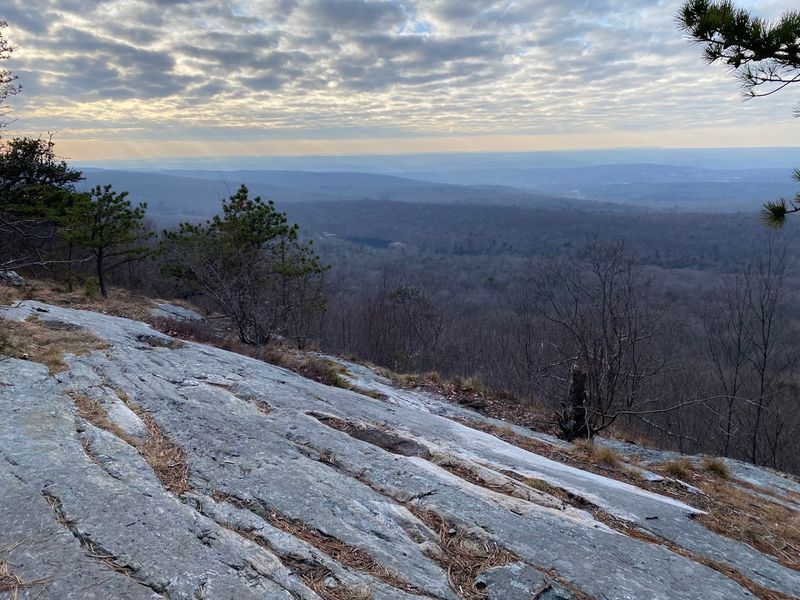
Water does most of the talking in this corner of Sussex County. It tumbles over the stones at Stepping Stones Falls, runs cold through trout streams, and threads the shadowy floor of Tillman Ravine beneath hemlocks and hardwoods.
Then the landscape changes gears entirely at Sunrise Mountain, where the ridge opens to long views over forests and farmland. Stokes spreads those experiences across more than 60 miles of trails, giving hikers room to build anything from a short waterfall walk to a serious day involving the Appalachian Trail.
Tillman Ravine is the crowd-pleaser, particularly when recent rain gives the cascades some muscle, but the better strategy is to pair it with another stop rather than treating it as the whole visit.
Drive to the Sunrise Mountain overlook, explore one of the quieter forest roads, or reserve a campsite and stay long enough to hear the woods after the day-trippers leave.
The forest offers tent sites, cabins, shelters, and group camping options, which makes it one of the most flexible bases in North Jersey. Seasonal entrance fees may apply from Memorial Day weekend through Labor Day, while winter turns the same network into terrain for cross-country skiing and snowshoeing when conditions cooperate.
Trails can be rocky, muddy, and slick around streams, so sturdy footwear matters more here than a perfectly packed picnic. Stokes feels less like one attraction than a whole mountain district waiting to be assembled into your own route.
4. Wawayanda State Park
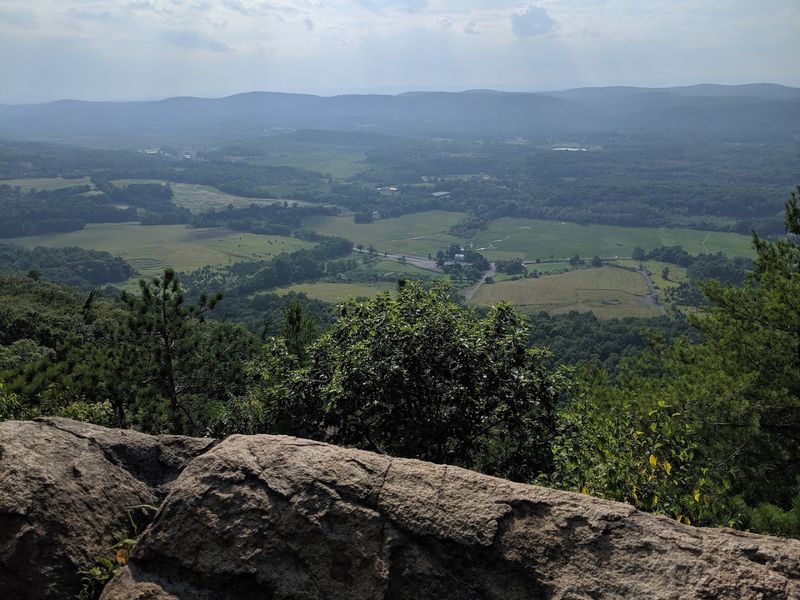
Some parks make you choose between a lake day and a mountain day. Wawayanda cheerfully refuses.
Lake Wawayanda sits in a bowl of wooded hills, giving paddlers and anglers a calm starting point, while the surrounding trail network climbs into rocky highlands that feel increasingly wild beyond the recreation area.
More than 60 miles of marked trails cross the park, along with nearly 20 miles of the Appalachian Trail, so there is plenty of space to get beyond the picnic tables.
The payoff on Wawayanda Mountain is a broad view over the northern highlands, while lower routes pass wetlands, hemlock groves, old stonework, and traces of the iron industry that once shaped the area. The historic furnace near the lake is worth a pause because it gives the scenery a little context: these woods were not always as quiet as they look now.
Canoeing and kayaking are among the easiest ways to enjoy the park, and campsites make an overnight trip practical without requiring backcountry logistics. The lake area can draw families on summer weekends, but the atmosphere changes quickly once you commit to a longer trail.
Bring an updated map, because intersections are numerous and the rocky terrain can make mileage feel slower than expected. Winter is an underrated season here; the park’s elevation often brings enough snow for cross-country skiing while lower parts of New Jersey are still staring at wet grass.
5. Ringwood State Park
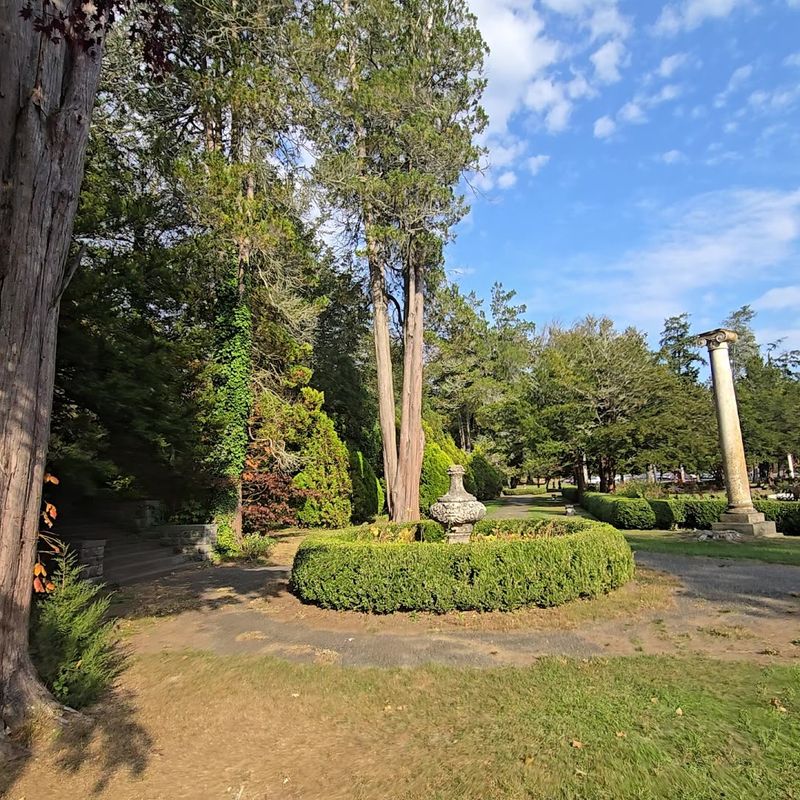
One minute you are walking past clipped hedges and stone terraces; the next, you are climbing into the Ramapo Mountains on a trail scattered with roots and granite. That contrast is Ringwood’s best trick.
The park combines the New Jersey State Botanical Garden at Skylands, the historic Ringwood Manor estate, and the woods around Shepherd Lake, so a visit can shift from formal gardens to industrial history to a proper hike without leaving the property.
Skylands Manor, designed in the late 1920s, brings Tudor-style stonework and stained glass to the middle of the forest, while the surrounding gardens offer an easy, unhurried stroll through seasonal plantings and mature trees.
Admission to the botanical garden is free, though a parking fee is charged on certain summer weekends and holidays. Hikers and mountain bikers can head deeper into the park, where old roads and rugged trails connect with the broader network of the Ramapo highlands.
Ringwood Manor adds another layer, telling the story of iron mining, ironmasters, and the families who shaped the region over centuries. Guided interior access depends on tour schedules, so the grounds are the reliable option for a spontaneous visit.
Ringwood works especially well for mixed groups: one person can chase a rocky loop, another can photograph the gardens, and everyone can regroup near the manor. Few state parks make civilization and wilderness feel like such close neighbors.
6. Norvin Green State Forest
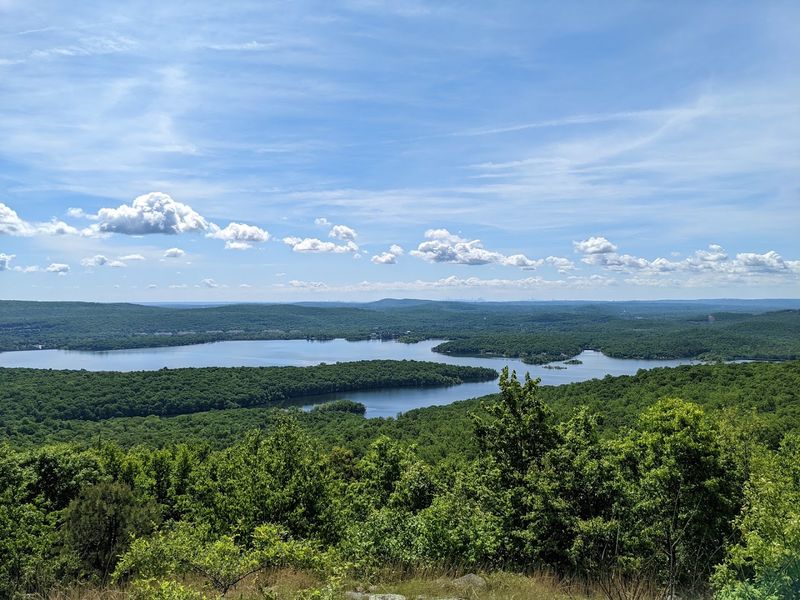
This is the pick for hikers who think a pleasant woodland stroll should occasionally require both hands. Norvin Green belongs to the Wyanokie Wilderness, where old logging roads, steep rock, stream crossings, and abrupt viewpoints create one of North Jersey’s most adventurous trail systems.
Elevations range from roughly 400 to 1,300 feet, but the constant up-and-down makes the forest feel bigger than those numbers suggest. Wyanokie High Point is the classic target, delivering a wide view over reservoirs, wooded ridges, and, on a clear day, the distant Manhattan skyline.
Longer loops can connect the summit with Chikahoki Falls, Otter Hole, Carris Hill, and other rocky overlooks that seem to appear just when your legs begin filing complaints. The forest has recently seen trail reblazing and route changes, so an updated map is essential; old screenshots and faded online directions are a poor substitute here.
Parking areas are modest, and there are few of the amenities found at more developed parks, which is precisely why the place retains its backcountry edge. Pack enough water, allow more time than the mileage implies, and wear shoes built for uneven stone.
Norvin Green is not the best choice for a casual picnic or a first hike with small children. It is the place to go when you want New Jersey to feel steep, scrappy, and wonderfully uninterested in making things easy.
7. Jenny Jump State Forest
After sunset, Jenny Jump reveals its most unusual feature. The forest is home to the Greenwood Observatory, where public astronomy programs bring visitors out on Saturday evenings from spring through fall for presentations and, when clouds cooperate, telescope viewing.
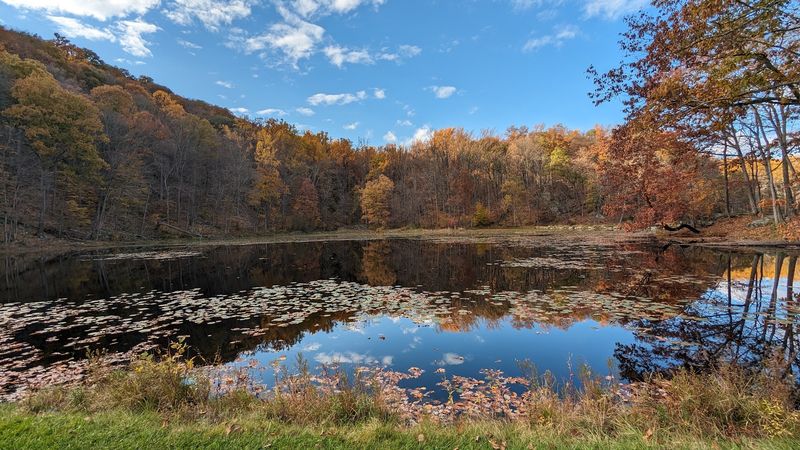
That alone makes it different from nearly every other state park trip in New Jersey, but the daytime landscape holds its own. Glacial boulders sit among hardwood forest, rocky outcrops open toward distant ridges, and about 14 miles of hiking trails weave across terrain that can switch from gentle to stubborn without much warning.
The Ghost Lake Trail is an accessible introduction, following an old road near the lake before climbing through forest and boulder fields. Longer combinations reach viewpoints and quiet interior sections that feel removed from the nearby towns.
Camping makes the astronomy angle even better: the forest offers tent and trailer sites, group sites, and simple shelters, allowing visitors to finish a hike, cook dinner, and stay for the night sky rather than driving home afterward. Reservations are smart in warm months, particularly on program weekends.
The atmosphere is low-key and slightly mysterious, helped by names such as Ghost Lake and Shades of Death Road, but the real appeal is less spooky than spacious. Jenny Jump gives you cliffs, woods, camping, and stargazing in one compact trip, with darkness serving as the final scenic overlook.
8. Hacklebarney State Park
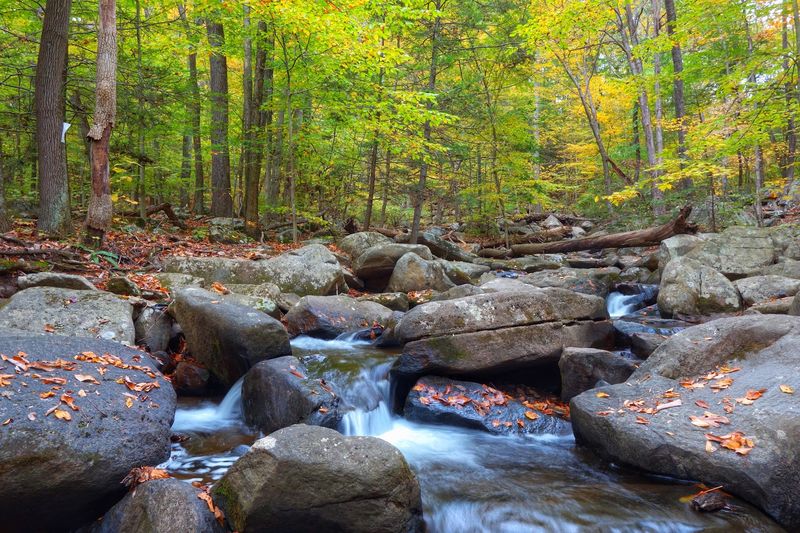
Follow the sound of rushing water and the main attraction quickly announces itself. The Black River cuts through a rocky glacial ravine, slipping around boulders and dropping through small cascades beneath hemlocks, birches, and maples.
Rinehart and Trout brooks feed the river, adding more movement to a park that feels unusually cool and shaded even on a warm afternoon.
The trails are not long-distance epics, but they are satisfying: stone steps, bridges, streamside paths, and uneven rocks create enough texture to make a short hike feel like an outing rather than a lap around the neighborhood.
Anglers come for the trout water, families spread out at the picnic area, and photographers tend to linger wherever the river gathers speed. Fall is spectacular, but it is also the season when the parking lot fills fastest, especially on weekends.
A weekday morning gives you a better chance of hearing water instead of car doors. Wet leaves and polished stones can be slick, so shoes with traction are worth bringing even for a modest loop.
The park has roots in the region’s 19th-century iron industry, though nature has thoroughly reclaimed the scene. Hacklebarney is ideal when you want dramatic scenery without committing to an all-day climb.
Pair it with lunch or a walk in nearby Chester, but do the ravine first; once the sun reaches the water, the forest seems to light itself from below.
9. Wharton State Forest
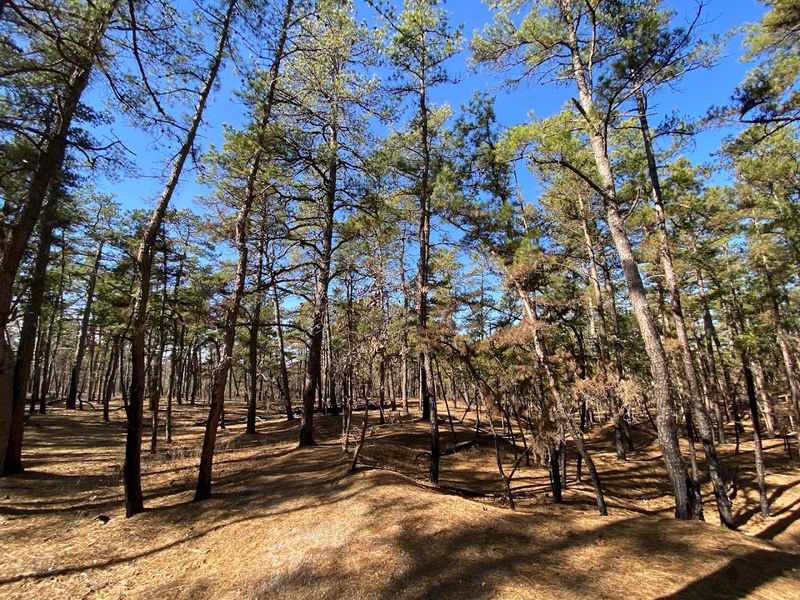
Scale is the first surprise. Wharton covers more than 124,000 acres, making it the largest single tract in New Jersey’s state park system, and the straight sand roads can run so far through pine and oak that the state’s crowded turnpikes feel imaginary.
This is Pine Barrens country, where cedar-dark streams, sandy trails, cranberry bogs, and pitch pine forests replace the cliffs and overlooks of North Jersey. Paddling is the best way to understand it.
The Mullica, Batsto, and other waterways twist through quiet woods with tea-colored water reflecting every branch overhead. On land, 77 miles of marked hiking trails include more than 27 miles of the Batona Trail, while hundreds of miles of sand roads support biking and horseback riding.
History sits right inside the wilderness at Batsto Village, a preserved industrial settlement with more than 30 surviving buildings, a working post office, sawmill, and mansion. Atsion adds a summer swimming area, picnic facilities, camping, and another historic mansion.
Because Wharton is vast and cell service can be unreliable, download the current vehicle-use and trail maps before entering. Street-legal vehicles must stay on designated roads; “off-roading” is not permitted.
A quick visit barely scratches the surface, so choose one theme—paddle, hike, history, or camping—and let the forest set the pace. Wharton does not need mountains to feel enormous.
10. Double Trouble State Park
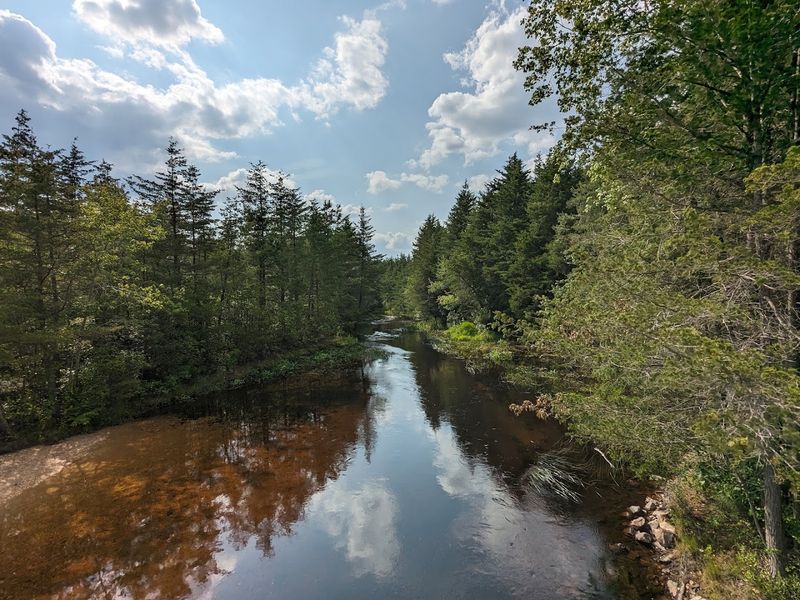
The name sounds like a roadside attraction, but the landscape is pure Pine Barrens: white sand roads, cedar water, quiet reservoirs, and old cranberry bogs spreading around a preserved company village. Double Trouble protects more than 8,000 acres, yet its historic district gives the park a human-scale center.
The village developed around lumbering and cranberry production, and surviving buildings help explain how workers once lived beside the bogs and streams. Start there, then follow one of the flat trails into the surrounding wetlands.
More than eight miles of official blazed routes cross the park, with most following sand roads suitable for easy hiking and, on designated sections, biking or horseback riding. The Nature Trail adds the most immersive stretch, passing through cedar swamp and over Cedar Creek between former bogs and reservoirs.
Paddlers can also experience the park from Cedar Creek, though low water, fallen trees, and twisting channels can turn a casual outing into a slower adventure than expected. There is no need to chase mileage here.
The pleasure comes from noticing the details: dark water against pale sand, straight rows in an old bog, the sudden coolness beneath Atlantic white cedars. The terrain is mostly level, but wet sections and biting insects can be part of the package, so bring repellent and footwear you do not mind muddying.
Double Trouble feels like an open-air history lesson that the forest has been patiently rewriting.
11. Island Beach State Park
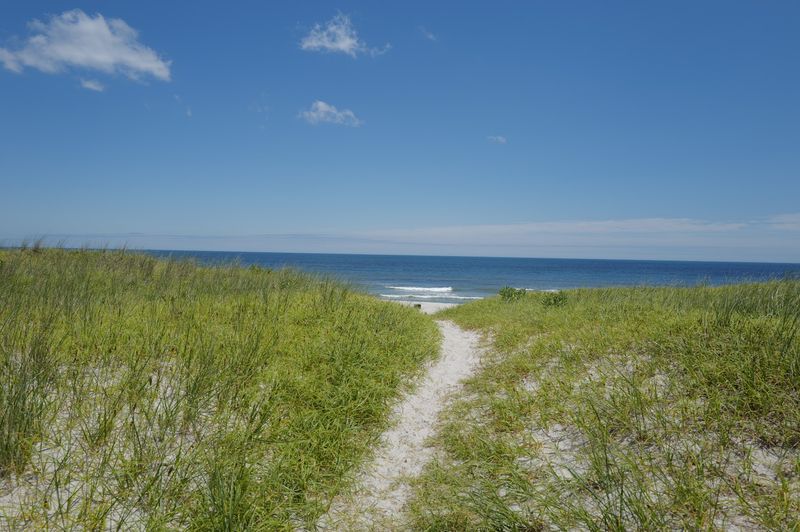
Drive south past the last dense stretch of shore houses and the landscape suddenly exhales.
Island Beach State Park runs for roughly ten miles along a narrow barrier island between the Atlantic Ocean and Barnegat Bay, preserving dunes, maritime forest, freshwater wetlands, thickets, and tidal marshes that once covered far more of the New Jersey coast.
The beach is the obvious draw, but the park rewards anyone willing to look beyond a towel and umbrella. Eight short trails lead toward the ocean or bay, ospreys patrol overhead, and the southern end feels wonderfully exposed to wind, surf, and sky.
About one mile is designated for guarded swimming during the summer schedule, with bathhouses, parking, changing areas, and concessions nearby. Surfing is allowed south of the swimming beaches, while anglers spread out along the shore for striped bass, bluefish, flounder, and other saltwater species.
A mobile sport-fishing vehicle permit is required to drive onto designated fishing beaches. Summer weekends can reach capacity, so early arrival matters more here than anywhere else on the list; checking the park’s live status before leaving home is a smart move.
Once inside, continue past the first busy lots. The farther south you go, the more the developed Jersey Shore falls away, leaving a rare strip of undeveloped coast that feels elemental rather than manicured.
12. Swartswood State Park
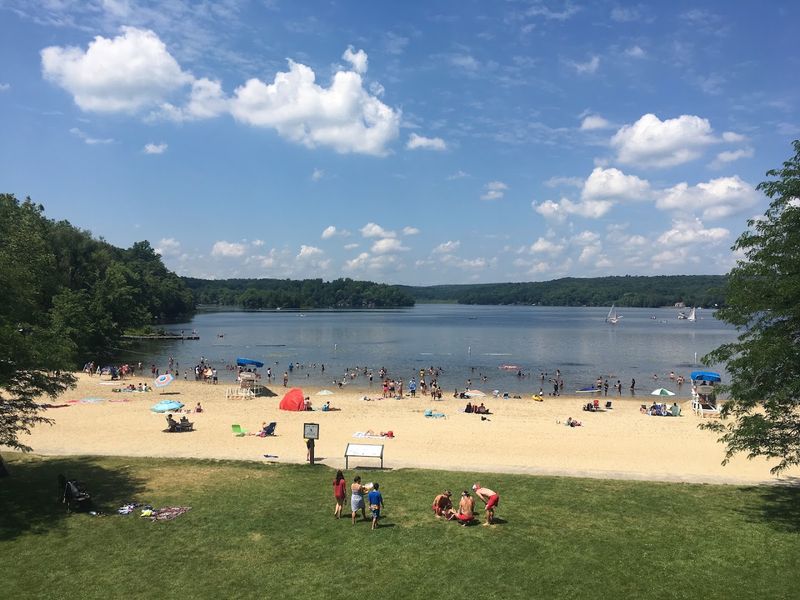
The lake barely ripples, and that is exactly the point. Gas-powered motors are not allowed on Swartswood Lake, so the 519-acre glacial lake belongs to sailboats, electric motors, canoes, kayaks, anglers, and the occasional swimmer cutting through the designated beach area.
Set in rural Sussex County away from major highways, the park feels slower from the moment the road narrows on the approach. Families can settle near the beach and picnic grounds, while hikers can use the surrounding trails to explore woods, fields, smaller ponds, and viewpoints away from the shoreline.
The lake is the center of everything, whether you are paddling at sunrise, fishing for bass and panfish, or simply watching light move across the water from a picnic table.
Swimming operates only when lifeguards are on duty; the 2026 schedule lists service Wednesday through Sunday during the summer season, so checking before the drive prevents disappointment.
Camping extends the experience, with sites and shelters that make Swartswood a practical base for a quiet Sussex County weekend. The park’s history stretches back to the early days of New Jersey’s public recreation system, and it still carries the uncomplicated appeal of an old-fashioned lake vacation.
There are no giant monuments or punishing summit climbs here. Swartswood earns its national-park feeling through space, clean horizons, and the rare absence of engines roaring across the water.
Share this story