Stand in the right spot in New Jersey and a bridge can feel less like a way across water and more like a dare. Steel towers rise out of river haze.
Footbridges sway just enough to wake up your knees. Old cables stretch over creeks, ravines, cranberry bogs, and some of the busiest waterways in America.
That is the fun of suspension bridges here: they are not all grand, postcard-famous giants. Some are tucked into campus paths or forest trails, while others carry highways, commuters, and shore-bound traffic with the calm confidence of something built to last.
Together, they show off New Jersey’s range in a wonderfully specific way. You get skyline views, Delaware River drama, Pine Barrens quiet, Revolutionary-era landscapes, and a few bridges that feel like local secrets.
These 12 crossings are worth knowing, whether you walk them, drive them, photograph them, or simply admire them from a nearby overlook.
1. George Washington Bridge
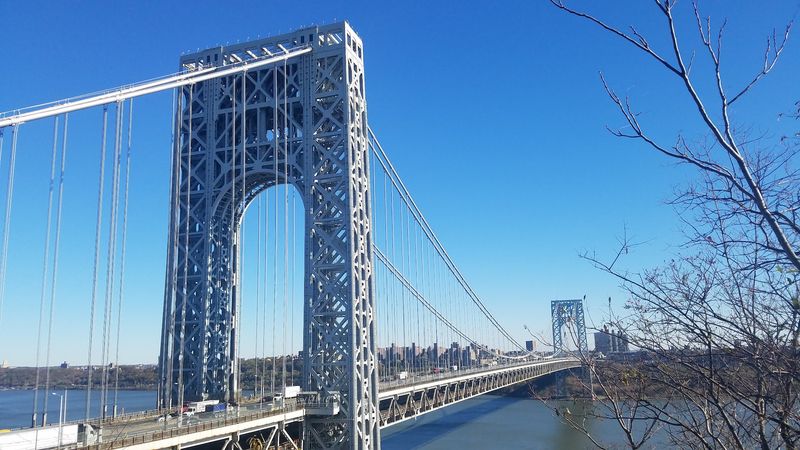
From Fort Lee, the George Washington Bridge does not just cross the Hudson; it practically commands it. Its steel towers rise above the Palisades with a kind of stripped-down confidence, especially when you see them from Fort Lee Historic Park, where the bridge, river, and Manhattan skyline line up like somebody arranged the scene on purpose.
The bridge opened in 1931 and was, at the time, twice as long as any previous suspension bridge, which explains why it still feels oversized even by modern New York-area standards. It is also closely tied to engineer Othmar Ammann, whose work helped define some of the region’s most recognizable crossings.
The best way to experience it is not necessarily from traffic, although every local has had a memorable GWB moment there. Walk or bike the North Walk from the Fort Lee side for the full drama: cables overhead, river wind, trucks rumbling beside you, and Manhattan suddenly looking close enough to touch.
If you want a slower visit, pair it with Fort Lee Historic Park, where overlooks give you the cleaner, camera-ready angle without having to dodge commuters.
2. Benjamin Franklin Bridge
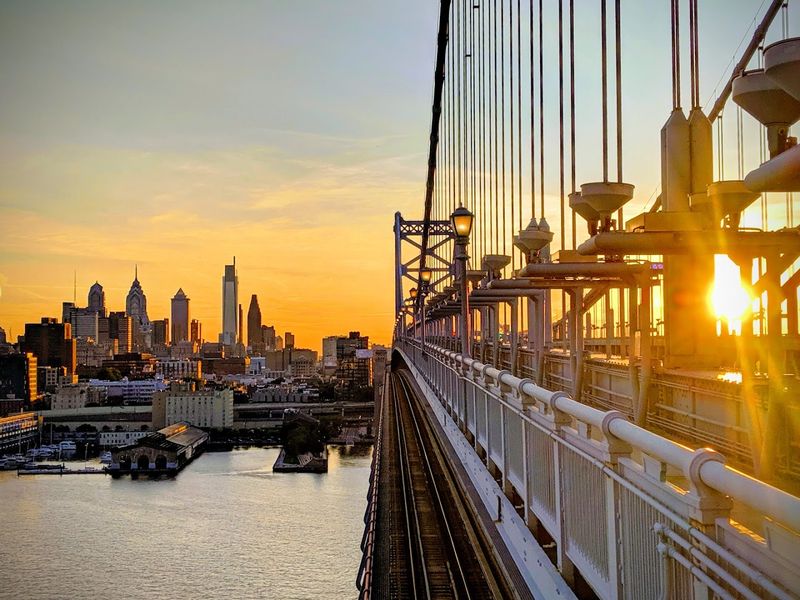
The Ben Franklin Bridge has that rare trick of feeling both monumental and totally usable. It connects Camden with Philadelphia, but from the New Jersey side it also doubles as one of the best urban walks in the region.
The pedestrian walkway gives you a broad, elevated look at the Delaware River, the Camden waterfront, Center City, and the blue sweep of the bridge itself. Opened in 1926, it was once the longest suspension bridge in the world, and you can still feel that old-school ambition in its towers, cables, and ceremonial presence.
This is a bridge that looks great from below but rewards you even more when you get on it. Start from Camden near 4th and Pearl Street and take your time; runners and cyclists use it as a workout, but walkers get the better deal because they can stop and stare.
The bridge also carries PATCO tracks and vehicle lanes, so the crossing has a layered, city-in-motion energy. Go near golden hour if you can.
The light hits the river, the skyline sharpens, and the whole thing feels like a free observation deck with better engineering.
3. Riegelsville Bridge
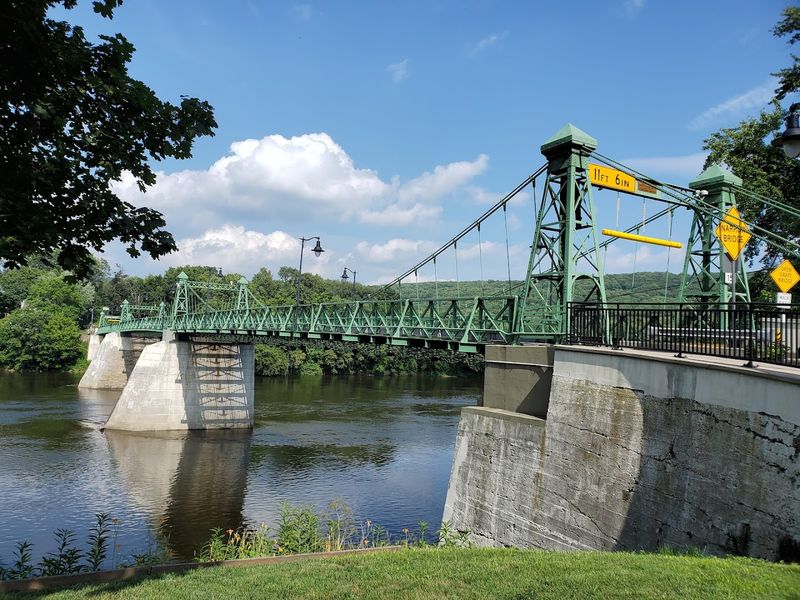
This is the kind of bridge that makes you slow down before you even reach it. The Riegelsville Bridge connects Pohatcong Township in Warren County with Riegelsville, Pennsylvania, and it still has the narrow, intimate feel of an older Delaware River crossing.
It is not trying to compete with the giant urban spans; its charm is in the details. The cables, trusses, and low-slung profile make it feel handmade compared with the big highway bridges farther south.
Current versions of the crossing date to the early 1900s, and the bridge is one of the older superstructures in the Delaware River Joint Toll Bridge Commission system. For visitors, the appeal is simple: river town scenery without the production.
Drive across carefully, then spend a little time nearby on the riverbanks or in the small-town streets around the crossing. The bridge has a 3-ton weight limit, so it is clearly not built for big modern traffic theatrics, and that restraint is part of the magic.
It feels like a piece of working history, still doing its job, still giving you a gorgeous Delaware River view without making a fuss about it.
4. Pochuck Creek Suspension Bridge
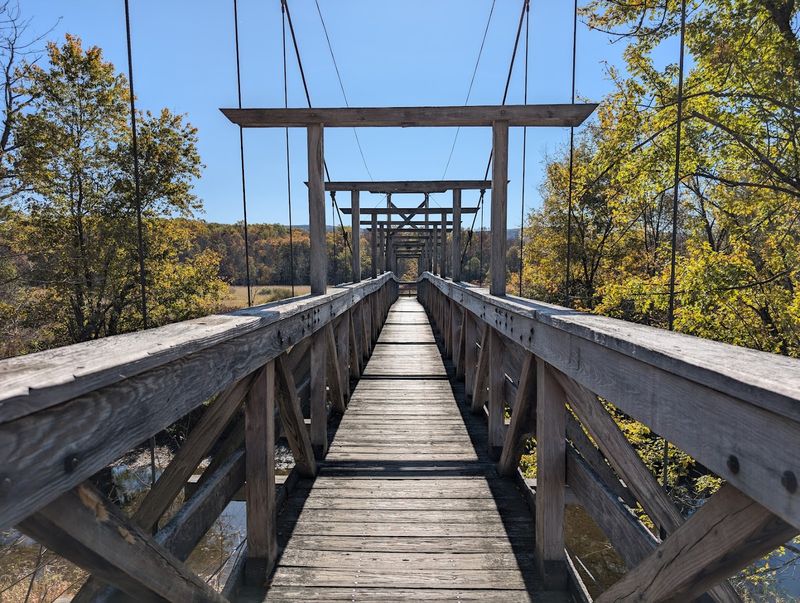
You hear it before you reach it: the rustle of wetland grass, the knock of footsteps on boardwalk planks, the little shift in energy when hikers realize the Appalachian Trail is about to throw them a suspension bridge. The Pochuck Creek Suspension Bridge is one of New Jersey’s most satisfying trail surprises, a 144-foot span reached along the Pochuck Boardwalk in Vernon.
This is not a bridge you admire from a windshield. You earn it with a short, flat walk through open marshland, where the sky feels huge and the wildlife often has better manners than the hikers.
The bridge rises after a set of stairs, crossing the creek with just enough bounce to make it memorable without making it intimidating. It is especially fun for first-time Appalachian Trail walkers because it delivers a real “I am on the AT” moment without requiring a mountain climb.
Parking is limited along Route 517, so arrive early on nice weekends, especially if you plan to continue toward the Stairway to Heaven section. For a shorter outing, turn around after the bridge and boardwalk.
For a bigger one, keep going and let the trail get progressively more serious.
5. Lumberville-Raven Rock Bridge
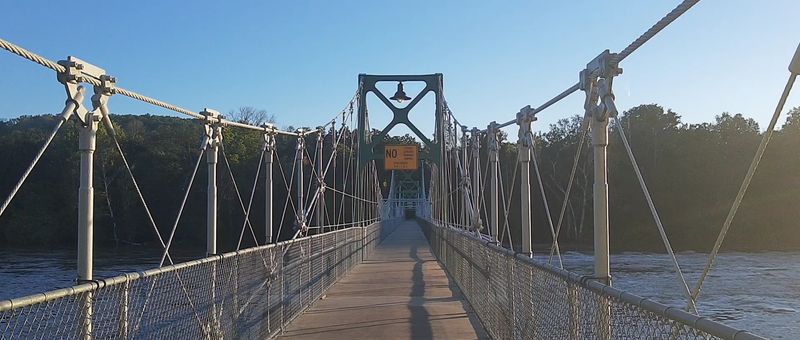
Crossing here feels like stepping into a quieter version of the Delaware River. The Lumberville-Raven Rock Bridge is pedestrian-only, which immediately changes the mood.
No engine noise barreling beside you, no rush to keep moving, just river air, cable lines, and the simple pleasure of walking from Hunterdon County into Bucks County. The bridge links Raven Rock near Bull’s Island Recreation Area with Lumberville, Pennsylvania, and the current five-span suspension structure was built in 1947 on older masonry supports.
That mix of old foundations and mid-century rebuild gives it a layered character: part river crossing, part preservation story, part scenic stroll. It is one of the best bridges on this list for people who want the engineering up close without the stress of traffic.
Look downriver, pause at midspan, then turn back toward the wooded New Jersey side and you get a completely different composition. Bull’s Island is the natural place to start, with parking and river access nearby, though it can fill up on pretty weekends.
The bridge also works beautifully as a low-effort add-on to a Delaware and Raritan Canal towpath day. It is not flashy, and that is exactly why people love it.
6. Shaky Bridge / Waste Weir Bridge
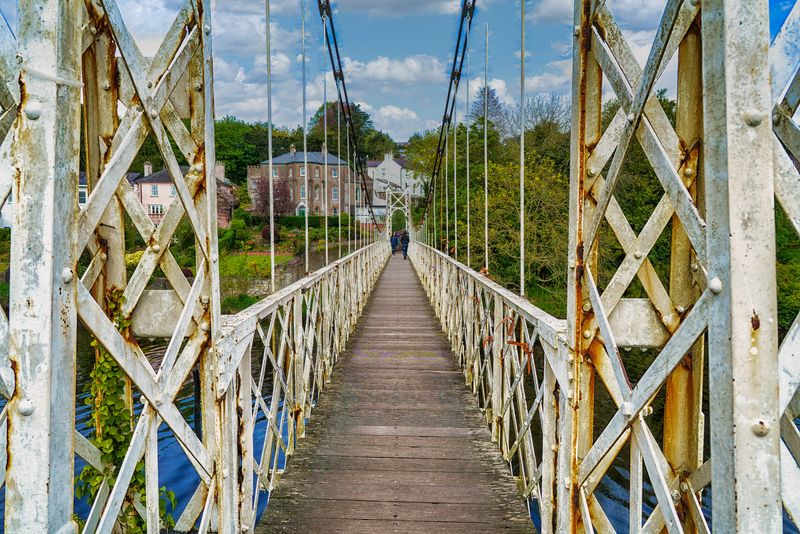
A little bridge with a name like Shaky Bridge is already halfway to local legend. Officially known as the Trenton Waste Weir Footbridge, this small pedestrian suspension bridge sits near Stacy Park in Trenton and crosses the waste weir connected with the Delaware and Raritan Canal feeder system.
It is modest in size, but it has a wonderfully oddball presence: timber deck, suspension form, and a setting that blends parkland, waterworks history, and canal infrastructure. The “shaky” part is part of the personality, although visitors should treat it like the historic structure it is, not a playground stunt.
What makes it worth including is the way it shrinks suspension-bridge engineering down to a human scale. You can understand the basic idea of cables, towers, and suspended deck in a few steps, without needing to squint up at a massive river span.
It is also a good reminder that New Jersey’s engineering history is not limited to headline bridges. Some of the most interesting structures were built to solve practical local problems, like managing water during storms.
Visit it as part of a Trenton riverfront or canal walk, and give yourself time to appreciate the weird little survivor energy of the place.
7. Institute Woods Swinging Bridge
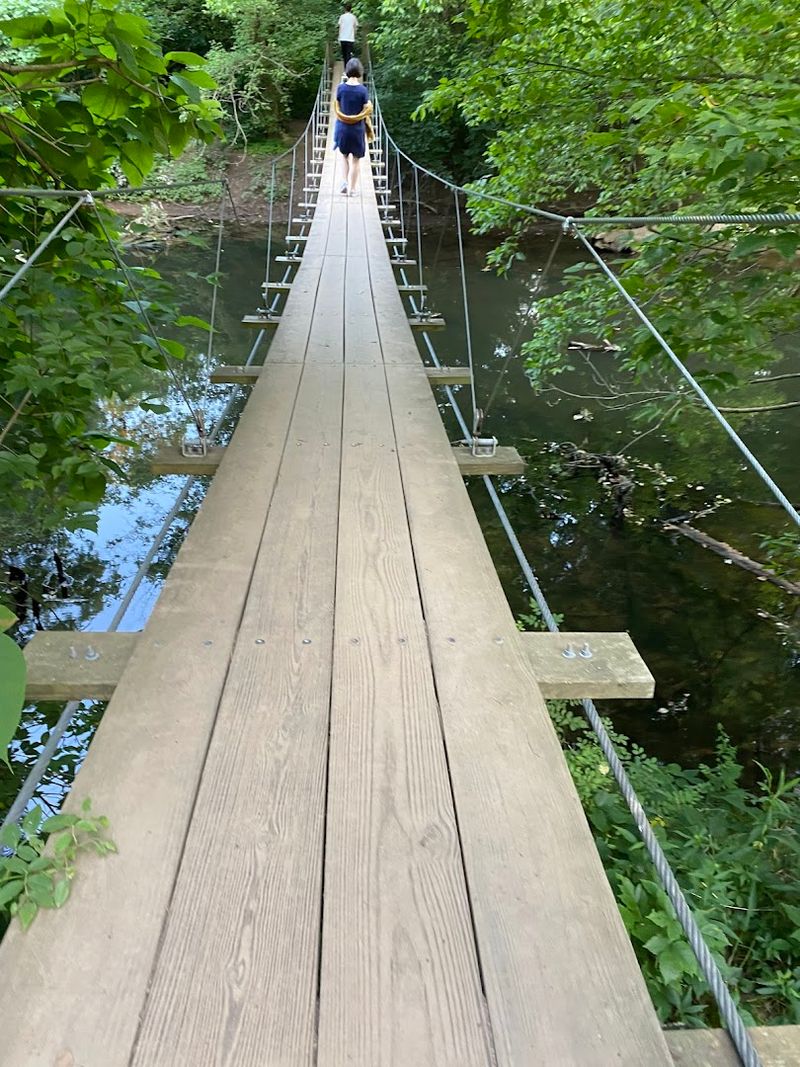
The fun of this one is that it feels slightly hidden even though plenty of Princeton walkers know exactly where they are going. The Institute Woods Swinging Bridge crosses Stony Brook within a preserved landscape of woods, wetlands, trails, and farmland.
The surrounding Institute Woods area covers more than 550 acres and includes more than eight miles of trails, so the bridge works best as the prize in the middle of a gentle wandering day rather than a quick roadside stop. Start near Princeton Battlefield State Park if you want the classic approach, then follow the wooded paths toward the water.
The bridge itself is small, narrow, and just lively enough underfoot to justify the “swinging” name. Kids love it, cautious adults pretend not to, and photographers immediately start looking for the angle with the creek below and trees framing both ends.
The vibe changes by season: bright green in spring, leafy shade in summer, coppery and quiet in fall, stark and moody in winter. Wear shoes that can handle mud after rain, and do not rush the surrounding trails.
The bridge is charming, but the walk through the woods is what makes the crossing feel earned.
8. Walt Whitman Bridge
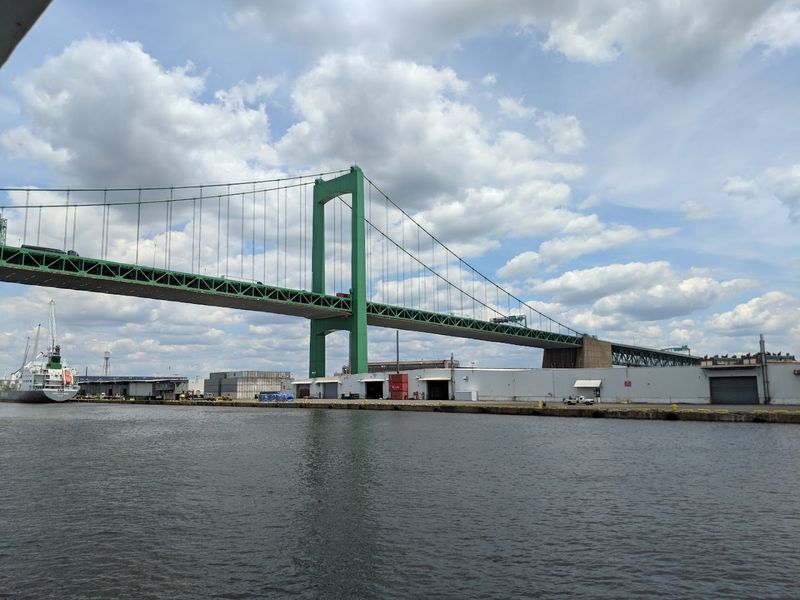
For anyone who has ever driven toward South Jersey with beach traffic on the brain, the Walt Whitman Bridge is more than infrastructure. It is a threshold.
This steel suspension bridge carries I-76 between Philadelphia and Gloucester City, and unlike the Ben Franklin Bridge, it is built for vehicles only. That means you experience it in motion: the climb, the river flash below, the city behind you, and New Jersey opening ahead.
Opened in 1957, it was created as a major regional crossing and remains one of the Delaware River’s most important highway spans. The bridge is broad, practical, and muscular, with seven lanes and a no-nonsense profile that suits its job perfectly.
Since you cannot walk it, the best way to appreciate it is either from a passenger seat or from Gloucester City’s waterfront, where the bridge’s scale is easier to read. There is a working-river feel here that makes the view different from the more polished postcard angles farther north.
Tugboats, traffic, industrial edges, and skyline glimpses all share the frame. It is not delicate, and it is not trying to be. The Walt Whitman is the bridge equivalent of rolling up its sleeves and getting everybody where they need to go.
9. Delaware Memorial Bridge I
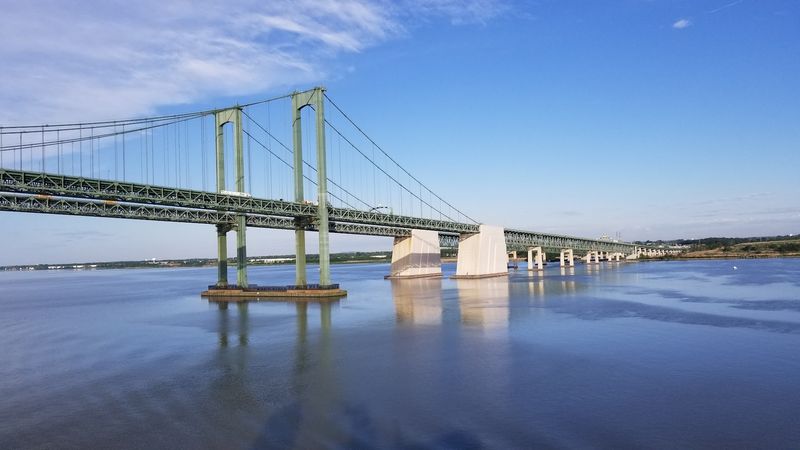
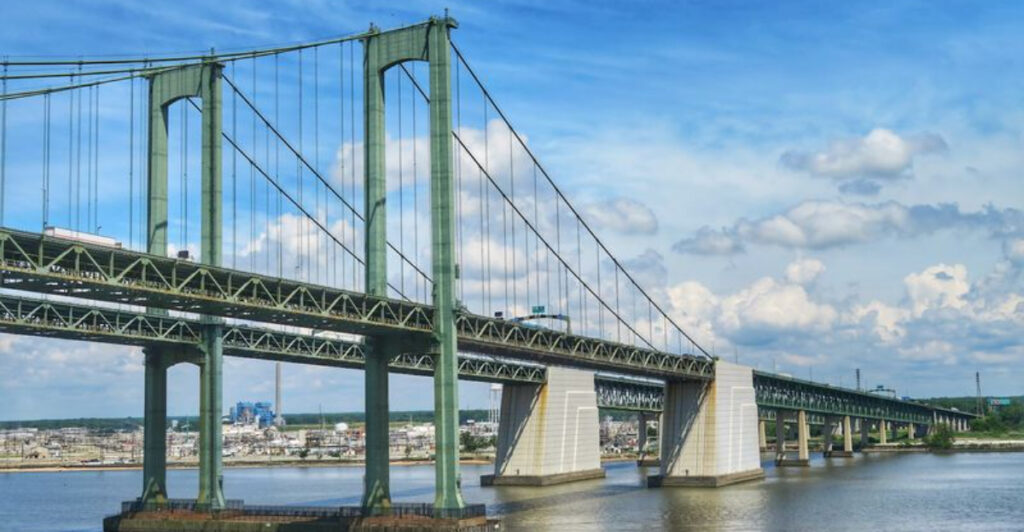
The older of the Delaware Memorial Bridge twins has a solemn kind of grandeur. Opened in 1951, the first span helped create a powerful highway link between Pennsville, New Jersey, and New Castle, Delaware, rising above the Delaware River near the top of the bay.
It was also dedicated as a memorial, which gives the bridge a different emotional weight from the commuter-heavy crossings farther north. Even at highway speed, you can feel the scale: long cables, high towers, wide water, and the sense that the river has broadened into something more tidal and open.
As an engineering landmark, the first span deserves attention because it set the stage for the twin-bridge arrangement that later became the site’s signature look. The best “visit” is honestly the drive itself, ideally when traffic allows you to absorb the view safely as a passenger.
Nearby Pennsville also offers places to glimpse the bridge from the New Jersey side, especially around riverfront areas where the twin spans become part of the horizon. It is not a cozy bridge, and it is not a strolling bridge.
It is a big, serious, mid-century suspension span with memorial purpose, highway importance, and one of the most commanding river settings in the state.
10. Delaware Memorial Bridge II
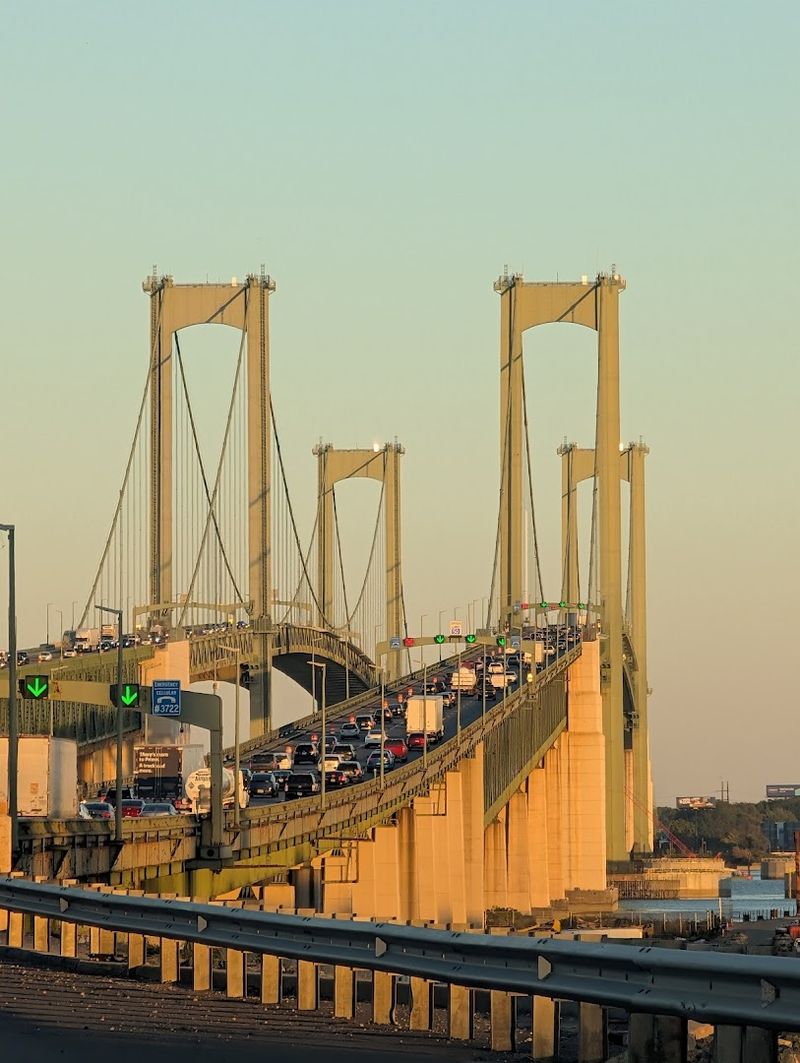
Built when the first Delaware Memorial Bridge could no longer handle the region’s growing traffic demands by itself, the second span gives the crossing its unmistakable twin-suspension silhouette. Construction began in the 1960s, and the newer span opened in 1968, creating the side-by-side bridge pairing drivers know today.
What makes this one especially interesting is that it looks like a sibling, not a clone. The two spans share the same broad visual language, but they reflect different construction eras and details.
Together, they turn a single crossing into a landmark visible from miles away. For road-trippers, this is one of New Jersey’s great “we are really going somewhere” bridges, whether the destination is Delaware, Maryland, the airports, the shore routes, or the long interstate chain beyond.
For bridge fans, the appeal is in comparing the pair: the rhythm of towers, cables, approach structures, and the way the two decks divide the traffic load. The view from the roadway is wide and windy, with the Delaware River spreading below and industrial and marshy edges shifting around it.
If the first bridge feels historic, the second feels like the practical sequel that made the whole system work. Together, they are bigger, busier, and more impressive than many drivers realize.
11. Cranberry Lake Footbridge
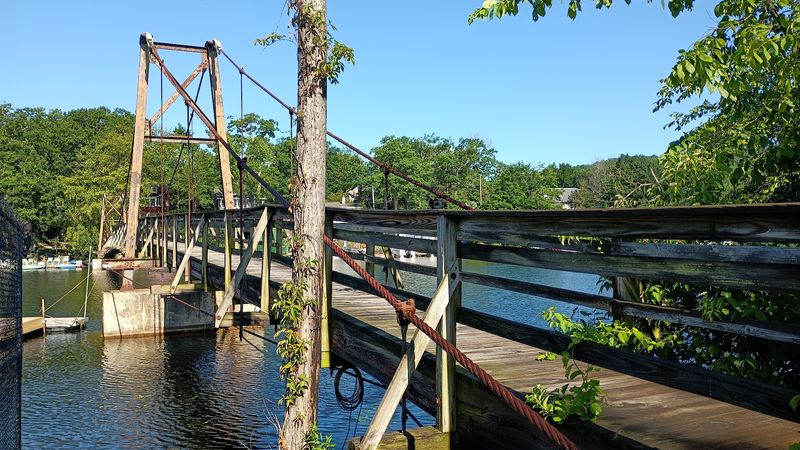
There is a bittersweet reason the Cranberry Lake Footbridge belongs on this list: it is beautiful, historic, and not currently the carefree walk it once was.
The suspension footbridge in Byram Township dates to around 1930, with some sources noting late-1930 completion and early-1931 opening, and it has long been tied to the lake’s summer-colony and recreation history.
For generations, locals used it as a daily crossing, the kind of small landmark that becomes part of family stories without trying. Its setting over Cranberry Lake gives it a nostalgic, almost camp-postcard quality, with water, trees, and a slim suspended deck doing a lot of visual work.
But the bridge was closed in 2019 pending repairs and rehabilitation, and restoration advocates have continued pushing for its preservation and reopening. That makes it more of an admire-from-a-distance entry right now than a walk-across-it destination.
Still, it deserves a place in any New Jersey suspension bridge roundup because it shows a different side of bridge value. Not every engineering marvel is massive.
Some matter because they connect neighborhoods, lake communities, memories, and local identity. Before planning any visit around it, check the latest access situation, respect closures, and treat it as a historic structure in recovery.
12. Franklin Parker Preserve Suspension Bridge
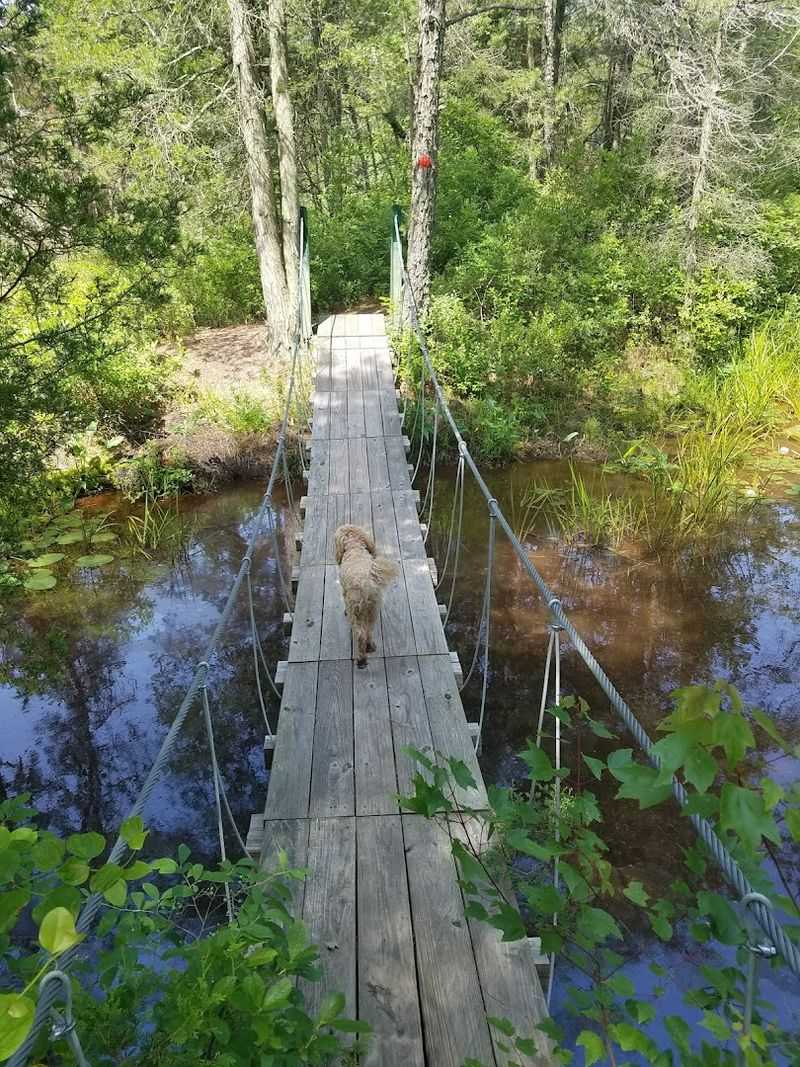
Out in the Pine Barrens, the Franklin Parker Preserve Suspension Bridge feels like a reward hidden inside a much larger landscape. The preserve, located around Chatsworth, is known for sandy trails, old cranberry bogs, cedar wetlands, blueberry fields, and the kind of tea-colored water that makes the Pine Barrens feel quietly mysterious.
The small suspension bridge is not the biggest feature there, but it is one of the most memorable because it appears in the middle of a hike, crossing a stream and adding a little adventure to an otherwise flat, peaceful route.
The preserve itself is huge, with miles of marked trails and a conservation story rooted in the transformation of former cranberry land into protected habitat.
That gives the bridge context: it is not just a cute crossing, but part of a trail system that lets visitors move through wetlands, forest, and restored bog landscapes without trampling the sensitive ground.
The Red Trail is the classic choice for people who want a fuller outing, though shorter loops are possible depending on where you park and how much time you have.
Bring water, download or print a map, and expect sandy footing. The bridge is the photo moment, but the real marvel is how much wild New Jersey surrounds it.
Share this story