A blacksmith’s hammer rings through a Cape May County clearing while, deep in the Pine Barrens, an abandoned cranberry packing house waits beside roads made of sugar sand. Farther north, a hand-operated swing bridge recalls the night George Washington’s army fled across the Hackensack River.
These places show a side of New Jersey that traffic reports and shore weekends tend to bury. They preserve company towns, canal stops, farming settlements, maritime communities, and ambitious experiments that flourished before highways stitched the state together.
Some are lively outdoor museums filled with costumed interpreters and working machinery. Others are quieter, leaving weathered cottages, mill foundations, and old roads to do most of the storytelling.
Together, they reveal how ironworkers, farmers, craftspeople, quarrymen, sailors, and entrepreneurs built communities around the resources beneath their feet. Leave room for muddy trails and unexpected detours.
The most memorable history here rarely sits behind glass.
1. Batsto Village — Hammonton
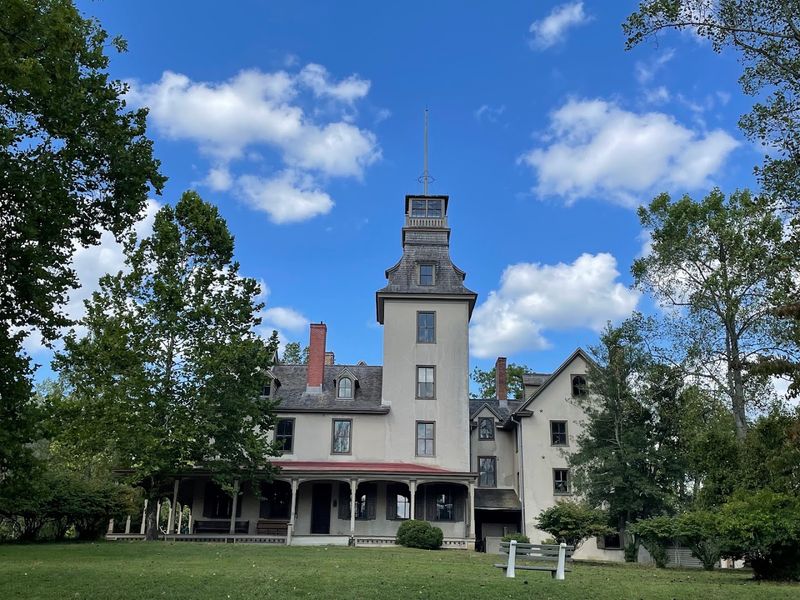
The first clue that Batsto was once an industrial powerhouse is the mansion rising above its modest workers’ homes. Its cupola looks across the surrounding Pine Barrens, where bog iron, abundant timber, and local waterways helped support a community that began producing iron in 1766.
The furnace supplied household goods and munitions, including materials for the Continental Army during the Revolutionary War. Glassmaking later replaced iron production, and businessman Joseph Wharton eventually reshaped the village around forestry, agriculture, and his imposing residence.
Today, more than 30 surviving structures create one of New Jersey’s most complete historic company towns. Walk past the sawmill, gristmill, blacksmith shop, general store, barn, post office, and rows of small homes where laborers once lived.
The mansion tour adds useful context, but wandering the grounds is just as rewarding. Batsto Lake and the forest keep modern development largely out of sight, allowing the village to feel genuinely separated from the present.
A visitor center introduces both the settlement and the unusual Pine Barrens environment that sustained it. The outdoor grounds can be explored without committing to a guided experience, though building access and demonstrations follow limited schedules.
Pair the village with one of Wharton State Forest’s shorter trails, and wear shoes that can handle sandy paths rather than treating this as a polished museum stop.
2. Historic Cold Spring Village — Cape May
Smoke curls from a forge, a printer works a hand press, and somewhere nearby a woodworker turns an ordinary piece of timber into something useful. Historic Cold Spring Village does not simply display the 1800s; it puts the century back to work.
Spread across 30 wooded acres just outside Cape May, this open-air museum contains more than two dozen restored historic buildings gathered from around South Jersey.
Interpreters in period clothing demonstrate trades such as blacksmithing, basket weaving, bookbinding, spinning, woodworking, and printing, making the visit especially good for anyone who tunes out the moment a museum becomes a row of labels.
The buildings range from homes and barns to workshops, a schoolhouse, and a country store, creating a broad picture of rural life rather than focusing on one wealthy household. Small gardens, farm animals, split-rail fences, and dirt paths help connect the individual demonstrations into a believable community.
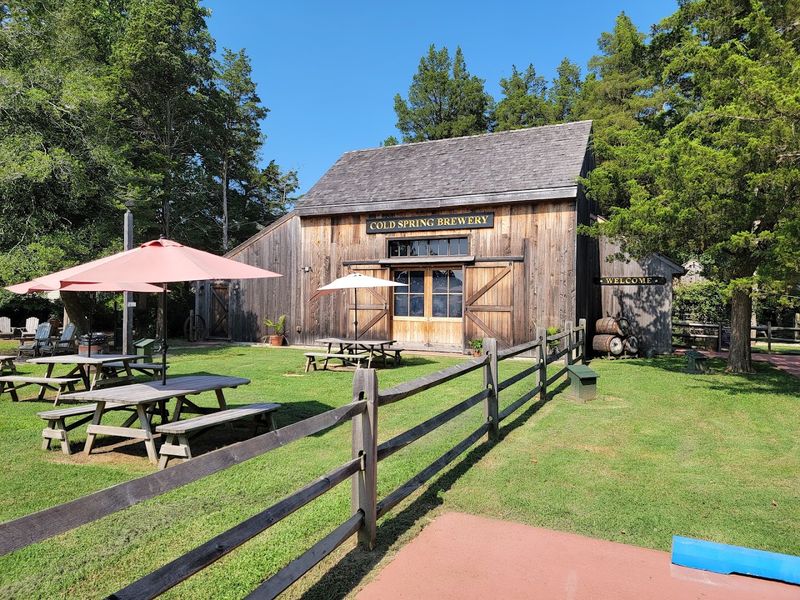
The onsite Cold Spring Brewery, housed in an adapted historic barn, gives adults an appealing place to pause after exploring. This is primarily a seasonal attraction, with regular programming concentrated from late spring through summer and special events extending into fall, so checking the calendar before driving down is essential.
Give yourself at least a few hours. Cape May’s beaches may be close, but the village deserves more than a hurried stop between the lighthouse and dinner.
3. Allaire Village — Wall Township
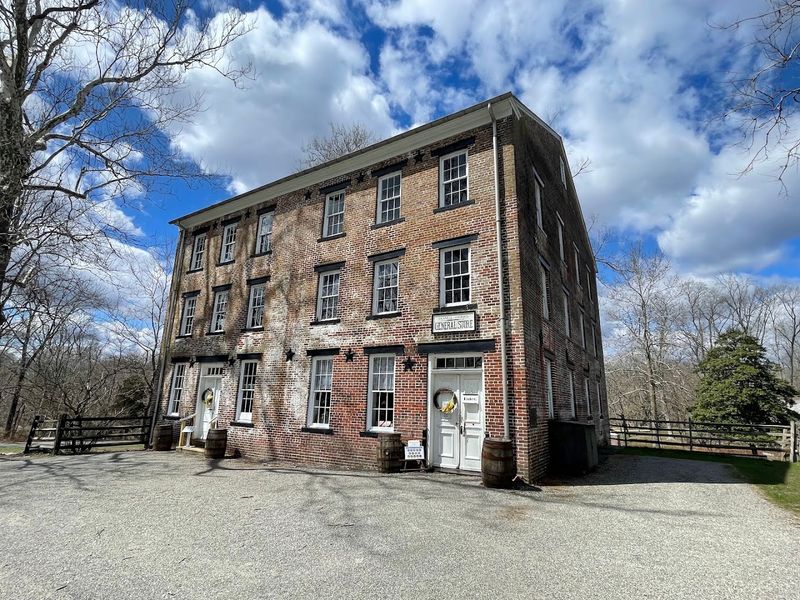
In the 1830s, nearly everything a worker at the Howell Works needed could be found within walking distance: housing, a school, a church, shops, a bakery, and an employer that shaped daily life. James P.
Allaire purchased the iron-producing property in 1822 and developed it into a self-contained industrial community supplying pig iron for his New York foundry. At its peak, hundreds of people lived and worked here.
The village declined after richer iron deposits and more efficient production methods shifted the industry elsewhere, but its surviving buildings now anchor Allaire State Park.
The long brick row house immediately conveys the scale of the operation, while the general store, blacksmith shop, carpenter’s shop, manager’s house, and church fill in the human details.
On living-history days, interpreters demonstrate the trades that kept the settlement functioning, and special programs range from craft events to lantern tours. The surrounding park makes Allaire unusually easy to turn into a full-day outing.
Hiking and multiuse trails begin nearby, picnic areas sit under mature trees, and the Pine Creek Railroad offers seasonal rides on a narrow-gauge train. The village grounds remain accessible more often than the interiors, which generally open on scheduled days and during events.
Arrive when programs are running if you want the fullest experience; come on a quiet weekday if you would rather study the buildings and imagine the clatter for yourself.
4. Waterloo Village — Stanhope
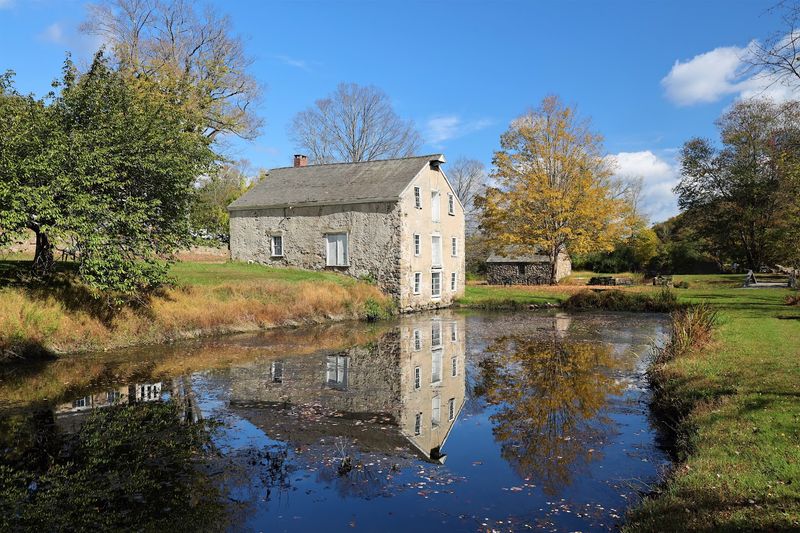
Canals once moved freight across New Jersey with surprising efficiency, and Waterloo occupied a valuable place along that watery highway. The settlement stood beside the Morris Canal, where boats carrying coal and other goods paused near locks and inclined planes on their journey between the Delaware and Hudson rivers.
By the mid-19th century, Waterloo had become a busy commercial village with stores, mills, workshops, homes, a school, and a church. The arrival of railroads eventually made canal transport obsolete, leaving the settlement to fade with the system that created it.
Its stone buildings, weathered clapboard houses, and canal-side landscape now preserve a rare glimpse of that era inside Allamuchy Mountain State Park. Smith’s Store, the gristmill, the sawmill, and Waterloo United Methodist Church are among the landmarks that give the grounds their strong sense of place.
Water and wooded hills frame nearly every view, making this one of the prettiest historic sites on the list, particularly when autumn color settles over the Musconetcong River. Access to interiors and formal programming can vary, so this is a destination where checking the latest schedule matters.
Even when the buildings are closed, the grounds reward a patient walk. Follow the old canal, look for traces of the transportation network, and imagine how noisy this peaceful corner must have been when boats, animals, merchants, and mill machinery all competed for space.
5. Millbrook Village — Hardwick Township
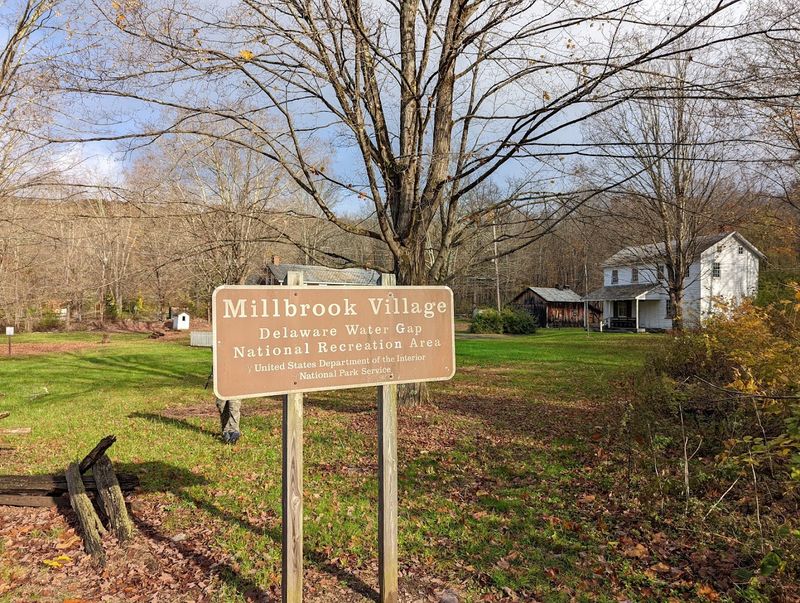
Seventy-five residents and roughly 19 major buildings were enough to make Millbrook a thriving rural community in 1875. Its origins reached back to 1832, when farmer Abram Garis built a gristmill where the Columbia-Walpack Turnpike crossed Van Campens Brook.
A church, school, store, smithy, boarding house, post office, and workshops followed, serving farm families scattered across this remote corner of Warren County. The settlement declined as industrialization changed agriculture and younger residents left for wage-paying work elsewhere.
Today’s village combines structures original to Millbrook with historic buildings relocated from nearby areas for preservation. The result is not an exact snapshot of a single year but a convincing portrait of the small country hamlets where many Americans lived before 1900.
The general store, schoolhouse, church, blacksmith shop, cider mill, cabins, barns, and reconstructed gristmill sit along old roadbeds surrounded by forest. On select days, volunteers demonstrate spinning, weaving, woodworking, gardening, and other traditional skills.
At quieter times, visitors can roam from dawn to dusk and enjoy the remarkable stillness. Millbrook lies within Delaware Water Gap National Recreation Area, so the outing pairs naturally with Old Mine Road, a picnic, or a nearby hike.
Cell service can be unreliable and amenities are limited. Download directions beforehand, pack water and lunch, and embrace the fact that reaching the village feels like part of the historical experience.
6. East Jersey Old Town Village — Piscataway
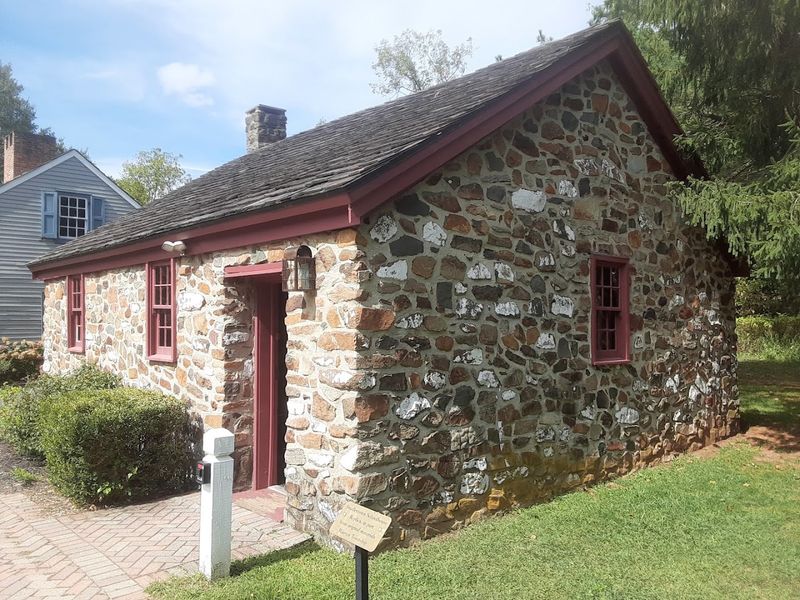
Most of the buildings here did not begin as neighbors. They were rescued from different Middlesex County communities, moved to Johnson Park, and arranged to tell a larger story about life in central New Jersey from the 18th through the early 20th centuries.
That makes East Jersey Old Town Village less like a preserved settlement and more like an architectural time capsule assembled one structure at a time.
The collection includes homes, workshops, a schoolhouse, a church, and the reconstructed New Brunswick Barracks, which represents military quarters used during the French and Indian War.
Buildings such as the Runyon House and Fitzrandolph House reveal how domestic architecture evolved, while trade spaces demonstrate the work that sustained early communities.
Exhibits and seasonal programs broaden the story beyond prominent families, examining the experiences of immigrants, laborers, women, and people of color who helped shape Middlesex County.
Its location is part of the appeal: the village occupies a leafy stretch near the Raritan River, with paths that encourage a slow loop rather than a rigid tour. Admission is generally free, making it an easy addition to an afternoon in the area, though interior access is tied to operating hours and scheduled events.
Visit during a demonstration or historical festival for more activity, or choose a quiet day when the clapboard buildings and open lawns can be studied without a crowd.
7. Whitesbog Historic Village — Browns Mills
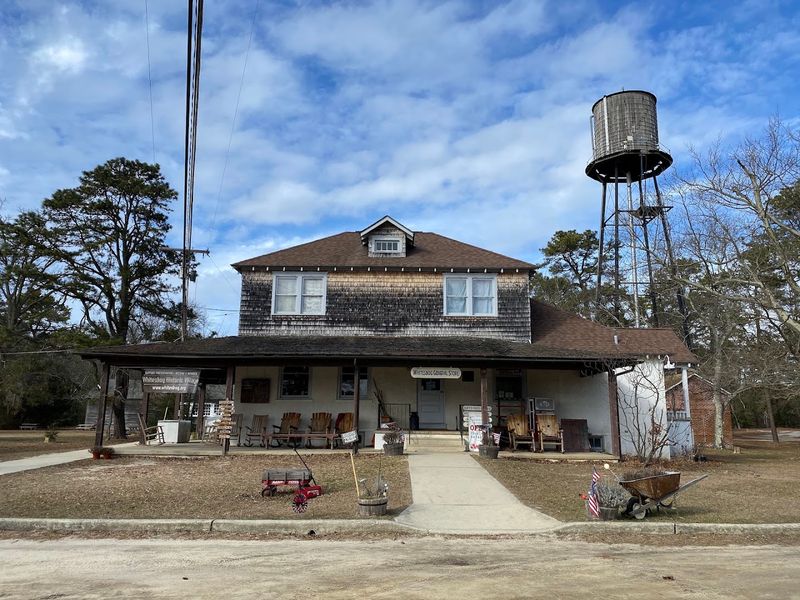
The cultivated blueberry owes a considerable debt to this quiet cluster of buildings in the Pine Barrens. Elizabeth Coleman White worked with botanist Frederick Coville in the early 20th century to identify and propagate wild blueberry plants with desirable qualities, helping turn an unpredictable woodland fruit into a commercial crop.
Her work unfolded at Whitesbog, a cranberry farm established in 1857 that grew into one of New Jersey’s most important agricultural operations. The village preserves the landscape surrounding that achievement: workers’ cottages, warehouses, a general store, the barrel factory, packing facilities, and White’s home, Suningive.
Beyond the buildings stretch reservoirs, cranberry bogs, blueberry fields, sandy roads, and pine forest. Exploring the full property reveals how inseparable the village was from the land and water engineered to support its crops.
The general store opens on a limited schedule, while guided walks, seasonal festivals, markets, and moonlight hikes offer deeper ways to experience the site. Fall brings vivid color to the cranberry beds, but summer carries its own appeal when blueberry season connects the landscape directly to White’s legacy.
The village is free to wander during daylight hours, although donations support preservation. Keep to marked routes, expect sandy or occasionally wet ground, and bring insect repellent in warm weather.
Whitesbog is not manicured into neat nostalgia, and that is precisely why its agricultural past feels so close.
8. Double Trouble Village — Bayville
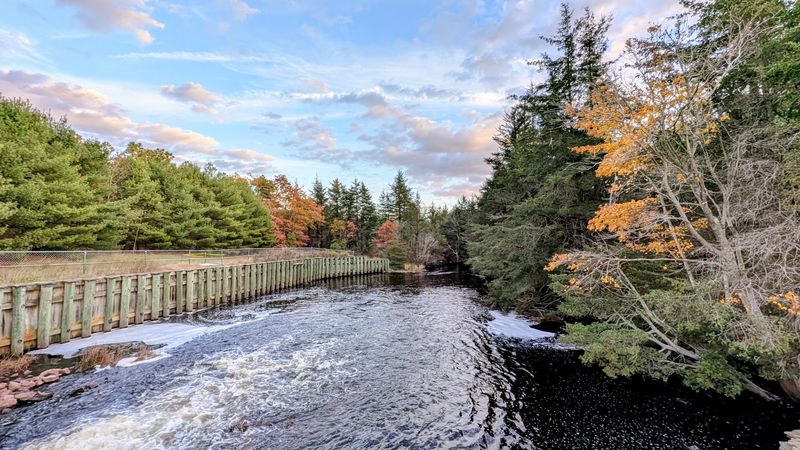
Its name sounds like folklore, but Double Trouble grew around two serious Pine Barrens industries: timber and cranberries. The settlement’s sawmill processed Atlantic white cedar harvested from surrounding swamps, while an intricate network of reservoirs and canals supplied water for cranberry cultivation.
By the early 20th century, the Double Trouble Company managed a substantial farming and milling operation, supported by workers who lived in houses clustered near the production buildings.
Fourteen original structures remain, including the sawmill, cranberry sorting and packing house, general store, schoolhouse, bunkhouse, cottages, and foreman’s home.
The preserved equipment inside the mill and packing house makes guided tours particularly worthwhile, since the machinery explains the village better than an empty room ever could.
Outside, hiking trails follow old service roads through cedar forest and around cranberry bogs, where straight embankments and controlled waterways reveal how thoroughly workers reshaped the landscape.
The village grounds are generally open for self-guided exploration, but access to buildings is more limited and often connected to scheduled tours or programs. There is no commercial village center or convenient café waiting around the corner, so arrive with water and anything else you need.
The reward is an unusually intact industrial landscape where natural beauty and hard labor overlap. Even the quietest view of a bog carries evidence of the people who dug, dammed, planted, harvested, and hauled here.
9. The Deserted Village of Feltville — Berkeley Heights
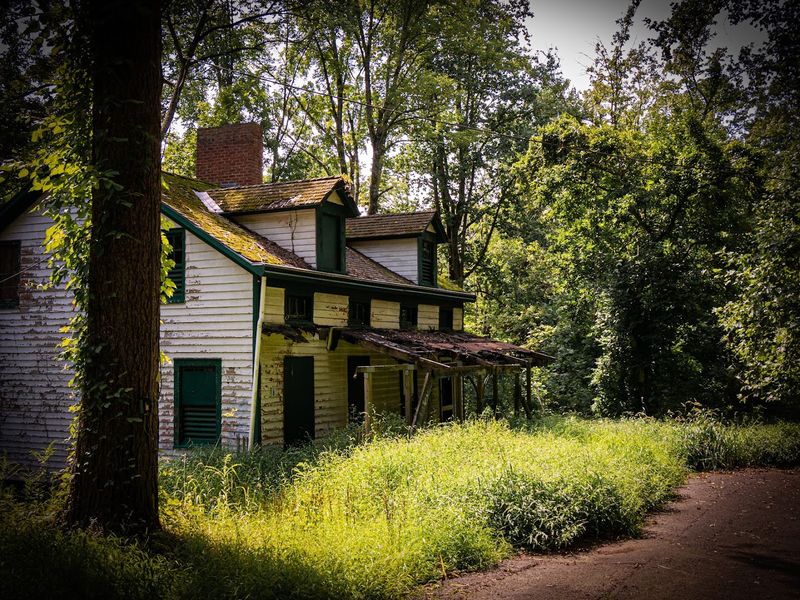
One surviving cottage has “General Store” painted across its front, though no clerk has waited behind the counter for generations. The building belongs to Feltville, a former mill community hidden within the Watchung Reservation.
Businessman David Felt purchased the property in 1844 and created a planned settlement around his stationery operation, providing workers with homes, a school, a church, and a store. He became known as “King David,” a nickname suggesting that his influence extended well beyond the factory floor.
After Felt sold the property, later businesses struggled, and the community earned its enduring “Deserted Village” name. It received another chance in the 1880s when Warren Ackerman transformed the site into Glenside Park, a summer resort where city residents rented cottages, attended dances, and escaped the heat.
That venture also declined as shore vacations became more fashionable. Today, a handful of restored buildings, old foundations, interpretive signs, and traces of roads remain among the trees.
A self-guided walking route explains both the industrial village and resort periods, while surrounding reservation trails lead toward Blue Brook and deeper into the Watchung woods. The grounds are free to explore, and parking is available near the village.
Come in fall for color or on a gray winter afternoon for the strongest abandoned-settlement mood. Despite the nickname, some buildings have modern uses, so admire occupied or restricted structures respectfully rather than treating them as ruins.
10. Red Mill Museum Village — Clinton
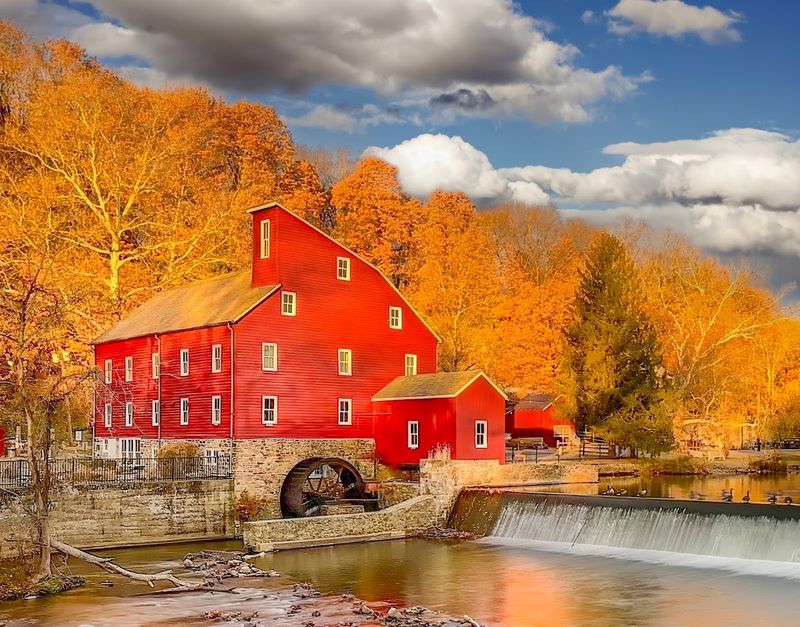
Few New Jersey landmarks make a first impression as confidently as the red mill beside the South Branch of the Raritan River. Its bold walls, large waterwheel, and position above the rushing water have made it Clinton’s signature view, but the building’s complicated working life is more interesting than the postcard.
Constructed around 1810 for wool processing, the mill repeatedly changed owners and purposes. It ground grain, produced peach baskets, supplied electricity, and processed graphite and talc before closing in 1928.
The surrounding museum grounds extend the story into the adjacent Mulligan Quarry, where limestone was extracted and burned in kilns. Visitors can examine the quarry office, blacksmith shop, dynamite shed, tenant house, lime kilns, and industrial equipment alongside exhibits inside the mill.
Together, they show how businesses adapted, failed, and reinvented themselves as markets changed. Seasonal events range from educational programs to the famously elaborate Haunted Red Mill, so the experience can shift dramatically depending on when you arrive.
Regular museum admission applies, and checking the operating calendar is wise because access is seasonal. Leave time to cross the river into downtown Clinton afterward.
From the opposite bank, the mill, waterfall, stone bridge, and neighboring Hunterdon Art Museum form one of the state’s best historic views. It is beautiful, certainly, but it was built to work—and the machinery, dust, and repeated financial gambles are what make its story memorable.
11. Historic New Bridge Landing — River Edge
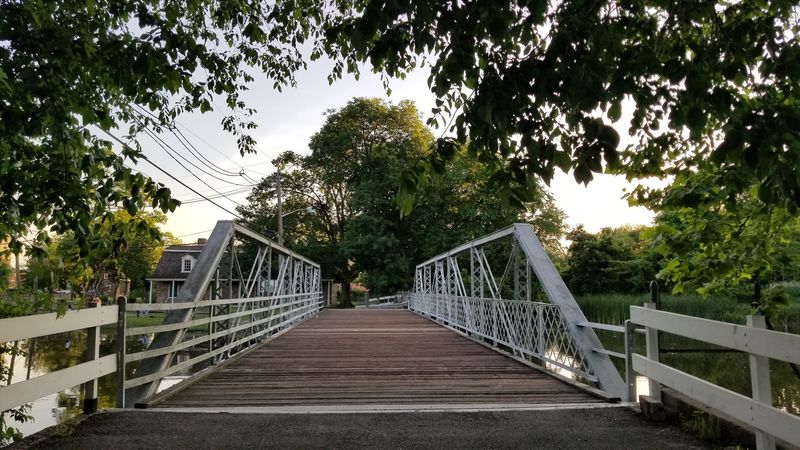
On November 20, 1776, retreating American troops crossed the Hackensack River here while British forces pursued them across Bergen County. The crossing became known as “the bridge that saved a nation,” giving Historic New Bridge Landing a dramatic place in the Revolutionary War story.
Yet the site offers more than one pivotal night. Its sandstone houses, river landing, barn, outdoor kitchen, and 1889 swing bridge preserve pieces of the Jersey Dutch culture that once defined the region.
The Steuben House stands closest to the river and later belonged to Baron von Steuben, the Prussian officer who helped professionalize the Continental Army.
Nearby, the Campbell-Christie House and Demarest House were relocated to the property to prevent their loss, creating a compact museum village filled with regional furniture, tools, textiles, documents, and domestic artifacts.
Historical reenactments, hearth-cooking demonstrations, military programs, and holiday events are the best times to see the buildings fully animated. The grounds can be appreciated more casually, but interior access is typically tied to scheduled openings rather than daily museum hours.
Stand near the river and the location’s strategic importance becomes immediately clear: this narrow crossing connected roads, farms, markets, and military routes. Modern Bergen County presses close around the property, which only makes the surviving green space more striking.
In one small riverfront pocket, several centuries of transportation, trade, conflict, and family life remain layered together.
12. Historic Walnford — Upper Freehold Township
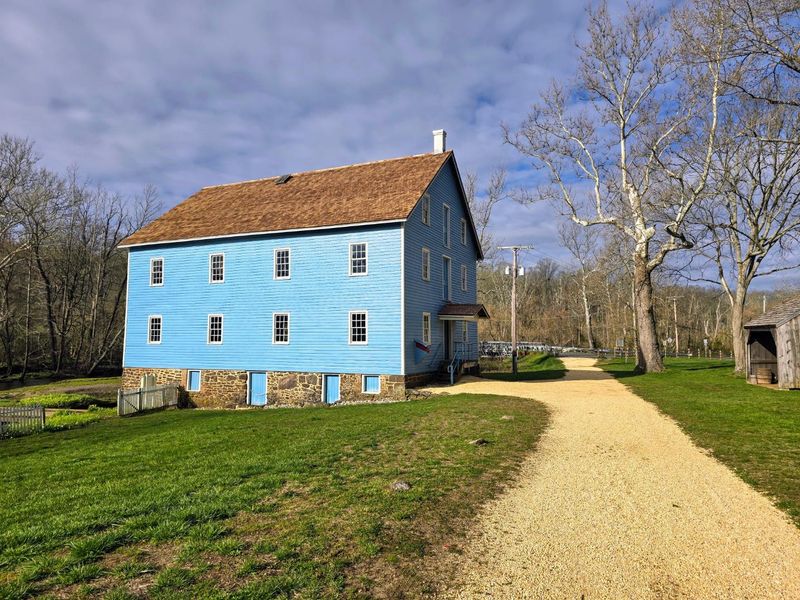
The low rumble of machinery is the sound to listen for at Walnford. Its centerpiece is a working 19th-century gristmill where demonstrations show how waterpower and belts moved grain through a multi-story production system.
The Waln family acquired the property in the 18th century and developed it into a prosperous farm and milling complex near Crosswicks Creek. Over generations, the site accumulated a substantial home, barns, carriage house, corn crib, cow barn, and other structures that reveal the scale of a successful rural enterprise.
The mill was rebuilt and modernized several times, and its surviving equipment reflects the continuous adjustments required to keep a family business competitive.
Exhibits inside the Waln House shift attention from machinery to domestic life, showing how the family furnished its rooms and managed a property that depended on both paid and enslaved labor during different periods of its history.
The surrounding lawns and farm fields make the complex pleasant to explore at an unhurried pace, while Crosswicks Creek gives the mill’s location an obvious logic. Walnford is part of Crosswicks Creek Park and generally does not charge admission, though mill demonstrations and building hours follow a schedule.
Pack a picnic if the weather cooperates; there are few commercial distractions nearby. This is not a recreated streetscape packed with shops.
It is something more focused: an unusually complete farmstead where water, agriculture, business, and household life can still be understood as one working system.
13. Tuckerton Seaport and Baymen’s Museum — Tuckerton
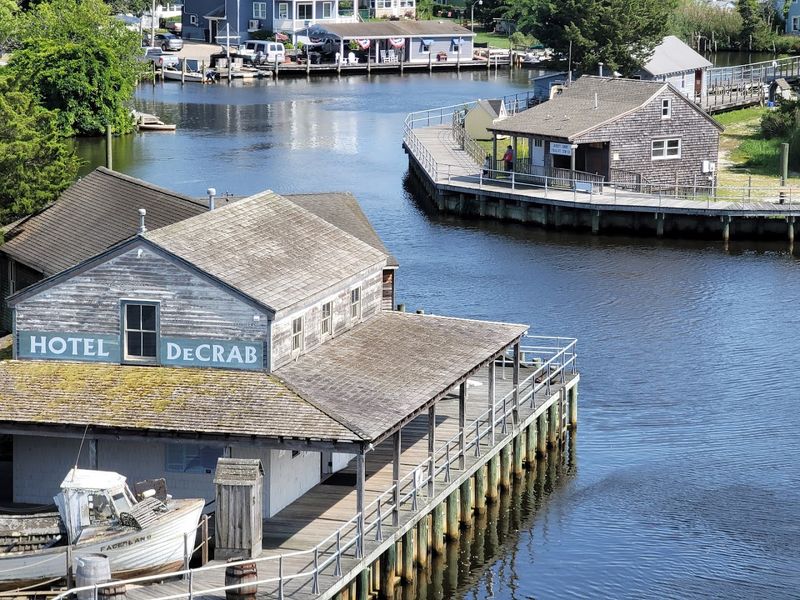
A full-size reproduction lighthouse rises over a collection of workshops, docks, boats, and weathered maritime buildings along Tuckerton Creek. This is a recreated seaport village rather than a settlement preserved exactly where every building originally stood, but its stories are firmly rooted in the Barnegat Bay region.
The museum explores the lives of baymen and women who made a living through fishing, clamming, boatbuilding, decoy carving, hunting, and harvesting salt hay. Inside the Jersey Shore Folklife Center and other exhibits, hand-carved decoys share space with traditional tools, local art, and oral histories.
The working boatworks is a highlight when craftspeople are present, turning maritime heritage into something tangible rather than decorative. The lighthouse recalls Tucker’s Island, a real barrier-island community whose buildings disappeared as erosion steadily consumed the land.
Boardwalks and nature trails lead through marsh habitat, connecting cultural history with the bay environment that shaped every trade represented here. Families will find enough interactive material to keep the visit moving, while serious craft enthusiasts can linger over sneakboxes, garveys, and carving traditions.
Admission and hours vary by season, and festivals can make the grounds far busier than an ordinary afternoon. Allow time to explore beyond the lighthouse photo.
The strongest parts of the seaport are the small, specific stories showing how coastal residents built useful lives around tides, marshes, timber, and shallow water.
Share this story