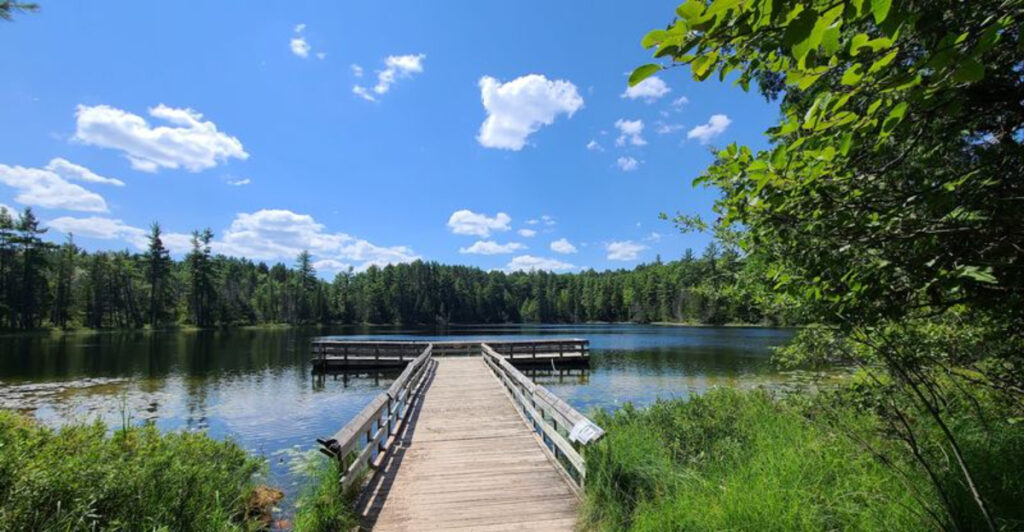
Michigan summers hit different — and the best part? You don’t need to empty your wallet to have an unforgettable day.
From towering sand dunes and crystal-clear lakes to charming small towns and ancient forests, the Great Lakes State is packed with adventures that are easy on the budget. Whether you’re planning a solo escape, a family road trip, or a weekend with friends, these 13 destinations are proof that the best things in Michigan are absolutely free (or close to it).
1. Mackinac Island
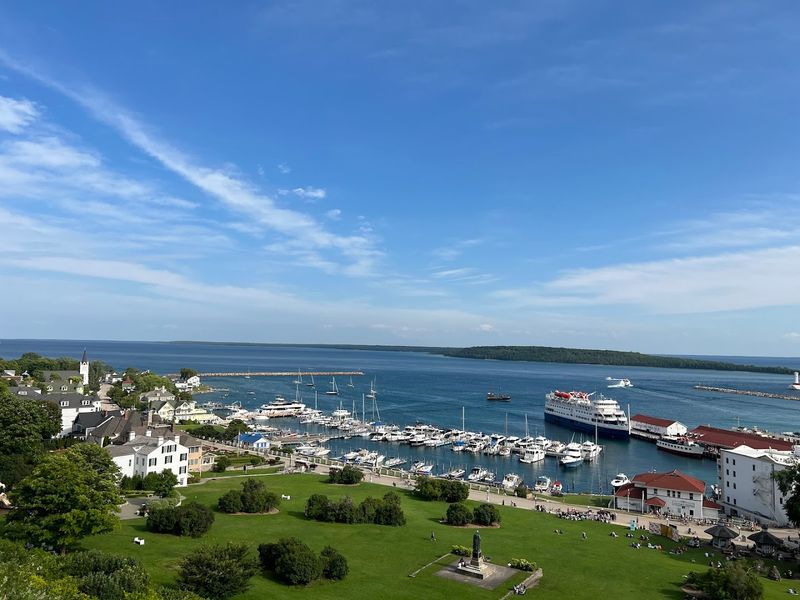
No cars, no traffic, no stress — Mackinac Island operates on a totally different frequency than the rest of the world, and that alone makes it worth the trip. Getting there requires a short ferry ride across the Straits of Mackinac, and once you arrive, the island greets you with horse-drawn carriages, blooming flower gardens, and a pace of life that feels like stepping into another century.
The ferry is the main cost, but once you’re on the island, exploring is largely free.
Rent a bike and circle the island’s perimeter road — it’s roughly eight miles and one of the most scenic rides in the entire Midwest. You’ll pass limestone arches, forested bluffs, and sweeping views of Lake Huron without spending a dime beyond your bike rental.
Fort Mackinac sits at the top of the bluff and charges a small admission, but the view from outside the fort is just as jaw-dropping and completely free.
The town itself is walkable and full of character. Street performers, fudge shops (yes, the free samples are real), and historic storefronts line the main drag.
Mackinac Island fudge has been a thing since the 1880s, and nearly every shop will hand you a taste without any pressure to buy. Pack a picnic lunch, find a bench overlooking the water, and soak in one of Michigan’s most iconic summer experiences without blowing your budget.
2. Kalamazoo Nature Center
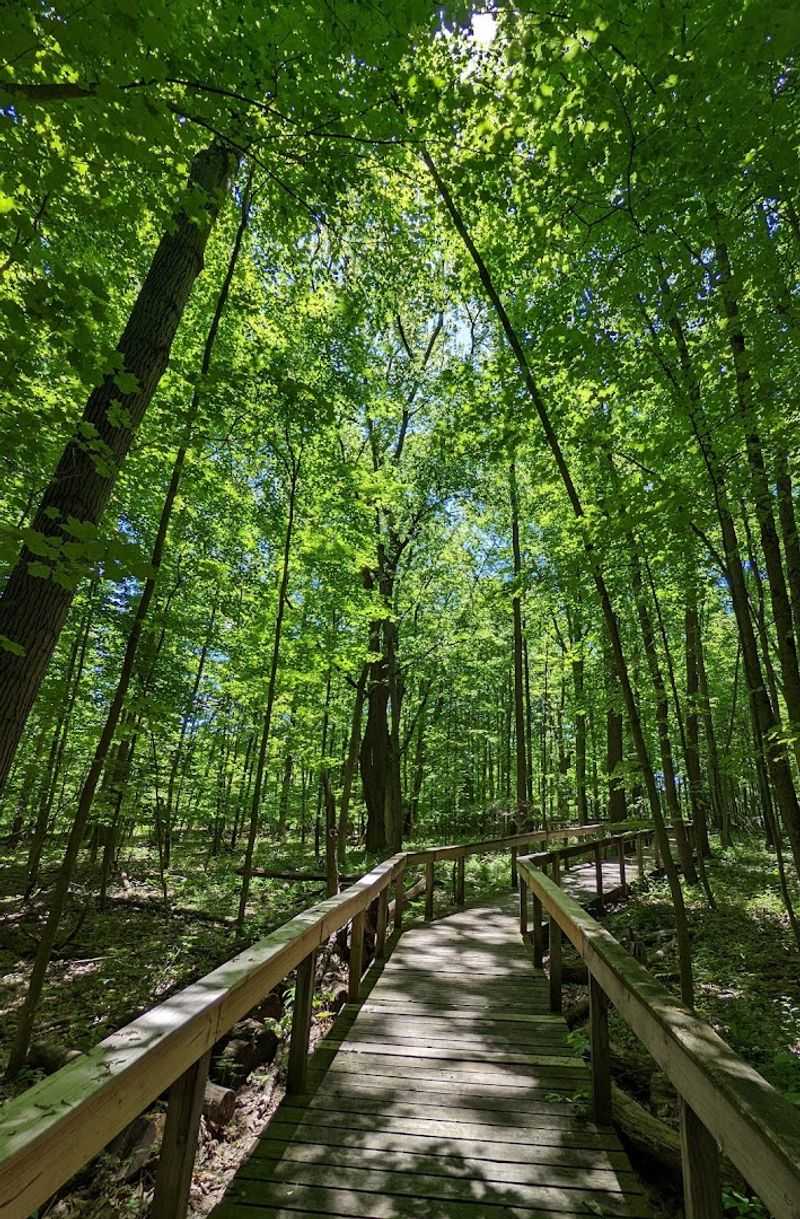
Tucked into the heart of Southwest Michigan, the Kalamazoo Nature Center is one of those places that feels like a well-kept local secret — even though it’s been around since 1960. Spanning over 1,100 acres of restored prairies, wetlands, and hardwood forests, it’s the kind of spot where you can genuinely lose yourself in nature without driving hours into the wilderness.
Admission is affordable, and the value you get for the price is hard to beat.
The trail system here is extensive and well-maintained, winding through habitats that shift dramatically as you walk. One moment you’re strolling through a sun-dappled forest, and the next you’re standing at the edge of a peaceful wetland watching herons fish in the shallows.
Over 250 bird species have been spotted on the property, making it a quiet paradise for birdwatchers and wildlife lovers of all ages.
Kids absolutely go wild for the interactive nature exhibits inside the main building, where live animals and hands-on displays turn a casual visit into a genuine learning experience. The restored 1858 DePuy homestead on the grounds adds a layer of history that catches most first-time visitors off guard — it’s a cool bonus you weren’t expecting.
Programs and guided walks run throughout the summer, many included with admission, so there’s always something happening beyond just the trails. Whether you’re a seasoned hiker or someone who just wants a quiet morning outdoors, the Kalamazoo Nature Center delivers without demanding much from your wallet.
3. Belle Isle Park
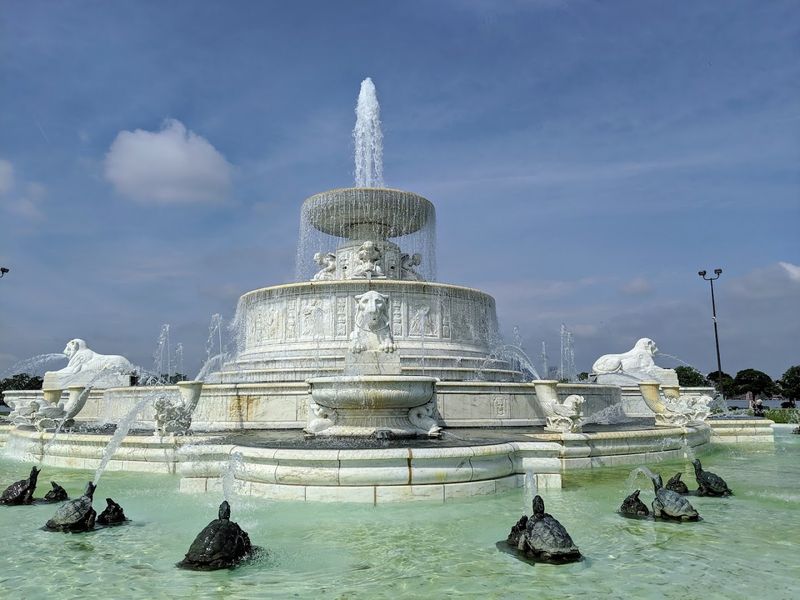
Sitting right in the middle of the Detroit River, Belle Isle is a 982-acre island park that punches way above its weight class for a free outdoor destination. Michigan residents with a Recreation Passport on their license plate get in without paying a separate entrance fee, making it one of the most accessible summer hangouts in the state.
The island has been a Detroit institution since the 1800s, and its mix of history, nature, and waterfront views still draws massive crowds every summer weekend.
The Anna Scripps Whitcomb Conservatory is a stunning domed greenhouse that’s free to enter and houses one of the oldest conservatory collections in the country. Walk through rooms filled with tropical plants, orchids, and towering palms while the summer heat hums outside — it’s a surprisingly refreshing midday stop.
The aquarium nearby is one of the oldest in the United States and charges only a small donation, making it a genuine steal for families.
Beyond the buildings, Belle Isle has beaches, picnic shelters, a nature center, fishing spots, and a beautiful stretch of shoreline where you can watch massive freighters cruise the Detroit River up close. The Scott Fountain at the center of the island is an architectural showpiece worth seeing, especially when it’s fully lit in the evening.
Cyclists, joggers, and rollerbladers loop the island’s perimeter road all summer long. For a full day of outdoor fun with zero major expenses, Belle Isle quietly outperforms a lot of destinations that charge significantly more for far less.
4. Sleeping Bear Dunes National Lakeshore
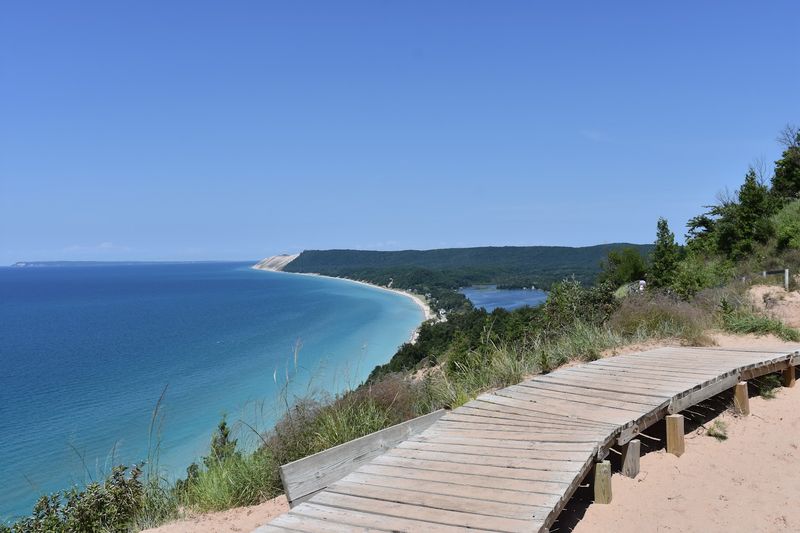
Good Morning America once called it the most beautiful place in America, and honestly, it’s hard to argue. Sleeping Bear Dunes National Lakeshore stretches along 35 miles of Lake Michigan shoreline in northern Michigan, offering a landscape so dramatic it feels almost unreal.
Towering sand dunes rise hundreds of feet above the lake, and the views from the top are the kind that make people go completely silent for a moment.
The Dune Climb is the park’s most iconic experience — a steep sandy slope that looks manageable from the bottom and feels like a full workout by the halfway point. Kids sprint up it like it’s nothing; adults discover muscles they forgot existed.
Getting to the top rewards you with a sweeping panorama of forest, dunes, and Lake Michigan that no photo ever quite captures. Entry into the national lakeshore requires a vehicle pass, which is very reasonably priced and valid for seven days.
Beyond the dunes, the park is loaded with hiking trails, crystal-clear inland lakes, quiet beaches, and charming nearby towns like Glen Arbor and Empire. The Pierce Stocking Scenic Drive is a 7.4-mile loop that hits the best overlooks with minimal effort, perfect for families or anyone who’d rather not tackle the climb.
Kayaking on the Platte River, swimming at Platte River Point, and exploring the North and South Manitou Islands by ferry are all options that extend your adventure without dramatically increasing costs. Sleeping Bear is the kind of place you visit once and spend years trying to get back to.
5. Marshall
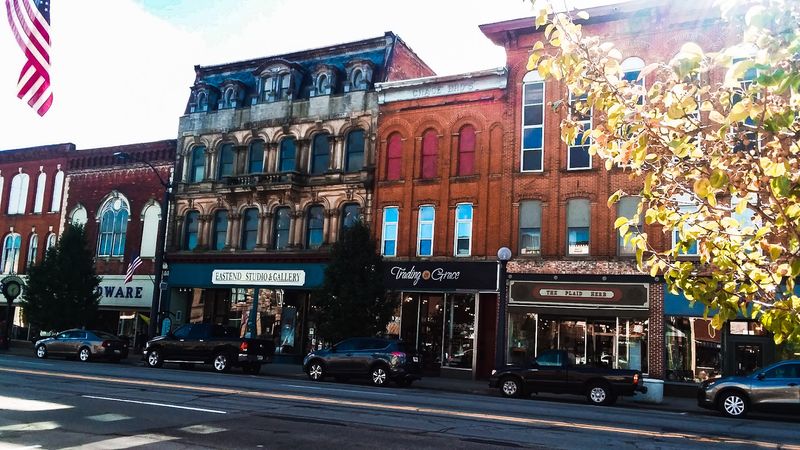
Marshall is the kind of small town that makes you slow down the moment you pull off the highway. Located in Calhoun County in southwest Michigan, this town of roughly 7,000 people has one of the most remarkably preserved collections of 19th-century architecture in the entire country.
The National Trust for Historic Preservation once called it a near-perfect example of a 19th-century American town, and walking its streets makes that title feel completely earned.
A self-guided walking tour through Marshall’s historic district is entirely free and takes you past more than 850 properties listed on the National Register of Historic Places. Greek Revival, Italianate, and Gothic Revival homes line the residential streets in such pristine condition that it genuinely feels like a movie set — except it’s real, and people actually live there.
The Honolulu House Museum is a standout oddity: a home built in 1860 by a former U.S. consul to Hawaii who tried to recreate a tropical mansion in Michigan, complete with a wraparound veranda and painted ceilings.
Downtown Marshall has independent shops, bakeries, and casual restaurants that are easy on the budget. The local diner scene is strong, and you can get a solid lunch without spending more than you would at a fast food chain.
The town also hosts seasonal events throughout summer that bring the streets to life with music, art, and community energy. Marshall sits conveniently along I-94, making it an easy and rewarding stop on a longer road trip across the state.
It’s the kind of place that rewards curiosity and slows your pace in the best possible way.
6. Warren Dunes State Park
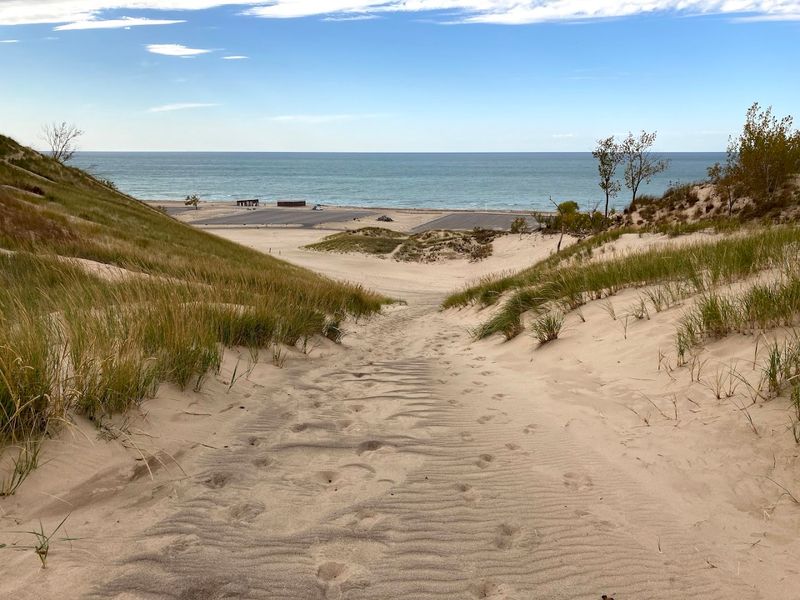
Southwest Michigan’s Warren Dunes State Park is the kind of place that becomes a summer ritual once you’ve been there. Located just a few miles from the Indiana border in Bridgman, it sits close enough to Chicago that it draws crowds from across the Midwest — but it earns that reputation honestly.
The park stretches over 1,900 acres, featuring three miles of Lake Michigan shoreline and dunes that climb as high as 240 feet above the water.
Tower Hill, the park’s tallest dune, is a rite of passage for first-time visitors. Climbing it requires serious effort, but the payoff at the top — a panoramic view of Lake Michigan and the surrounding forests — is absolutely worth the burning quads.
The descent is pure joy, especially if you run it. Kids and adults alike end up doing it multiple times before the day is over, which tells you everything you need to know about how fun it is.
The beach itself is wide, clean, and consistently rated among the best in the Midwest. On a clear summer day, the water takes on a shade of blue that surprises most visitors who assume Lake Michigan won’t compare to the ocean — it absolutely holds its own.
Beyond the beach, there are hiking trails through forested dunes and wetlands that offer a quieter, more reflective side of the park. Entry requires a Recreation Passport, which Michigan residents likely already have through their vehicle registration.
Camping is available for those who want to extend the experience into a full weekend. Warren Dunes delivers big-beach energy at a fraction of a coastal vacation’s cost.
7. Grand Haven
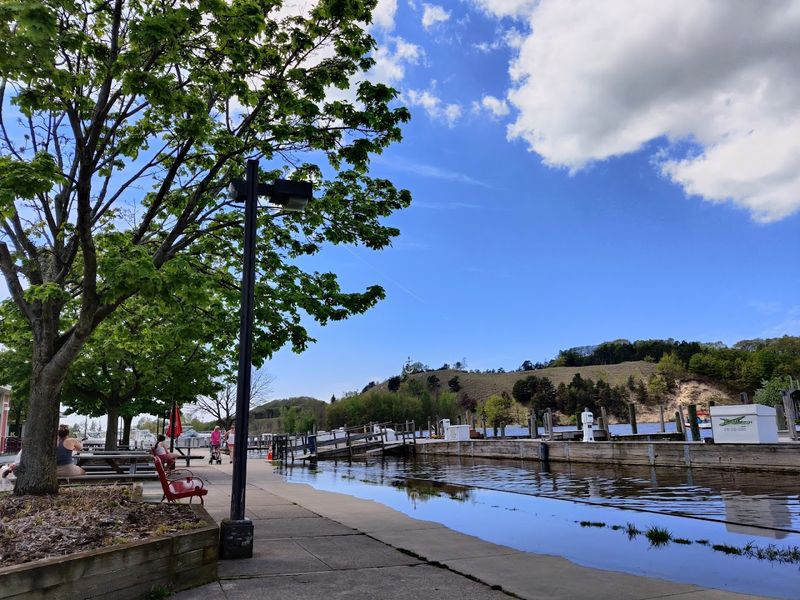
There’s a reason Grand Haven keeps showing up on every list of Michigan’s best beach towns — it’s simply one of the most enjoyable places to spend a summer day without spending a lot of money. The city sits at the mouth of the Grand River where it meets Lake Michigan, and that geography gives it a waterfront experience that’s hard to replicate.
A long, beautifully maintained boardwalk connects the downtown area to the beach, and walking it costs absolutely nothing.
The Grand Haven South Pier and its iconic red lighthouse are among the most photographed spots in Michigan. Walking the pier is free and gives you the sensation of being surrounded by water on both sides as Lake Michigan opens up in front of you.
The view back toward shore from the end of the pier, especially at golden hour, is genuinely stunning. Locals and tourists alike make a point of being on or near the pier at sunset, and it’s easy to see why.
Grand Haven State Park sits right at the beach and has a wide sandy shoreline that fills up on summer weekends. The Musical Fountain, one of the world’s largest synchronized water, light, and music shows, runs on summer evenings and is completely free to watch from Lynne Sherwood Waterfront Stadium.
It’s wonderfully cheesy in the best possible way and a genuine crowd-pleaser for all ages. The downtown strip has casual restaurants, ice cream spots, and shops that are fun to browse without pressure to buy.
Grand Haven proves that a full, satisfying summer day doesn’t require an expensive resort — just good water, good light, and the right town.
8. Hartwick Pines State Park near Frederic/Grayling
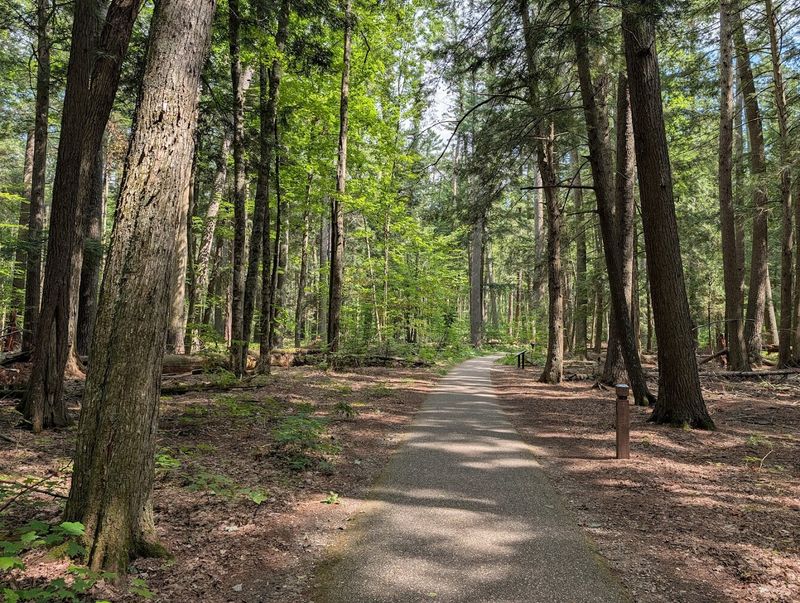
Standing beneath a 300-year-old white pine at Hartwick Pines puts everything in perspective pretty quickly. Located near Grayling in northern lower Michigan, this state park protects one of the last remaining old-growth white pine forests in the entire state — a rare and genuinely humbling thing to witness.
Most of Michigan’s ancient forests were logged out in the 1800s, which makes what remains here feel all the more precious and worth protecting.
The Old Growth Forest Trail is the centerpiece of the park, a 1.25-mile loop through trees so tall and wide they seem to belong to a different era. The forest floor is carpeted with ferns and soft light filters through a canopy that can reach 150 feet overhead.
It’s quiet in there — the kind of quiet that city dwellers forget exists. The Michigan Forest Visitor Center inside the park tells the story of the logging era through exhibits, artifacts, and a reconstructed logging camp that kids find surprisingly engaging.
Entry into Hartwick Pines requires a Recreation Passport, but beyond that, the experience is essentially free. There are additional hiking trails beyond the old-growth loop that wind through younger forest, wetlands, and along the East Branch of the Au Sable River.
Anglers come specifically for the Au Sable, which is legendary in Michigan fly-fishing circles. The campground is excellent for those who want to make a weekend of it, and the park’s proximity to Grayling means you have easy access to food and supplies without much detour.
Hartwick Pines is the kind of place that resets your brain and reminds you what Michigan is really made of.
9. Holland State Park
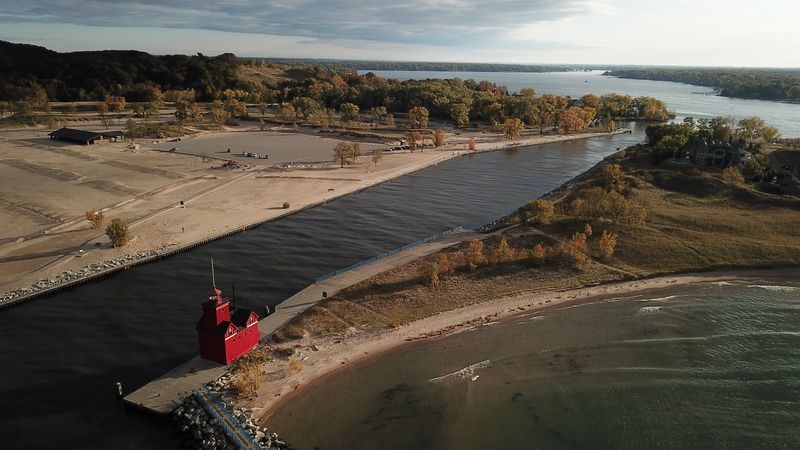
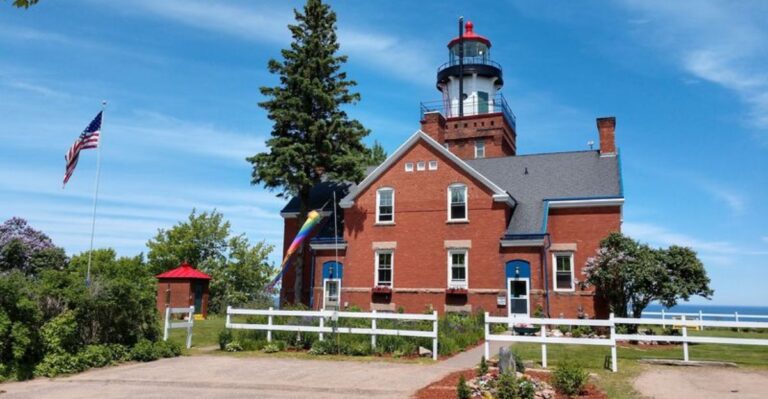
Holland State Park has one of the most recognizable views in all of Michigan — a wide, sandy beach with the famous Big Red lighthouse standing boldly at the end of the channel. That red lighthouse has been photographed millions of times, and yet it never gets old in person.
The park sits at the mouth of Lake Macatawa where it connects to Lake Michigan, giving visitors access to two distinct bodies of water within walking distance of each other.
The beach at Holland State Park is consistently ranked among the best freshwater beaches in the country, and a visit in peak summer makes that ranking easy to believe. The sand is soft, the water is typically clear, and the views stretch so far across the lake that on a calm day the horizon looks almost ocean-like.
Swimmers, paddleboarders, and kayakers share the water all summer long, and the energy on a sunny weekend is genuinely festive without being overwhelming.
Getting into the park requires a Recreation Passport, which remains one of the best deals in Michigan outdoor recreation. The nearby city of Holland adds significant value to a day trip — the downtown area is charming and walkable, with Dutch-inspired architecture, independent shops, and Tulip City’s famous flower culture visible even after peak tulip season.
Windmill Island Gardens is worth a small admission if you want to see a working authentic Dutch windmill up close. The Farmers Market in Holland runs through the summer and is an excellent spot to grab fresh produce and local snacks at very reasonable prices.
Holland State Park and the surrounding town make for a full, satisfying, and very affordable summer day.
10. Frankenmuth
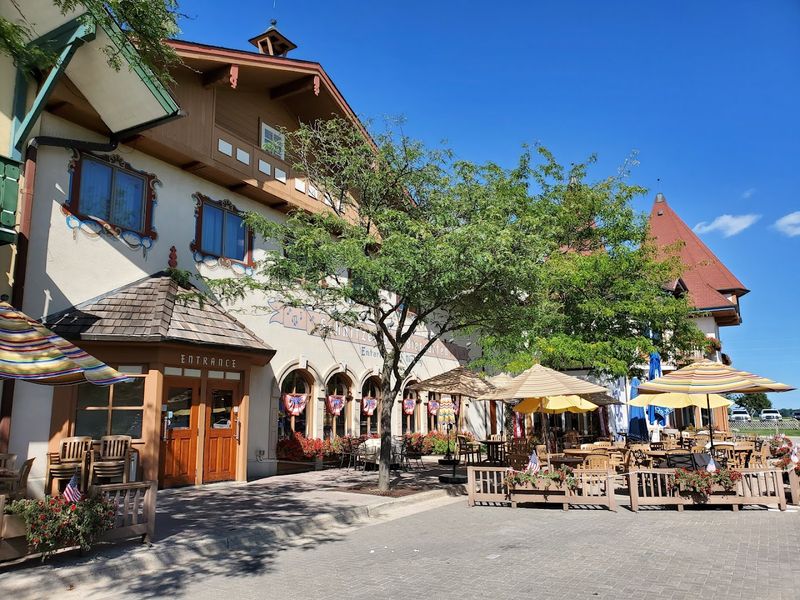
Frankenmuth calls itself Michigan’s Little Bavaria, and the moment you cross the Holz Brucke covered bridge over the Cass River, you start to understand why. This small town in Saginaw County has leaned hard into its German heritage since the mid-1800s, and the result is one of Michigan’s most distinctive and entertaining destinations.
Brick-paved streets, flower-covered balconies, and glockenspiel clock towers give the town a storybook quality that feels festive without being over-the-top.
Wandering Frankenmuth is free entertainment on its own. The architecture is genuinely interesting, the river walk is peaceful and well-maintained, and the Bavarian Festival atmosphere that permeates the town’s design makes even a casual stroll feel like an event.
Bronner’s Christmas Wonderland — the world’s largest Christmas store — is open year-round and free to enter, which makes it one of the most bizarre and delightful free attractions in the state. You don’t have to buy a single ornament to enjoy the spectacle of a 27-acre Christmas store operating in the middle of July.
Food is a big part of Frankenmuth’s identity, and while the famous all-you-can-eat chicken dinners at Zehnder’s or the Bavarian Inn can be a splurge, there are plenty of more casual and affordable eating options around town. The Frankenmuth Brewery has been operating since 1862, making it one of the oldest breweries in Michigan, and a stop there is a fun and affordable way to sample local craft beer.
Fudge shops, pretzel vendors, and ice cream stands keep snack costs manageable. Frankenmuth rewards visitors who wander slowly, look up at the architecture, and let the town’s quirky charm work on them gradually.
11. Pictured Rocks National Lakeshore
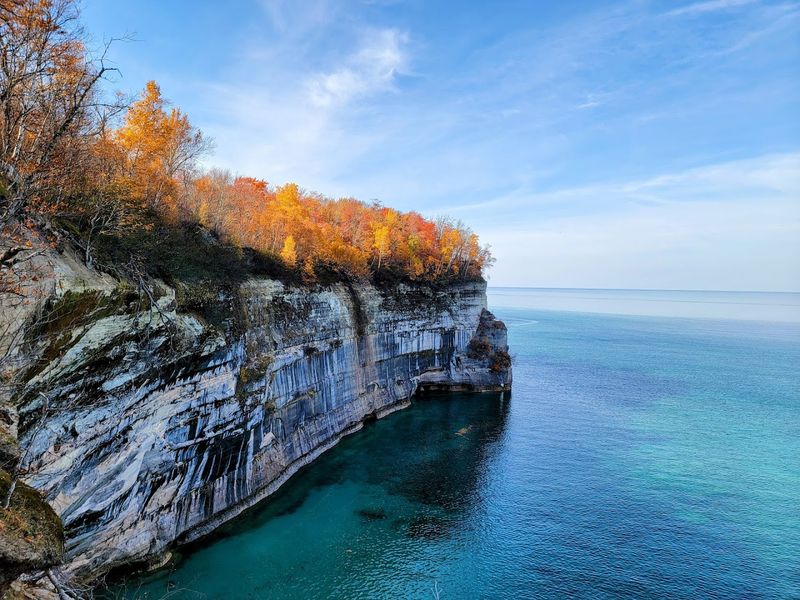
Few places in the Midwest can match the raw visual drama of Pictured Rocks National Lakeshore. Stretching 42 miles along the southern shore of Lake Superior in Michigan’s Upper Peninsula, this national lakeshore features mineral-stained sandstone cliffs that rise up to 200 feet straight out of the water in shades of red, orange, blue, and green.
It looks like someone painted the cliffs by hand, which is exactly how the park got its name.
Access to the park is free, which is remarkable given the scale of what you get. The Chapel Loop Trail is one of the most rewarding hikes in the Upper Peninsula, passing Chapel Falls, Chapel Rock, and Chapel Lake in a single loop that showcases the park’s incredible variety.
Miners Beach and Miners Castle are two of the most accessible highlights and require little more than a short walk from the parking area. The views of the castle-shaped rock formation jutting out over Lake Superior are the kind of images that stick with you for years.
Kayaking the base of the cliffs is widely considered one of the top outdoor experiences in all of Michigan, and several outfitters in Munising offer guided tours at reasonable prices. If kayaking isn’t your thing, boat tours from Munising provide a close-up view of the cliffs from the water at a fraction of the cost of a guided kayak trip.
The town of Munising itself is a great base camp — small, friendly, and loaded with affordable dining options. Pictured Rocks is a serious drive from most of Michigan’s population centers, but it’s one of those destinations that justifies every mile without question.
12. Kensington Metropark
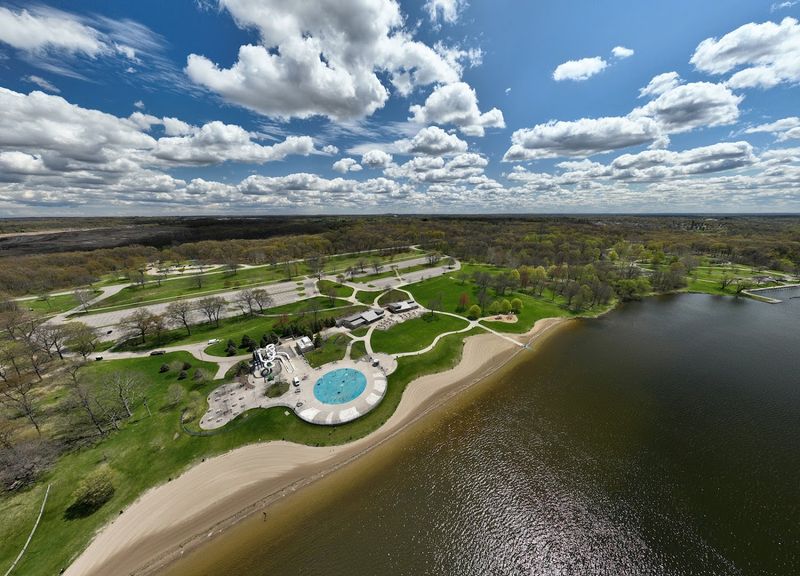
Kensington Metropark is the kind of place that Southeast Michigan residents grow up visiting and never fully outgrow. Located between Brighton and Milford in Livingston County, this 4,481-acre park is one of the most visited in the entire Huron-Clinton Metroparks system — and for good reason.
It packs a remarkable amount of outdoor activity into a single, well-maintained, and very accessible location. A vehicle entry fee applies, but it’s modest and covers everything inside the park.
Kent Lake is the park’s centerpiece, offering swimming, fishing, kayaking, canoeing, and paddleboard rentals at rates that won’t hurt your budget. The beach area is family-friendly and well-staffed, making it a popular choice for parents with young kids who want a safe, clean swimming spot without the chaos of a crowded public beach.
Boat rentals are available by the hour, and spending a couple of hours paddling around the lake on a summer afternoon is one of those simple pleasures that’s hard to put a price on.
The trail system at Kensington is excellent — paved paths loop around the lake and through forested areas, making it ideal for cyclists, joggers, and inline skaters. The Farm Center, a working farm within the park, is a hit with younger visitors who get to interact with animals and learn about agriculture in a hands-on way.
A nature center and a disc golf course round out the options for those who want variety in their day. Kensington also has a miniature golf course and boat launch for anglers.
It’s the rare park that genuinely has something for everyone, and the price of admission reflects that rare combination of quality and accessibility.
13. Tahquamenon Falls State Park
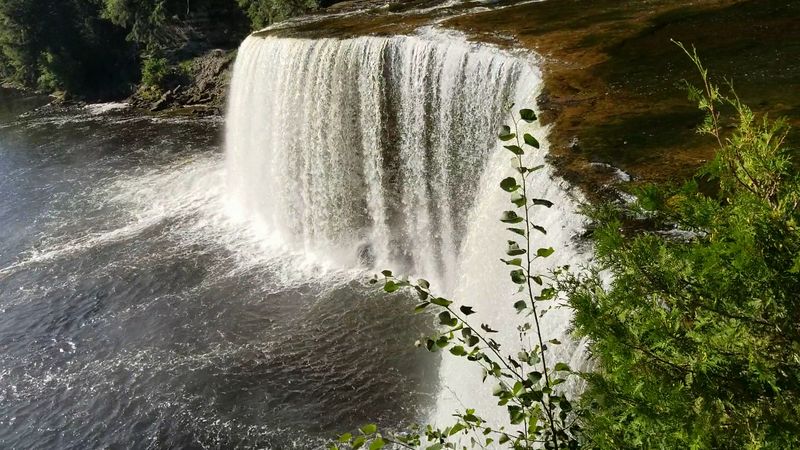
The Upper Tahquamenon Falls is the second largest waterfall east of the Mississippi River, and standing at the edge of it for the first time is a full-body experience. The water runs a deep amber color — a result of tannins leaching from the cedar swamps upstream — and the contrast between that rich golden-brown cascade and the surrounding green forest is something genuinely unlike anything else in the Midwest.
It’s dramatic, it’s loud, and it’s completely worth the drive to the eastern Upper Peninsula.
Tahquamenon Falls State Park is one of Michigan’s largest state parks, covering nearly 50,000 acres of boreal forest. Entry requires a Recreation Passport, but beyond that, the falls themselves are free to view from multiple platforms and overlooks along the trail.
The upper falls are easily accessible via a short, well-maintained trail from the parking area, making them viewable for visitors of all mobility levels. The lower falls, located about four miles downstream, offer a different experience — a series of smaller cascades spread around a river island that you can reach by renting a rowboat from the park concession.
The rowboat rental to reach the lower falls is one of the best budget-friendly experiences in the entire state park system — a few dollars gets your whole group across to an island surrounded by rushing water. The park’s trail system extends far beyond the falls into remote forest where black bears, wolves, and moose have all been spotted.
The nearby town of Paradise (yes, that’s really its name) has a handful of casual restaurants and shops where you can grab a meal without much expense. Tahquamenon Falls earns its reputation as one of Michigan’s crown jewels every single time.
Share this story