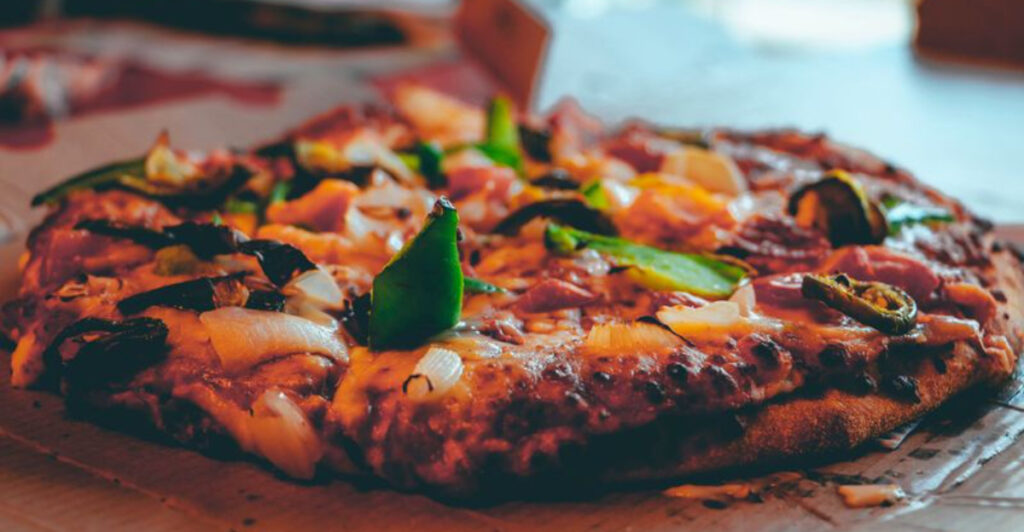
A coal-blackened crust slides from a century-old oven in Elizabeth. A few counties away, tomato sauce lands on top of the cheese in the gloriously backward order that defines a Trenton tomato pie.
Down the Shore, an impossibly thin pizza arrives beside a cold drink and the promise of a T-shirt if you can finish the whole thing. New Jersey does not have one signature pizza style, and that is exactly what makes eating your way across the state so rewarding.
Its pizza identity has been shaped by immigrant families, neighborhood taverns, boardwalk counters, old bread ovens, ambitious chefs, and regulars who know precisely how well-done they want their crust.
Some of these places have been feeding the same communities for generations; others are writing a fresh chapter with local grains, sourdough starters, and seasonal toppings.
Together, these 13 pizzerias show how much Garden State history, personality, and friendly argument can fit inside a cardboard box.
1. Razza Pizza Artigianale – Jersey City
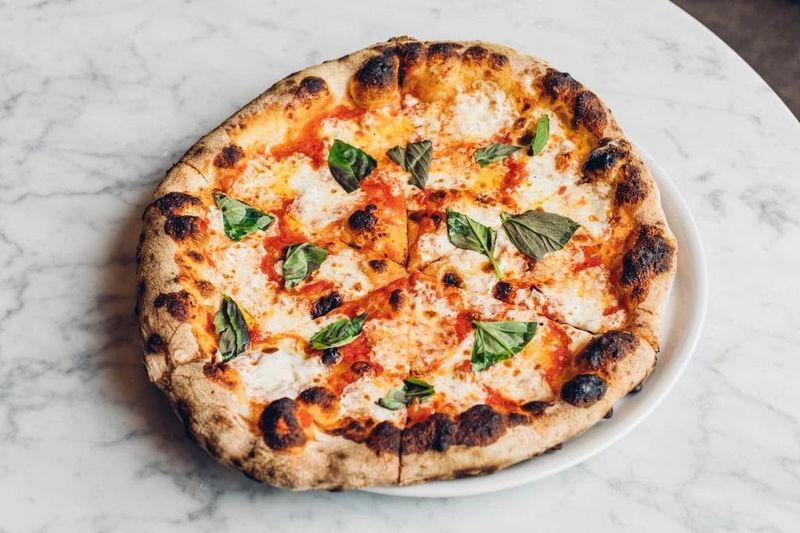
The dough receives the sort of attention normally reserved for a tasting menu, yet the finished pizza never feels fussy. Chef Dan Richer’s Jersey City restaurant is built around a simple idea: every component should taste exceptional before it becomes part of a pie.
Flour, fermentation, tomatoes, cheese, salt, and olive oil are considered individually, then brought together in a wood-fired oven that leaves the crust blistered, airy, and pleasantly chewy. The Margherita is the clearest introduction because there is nowhere for weak ingredients to hide.
Tomato, fresh mozzarella, basil, and a properly fermented crust do all the talking. The Bread and Butter appetizer is also worth ordering, especially if you want to understand how seriously the kitchen takes grain and dairy.
Seasonal pizzas may bring locally grown produce or unexpected combinations, but they are composed with restraint rather than piled high for attention. Razza sits on Grove Street in downtown Jersey City, close to the PATH, making it one of the easiest destination dinners in the state for anyone arriving by train.
Reservations are a smart move, particularly on Friday and Saturday evenings, when the dining room fills quickly. The polished space, open kitchen, and serious cocktail list make it feel more like a full evening out than a quick slice stop.
Still, once the first pie lands, the experience becomes unmistakably Jersey: excellent pizza in the middle of a busy neighborhood, surrounded by people already debating what to order next.
2. Star Tavern – Orange
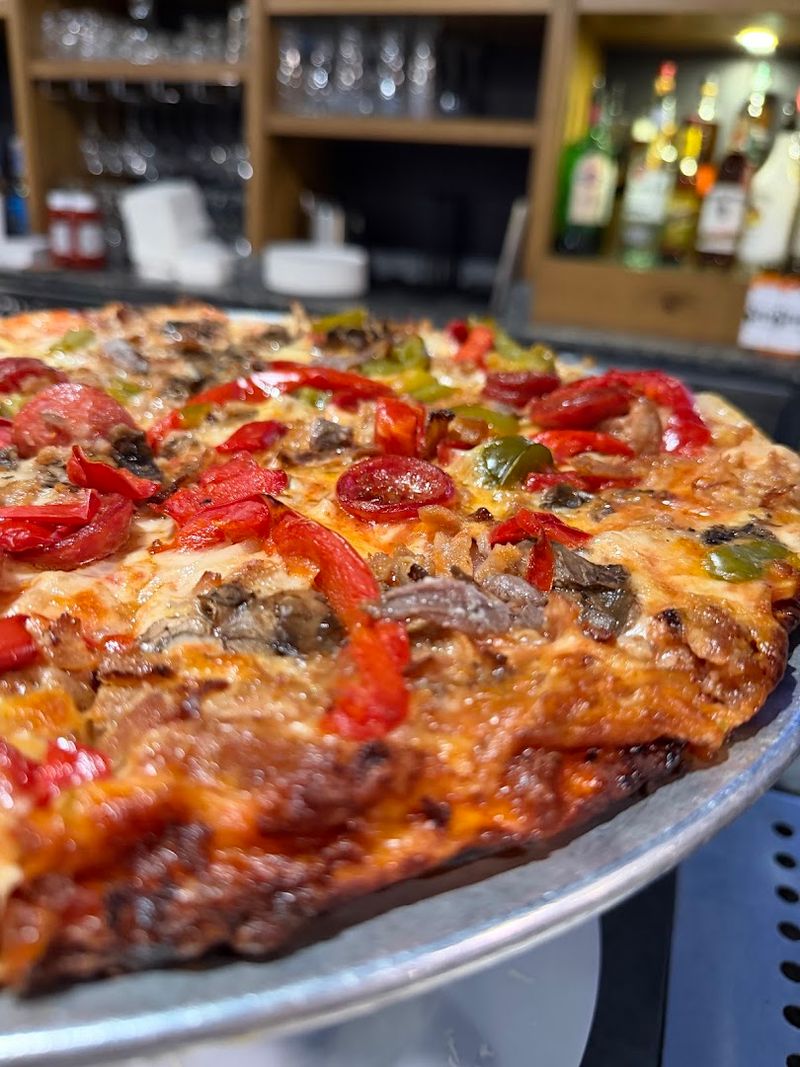
A plain pie at this Orange institution arrives thin, crisp, and covered edge to edge with sauce and cheese. There is barely any outer rim to abandon on the plate, which means every bite delivers the same satisfying combination of browned mozzarella, tangy tomato, and cracker-like crust.
That consistency has made Star Tavern a defining stop in North Jersey’s bar-pie tradition. The business dates to 1945, and locals simply call it “The Star,” as if no further explanation could possibly be necessary.
First-timers should begin with a regular pie and add sausage, pepperoni, hot peppers, or mushrooms only if the temptation proves overwhelming. The kitchen offers specialty combinations, including white clam and an “Old School Everything,” but the plain pizza explains the loyal following more clearly than anything else.
It is sized for sharing in theory, although two hungry people can make one disappear with alarming speed. The room feels like a neighborhood tavern because that is precisely what it is, with a full bar, close-set tables, and generations of customers who have their orders down before they sit.
Families mix with longtime regulars, and takeout traffic keeps the front door moving throughout dinner. Parking around High Street can require a little patience during peak hours, so arriving early is rarely a bad idea.
Star Tavern captures a particularly Jersey form of confidence: keep the crust thin, cook it until crisp, and trust that a great plain pie does not need a speech.
3. Kinchley’s Tavern – Ramsey
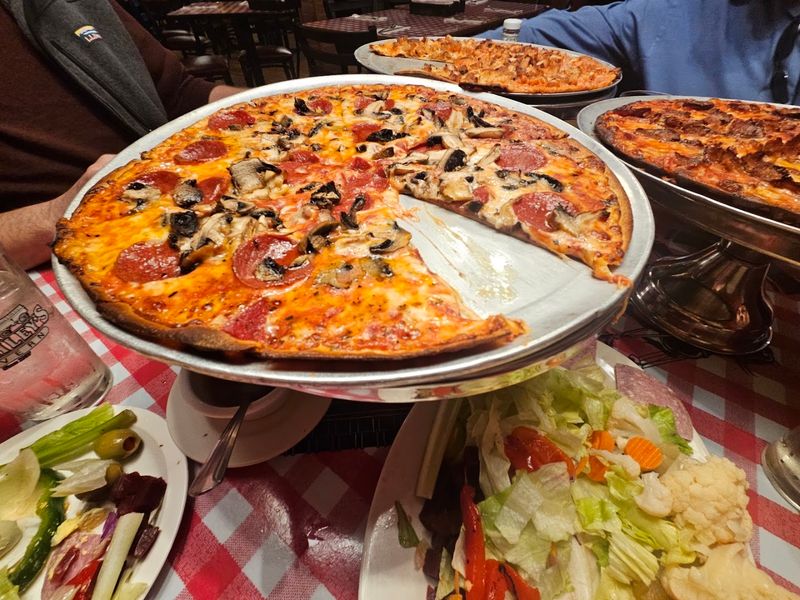
Look for the horse on the roof. That wonderfully odd landmark has been guiding pizza seekers to this Ramsey tavern for decades, and the interior is every bit as memorable.
Wood paneling, old booths, glowing beer signs, and model trains create the impression that someone turned a beloved family rec room into a restaurant and wisely refused to modernize it. Kinchley’s has been a local fixture since 1937, but pizza is the reason tables remain packed.
Its ultra-thin pies have a brittle, almost cracker-like base that stays crisp beneath the sauce and cheese. The regular tomato sauce leans slightly sweet, while the Fra Diavolo version brings a sharper kick for diners who prefer heat.
A plain pie is the logical starting point, followed by sausage or pepperoni if the table can manage a second round. Because the pizzas are thin and roughly personal-sized for an enthusiastic eater, ordering one more than seems sensible often turns out to be exactly right.
The tavern serves a broader Italian-American menu and keeps rotating beers on tap, but pizza remains the center of gravity. Reservations are strongly recommended, even for smaller groups, especially on weekend evenings.
Kinchley’s is also famously cash-only, though there is an ATM on the premises, so plan accordingly. Nothing about the experience has been engineered for nostalgia, and that is why it works.
The quirky roof ornament, miniature trains, worn-in dining room, and shatteringly crisp crust all feel like genuine pieces of Bergen County tradition rather than decorations chosen to imitate it.
4. Papa’s Tomato Pies – Robbinsville
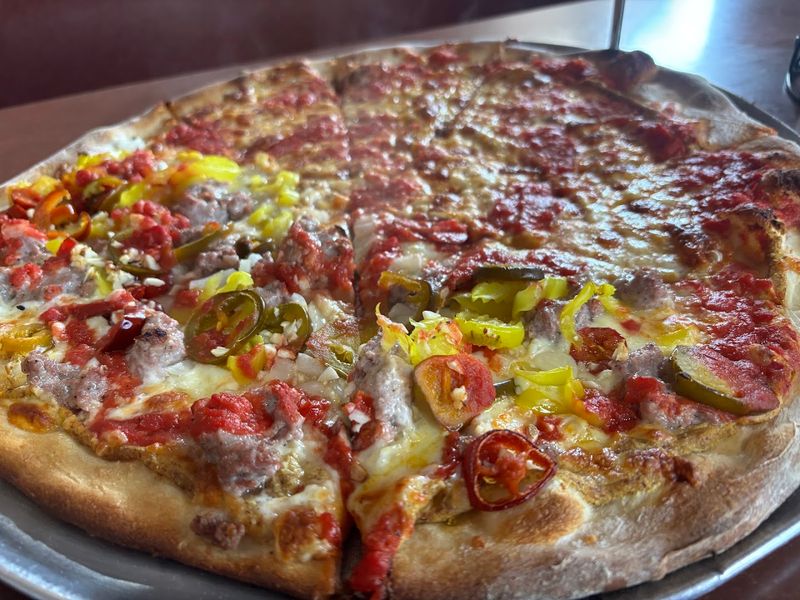
Cheese first, tomato second, and mustard underneath if you are feeling properly adventurous: Papa’s turns the usual pizza blueprint inside out. Founded in Trenton in 1912 and now located in Robbinsville, it is recognized as the oldest continuously family-owned pizza restaurant in the United States.
That lineage would be impressive even if the pies were merely decent. Fortunately, more than a century of repetition has produced a tomato pie with a thin, well-done crust, mellow cheese, and bright crushed tomato spread across the top in irregular patches.
The reverse layering keeps the sauce vivid instead of burying it beneath the mozzarella. Order the classic plain pie to appreciate the style, then try the mustard pie that has become the restaurant’s calling card.
A thin layer of spicy brown mustard goes directly onto the dough before the cheese and tomato are added. It sounds like a stunt until the tangy mustard cuts through the richness and suddenly makes perfect sense.
Sausage is a particularly good addition, although pork roll offers an even more New Jersey-specific direction. Papa’s is a casual, family-friendly restaurant with a full Italian-American menu, but ordering too many appetizers can interfere with the main mission.
The Robbinsville location offers dine-in service, takeout, and delivery, and it is BYOB for those settling in at a table. Pies normally arrive well-done with a little char, so speak up if you prefer a softer bake.
For everyone else, let the edges darken and enjoy a piece of living pizza history.
5. De Lorenzo’s Tomato Pies – Robbinsville
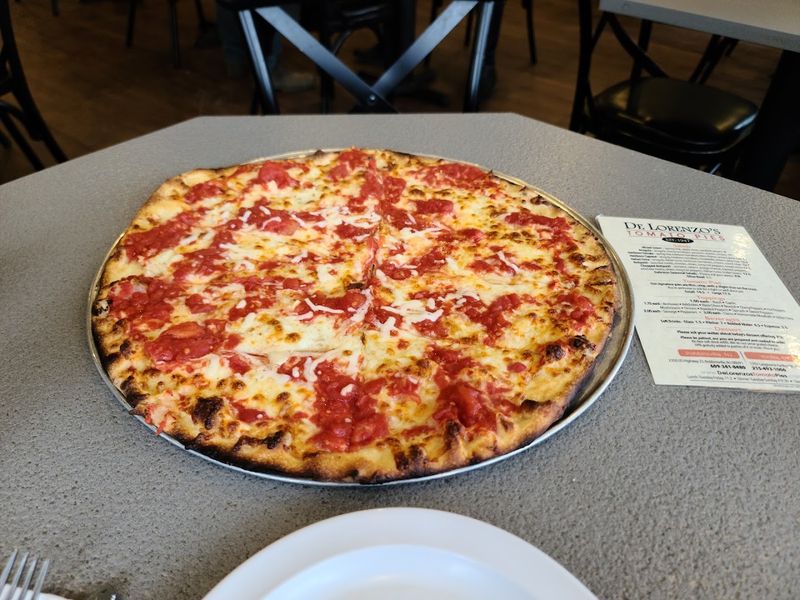
The scattered patches of tomato on a De Lorenzo’s pie are not a finishing flourish; they are the main event. Whole tomatoes are crushed for a sauce that tastes fresh, lightly sweet, and assertive enough to remain the dominant flavor after a trip through the oven.
Mozzarella sits beneath it, following the classic Trenton tomato-pie method, while the thin crust develops dark blisters and crisp edges. Alexander “Chick” De Lorenzo opened his own restaurant in Trenton’s Chambersburg neighborhood in 1947, building on a family pizza tradition that began during the previous decade.
The original Hudson Street dining room closed in 2012, but the Robbinsville location, opened by Chick’s grandson Sam Amico in 2007, keeps that legacy moving forward. A plain tomato pie is essential on a first visit.
From there, sausage, mushrooms, pepperoni, or sweet peppers fit naturally without smothering the sauce. The clam pie is another longtime favorite for diners who appreciate a briny counterpoint to the crust.
De Lorenzo’s feels more spacious and polished than the famously compact Trenton original, yet the focus remains refreshingly narrow. People come to eat tomato pies, compare the charred pieces, and negotiate over the final slice.
Its Robbinsville address places it within easy reach of Papa’s, creating the possibility of a highly opinionated two-stop pizza outing. That comparison is practically a Central Jersey rite, but there is no need to declare a winner.
De Lorenzo’s earns its place through generations of consistency and a sauce-forward pie that could only have come from the Trenton area.
6. DeLucia’s Brick Oven Pizza – Raritan
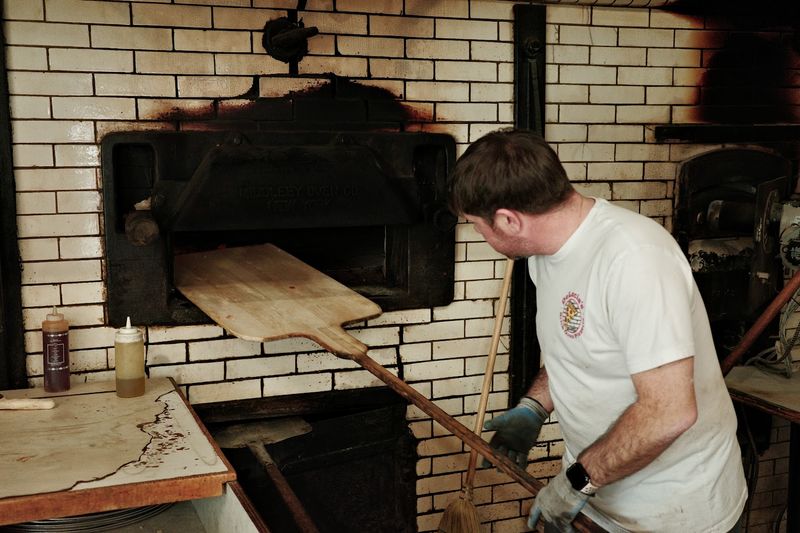
Before the first pie is ordered, there is one important fact to understand: the oven sets the pace. DeLucia’s uses the original brick oven installed for the family’s Raritan bread bakery, which Italian immigrant Costanio DeLucia opened in 1917.
Pizza joined the operation in the 1930s, and by the early 1950s demand had transformed the bakery into an all-pizza business. More than a century after the oven began working, the family still relies on its stored heat to bake thin pies with crisp bottoms, charred bubbles, and an earthy flavor that newer equipment cannot easily duplicate.
The plain cheese pizza is the right first order because it shows off the crust and balanced sauce without distraction. Sausage, pepperoni, anchovies, onions, and peppers are available for traditionalists who want to build from there.
The dining room is small and unpretentious, keeping the experience close to its neighborhood-bakery roots. Popularity, however, has made planning essential.
DeLucia’s reaches its maximum pizza capacity regularly, and wait times can stretch for hours on high-demand days. Travelers coming from a distance should call during business hours as early as possible, while walk-in customers have the best odds near opening.
Operating hours are divided between lunch and dinner on several weekdays, and the shop can close once it sells out. That scarcity is not manufactured hype; a historic oven can produce only so many pies.
Secure a time, arrive hungry, and let Raritan’s most famous piece of equipment handle the rest.
7. Santillo’s Brick Oven Pizza – Elizabeth
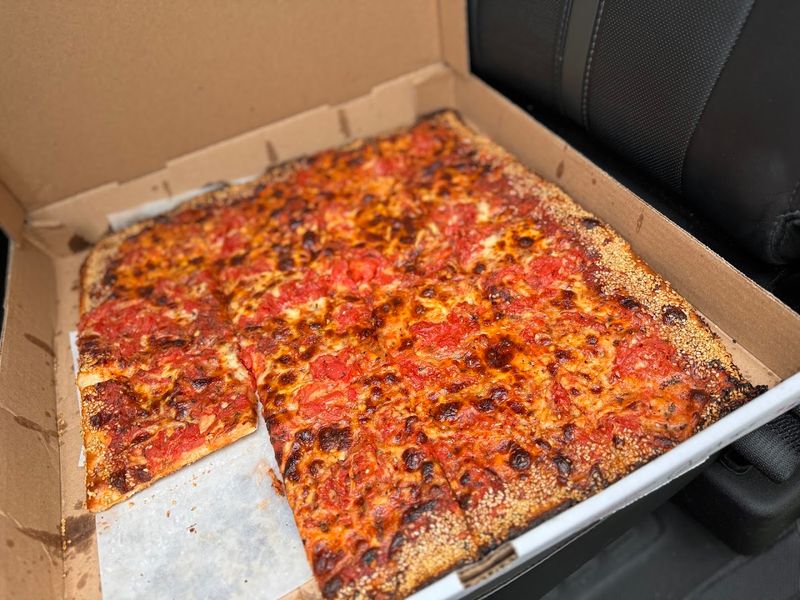
Ordering at Santillo’s can feel like choosing a year from a pizza history book. Some pies are named for the eras and preparation styles they represent, giving customers a chance to move between thin, crisp midcentury versions and thicker, more old-fashioned builds without leaving Elizabeth.
The family’s baking history stretches back to the early 1900s, and Al Santillo continues the tradition using a brick oven that has become nearly as famous as the man operating it. This is not a polished dining-room experience.
Santillo’s is primarily a takeout operation, tucked behind a residential-looking property on South Broad Street, with the focus placed squarely on dough, sauce, cheese, and fire.
Begin with the 1957 Style pizza if an extra-thin, crisp crust sounds appealing, or go further back with a tomato-forward pie that emphasizes rich sauce and olive oil.
Sicilian versions bring a thicker, airy base with beautifully browned edges, while the round pies can be cooked a little longer for anyone who prizes crunch. Al is known for adjusting the bake to the pizza and even considering how a pie will hold up inside its box.
Calling ahead is the sensible approach, since hours and availability can vary and each order receives hands-on attention. The reward is pizza with a personality as strong as its maker.
Santillo’s does not capture New Jersey through slick branding or carefully staged nostalgia. It does so through an old oven, a family craft, and the conviction that every decade deserves its own crust.
8. Conte’s Pizza – Princeton
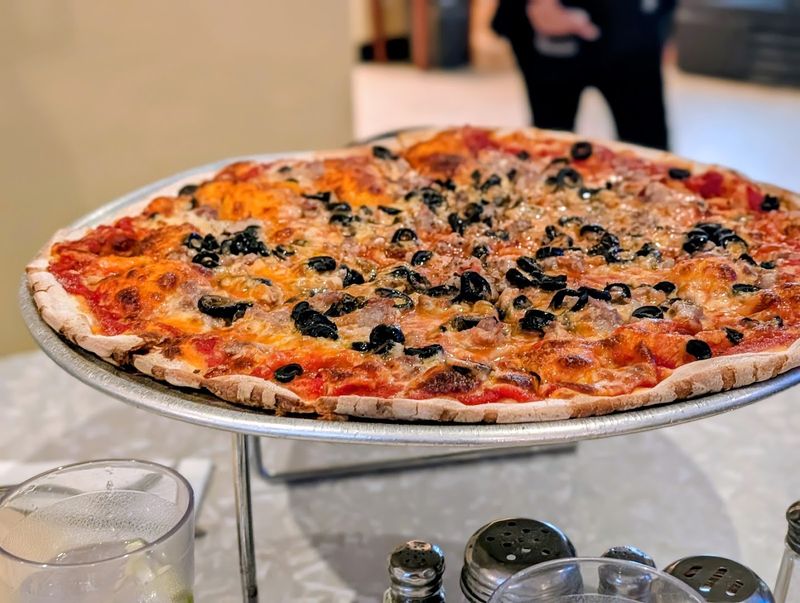
White-topped tables from the 1950s still fill the dining room, and they suit the pizza perfectly. Conte’s is not interested in turning its history into a museum exhibit; it simply continues using the room much as generations of Princeton diners remember it.
Sebastiano Conte opened the Witherspoon Bar at this address in 1936, replacing outdoor bocce courts with a pizza restaurant in 1950 because local residents otherwise had to travel too far to find a pie. That decision made Conte’s the first place to sell pizza in Princeton.
The house style is thin, crisp, and straightforward, with a sturdy base that carries tomato sauce and browned cheese without collapsing. Start with a plain pie or add sausage, pepperoni, mushrooms, onions, or anchovies.
Toppings are distributed generously, but the kitchen does not bury the crust beneath elaborate combinations. The menu extends into salads, pasta, and familiar Italian-American dishes, though regulars know that pizza and a cold drink are the essential pairing.
Conte’s occupies a residential stretch of Witherspoon Street away from Princeton’s busiest downtown blocks, and on-site parking makes the visit easier than many trips into town. Inside, the long bar and vintage dining room encourage lingering rather than grabbing a slice and rushing out.
The place has served students, families, construction workers, professors, and neighborhood regulars across multiple eras. Its importance is not just that it introduced Princeton to pizza.
It is that the same unfussy, crisp-edged pie still feels completely at home there more than 75 years later.
9. Federici’s Family Restaurant – Freehold
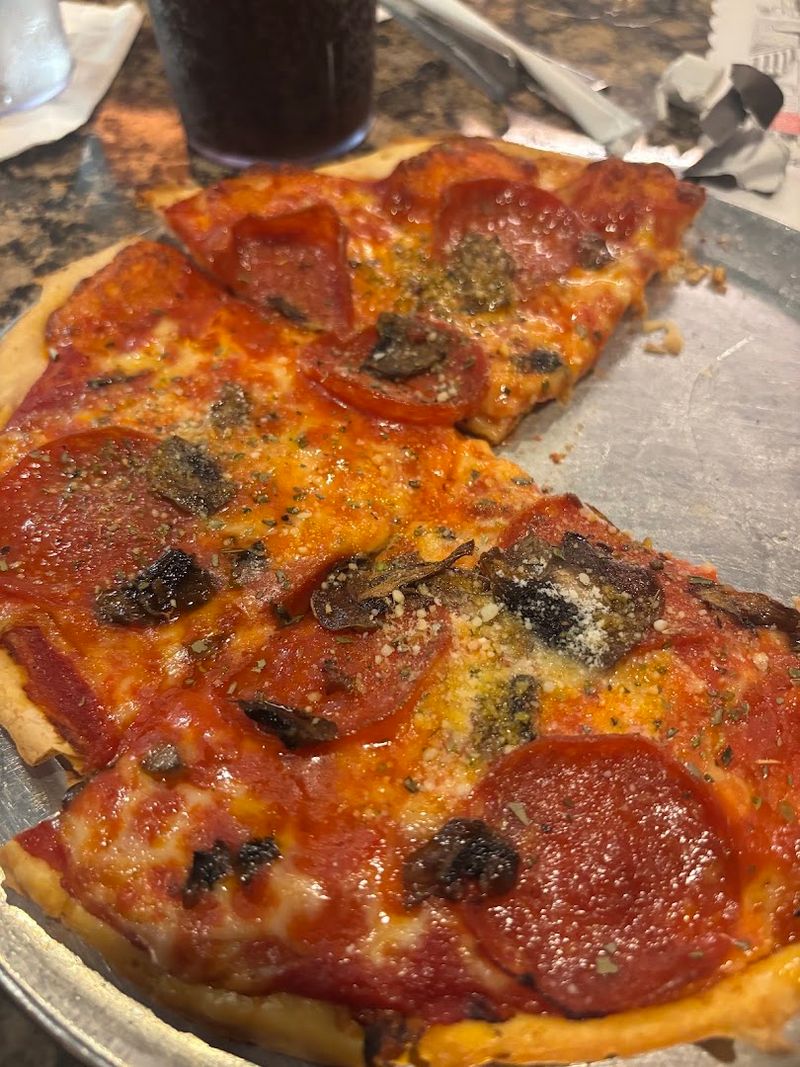
Four generations of Freehold memories have accumulated around the thin pies at this East Main Street landmark. The Federici family took over the business in 1921, and brothers Frank and Dante helped establish its signature brick-oven pizza in 1946.
What arrives today is exceptionally thin, crisp enough to snap at the edges, and cut into small squares that encourage the table to keep reaching until nothing remains but crumbs. A plain pie demonstrates the appeal, balancing a light layer of sauce with browned cheese and a crust that never becomes heavy.
Sausage is the classic addition, while anchovies, mushrooms, pepperoni, peppers, and onions keep things rooted in the old neighborhood-pizzeria playbook.
Federici’s is a full Italian restaurant rather than a bare-bones pizza counter, so meatballs, baked pasta, chicken dishes, and homemade desserts can turn a quick pie into a complete family dinner.
The building has the comfortable density of a place that has expanded and evolved over many decades, with framed history sharing space with everyday restaurant bustle. Sidewalk seating adds another option in pleasant weather, right in the middle of downtown Freehold.
Reservations are generally accepted for larger parties, while smaller groups should expect to wait during busy weekend periods. Parking is available in the Market Yard lot behind the restaurant, with fees applying at certain evening times later in the week.
Federici’s feels inseparable from Freehold because it has fed the town for more than a century. The pizza is not preserved out of obligation; it remains because crisp, square-cut slices still disappear as quickly as ever.
10. Pete & Elda’s Bar / Carmen’s Pizzeria – Neptune City
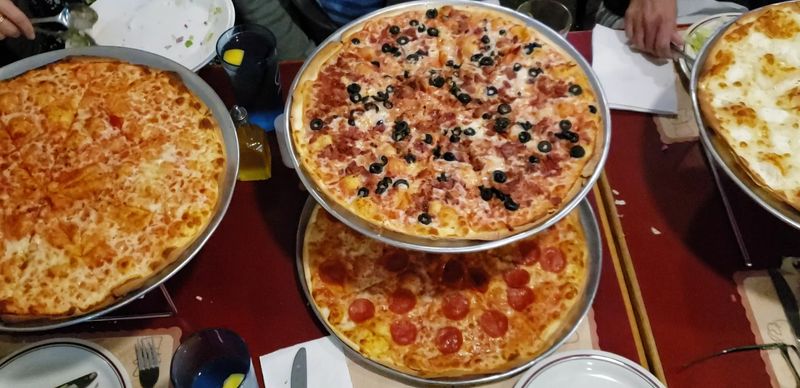
The Whole Pie Eater Challenge has a wonderfully simple premise: finish an 18-inch XXL pizza by yourself within 30 minutes and earn a T-shirt. Plenty of diners come to Neptune City determined to join the club, but the challenge works only because the pizza is famously thin.
Carmen’s crust is stretched until it approaches cracker territory, then baked with a blanket of sauce and cheese that reaches close to the edge. The result is crisp, light, and dangerously easy to keep eating.
A plain pie is the local standard, although pepperoni, sausage, hot peppers, and anchovies all work well on the delicate base. Ordering it well-done adds another degree of crunch for diners who believe pizza should make a little noise.
The double name reflects the restaurant’s history: Pete and Elda operated the bar, while Carmen Andretta became associated with the pizzeria, creating a partnership that remains stamped on the business decades later.
Today, the place combines a full bar, family dining room, extensive Italian-American menu, and a steady stream of takeout orders.
Friday and Saturday hours run later than most traditional pizzerias, making it a reliable post-beach or post-show stop near Asbury Park. The room can get busy and boisterous around dinner, especially when someone attempts the challenge and nearby tables begin following the progress.
You do not need to chase a shirt to enjoy the place, though. Share a pie, order another when it vanishes, and participate in a Shore ritual that does not require sand between your toes.
11. Talula’s – Asbury Park
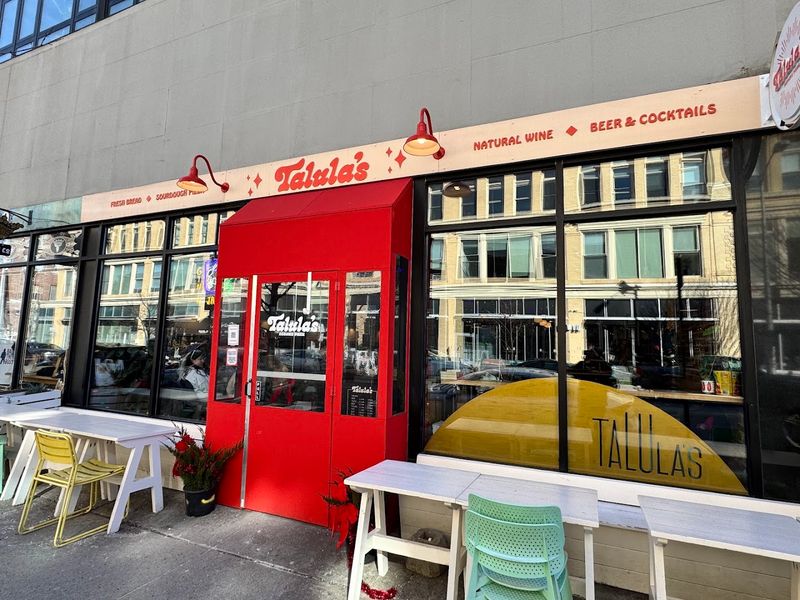
Sourdough gives the crust here a personality all its own: puffy at the rim, lightly tangy through the center, and blistered by the wood-burning oven.
Owners Steve and Shanti Mignogna began experimenting with pizza around a backyard oven before opening Talula’s in downtown Asbury Park, and that handcrafted spirit remains visible in the menu.
Dough, sauces, ice cream, and several cheeses are made in-house, allowing the kitchen to create pizzas that feel cohesive even when the toppings move beyond tradition. The Margie, with tomato sauce, fresh mozzarella, basil, and olive oil, is the best measure of the crust.
For something bolder, the Beekeeper’s Lament pairs soppressata with hot honey, creating a sweet-spicy combination that has become a modern pizza staple for good reason.
Seasonal pies may feature local vegetables, herbs, or ingredients that appear only briefly, so checking the current menu can uncover the most interesting order.
Talula’s also treats vegan diners as part of the audience rather than an afterthought, offering house-made plant-based cheeses and thoughtfully constructed pies. The airy Cookman Avenue space has communal energy without feeling chaotic, and the bar pours cocktails, wine, and beer chosen to suit the food.
Weekend brunch brings another version of the restaurant, but dinner is when the oven takes center stage. Reservations are useful during busy evenings, particularly when Asbury Park is crowded for concerts or summer events.
Talula’s represents New Jersey pizza in the present tense: rooted in careful fermentation and neighborhood hospitality, yet confident enough to keep inventing.
12. Maruca’s Tomato Pies – Seaside Heights
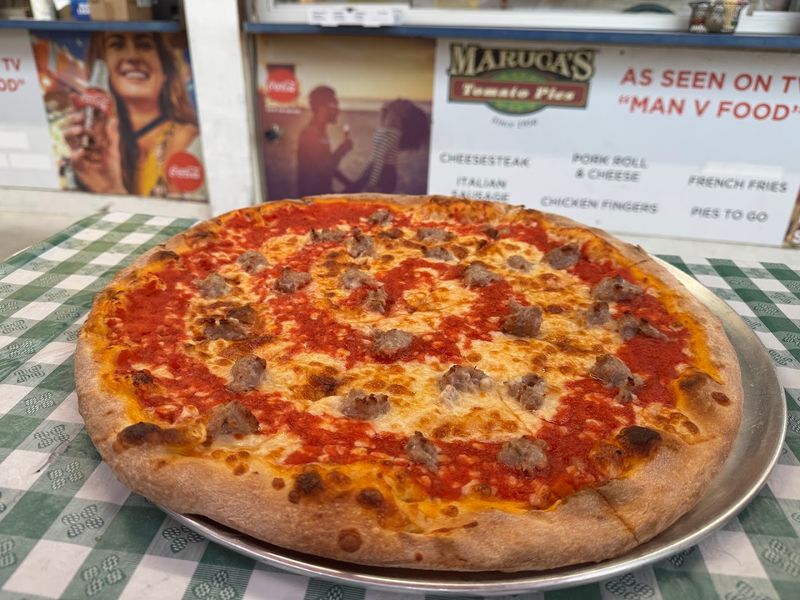
Few pizza sights announce the Jersey Shore as clearly as red sauce spiraled over melted cheese on an enormous boardwalk pie. Maruca’s has been serving its distinctive tomato pies since 1950, becoming part of the Seaside Heights experience alongside arcade bells, ocean wind, and the wooden planks underfoot.
The pizza is thin but pliable, with enough structure to handle a generous slice while still inviting the classic fold. Mozzarella goes down beneath the tomato sauce, which is applied in a visible swirl that gives each bite a slightly different balance of cheese and tangy red sauce.
A plain slice is the essential order because it delivers the style in its purest form. Whole pies come in several sizes, including an attention-commanding 24-inch version suited to a hungry group.
The Maruca’s Deluxe adds sausage, pepperoni, mushrooms, peppers, and onions, but loading up on toppings can distract from the sauce pattern that makes the pizza distinctive. Boardwalk seating keeps the meal casual, and slices make it easy to stop without interrupting an afternoon of beach time or rides.
Summer weekends naturally bring lines, though turnover is usually brisk as customers grab trays and move along. There are additional Maruca’s locations, but the Seaside Heights boardwalk shop supplies the full sensory package.
This is not pizza that happens to be near the Shore. It tastes connected to the place—portable, unfussy, instantly recognizable, and best eaten while gulls watch your table with professional concentration.
13. Bricco Coal Fired Pizza – Westmont
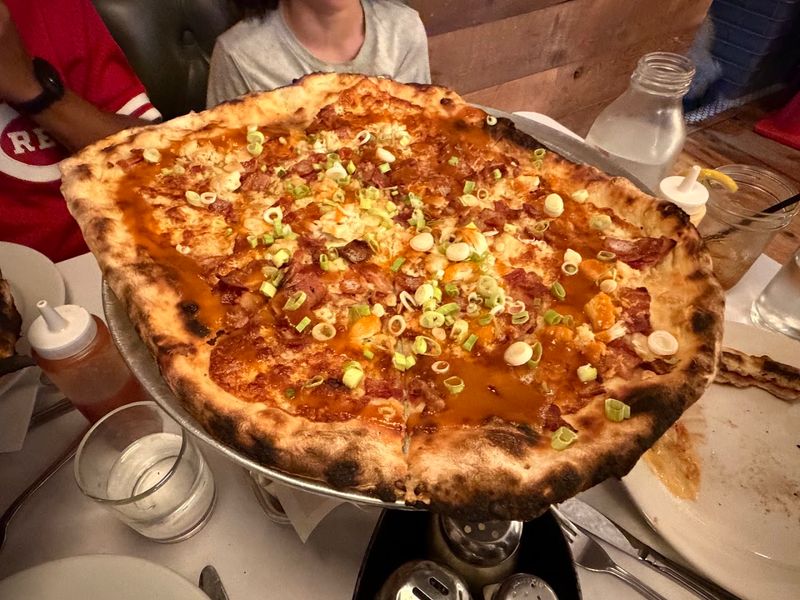
At roughly 1,000 degrees, patience is measured in minutes rather than hours. Bricco’s coal-fired oven gives each pie a crisp underside, chewy interior, and dark char around the rim, producing a style that feels right at home in South Jersey even though its roots reach toward the old coal-oven pizzerias of the Northeast.
The Westmont restaurant opened in 2014 with Vincenzo Barone drawing on a family background in the regional restaurant business. Long-fermented dough and carefully chosen tomatoes provide the foundation, while the open kitchen keeps the glowing oven in view.
The basic Bricco pie—tomato and mozzarella—is the smart starting point. Its simplicity allows the smoky crust to register before the menu’s more elaborate combinations begin competing for attention.
The Stinger adds spicy soppressata, honey, basil, and mint, while the Funghi Mista layers seasonal mushrooms with black truffle cream and pecorino. Coal-fired wings, roasted at the same fierce temperature, make a fitting appetizer without pulling the meal away from the oven.
The dining room on Haddon Avenue is warm and modern, with enough polish for a night out but none of the stiffness that can creep into chef-driven pizza restaurants. Bricco offers both 12- and 16-inch pies, plus a gluten-free crust in the smaller size.
Parking can take some scouting along the busy Westmont corridor, especially at dinner, but the location is convenient to the neighborhood’s bars and PATCO station. Bricco closes the list by proving New Jersey pizza tradition is not frozen in time.
It keeps absorbing techniques, adapting them, and making them taste local.
Share this story