Michigan is one of those states that genuinely surprises you every time you visit. From roaring waterfalls and towering sand dunes to crystal-clear springs and remote island escapes, the Great Lakes State packs more natural beauty into one place than most people realize.
Whether you’re planning a summer road trip or a fall foliage adventure, these 16 spots deserve a top spot on your 2026 travel list. Pack your camera, lace up your hiking boots, and get ready to see Michigan in a whole new way.
1. Keweenaw Peninsula
Jutting into the icy waters of Lake Superior like a rugged fist, the Keweenaw Peninsula is Michigan’s most remote and rewarding destination. It sits at the very tip of the Upper Peninsula, and getting there is half the adventure.
The drive alone through dense forests and old mining towns tells you that you’re entering a place with serious character.
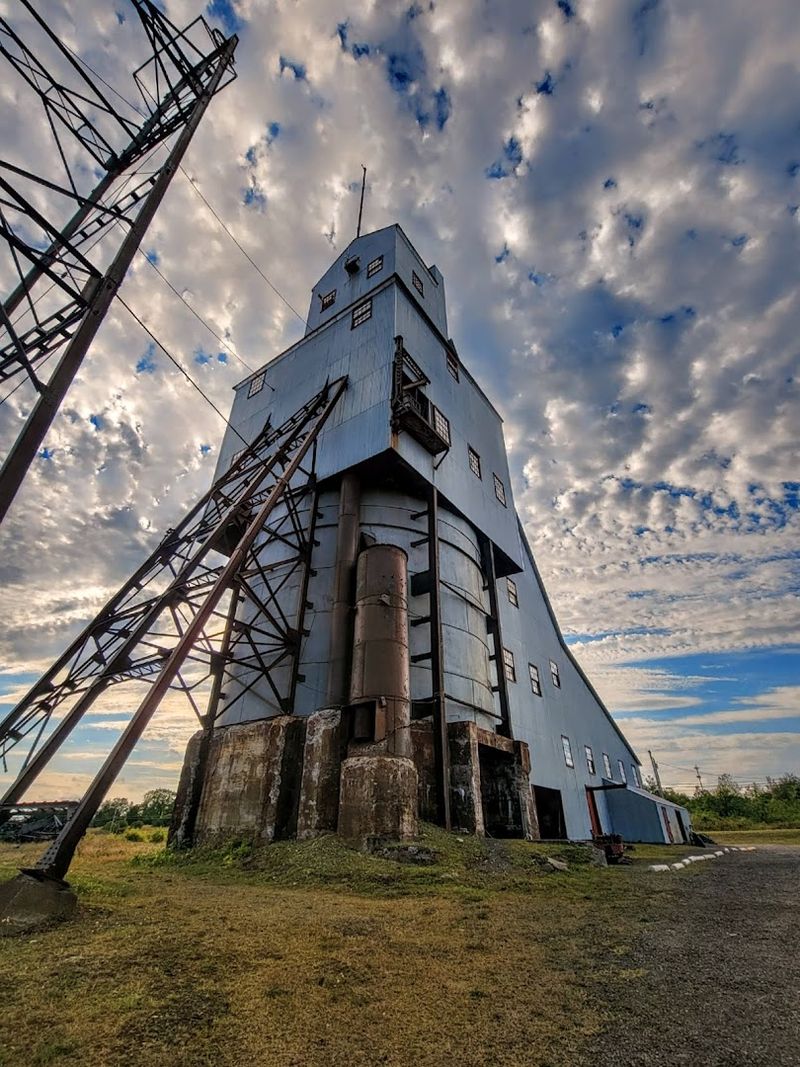
Copper mining once defined this region, and that history is still very much alive. You can explore the Keweenaw National Historical Park, where old smelting ruins and mine shafts have been preserved for visitors.
It’s the kind of place where you can almost feel the weight of the past beneath your feet.
Outdoor lovers come here for world-class snowmobiling in winter and incredible hiking and kayaking in summer. The shoreline along Lake Superior features dramatic rocky outcroppings and hidden coves that feel completely untouched.
Brockway Mountain Drive offers one of the finest panoramic views in all of Michigan, especially during fall when the colors peak.
Small towns like Copper Harbor and Eagle River add charm and personality to any visit. You’ll find cozy cafes, local art galleries, and friendly residents who genuinely love where they live.
The pace is slow, and that’s exactly the point.
Wildlife is abundant here, including black bears, moose, and bald eagles. Stargazing is exceptional due to minimal light pollution, making the Keweenaw a paradise for night-sky enthusiasts.
If you’re looking for a Michigan experience that feels nothing like a typical tourist trip, this peninsula delivers on every level.
2. Holland State Park
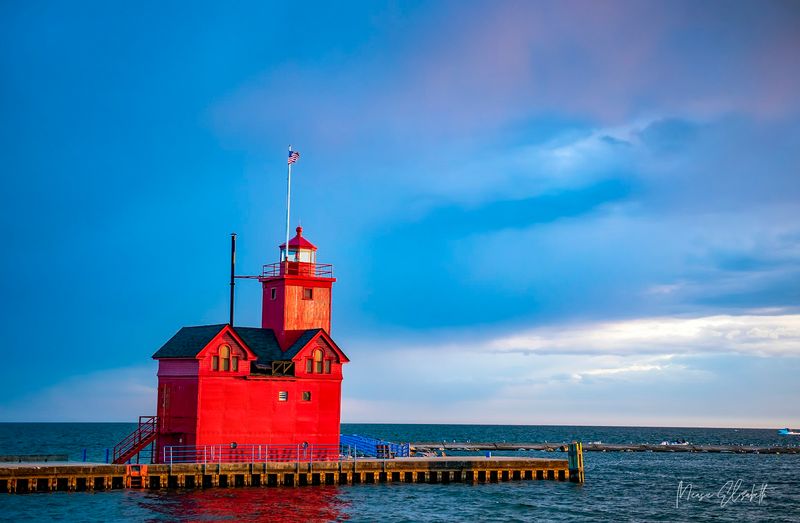
Few Michigan beaches hit quite like Holland State Park. Situated along Lake Michigan’s eastern shore, this park is famous for its iconic Big Red lighthouse, which has been photographed more times than most celebrities.
The lighthouse sits at the mouth of the Black River channel, and the view from the beach looking toward it is genuinely postcard-worthy.
Swimming here is a treat. The sandy beach stretches wide and clean, the water is refreshingly clear, and the sunsets over Lake Michigan are the kind that make you put your phone down and just watch.
Summer weekends fill up fast, so arriving early is always a smart move if you want a good spot.
The park is split into two sections: the beach area along Lake Michigan and a campground on Lake Macatawa. Both sides offer easy access to nature, but the beach side is where most visitors spend their time.
Camping reservations fill up months in advance, so plan ahead if you want to wake up steps from the water.
Holland itself is a charming city with Dutch heritage that shows in its architecture, tulip festivals, and windmills. The annual Tulip Time Festival, held each spring, draws visitors from across the Midwest.
Pairing a visit to the park with time in town makes for a full and satisfying trip.
Fishing, kayaking, and paddleboarding are popular activities along the waterway. The park has solid amenities including restrooms, changing areas, and a concession stand in peak season.
Holland State Park is the kind of place that rewards both the first-time visitor and the returning regular with something worth savoring every time.
3. Isle Royale National Park
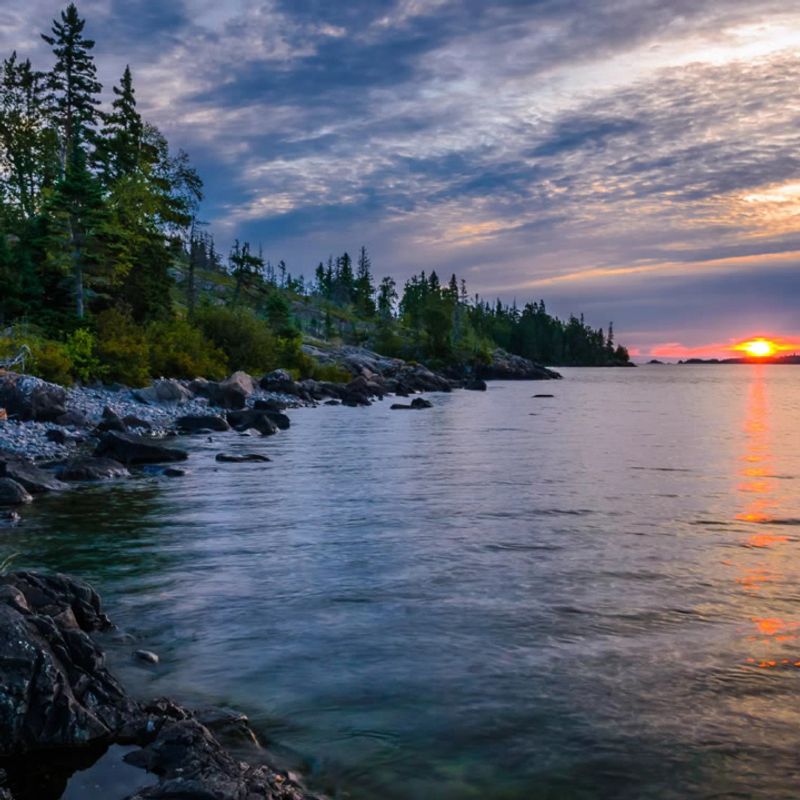
Getting to Isle Royale National Park requires a ferry ride or floatplane, and that barrier alone keeps the crowds away. Located in Lake Superior near the Canadian border, this remote island wilderness is one of the least-visited national parks in the entire country.
That’s not a flaw — it’s the whole appeal.
The island is a backpacker’s dream. Over 165 miles of trails wind through boreal forests, past inland lakes, and along rugged shorelines.
Moose roam freely here, and wolf sightings, while rare, do happen. The ecosystem on Isle Royale has been the subject of one of the longest-running predator-prey studies in the world, making it scientifically fascinating as well as visually stunning.
Camping requires permits, and visitors need to be genuinely self-sufficient. There are no roads, no cars, and no Wi-Fi.
What you get instead is complete immersion in nature at its most raw. Waking up to the sound of loons on a backcountry lake is an experience that sticks with you long after you’ve returned home.
Kayaking and canoeing around the island’s complex shoreline reveals hidden coves, sea caves, and shipwreck sites that are popular with scuba divers. The water is cold but remarkably clear.
Snorkeling is even possible at some of the shallower wreck sites.
The park is only open from April through October due to its harsh winters. Ferry services run from Houghton and Copper Harbor in Michigan, as well as Grand Portage in Minnesota.
If you want a Michigan adventure that genuinely challenges and rewards you, Isle Royale belongs at the very top of your 2026 bucket list.
4. Grand Haven State Park
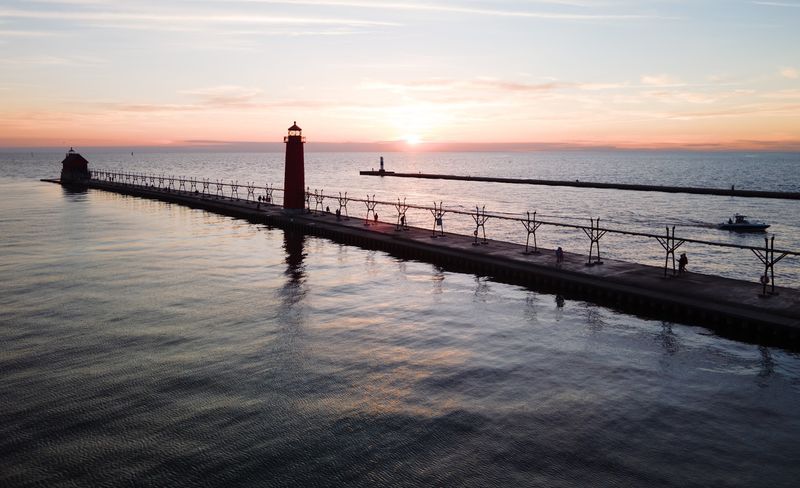
Grand Haven State Park punches well above its size. It may be one of Michigan’s smaller state parks, but what it offers in terms of beach quality, pier access, and overall atmosphere is hard to beat.
The park sits right in Grand Haven, a city that consistently ranks among Michigan’s most beloved lakeside communities.
The beach is wide, sandy, and well-maintained. Lake Michigan’s waves here can get surprisingly lively, which makes it a hit with boogie boarders and anyone who just wants to feel the water’s energy.
The water temperature warms up nicely by mid-July, making it comfortable for swimming through the rest of summer.
The famous Grand Haven pier is one of the most photographed spots on the entire Lake Michigan shoreline. Walking the pier out to the red lighthouse at the end is a must-do activity, especially at sunset.
The musical fountain nearby puts on a free light and water show in the evenings during the warmer months that draws large, happy crowds.
Camping at the park is extremely popular, with sites that sit right on the beach. Falling asleep with the sound of waves just outside your tent is a genuinely special experience.
Because of that, reservations book up quickly — sometimes months in advance — so planning early is essential.
The city of Grand Haven itself adds tremendous value to any visit. Restaurants, ice cream shops, boutiques, and a lively boardwalk scene make it easy to spend a full day or two here without running out of things to do.
Grand Haven State Park is the full package: natural beauty, great facilities, and a vibrant community right next door.
5. Turnip Rock
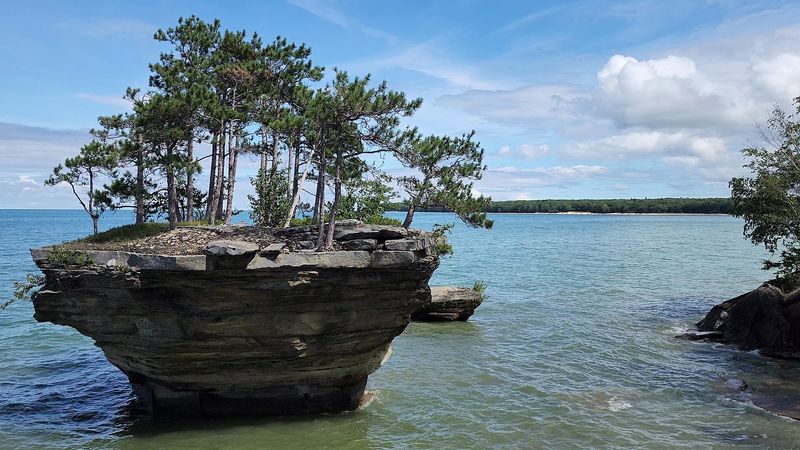
Turnip Rock is exactly the kind of place that makes you say, “Wait, that’s real?” This bizarre and beautiful rock formation juts out of Lake Huron near Port Austin, shaped uncannily like a giant turnip with a tuft of trees growing from its top. It’s one of those natural oddities that photographs so dramatically that people assume it must be edited.
The catch? You can only reach it by water.
There are no hiking trails leading to Turnip Rock, which means kayaking or canoeing is the only way to experience it up close. Several outfitters in Port Austin rent kayaks and offer guided tours specifically to this spot, making it accessible even for beginners.
The paddle is usually around three to four miles round trip along a scenic stretch of Lake Huron shoreline.
Along the way, you’ll pass sea caves, arched rock formations, and dramatic limestone cliffs carved by centuries of wave action. The water along this stretch of Huron is remarkably clear and often takes on shades of blue-green that feel more Caribbean than Midwestern.
It’s the kind of scenery that keeps you paddling with a constant grin on your face.
Port Austin itself is a charming small town with good food, local shops, and a relaxed energy that fits perfectly with a kayaking adventure. The Thumb region of Michigan, where this area sits, tends to fly under the radar compared to the Upper Peninsula or the Leelanau area, which means fewer crowds and a more authentic experience.
Turnip Rock is best visited between late spring and early fall when lake conditions are calmer. Mornings tend to have the smoothest water, so launching early gives you the best paddling conditions and the best light for photos.
6. Belle Isle Park
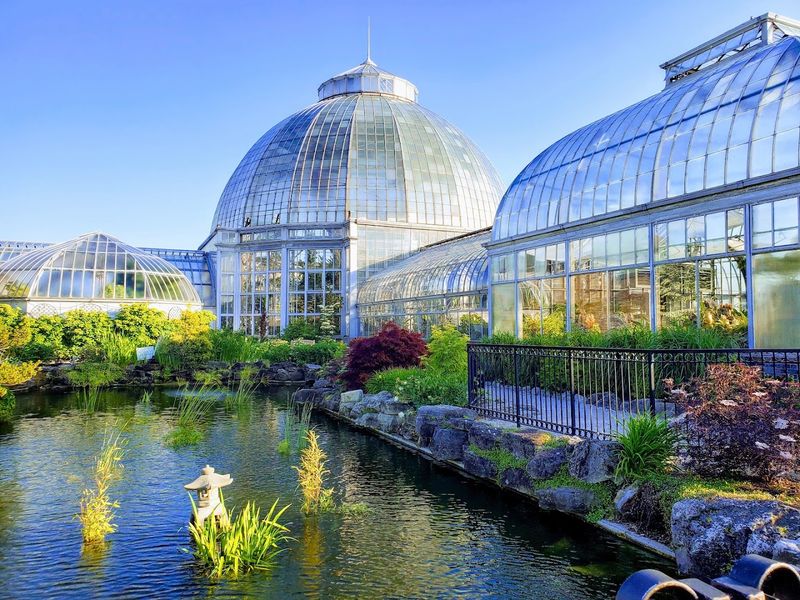
Sitting right in the Detroit River between Michigan and Canada, Belle Isle Park is one of the most unique urban green spaces in the entire country. At 982 acres, this island park is larger than New York’s Central Park, and it packs in an impressive mix of nature, history, and Detroit character.
The fact that you can see the downtown Detroit skyline from within a genuine wilderness setting is a contrast that never gets old.
The island became a Michigan state park in 2014 after the city of Detroit transferred its management. Since then, significant improvements have been made to facilities and attractions.
The Belle Isle Aquarium, the oldest in the Western Hemisphere, has been restored and is worth a visit on its own. The Anna Scripps Whitcomb Conservatory houses a stunning collection of tropical plants in a gorgeous domed glass building.
Nature lovers will appreciate the variety of wildlife that calls the island home, including great blue herons, deer, and a wide range of migratory birds. Walking and biking trails loop around the entire island, offering views of the river from multiple angles.
Fishing along the shores is popular year-round among Detroit locals who know the island well.
The beach on the island’s eastern end provides a surprisingly pleasant swimming spot during summer, with views of large cargo ships passing through the river. Picnic areas, a yacht club, a golf course, and a historic casino building (now used as an event space) round out the amenities.
There’s almost always something happening on Belle Isle, from fitness events to cultural festivals.
Entry requires a Recreation Passport, which is standard for Michigan state parks. For Detroit visitors who want to experience something beyond the city’s urban core, Belle Isle is a genuinely refreshing and rewarding stop.
7. Kitch-iti-kipi
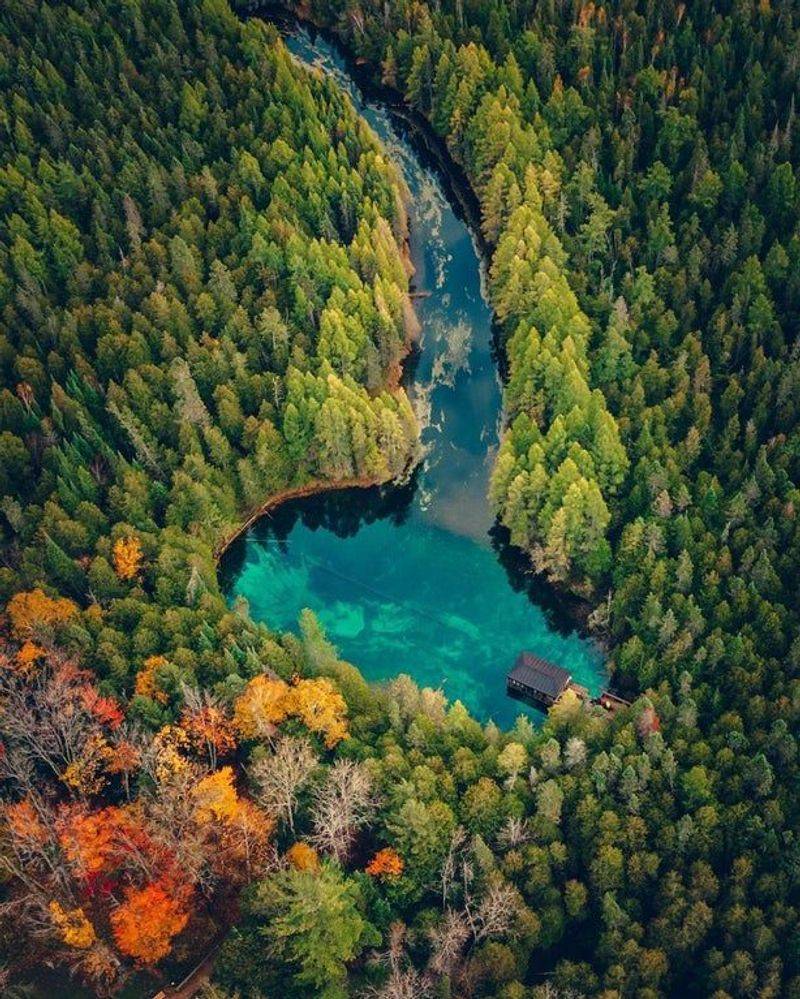
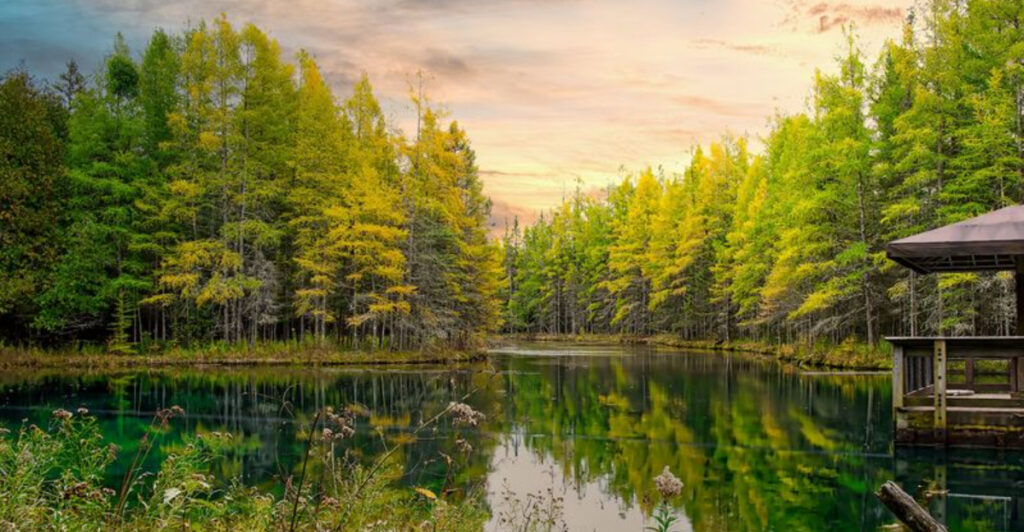
Michigan’s largest natural freshwater spring has a name that’s fun to say and even more fun to see. Kitch-iti-kipi, also known as “The Big Spring,” sits in Palms Book State Park near Manistique in the Upper Peninsula.
It measures about 200 feet across and nearly 40 feet deep, pumping out an estimated 10,000 gallons of water per minute at a constant temperature of 45 degrees Fahrenheit year-round.
The water is so extraordinarily clear that you can see every detail of the spring floor from the surface. Massive brown trout glide effortlessly through the crystal water, and the submerged logs and limestone formations below look close enough to touch even at full depth.
The turquoise and green hues of the water shift depending on the light, creating an almost surreal visual experience.
Visitors access the spring via a self-operated observation raft that you pull across the water using a rope and pulley system. It’s a simple mechanism, but it puts you right in the middle of the spring with views straight down through the water column.
Watching the fish and the bubbling sand vents from the raft is one of those experiences that genuinely stops people in their tracks.
The park itself is small and straightforward — a short trail, a viewing raft, and the spring. There are no elaborate facilities or long hikes required.
That simplicity is part of its charm. You show up, you see something remarkable, and you leave feeling like you witnessed something the rest of the world is somehow missing.
Kitch-iti-kipi is open year-round, and winter visits offer a particularly magical experience as steam rises from the warm spring water in the cold air. Bring your camera, but know that photos rarely do this place full justice.
8. Ludington State Park
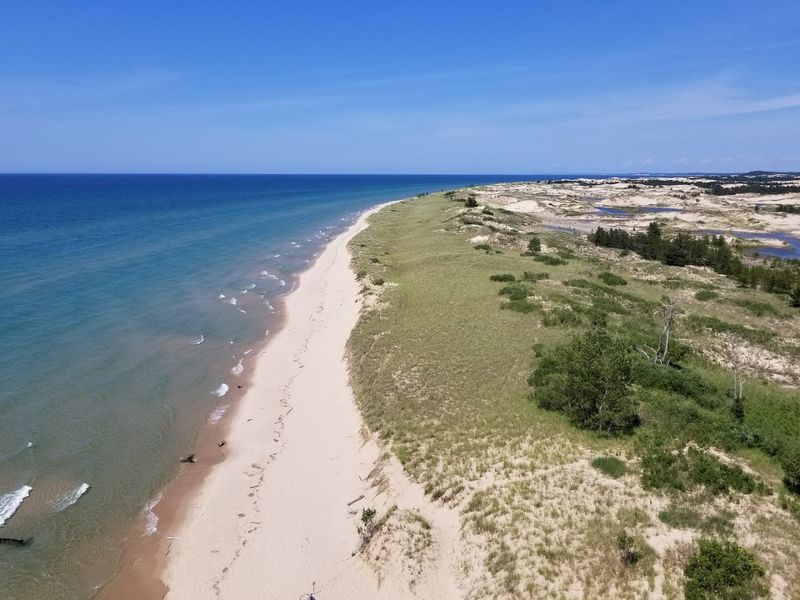
Ludington State Park is the kind of place that makes Michigan residents feel genuinely proud of their state. Wedged between Lake Michigan, Hamlin Lake, and the Pere Marquette River, this park offers an almost overwhelming variety of landscapes packed into one manageable destination.
It’s consistently ranked among the best state parks in the country, and a single visit makes that reputation easy to understand.
The Big Sable Point Lighthouse is one of the park’s crown jewels. A roughly two-mile walk along the beach or through the dunes takes you to this striking black-and-white striped lighthouse that has guided ships since 1867.
You can climb the tower during the summer season for sweeping views of Lake Michigan that stretch far into the horizon.
Hiking trails here cover a wide range of difficulty levels, from easy lakeside strolls to more challenging dune crossings that’ll have your legs burning. The Skyline Trail offers elevated views over the dune landscape, while trails along Hamlin Lake provide a completely different, quieter woodland experience.
Birdwatching is excellent throughout the park, particularly during spring and fall migration.
Canoeing and kayaking on Hamlin Lake is a popular activity, with calm inland water that’s great for paddlers of all skill levels. Fishing in the lake and nearby river draws anglers chasing trout, bass, and other species.
Swimming is available at multiple access points across the park’s varied waterways.
Camping options range from rustic to modern, and the campground fills quickly on summer weekends. Ludington, the town just outside the park, adds even more appeal with its charming downtown, ferry service to Wisconsin, and excellent local dining.
This park genuinely earns every bit of its stellar reputation.
9. Pictured Rocks National Lakeshore
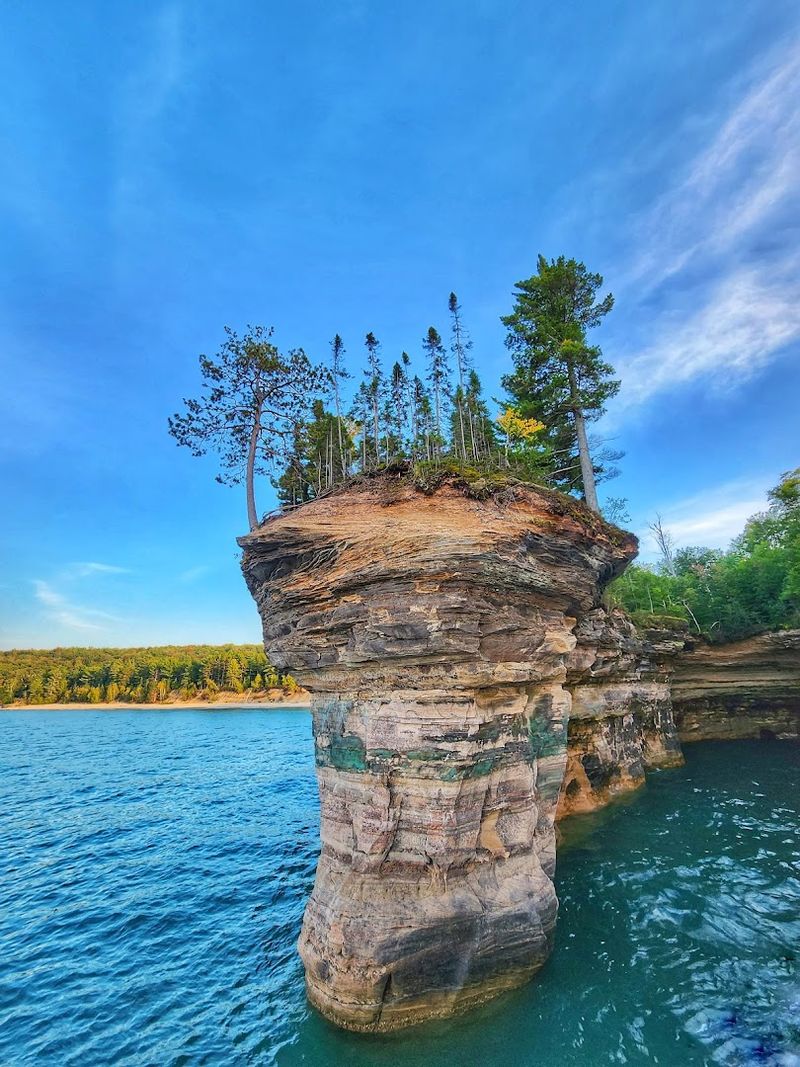
There is nothing else in the Midwest that looks quite like Pictured Rocks National Lakeshore. Stretching along 42 miles of Lake Superior’s southern shoreline in the Upper Peninsula, this park features towering sandstone cliffs that have been stained with vivid streaks of mineral color — copper greens, iron reds, manganese blacks — creating a natural canvas that looks almost painted by hand.
The cliffs rise up to 200 feet above the lake in some sections, and viewing them from a boat is the most dramatic way to experience their full scale. Several tour boat operators based in Munising run excursions along the lakeshore that get you close to the rock faces, sea caves, and natural arches.
The Chapel Rock formation, with its lone pine tree clinging to the top, is one of the most photographed scenes in all of Michigan.
Hikers have access to the North Country Trail, which runs the entire length of the lakeshore and offers spectacular cliff-edge views. Waterfall enthusiasts will find multiple falls within the park, including Miners Falls and Chapel Falls, both of which are accessible via well-maintained trails.
The combination of waterfalls, cliffs, beaches, and forests makes this park a multi-day destination.
Kayaking along the base of the cliffs and into the sea caves is an experience unlike any other in the region. Cave paddling requires calm conditions and is best done with an experienced guide.
The water here is cold and deep, so respect for the lake is non-negotiable.
Munising serves as the gateway town and has solid lodging, outfitter shops, and restaurants. Visiting in late summer or early fall tends to offer the best combination of weather and fall color.
Pictured Rocks is genuinely one of Michigan’s most awe-inspiring places.
10. Arcadia Overlook
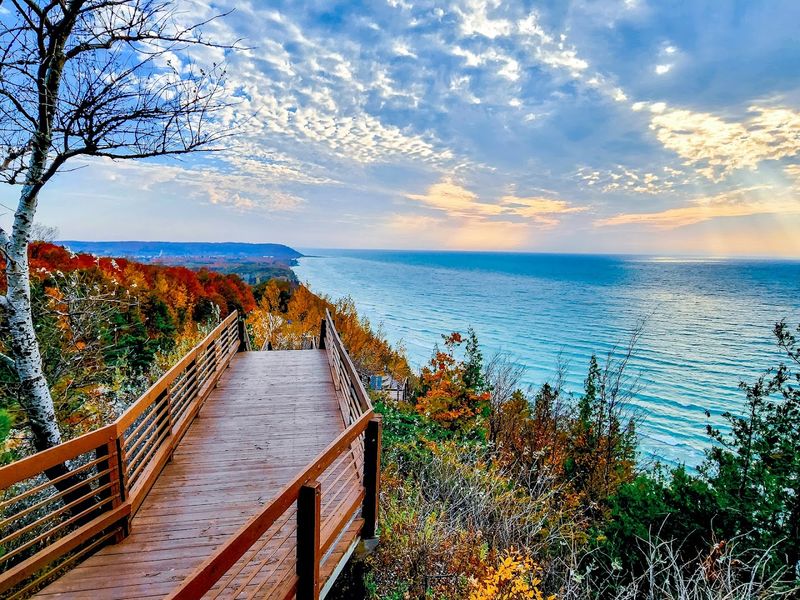
Not enough people know about Arcadia Overlook, and that’s honestly their loss. Tucked away in Benzie County along Michigan’s northwestern Lower Peninsula, this spot offers one of the most jaw-dropping views in the entire state — and it requires almost no effort to reach.
A short walk from the parking area brings you to a high bluff perched over 300 feet above Lake Michigan, with a view that opens up so suddenly it almost feels like a trick.
The panorama from the top takes in the lake, the rolling forested hills below, and on clear days, the distant outline of the Sleeping Bear Dunes to the north. In autumn, the surrounding hillsides explode with color, making the overlook one of the finest fall foliage viewpoints in the Lower Peninsula.
Sunrise visits are particularly rewarding when morning mist hangs over the lake and the light turns everything gold.
The overlook is part of the Lake Michigan Recreation Area managed by the U.S. Forest Service.
There are trails that wind down the bluff toward the lakeshore, though the descent is steep and the return climb requires a bit of effort. The beach at the bottom is quiet and largely uncrowded, which is a significant bonus compared to more popular Lake Michigan beaches nearby.
Arcadia is a tiny village, but it has a genuine charm. The local general store and the laid-back community vibe make it feel like a place that time has treated kindly.
There’s no admission fee to visit the overlook, which makes it one of the best free experiences in Michigan.
If you’re driving the Lake Michigan Circle Tour or exploring the Benzie County area, make Arcadia Overlook a mandatory stop. You will not regret it for a single second.
11. Mackinac Island
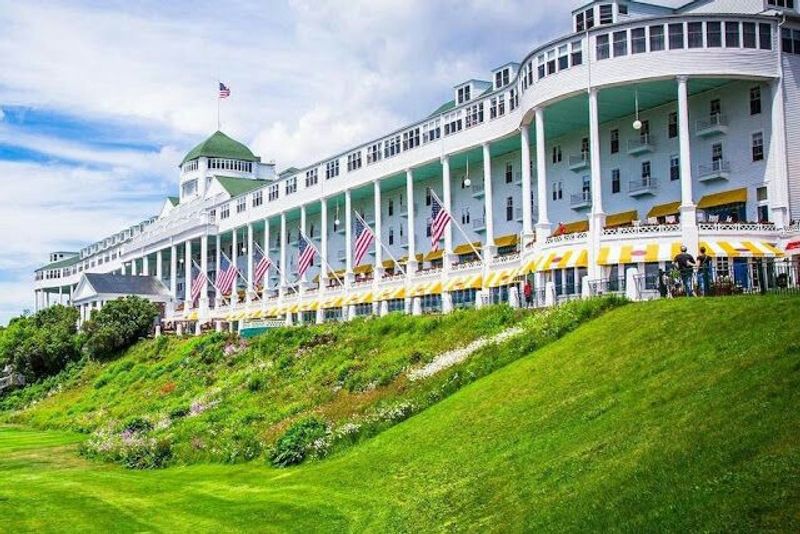
Step off the ferry at Mackinac Island and you’ll immediately notice something missing: cars. The island banned motor vehicles over a century ago, and that decision shaped everything about what it became.
Horse-drawn carriages clip-clop down the main street, bicycles are everywhere, and the pace of life slows to something that feels genuinely restorative. It’s one of the most distinctive travel experiences in all of the Midwest.
The island sits in the Straits of Mackinac between Michigan’s Upper and Lower Peninsulas, accessible by ferry from Mackinaw City or St. Ignace. The famous Grand Hotel, with its 660-foot front porch — reportedly the world’s longest — dominates the hilltop and defines the island’s Victorian character.
Even if you’re not staying there, paying the entrance fee to walk the grounds and enjoy the view is worthwhile.
Fort Mackinac, perched on a limestone bluff above the town, offers living history demonstrations and sweeping views of the Straits. The island’s interior is largely preserved as state park land, with over 70 miles of trails winding through forests and along dramatic cliff edges.
Arch Rock, a natural limestone arch rising 146 feet above Lake Huron, is one of the island’s most striking natural features.
Fudge is practically a religion on Mackinac Island. Dozens of shops line the main street, and the smell of fresh fudge being made on marble slabs is part of the whole sensory experience.
It’s touristy, yes — but it’s genuinely delicious and absolutely part of the tradition.
Summer is peak season, but fall visits offer a quieter, more atmospheric experience. The leaves turn brilliantly, the crowds thin, and the island takes on a more intimate character.
Mackinac Island is one of those places that earns its hype every single time.
12. Silver Lake Sand Dunes
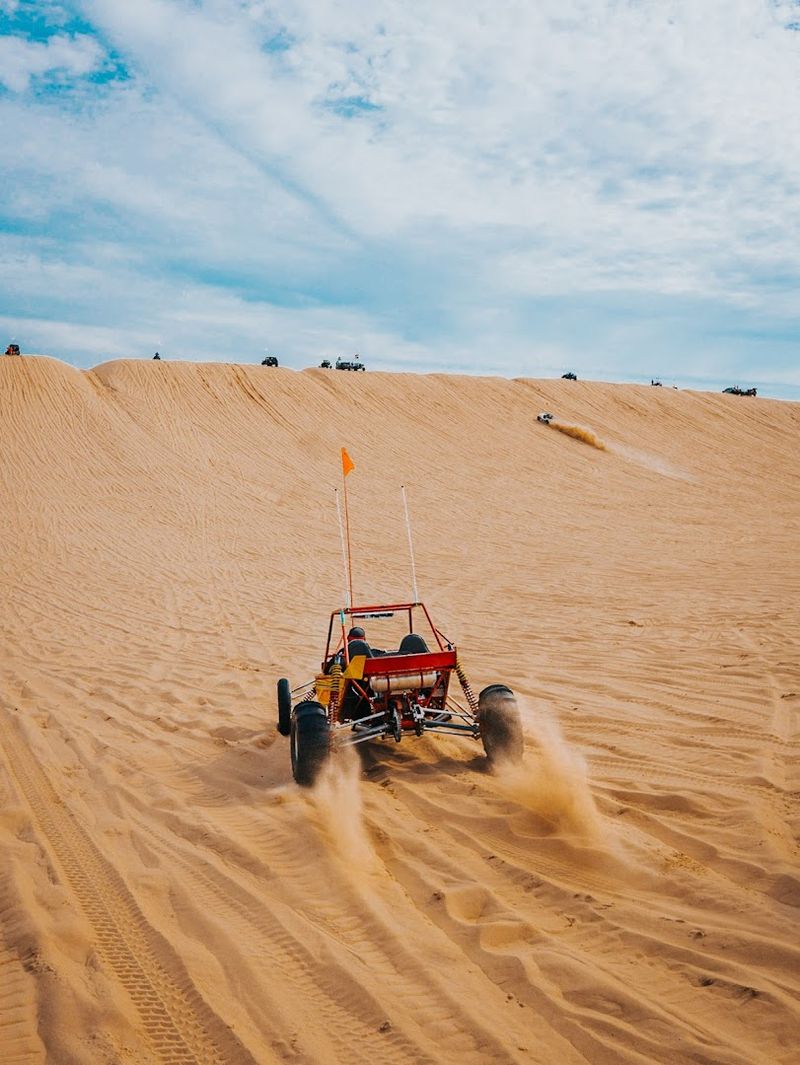
Silver Lake Sand Dunes offers something most Michigan destinations don’t: the freedom to be loud, fast, and a little wild. Located in Oceana County along the Lake Michigan shoreline, this is one of the only places in Michigan where off-road vehicles are legally permitted to ride on open sand dunes.
The result is a roaring, sandy playground that draws thrill-seekers from across the Midwest every summer.
The dunes themselves are massive — some rising over 100 feet — and they stretch for miles between Silver Lake and Lake Michigan. Renting a dune buggy or ORV from one of the local outfitters is the most popular way to experience them, and the rides can get legitimately exhilarating.
Cresting the top of a dune and seeing Lake Michigan suddenly appear on the other side is a rush that’s hard to describe.
For those who prefer a quieter experience, the northern portion of the dunes area is designated for foot traffic only. Hiking through the dunes on foot is surprisingly challenging — soft sand makes every step a workout — but the reward at the top is an unobstructed view that stretches from the lake to the forested shoreline below.
It’s a completely different vibe from the ORV section, but equally impressive.
Silver Lake itself is a warm, calm inland lake ideal for swimming, paddleboarding, and fishing. The town of Mears nearby has restaurants, shops, and campgrounds that cater well to visitors.
The combination of adventure activities and natural beauty makes this area a strong choice for families with varied interests.
Visiting on a weekday tends to be far more relaxed than weekend visits when the crowds and noise levels peak. Either way, the Silver Lake Sand Dunes deliver an experience that feels genuinely one-of-a-kind in Michigan.
13. Porcupine Mountains Wilderness State Park
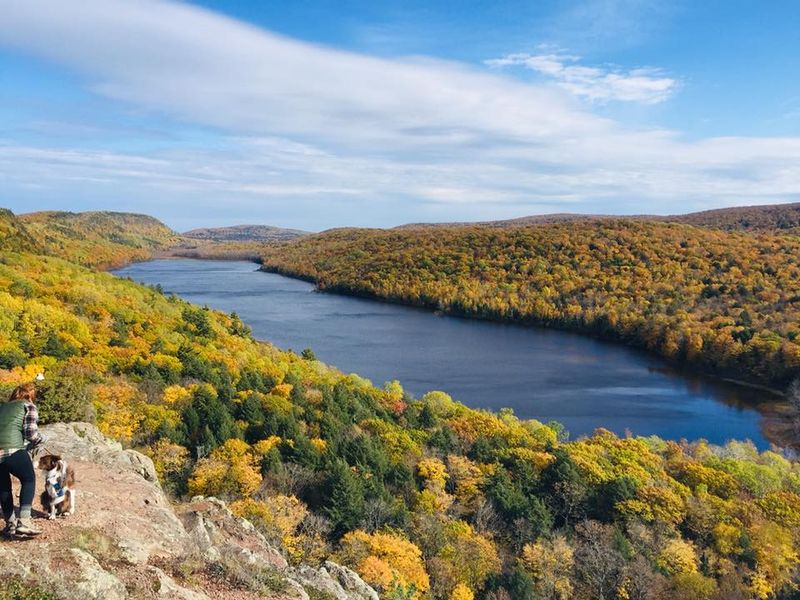
The Porcupine Mountains — or simply “the Porkies” to those who know and love them — represent Michigan’s largest state park and one of the finest wilderness experiences in the entire Great Lakes region. Spanning nearly 60,000 acres in the western Upper Peninsula, this park contains one of the largest remaining stands of old-growth northern hardwood and hemlock forest in the Midwest.
Walking among trees that have stood for centuries is a humbling experience.
The Lake of the Clouds is the park’s most iconic viewpoint, and it earns that status completely. From the escarpment overlook, you look down over a forested valley to a long, still lake flanked by ridgelines that seem to roll on forever.
In fall, the surrounding forest lights up in shades of crimson, gold, and amber that make the view almost impossibly beautiful. It’s the kind of scene that appears on every Michigan travel list for good reason.
The park offers over 90 miles of hiking trails ranging from gentle riverside walks to rugged backcountry routes that require real navigation skills. The Lake Superior shoreline within the park features wild, rocky beaches and dramatic views of the lake’s open water.
Summit Peak, the highest point in the park, rewards hikers with a 360-degree view from an observation tower.
Winter transforms the Porkies into a snowshoeing and cross-country skiing paradise. The park maintains groomed ski trails and rents equipment on-site, making it accessible even for first-timers.
Rustic cabins and yurts available for rent inside the park offer a cozy way to experience the wilderness without giving up all comforts.
The nearest town is Ontonagon, a small community with basic services. This park rewards those who come prepared and stay for more than a day — the longer you linger, the more it reveals.
14. Miners Castle Overlook
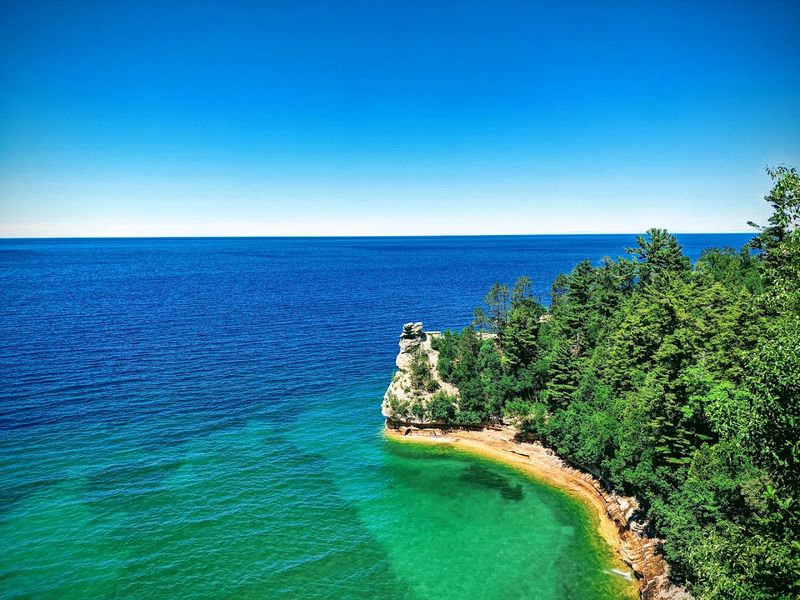
Miners Castle Overlook is the kind of viewpoint that stops conversations mid-sentence. Part of the Pictured Rocks National Lakeshore near Munising, this formation is arguably the most recognizable single landmark along the entire 42-mile lakeshore.
Two towering sandstone turrets rise dramatically above Lake Superior, shaped by centuries of wave erosion into something that genuinely resembles the battlements of an ancient castle.
The overlook is accessible via a short, paved trail from the parking area, making it one of the most accessible dramatic views in the Upper Peninsula. Two viewing platforms sit at different heights along the trail, each offering a distinct perspective on the rock formation and the lake below.
The water visible from the overlook is a deep, rich blue that shifts with the light throughout the day.
Miners Beach sits just below the overlook and is reachable via a trail that descends to the shoreline. The beach itself is a beautiful crescent of sand backed by forested bluffs, and it’s one of the few places along the national lakeshore where swimming is both possible and reasonably popular — though the water temperature is always brisk.
The combination of the overlook and the beach makes this stop a worthy extended visit rather than just a quick photo opportunity.
Miners Falls, located a short drive away within the same area of the park, pairs naturally with a visit to the castle overlook. The falls drop about 40 feet into a forested gorge and are reached via a pleasant mile-long trail through the woods.
Combining both stops in one morning or afternoon is a highly satisfying way to experience this section of Pictured Rocks.
Sunset visits to Miners Castle Overlook produce extraordinary light on the sandstone faces. The orange and red mineral streaks in the rock glow warmly in the late afternoon sun, turning the whole formation into something almost otherworldly.
15. Tahquamenon Falls State Park
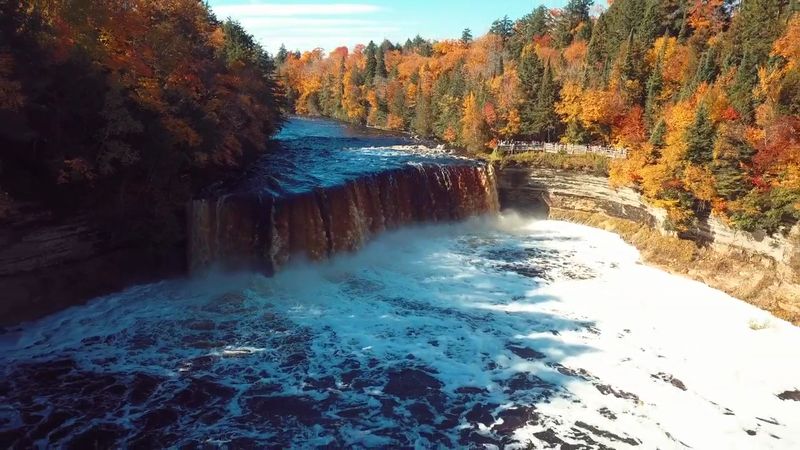
Tahquamenon Falls earns its nickname as the “Root Beer Falls” honestly. The water flowing over these falls is naturally tinted a deep amber-brown color, caused by tannins leaching from the cedar, spruce, and hemlock forests upstream.
It’s not pollution — it’s pure, wild Michigan forest water doing something remarkable. The effect is striking, especially when the falls are running full force and the white foam contrasts against that rich, dark water.
The Upper Falls is one of the largest waterfalls east of the Mississippi River, spanning nearly 200 feet wide with a drop of about 50 feet. Standing at the viewing platforms along the rim trail and feeling the mist and hearing the roar of all that water is a full sensory experience.
The Lower Falls, located about four miles downstream, consists of a series of smaller cascades surrounding a small island that visitors can reach by rowboat — one of Michigan’s most unique waterfall experiences.
The park encompasses over 40,000 acres and includes miles of hiking trails through old-growth forest. The North Country Trail passes through here, connecting Tahquamenon to a much larger trail network.
Wildlife encounters are common, with black bears, river otters, and abundant birdlife throughout the park.
A brewpub operated within the park serves food and locally brewed beer right near the Upper Falls, which makes for a surprisingly civilized stop in the middle of the wilderness. It’s a welcome and genuinely enjoyable addition to the visitor experience, especially after a long hike.
The park is located in Paradise, Michigan — a small town with a name that perfectly matches the landscape surrounding it. Fall visits are particularly spectacular when the surrounding forest ignites with color and the falls run strong from autumn rains.
Tahquamenon Falls is a must-see Upper Peninsula experience in 2026.
16. Sleeping Bear Dunes National Lakeshore
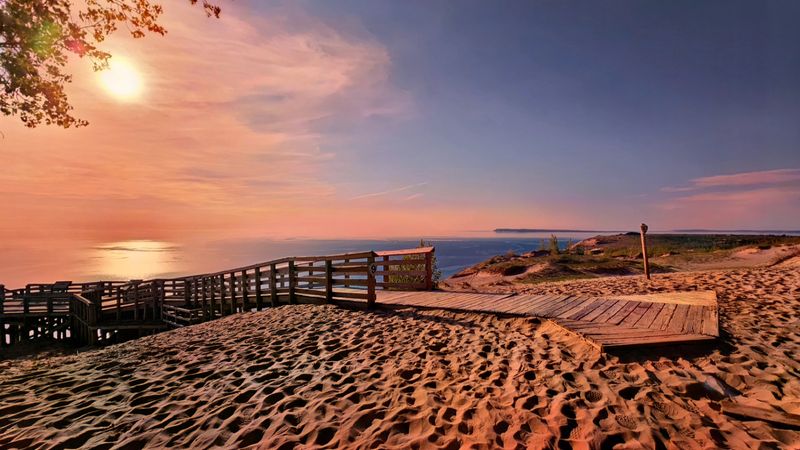
Sleeping Bear Dunes National Lakeshore was voted the most beautiful place in America by Good Morning America viewers back in 2011, and the landscape has done absolutely nothing since then to suggest that vote was wrong. Stretching along 35 miles of Lake Michigan shoreline in the northwestern Lower Peninsula, this national lakeshore combines towering perched dunes, quiet inland lakes, dense forests, and two offshore islands into one spectacular package.
The Dune Climb is the park’s most famous feature and most humbling physical challenge. The main dune rises about 130 feet from the parking area, and the scramble to the top will have most visitors breathing hard within the first 100 feet.
Reaching the summit reveals a stunning view — but the lake is still another mile of soft sand away. Many people attempt the full trek to the water’s edge and return, a round trip that takes two to three hours and feels like a full workout.
The Pierce Stocking Scenic Drive is one of Michigan’s finest road experiences, winding through the park’s interior and stopping at multiple overlooks. The Lake Michigan Overlook stop puts you at the edge of a 450-foot dune with the lake spread out far below — a view that consistently leaves people speechless.
The drive is open seasonally and well worth the vehicle entry fee.
Glen Haven, Glen Arbor, and Empire are charming small towns within or near the park that offer excellent dining, local art, and friendly Michigan hospitality. The Leelanau Peninsula wine country is just a short drive away, adding a sophisticated bonus to any visit.
Sleeping Bear Dunes rewards every type of traveler — hikers, swimmers, paddlers, photographers, and people who simply want to sit on top of something beautiful and breathe. Plan at least a full day, and seriously consider two.
Share this story