Texas has plenty of ghost towns scattered across its vast landscape, and each one tells a different tale of boom and bust. Some were mining camps that dried up overnight, while others fell victim to hurricanes, railroad bypasses, or simply ran out of reasons to exist. What remains are crumbling buildings, empty streets, and enough eerie atmosphere to make your skin crawl.
These seven forsaken places offer a haunting glimpse into Texas history you won’t soon forget.
1. Glenrio (Deaf Smith County)
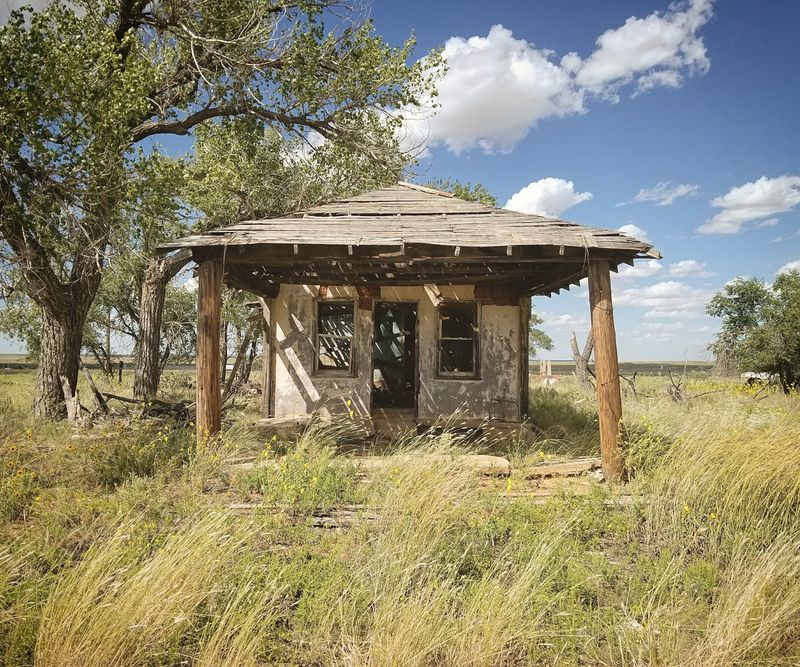
Straddling the Texas-New Mexico border like a forgotten relic, this Route 66 ghost town once thrived on travelers heading west during America’s golden age of road trips. When Interstate 40 opened in the 1970s, traffic vanished almost overnight. The town that had fed, fueled, and sheltered thousands of motorists each year suddenly had no purpose.
Walking through what’s left feels like stepping onto a movie set. The old Brownlee Diner still stands with its vintage sign, though nobody’s flipped burgers there in decades. Rusted gas pumps lean at odd angles, their price displays frozen in time when gas cost pennies per gallon.
The Texas Longhorn Motel sits empty, its neon sign dark and windows shattered. You can still see room numbers painted on doors that no longer lock. Personal belongings were sometimes left behind when residents moved on, creating an unsettling time capsule effect.
What makes this place particularly spooky is how quickly it died. One year it was bustling, the next it was a graveyard. Buildings on the Texas side decay differently than those on the New Mexico side due to varying weather patterns, creating a strange contrast along the state line.
Photographers love capturing the peeling paint and broken glass against big sky backdrops. The silence here is profound, broken only by wind rattling loose shutters. On foggy mornings, you can almost hear phantom engines from cars that passed through half a century ago.
Urban explorers should exercise caution, as structures are unstable and rattlesnakes claim some buildings as their own. The town serves as a sobering reminder that progress leaves casualties. What was once essential becomes obsolete, and entire communities can disappear when their reason for existing evaporates.
2. Terlingua (Brewster County)
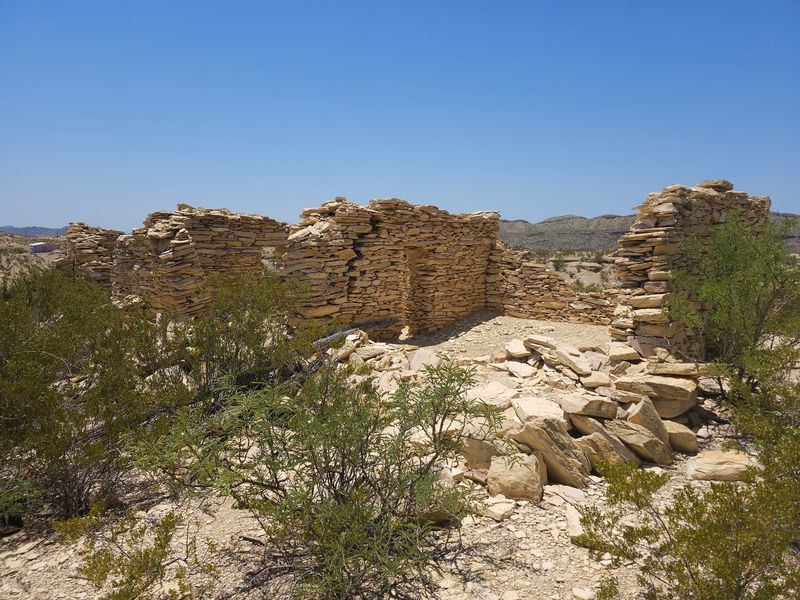
Out in the Big Bend region, where civilization feels optional, sits a mercury mining town that went from boom to bust faster than you can say quicksilver. At its peak in the early 1900s, this place produced more mercury than anywhere else in the country. Then the mines ran dry, and nearly everyone scattered.
The Chisos Mining Company once employed hundreds of workers who lived in company housing and shopped at the company store. Now those adobe structures crumble under relentless sun, their walls slowly returning to the earth they came from. The old theater still stands, though its roof has long since collapsed.
What sets this ghost town apart is that it’s not completely dead. A small community of artists, river guides, and desert rats has claimed the ruins, creating one of the strangest living situations in Texas. They’ve opened restaurants, galleries, and a famous chili cook-off that draws thousands each November.
The original cemetery sits on a hillside overlooking the ruins, headstones marking miners who died from accidents, disease, or the brutal conditions of desert life. Some graves belong to children who didn’t survive childhood illnesses. Reading those weathered markers puts the harshness of frontier existence into perspective.
Perry Mansion, once home to the mine operator, dominates the landscape with its distinctive architecture. It’s been partially restored but remains mostly a shell, windows gaping like empty eye sockets. Local legends claim it’s haunted by former residents who died during the town’s heyday.
The contrast between old ruins and new quirky establishments creates a surreal atmosphere. You can eat gourmet pizza while surrounded by century-old decay. Starlight Theatre, built from salvaged materials, hosts live music in a setting that feels post-apocalyptic.
This half-alive ghost town proves that some places refuse to die completely, even when logic says they should.
3. Indianola (Calhoun County)
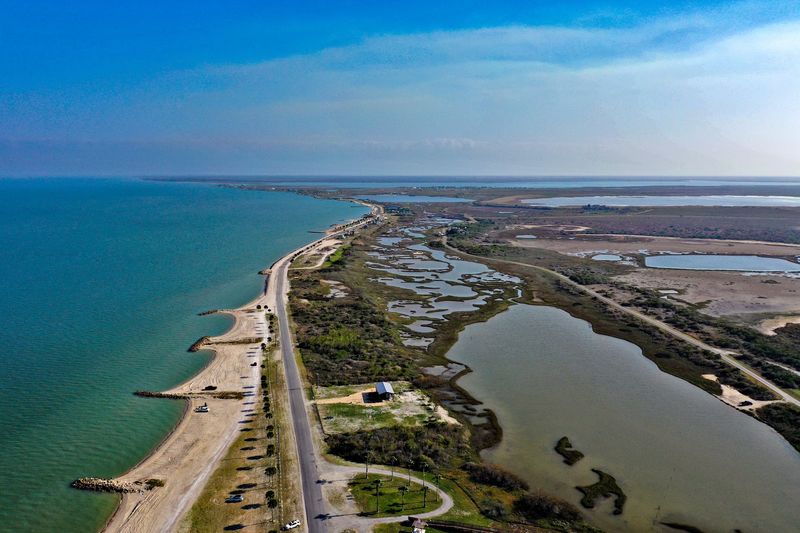
Mother Nature doesn’t negotiate, and this once-thriving port city learned that lesson the hard way. Before Galveston rose to prominence, Indianola served as Texas’s main gateway for European immigrants and commercial shipping. Tens of thousands of people passed through its docks, making it one of the state’s most important cities in the mid-1800s.
Then came September 1875. A category 3 hurricane slammed into the coast with devastating force, killing hundreds and flattening most buildings. The town rebuilt with determination, refusing to surrender to the Gulf’s fury.
Residents constructed stronger structures and resumed business, convinced they could outlast anything nature threw at them.
They were wrong. In August 1886, another massive hurricane struck with even greater violence. This one packed winds that obliterated everything the previous storm had spared.
A storm surge swept entire city blocks into the bay, drowning people in their homes and washing bodies miles inland.
After that second catastrophe, survivors gave up. The few remaining residents relocated to higher ground, and Indianola became a memory. Today, almost nothing remains except a historical marker and some scattered foundation stones visible at low tide.
The bay has reclaimed most of what once stood there.
What makes this abandonment particularly chilling is the sheer erasure of it all. We’re not talking about a small settlement but a major city that simply ceased to exist. Thousands of lives, countless stories, entire family lineages, all swept away by wind and water.
Locals report strange occurrences near the old townsite. Fishermen claim to hear phantom church bells during storms. Others swear they’ve seen ghostly lights moving across the water where streets once ran.
Whether you believe in such things or not, standing on that empty shoreline knowing what happened there will absolutely give you chills. The Gulf keeps its secrets well.
4. Lobo (Culberson County)
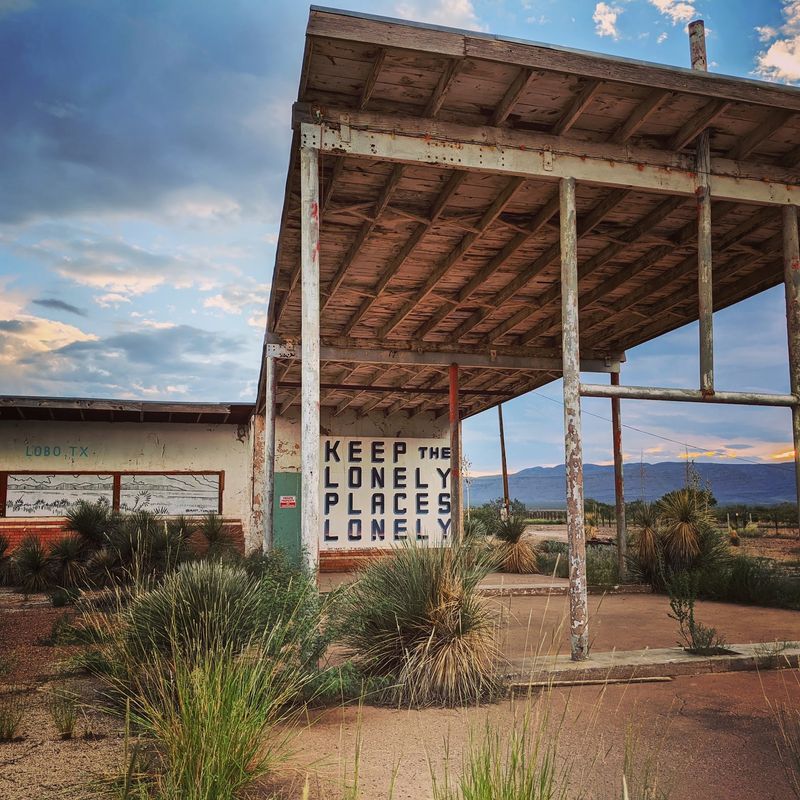
Deep in West Texas, where the landscape looks like Mars with tumbleweeds, this railroad town tells a story about what happens when your single resource disappears. Founded in 1881 as a water stop for steam locomotives, the settlement grew around precious underground springs that fed thirsty engines crossing the desert.
For decades, the town served its purpose perfectly. Train crews changed shifts here, passengers stretched their legs, and locals made decent livings servicing the railroad. Buildings went up, families moved in, and for a while everything worked.
Then diesel engines replaced steam, and suddenly nobody needed the water anymore.
The railroad pulled out, taking the town’s entire reason for existing with it. Residents trickled away over the following years, leaving behind homes, businesses, and personal possessions they couldn’t be bothered to haul across the desert. By the 1990s, Lobo was completely empty.
What remains today feels apocalyptic. The old schoolhouse sits with textbooks still on shelves and children’s artwork fading on walls. A general store displays canned goods from brands that no longer exist.
Someone’s kitchen table still has plates set out, as if the family just stepped away for a moment fifty years ago.
The loneliness here is tangible. You’re surrounded by evidence of normal life that stopped mid-stride, frozen like Pompeii but without the drama of volcanic destruction. Just quiet abandonment, which somehow feels worse.
No catastrophe drove people out, just economic reality and the march of progress.
Explorers who visit report an overwhelming sense of melancholy. The desert wind moans through broken windows, creating sounds that could pass for human voices if you’re feeling jumpy. Rattlesnakes have claimed many buildings, so watch your step.
The water tower still stands, a rusted monument to the resource that built and doomed this place. On summer days when heat waves shimmer off the ground, the whole town looks like a mirage, which seems fitting for somewhere that essentially vanished into thin air.
5. Thurber (Erath County)
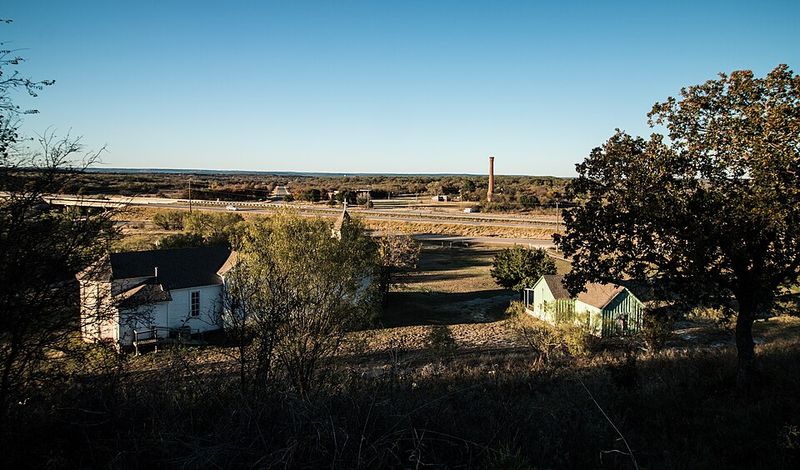
Picture a company town so complete that every single resident worked for the same employer, shopped at the same store, and lived in company-owned housing. That was Thurber at its height, a coal mining operation that became one of the most unusual communities in Texas history. At its peak around 1920, nearly 10,000 people called this place home.
The Texas and Pacific Coal Company controlled everything. They mined coal to fuel locomotives, manufactured bricks in massive kilns, and even produced their own electricity. The town had its own baseball team, opera house, and the first completely electrified city in Texas.
Workers came from across Europe, creating a diverse melting pot in the middle of ranch country.
Then oil started replacing coal as the preferred fuel. The writing appeared on the wall in big, bold letters. By the late 1920s, the mines began closing.
The brick plant shut down. Workers moved to oil fields or other opportunities, and the company systematically dismantled the town they’d built.
Unlike most ghost towns that decay naturally, Thurber was deliberately erased. The company tore down buildings, salvaged materials, and removed infrastructure. They wanted the land cleared for other uses.
What remains today is mostly foundations, the famous smokestack, and a restaurant that serves as a museum.
That smokestack stands 130 feet tall, visible for miles, a lonely sentinel marking where a thriving city once hummed with activity. Walking the site, you can trace street grids and building footprints, imagining the noise and energy that filled this space a century ago. The silence now feels heavy, almost oppressive.
The cemetery survived demolition, containing graves of miners killed in accidents and immigrants who came seeking better lives. Reading headstones in multiple languages drives home how cosmopolitan this isolated prairie town really was. Polish, Italian, German, and English names rest side by side, united in death as they were in labor.
What’s truly eerie is how thoroughly Thurber was wiped from the landscape. Most ghost towns die slowly, leaving picturesque ruins. This one was murdered efficiently, leaving barely a trace of the thousands who lived full lives here.
6. Study Butte & Chisos Mining Ruins (Brewster County)
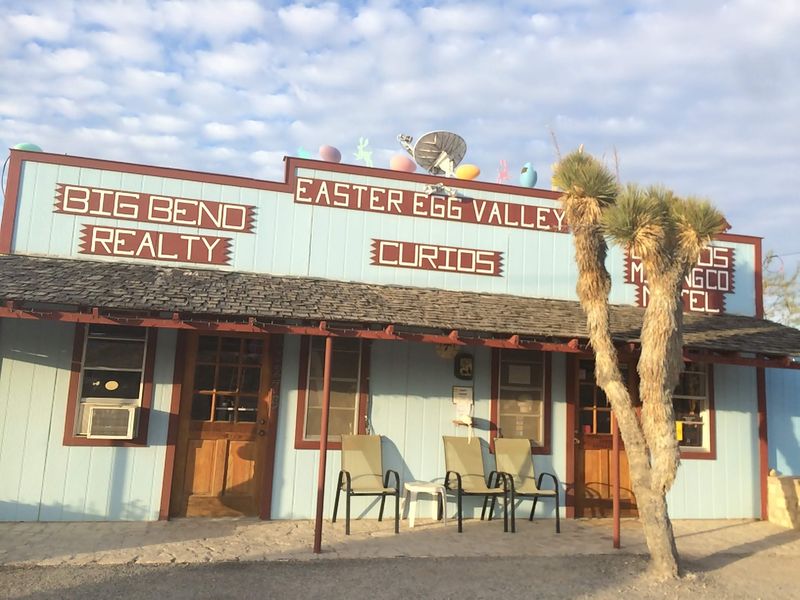
Just down the road from Terlingua sits another mercury mining casualty, though this one feels even more desolate if that’s possible. Study Butte operated as a company town where miners extracted cinnabar ore from the earth, processing it into liquid mercury used in everything from thermometers to munitions during World War II.
The Chisos Mining Company established operations here in the early 1900s, building housing, a company store, and processing facilities. Miners worked in brutal conditions, breathing toxic fumes and dealing with scorching desert heat. When mercury prices collapsed after the war, the company closed shop without ceremony.
Workers grabbed what they could carry and left everything else behind.
Today, the ruins spread across the desert like scattered bones. Concrete foundations outline where buildings once stood. Rusted machinery sits frozen mid-task, gears that will never turn again slowly oxidizing in the dry air.
The old processing plant looks like something from a dystopian movie, its metal framework twisted and corroded.
What makes these ruins particularly unsettling is the toxic legacy. Mercury contamination still poisons the soil and groundwater. You can literally see pools of liquid mercury in some of the old processing areas, glittering silver puddles that look beautiful but represent serious environmental hazards.
The earth itself remains poisoned decades after operations ceased.
Explorers who wander through report feeling watched, though that’s probably just the isolation playing tricks on minds. The Big Bend region is so remote that you can stand in these ruins and not see another human being for hours. The silence is absolute except for wind and the occasional raven.
Old housing structures have collapsed into piles of adobe and wood, reclaimed by the desert. You can still identify individual homes, see where kitchens and bedrooms were, imagine families trying to build normal lives in this harsh environment. Children’s toys sometimes surface from the dust, faded plastic remnants of childhoods lived in the shadow of toxic industry.
The proximity to Big Bend National Park makes these ruins accessible, but that doesn’t make them less creepy. Standing among the decay while mountains loom in the distance creates a profound sense of human insignificance. Nature doesn’t care about our ambitions.
7. Shafter (Presidio County)
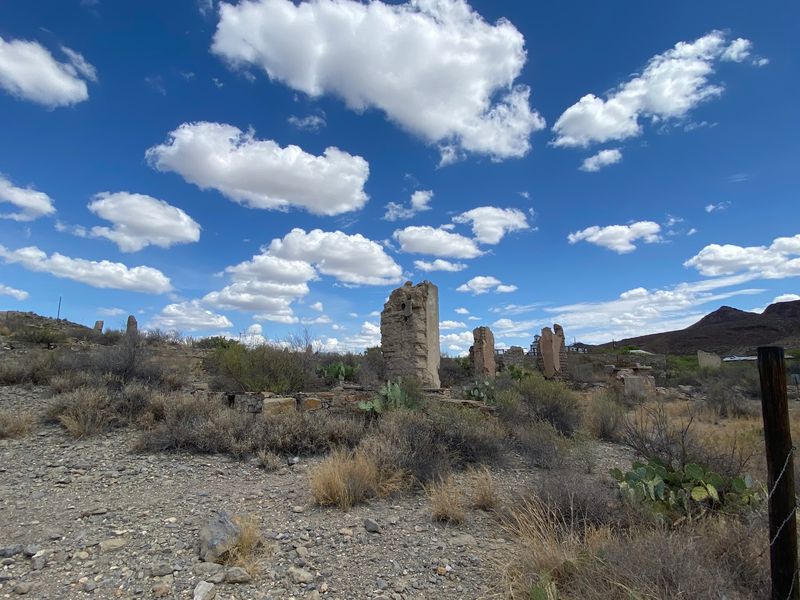
Silver brought people to this remote corner of Texas near the Mexican border, and when the silver ran out, people left just as quickly. Shafter boomed in the late 1800s when prospectors discovered rich veins of silver ore in the nearby hills. At its peak, several thousand miners and their families lived here, making it one of the most important mining operations in Texas.
The town had everything a frontier settlement needed: saloons, stores, a school, churches, and rows of housing for workers. The mining company built extensive infrastructure, including a mill to process ore and a narrow-gauge railroad to haul materials. Money flowed as freely as whiskey, and fortunes were made and lost on the turn of a card.
But silver mining is boom-bust by nature. Veins play out, prices fluctuate, and when the math stops working, operations shut down overnight. By the 1940s, Shafter’s mines had closed for good.
The population drained away like water through a sieve, leaving behind a shell of what had been a vibrant community.
Today, Shafter exists in that strange half-alive state where a handful of residents remain among extensive ruins. The old mill still stands, its machinery rusted solid and windows shattered. Mine entrances gape like dark mouths in the hillsides, tunnels extending deep into the earth where men once risked their lives for precious metal.
Housing structures have mostly collapsed, leaving only foundations and the occasional standing wall. The cemetery holds miners who died in cave-ins, shootouts, and from diseases that frontier medicine couldn’t cure. Some graves belong to children, tiny markers that remind you how hard life was out here.
What’s particularly eerie is how isolated Shafter remains. You’re miles from anything resembling civilization, surrounded by desert mountains and enormous sky. The silence is profound, broken only by wind and the occasional cry of a hawk.
At night, the darkness is absolute, the kind of black that makes you understand why humans fear the unknown.
Legends persist about lost silver still hidden in the hills, waiting for someone clever or lucky enough to find it. Whether true or not, those stories keep treasure hunters poking around, adding a layer of modern desperation to historical tragedy.
Share this story