Illinois is filled with hidden attractions, but few are as unexpected as the towering Rock Men of Rockford. Standing near the Rock River, these massive stone figures blend public art, local history, and larger-than-life craftsmanship into one unforgettable sight.
Their quiet setting makes the discovery feel even more rewarding, catching many visitors by surprise the first time they appear. While they may not attract the crowds of the state’s most famous landmarks, that only adds to their appeal. For travelers who enjoy unusual roadside attractions, hidden gems, and unique photo opportunities, these giant sentinels are well worth seeking out.
The Reveal Beside the River
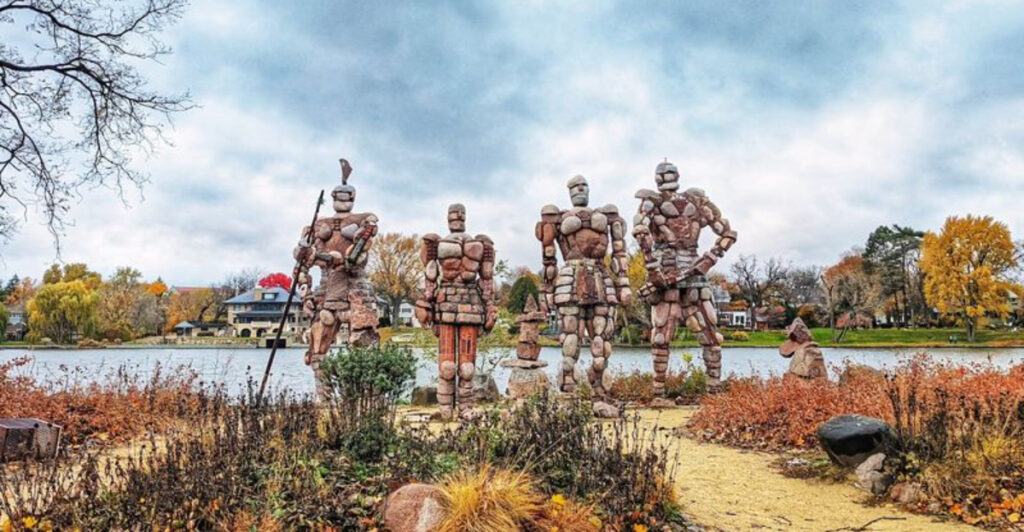
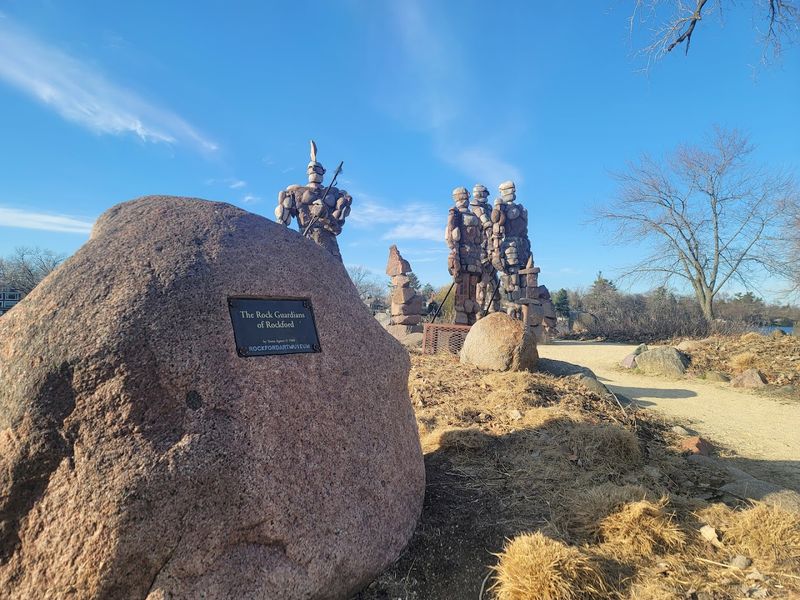
The first surprise at Rock Men is how suddenly the sculptures appear. You can be moving along the Rock River Rec Bike Path with trees, grass, and water setting an easy rhythm, then four huge stone figures step into the scene like they have been waiting for you to notice.
Because there is not much fanfare around the site, the encounter has a stronger visual jolt than many larger attractions.
These are not polished monuments on high pedestals. They stand close enough to the path to feel part of the landscape, with rough boulders, uneven surfaces, and a profile that reads almost prehistoric from a distance.
Against the riverbank, the shapes look both deliberate and elemental, like giant bodies assembled from the same materials already scattered through northern Illinois.
That setting does important work. The water adds motion, the path adds everyday life, and the open sky gives the figures room to dominate without crowding the view.
Runners pass, cyclists slow down, and walkers drift over for a better look, which makes the sculptures feel less isolated than tucked into the normal flow of the park.
Even before you study details, the scale carries the moment. Reports consistently describe them as about twelve feet tall, and that height matters because it turns a quirky art stop into a genuine presence on the riverfront.
Rock Men do not need dramatic lighting or a formal plaza to impress you. The combination of stone, height, and placement handles that all by itself.
How Four Boulder Figures Command the Scene
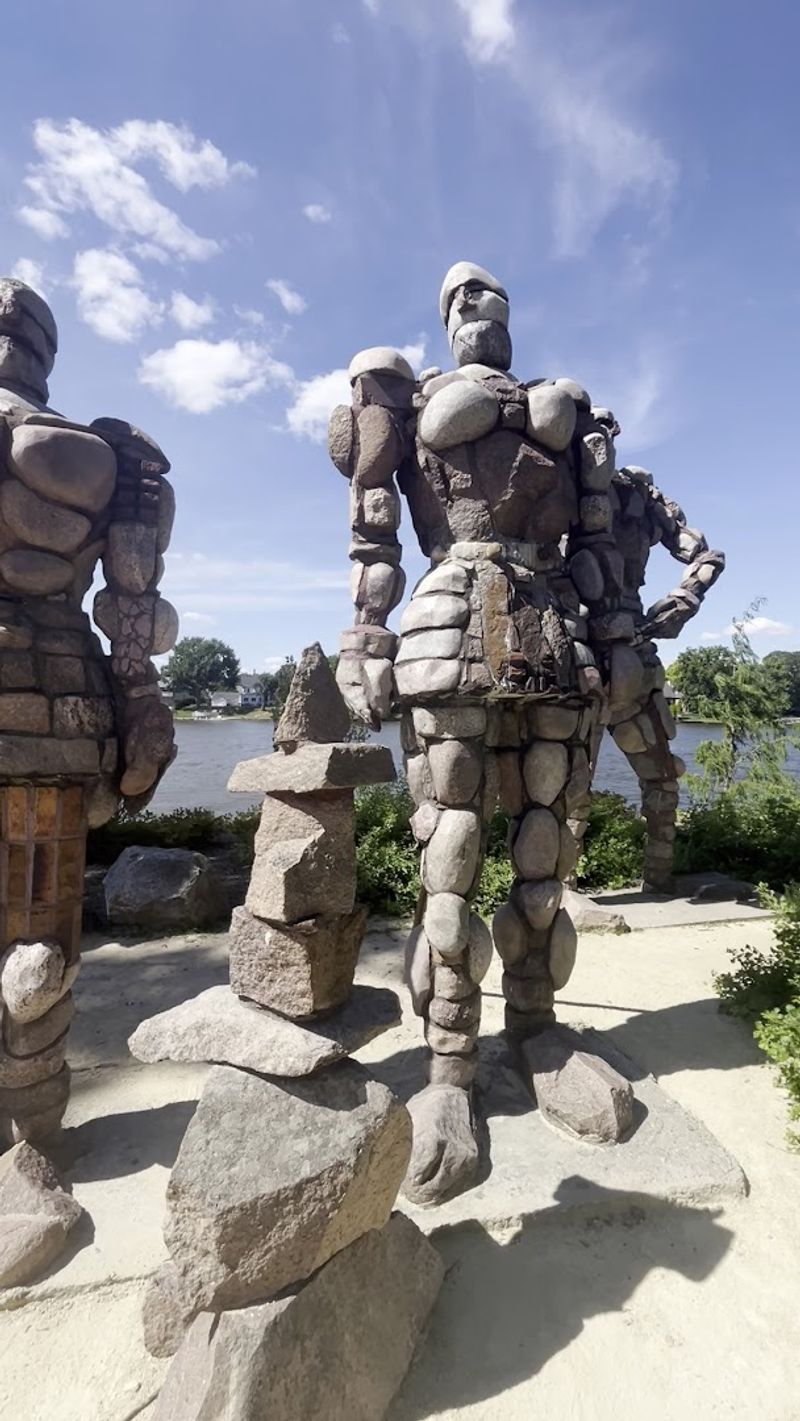
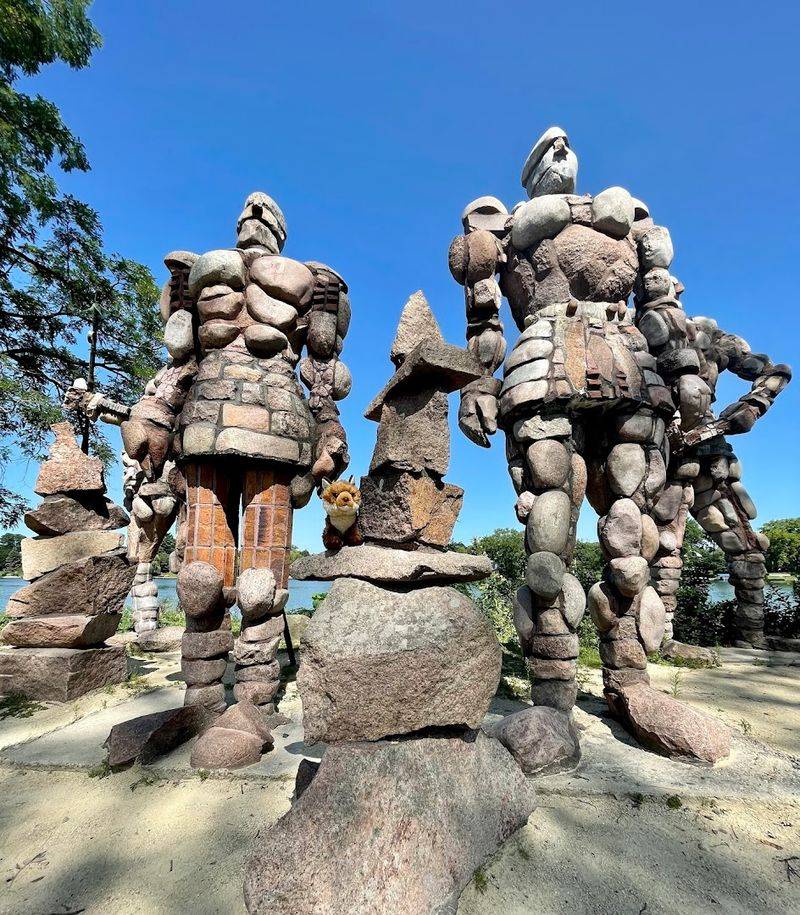
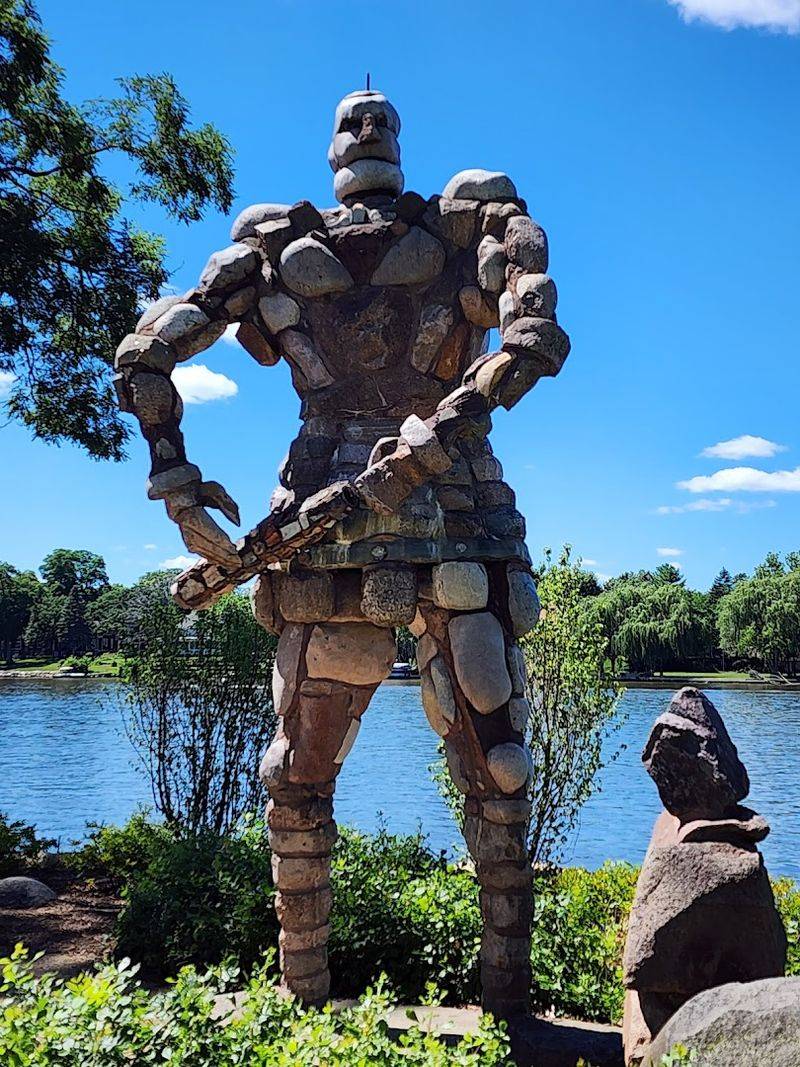
Up close, the construction becomes the real hook. Each figure is built from assorted rocks and boulders, stacked into broad shoulders, thick legs, and blocky heads that read clearly as human without chasing realistic anatomy.
The surfaces stay intentionally rugged, so your eye keeps moving from one stone to the next, tracing how weight, shape, and balance hold together in a form that seems almost impossible at first glance.
The silhouettes are simple enough to understand from far away, yet the texture rewards a slower look. Some stones are rounded, some flatter, some noticeably larger than their neighbors, and the cement binding them is part of the visual story rather than something hidden.
Instead of smoothing over the joins, the sculpture leaves the assembly visible, which gives the figures a muscular, hand-built honesty.
There is also a strange tension between playfulness and severity. They can read like guardians, soldiers, or oversized river watchers depending on your angle, but they never become cute.
Standing beneath them shifts the scale dramatically, because a detail that seemed whimsical from a distance turns imposing when the torso rises far above eye level and the arms lock into rigid, upright poses.
That is why Rock Men work so well as public art. You do not need a plaque to understand the basic gesture, but the longer you look, the more the material choices matter.
These sculptures are direct, physical, and easy to grasp in seconds, yet they keep offering fresh details in the stonework. For a quick stop on a path, that combination is harder to pull off than it looks.
A Strange Landmark with Deep Rockford Energy
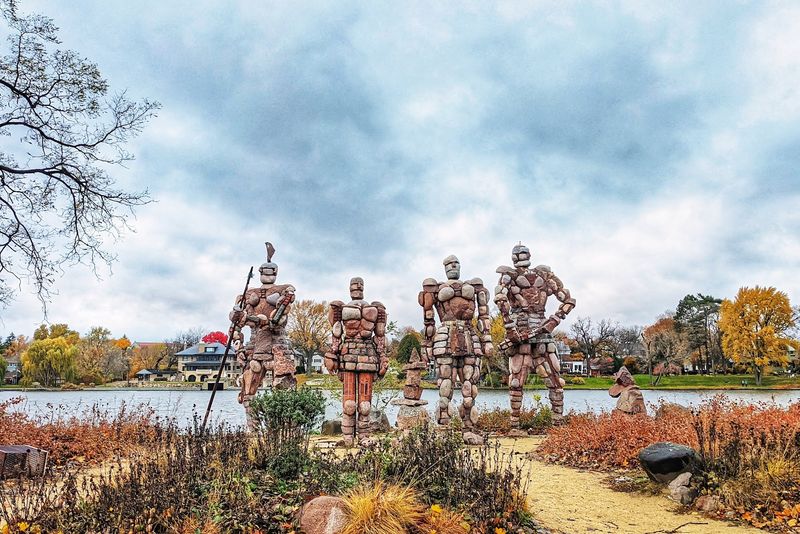
Some attractions could be dropped into almost any city and barely change character. Rock Men could not. The sculptures tap directly into Rockford’s setting by using stone mass, riverfront placement, and a straightforward Midwestern openness that suits the site far better than anything overly polished or decorative would.
The name helps too. In a city called Rockford, giant figures made from rock standing by the Rock River carry an almost playful inevitability, as if the idea had been hiding in plain sight all along.
Yet the execution avoids gimmick territory because the forms are large, stark, and physically convincing enough to feel like an actual landmark rather than a visual pun.
That local fit matters when you consider how public art lives in a city. It needs to be memorable without becoming disconnected from daily surroundings, and these figures manage that balance by belonging to the river path instead of overpowering it.
They become part of a walk, a run, a picnic stop, or a bike ride, which gives them a civic usefulness beyond posing for photos.
Rockford, Illinois gets an extra lift from that specificity. Plenty of cities have river walks and scattered sculptures, but not many have a cluster of twelve-foot stone sentinels that seem custom-built for the local name and landscape.
The result is the kind of place detail travelers chase: not a blockbuster, not overproduced, and not trying too hard. It is simply odd, solid, and tied to its setting in a way that makes the whole stop more satisfying than you expect.
The River Path Is Half the Experience
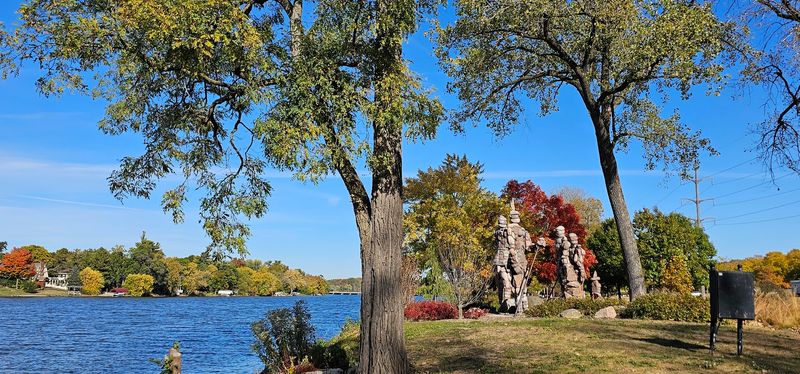
Rock Men are easier to appreciate when you treat them as part of a moving landscape instead of a stand-alone object. The Rock River Rec Bike Path adds that motion immediately, giving you long sightlines, changing angles, and enough room to approach the sculptures gradually rather than all at once.
That approach makes the statues feel larger, because the path keeps resetting your perspective as you near them.
The setting is practical as well as scenic. This is the kind of place where you can pause on a bench, take a short stroll, or fold the sculptures into a longer walk without much planning.
Open lawns and river views keep the area from feeling cramped, and the path naturally encourages a slower pace than a quick roadside stop would.
There is a nice contrast between the steady activity of the trail and the rigid stillness of the figures. Runners move through, bikes hum past, dogs circle patches of grass, and the river continues its own quiet flow while the sculptures stay fixed, almost ceremonial.
That contrast gives the installation energy even though the artwork itself never changes position or pose. For travelers, this matters because the stop can become more than a photo opportunity. You are not parking, snapping one frame, and leaving from a barren pull-off.
You are stepping into an active riverside corridor that supports a fuller outing, whether that means stretching your legs for fifteen minutes or lingering longer with the water in view. The sculptures anchor the scene, but the path gives them context, rhythm, and a reason to revisit from a different direction.
The Backstory That Adds Weight
Rock Men are visually strong enough to work without context, but the backstory gives them extra weight. The installation is associated with artist Terese Agnew, and local references place its creation in 1987 before a later move to the current riverfront site.
Those details matter because they frame the sculptures as a durable piece of public art with a life inside the city, not a novelty recently planted for attention.
The age shows up in a good way. Public artworks that survive changes in location, trends, and surrounding development usually do so because they keep earning space through recognizability.
Rock Men clearly pass that test. Even with sparse signage, they remain a point of curiosity and affection, which says a lot about how unusual forms can settle into community identity over time.
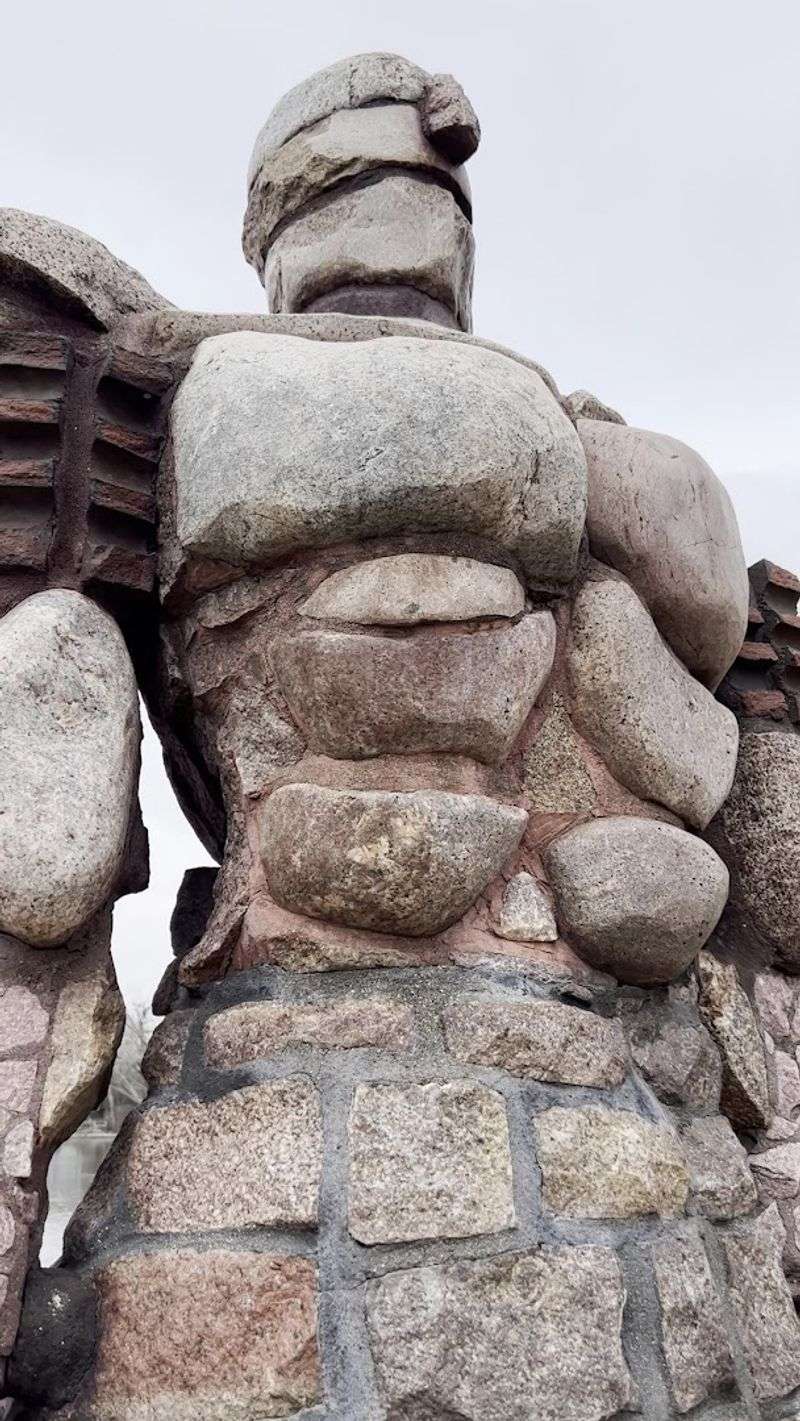
There is also a pleasing contradiction in the material itself. The figures look ancient, almost mythic, yet the work is undeniably constructed, with cement and support structure doing the hard engineering behind the illusion of stacked stone bodies.
That combination of primitive appearance and practical fabrication makes the sculptures more interesting than if they were either purely natural or slickly contemporary.
Knowing this history changes the way you read the site. The four figures stop being random roadside oddities and become a long-standing chapter in Rockford’s public landscape, one that has adapted while keeping its core image intact.
You can still enjoy them in ten seconds as giant stone guardians beside the river. But once you understand that they have endured, moved, and remained recognizable for decades, the encounter carries more substance than a casual detour usually delivers.
Best Time to Go and What to Notice
Because Rock Men sit outdoors on an always-open path, timing changes the experience more than admission rules or schedules ever could.
Early morning gives the site a cleaner, quieter stage, with softer light on the stone surfaces and fewer distractions along the trail.
Late afternoon can work just as well if you want warmer color and a busier riverside scene that makes the sculptures feel woven into everyday park life.
The smartest approach is to give yourself time to circle and pause. From one angle, the figures read as a group holding formation; from another, the spacing between them becomes more apparent and the river starts sharing equal attention.
Looking at them straight on emphasizes their height, while a side view makes the stacked boulders and structural logic easier to read.
It also helps to arrive with realistic expectations. This is not a giant campus of attractions with heavy interpretation, gift shops, or a dramatic entrance sequence.
Signage can be easy to miss, and the appeal depends on appreciating scale, texture, and placement rather than checking off a long list of activities. In other words, the stop rewards curiosity more than spectacle chasing.
Practical details stay fairly simple. Parking is typically available nearby, the path makes access straightforward for walkers and cyclists, and benches in the area support a longer pause if you want one.
Since this is a riverside park environment, ground conditions can vary, and it is wise to watch where you step. The sculptures are the headline, but the best visit comes from paying attention to the whole setting around them.
Why This Quiet Illinois Sculpture Stop Wins
Rock Men succeed for a reason many attractions miss: they are unusual without being overexplained. You do not need a long introduction to understand the basic thrill of four giant stone figures standing guard near the water.
At the same time, the site avoids the disposable feel of a quick gimmick because the materials, scale, and riverfront placement give the work real physical authority.
There is also value in how modestly the place presents itself. The sculptures are not wrapped in heavy branding or staged behind layers of commercial distraction.
You find them through the park, the path, and the river, which makes the experience feel discovered rather than delivered. In an era when so many stops are built to funnel attention in predictable ways, that quiet confidence lands differently.
For Rockford, the installation functions as both artwork and shorthand for local character. It is outdoorsy, a little offbeat, and more substantial than it first appears.
Travelers can pair it with other nearby stops if they want a fuller day, but Rock Men do not need backup to justify the visit. They hold attention on their own because the image is so direct: towering bodies made of rock, posted beside a river, unbothered by trends.
If you are the kind of traveler who likes the polished, obvious, and heavily signposted, this may register as a brief detour. If you enjoy places with texture, scale, and a strong sense of setting, Rock Men hit a much sweeter spot.
They turn an ordinary stretch of path into a small urban myth rendered in stone. That is a rare trick, and it explains why this quiet Illinois stop keeps earning repeat looks.
Share this story