Texas barbecue has earned worldwide fame, drawing millions of visitors every year who want to taste what all the fuss is about. But here’s the thing: just because a place has long lines and packed parking lots doesn’t mean it’s serving the best brisket in town. Locals have learned which big-name chains are coasting on reputation rather than quality, and they’ve quietly moved on to spots that actually deliver on flavor.
If you want to eat like a true Texan instead of a tourist, it helps to know which popular chains are worth skipping.
1. Rudy’s Country Store & Bar-B-Q (San Antonio)
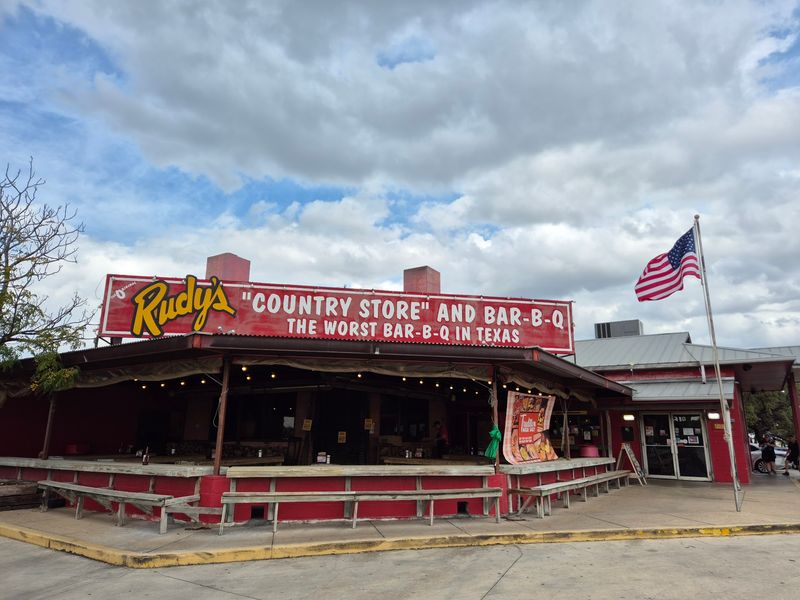
Walk into any Rudy’s location and you’ll spot tour buses in the parking lot before you even smell the smoke. This gas station-turned-BBQ-joint built its reputation on convenience and consistency, which sounds great until you realize that means every piece of meat tastes exactly the same across dozens of locations. The brisket comes pre-sliced and sitting under heat lamps, losing that crucial bark and moisture that makes Texas BBQ special.
San Antonio locals will tell you the truth: Rudy’s is fine if you’re road-tripping and need something quick off the highway. But if you’re actually in town with time to spare, there are family-owned spots serving meat that was smoked that morning, not shipped from a central kitchen. The sides taste like they came from industrial-sized containers, and the sauce can’t hide the fact that the meat itself lacks depth.
What really gives Rudy’s away is the assembly-line feel of the whole operation. You order at a counter, grab your meat on butcher paper, and move along like you’re at a cafeteria. There’s nothing wrong with efficiency, but BBQ is supposed to have soul.
When every location looks identical and serves identical food, something essential gets lost.
Tourists love Rudy’s because it feels authentically Texan with its corrugated metal walls and country store vibe. Locals know better because they’ve tasted what real pit masters can do when they’re not trying to serve 500 people an hour. If you want barbecue that actually reflects San Antonio’s unique food culture, skip the chain and find a place where the owner is still tending the smoker out back.
2. The Salt Lick (Driftwood)
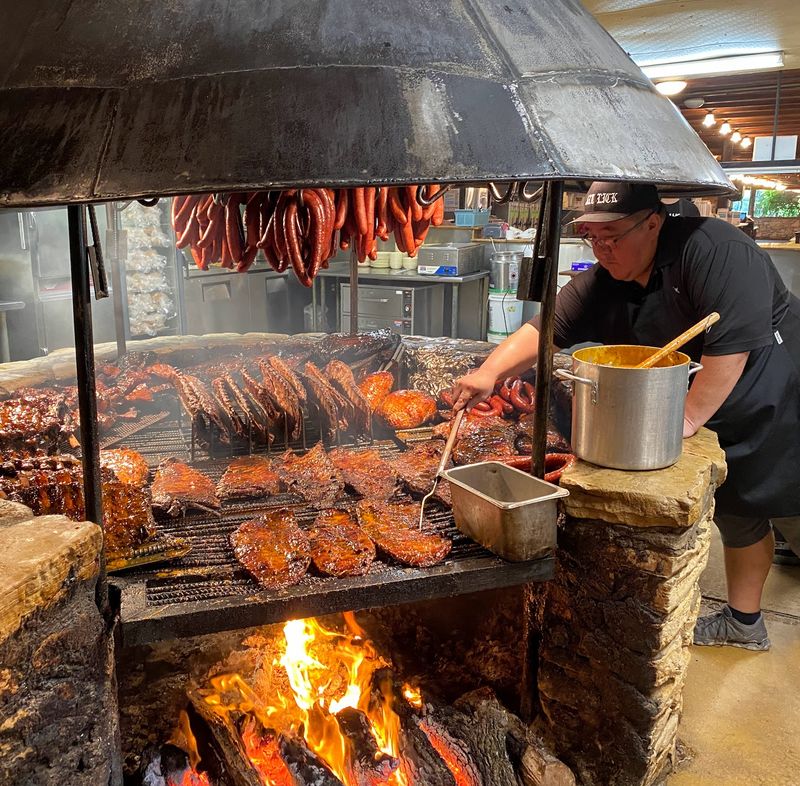
Positioned in the beautiful Hill Country outside Austin, The Salt Lick has become more of a destination experience than an actual barbecue restaurant. Tourists flock here for the scenic drive, the sprawling outdoor seating, and the Instagram-worthy rustic buildings. But ask any Austin local where they go for brisket, and The Salt Lick rarely makes the list.
The problem isn’t that the food is terrible, it’s that it’s aggressively mediocre while charging prices that suggest otherwise.
The all-you-can-eat family-style option sounds appealing until you realize you’re getting quantity over quality. The brisket tends to be dry, the ribs lack the fall-off-the-bone tenderness you’d expect, and everything tastes like it’s been sitting out for the tour groups that arrived an hour before you. Their signature sauce is sweet and tangy, which some people love, but it’s doing a lot of heavy lifting to mask meat that should be flavorful enough on its own.
What really bothers locals is how The Salt Lick has leaned into its tourist appeal rather than focusing on the craft of smoking meat. They’ve expanded into airports and grocery stores, turning what was once a genuine family recipe into a brand you can find anywhere. When a BBQ joint starts worrying more about merchandise and licensing deals than perfecting their smoke ring, you know priorities have shifted.
The setting is undeniably pretty, and if you’re visiting from out of state, you might enjoy the whole experience. But people who live in Central Texas know there are dozens of smaller joints serving better brisket without the hour-long wait or the tourist-trap pricing. Real barbecue doesn’t need a gift shop.
3. Smokey Mo’s BBQ (Cedar Park)
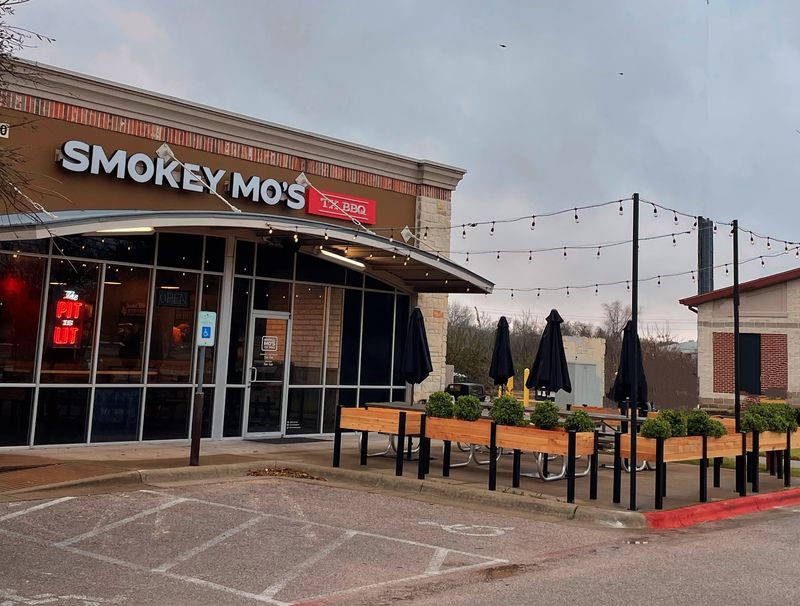
Smokey Mo’s has carved out a niche in the Austin suburbs by offering fast, affordable barbecue that’s perfect for families on a budget. The problem is that locals who know their brisket can taste the shortcuts immediately. The meat here is smoked, sure, but it lacks the time and attention that separates good BBQ from great BBQ.
Everything feels rushed, like they’re more concerned with turnover than with letting the smoke do its magic.
Cedar Park residents initially welcomed Smokey Mo’s as a convenient option close to home. But once you’ve had brisket from a place that actually takes pride in their craft, it’s hard to go back to meat that tastes like it was cooked on a schedule rather than by feel. The texture is often inconsistent, with some slices being tender and others requiring serious jaw work.
The sides are standard cafeteria fare, nothing that would make you order them twice.
Where Smokey Mo’s really shows its chain restaurant roots is in the atmosphere. Bright lighting, plastic trays, and a dining room that could belong to any fast-casual concept in America. Texas BBQ is supposed to feel like you’re eating at someone’s backyard cookout, not grabbing lunch at a corporate franchise.
The staff is friendly enough, but nobody there is going to tell you stories about their grandfather’s smoking techniques.
Tourists staying in Cedar Park hotels might stop by because it’s nearby and the prices are reasonable. Locals drive past it to hit up the smaller spots where the owner still shows up at 4 AM to start the smokers. When you’re competing in Texas, being “good enough” just doesn’t cut it, especially when truly great barbecue is only a few miles away.
4. Dickey’s Barbecue Pit (Dallas)
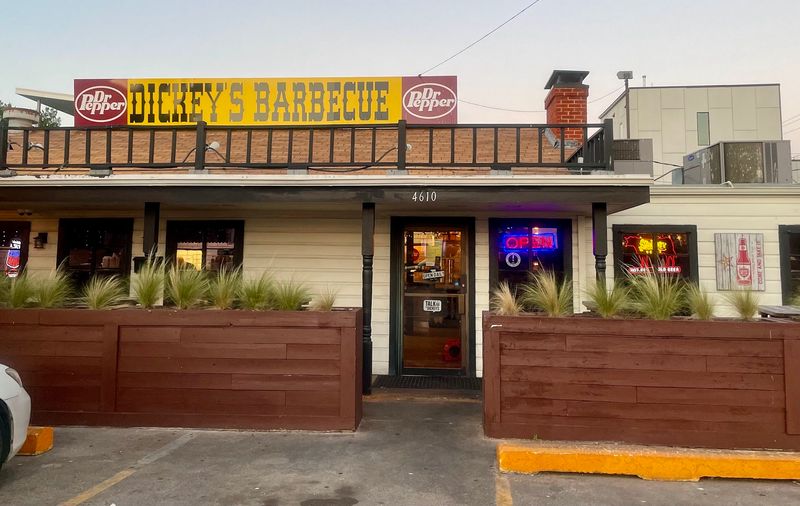
Started in Dallas back in 1941, Dickey’s has the history to back up its claims of authenticity. Unfortunately, somewhere along the path to becoming the largest BBQ chain in America, quality took a back seat to expansion. With over 500 locations nationwide, Dickey’s has become the fast food of barbecue, which is exactly what serious BBQ lovers try to avoid.
The meat is cooked off-site in many locations and reheated, which any Texan will tell you is basically a crime against brisket.
Dallas locals remember when Dickey’s was a single family-owned spot that actually slow-smoked everything on premises. Now it’s a franchise operation where teenagers in yellow shirts serve pre-portioned meat that tastes like it came from a vacuum-sealed bag. The brisket is often tough and flavorless, relying entirely on sauce to provide any taste at all.
The ribs are worse, with a rubbery texture that suggests they’ve been sitting in a warming drawer for way too long.
What makes Dickey’s particularly frustrating is how it markets itself as authentic Texas barbecue while doing everything possible to industrialize the process. Real BBQ can’t be rushed or mass-produced, but Dickey’s tries anyway because that’s what the franchise model demands. You end up with food that technically qualifies as barbecue but misses everything that makes it special.
Tourists grab Dickey’s because they recognize the name and it’s often located near hotels or airports. Locals won’t touch it unless they’re absolutely desperate and everything else is closed. Dallas has some of the best barbecue in the entire state, with pit masters who’ve dedicated their lives to perfecting their craft.
Choosing Dickey’s when you’re in Dallas is like visiting Italy and eating at Olive Garden.
5. Cooper’s Old Time Pit Bar-B-Que (Llano)
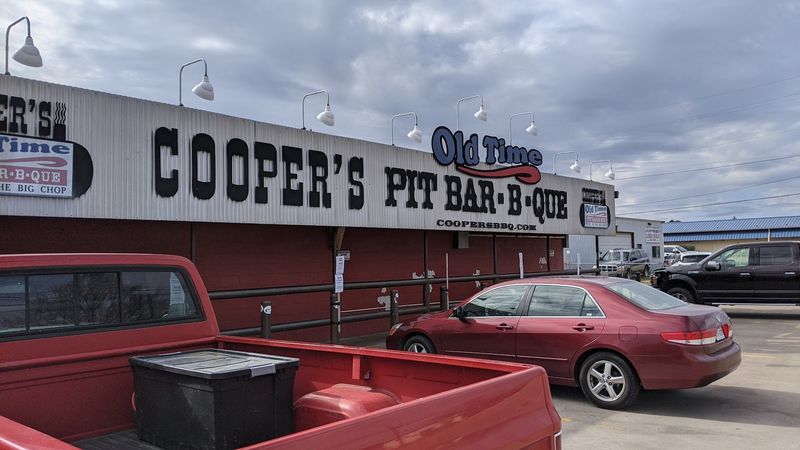
Cooper’s started as a genuine Hill Country treasure, the kind of place where you’d pick your meat straight from the pit and watch the smoke billow into the Texas sky. Llano locals loved it because it felt real and unpretentious, just good meat cooked over mesquite with no fancy nonsense. Then Cooper’s started expanding, opening locations in bigger cities and slowly transforming from a local secret into a tourist attraction.
That’s when things started changing.
The original Llano location still has charm, but even there you can feel the shift toward serving volume rather than perfection. The brisket isn’t bad, but it’s not the transcendent experience it used to be. They’ve streamlined the process to handle larger crowds, which means the meat doesn’t get the individual attention it needs.
You’ll notice more tourists than locals these days, which tells you everything you need to know about how the quality has shifted.
What really bothers longtime fans is how Cooper’s has leaned into its reputation instead of continuing to earn it. They’ve opened locations in New Braunfels, Fort Worth, and even San Antonio, spreading themselves thin in the process. Each new location means more standardization, more corporate oversight, and less of that authentic pit master touch that made Cooper’s special in the first place.
The sides have become generic, the service feels rushed, and the whole experience lacks the soul it once had.
Out-of-towners still rave about Cooper’s because they don’t know what it used to be. Locals who remember the old days feel a sense of loss, like watching a beloved neighborhood spot sell out for wider appeal. Llano has other options now, smaller places run by people who still care more about the smoke than the bottom line.
6. Bill Miller Bar-B-Q (San Antonio)
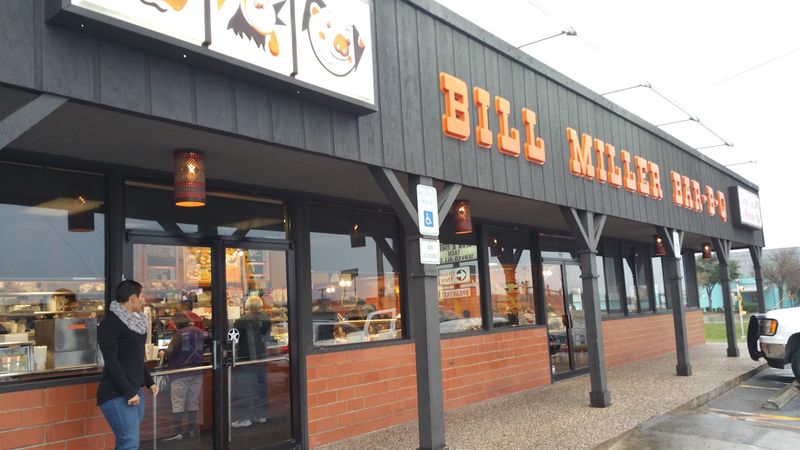
San Antonio has over 70 Bill Miller locations, which should tell you everything about whether this is a craft BBQ operation or a fast-food chain that happens to serve smoked meat. Locals have a complicated relationship with Bill Miller because it’s cheap, convenient, and open late, but nobody’s going there for quality barbecue. It’s more like Tex-Mex fast food that includes brisket on the menu.
The fried chicken is actually more popular than the BBQ, which says something about priorities.
The brisket at Bill Miller is pre-sliced, often dry, and completely lacking the bark and smoke flavor that defines good Texas barbecue. It’s the kind of meat you eat when you’re in a hurry or on a tight budget, not when you’re actually craving real BBQ. The sides are standard fast-food quality, with beans that taste canned and coleslaw that’s mostly mayonnaise.
Everything comes served on styrofoam plates with plastic utensils, reinforcing the fast-food vibe.
What makes Bill Miller particularly uninspiring is how it doesn’t even try to pretend it’s authentic barbecue. The restaurants look like any other fast-food chain, with drive-through windows and bright interiors designed for quick turnover. There’s no smoke pit visible, no smell of mesquite in the air, nothing that connects you to the tradition of Texas BBQ.
It’s barbecue in name only.
Tourists sometimes end up at Bill Miller because it’s everywhere in San Antonio and the prices are low. Locals use it as a last resort or when they need something quick before a kid’s soccer game. But if you’re visiting San Antonio and actually want to experience what makes Texas barbecue special, Bill Miller is absolutely not where you should be eating.
There are family-owned joints all over the city serving meat that will make you understand why people take BBQ so seriously here.
7. Sonny Bryan’s Smokehouse (Dallas)
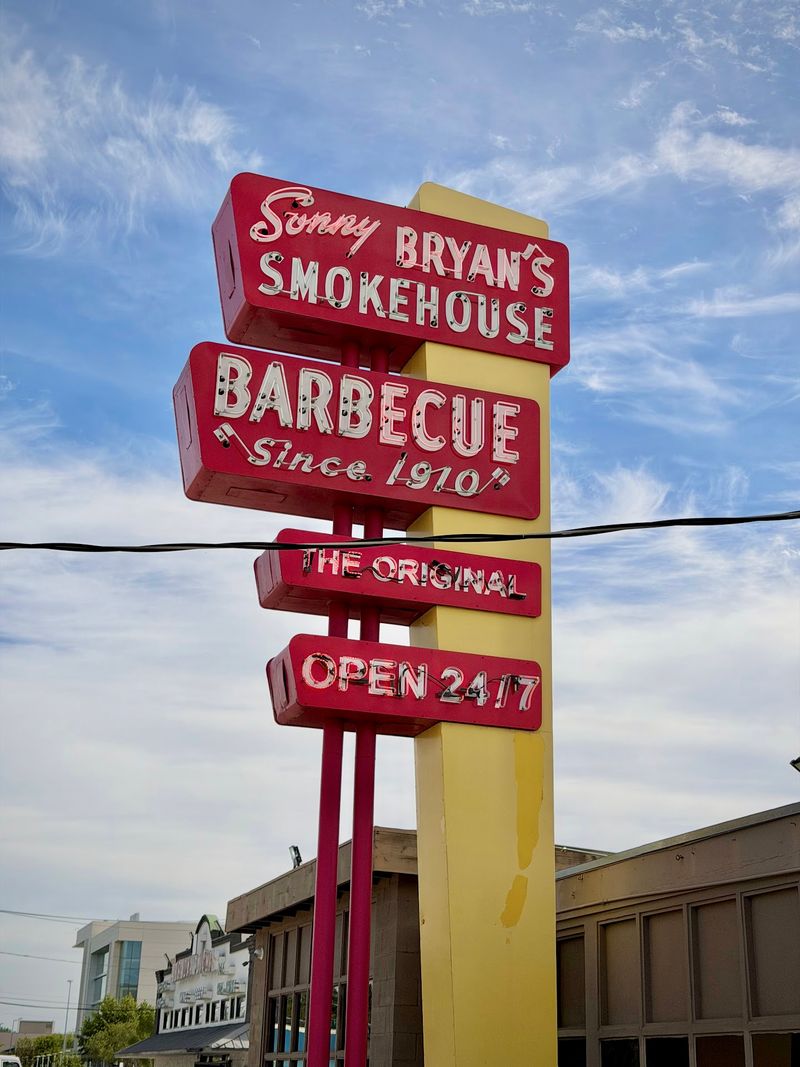
Sonny Bryan’s opened in 1910 and earned legendary status in Dallas for decades, becoming the kind of place where politicians and celebrities would wait in line alongside construction workers. The original tiny location on Inwood Road was cramped, hot, and uncomfortable, but the brisket was so good nobody cared. Then the family sold the business, and like so many beloved Texas institutions, expansion killed what made it special.
Now there are multiple locations, and the quality has dropped dramatically.
The brisket that once had people lining up around the block is now just okay, lacking the deep smoke flavor and perfect tenderness that built the reputation. The new locations feel sterile and corporate, with none of the character that made the original spot a Dallas landmark. They’ve tried to recreate the old-school vibe with vintage signs and memorabilia, but it feels forced, like a theme restaurant version of what used to be authentic.
Long-time Dallas residents talk about Sonny Bryan’s with nostalgia, remembering when it was truly great. But most of them have moved on to other spots that still care about the craft. The current version trades on a name and history it no longer lives up to, serving tourists who’ve read about it in outdated guidebooks but don’t know that the magic is gone.
What’s particularly sad about Sonny Bryan’s decline is that it represents a larger trend in Texas BBQ. Small family operations build incredible reputations through hard work and dedication, then get bought out by people who see dollar signs instead of tradition. The new owners expand rapidly, cut corners to maintain profit margins, and watch the quality slide while still charging premium prices based on past glory.
Locals see through it immediately and find new favorites.
Share this story