Somewhere on the Massachusetts coast stands a house built with roughly 100,000 newspapers, right down to paper furniture that includes chairs, a desk, and even a clock. Once I learned that existed, I had to know what other strange places Massachusetts was hiding.
The answer goes well beyond lighthouses, lobster rolls, and the colonial history everyone learns in school. There is a giant glass globe you can step inside, where even a whisper comes bouncing back.
Deep in the woods, enormous boulders form narrow passages you can squeeze through. Elsewhere, an old-fashioned carousel still lets riders reach for the brass ring.
A few of these attractions are already famous, but their stories are much stranger than their names suggest. That is what I love about this list.
Massachusetts manages to pack an impressive amount of weirdness into one small state, and I have a feeling at least one of these places will have you reaching for the map.
1. The Mapparium

Most globes sit politely on a desk, but this one lets you stroll straight through the middle of the planet. The Mapparium is a three-story stained-glass globe inside the Mary Baker Eddy Library in Boston.
Workers completed it in 1935 using 608 glass panels. A glass bridge carries you across the inside, so oceans and continents wrap around you on every side.
The map shows the world as it looked in the mid-1930s. You’ll spot country names and borders that no longer exist, which turns your visit into a fun history puzzle.
Try hunting for places your grandparents might have known by different names. It’s a sneaky geography lesson, and nobody has to take a quiz afterward.
The real party trick is the sound. Because the room is shaped like a sphere, voices bounce in odd ways, and a soft whisper can travel farther than you’d expect.
Bring a friend and test it out together. You may feel a little silly murmuring at a glass wall, but the payoff is worth the giggles.
Visits to the globe usually happen as guided presentations with lights and narration. Check the schedule ahead of time so you aren’t stuck waiting in the lobby.
The library also offers exhibits on ideas, history, and the woman who founded The Christian Science Monitor. You can easily spend longer than you planned without noticing the clock.
Outside, the Christian Science Plaza stretches out with a long reflecting pool. Pair the two for a Boston afternoon that feels nothing like the usual Freedom Trail stops.
Address: 200 Massachusetts Ave, Boston, MA 02115
2. The Amazing World of Dr. Seuss Museum
Long before the Cat in the Hat wrecked anyone’s living room, Theodor Geisel was a kid growing up in Springfield. His hometown now honors him with a whole museum full of rhymes and wild colors.
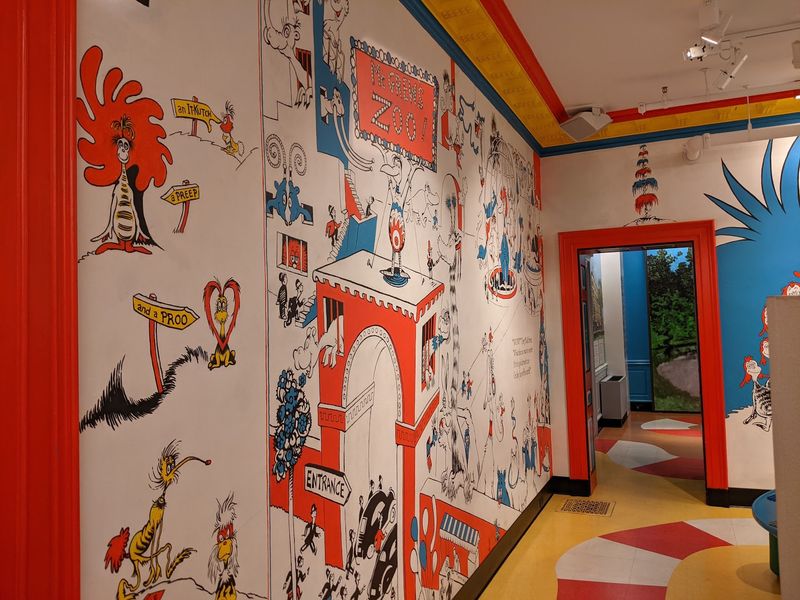
The Amazing World of Dr. Seuss Museum opened in 2017 as part of the Springfield Museums. The first floor is hands-on, with bright spaces built around his famous characters and stories.
Younger visitors can play with words, sounds, and silly settings pulled straight from the books. Adults usually end up reciting lines they haven’t thought about in decades.
Head upstairs for the quieter, more personal side of Geisel. You’ll find family items and pieces tied to his life and work, which help explain how a Springfield boy became a worldwide storyteller.
Did you know one of his earliest books took its name from a real street? Mulberry Street is an actual Springfield road, and it starred in “And to Think That I Saw It on Mulberry Street.”
That detail makes the city feel like a living page from his imagination. Keep an eye on the street signs during your drive in.
Outside, the Dr. Seuss National Memorial Sculpture Garden fills the museum quadrangle with bronze figures. Horton, the Grinch, and Yertle the Turtle make perfect photo partners for kids and grown-ups alike.
The sculptures were created by Lark Grey Dimond-Cates, his stepdaughter. Knowing they came from family adds a sweet layer to the whole experience.
Your ticket also covers other Springfield Museums on the same quadrangle, including art and science collections. Plan for a longer visit than you think, because one Seuss stop can easily become a full day.
Address: 21 Edwards St, Springfield, MA 01103
3. Mount Greylock State Reservation
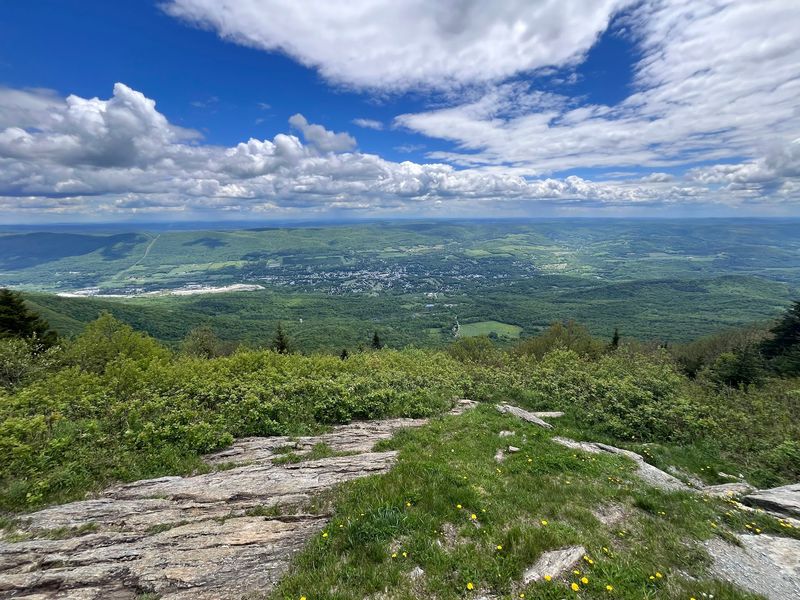
At 3,491 feet, Mount Greylock is the highest point in Massachusetts. That’s tall enough to make your ears pop and your phone fill up with view photos.
The state reservation covers a big chunk of the Berkshires. On clear days, the summit view rolls across several states, and the mountains look like folded green blankets.
Here’s a fun bonus for hikers. The famous Appalachian Trail crosses right over the summit, so you can say you walked a piece of that legendary path.
Not a hiker? No problem, because a seasonal road climbs to the top.
You can drive up, stretch your legs, and still feel like you earned something.
A stone memorial tower stands at the peak and honors the state’s veterans. You can’t miss it, since it rises above the summit like a giant lighthouse on land.
Nearby, Bascom Lodge is a rustic stone and wood building from the 1930s. It was built by the Civilian Conservation Corps, a Depression-era program that put young men to work on public lands.
Start at the visitor center at the base of the mountain. Rangers and exhibits can help you choose trails that match your energy level and your snack supply.
Fall is a showstopper here, when the slopes turn red, orange, and gold. Summer brings cooler temperatures up top, so pack a light jacket even on a hot day.
The summit road usually closes for the colder months. Check conditions before you go so your mountain adventure doesn’t end at a locked gate.
Address: 30 Rockwell Rd, Lanesborough, MA 01237
4. Hammond Castle
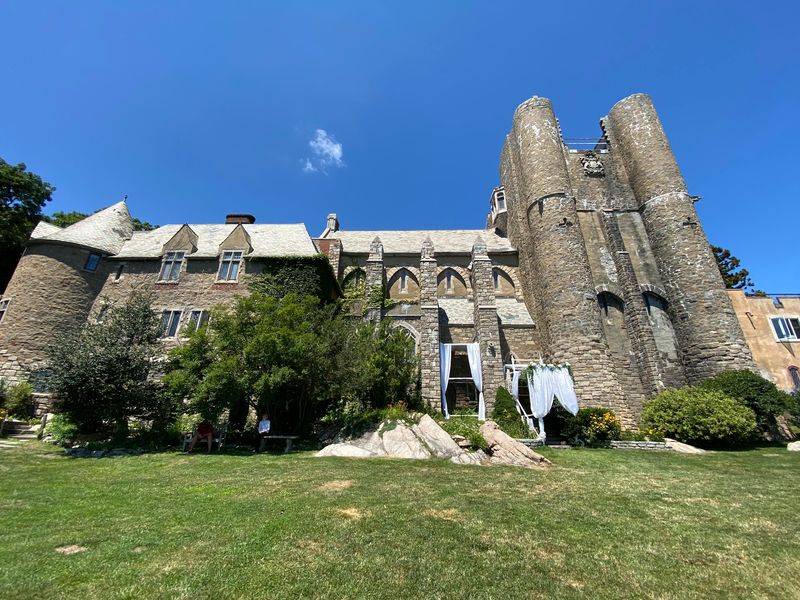
An inventor with hundreds of patents decided he needed a castle by the sea, so he built one. Hammond Castle sits on the rocky coast of Gloucester and looks like it wandered out of a fairy tale.
John Hays Hammond Jr. built it between 1926 and 1929. He’s often called the father of radio control, thanks to his early work guiding boats and other devices without wires.
The castle served as his home and his laboratory. It also held his large collection of historical pieces from Europe, which he worked right into the walls and rooms.
One standout is the great hall with its massive pipe organ. Hammond loved music, and the organ ranks among the castle’s most famous features.
Wait until you see the indoor courtyard. It was designed to look like an old European village square, complete with a pool in the middle.
Hammond had fun with his home, too. Stories of secret passages and surprising design tricks make the tour feel a bit like a puzzle game.
The location adds drama of its own. The castle overlooks the water near Norman’s Woe, the reef made famous by Longfellow’s poem “The Wreck of the Hesperus.”
Grab your camera for the outside views before or after your tour. The stone towers against the ocean make one of the North Shore’s most striking scenes.
The museum tends to keep seasonal hours and hosts special events. Look up the schedule before your trip to Gloucester so you can plan around it.
Address: 80 Hesperus Ave, Gloucester, MA 01930
5. The Paper House
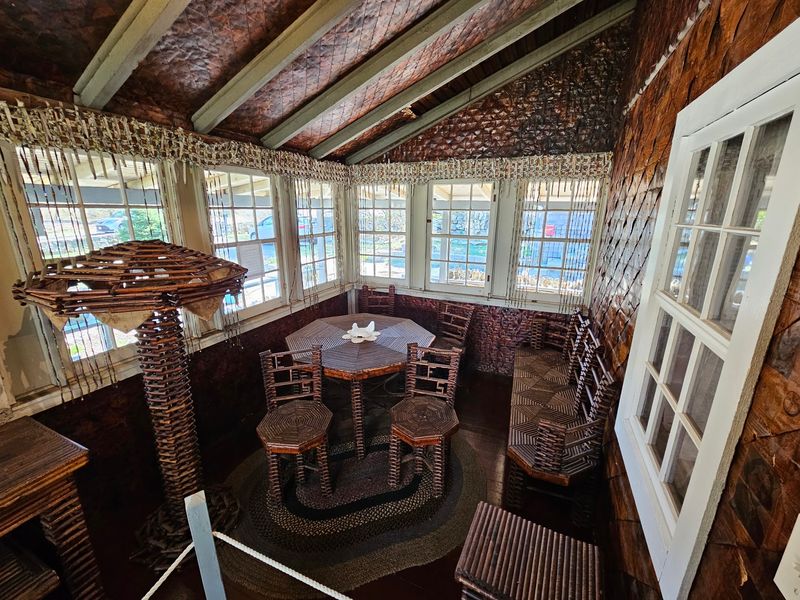
Most people toss yesterday’s newspaper into the recycling bin. Elis Stenman used his to build an entire house.
Stenman was a mechanical engineer who designed machines that made paper clips. In 1922, he started building a summer home in Rockport, and he decided paper would be the main material.
He used about 100,000 newspapers in the project. The walls are layers of paper pasted together with glue and coated with varnish to protect them from the weather.
The frame, roof, and floors are wood, so the house isn’t paper from top to bottom. Still, the walls are, and that’s plenty impressive.
Then he kept going inside. Stenman rolled newspapers into tight logs to make furniture, including chairs, a desk, and a clock.
Get close and you can still read some of the headlines. It’s like flipping through a giant scrapbook from nearly a century ago.
Bring curious kids along for a fun scavenger hunt. Challenge them to spot old dates, advertisements, or famous names hiding in the walls.
The house is small, so your visit won’t take long. That makes it an easy add-on to a day exploring Rockport’s shops and harbor.
It’s usually open during the warmer months, and visitors are asked for a small fee or donation. Check ahead for seasonal timing before you head out.
Honestly, it might change the way you look at your junk mail. Who knew newsprint could last this long when someone treats it like lumber?
Address: 52 Pigeon Hill St, Rockport, MA 01966
6. Bridge of Flowers
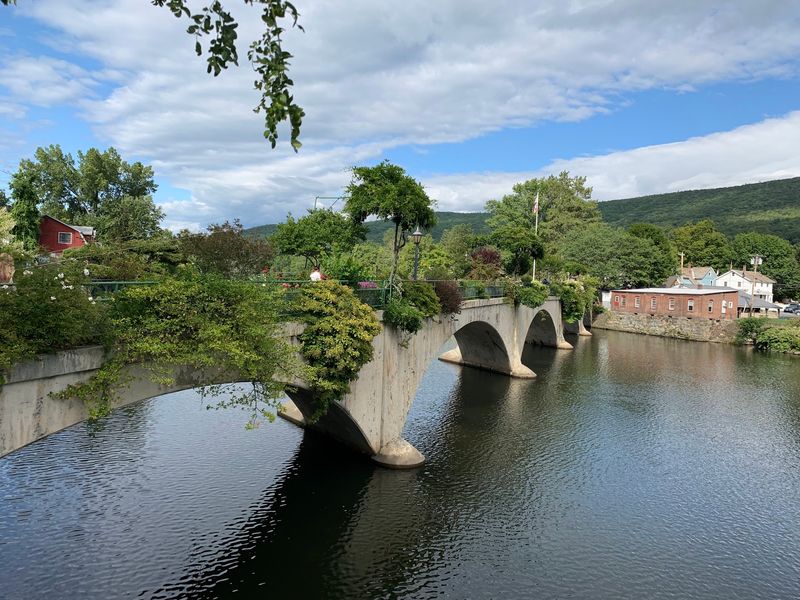
Trolleys once rumbled across this bridge carrying freight and passengers. Now it carries tulips, roses, and a steady stream of flower fans.
The Bridge of Flowers spans the Deerfield River in Shelburne Falls. It was built in 1908 as a trolley bridge and stretches about 400 feet from one side to the other.
When the trolley line shut down, the bridge sat unused. In 1929, the local women’s club turned it into a garden, and the idea took root in the best way.
Today, volunteers and gardeners keep it blooming through the season. The plantings change as spring turns to summer and fall, so a return trip can look totally different.
You’ll walk along a path lined with flowers, shrubs, and vines. Stop often, because the river views below are just as pretty as the petals.
The bridge is usually open from spring through fall and closes in the winter. Visiting is free, though donations help keep the gardens growing.
Don’t leave town too quickly. The nearby glacial potholes are round holes carved into the riverbed rock by swirling water and stones long ago.
Those smooth, curving rock shapes make a fun contrast to the flowers upstream. They look almost like giant bowls scooped out by a playful hand.
Shelburne Falls itself is a small village with shops and places to grab a bite. It makes a relaxing stop along the Mohawk Trail in western Massachusetts.
Address: 22 Water St, Shelburne Falls, MA 01370
7. MASS MoCA
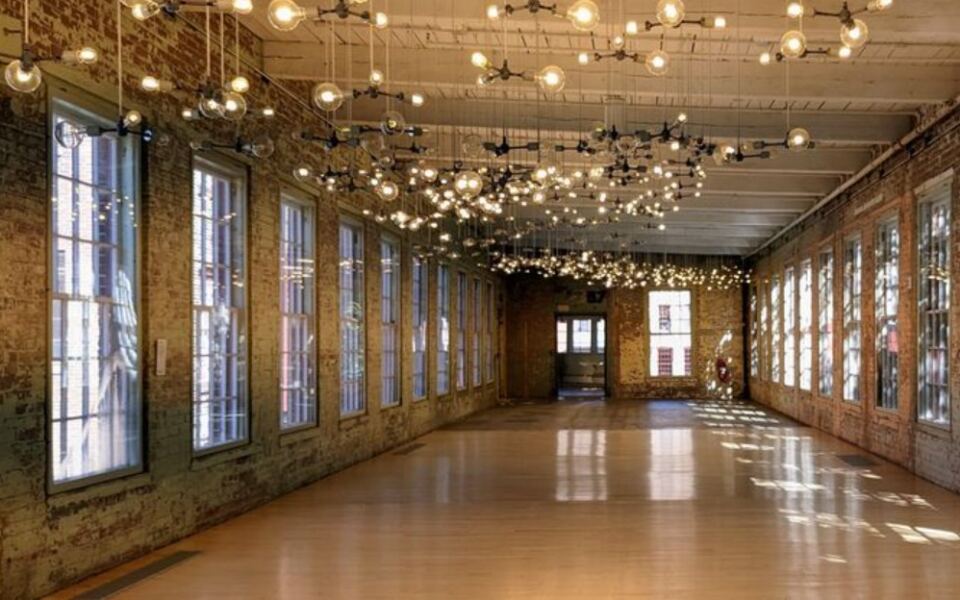
Old factories usually end up empty or torn down. In North Adams, one became among the largest contemporary art museums in the country.
MASS MoCA opened in 1999 inside a sprawling former factory complex. Much of it once belonged to Sprague Electric, a company that made electronic parts for decades.
The brick buildings still have that industrial feel. Huge rooms, tall ceilings, and old walkways give artists space to create works that wouldn’t fit in a regular museum.
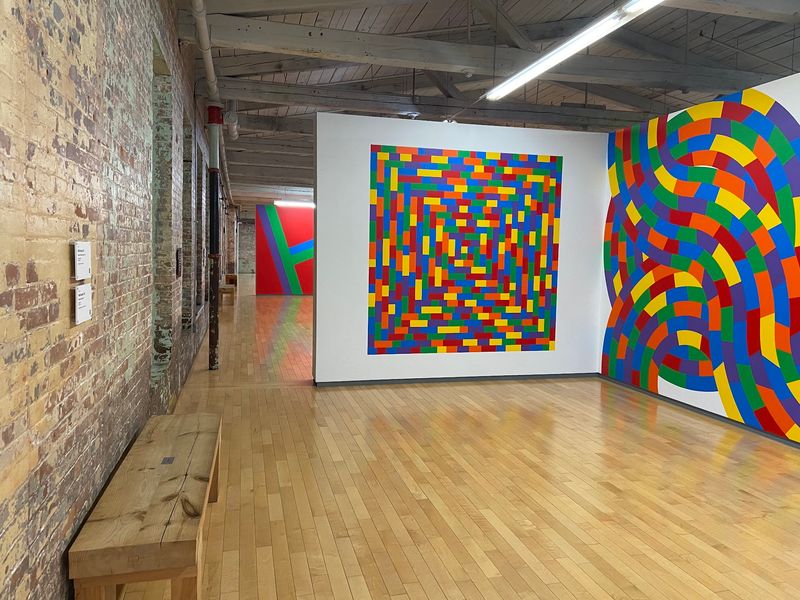
Some galleries hold long-term installations, so you can see major pieces without rushing. A big highlight is a massive collection of Sol LeWitt wall drawings spread across multiple floors.
Those wall drawings use bold colors, lines, and shapes. They’re fun even if you don’t know much about art, because they feel like stepping into a giant coloring book.
Other spaces show work by artists like James Turrell and Anselm Kiefer. Exhibits change over time, so check what’s on view before your visit.
Wear comfy shoes, seriously. The museum is huge, and you could walk for hours without seeing the same room twice.
Kids often enjoy the open spaces and surprising artwork. There’s room to move, which helps when little legs need a break from standing still.
The campus also hosts concerts, performances, and festivals throughout the year. Pair your trip with a drive through the Berkshire hills for a full day out.
Address: 1040 MASS MoCA Way, North Adams, MA 01247
8. Plimoth Patuxet Museums
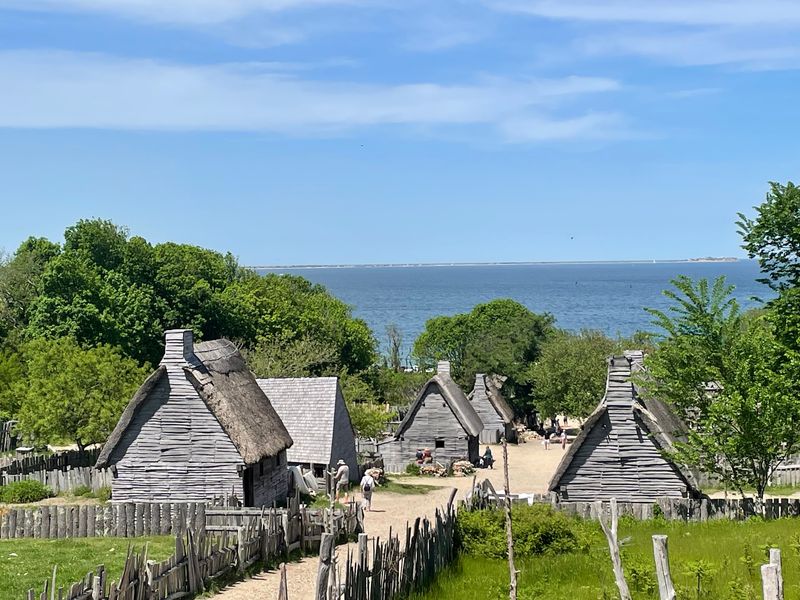
History books can feel flat, but this place adds sound, smells, and conversation. Plimoth Patuxet Museums brings 1600s Plymouth to life in a way your textbook never could.
The museum changed its name in 2020 to include Patuxet. That’s the Wampanoag name for the land where the Pilgrims built their colony.
Start at the Historic Patuxet Homesite. Native staff members from the Wampanoag and other Native Nations share history and culture from a Native point of view.
They wear traditional clothing, but they speak from a modern perspective. You can ask questions and learn about a community that was here long before the Mayflower arrived.
Next, wander over to the 17th-Century English Village. Role players portray real colonists from 1627, and they stay in character while they cook, garden, and work.
Try asking them about something modern, like a smartphone. Their puzzled replies are part of the fun.
Mayflower II sits at a separate spot on the Plymouth waterfront. This full-scale reproduction of the famous ship lets you see just how cramped the long ocean voyage must have been.
You can also visit the Plimoth Grist Mill, which grinds corn the old-fashioned way. Each site shows a different piece of the same big story.
Give yourself plenty of time, because there’s a lot to explore. Check which sites are open during your visit, since some operate seasonally.
Address: 137 Warren Ave, Plymouth, MA 02360
9. The Witch House
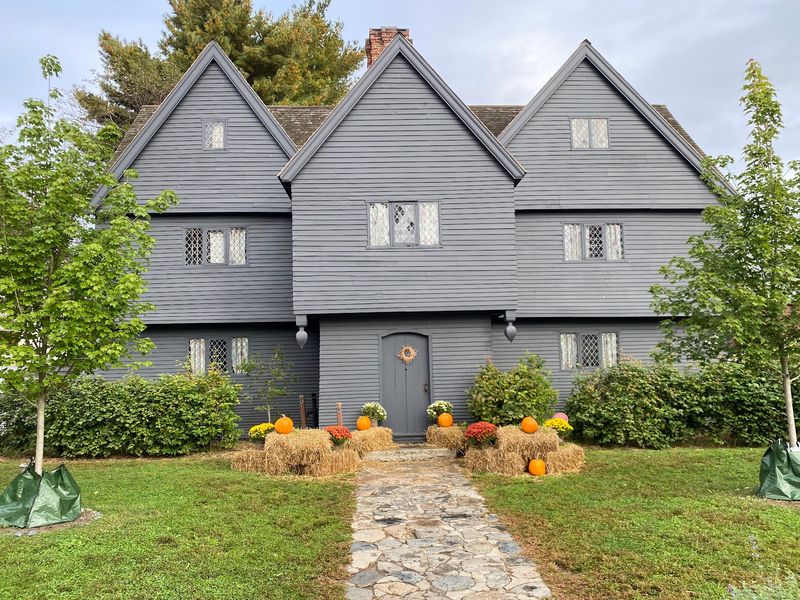
Salem has plenty of spooky shops and costume stores, but only one building with a direct link to the 1692 witch trials. That’s the Witch House, and it’s the real deal.
This dark, steep-roofed house belonged to Judge Jonathan Corwin. He served as one of the judges during the trials that shook Salem and the surrounding towns.
The house dates back to the 1600s. Its dark wood, sharp gables, and small windows make it look exactly like you’d expect a mysterious old Salem house to look.
Inside, you’ll learn about daily life in colonial Massachusetts. Exhibits show what homes were like and how families lived during that time.
You’ll also learn about the trials themselves and how fear spread through the community. It’s a sobering story, but an important one to understand.
The museum is owned by the City of Salem. That gives it a bit more weight than the many tourist attractions that borrow the witch theme.
October is Salem’s busiest month by far, thanks to Halloween events. If you’d rather skip the biggest crowds, try visiting in late spring or summer.
The house sits right on Essex Street, close to downtown. You can easily walk from here to other historic spots and museums in town.
Bring your questions and your curiosity. The story is darker than the costumes outside suggest, and that makes it far more interesting.
Address: 310 Essex St, Salem, MA 01970
10. Purgatory Chasm State Reservation
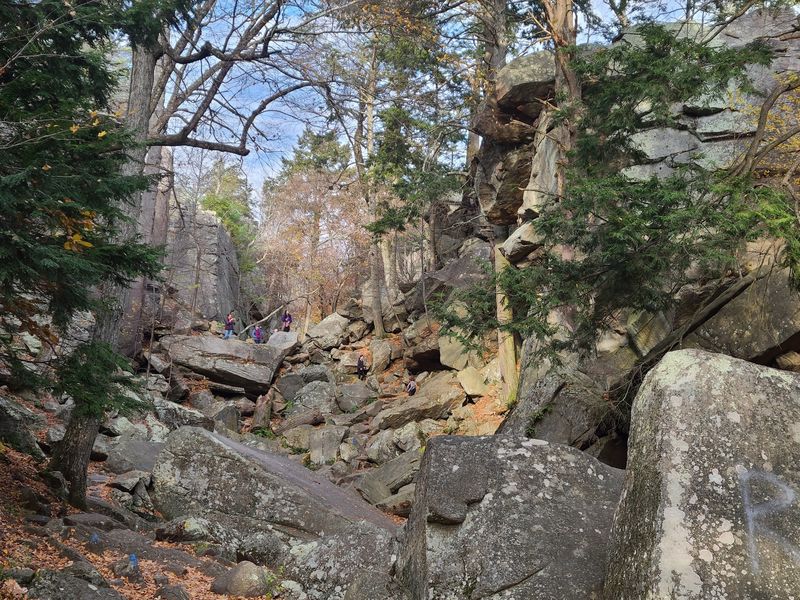
Somewhere in the middle of a quiet Worcester County forest, the ground suddenly splits open. Purgatory Chasm is a narrow granite gorge that looks like a giant took a bite out of the earth.
The chasm runs about a quarter mile long. Its rocky walls rise as high as 70 feet, and huge boulders lie scattered along the bottom.
Scientists think it formed near the end of the last ice age. A sudden rush of glacial meltwater likely carved through the rock with incredible force.
The main trail runs right through the chasm floor. You’ll scramble over rocks, squeeze past boulders, and use your hands more than you expect.
Some rock formations have fun names. Look for Fat Man’s Misery, a tight squeeze, and the Corn Crib, another narrow spot that tests your flexibility.
Kids usually love it, since it feels like a natural jungle gym. Keep a close eye on them, though, because the rocks can be slippery and steep.
Wear sturdy shoes with good grip. Flip-flops and sandals are a bad idea here, unless you enjoy wobbling like a baby deer.
Other trails loop through the woods around the chasm. They’re calmer and easier if someone in your group wants a gentler walk.
Picnic areas and a visitor center make it easy to spend a few hours. It’s a great pick when you want adventure without a long drive into the mountains.
Address: 198 Purgatory Rd, Sutton, MA 01590
11. Walden Pond State Reservation
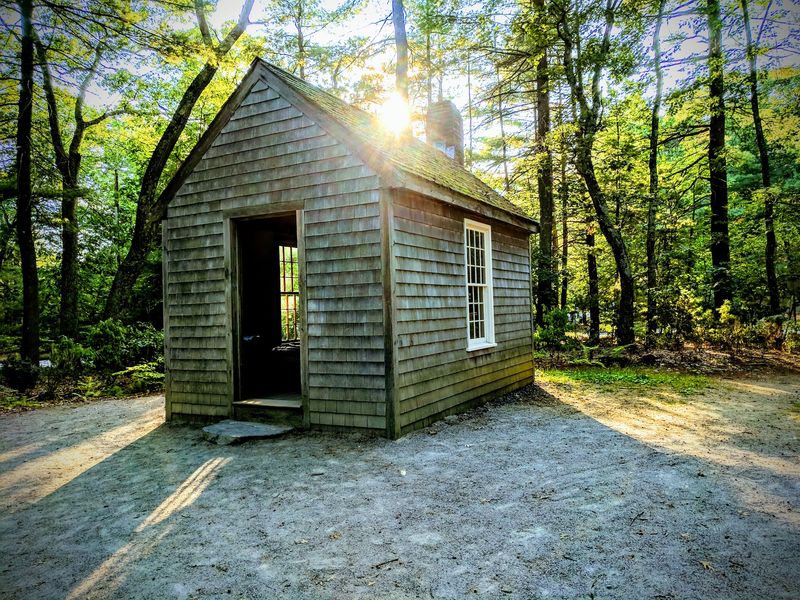
Henry David Thoreau wanted to live simply, so he built a tiny cabin in the woods. The pond beside it became one of the most famous bodies of water in American writing.
Thoreau lived at Walden Pond from 1845 to 1847. He later wrote “Walden,” published in 1854, about his time living close to nature.
His original cabin is long gone. A replica stands near the parking area, and it’s surprisingly small, with just enough room for a bed, a desk, and a few chairs.
Step inside and picture living there for two years. It might make your bedroom feel like a palace by comparison.
A short walk brings you to the site where the real cabin stood. Stones mark the spot in the woods, and visitors often leave small rocks nearby.
The pond itself is a kettle pond, formed by melting glacial ice thousands of years ago. It’s about 100 feet deep, which is impressive for a pond.
In summer, people swim, paddle, and fish here. A trail loops around the shoreline, making it a lovely walk in any season.
Stop by the visitor center to learn more about Thoreau and the area. The exhibits give helpful background before you explore.
Parking fills up fast on warm days, so arrive early. Then grab a quiet spot by the water and see why Thoreau found it so inspiring.
Address: 915 Walden St, Concord, MA 01742
12. Dinosaur Footprints

Long before the Connecticut River had cars zooming beside it, dinosaurs strolled through the mud here. Their footprints are still sitting in the rock for you to see.
The Dinosaur Footprints reservation sits along Route 5 in Holyoke. It’s managed by The Trustees, a Massachusetts nonprofit that protects special outdoor places.
The tracks date back to the Early Jurassic period, roughly 190 million years ago. That’s older than many of the famous dinosaurs you know from movies.
Most prints are three-toed and look a bit like giant bird tracks. That makes sense, since scientists now know birds are related to dinosaurs.
Back in the 1800s, a geologist named Edward Hitchcock studied tracks in this area. He thought they came from huge ancient birds, which was a pretty good guess for his time.
You can walk right beside the sloping rock ledge. Look closely, and you’ll start spotting trails of footprints heading in the same direction.
Bring a small ruler or use your own foot to compare sizes. Kids especially love imagining how big the creature that left each print might have been.
The site is small, so a visit won’t take long. It’s an easy stop to add to a day exploring western Massachusetts.
The reservation is usually open in the warmer months. Check ahead before you go, and remember to look but not touch the fragile prints.
Address: Route 5 (Northampton St), Holyoke, MA 01040
13. Norman Rockwell Museum
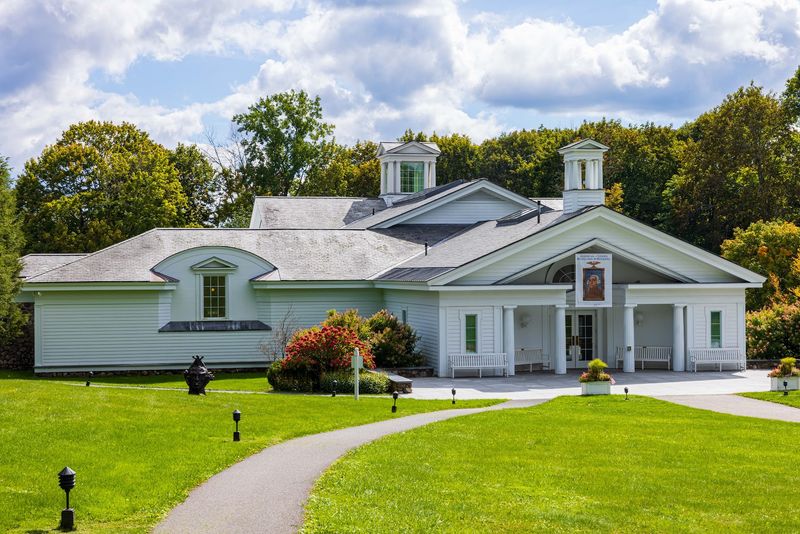
You probably know a Norman Rockwell painting even if you can’t name one. His scenes of American life appeared on magazine covers for decades.
The Norman Rockwell Museum in Stockbridge holds the largest collection of his original artwork in the world. Seeing the paintings in person is way different from seeing them in a book.
Up close, you’ll notice tiny details and brushstrokes. The faces are full of humor and personality that make you want to study each one for a while.
Rockwell lived in Stockbridge for the last 25 years of his life. The town even inspired one of his famous works, a snowy holiday view of Stockbridge Main Street.
His actual studio was moved to the museum grounds. Peek inside to see where he worked, with his easel, tools, and personal items arranged nearby.
The museum sits on a large property with rolling lawns and great views of the Berkshire hills. It’s worth strolling outside before or after your time in the galleries.
Special exhibits feature other illustrators and artists, too. That keeps things fresh if you’ve visited before.
Many visitors stop in downtown Stockbridge after the museum. Comparing the real streets to the painting is a fun little game.
Give yourself a couple of hours to explore. It’s an easy pick for families, art lovers, and anyone who enjoys a good story told in paint.
Address: 9 Glendale Rd, Stockbridge, MA 01262
14. Flying Horses Carousel
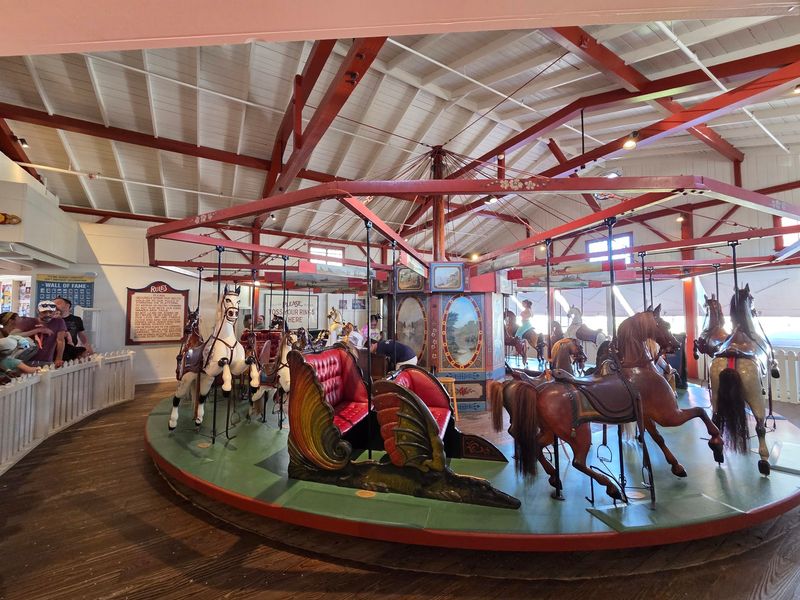
Reach out, grab the brass ring, and win a free ride. That old carousel tradition is still alive on Martha’s Vineyard.
The Flying Horses Carousel in Oak Bluffs is the oldest operating platform carousel in the United States. It was built in 1876 and later moved to the island.
Charles W. F. Dare crafted it during the golden age of carousels. Today, it’s a National Historic Landmark, which is a big honor for a merry-go-round.
The horses don’t go up and down like many modern carousels. Instead, they stay put while the platform spins, giving the ride a classic feel.
Look closely at the horses. They have real horsehair manes and glass eyes, which makes them look surprisingly lifelike.
As you ride, try reaching for the rings from a dispenser on the side. Snag the brass one, and you’ve earned another spin around the circle.
The Martha’s Vineyard Preservation Trust cares for the carousel. Their work helps keep this piece of history running for new generations of riders.
You’ll need a ferry ride to reach the island from the mainland. That trip adds to the adventure, especially on a sunny day.
The carousel usually runs seasonally, with longer hours in summer. Check ahead before you plan your Oak Bluffs day so you don’t miss your ride.
Address: 15 Lake Ave, Oak Bluffs, MA 02557
15. Pilgrim Monument
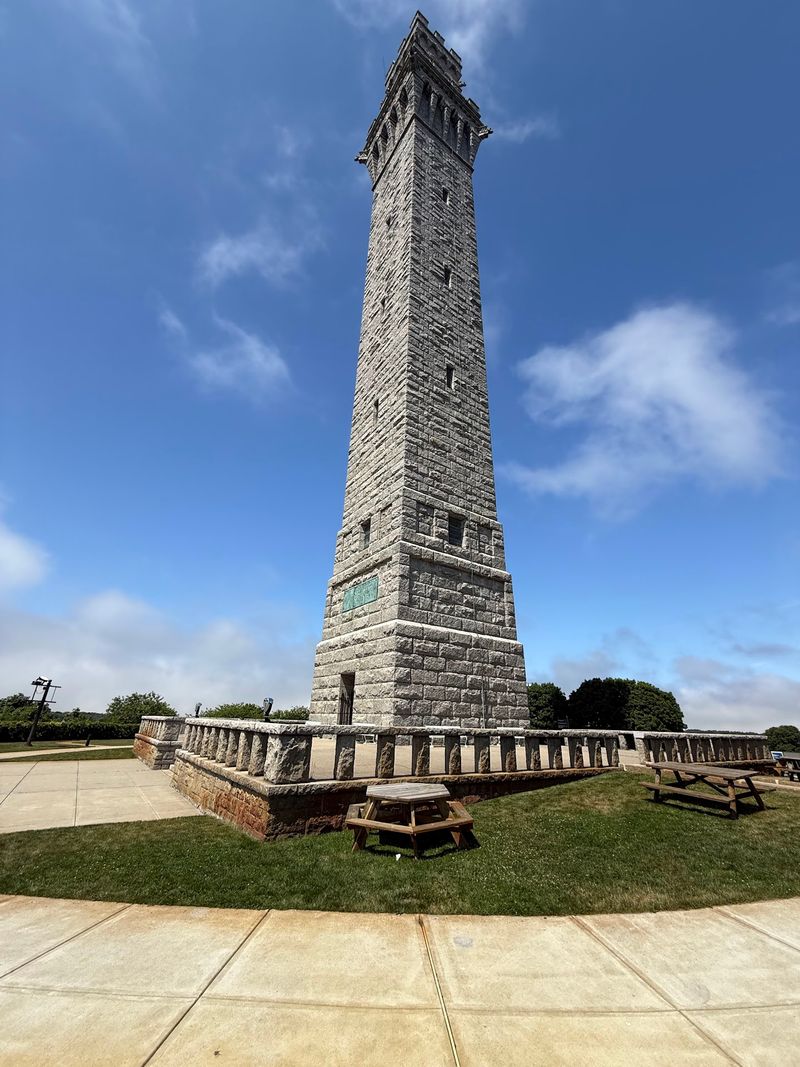
Plymouth gets the fame, but the Pilgrims actually landed in Provincetown first. The Pilgrim Monument stands tall to make sure nobody forgets it.
The Mayflower arrived at the tip of Cape Cod in November 1620. The Mayflower Compact was signed in the harbor before the travelers moved on to Plymouth.
Construction on the monument began in 1907. President Theodore Roosevelt laid the cornerstone, and President William Howard Taft dedicated it in 1910.
The tower rises 252 feet into the sky. It’s the tallest all-granite structure in the United States, so it’s hard to miss from almost anywhere in town.
Ready for a workout? Getting to the top means climbing 116 steps and 60 ramps.
The reward at the top is a sweeping view of Cape Cod. You can see the harbor, the curving coastline, and the long stretch of sand dunes.
Don’t skip the museum at the base. It covers the Pilgrims’ landing, Provincetown’s past, and the town’s long history as a fishing village.
Walking down into town afterward is half the fun. Provincetown is packed with shops, galleries, and spots to grab some seafood.
The monument is usually open seasonally, so check ahead for your trip. Then lace up your sneakers and get ready to climb.
Address: 1 High Pole Hill Rd, Provincetown, MA 02657
16. Orchard House
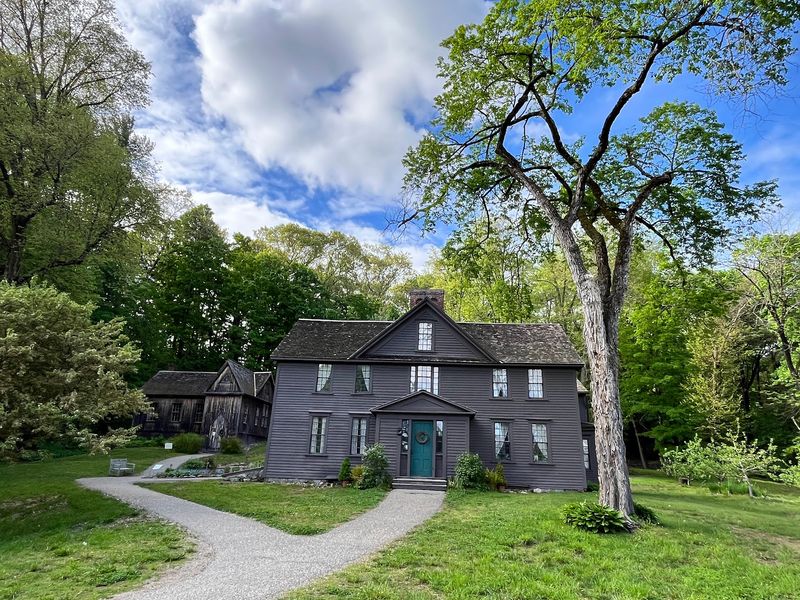
Jo March had her writing nook, and so did the real author behind her. Louisa May Alcott wrote and set “Little Women” at Orchard House in Concord.
The Alcott family lived here from 1858 to 1877. Louisa wrote her famous novel in 1868 while living in this brown clapboard home.
Fans of the book will feel right at home. The four sisters in the story were based on Louisa and her real sisters.
About 75 percent of the furnishings belonged to the Alcotts. That means you’re seeing the same rooms and objects the family actually used.
Look for the small shelf desk where Louisa wrote. Her father, Bronson Alcott, built it for her between two windows.
Her sister May was an artist, and some of her drawings still decorate the walls. She inspired the character Amy, who also loved to draw.
Guided tours walk you through the house and share family stories. You’ll learn how the Alcotts lived and why their home mattered so much to Louisa.
Concord is full of other literary history, too. Walden Pond and other author homes are nearby, so you can plan a book-lover’s day in Massachusetts.
If you’ve read the book or seen a movie version, this visit hits differently. It’s like stepping into the pages of a story you already love.
Address: 399 Lexington Rd, Concord, MA 01742
Share this story